Ebola is one of the most feared infectious diseases in the world, and for understandable reasons. It can cause severe illness, outbreaks can be difficult to control, and some types of Ebola disease have a high death rate without rapid specialist care.
But Ebola is also often misunderstood. It does not spread like flu, COVID or norovirus. It is not usually caught through casual contact in everyday settings. People are generally not infectious before symptoms start. In the UK, the risk to the general public is very low, although returning travellers from outbreak areas may occasionally need urgent assessment.
This guide explains what Ebola is, where it comes from, how it spreads, what symptoms to look for, how dangerous it is, how it is treated, whether vaccines exist, and what to do if you are worried after travel or possible exposure.
Important: Ebola is rare in the UK, but it is a serious medical emergency if suspected. If you develop fever or severe illness within 21 days of travel to an Ebola outbreak area, or after contact with someone who may have Ebola, seek urgent medical advice and tell healthcare staff about your travel or exposure history before attending in person.
What is Ebola?
Ebola disease is a rare but severe viral illness caused by viruses in the Orthoebolavirus genus, part of the filovirus family. It is sometimes called Ebola virus disease, or EVD, although different Ebola-related viruses can cause similar but distinct diseases.
The World Health Organization explains that Ebola disease is often fatal and that six species of orthoebolaviruses have been identified, with several known to cause large outbreaks. The best-known is Ebola virus, sometimes called Zaire ebolavirus, but Sudan virus and Bundibugyo virus can also cause serious outbreaks. WHO: Ebola disease.
Ebola can affect many parts of the body. Early symptoms often look like other infections: fever, headache, weakness, muscle aches and sore throat. As illness progresses, people may develop vomiting, diarrhoea, stomach pain, rash, kidney and liver problems, bleeding, shock and organ failure.
Why is Ebola so serious?
Ebola is serious because it can progress quickly from flu-like symptoms to severe dehydration, bleeding problems, shock and multi-organ failure. Outbreaks are also challenging because they often happen in settings where healthcare systems may be under pressure, infection control may be difficult, and people may delay seeking care because of fear or mistrust.
Case fatality rates vary by virus species, outbreak, access to care and timing of treatment. Some Ebola outbreaks have had very high death rates, while outcomes improve when cases are identified early and patients receive high-quality supportive care.
Ebola is not dangerous because it spreads easily through the air. It is dangerous because close contact with the body fluids of a symptomatic person can transmit infection, and very sick patients can have high amounts of virus in blood, vomit, diarrhoea and other fluids.
Where does Ebola come from?
Ebola is a zoonotic infection, meaning it can pass from animals to humans. The natural reservoir is not fully settled for all Ebola viruses, but fruit bats are considered likely hosts or important contributors. Humans can become infected through contact with infected wildlife or their body fluids.
Possible animal-related sources include:
- fruit bats
- non-human primates, such as monkeys and apes
- forest antelope
- other wild animals found sick or dead in outbreak regions
- handling or eating bushmeat from infected animals
Once Ebola enters a human population, it can spread between people through direct contact with infected body fluids.
Where do Ebola outbreaks happen?
Ebola outbreaks have mainly occurred in parts of sub-Saharan Africa, particularly Central and West Africa. Countries that have experienced outbreaks include the Democratic Republic of Congo, Uganda, Guinea, Sierra Leone, Liberia and others.
The largest Ebola outbreak took place in West Africa from 2014 to 2016, mainly affecting Guinea, Liberia and Sierra Leone. More recent outbreaks have occurred in the Democratic Republic of Congo and Uganda.
As of May 2026, international agencies have reported an Ebola outbreak in the Democratic Republic of Congo linked to Bundibugyo virus. WHO noted that previous Bundibugyo virus disease outbreaks have had case fatality rates around 30% to 50%, and that there is no licensed vaccine or specific therapeutic approved for Bundibugyo virus disease, although early supportive care is lifesaving. WHO outbreak update: Bundibugyo virus disease, DRC.
For people in the UK, the overall risk remains low. UKHSA has stated that the current outbreak poses a low risk to the UK population and that Ebola cases in returning travellers are rare. The NHS has safe procedures and specialist centres for any suspected cases. UKHSA: what is Ebola and how does it spread?.
How does Ebola spread?
Ebola spreads through direct contact with infected body fluids from someone who has symptoms, or from someone who has died from Ebola. The virus can enter the body through broken skin or through the eyes, nose or mouth.
Body fluids that can spread Ebola include:
- blood
- vomit
- diarrhoea or poo
- urine
- saliva
- sweat
- breast milk
- semen
- vaginal fluids
The NHS says Ebola spreads from person to person when someone touches infected body fluids such as semen, saliva, blood, poo, pee and vomit. It has never spread from person to person in the UK. NHS: Ebola virus disease.
Ebola can also spread through objects contaminated with infected body fluids, such as needles, medical equipment, bedding, clothing or surfaces. This is why strict infection prevention and control is essential in healthcare settings.
Can Ebola spread through the air?
Ebola is not considered an airborne infection in the way that measles, flu or COVID can be. It does not usually spread through casual conversation, walking past someone, or sharing air in a room.
The European Centre for Disease Prevention and Control states that Ebola is not an airborne disease and is generally not considered contagious before symptoms start. Transmission requires direct contact with organs, blood, secretions or other bodily fluids of infected people or animals, or their dead bodies. ECDC: Ebola disease factsheet.
That said, caring for a person with Ebola is high risk without proper protective equipment, because vomiting, diarrhoea and bleeding can contaminate skin, clothing, bedding and surfaces.
Can Ebola spread before symptoms start?
People with Ebola are generally not infectious before symptoms start. This is very different from some respiratory viruses, where people may spread infection before they realise they are ill.
Once symptoms begin, the risk of transmission increases, especially as illness becomes more severe and body fluids contain more virus.
What is the incubation period?
The incubation period is the time between exposure to the virus and the start of symptoms. For Ebola, this is usually between 2 and 21 days, with symptoms often appearing around 8 to 10 days after exposure.
This 21-day window is important for public health monitoring. People who have had possible exposure may be monitored for symptoms for 21 days after their last possible contact.
What are the symptoms of Ebola?
Ebola can start suddenly. Early symptoms may be difficult to distinguish from malaria, flu, typhoid, sepsis, COVID, meningitis, food poisoning or other infections, especially in people who have recently travelled.
Early symptoms may include:
- fever
- severe tiredness or weakness
- headache
- muscle and joint pain
- sore throat
- loss of appetite
As illness progresses, symptoms may include:
- vomiting
- diarrhoea
- stomach pain
- rash
- red eyes
- chest pain or cough
- shortness of breath
- confusion
- kidney or liver problems
- internal or external bleeding in some cases
CDC describes early Ebola symptoms as “dry” symptoms such as fever, aches, pains and fatigue, which can then progress to “wet” symptoms such as diarrhoea, vomiting and unexplained bleeding. CDC: Ebola disease basics.
Does Ebola always cause bleeding?
No. Bleeding can happen in Ebola, but it is not present in every case and is not always the first or most obvious symptom. The term “viral haemorrhagic fever” can make people imagine dramatic bleeding from the start, but early Ebola often looks like many other infections.
The more consistent early clues are fever, severe weakness, aches and travel or exposure history. Vomiting, diarrhoea and dehydration can become prominent as illness progresses.
How dangerous is Ebola?
Ebola can be life-threatening. The death rate varies depending on the virus species, outbreak conditions and quality of care. Some outbreaks have had mortality rates above 50%, while outcomes are better when patients receive early supportive care, careful fluid management, monitoring, and where available, specific treatments.
Danger is higher when:
- diagnosis is delayed
- patients cannot access supportive care quickly
- there is severe vomiting or diarrhoea causing dehydration
- there is shock or organ failure
- healthcare systems are overwhelmed
- safe burial and infection control measures are difficult
However, it is important not to confuse severity with everyday risk. Ebola can be very serious for those infected, but most people in the UK are extremely unlikely to catch it unless they have been in an outbreak area or had direct contact with a suspected or confirmed case.
Who is most at risk?
The risk is highest for people who have direct contact with infected body fluids, especially without proper protective equipment.
Higher-risk groups during an outbreak include:
- household members caring for someone who is sick
- healthcare workers without adequate protective equipment
- people involved in washing or preparing bodies for burial
- laboratory workers handling infectious samples
- people who handle infected wildlife or bushmeat
- sexual partners of survivors if precautions are not followed during the period when virus may persist in semen
Travellers are usually at low risk if they avoid healthcare settings linked with outbreaks, avoid contact with sick people, avoid funeral rituals involving bodies, avoid bushmeat and follow public health advice.
Can Ebola spread through sex?
Yes, Ebola virus can persist in some body fluids after recovery, especially semen. Sexual transmission from survivors has been documented, although it is not the main route during most outbreaks.
Public health advice may include avoiding sex or using condoms for a period after recovery, and some programmes offer testing of semen for Ebola virus. Advice should be based on current public health guidance in the country or outbreak setting.
Can Ebola spread from dead bodies?
Yes. Bodies of people who have died from Ebola can contain high levels of virus and are highly infectious. Traditional burial practices involving washing, touching or kissing the body have contributed to outbreaks in the past.
Safe and dignified burial practices are a major part of Ebola outbreak control. These measures can be emotionally difficult for families, but they protect relatives, healthcare workers and communities.
Is Ebola a risk in the UK?
For the general UK population, Ebola risk is very low. Ebola has not spread from person to person in the UK. The main UK concern is occasional imported cases or people returning from outbreak areas who develop symptoms within 21 days.
If a person in the UK is suspected of having Ebola, the NHS and UKHSA have procedures for assessment, isolation, testing, contact tracing and specialist care. The UK also has specialist High Consequence Infectious Disease units for patients who need this level of care.
TravelHealthPro, the UK’s travel health resource, states that Ebola infection is a negligible to very low risk to the UK, and that infection spreads through close, direct physical contact with infected body fluids. TravelHealthPro: Ebola disease.
When should a traveller seek medical advice?
Seek urgent medical advice if you develop fever or severe illness within 21 days of being in an area with an Ebola outbreak, especially if you had possible exposure.
Possible exposure includes:
- contact with someone who was ill or died from suspected Ebola
- working in or visiting a healthcare facility treating Ebola patients
- contact with blood, vomit, diarrhoea or other body fluids
- attending or participating in funeral practices involving contact with a body
- handling wildlife, bushmeat or dead animals in an outbreak area
- sexual contact with an Ebola survivor without following public health precautions
If you are in the UK and symptoms develop after travel, contact NHS 111, your GP or emergency services for advice. Tell them about the travel and possible exposure before attending a clinic or hospital, so staff can arrange safe assessment.
How is Ebola diagnosed?
Ebola is diagnosed using specialist laboratory tests on blood or other samples. Testing is done under strict safety procedures because samples may contain high levels of virus.
A clinician will consider Ebola if symptoms fit and there is a relevant travel or exposure history. Because early symptoms are non-specific, doctors also consider other common or serious illnesses such as malaria, sepsis, typhoid, meningitis and other viral haemorrhagic fevers.
In the UK, suspected Ebola cases are handled through specialist pathways involving infectious disease experts and public health teams.
How is Ebola treated?
Treatment depends on the Ebola virus species, severity of illness and what therapies are available. The foundation of treatment is early supportive care.
Supportive care may include:
- fluids and electrolytes to treat dehydration
- oxygen support
- blood pressure support
- treatment of vomiting and diarrhoea
- pain and fever control
- monitoring and support for kidney and liver function
- treatment of other infections, such as malaria or bacterial sepsis, where present
- intensive care in severe cases
For Ebola virus disease caused by Zaire ebolavirus, there are specific monoclonal antibody treatments that can improve survival when given early. However, these treatments do not necessarily work against all Ebola virus species. For example, WHO notes that there is currently no licensed vaccine or specific therapeutic against Bundibugyo virus disease, although supportive care remains lifesaving.
Is there an Ebola vaccine?
Yes, but vaccine protection depends on the virus species. The best-established Ebola vaccine is used against Zaire ebolavirus. It has been used in outbreak control, especially through ring vaccination strategies, where contacts and contacts of contacts are vaccinated to create a protective barrier around cases.
However, vaccines are not available for every Ebola-related virus. For example, the current Bundibugyo outbreak reported by WHO involves a virus for which there is no licensed vaccine.
Ebola vaccination is not a routine travel vaccine for the general public. It is usually used for people at high risk, such as outbreak responders, healthcare workers in affected areas, contacts of cases, or specific occupational groups depending on public health guidance.
How are Ebola outbreaks controlled?
Ebola outbreak control requires rapid public health action and community trust. The main aim is to identify cases quickly, isolate and care for patients safely, trace contacts, prevent infection in healthcare settings, and reduce risky exposures.
Key control measures include:
- early detection and testing
- safe isolation and specialist care
- contact tracing and 21-day monitoring
- infection prevention and control in healthcare settings
- safe handling of bodies and dignified burial practices
- community engagement and clear communication
- vaccination where an effective vaccine exists for the virus species
- support for survivors and affected families
Public trust is crucial. If communities fear treatment centres, mistrust authorities or cannot follow burial advice because it conflicts with tradition, outbreaks become harder to stop.
How can travellers reduce their risk?
Most travellers are at low risk, but precautions matter if travelling to or working in an affected region.
Risk reduction steps include:
- check official travel health advice before travel
- avoid contact with anyone who is sick or has died from suspected Ebola
- avoid contact with blood or body fluids
- avoid hospitals or clinics involved in outbreak care unless you are part of the response
- avoid funeral rituals involving touching or washing bodies
- avoid handling wild animals, bats, monkeys or bushmeat
- wash hands frequently
- follow local public health instructions
- seek medical advice urgently if symptoms develop within 21 days of possible exposure
Before travel, check TravelHealthPro and GOV.UK foreign travel advice for the latest country-specific guidance.
What should you do if you think you have been exposed?
If you may have been exposed to Ebola, do not wait until you are very unwell to seek advice. Contact local public health authorities, your healthcare provider, NHS 111 or emergency services depending on where you are and how urgent symptoms are.
If you are currently well but had possible exposure, you may need monitoring for 21 days. If symptoms develop, you should avoid contact with others and follow public health instructions.
If you are already symptomatic, call ahead before attending healthcare settings. This helps staff protect you, other patients and healthcare workers.
Ebola versus malaria, flu or food poisoning
Early Ebola symptoms can look like many other illnesses. Fever, headache, aches and tiredness can be flu, COVID, malaria or sepsis. Vomiting and diarrhoea can look like food poisoning or norovirus.
Travel and exposure history are what make Ebola more likely. A person with fever after travel to an outbreak area needs proper assessment, not assumptions.
Malaria is also a medical emergency and is more common than Ebola in many travel settings. If you develop fever after travel to a malaria-risk area, seek urgent medical advice even if you do not think Ebola is likely.
For UK everyday illness comparisons, you may find our guides to norovirus, fatigue and chest pain useful.
Ebola and healthcare workers
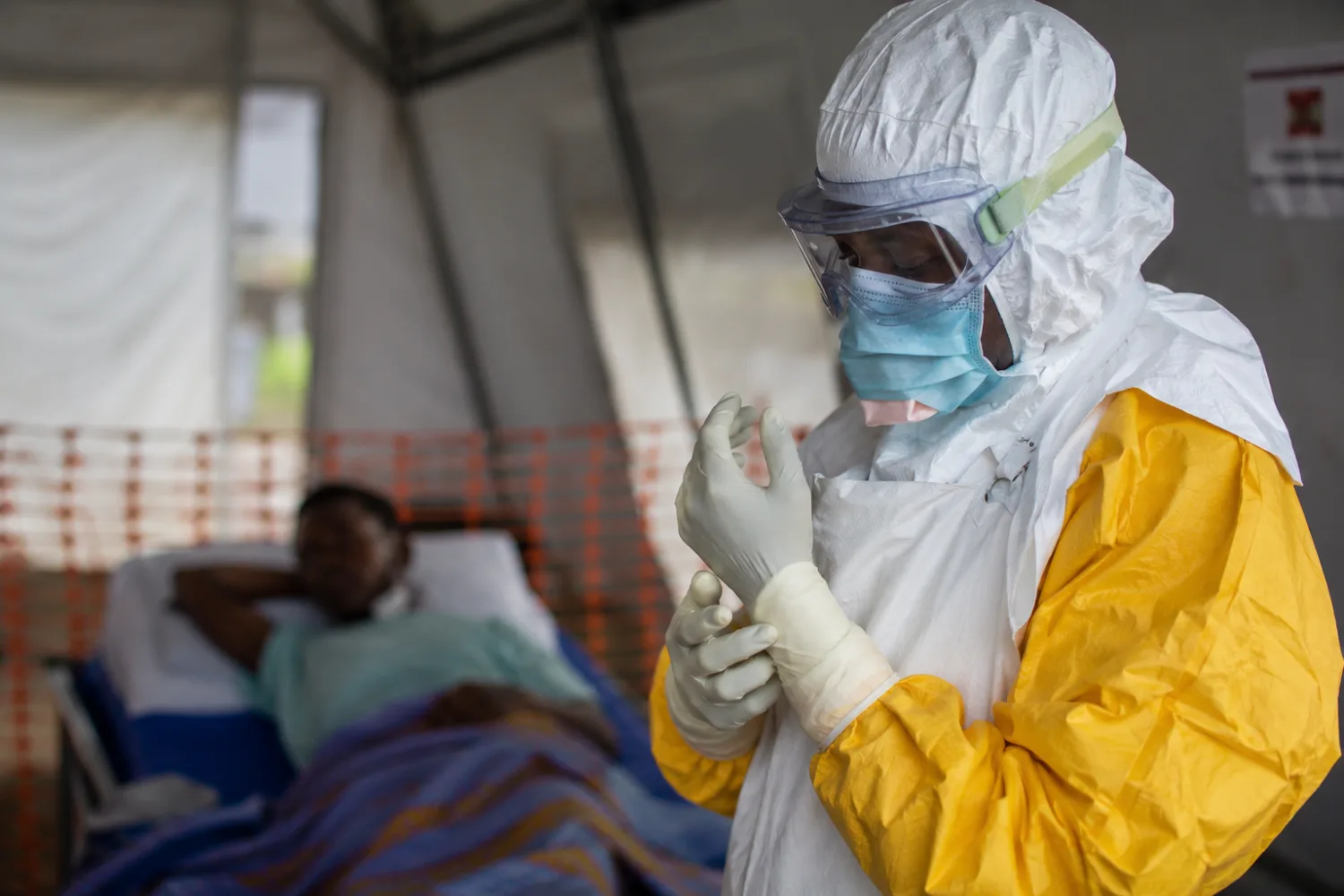
Healthcare workers are at increased risk during outbreaks if infection control is inadequate. Ebola care requires strict personal protective equipment, training, isolation procedures, safe waste disposal and careful handling of samples and contaminated materials.
In countries with strong infection control systems, the risk can be managed, but outbreaks in under-resourced settings are much harder. Healthcare workers have been among those affected in several Ebola outbreaks.
Ebola survivors: what happens after recovery?
Surviving Ebola does not always mean recovery is immediate or complete. Some survivors develop ongoing symptoms, sometimes called post-Ebola syndrome.
Possible longer-term problems include:
- fatigue
- joint and muscle pain
- headaches
- eye inflammation or vision problems
- hearing problems
- sleep disturbance
- mental health difficulties
- stigma or social isolation
Ebola virus can also persist for a period in immune-protected sites such as the eyes, central nervous system or testes. This is why survivor follow-up and sexual health advice are important after recovery.
Common myths about Ebola
Myth: Ebola spreads like flu
Ebola does not spread through casual airborne transmission like flu. It spreads through direct contact with infected body fluids from someone who has symptoms, contaminated objects, infected animals or bodies of people who died from Ebola.
Myth: Anyone with Ebola is infectious before symptoms
People are generally not infectious before symptoms start. The risk rises once symptoms begin and increases as illness becomes more severe.
Myth: Ebola always causes bleeding
Bleeding can happen, but not everyone with Ebola has visible bleeding. Early symptoms often look like fever, weakness, headache, aches, sore throat, vomiting or diarrhoea.
Myth: Ebola is always fatal
Ebola is often severe and can be fatal, but people can survive, especially with early, high-quality supportive care and, for some Ebola species, specific treatments.
Myth: The UK public is at high risk during African outbreaks
The risk to the UK public is generally very low. The main concern is people returning from outbreak areas who develop symptoms or people with direct exposure to a suspected or confirmed case.
When to seek urgent help
Seek urgent medical advice if you have symptoms that could fit Ebola and a relevant exposure history within the previous 21 days.
This includes fever, severe weakness, vomiting, diarrhoea, stomach pain, unexplained bleeding, severe headache or feeling very unwell after:
- travel to an Ebola outbreak area
- contact with someone suspected or confirmed to have Ebola
- contact with blood, vomit, diarrhoea or other body fluids from a possible case
- contact with a body of someone who died in an outbreak area
- healthcare work in an affected region
- handling wild animals or bushmeat in an affected area
Call ahead before attending healthcare settings. In the UK, use NHS 111, your GP, or emergency services depending on severity, and clearly explain your travel and exposure history.
Call 999 if someone is severely unwell, confused, collapsing, bleeding, severely dehydrated, or has breathing problems.
Final thoughts
Ebola virus disease is rare but serious. It can cause severe illness and outbreaks, particularly in parts of Central and West Africa. It spreads through direct contact with infected body fluids from symptomatic people, contaminated objects, infected animals or bodies of people who have died from Ebola.
For most people in the UK, the risk is very low. Ebola does not spread like flu, and people are generally not infectious before symptoms start. The risk becomes relevant if someone has been in an outbreak area or had direct contact with a suspected or confirmed case.
Early recognition, safe isolation, specialist care, contact tracing, infection control and community trust are the foundations of Ebola control. If you develop fever or severe illness within 21 days of possible exposure, seek urgent medical advice and tell healthcare staff about your travel or exposure before attending in person.
For official information, see the WHO Ebola disease fact sheet, NHS Ebola guidance, UKHSA Ebola information, TravelHealthPro Ebola advice and CDC Ebola disease basics.
This article is for general information only and should not replace medical or public health advice. If you are unwell after travel to an Ebola outbreak area or after possible exposure to Ebola, contact NHS 111, your GP, emergency services or local public health authorities urgently. Call 999 in an emergency.
Frequently asked questions
What is Ebola?
Ebola is a rare but severe viral illness caused by orthoebolaviruses. It can cause fever, weakness, vomiting, diarrhoea, organ problems, bleeding and shock. It mainly occurs during outbreaks in parts of sub-Saharan Africa.
How do people catch Ebola?
People usually catch Ebola through direct contact with infected body fluids, such as blood, vomit, diarrhoea, urine, saliva, semen or breast milk, from someone who has symptoms. It can also spread through contaminated objects, infected animals or bodies of people who died from Ebola.
Can Ebola spread through the air?
Ebola is not considered an airborne disease like flu, measles or COVID. It spreads mainly through direct contact with infected body fluids or contaminated materials.
Can someone spread Ebola before symptoms start?
People are generally not contagious before they develop symptoms. The risk of spreading Ebola increases once symptoms begin, especially as illness becomes more severe.
What are the first symptoms of Ebola?
Early symptoms often include fever, severe tiredness, headache, muscle aches, joint pain, sore throat and weakness. Vomiting, diarrhoea, stomach pain, rash, confusion or bleeding may develop later.
How long after exposure do Ebola symptoms appear?
Symptoms usually appear between 2 and 21 days after exposure, often around 8 to 10 days. People with possible exposure may be monitored for 21 days.
Is Ebola always fatal?
No. Ebola can be fatal, but many people survive, especially with early supportive care. Survival depends on the virus species, how quickly treatment starts, the quality of care and the person’s overall health.
Is there a vaccine for Ebola?
There is a vaccine against Zaire ebolavirus, the species responsible for some major outbreaks. However, vaccines are not available for every Ebola-related virus. For example, there is no licensed vaccine for Bundibugyo virus disease.
How is Ebola treated?
Treatment includes supportive care such as fluids, electrolytes, oxygen, blood pressure support, treatment of vomiting and diarrhoea, and intensive care if needed. For Zaire ebolavirus, specific monoclonal antibody treatments may be used where available.
Can Ebola be treated with antibiotics?
Antibiotics do not treat Ebola itself because it is caused by a virus. However, doctors may give antibiotics if they suspect bacterial infection or sepsis alongside Ebola or while test results are pending.
Is Ebola a risk in the UK?
The risk to the UK public is very low. Ebola has never spread from person to person in the UK. The main concern is rare imported cases in people returning from outbreak areas or people with direct exposure to a suspected or confirmed case.
Should I worry if I sat near someone who travelled from Africa?
Not usually. Ebola risk depends on whether the person travelled from an active outbreak area, had exposure to Ebola, and has symptoms. Casual contact with a well person is not considered a typical Ebola risk.
What should I do if I travelled from an outbreak area and feel unwell?
Seek urgent medical advice and clearly explain your travel history and possible exposure. Call NHS 111, your GP or emergency services for advice before attending in person, so healthcare staff can arrange safe assessment.
Can Ebola spread through sex?
Yes, Ebola virus can persist in semen after recovery and sexual transmission has been reported. Survivors should follow public health advice about condoms, abstinence and testing where available.
How can Ebola outbreaks be stopped?
Outbreaks are controlled through rapid diagnosis, isolation and care of patients, contact tracing, 21-day monitoring, infection control, safe burials, community engagement and vaccination when an effective vaccine exists for the virus species involved.