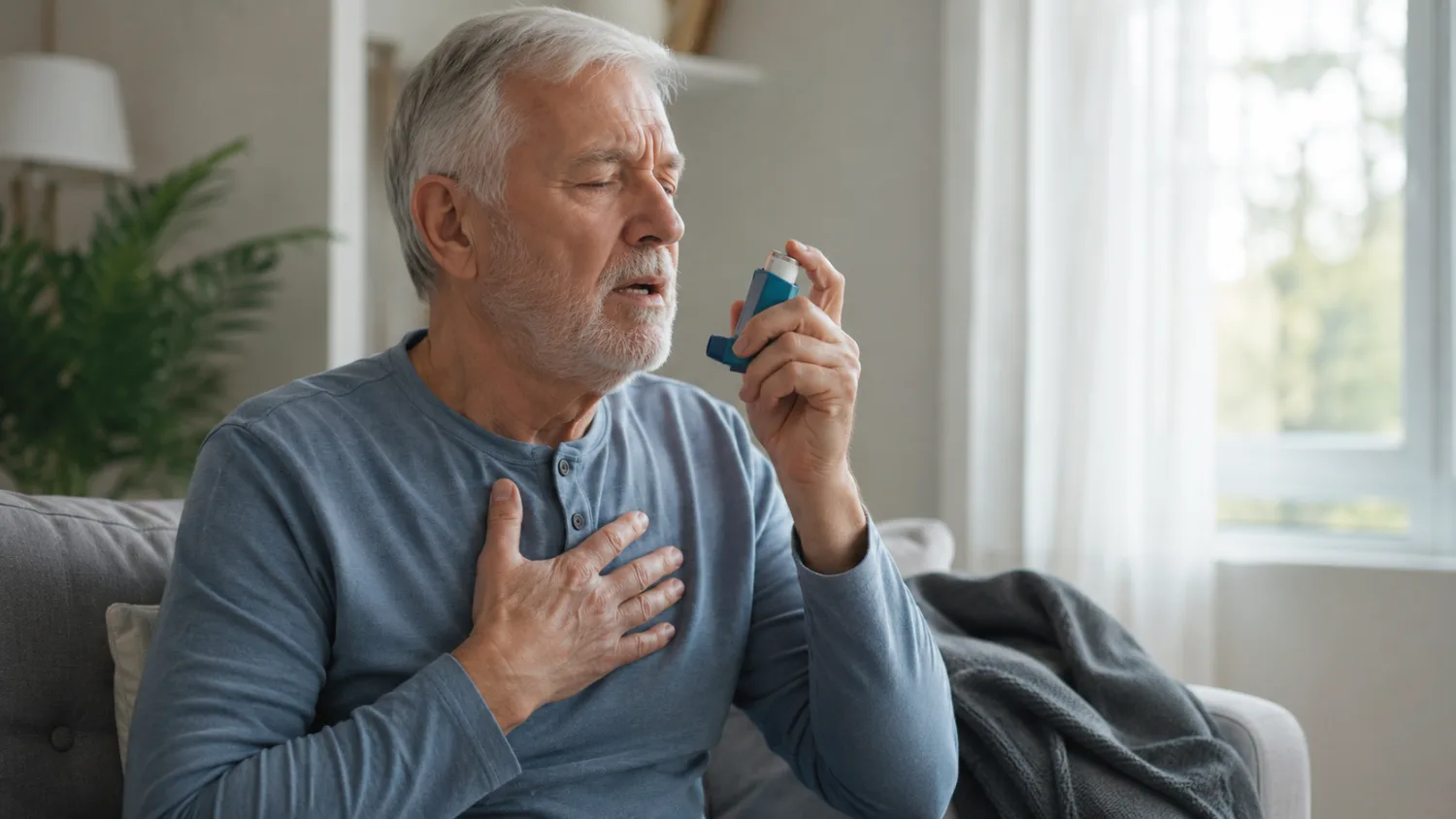
Chronic obstructive pulmonary disease, or COPD, is a long-term lung condition that makes it increasingly difficult to move air in and out of the lungs. It commonly causes breathlessness, a persistent chesty cough, phlegm, wheezing and repeated chest infections.
COPD develops gradually, often over many years. Early symptoms can be easy to dismiss as ageing, reduced fitness, a “smoker’s cough” or the after-effects of repeated winter infections. Some people unconsciously reduce how much they walk, climb stairs or carry before recognising that breathing has changed.
Smoking is the main cause in the UK, but it is not the only one. Workplace dusts and fumes, air pollution, previous lung damage and a rare inherited condition called alpha-1 antitrypsin deficiency can also contribute.
COPD cannot currently be cured, and established lung damage is usually permanent. However, stopping smoking, using the correct inhalers, attending pulmonary rehabilitation, remaining active and preventing flare-ups can make a substantial difference to symptoms, independence and future health.
A diagnosis should be supported by spirometry, a breathing test that measures airflow. Breathlessness and coughing have many other causes, including asthma, heart disease, anaemia, lung cancer, bronchiectasis and physical deconditioning.
Call 999 if you are severely breathless, unable to speak normally, becoming confused or unusually drowsy, have blue or grey lips, collapse, develop severe chest pain or are coughing up a significant amount of blood.
Seek urgent medical advice if breathing becomes much worse than usual, your reliever inhaler is not helping, you develop fever or feel seriously unwell, or your phlegm suddenly becomes much thicker, more abundant or changes colour.
Contact a GP promptly for unexplained weight loss, persistent coughing up blood, new chest pain, a cough lasting more than three weeks or a clear change in longstanding respiratory symptoms.
What is COPD?
COPD is an umbrella term for long-term lung conditions that cause persistent airflow obstruction.
It commonly involves a mixture of:
- chronic bronchitis, where the airways are inflamed and produce excessive mucus;
- emphysema, where the walls of the small air sacs are damaged and lose elasticity;
- narrowing and scarring of the smaller airways.
The balance differs from one person to another. Someone may have prominent phlegm and repeated infections, while another person mainly experiences breathlessness caused by emphysema.
What happens inside the lungs?
Healthy airways remain open as air moves in and out. In COPD:
- the airway lining becomes chronically inflamed;
- mucus glands may produce more phlegm;
- small airways become narrowed or scarred;
- damaged air sacs lose their normal springiness;
- air becomes trapped when breathing out.
This can make exhalation particularly difficult. A person may feel that they cannot empty the lungs before the next breath begins.
Why does COPD cause breathlessness?
Breathlessness can result from several mechanisms:
- narrowed airways increase the work of breathing;
- air trapping causes the lungs to remain overinflated;
- damaged air sacs transfer oxygen less efficiently;
- respiratory muscles work harder;
- reduced activity causes loss of fitness and muscle strength.
These factors can reinforce one another. Breathlessness leads to less activity, which causes deconditioning, which makes ordinary activity even more demanding.
Is COPD the same as emphysema?
No. Emphysema is one form or component of COPD.
A person may have:
- mainly emphysema;
- mainly chronic bronchitis and airway disease;
- a combination of both.
Is COPD the same as chronic bronchitis?
Not exactly.
Chronic bronchitis traditionally describes a productive cough lasting for at least three months in each of two consecutive years, after other causes have been excluded.
Someone can have chronic bronchitis without meeting spirometry criteria for COPD, and someone with COPD may produce very little phlegm.
Is COPD contagious?
No. COPD itself cannot be passed from one person to another.
Respiratory infections that trigger COPD flare-ups can be contagious.
Can COPD be cured?
There is currently no cure, and damaged lung tissue usually does not return to normal.
Treatment can still:
- slow further decline;
- reduce breathlessness;
- improve exercise capacity;
- reduce flare-ups;
- support independence;
- improve quality of life.
What are the symptoms of COPD?
COPD symptoms usually develop slowly and become more noticeable over time.
The most common symptoms are:
- shortness of breath;
- a persistent chesty cough;
- regular phlegm production;
- persistent wheezing;
- recurrent chest infections.
Breathlessness
Early breathlessness may occur only during:
- walking uphill;
- climbing stairs;
- carrying shopping;
- walking quickly;
- heavy physical work.
As COPD progresses, symptoms may occur during:
- ordinary walking;
- washing and dressing;
- housework;
- eating;
- talking;
- rest.
Breathlessness is not always proportional to spirometry results. Fitness, anxiety, heart disease, body weight, anaemia and muscle strength also affect how breathless someone feels.
A persistent chesty cough
The cough may be present every day or mainly in the morning.
People who smoke sometimes normalise a chronic cough and do not mention it to a GP. A persistent cough is not a harmless or inevitable feature of smoking.
Seek assessment if a cough:
- lasts longer than three weeks;
- changes from its usual pattern;
- is associated with blood;
- occurs with unexplained weight loss;
- is accompanied by persistent chest pain.
Phlegm or sputum
COPD can cause regular production of clear, white or grey phlegm.
A sudden change may indicate a flare-up or infection.
Report phlegm that becomes:
- yellow or green;
- rust-coloured;
- blood-stained;
- much thicker;
- more abundant than usual;
- unusually difficult to clear.
Wheezing
Wheezing is a whistling sound caused by narrowed airways.
It may occur:
- during exertion;
- during an infection;
- in cold weather;
- after exposure to smoke or fumes;
- throughout the day in more severe disease.
Wheezing also occurs in asthma and several other conditions, so it does not diagnose COPD by itself.
Frequent chest infections
People with COPD may experience repeated episodes of:
- increased coughing;
- more phlegm;
- fever;
- worsening breathlessness;
- reduced energy.
Some episodes are caused by viruses, some by bacteria and some by non-infectious triggers.
Chest tightness
Chest tightness can occur because the airways are narrowed and breathing muscles are working harder.
New chest pressure should not automatically be blamed on COPD, particularly when it:
- occurs with exertion;
- spreads to the arm, jaw or back;
- is accompanied by sweating or nausea;
- lasts more than a few minutes;
- feels different from usual breathing symptoms.
Fatigue
Fatigue can result from:
- the increased effort of breathing;
- poor sleep;
- repeated infections;
- low oxygen levels;
- reduced activity;
- muscle loss;
- anxiety or depression;
- another illness such as anaemia.
Weight loss and loss of muscle
Advanced COPD can increase the energy required for breathing while reducing appetite and activity.
This can cause:
- unintentional weight loss;
- reduced muscle strength;
- difficulty completing daily tasks;
- greater vulnerability to infections.
Unexplained weight loss also needs assessment for cancer, thyroid disease, digestive illness and other causes.
Swollen ankles
Swelling of the ankles or legs may occur when severe lung disease affects the heart and circulation.
It can also be caused by:
- heart failure;
- kidney disease;
- venous problems;
- medicines;
- blood clots.
Sudden one-sided leg swelling with pain, chest pain or worsening breathlessness requires urgent medical help.
What causes COPD?
COPD develops after long-term exposure to substances that damage the lungs, although individual susceptibility varies.
Smoking
Smoking is the main cause of COPD in the UK.
Cigarette smoke damages:
- the airway lining;
- the small hairs that clear mucus;
- the air sacs;
- the lungs’ defence against infection.
The NHS estimates that smoking is responsible for around nine in ten COPD cases.
Risk increases with:
- the number of years smoked;
- the number of cigarettes smoked daily;
- starting at a young age;
- individual genetic susceptibility.
Not every smoker develops COPD, and not everyone with COPD has smoked.
Second-hand smoke
Long-term exposure to other people’s tobacco smoke may increase COPD risk and worsen symptoms in someone who already has the condition.
Workplace dusts and fumes
Occupational exposure can contribute to COPD, particularly when combined with smoking.
Relevant exposures include:
- coal and silica dust;
- grain and flour dust;
- wood dust;
- welding fumes;
- diesel exhaust;
- chemical fumes;
- industrial vapours;
- construction dust.
Tell the clinician about past jobs, even if the exposure happened decades earlier.
Indoor and outdoor air pollution
Long-term air pollution exposure can contribute to lung damage.
Worldwide, smoke from indoor cooking and heating fuels is an important cause. In the UK, outdoor pollution can worsen symptoms and may contribute to risk over time.
Alpha-1 antitrypsin deficiency
Alpha-1 antitrypsin deficiency is a rare inherited condition that makes the lungs more vulnerable to damage.
It may be considered when:
- COPD develops unusually young;
- there is little or no smoking history;
- emphysema is severe or affects the lower lungs;
- several relatives have early lung or liver disease.
A blood test can measure alpha-1 antitrypsin levels.
Asthma and childhood lung development
Poor lung growth during childhood or longstanding poorly controlled asthma may increase the chance of persistent airflow obstruction later in life.
Possible contributors include:
- premature birth;
- childhood respiratory infections;
- maternal smoking;
- severe childhood asthma;
- environmental pollution.
Previous lung infections
Severe or repeated infections can damage the lungs, although COPD should not be assumed when another condition such as bronchiectasis may better explain recurrent infections and phlegm.
Vaping
Vaping is not established as a safe long-term activity for the lungs.
For smokers, switching completely from cigarettes to a regulated nicotine vape is likely to reduce exposure to many harmful combustion products. Continuing to smoke and vape provides less benefit than stopping cigarettes completely.
People with COPD should discuss smoking cessation options with a trained adviser rather than assuming vaping will treat established lung disease.
How is COPD diagnosed?
COPD should be considered in adults over 35 who have relevant symptoms and a risk factor such as smoking or occupational exposure.
Diagnosis is supported by spirometry showing persistent airflow obstruction.
Medical history
A clinician may ask about:
- breathlessness and what activities trigger it;
- cough and phlegm;
- chest infections;
- wheezing;
- smoking history;
- vaping;
- workplace exposure;
- childhood asthma;
- family history;
- weight loss;
- chest pain;
- the effect on daily life.
Examination
The clinician may check:
- breathing rate;
- oxygen saturation;
- chest sounds;
- heart rate;
- ankle swelling;
- weight and muscle loss;
- signs of another condition.
The examination can be normal in early COPD.
Spirometry
Spirometry measures:
- FEV1: the amount of air blown out during the first second;
- FVC: the total amount of air blown out after a full breath;
- the ratio between these measurements.
You breathe in fully and blow into a machine as hard and as long as possible.
A bronchodilator inhaler may be given before the test is repeated.
What confirms airflow obstruction?
NICE guidance uses a post-bronchodilator FEV1/FVC ratio below 0.7 to support persistent airflow obstruction in the correct clinical context.
The result must be interpreted alongside:
- age;
- symptoms;
- smoking and exposure history;
- other tests;
- possible alternative diagnoses.
A fixed ratio can sometimes overdiagnose obstruction in older adults and underdiagnose it in younger adults, so clinical interpretation matters.
Can spirometry be normal?
Someone with respiratory symptoms can have normal spirometry.
Possible explanations include:
- asthma that is inactive during testing;
- early smoking-related lung damage without established obstruction;
- heart disease;
- anaemia;
- deconditioning;
- obesity;
- another lung condition.
Normal spirometry means COPD should not simply be assumed.
Chest X-ray
A chest X-ray cannot confirm COPD on its own.
It may help identify or exclude:
- lung cancer;
- pneumonia;
- heart failure;
- lung scarring;
- another structural lung condition.
Some lung cancers do not show clearly on a basic chest X-ray, so persistent warning symptoms may need further investigation.
Blood tests
Blood tests may check for:
- anaemia;
- an unusually high red-cell count caused by chronic low oxygen;
- infection;
- kidney and liver function;
- alpha-1 antitrypsin deficiency;
- eosinophils, which may influence inhaler decisions.
Oxygen saturation and blood gases
A finger sensor measures oxygen saturation.
If oxygen is persistently low or disease is severe, an arterial blood-gas test may measure:
- oxygen;
- carbon dioxide;
- blood acidity.
CT scan
A CT scan may be used when:
- symptoms are more severe than spirometry suggests;
- lung cancer is suspected;
- bronchiectasis is possible;
- surgery or lung-volume treatment is being considered;
- the diagnosis remains uncertain.
ECG and heart tests
Breathlessness may be caused or worsened by heart disease.
Testing may include:
- ECG;
- BNP or NT-proBNP blood testing;
- echocardiography;
- ambulatory heart monitoring.
COPD, asthma or another cause of breathlessness?
COPD and asthma can both cause cough, wheezing and breathlessness, but they are not the same condition.
Typical COPD pattern
COPD is more likely when:
- symptoms began after age 35 or 40;
- there is a substantial smoking or exposure history;
- breathlessness is persistent and progressively worsening;
- a chronic productive cough is present;
- spirometry shows persistent obstruction after bronchodilator treatment.
Typical asthma pattern
Asthma is more likely when:
- symptoms began in childhood or early adulthood;
- symptoms vary markedly from day to day;
- night and early-morning symptoms are prominent;
- there is eczema, hay fever or allergy;
- airflow obstruction is more reversible;
- symptoms occur after specific triggers.
See our guide to asthma symptoms, causes and treatment.
Can someone have asthma and COPD?
Yes. Some people have clinical features of both conditions.
This can affect treatment because inhaled corticosteroids are particularly important when asthma is present.
Heart disease
Heart failure, coronary disease and abnormal rhythms can cause:
- breathlessness;
- reduced exercise tolerance;
- chest tightness;
- night-time symptoms;
- ankle swelling;
- fatigue.
COPD and cardiovascular disease commonly occur together.
Anaemia
Anaemia reduces the blood’s oxygen-carrying capacity and can cause:
- breathlessness;
- palpitations;
- dizziness;
- fatigue;
- reduced exercise capacity.
Bronchiectasis
Bronchiectasis causes widened, damaged airways and may produce:
- large amounts of daily phlegm;
- repeated infections;
- coughing up blood;
- crackling chest sounds.
Some people have both COPD and bronchiectasis.
Lung cancer
Symptoms that need investigation include:
- a new or changing cough;
- coughing up blood;
- unexplained weight loss;
- persistent chest or shoulder pain;
- new hoarseness;
- recurrent infection in the same part of the lung.
Anxiety and dysfunctional breathing
Anxiety can intensify breathlessness and cause rapid, inefficient breathing.
This does not mean COPD symptoms are imaginary.
A person may have both respiratory disease and anxiety, and both deserve appropriate treatment.
Physical deconditioning
Reduced activity causes loss of muscle efficiency, meaning the body requires more oxygen for the same task.
Pulmonary rehabilitation addresses this cycle directly.
How is COPD treated?
COPD treatment aims to:
- slow further lung damage;
- reduce breathlessness;
- improve activity and independence;
- reduce flare-ups;
- treat associated conditions;
- support quality of life.
The foundation of care includes smoking cessation, vaccination, inhaler optimisation, pulmonary rehabilitation and a personalised self-management plan.
Stopping smoking
For someone who smokes, stopping is the most important treatment.
Stopping cannot reverse established emphysema, but it can:
- slow further lung-function decline;
- reduce cardiovascular and cancer risk;
- reduce coughing and phlegm over time;
- improve response to some treatments;
- reduce exposure for family members.
Evidence-based help may include:
- behavioural support;
- nicotine-replacement products;
- varenicline where suitable and available;
- cytisine where offered;
- bupropion in selected cases;
- a regulated nicotine vape as a quitting aid for some adults.
Using behavioural support with medication is generally more effective than trying to stop without help.
Short-acting bronchodilator inhalers
Short-acting inhalers relax airway muscles and provide relatively rapid symptom relief.
These may include:
- a short-acting beta-2 agonist such as salbutamol;
- a short-acting muscarinic antagonist such as ipratropium.
They may be used when needed or as part of a flare-up plan.
Long-acting bronchodilator inhalers
Long-acting bronchodilators keep the airways more open over many hours.
Main groups include:
- LABAs: long-acting beta-2 agonists;
- LAMAs: long-acting muscarinic antagonists.
They may be used individually or together in a combination inhaler.
When is a LAMA–LABA combination used?
A dual bronchodilator may be offered when:
- breathlessness continues;
- exercise remains limited;
- one long-acting inhaler is insufficient;
- there are no strong features suggesting steroid-responsive disease.
Inhaled corticosteroids
Inhaled corticosteroids reduce inflammation but are not suitable for every person with COPD.
They are usually combined with long-acting bronchodilators rather than used alone.
They may be considered when:
- frequent flare-ups continue;
- blood eosinophils are raised;
- there are features of asthma;
- the expected benefit outweighs infection risk.
Triple therapy
Triple inhaler treatment combines:
- a LAMA;
- a LABA;
- an inhaled corticosteroid.
It may be used for people with continuing symptoms or repeated exacerbations despite dual therapy, depending on clinical features and eosinophil results.
Risks of inhaled corticosteroids
Possible risks include:
- oral thrush;
- hoarse voice;
- bruising;
- increased pneumonia risk in some people.
Use the inhaler exactly as instructed and rinse and spit after steroid doses.
Inhaler technique
An inhaler cannot work properly if little medicine reaches the lungs.
Technique should be checked:
- when treatment starts;
- at routine reviews;
- after flare-ups;
- when symptoms remain uncontrolled;
- when a device changes.
Spacers
A spacer can improve delivery from a pressurised metered-dose inhaler and make coordination easier.
It may also reduce the amount of steroid left in the mouth.
Mucolytic medicines
A mucolytic such as carbocisteine may be considered when thick sputum is a persistent problem.
It can make mucus easier to cough up but is not useful for everyone.
Antibiotics for prevention
Long-term antibiotic treatment, such as azithromycin, is reserved for selected people with frequent flare-ups despite optimised care.
Specialist assessment may include:
- ECG;
- hearing assessment;
- sputum testing;
- review of antibiotic resistance;
- exclusion of bronchiectasis or another infection problem.
Roflumilast
Roflumilast is an oral anti-inflammatory medicine for selected people with severe COPD, chronic bronchitis and repeated exacerbations despite inhaled treatment.
Possible side effects include:
- diarrhoea;
- nausea;
- weight loss;
- sleep disturbance;
- mood effects.
Pulmonary rehabilitation, exercise and everyday management
Pulmonary rehabilitation is one of the most effective COPD treatments for improving breathlessness, exercise capacity and quality of life.
It combines supervised exercise with education and self-management support.
Who is pulmonary rehabilitation for?
It is commonly offered when breathlessness limits ordinary activity.
It is particularly valuable:
- after a hospital admission for a flare-up;
- when walking ability has declined;
- when fear of breathlessness reduces activity;
- when muscle weakness is present.
What happens during the programme?
A programme may include:
- walking or cycling;
- strength exercises;
- breathing techniques;
- inhaler education;
- nutrition advice;
- flare-up planning;
- support with anxiety and breathlessness.
Why exercise helps when the lungs are damaged
Exercise does not repair emphysema, but it improves how efficiently the rest of the body uses oxygen.
Stronger muscles require less effort for ordinary tasks, reducing the sensation of breathlessness.
The breathlessness–inactivity cycle
A common cycle is:
- activity causes breathlessness;
- the person avoids activity;
- muscles become weaker;
- the same activity requires more effort;
- breathlessness worsens;
- activity reduces further.
Pulmonary rehabilitation helps break this cycle safely.
Pursed-lip breathing
Pursed-lip breathing involves:
- breathing in gently through the nose;
- breathing out slowly through narrowed lips, as though blowing out a candle;
- making the outward breath longer than the inward breath.
This may help keep small airways open for longer and reduce air trapping.
Paced breathing
Coordinate breathing with activity.
For example:
- breathe in before standing;
- breathe out while standing up;
- use a steady rhythm while climbing stairs;
- breathe out during the hardest part of lifting.
NHS living-with-COPD guidance includes pursed-lip and paced breathing as useful techniques.
Clearing phlegm
A respiratory physiotherapist may teach the active cycle of breathing technique.
This combines:
- breathing control;
- deep breaths;
- forced expiration or “huffing”;
- controlled coughing.
Repeated harsh coughing can be exhausting and less effective than a structured technique.
Nutrition
Some people with COPD lose weight, while others gain weight because activity becomes difficult.
Nutrition support may focus on:
- adequate protein;
- maintaining muscle;
- smaller frequent meals;
- avoiding large meals that worsen breathlessness;
- dietitian referral;
- weight management where appropriate.
Vaccination
People with COPD are commonly advised to receive:
- annual flu vaccination;
- COVID vaccination according to current eligibility;
- pneumococcal vaccination;
- other age- or risk-based vaccinations.
Vaccination can reduce the risk of infections that trigger serious exacerbations.
Air pollution and weather
Symptoms may worsen during:
- cold weather;
- heatwaves;
- high pollution;
- wildfire or wood smoke;
- high pollen or mould exposure where allergy coexists.
Use local air-quality information and adjust outdoor activity when pollution is severe.
COPD flare-ups and chest infections
A COPD flare-up, also called an exacerbation, is a sustained worsening beyond normal day-to-day variation.
It may be triggered by:
- a viral infection;
- a bacterial infection;
- air pollution;
- cold weather;
- poor inhaler use;
- another illness;
- sometimes no clear cause.
Signs of a flare-up
Possible warning signs include:
- greater breathlessness;
- more coughing;
- more phlegm;
- thicker phlegm;
- yellow or green phlegm;
- more wheezing;
- chest tightness;
- fever;
- reduced ability to walk or complete normal tasks.
Use a COPD action plan
A written plan may explain:
- your normal symptoms;
- early flare-up signs;
- how to increase reliever treatment;
- when to contact the GP or respiratory team;
- when to use rescue medicines;
- when to call 999.
Rescue packs
Some people with established COPD and repeated exacerbations are given a rescue pack containing:
- a short course of steroid tablets;
- antibiotics where clinically appropriate.
Rescue packs should be used only according to an agreed plan.
Starting antibiotics for every cough can cause side effects and antimicrobial resistance.
When are antibiotics used?
Antibiotics may be considered when bacterial infection is likely, particularly when sputum becomes more purulent or symptoms are more severe.
They do not treat viral infections.
Steroid tablets
A short course of prednisolone may reduce airway inflammation during a significant flare-up.
Possible short-term side effects include:
- insomnia;
- indigestion;
- mood change;
- raised blood glucose;
- increased appetite.
Repeated courses increase risks including osteoporosis, diabetes, cataracts and infection.
When is hospital treatment needed?
Hospital assessment may be needed when:
- breathlessness is severe;
- oxygen is very low;
- carbon dioxide is rising;
- confusion or drowsiness develops;
- the person cannot eat, drink or manage at home;
- there is significant heart disease;
- home treatment has failed;
- pneumonia, a blood clot or another emergency is suspected.
Non-invasive ventilation
During a severe exacerbation, carbon dioxide may build up because the lungs cannot ventilate effectively.
Non-invasive ventilation uses a tight-fitting mask to support breathing and can reduce the need for invasive mechanical ventilation.
Follow-up after a flare-up
A review should consider:
- the trigger;
- inhaler technique;
- medicine adherence;
- whether treatment needs changing;
- smoking support;
- pulmonary rehabilitation;
- vaccination;
- whether another diagnosis contributed.
Oxygen therapy and treatment for advanced COPD
Oxygen therapy is not a general treatment for breathlessness.
It is prescribed when tests show that blood oxygen remains sufficiently low.
Long-term oxygen therapy
Long-term oxygen therapy may be recommended for selected people with persistent resting hypoxaemia.
Assessment usually requires:
- oxygen-saturation measurements;
- arterial blood gases;
- stable disease rather than an acute infection;
- repeat testing where appropriate.
When prescribed, it may need to be used for at least 15 hours daily to provide survival benefit.
Why oxygen can be dangerous when used incorrectly
Some people with advanced COPD retain carbon dioxide.
Uncontrolled high-flow oxygen can worsen carbon-dioxide retention in susceptible patients.
Use only the prescribed:
- flow rate;
- device;
- number of hours;
- target oxygen range.
Smoking and home oxygen
Smoking near oxygen creates a major fire and burn risk.
Oxygen supports combustion, meaning cigarettes, candles, gas flames and sparks become much more dangerous.
Ambulatory oxygen
Portable oxygen may be considered when oxygen levels fall substantially during activity and testing shows a meaningful benefit.
It is not automatically prescribed simply because someone becomes breathless while walking.
Breathlessness despite normal oxygen
Someone can feel extremely breathless while oxygen saturation remains normal.
Management may include:
- pulmonary rehabilitation;
- breathing techniques;
- handheld fan use;
- activity pacing;
- treating anxiety;
- optimising inhalers;
- addressing anaemia or heart disease.
Lung-volume reduction
Selected people with severe emphysema may be assessed for:
- endobronchial valves;
- lung-volume-reduction surgery;
- other specialist procedures.
These treatments remove or isolate the most damaged areas so healthier lung regions can work more efficiently.
Lung transplant
A lung transplant may be considered for a very small number of carefully selected people with advanced disease.
Factors include:
- age;
- overall health;
- smoking status;
- other organ function;
- likely benefit;
- ability to manage lifelong anti-rejection treatment.
Palliative and supportive care
Palliative care is not limited to the final days of life.
It can help manage:
- persistent breathlessness;
- anxiety;
- fatigue;
- sleep difficulty;
- future-care planning;
- support for family and carers.
Living with COPD and reducing future risk
COPD affects more than breathing. Good care should include cardiovascular health, mental wellbeing, nutrition, mobility and social support.
Attend regular reviews
A COPD review may include:
- symptom control;
- flare-up frequency;
- smoking status;
- inhaler technique;
- oxygen saturation;
- weight;
- exercise capacity;
- vaccinations;
- mental health;
- other medical conditions.
Check inhaler technique every time the device changes
Different inhalers require different breathing patterns.
A person may need:
- a slow, deep inhalation for an aerosol device;
- a faster, stronger breath for a dry-powder inhaler;
- a spacer;
- a device that is easier to load or grip.
Stay active
Useful activities may include:
- walking;
- cycling;
- strength training;
- chair-based exercise;
- pulmonary rehabilitation exercises;
- gardening and everyday movement.
The right amount causes manageable breathlessness that settles with rest, not severe distress.
Plan demanding activities
Strategies include:
- breaking tasks into stages;
- sitting for washing or food preparation;
- keeping commonly used items within easy reach;
- resting before becoming exhausted;
- breathing out during effort;
- using mobility aids when appropriate.
Anxiety and depression
Breathlessness can cause fear, while loss of independence can contribute to depression.
Symptoms may include:
- avoiding activity because of panic;
- loss of interest;
- persistent hopelessness;
- social withdrawal;
- poor sleep;
- difficulty following treatment.
Psychological treatment, pulmonary rehabilitation, medication and peer support may help.
Driving
Many people with COPD can drive safely.
Seek medical advice if you experience:
- blackouts;
- severe daytime sleepiness;
- confusion;
- very low oxygen;
- symptoms that interfere with controlling the vehicle.
Flying
Cruise-cabin oxygen levels are lower than at ground level.
People with severe COPD, low resting oxygen or recent flare-ups may need a fitness-to-fly assessment.
Airlines usually require advance arrangements for oxygen or an approved portable concentrator.
Travel preparation
Carry:
- inhalers in hand luggage;
- enough medicine for delays;
- a current medication list;
- the action plan;
- travel insurance covering COPD;
- oxygen documentation where needed.
Cardiovascular risk
Smoking and chronic inflammation increase the risk of:
- heart attack;
- stroke;
- peripheral arterial disease;
- heart failure.
Blood pressure, cholesterol, diabetes risk and activity should be reviewed alongside lung health.
Lung cancer risk
People with COPD, particularly those with a smoking history, have increased lung-cancer risk.
Eligible current and former smokers may be invited for an NHS targeted lung health check or lung-cancer screening programme depending on age, smoking history and local rollout.
Frequently asked questions about COPD
What does COPD stand for?
Chronic obstructive pulmonary disease.
What is the main symptom of COPD?
Gradually worsening breathlessness is one of the main symptoms, often alongside a persistent cough, phlegm and wheezing.
What are the early signs?
Early signs may include getting breathless on hills or stairs, a persistent morning cough, regular phlegm and repeated winter chest infections.
Can COPD begin without symptoms?
Yes. Lung damage can develop before symptoms become obvious, particularly when activity has gradually reduced.
Can you have COPD without coughing?
Yes. Some people mainly experience breathlessness and produce little phlegm.
Can you have COPD without smoking?
Yes. Workplace exposure, pollution, impaired lung development and alpha-1 antitrypsin deficiency are possible causes.
Does every smoker develop COPD?
No. Individual susceptibility varies, but smoking substantially increases risk.
Can passive smoking cause COPD?
Long-term second-hand-smoke exposure may contribute to risk and can worsen existing disease.
Is vaping safe with COPD?
Vaping is not harmless to the lungs. For a smoker, switching completely may be less harmful than continuing cigarettes, but stopping inhaled nicotine products is preferable where achievable.
Is COPD hereditary?
Most COPD is not inherited directly, although genetic susceptibility matters. Alpha-1 antitrypsin deficiency is a recognised inherited cause.
What is emphysema?
Emphysema is damage to the walls of the lung’s air sacs, reducing elasticity and surface area for gas exchange.
What is chronic bronchitis?
It describes chronic airway inflammation with a persistent productive cough over a defined period.
Is COPD the same as asthma?
No. Asthma usually has more variable and reversible airway narrowing, while COPD causes persistent obstruction related to long-term lung damage.
Can you have asthma and COPD?
Yes. Some people have features of both, which can influence inhaler treatment.
How is COPD diagnosed?
Diagnosis is based on symptoms and risk factors, supported by post-bronchodilator spirometry.
Can a chest X-ray diagnose COPD?
No. It can show emphysema or another condition but cannot confirm airflow obstruction.
What does spirometry involve?
You breathe in fully and blow into a machine as hard and for as long as possible.
What does FEV1 mean?
It is the amount of air blown out during the first second of forced exhalation.
What does FVC mean?
It is the total amount of air forcefully blown out after a full breath.
What does an FEV1/FVC below 0.7 mean?
After bronchodilator treatment, it supports persistent airflow obstruction when interpreted with symptoms and clinical history.
Can COPD be reversed?
Established structural damage is generally permanent, but symptoms and fitness can improve significantly with treatment.
Can COPD be cured?
There is currently no cure.
Can stopping smoking still help after diagnosis?
Yes. It is the most important action for slowing further damage.
Will coughing become worse after stopping smoking?
Coughing may temporarily increase as airway-clearing function begins to recover, but it generally improves with time.
What inhalers are used for COPD?
Treatment may include short-acting relievers, long-acting bronchodilators, dual LAMA–LABA inhalers and selected steroid-containing combinations.
Are COPD inhalers the same as asthma inhalers?
Some medicines overlap, but treatment priorities and steroid use differ.
Why am I not prescribed a steroid inhaler?
Inhaled steroids do not benefit every COPD patient and can increase pneumonia risk. They are targeted to people more likely to benefit.
What is triple therapy?
It combines a LAMA, LABA and inhaled corticosteroid.
Can inhalers improve lung function?
They can open the airways and improve symptoms, but they do not restore destroyed lung tissue.
Why is inhaler technique important?
Incorrect technique may mean very little medicine reaches the lungs.
What is pulmonary rehabilitation?
It is a structured exercise and education programme designed for people with chronic lung disease.
Does pulmonary rehabilitation work?
Yes. It can improve exercise capacity, breathlessness and quality of life and reduce readmission risk after flare-ups.
Should I avoid exercise?
No. Appropriate exercise is an important part of treatment unless a clinician advises otherwise.
Why do I become breathless even when oxygen is normal?
Breathlessness also results from air trapping, muscle effort, deconditioning and anxiety, not only low oxygen.
Does everyone with COPD need oxygen?
No. Oxygen is prescribed only when testing confirms sufficiently low blood oxygen or another specific need.
Can oxygen cure breathlessness?
It helps when oxygen levels are low but may not relieve breathlessness caused mainly by air trapping or deconditioning.
Can too much oxygen be harmful?
Yes. In some people with advanced COPD it can worsen carbon-dioxide retention.
What is a COPD flare-up?
It is a sustained worsening of breathlessness, cough or sputum beyond normal daily variation.
What usually triggers a flare-up?
Viral or bacterial infection, pollution, cold weather and poor inhaler use are common triggers.
Does green phlegm always require antibiotics?
No. Colour is one factor among several. Antibiotic decisions depend on symptoms, severity and medical assessment.
What is a rescue pack?
It is a prescribed supply of steroid tablets and sometimes antibiotics for selected people to use according to a written flare-up plan.
When should I call 999?
Call for severe breathlessness, inability to speak, confusion, blue or grey colouring, collapse, severe chest pain or significant coughing up of blood.
Can COPD cause chest pain?
Breathing-muscle strain can cause discomfort, but new chest pain requires assessment for heart disease, blood clots, infection and other causes.
Can COPD cause dizziness?
It can occur with low oxygen, carbon-dioxide retention, coughing, medicines or another condition.
Can COPD cause headaches?
Morning headaches may occasionally indicate overnight carbon-dioxide retention or sleep-related breathing problems.
Can COPD cause swollen legs?
Advanced lung disease can affect the heart, but swelling also has many other causes.
Can COPD cause weight loss?
Yes, particularly in advanced disease. Unexplained loss still needs investigation.
Can COPD cause weight gain?
Reduced activity and steroid treatment can contribute, while fluid retention may cause rapid weight increase.
Can COPD affect sleep?
Yes. Cough, breathlessness, low oxygen, sleep apnoea and anxiety may disrupt sleep.
Can COPD cause anxiety?
Yes. Breathlessness can be frightening, and anxiety can then intensify breathing discomfort.
Can I fly with COPD?
Many people can, but those with severe disease or low oxygen may need a pre-flight assessment and arranged oxygen.
Can cold weather worsen COPD?
Yes. Cold air and respiratory infections often worsen symptoms.
Should I have the flu jab?
People with COPD are generally advised to receive annual flu vaccination.
Should I have a pneumococcal vaccine?
It is commonly recommended because pneumococcal infection can cause serious pneumonia.
Can COPD turn into lung cancer?
COPD does not turn into cancer, but the conditions share risk factors and can occur together.
How long can someone live with COPD?
Life expectancy varies widely according to smoking, lung function, flare-ups, fitness, weight, oxygen levels and other health conditions. A diagnosis alone cannot predict an individual lifespan.
Can people live well with COPD?
Yes. Many people remain active for years with effective treatment, rehabilitation and smoking cessation.
When should I see a GP?
Arrange an assessment for persistent breathlessness, a longstanding chesty cough, regular phlegm, wheezing or recurrent chest infections—particularly with smoking or workplace exposure.