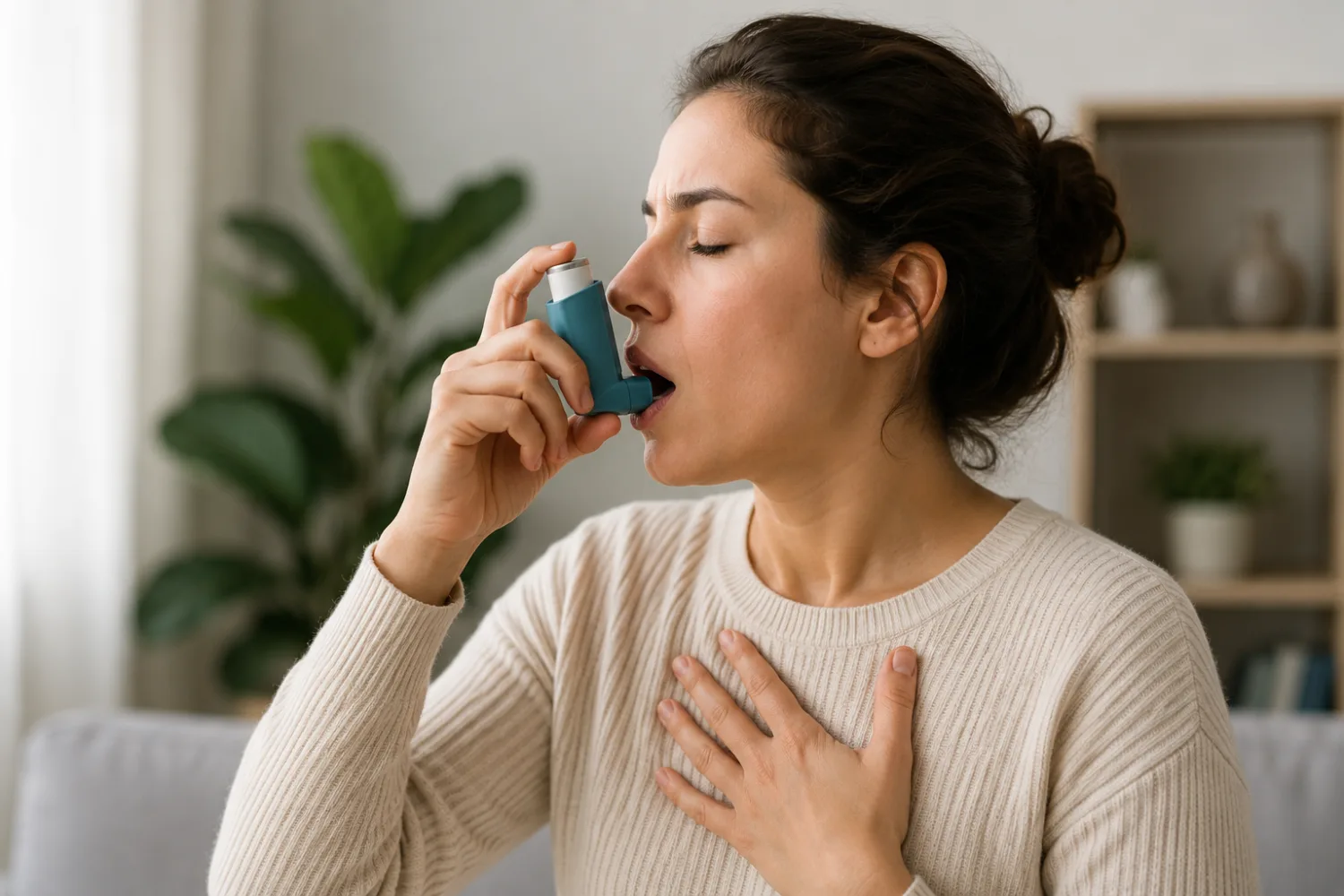
Asthma is a long-term condition in which the airways become inflamed, sensitive and temporarily narrower, making it harder to breathe. It commonly causes wheezing, coughing, chest tightness and shortness of breath. Symptoms may come and go, vary throughout the year or become suddenly severe during an asthma attack.
Some people experience only occasional symptoms, perhaps during exercise or the pollen season. Others need daily treatment to prevent night waking, breathlessness and serious flare-ups. Even asthma described as “mild” can cause a severe attack, so treatment is based not only on everyday symptoms but also on future risk.
Asthma can begin at any age. It often starts in childhood, but adults can develop it for the first time, including people who have never previously wheezed.
Diagnosis should not usually be based on symptoms alone. Wheezing and breathlessness can also be caused by infection, chronic obstructive pulmonary disease, heart disease, anxiety, vocal-cord problems and several other conditions. Lung-function and inflammation tests help confirm whether asthma is the most likely explanation.
With the right inhaler, good technique, trigger management and a written asthma action plan, most people should be able to exercise, sleep and manage ordinary activities without regular symptoms.
Call 999 during an asthma attack if you are getting worse at any point, your reliever inhaler is not helping, you are too breathless to speak normally, your lips look blue or grey, you feel exhausted or confused, or you do not improve after the maximum emergency doses stated in your asthma action plan.
If you use a blue reliever inhaler, NHS advice during an attack is generally to sit upright and take one puff every 30 to 60 seconds, shaking the inhaler between puffs and using a spacer where available, up to a maximum of 10 puffs. Call 999 if you worsen or are not better after 10 puffs.
If you use an AIR or MART inhaler as your reliever, follow the instructions in your personal asthma action plan. NHS guidance commonly advises one puff every one to three minutes, up to six puffs, before calling 999 if there is no improvement.
If an ambulance has not arrived after 10 minutes and symptoms remain severe, repeat the emergency inhaler instructions in your action plan and call 999 again.
What is asthma?
Air travels through branching tubes called airways before reaching the small air sacs in the lungs.
In asthma, the airway lining is inflamed and unusually sensitive. When symptoms are triggered:
- muscles around the airways tighten;
- the airway lining becomes more swollen;
- mucus may increase;
- less space remains for air to move through.
This narrowing is usually variable and at least partly reversible. The airways may be relatively normal between episodes and much narrower during a flare-up.
Asthma is more than airway tightening
A reliever inhaler can relax the muscles around the airways, but it does not adequately treat the underlying inflammation when used alone.
This is why modern treatment places greater emphasis on inhaled corticosteroids, either:
- taken regularly as a preventer;
- included within an anti-inflammatory reliever inhaler;
- used in a MART combination inhaler for both maintenance and symptom relief.
Can asthma be cured?
There is currently no guaranteed cure.
Symptoms may become absent for long periods, particularly after childhood asthma, but the tendency can return later.
Good control means asthma causes:
- little or no daytime symptoms;
- no night waking;
- no avoidable limitation of activity;
- little need for extra reliever treatment;
- no attacks;
- normal or near-normal lung function where possible.
Is asthma always severe?
No. Asthma varies from occasional symptoms to difficult-to-control disease requiring specialist treatment.
However, the label “mild asthma” can be misleading. Someone with infrequent symptoms can still experience a dangerous attack after a viral infection, allergen exposure or another trigger.
Asthma in children
Asthma commonly begins in childhood, but diagnosing very young children can be difficult because:
- they cannot reliably complete breathing tests;
- viral wheezing is common;
- symptoms may change as the lungs develop;
- several childhood conditions can cause noisy breathing.
Children under five may be offered a monitored trial of treatment, with objective testing attempted when they are old enough.
Adult-onset asthma
Asthma can first appear during adulthood.
Possible contributors include:
- allergies;
- workplace exposure;
- viral infections;
- hormonal change;
- smoking or air pollution;
- obesity;
- certain medicines.
New wheezing in an adult should be assessed rather than assumed to be asthma, particularly in someone who smokes or has heart symptoms.
What are the symptoms of asthma?
The four classic symptoms are:
- wheezing;
- coughing;
- shortness of breath;
- chest tightness.
Not everyone experiences all four.
Wheezing
Wheezing is a high-pitched whistling sound, commonly heard while breathing out.
It may be:
- quiet and noticeable only through a stethoscope;
- loud enough for other people to hear;
- present only during exercise or illness;
- absent during a severe attack when very little air is moving.
Wheeze can also occur with:
- viral infections;
- COPD;
- allergic reactions;
- inhaled foreign objects;
- heart failure;
- vocal-cord dysfunction.
Cough
An asthma cough may be:
- dry;
- worse at night;
- worse early in the morning;
- triggered by exercise;
- triggered by cold air;
- persistent after a respiratory infection.
Some people have cough-predominant asthma with little obvious wheezing.
A persistent cough also has many other possible causes, including reflux, postnasal drip, smoking, infection and medicine side effects.
Shortness of breath
Asthma breathlessness may feel like:
- difficulty getting enough air;
- breathing faster than usual;
- becoming breathless sooner during activity;
- needing to pause while speaking;
- being unable to take a satisfying breath.
Breathlessness that is new, severe or associated with chest pain, fainting or a very irregular heartbeat needs urgent assessment.
Chest tightness
People may describe:
- a band around the chest;
- pressure;
- heaviness;
- difficulty expanding the chest;
- a feeling that the lungs cannot empty properly.
Asthma can cause tightness, but chest pressure should not automatically be attributed to asthma, particularly when it occurs during exertion or alongside sweating, nausea or pain spreading to the arm, jaw or back.
Symptoms at night
Waking because of coughing, wheezing, chest tightness or breathlessness is a sign that asthma is not adequately controlled.
Night symptoms may be worsened by:
- dust mites;
- pets in the bedroom;
- cold air;
- reflux;
- poor adherence to preventer treatment;
- an incorrect diagnosis such as sleep apnoea.
Symptoms during exercise
Exercise can trigger airway narrowing, especially in cold, dry air.
Possible symptoms include:
- coughing after running;
- wheezing during sport;
- chest tightness;
- unusually slow recovery;
- avoiding activity because breathing feels uncomfortable.
Regular exercise should normally be possible when asthma is well controlled. Repeated exercise symptoms suggest treatment or inhaler technique needs review.
What causes asthma?
Asthma does not have one single cause.
It develops through a combination of genetic susceptibility, immune-system behaviour, airway development and environmental exposure.
Family history
Asthma and allergic conditions often run in families.
Risk may be higher when close relatives have:
- asthma;
- eczema;
- hay fever;
- food allergy;
- other atopic conditions.
Having an affected parent does not mean a child will definitely develop asthma.
Allergic tendency
Many people with asthma also have allergies.
The immune system may react strongly to otherwise harmless substances such as:
- pollen;
- dust mites;
- animal dander;
- mould;
- cockroach particles.
This is often described as allergic or atopic asthma.
Respiratory infections
Viral infections can:
- trigger childhood wheezing;
- bring out previously unrecognised asthma;
- cause severe flare-ups in established asthma;
- leave the airways sensitive for weeks.
Common colds are among the most frequent asthma-attack triggers.
Smoking and second-hand smoke
Tobacco smoke irritates the airways and is associated with:
- worse symptoms;
- more attacks;
- reduced response to inhaled corticosteroids;
- faster decline in lung function;
- greater risk of COPD.
Children exposed to smoke are more likely to wheeze and develop respiratory problems.
Air pollution
Traffic pollution, particulate matter, ozone, wood smoke and workplace fumes can trigger symptoms and may contribute to asthma development in susceptible people.
Pollution is rarely the only cause, but it can make control more difficult.
Obesity
Asthma is more common and sometimes harder to control in people living with obesity.
Breathlessness may also be caused by:
- reduced fitness;
- sleep apnoea;
- reflux;
- cardiovascular disease.
These conditions can coexist with asthma and may need separate treatment.
Hormonal factors
Asthma symptoms can change around:
- puberty;
- menstrual cycles;
- pregnancy;
- menopause.
Some adults first develop asthma during or after major hormonal transitions.
Occupational asthma
Workplace substances can cause asthma or worsen existing disease.
Higher-risk exposures include:
- flour and bakery dust;
- wood dust;
- isocyanates used in paints and foams;
- laboratory animals;
- cleaning chemicals;
- hairdressing products;
- metal fumes;
- latex;
- industrial enzymes.
Clues include symptoms that:
- begin after starting a new job;
- worsen during shifts;
- improve at weekends;
- improve during holidays;
- affect colleagues with similar exposure.
Early assessment matters because continuing exposure can lead to persistent asthma even after the job changes.
Common asthma triggers
A trigger is something that provokes symptoms in someone whose airways are already susceptible.
A trigger does not necessarily explain why the person developed asthma.
Pollen
Tree, grass and weed pollen can worsen asthma during particular seasons.
People may also experience:
- sneezing;
- itchy eyes;
- blocked or runny nose;
- itchy throat.
Treating hay fever can improve asthma control in some people.
Dust mites
Dust mites live in bedding, carpets and soft furnishings.
It is impossible to remove them completely. Practical steps may include:
- washing bedding regularly at a suitable temperature;
- reducing damp;
- vacuuming with an effective filter;
- considering allergen-proof bedding covers where appropriate.
Expensive environmental products are not a substitute for effective inhaled treatment.
Animals
Triggers come from proteins in animal:
- skin flakes;
- saliva;
- urine;
- fur contamination.
There is no completely hypoallergenic dog or cat.
Keeping a pet out of the bedroom may reduce exposure, but allergens can remain in the home for a long time.
Mould and damp
Mould spores can trigger symptoms, while damp housing is associated with poorer respiratory health.
The underlying moisture problem should be addressed rather than repeatedly cleaning visible mould without fixing the cause.
Cold air and weather
Cold, dry air can irritate the airways.
Covering the nose and mouth with a loose scarf and breathing through the nose may help during cold-weather activity.
Thunderstorms can also concentrate and break pollen into smaller particles, occasionally triggering severe community outbreaks of asthma.
Exercise
Exercise is a trigger for some people, but avoiding activity is not usually the answer.
Regular preventer or combination inhaler treatment reduces airway inflammation and makes exercise safer and more comfortable.
Smoke, fumes and strong smells
Symptoms may be triggered by:
- cigarette smoke;
- vaping aerosols;
- wood-burning smoke;
- perfume;
- paint fumes;
- cleaning sprays;
- candles and incense;
- air pollution.
Stress and strong emotion
Stress does not mean asthma is imaginary.
Strong emotion can change breathing patterns and trigger airway symptoms. Laughing, crying and panic may also provoke coughing or tightness.
Anxiety and asthma can coexist. Breathlessness should not automatically be labelled anxiety without checking respiratory control.
See our guide to anxiety symptoms and treatment options.
Medicines
Some medicines can worsen asthma, including:
- aspirin and other anti-inflammatory painkillers in susceptible people;
- non-selective beta blockers;
- beta-blocker eye drops;
- occasionally other medicines through allergic reactions.
Propranolol is a non-selective beta blocker and is generally contraindicated in people with asthma or a history of bronchospasm. See our guide to propranolol uses and safety precautions.
Food allergy and sulphites
Food allergy can trigger asthma as part of a severe allergic reaction.
Some people also react to sulphites in foods or drinks.
Wheezing with lip, tongue or throat swelling, widespread hives, faintness or collapse may represent anaphylaxis and requires emergency treatment.
How is asthma diagnosed?
Asthma diagnosis combines a suggestive history with objective evidence of variable airway narrowing or inflammation.
A person should not normally remain on long-term asthma treatment solely because they once wheezed during an infection.
Medical history
A clinician may ask:
- which symptoms occur;
- when they began;
- whether they vary over time;
- whether they are worse at night or early morning;
- whether exercise, infection, animals or pollen trigger them;
- whether there is eczema, hay fever or family history;
- about smoking and vaping;
- about work exposures;
- whether inhalers have helped;
- about emergency visits or previous attacks.
Examination
The lungs may sound normal between episodes.
The clinician may also check for:
- wheezing;
- nasal allergy;
- eczema;
- signs of infection;
- heart problems;
- other explanations for breathlessness.
FeNO testing
Fractional exhaled nitric oxide, or FeNO, measures nitric oxide in exhaled breath.
A raised result can support the presence of eosinophilic airway inflammation and predict response to inhaled corticosteroids.
A normal result does not always rule out asthma, particularly when:
- the person already uses steroids;
- symptoms are intermittent;
- the asthma type is not strongly eosinophilic.
Spirometry
Spirometry measures:
- how much air you can blow out;
- how quickly you can empty the lungs.
You take a full breath and blow as hard and fast as possible into the machine.
The test can identify obstructed airflow but may be normal when asthma is well controlled or inactive.
Bronchodilator reversibility
Spirometry may be repeated after using a bronchodilator inhaler.
A significant improvement supports variable airway narrowing consistent with asthma.
Peak expiratory flow
A peak-flow meter records how quickly air can be blown out.
You may be asked to record readings:
- morning and evening;
- before and after work;
- during symptoms;
- before and after reliever treatment.
Large variation over time may support asthma.
The most useful comparison is often with your own personal best rather than a single population number.
Bronchial challenge testing
If symptoms strongly suggest asthma but routine tests are inconclusive, a specialist may perform a challenge test.
This measures how the airways respond to:
- methacholine or another inhaled substance;
- exercise;
- another controlled trigger.
Allergy testing
Skin-prick or blood testing may help identify allergic sensitisation.
A positive result means the immune system recognises the allergen. It does not automatically prove that the substance causes every asthma symptom.
Chest X-ray
An X-ray does not diagnose asthma.
It may be used when the clinician suspects:
- infection;
- another lung condition;
- a structural problem;
- heart failure;
- an inhaled foreign object.
Asthma inhalers and medicines
Asthma treatment is personalised according to age, symptoms, attack history, test results and response.
The goal is to use the lowest treatment level that maintains good control and prevents attacks.
Inhaled corticosteroids
Inhaled corticosteroids reduce airway inflammation.
Examples include:
- beclometasone;
- budesonide;
- fluticasone;
- mometasone.
They may be delivered:
- as a separate daily preventer;
- combined with a long-acting bronchodilator;
- within an AIR or MART inhaler.
They do not work in the same way as anabolic steroids and usually involve a much smaller whole-body dose than steroid tablets.
Blue reliever inhalers
Short-acting beta-2 agonists such as salbutamol quickly relax the muscles around the airways.
They can provide rapid symptom relief but do not adequately treat inflammation when used alone.
Increasing use is a warning sign of poor control.
Current UK guidance no longer recommends prescribing a short-acting blue reliever as the only asthma medicine. People using one should also receive anti-inflammatory treatment appropriate to their asthma plan.
AIR inhalers
AIR means anti-inflammatory reliever.
The inhaler contains:
- an inhaled corticosteroid;
- formoterol, a fast-acting long-acting bronchodilator.
It is taken when symptoms occur, so each reliever dose also treats airway inflammation.
This approach may be suitable for some people aged 12 and over with asthma, depending on the product licence and clinical plan.
MART inhalers
MART means maintenance and reliever therapy.
The same corticosteroid-formoterol inhaler is used:
- regularly every day;
- for extra symptom relief when needed.
Only particular combination inhalers and doses are suitable for MART. Another preventer-and-LABA inhaler should not be used as an extra reliever unless specifically prescribed that way.
Long-acting bronchodilators
Long-acting beta-2 agonists, or LABAs, include:
- formoterol;
- salmeterol.
In asthma, LABAs should be used with inhaled corticosteroid treatment rather than alone.
Long-acting muscarinic antagonists
A medicine such as tiotropium may be added for selected people whose asthma remains uncontrolled despite other inhalers.
Montelukast
Montelukast is a leukotriene-receptor antagonist tablet.
It may help selected people, including some with:
- exercise-related symptoms;
- allergic asthma;
- difficulty using inhalers;
- continuing symptoms despite inhaled treatment.
Montelukast can cause neuropsychiatric side effects, including:
- sleep disturbance;
- nightmares;
- behaviour changes;
- anxiety;
- depression;
- rare suicidal thoughts.
Patients and caregivers should seek medical advice if mood, sleep or behaviour changes develop.
Steroid tablets
A short course of oral corticosteroids such as prednisolone may be prescribed during a significant flare-up.
Repeated courses can increase risks including:
- bone thinning;
- diabetes;
- weight gain;
- high blood pressure;
- infection;
- cataracts;
- mood effects.
Needing frequent courses suggests asthma requires specialist or urgent review.
Biologic treatments
Specialist injectable treatments are available for certain types of severe asthma.
They target specific inflammatory pathways and may substantially reduce:
- attacks;
- hospital admissions;
- steroid-tablet use;
- daily symptoms.
Eligibility depends on asthma type, blood tests, FeNO, allergy results, attack history and treatment adherence.
Using inhalers correctly
An effective medicine cannot work properly if little of it reaches the lungs.
Incorrect inhaler technique is extremely common and should be checked regularly.
Pressurised metered-dose inhalers
For a standard aerosol inhaler, technique generally involves:
- removing the cap;
- checking the mouthpiece;
- shaking the inhaler;
- breathing out gently;
- sealing the lips around the mouthpiece;
- starting a slow deep breath;
- pressing the canister once while continuing to breathe in;
- holding the breath if comfortable;
- waiting before a second puff.
Follow the specific instructions for your device.
Spacers
A spacer is a chamber attached to a pressurised inhaler.
It can:
- make timing easier;
- deliver more medicine to the lungs;
- reduce medicine left in the mouth;
- reduce some local steroid side effects;
- help during asthma attacks.
Spacers need cleaning according to the manufacturer’s instructions. Some should be air-dried rather than towel-dried to reduce static.
Dry-powder inhalers
Dry-powder devices generally need a faster, stronger inhalation than aerosol inhalers.
Do not shake them unless the device instructions say to do so.
Keep them dry and avoid breathing out into the mouthpiece.
Soft-mist inhalers
These devices create a slower-moving mist and have their own loading and inhalation steps.
Rinse after steroid inhalers
After an inhaled corticosteroid dose:
- rinse the mouth;
- gargle where practical;
- spit out the water;
- clean dentures if relevant.
This reduces the risk of:
- oral thrush;
- hoarse voice;
- mouth irritation.
How do you know an inhaler is empty?
Use the dose counter where available.
Shaking or floating the canister in water is not a reliable method.
Keep track of:
- the number of doses;
- the date opened;
- expiry after opening;
- when a replacement prescription is needed.
Do inhaler colours always mean the same thing?
No.
Blue has traditionally indicated a reliever, and brown is often associated with preventers, but modern combination inhalers come in many colours.
Know the:
- medicine name;
- device name;
- role of each inhaler;
- usual dose;
- maximum reliever dose in your action plan.
Asthma attacks and worsening symptoms
An asthma attack occurs when the airways become significantly narrower and breathing symptoms escalate.
An attack may develop over minutes or build over several hours or days.
Early warning signs
Possible signs include:
- needing the reliever more often;
- waking at night;
- coughing more;
- difficulty exercising;
- falling peak-flow readings;
- tightness returning before the next dose;
- needing time off work or school;
- feeling that the inhaler is not lasting.
Following the worsening-symptoms section of an asthma action plan may prevent a full attack.
Signs of a severe attack
Call 999 if someone:
- is too breathless to finish sentences;
- is breathing rapidly or struggling visibly;
- has severe chest tightness;
- is becoming exhausted;
- looks blue, grey or unusually pale;
- is confused or drowsy;
- has a reliever that is not helping;
- has a very low peak flow;
- is deteriorating quickly.
A silent chest is dangerous
A person does not need to wheeze loudly to have a severe attack.
If the airways are critically narrow, too little air may move to produce a wheezing sound.
What to do with a blue reliever inhaler
Unless your personalised plan says otherwise:
- sit upright;
- try to remain calm;
- take one puff every 30 to 60 seconds;
- shake the inhaler between puffs;
- use a spacer if available;
- take up to 10 puffs;
- call 999 if symptoms worsen or do not improve.
What to do with an AIR or MART inhaler
Follow your asthma action plan.
NHS guidance commonly advises:
- sit upright;
- take one puff every one to three minutes;
- take up to six puffs;
- call 999 if symptoms worsen or do not improve.
The exact emergency maximum may vary according to the prescribed inhaler and plan.
After an asthma attack
Even when symptoms settle without hospital treatment, arrange an urgent review.
The review should consider:
- what triggered the attack;
- inhaler technique;
- whether medicines were taken consistently;
- whether the treatment level needs increasing;
- whether the action plan needs updating;
- whether another condition contributed.
After emergency or hospital treatment, follow-up should occur promptly according to the discharge plan.
Living well with asthma
Good asthma care involves more than collecting repeat inhalers.
Use a written asthma action plan
A personalised plan should explain:
- your everyday medicines;
- how to recognise good control;
- what worsening symptoms look like;
- when and how to increase reliever treatment;
- when to contact a GP;
- when to call 999;
- your usual or personal-best peak flow where relevant.
Keep a copy:
- at home;
- on your phone;
- with school or childcare staff;
- with relatives or carers where appropriate.
Attend asthma reviews
Asthma should generally be reviewed at least annually and after a significant flare-up.
A review may include:
- symptom control;
- night waking;
- reliever use;
- attacks and steroid courses;
- inhaler technique;
- medicine adherence;
- smoking and vaping;
- peak flow or spirometry;
- action-plan updates.
Do not rely on the blue inhaler
Using a blue inhaler frequently is not a sign that asthma is being successfully treated.
Seek review if:
- you need it several times each week;
- you need it at night;
- one inhaler does not last as long as expected;
- you are using multiple canisters each year;
- symptoms quickly return after each dose.
Stop smoking and avoid vaping
Stopping smoking improves respiratory and cardiovascular health and can make asthma treatment more effective.
Vaping aerosols can irritate the airways and should not be regarded as harmless for someone with asthma.
Exercise
People with well-controlled asthma can participate in most sports.
Useful measures include:
- warming up gradually;
- using prescribed treatment consistently;
- carrying the reliever inhaler;
- avoiding intense outdoor activity during severe pollution or pollen episodes when personally triggering;
- reviewing treatment if exercise repeatedly causes symptoms.
Vaccination
People with asthma may be advised to receive:
- annual flu vaccination if eligible;
- COVID vaccination according to current recommendations;
- pneumococcal vaccination in selected risk groups.
Asthma during pregnancy
Good asthma control is important during pregnancy.
Most inhaled asthma medicines can be continued, and stopping treatment without advice may be more dangerous than using it.
Contact the maternity or respiratory team if:
- symptoms worsen;
- reliever use increases;
- you are waking at night;
- you have an asthma attack;
- you are unsure whether a medicine is safe.
Travel
When travelling:
- carry inhalers in hand luggage;
- bring enough medicine for the trip and delays;
- carry a spacer where used;
- take a copy of the action plan;
- check prescriptions before leaving;
- consider triggers such as altitude, cold air, pollen and pollution.
When should asthma be reviewed by a specialist?
Many people are managed successfully in primary care, but respiratory or severe-asthma services may be needed when the diagnosis or treatment response is unclear.
Referral may be appropriate when:
- the diagnosis remains uncertain;
- objective tests conflict with symptoms;
- asthma began after workplace exposure;
- attacks continue despite treatment;
- high-dose inhaled treatment is required;
- repeated steroid-tablet courses are needed;
- hospital admissions occur;
- biologic treatment may be suitable;
- a child has atypical or severe symptoms.
Difficult-to-treat asthma
Before labelling asthma severe, the clinical team should check for:
- incorrect inhaler technique;
- missed doses;
- continuing allergen or smoke exposure;
- incorrect diagnosis;
- rhinitis or sinus disease;
- reflux;
- obesity;
- sleep apnoea;
- anxiety or dysfunctional breathing;
- vocal-cord problems.
Severe asthma
Severe asthma remains uncontrolled despite optimised high-level treatment and management of contributing factors, or worsens when treatment is reduced.
Specialist assessment may include:
- blood eosinophils;
- IgE and allergy testing;
- FeNO;
- advanced lung-function tests;
- CT imaging where indicated;
- assessment for biologic medicines.
When symptoms may not be asthma
Another diagnosis should be considered when:
- symptoms never vary;
- there is no response to appropriate asthma treatment;
- wheezing is mainly heard while breathing in;
- breathlessness is associated with fainting or chest pain;
- large amounts of sputum are produced;
- there is unexplained weight loss;
- oxygen levels remain low between attacks;
- symptoms began after choking;
- there is significant smoking history.
Frequently asked questions about asthma
What is asthma?
Asthma is a long-term inflammatory airway condition that causes variable narrowing, wheezing, coughing, chest tightness and breathlessness.
What are the first signs of asthma?
Possible early signs include recurring cough, wheeze, night symptoms, breathlessness during exercise and chest tightness that comes and goes.
Can asthma start suddenly?
Symptoms can appear suddenly, although airway sensitivity may have been developing for some time.
Can adults develop asthma?
Yes. Asthma can begin at any age.
Can you develop asthma after COVID or another virus?
Viral infections can trigger prolonged airway symptoms and may bring out asthma in susceptible people. Persistent symptoms need objective assessment because post-viral cough can also occur without asthma.
Is asthma genetic?
Genetics contribute, particularly when asthma, eczema or hay fever run in the family, but inheritance is not simple or inevitable.
Is asthma an autoimmune disease?
Asthma involves immune-system inflammation, but it is not usually classified as a conventional autoimmune disease.
Is asthma a lung disease?
Yes. It primarily affects the airways within the lungs.
Is wheezing always asthma?
No. Infection, COPD, allergy, heart failure, airway obstruction and vocal-cord problems can also cause wheezing.
Can you have asthma without wheezing?
Yes. Cough, breathlessness or chest tightness may be more prominent.
Can you have asthma with normal oxygen levels?
Yes. Oxygen saturation is often normal between attacks and during milder symptoms.
Can a chest X-ray diagnose asthma?
No. It may help exclude another condition, but asthma requires history and lung-function or inflammation testing.
What is a FeNO test?
It measures nitric oxide in exhaled breath and can indicate eosinophilic airway inflammation.
What is spirometry?
It measures how much and how quickly air can be blown from the lungs.
What is peak flow?
Peak expiratory flow is the fastest speed at which you can blow air out. Tracking it over time can show variable narrowing or early worsening.
What peak-flow number is normal?
Expected values vary with age, sex and height. For monitoring asthma, your personal best and change over time are often more useful than one isolated number.
What triggers asthma?
Common triggers include viral infections, pollen, dust mites, pets, mould, smoke, air pollution, exercise, cold air and stress.
Can anxiety cause asthma?
Anxiety can trigger or amplify symptoms but does not make asthma imaginary. Asthma and anxiety may coexist.
Can reflux worsen asthma?
Reflux may worsen cough or asthma-like symptoms in some people, especially when it causes heartburn or regurgitation.
Can weather affect asthma?
Yes. Cold air, sudden temperature change, pollen, thunderstorms and pollution can all provoke symptoms.
Can exercise cause asthma?
Exercise can trigger airway narrowing, but repeated symptoms may indicate poorly controlled asthma rather than a need to avoid activity.
Can asthma go away?
Symptoms may disappear for years, particularly after childhood, but can return later.
Can asthma be cured permanently?
There is no guaranteed permanent cure, but effective treatment can provide long periods with few or no symptoms.
What is a preventer inhaler?
It contains an anti-inflammatory medicine, usually an inhaled corticosteroid, used to reduce symptoms and attack risk.
What is a reliever inhaler?
It quickly opens the airways when symptoms occur. Modern relievers may also contain inhaled corticosteroid.
What is an AIR inhaler?
It is an anti-inflammatory reliever containing inhaled corticosteroid and formoterol, taken when symptoms occur.
What is a MART inhaler?
It is one corticosteroid-formoterol inhaler used for both regular maintenance doses and additional symptom relief.
Is a blue inhaler enough?
Current UK guidance says a short-acting blue inhaler should not be the only asthma treatment because it relieves tightening without adequately treating inflammation.
How often is too often for a blue inhaler?
Needing it repeatedly each week, at night or in increasing amounts suggests poor control and needs review. Excessive use is associated with severe attacks and increased mortality risk.
Can you become addicted to an inhaler?
Asthma inhalers do not cause addiction in the usual sense. Frequent reliever use generally indicates uncontrolled asthma rather than dependence.
Do steroid inhalers cause weight gain?
Standard inhaled doses produce much less whole-body exposure than steroid tablets and do not usually cause significant weight gain.
Can steroid inhalers cause thrush?
Yes. Using a spacer and rinsing and spitting after doses reduces the risk.
Do inhaled steroids affect growth in children?
They may cause a small reduction in growth rate, particularly at higher doses, but poorly controlled asthma also affects growth and health. The lowest effective dose should be used and growth monitored.
Can propranolol be taken with asthma?
Propranolol can cause dangerous bronchospasm and is generally contraindicated in people with asthma or previous wheezing.
Can ibuprofen trigger asthma?
It can worsen asthma in susceptible people, particularly those with aspirin-exacerbated respiratory disease. Many people with asthma tolerate it normally.
Can I use someone else’s inhaler?
No. The inhaler, dose and emergency plan may not be appropriate for you.
Can inhalers expire?
Yes. Check the expiry date and the period for which the device remains usable after opening.
Can I exercise with asthma?
Yes. Most people should be able to exercise normally with good control and the correct treatment plan.
Can I swim with asthma?
Many people tolerate swimming well, although chlorine fumes can trigger symptoms in some pools.
Can I fly with asthma?
Usually. Carry inhalers in hand luggage and ensure symptoms are stable before travel.
Can asthma worsen during pregnancy?
It may improve, worsen or remain unchanged. Continue prescribed treatment and seek review if symptoms increase.
Is asthma dangerous?
It can be. Severe attacks may be fatal, but good anti-inflammatory treatment, inhaler technique and action-plan use substantially reduce risk.
What does an asthma attack feel like?
Symptoms may include rapidly increasing tightness, wheezing, coughing, breathlessness and difficulty speaking or walking.
Can you have a silent asthma attack?
Yes. In a severe attack there may be little wheeze because too little air is moving.
Should you lie down during an asthma attack?
No. Sit upright to help breathing.
When should I call 999?
Call when symptoms are severe, worsening, not responding to the emergency inhaler doses in your plan, or accompanied by difficulty speaking, exhaustion, confusion, blue or grey colouring or collapse.
Do I need a GP review after an attack?
Yes. Every significant attack suggests control and treatment need reassessment.
What is an asthma action plan?
It is a personalised written plan explaining everyday treatment, worsening signs, emergency inhaler instructions and when to seek help.
How often should asthma be reviewed?
Generally at least once a year, and sooner after an attack, medicine change, pregnancy or worsening symptoms.
When should I see an asthma specialist?
Specialist review may be needed when diagnosis is uncertain, attacks continue, high-dose treatment is required, occupational asthma is suspected or biologic treatment may be appropriate.