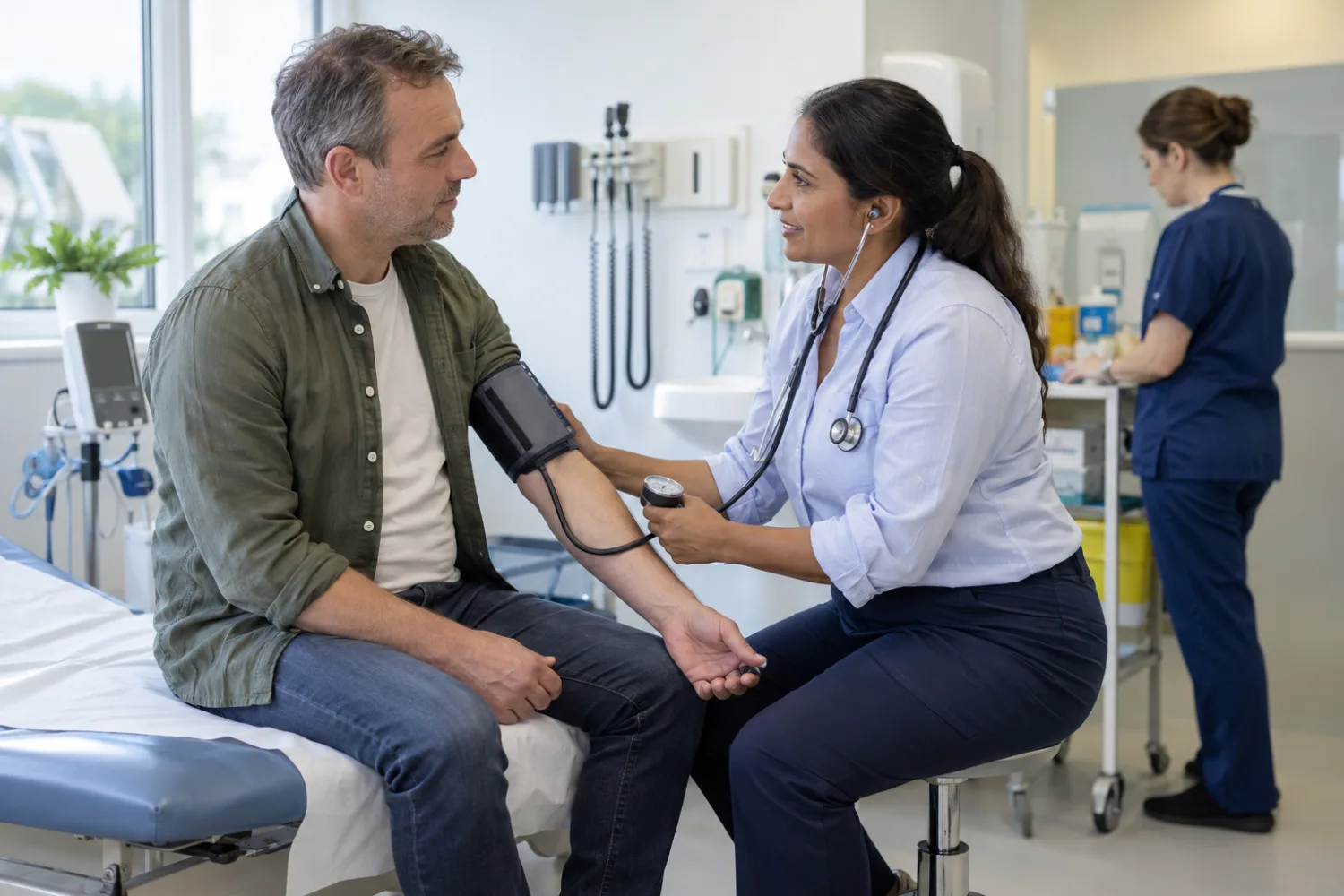
Sexual health clinics in the UK provide confidential advice, testing and treatment for sexually transmitted infections, contraception, emergency contraception and a range of other sexual-health concerns. NHS sexual health services are generally free, and you can usually use them without being referred by your GP.
You do not need to have obvious symptoms or know exactly what test you need before making contact.
People attend sexual health clinics for all sorts of reasons: a new partner, sex without a condom, unusual discharge, pain, a broken condom, contraception, an HIV test, reassurance after a relationship ends or simply because they have never had a sexual-health check before.
Clinics are used to discussing intimate subjects. Staff will ask fairly direct questions about sex because those answers help determine which tests are useful, but the purpose is clinical rather than judgemental.
Depending on the service, you may be able to book online, telephone for an appointment, attend a walk-in session or order an NHS home-testing kit instead.
The NHS says sexual health clinics can provide STI testing and treatment, HIV testing, contraception including emergency contraception, pregnancy testing, PrEP and PEP for HIV prevention, selected vaccinations and support following sexual assault.
If your main question is simply which STI test to choose, our separate guide to STI testing in the UK: NHS vs private vs postal kits compares those options in more detail.
Some sexual-health situations should not wait for a routine appointment.
If you think you may have had a significant exposure to HIV, seek advice about PEP as soon as possible. PEP needs to be started within 72 hours of exposure, and earlier is better.
If pregnancy is possible after unprotected sex or contraceptive failure, emergency contraception is time-sensitive too. Depending on the method, it can be used within 3 to 5 days, and a copper IUD can usually be fitted within 5 days of sex.
Severe pelvic or abdominal pain, heavy bleeding, collapse, severe testicular pain or another serious acute illness may require urgent medical assessment rather than waiting for an ordinary sexual-health screening appointment.
What can a sexual health clinic help with?
Modern sexual-health clinics do considerably more than test for chlamydia.
Depending on the clinic and local commissioning arrangements, services may include:
- chlamydia and gonorrhoea testing;
- HIV and syphilis testing;
- assessment of genital symptoms;
- STI treatment;
- contraception;
- emergency contraception;
- pregnancy testing;
- HIV PrEP;
- emergency HIV PEP;
- hepatitis A and B vaccination for eligible groups;
- HPV vaccination in eligible circumstances;
- support after rape or sexual assault;
- partner notification after an STI diagnosis.
The NHS specifically lists STI and HIV testing, contraception, emergency contraception, pregnancy testing, PrEP, PEP and selected vaccinations among services available through sexual health clinics.
Do all clinics provide everything?
No.
One local service may operate a large central clinic providing contraception, complex STI care and HIV prevention, while smaller satellite clinics may offer only certain appointments.
Some services have separate sessions for:
- people with symptoms;
- routine testing;
- contraception;
- young people;
- PrEP;
- complex reproductive-health care.
Check the local clinic website or call before travelling if you need a specific service such as coil fitting, PEP or treatment of significant symptoms.
Do you need symptoms?
No.
Many sexually transmitted infections cause no obvious symptoms.
A routine sexual-health check may be appropriate after a new partner, condomless sex or another situation where there could have been exposure.
Do you need a GP referral?
Usually not.
Sexual health clinics are generally designed as direct-access services.
You may be able to:
- book yourself online;
- call the clinic;
- use a walk-in clinic;
- request a home-testing kit.
NHS local services commonly provide confidential testing and treatment without requiring a GP referral.
Can you attend a clinic outside your GP area?
Often, although local services have their own access arrangements.
Sexual-health care has traditionally allowed more flexibility than many other NHS services because confidentiality and accessibility are particularly important.
If you are travelling to another town specifically for privacy, check that the clinic accepts people who live outside its usual catchment area before making the journey.
What if the clinic has no appointments?
Some services separate urgent and routine care.
If you have symptoms, recent HIV exposure, emergency-contraception needs or another time-sensitive concern, tell the service rather than simply accepting the next routine screening slot.
A clinic may direct you to another site, pharmacy, GP service or urgent pathway.
Is a sexual health clinic confidential?
Yes. Confidentiality is one of the core principles of NHS sexual-health care.
The NHS states that staff will not tell anyone what you discuss without your permission, including your GP, except in limited circumstances such as serious safeguarding concerns.
Will the clinic tell my GP?
Not simply because you attended.
Sexual-health services may use separate records from your general GP record, depending on the service.
If information needs to be shared for your care, staff can explain what will happen.
Some clinics specifically state that their records are separate from GP systems and are not shared without permission.
Will my partner be told?
The clinic will not ordinarily contact a partner simply because you attended for testing.
If you are diagnosed with certain infections, staff will discuss partner notification so current or recent partners can be tested and treated where appropriate.
This does not necessarily mean you have to personally make an uncomfortable phone call.
Sexual-health services can sometimes contact partners anonymously, so the other person is told they may have been exposed to an STI without being told who provided their details. Partner notification is a routine part of STI control in UK sexual-health services.
What are the limits of confidentiality?
Like other health professionals, sexual-health staff may need to act if they believe a child, young person or another person is at serious risk of abuse or harm.
The NHS says staff should normally discuss this with you before sharing information with another healthcare or safeguarding service.
What happens when you arrive at a sexual health clinic?
The exact process varies, but it is usually much less dramatic than people imagine.
You may check in at reception or through an electronic system and wait to see a nurse, doctor or sexual-health practitioner.
The consultation normally starts with questions.
What questions will they ask?
You may be asked about:
- why you came;
- any symptoms;
- when symptoms started;
- when you last had sex;
- whether condoms were used;
- whether partners were male, female or both;
- vaginal, oral or anal sex;
- number of recent partners;
- previous STIs;
- contraception;
- pregnancy possibility;
- medicines and allergies.
The questions are not there to judge the number or type of partners you have.
They help the clinician work out which parts of the body need testing.
For example, a urine test alone may miss an infection in the throat or rectum after oral or anal sex.
Can you ask for a male or female clinician?
You can ask.
The NHS also says patients can request a male or female nurse or doctor and can have another person or staff member present during examinations, although availability may affect what can be arranged immediately.
Do you always need an examination?
No.
If you have no symptoms and simply want routine screening, the appointment may involve only questions, self-taken samples and a blood test.
An examination becomes more likely if you have symptoms such as:
- genital sores;
- unusual discharge;
- pelvic pain;
- testicular symptoms;
- bleeding;
- a genital rash;
- pain during sex.
What STI tests are done at the clinic?
The tests are chosen according to symptoms, anatomy and sexual activity rather than giving everybody exactly the same panel.
Chlamydia and gonorrhoea
Testing is commonly performed using:
- a urine sample; or
- a vaginal swab, which can often be taken yourself.
Depending on sexual activity, throat and rectal swabs may also be needed.
HIV
HIV screening usually involves a blood test.
Syphilis
Syphilis is usually tested with blood.
If there is an ulcer or suspicious lesion, a clinician may also take a swab directly from it.
Other infections
Testing for infections such as trichomoniasis or Mycoplasma genitalium is usually targeted rather than automatically included in every routine screening panel.
If you have symptoms, a clinician may take additional samples or perform an examination to look for other causes such as bacterial vaginosis or genital skin conditions.
Do they test for herpes?
Routine herpes blood testing is not generally part of a standard STI screen.
If you have fresh blisters or sores, a clinician may be able to take a swab from the lesion.
Do they test for HPV?
HPV testing is not simply added to an ordinary sexual-health screening panel.
Cervical HPV testing is primarily part of the NHS cervical screening programme.
If you are due or overdue for screening, see our guide to cervical screening and smear tests.
How long after sex should you get tested?
This is where timing becomes important.
An infection may be present but still too early for a test to detect reliably.
This is known as the window period.
Different infections and different testing methods have different windows.
Some NHS services advise approximately:
- 2 weeks after exposure for chlamydia and gonorrhoea;
- 6 weeks for commonly used HIV testing;
- 6 weeks for syphilis screening.
Local NHS services publish similar timings, although clinicians may recommend different follow-up depending on the type of test and individual exposure.
Should you wait if you have symptoms?
No.
If symptoms develop, contact the clinic now.
The clinician can examine you, test appropriately and tell you whether repeat testing will be needed later.
What if the exposure was yesterday?
Routine testing may be too early for some infections, but other care may be urgent.
For example:
- PEP may be relevant after higher-risk HIV exposure;
- emergency contraception may be needed;
- sexual-assault support may be appropriate.
Do not wait for a theoretical testing window before asking for advice about something time-sensitive.
What happens if an STI test is positive?
A positive result is usually manageable, and sexual-health clinics deal with these diagnoses every day.
You will normally be contacted and told:
- what the infection is;
- whether treatment is needed;
- how to obtain treatment;
- whether you should avoid sex temporarily;
- whether partners need testing;
- whether another test is needed later.
Chlamydia
Chlamydia can usually be treated with antibiotics.
The clinic will explain how long to avoid sex and which recent partners should be contacted.
Gonorrhoea
Gonorrhoea treatment is usually arranged through a sexual-health clinic because antibiotic resistance makes appropriate treatment and follow-up particularly important.
Syphilis
Syphilis is treatable with antibiotics, but the treatment schedule and follow-up depend on the stage of infection.
HIV
A positive HIV screening result requires confirmatory testing and specialist care.
Modern HIV treatment is highly effective. People taking effective antiretroviral treatment can achieve an undetectable viral load, protecting their health and preventing sexual transmission of HIV.
Partner notification
Partner notification helps prevent reinfection and further spread.
The clinic may ask about partners within a particular time period depending on the infection.
You can often choose between contacting them yourself or allowing the service to help notify them anonymously.
Can sexual health clinics provide contraception?
Many can.
Depending on the service, options may include:
- contraceptive pill;
- progestogen-only pill;
- injection;
- implant;
- contraceptive patch;
- vaginal ring;
- copper IUD;
- hormonal IUS;
- condoms.
Contraception through NHS sexual-health services is free.
Can you have a coil or implant fitted?
Many larger contraception and sexual-health services offer long-acting contraception such as implants, copper coils and hormonal intrauterine systems.
You normally need a specific fitting appointment rather than expecting the procedure to happen during an ordinary STI-testing visit.
What about emergency contraception?
Sexual-health clinics are an important source of emergency contraception.
The two main emergency pills used in the UK have different time limits:
- levonorgestrel: within 72 hours;
- ulipristal acetate: within 120 hours.
The copper IUD can usually be fitted within 120 hours of unprotected sex and is the most effective form of emergency contraception.
Emergency contraception is also available through GP surgeries and many pharmacies.
What are PrEP and PEP?
Sexual-health clinics play a major role in preventing HIV as well as testing for it.
PrEP
PrEP stands for pre-exposure prophylaxis.
It is HIV-prevention medication used by HIV-negative people who have an ongoing higher chance of exposure.
PrEP is available free through NHS sexual-health clinics. Depending on circumstances, it may be taken daily or using another approved dosing approach.
The clinic will discuss:
- whether PrEP is appropriate;
- HIV testing;
- kidney health where required;
- dosing;
- ongoing STI screening.
PEP
PEP stands for post-exposure prophylaxis.
Unlike PrEP, it is emergency medication taken after a possible HIV exposure.
PEP needs to be started as soon as possible and no later than 72 hours after the exposure.
If the sexual-health clinic is closed and you think you need PEP, use an urgent NHS service rather than waiting until the clinic reopens.
Does every episode of condomless sex require PEP?
No.
A clinician assesses the actual HIV transmission risk based on the type of exposure and what is known about the other person's HIV status and treatment.
But because the timing is critical, seek advice promptly rather than trying to calculate the risk yourself for several days.
Can teenagers use a sexual health clinic without their parents?
Yes.
NHS sexual-health services are confidential for young people too.
The NHS specifically states that someone under 16 can attend a sexual-health clinic and the clinic will not routinely tell their parents.
Can someone under 16 get contraception?
Healthcare professionals can provide contraception and sexual-health advice confidentially to a young person when they are satisfied that the young person understands the information and that providing care is appropriate.
The aim is to protect the young person's health and welfare.
When might confidentiality be broken?
If staff believe a young person is being abused, exploited or placed at serious risk, safeguarding responsibilities may require other professionals to become involved.
The NHS says staff should talk to the young person about this before information is shared wherever possible.
Will staff judge a teenager for having sex?
The purpose of the consultation is health and safeguarding rather than punishment.
Staff may ask more detailed questions about:
- age differences;
- whether sex was consensual;
- whether pressure was involved;
- alcohol or drugs;
- whether the young person feels safe.
Those questions help identify situations where someone may need additional protection.
When should you use a sexual health clinic rather than a GP?
There is considerable overlap.
A GP can help with many sexual-health concerns, while specialist clinics may be easier for testing, partner notification, complex contraception and HIV prevention.
A sexual health clinic may be particularly useful for
- routine STI screening;
- symptoms after a new sexual partner;
- gonorrhoea or syphilis assessment;
- HIV testing;
- PrEP or PEP;
- partner notification;
- complex STI treatment;
- emergency contraception;
- contraceptive implants or coils where provided.
A GP may be useful when
The issue is closely connected with another medical problem, such as:
- persistent pelvic pain;
- recurrent urinary symptoms;
- menstrual problems;
- general medication review;
- another chronic medical condition.
Some symptoms overlap. Pain when passing urine, for example, can result from an STI but can also be caused by a urinary infection or other problem. Our guide to pain when urinating explains the common possibilities.
What if you are worried about vaginal discharge?
Changes in discharge may result from an STI, bacterial vaginosis, thrush or other causes.
Our guide to vaginal discharge: what's normal and what's not explains how symptoms differ.
You may also find our comparison of thrush versus bacterial vaginosis useful.
When is A&E more appropriate?
Routine STI screening is not an A&E service.
However, seek urgent or emergency medical care for symptoms such as:
- severe abdominal or pelvic pain;
- collapse or fainting with possible pregnancy;
- very heavy bleeding;
- sudden severe testicular pain;
- severe illness with fever;
- serious injury;
- immediate safety concerns following assault.
Frequently asked questions about UK sexual health clinics
Are sexual health clinics free?
NHS sexual-health testing and advice are free. NHS contraception is also free. Some prescriptions or services outside the clinic may follow different charging rules.
Do I need a GP referral?
Usually not. Most sexual-health services accept self-referrals.
Can anyone go to a sexual health clinic?
Yes. NHS guidance says sexual-health services are available regardless of age, gender, ethnicity or sexuality.
Do I have to have symptoms?
No. Many people attend simply for routine testing.
Can I go after having sex with a new partner?
Yes. The clinic can advise on which tests are appropriate and when they should be taken.
How soon after sex should I test?
Timing differs by infection. Some NHS services advise about two weeks for chlamydia and gonorrhoea and around six weeks for HIV and syphilis screening.
Can I test immediately?
You can seek advice immediately, but some tests may need repeating once the relevant window period has passed.
Should I wait if I have symptoms?
No. Contact the clinic now.
What samples do they take?
Common tests involve urine, vaginal swabs, throat or rectal swabs and blood samples.
Can I take the swab myself?
Yes. Vaginal and some other swabs are often self-taken.
Do they need to examine me?
Not always. Routine screening often does not require an intimate examination.
Will they ask how many people I have slept with?
They may ask about recent partners and sexual activity because it affects testing and partner-notification advice.
Do I have to tell them everything?
You decide what to disclose, but accurate information about the types of sex you have had helps the clinician choose the correct test sites.
Can they tell my GP?
Sexual-health consultations are confidential and information is not routinely shared with your GP without permission, subject to safeguarding and other exceptional circumstances.
Will it appear on my NHS app?
Record systems vary between services. If privacy around electronic records is particularly important to you, ask the clinic how its results and prescriptions are recorded before testing.
Will my parents know?
Not routinely, even if you are under 16. Sexual-health services are confidential for young people, subject to safeguarding responsibilities.
Can I take a friend?
Yes. NHS guidance says you can ask to have a friend, family member or another staff member with you during examinations or tests.
Can I request a female doctor?
You can ask for a male or female clinician, although immediate availability may vary.
Do sexual health clinics test for chlamydia?
Yes.
Do they test for gonorrhoea?
Yes.
Do they test for HIV?
Yes.
Do they test for syphilis?
Yes.
Do they test for herpes?
Herpes is generally tested when relevant symptoms such as fresh blisters or ulcers are present rather than through routine screening of people without symptoms.
Do they test for HPV?
Not as part of an ordinary STI screen. Cervical HPV testing is principally provided through cervical screening.
Can they test my throat?
Yes, where oral sexual exposure makes throat testing for chlamydia or gonorrhoea appropriate.
Can they do rectal STI tests?
Yes, where appropriate.
How do I get my results?
Services commonly use text messages, online systems or telephone calls. The exact method and turnaround vary by clinic.
How long do results take?
It varies from a few days to around two weeks depending on the infection, laboratory and service. One NHS home-testing service, for example, advises up to two weeks for chlamydia and gonorrhoea results.
What if my result is positive?
The clinic will explain treatment, whether you need another test and which partners may need contacting.
Will they contact my partner?
They may help you notify partners, including anonymously in some services.
Will my partner know it was me?
Not necessarily. Anonymous partner notification can tell someone they may have been exposed without identifying the person who tested positive.
Can I have treatment on the same day?
Sometimes, particularly when symptoms and examination strongly suggest an infection. In other situations the clinic may wait for test results.
Can I get contraception from the clinic?
Yes, at many sexual-health services.
Is NHS contraception free?
Yes.
Can I get the pill?
Yes, where contraception is provided and it is clinically suitable.
Can I get an implant?
Many contraception services provide implants, usually through a fitting appointment.
Can I get a coil?
Many services provide copper IUDs and hormonal intrauterine systems, although you normally need a specific appointment.
Can I get emergency contraception?
Yes. Sexual-health clinics provide emergency contraception.
How quickly do I need the morning-after pill?
Levonorgestrel must be taken within 72 hours and ulipristal within 120 hours. Earlier treatment is generally better.
What is the most effective emergency contraception?
The copper IUD is the most effective emergency-contraception option.
Can the clinic do a pregnancy test?
Many can.
Can I ask about abortion?
Yes. NHS sexual-health clinics can provide advice and direct you to appropriate services.
Can I get PrEP?
Yes. PrEP is available free through NHS sexual-health clinics for people for whom it is appropriate.
What is PrEP?
It is medication taken before possible HIV exposure to substantially reduce the chance of acquiring HIV.
What is PEP?
PEP is emergency HIV-prevention treatment taken after a possible significant exposure.
How quickly do I need PEP?
It must be started within 72 hours, and the sooner it is started the better.
Can I wait until Monday for PEP?
Not if waiting could take you beyond the 72-hour window. Seek urgent NHS advice while the sexual-health clinic is closed.
Do clinics give HPV vaccines?
Some sexual-health services provide HPV vaccination for eligible groups.
Do they give hepatitis vaccines?
Selected patients may be offered hepatitis A or B vaccination according to risk and eligibility.
Can I get help after sexual assault?
Yes. Sexual-health services can help, although specialist Sexual Assault Referral Centres also provide confidential medical, forensic and emotional support.
Do I have to report an assault to the police to get medical help?
No. You can seek healthcare and support without first deciding whether to make a police report.
Can a sexual health clinic treat a UTI?
Some symptoms overlap with STIs, but ordinary urinary infections may be managed through a GP or pharmacy depending on the situation.
Can a sexual health clinic treat thrush?
Clinics may assess vaginal symptoms and distinguish thrush from BV, STIs and other causes where appropriate.
What if I just want reassurance?
That is a perfectly ordinary reason to use the service. A clinician can explain whether testing is necessary and when it will be reliable.
Do I need to shave or prepare before an examination?
No.
Should I avoid urinating before the appointment?
If a urine test is likely, some clinics ask patients not to urinate for a period before the sample. For example, some NHS clinics request at least one hour. Check the instructions from your own service.
Can I test at home instead?
Yes. Many NHS areas offer postal STI testing for people without symptoms.
Is a home test as good as going to a clinic?
For straightforward screening, properly collected NHS laboratory samples can be very useful. A clinic is more appropriate when you have symptoms, need an examination, require urgent treatment or need tests not included in the kit.
Where do I find my nearest clinic?
Use the NHS sexual-health clinic finder or your local NHS sexual-health service website.