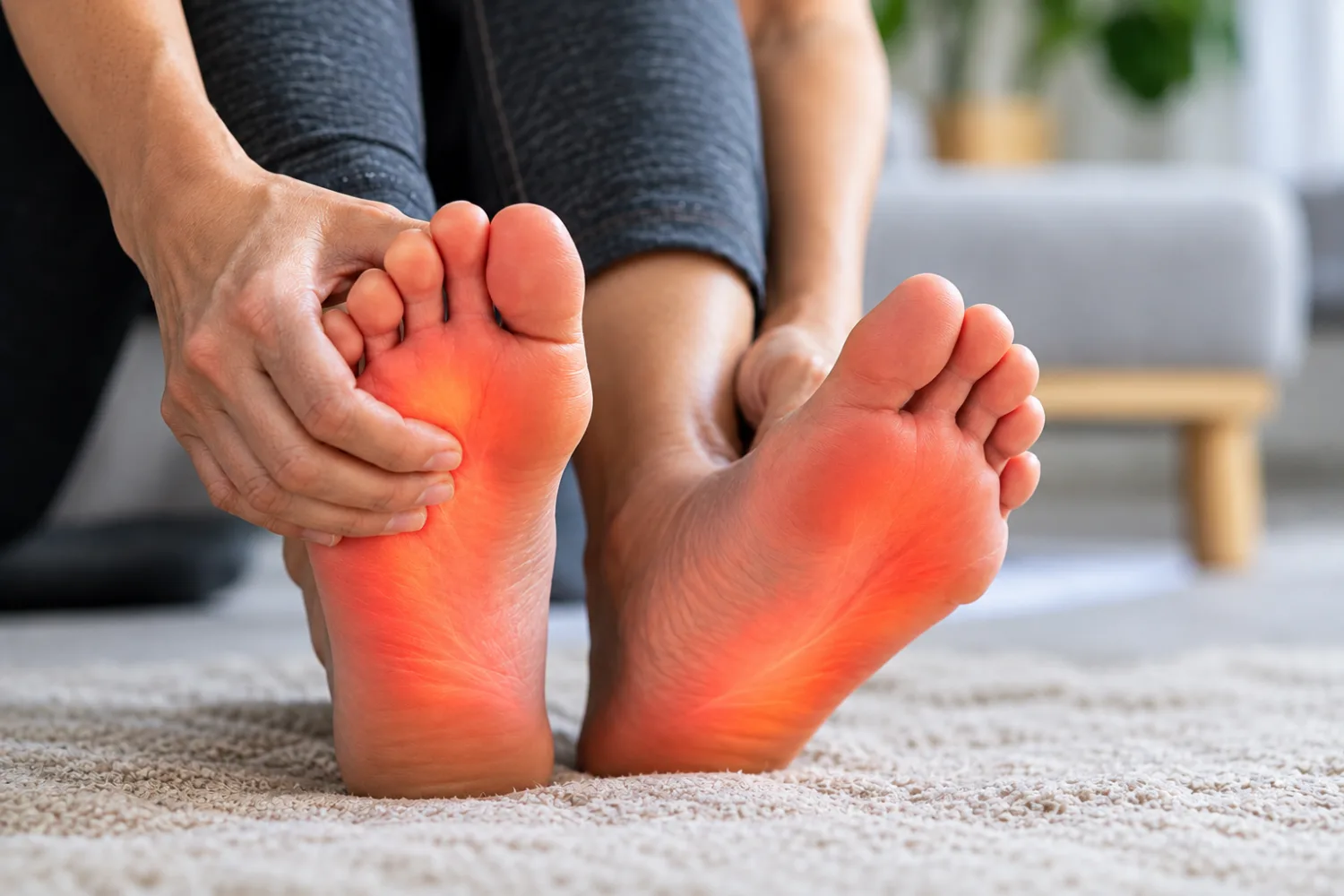
Cold hands and feet are extremely common, especially during winter. For many people, they are simply part of the body’s normal response to cold temperatures. Blood vessels in the hands and feet narrow to help preserve warmth around the heart and other vital organs, so fingers and toes can feel chilly even when the rest of the body feels comfortable.
Sometimes, however, persistently cold hands or feet can point to something else.
Raynaud’s phenomenon, an underactive thyroid, anaemia, nerve problems, diabetes and reduced blood flow to the legs can all cause similar symptoms. The pattern often gives useful clues. Fingers that suddenly turn white or blue in the cold suggest something very different from one foot that is persistently colder than the other and develops painful or slow-healing skin changes.
This guide explains the common reasons hands and feet feel cold, how to tell normal cold sensitivity from a circulation or medical problem, and when it is worth speaking to a GP.
Why Do Hands and Feet Feel Colder Than the Rest of the Body?
Your hands and feet are particularly good places for the body to lose heat. They contain many small blood vessels close to the skin and sit at the ends of the circulation.
When the body senses cold, those vessels narrow. This reduces blood flow near the skin and helps conserve heat for the core of the body. It is a normal and useful response.
That is why someone can have cold fingers while their chest and abdomen still feel warm.
Some people naturally notice this more than others. Being slim, sitting still for long periods, working in a cool office or wearing damp shoes can all make hands and feet feel colder without there being a medical problem.
If both hands and feet warm up normally once you move around or go indoors, and there are no other symptoms, there is usually little reason to worry.
The picture changes when coldness is persistent, severe, affects only one side, or comes with pain, numbness, colour changes or other symptoms.
Raynaud’s: When Fingers or Toes Change Colour
Raynaud’s phenomenon is one of the most recognisable causes of unusually cold fingers and toes.
During an episode, the small blood vessels narrow more dramatically than usual. Cold weather is a common trigger, although emotional stress can do the same thing.
The fingers may become pale or white, then bluish or darker, before turning red as blood flow returns. Some people also notice numbness, tingling, throbbing or pain.
Not everyone experiences the classic three-colour sequence. For some people, the main complaint is simply that their fingers become painfully cold very quickly.
Most cases are called primary Raynaud’s, which means there is no serious underlying disease. It often starts in younger people and can be more of a nuisance than a danger.
Secondary Raynaud’s is different. It can occur alongside autoimmune or connective-tissue conditions such as lupus, rheumatoid arthritis or systemic sclerosis.
It is more important to seek medical advice if Raynaud’s starts for the first time after about age 30, affects only one side, is becoming more severe, or occurs alongside symptoms such as joint pain, muscle weakness or unusual rashes.
Could an Underactive Thyroid Be Making You Feel Cold?
An underactive thyroid can make the whole body feel unusually cold, including the hands and feet.
The thyroid gland helps regulate metabolism and heat production. When it does not produce enough thyroid hormone, many body processes slow down.
Cold intolerance is therefore usually not the only symptom.
People with hypothyroidism often also notice tiredness, weight gain, constipation, dry skin, changes in hair, low mood or difficulty concentrating. Symptoms tend to develop gradually rather than appearing suddenly.
If your hands and feet are cold but you also feel colder than everyone else in the room, thyroid testing may be worth discussing with your GP.
The usual blood tests are TSH and free T4.
If hypothyroidism is confirmed, it is generally treated with levothyroxine, which replaces the thyroid hormone the body is not making in sufficient amounts.
Anaemia Can Make You Feel Cold and Tired
Anaemia is another common explanation for feeling unusually cold.
Red blood cells carry oxygen around the body. When haemoglobin levels fall, tissues receive less oxygen than normal, and some people become noticeably cold in their hands and feet.
Coldness is usually accompanied by other symptoms such as tiredness, weakness, dizziness, headaches, breathlessness or palpitations.
Iron deficiency is one of the most common causes. It can develop because of heavy periods, pregnancy, low dietary iron, poor absorption or bleeding from the stomach or bowel.
A full blood count can show whether anaemia is present, while ferritin can help assess iron stores.
It is worth avoiding the temptation to start strong iron supplements purely because your hands are cold. Cold hands alone do not prove iron deficiency, and the reason for any true deficiency still needs to be understood.
When Cold Feet Really Are a Circulation Problem
The phrase “poor circulation” is often used very loosely, but true arterial circulation problems have a more specific pattern.
One important condition is peripheral arterial disease, or PAD. It develops when arteries supplying the legs become narrowed by fatty deposits.
The classic symptom is pain or aching in the calves, thighs or buttocks during walking, which improves after a few minutes of rest.
A foot may also feel noticeably colder than the other one.
As the problem becomes more severe, you may notice pale or bluish skin, weak pulses in the feet, shiny skin, slow-growing toenails, hair loss on the lower legs or wounds that take a long time to heal.
PAD is more common in people who smoke or have diabetes, high blood pressure or high cholesterol.
If a GP suspects PAD, they may check the pulses in your feet and compare blood pressure in the ankle and arm using an ankle-brachial pressure index, usually called an ABPI.
Persistent one-sided coldness deserves more attention than simply having both feet feel cold on a winter evening.
If you also notice swelling rather than coldness alone, our guide to swollen legs and ankles explains the common vein, heart, kidney and medication-related causes.
Sometimes the Problem Is Nerves, Not Blood Flow
One of the more confusing situations is when a foot feels freezing even though the skin does not actually feel cold to someone touching it.
That can happen when sensory nerves are not transmitting temperature normally.
Peripheral neuropathy can create many strange sensations. Some people describe burning, tingling or numbness. Others say their feet feel icy, wet or strangely sensitive to temperature.
Diabetes is one of the most common causes of peripheral neuropathy in the UK.
Other possible causes include vitamin B12 deficiency, thyroid problems, alcohol excess, certain medicines, kidney disease and direct nerve injury.
If your feet alternate between cold, burning and numb sensations, or if you have pins and needles as well, nerve dysfunction may be more likely than a straightforward blood-flow problem.
You may find our guides to burning feet and numbness and tingling useful.
If diabetes is a possibility, see our guide to the early signs of type 2 diabetes.
Vitamin B12 Deficiency Can Alter Temperature Sensation
Vitamin B12 deficiency can affect both the blood and the nervous system.
That means it can contribute to feeling cold in more than one way.
If deficiency causes anaemia, a person may feel generally cold and tired. If it affects the nerves, the hands and feet may develop unusual sensations such as pins and needles, numbness or altered temperature perception.
Some people also develop balance problems, muscle weakness or difficulty concentrating.
B12 deficiency can result from pernicious anaemia, dietary deficiency, absorption problems or certain medicines.
It is worth taking seriously because prolonged deficiency can cause neurological damage that may become difficult to reverse.
Our guide to vitamin B12 deficiency explains the common causes, blood tests and treatment options.
What Can You Do About Cold Hands and Feet?
If your symptoms are mild and clearly linked to cold weather, the most useful measures are often very simple.
Keeping your whole body warm tends to work better than concentrating only on your hands and feet. Gloves, warm socks and layers can help, but so can moving around regularly instead of sitting still for several hours.
Exercise supports normal circulation and also helps regulate body temperature.
Smoking is particularly unhelpful because nicotine narrows blood vessels and smoking is a major risk factor for peripheral arterial disease.
People with Raynaud’s may also find that reducing caffeine helps if it seems to trigger episodes.
Be careful with very hot water bottles or radiators if you have numbness, diabetes or neuropathy. Reduced sensation can make it easier to burn the skin without realising it.
If symptoms continue despite keeping warm, it makes more sense to investigate the cause than simply buying thicker socks.
Depending on your symptoms, a GP might consider a full blood count, ferritin, thyroid tests, vitamin B12, folate and HbA1c.
When Should Cold Hands or Feet Be Checked?
Cold hands and feet usually do not require medical attention when they are simply a response to cold weather.
It is more reasonable to make a GP appointment when the symptoms become persistent or start appearing alongside other changes.
For example, coldness accompanied by tiredness, constipation and weight gain may suggest thyroid disease. Cold feet with numbness or burning may point towards neuropathy. Coldness in one foot with walking pain or slow-healing wounds raises more concern about arterial circulation.
You should also get checked if you notice repeated colour changes, increasing numbness or tingling, palpitations, unusual breathlessness or dizziness.
More urgent assessment is needed if a hand, foot, arm or leg suddenly becomes very cold, pale or blue and is also painful, numb or weak. A sudden interruption to the blood supply can be a medical emergency.
Blackening skin, severe pain at rest or wounds that refuse to heal also need prompt medical attention.
Frequently Asked Questions
Are cold hands and feet usually caused by poor circulation?
No. In many people they are simply part of the body's normal response to cold. True arterial circulation problems are more likely when there is walking pain, one-sided coldness, weak pulses or poor-healing skin.
Why are my hands cold even when the house is warm?
Possible reasons include Raynaud's phenomenon, an underactive thyroid, anaemia, low body weight, anxiety or individual sensitivity to temperature.
Can thyroid problems cause cold feet?
Yes. Feeling unusually cold is a common symptom of hypothyroidism, especially when it occurs with tiredness, weight gain, constipation or dry skin.
Can iron deficiency cause cold hands and feet?
Yes. Iron-deficiency anaemia can make people feel cold, but it usually causes other symptoms such as fatigue, dizziness, paleness or shortness of breath as well.
Can diabetes make your feet feel cold?
Yes. Diabetes can cause nerve damage that alters temperature sensation and can also increase the risk of peripheral arterial disease.
Why does one foot feel colder than the other?
A persistent difference between the two feet deserves assessment. Reduced arterial blood flow, nerve problems or previous injury may be responsible.
Why do my fingers turn white in cold weather?
This is a typical feature of Raynaud's phenomenon, where blood vessels temporarily narrow too much in response to cold.
Can anxiety make your hands cold?
Yes. Stress activates the sympathetic nervous system and can narrow blood vessels in the hands and feet. Stress is also a recognised trigger for Raynaud's attacks.
What blood tests might be useful?
Depending on your symptoms, a GP may consider a full blood count, ferritin, thyroid tests, vitamin B12 and folate, and HbA1c or glucose.
When are cold feet an emergency?
Seek urgent help if a foot or leg suddenly becomes very cold, pale or blue and is also severely painful, numb or weak. These symptoms can indicate an acute loss of blood supply.
This article provides general health information rather than a diagnosis. Persistent or one-sided coldness, significant colour changes, numbness, weakness, severe pain or non-healing wounds should be medically assessed.