Hand, foot and mouth disease is a common childhood infection that causes a fever, painful mouth ulcers and a distinctive rash or small blisters, often on the hands and feet. It is most common in babies and children under 5, although older children and adults can catch it too.
The illness is usually mild and clears by itself within 7 to 10 days. There is no specific medicine that removes the virus, and antibiotics do not help because the infection is viral. Care is mainly about easing pain, encouraging fluids and watching for signs that a child is becoming dehydrated or unusually unwell.
The name can sound alarming, but hand, foot and mouth disease is not related to foot-and-mouth disease in farm animals. Children cannot catch it from cattle, sheep or pigs.
The rash may be unmistakable once it appears, but the first day or two can resemble many ordinary childhood infections. A child may initially have only a temperature, sore throat, poor appetite and general tiredness before the mouth ulcers and spots develop.
Seek urgent medical advice if a child is drinking very little, has fewer wet nappies or trips to the toilet, has a dry mouth, no tears, sunken eyes, unusual sleepiness or other signs of dehydration.
Call 999 or go to A&E if the child is difficult to wake, limp or floppy, struggling to breathe, has a seizure, develops a rash that does not fade when pressed, has blue, grey, pale or blotchy skin, or appears seriously unwell.
Any baby under 3 months with a temperature of 38°C or higher needs urgent medical advice.
What is hand, foot and mouth disease?
Hand, foot and mouth disease is caused by a group of viruses called enteroviruses. Coxsackievirus A16 is a common cause, although several related viruses can produce the same illness.
The infection is particularly common in nurseries, playgroups and young families because small children have close contact with one another, frequently put their hands or toys into their mouths and are still learning reliable hand hygiene.
After a child is exposed to the virus, symptoms usually appear several days later. The illness often begins gradually, with fever and a sore throat appearing before the rash.
The virus can be present in:
- saliva and nasal secretions;
- droplets released through coughing or sneezing;
- fluid from blisters;
- stool.
This means it can spread through close contact, shared objects, contaminated hands and surfaces, and nappy changing.
Is it the same as foot-and-mouth disease?
No. Foot-and-mouth disease is an infection affecting farm animals. It is caused by a different virus and has no connection with the common childhood illness.
Who gets it?
Children under 5 are affected most often, but the infection can occur at any age. Older children and adults may develop milder symptoms, although some adults experience severe mouth pain or a widespread rash.
Having the infection once does not guarantee lifelong immunity because several different enteroviruses can cause it. A child can therefore develop hand, foot and mouth disease more than once.
What are the first symptoms?
The earliest stage may look like a cold, sore throat or general viral infection. The child may become quieter, clingier or less interested in food before any spots are visible.
Early symptoms can include:
- a raised temperature;
- sore throat;
- reduced appetite;
- tiredness;
- irritability;
- headache or aching in older children;
- a general feeling of being unwell.
The mouth ulcers and skin rash commonly appear after these initial symptoms, sometimes one or two days later.
How high is the fever?
The temperature is often mild to moderate, although some children develop a higher fever. The number should be considered alongside the child’s age and overall condition.
A child who remains responsive, drinks and improves after comfort measures is less concerning than a child with a lower temperature who is unusually sleepy, difficult to wake or refusing all fluids.
Seek urgent advice for:
- a temperature of 38°C or higher in a baby under 3 months;
- a temperature of 39°C or higher in a baby aged 3 to 6 months;
- a fever lasting for 5 days or more;
- any fever accompanied by breathing difficulty, severe drowsiness, dehydration or a non-blanching rash.
Can a child have the infection without a fever?
Yes. Some children have only a mild rash or a few mouth ulcers. Others may be infected without obvious symptoms.
This helps explain why the virus can spread before families realise it is present.
What do the mouth ulcers and rash look like?
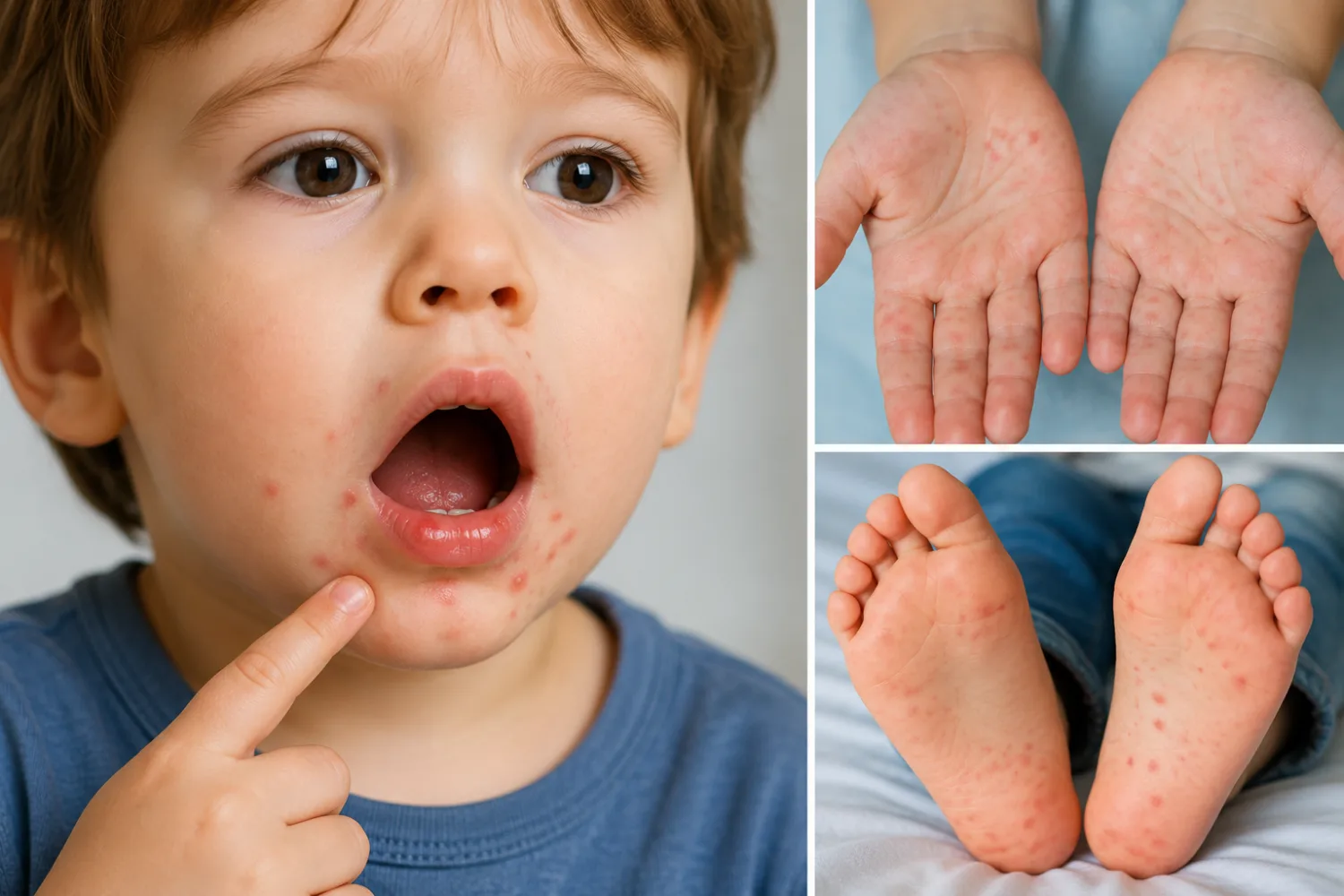
The illness often becomes easier to recognise when painful spots develop inside the mouth and a separate rash appears on the hands, feet or nearby skin.
Mouth ulcers
The mouth may initially contain small red spots that develop into shallow grey, white or yellow ulcers with a red border.
They may appear:
- on the tongue;
- inside the cheeks;
- on the gums;
- on the roof of the mouth;
- towards the back of the throat;
- around the lips.
These ulcers can be the most difficult part of the illness. A young child may want to drink but pull away crying because swallowing hurts.
Babies may feed for shorter periods, dribble more than usual or refuse the bottle or breast after a few sucks.
Spots on the hands and feet
The skin rash may begin as small red, pink or darker spots. Some become oval or round blisters containing clear or cloudy fluid.
Common locations include:
- palms of the hands;
- fingers;
- soles of the feet;
- toes;
- sides and backs of the hands and feet.
On brown or black skin, the spots may appear red-brown, purple, grey or darker than the surrounding skin rather than bright red. Checking the palms and soles can make the pattern easier to identify.
Can the rash appear elsewhere?
Yes. Despite the name, the rash is not limited to the hands, feet and mouth.
Spots may also appear on:
- the buttocks;
- groin and nappy area;
- legs;
- arms;
- around the mouth;
- knees and elbows.
Some viral strains cause a more widespread rash that can resemble chickenpox or eczema that has suddenly worsened.
Is the rash itchy?
It is often not very itchy, although individual children may find it uncomfortable. Painful feet can make walking unpleasant, particularly when blisters develop on weight-bearing areas.
Do not deliberately burst the blisters. The covering protects the healing skin underneath, and broken blisters can become infected.
How can you care for a child at home?
Most children can recover at home. The emphasis should be on comfort and fluids rather than trying to make the rash disappear.
Keep offering fluids
Frequent small amounts are usually easier than asking a child to finish a full cup.
Options may include:
- cool water;
- milk;
- usual breastfeeds or formula feeds;
- oral rehydration solution when advised;
- ice lollies;
- small sips through a straw or favourite cup.
Very cold drinks soothe some children but hurt others. Follow the child’s preference.
Avoid acidic drinks such as orange juice when they sting the ulcers. Fizzy drinks and very hot liquids can also be uncomfortable.
Offer soft, cool foods
A child may eat less for several days. Fluids matter more than maintaining a normal food intake during a short illness.
Foods that may be easier include:
- yoghurt;
- porridge that has cooled;
- mashed potato;
- soft pasta;
- soup served warm rather than hot;
- banana;
- custard;
- ice cream;
- smooth purées.
Salty, spicy, acidic or crunchy foods may irritate the ulcers. There is no need to force food when swallowing is painful, provided the child is drinking and does not have another reason to require urgent assessment.
Use suitable pain relief
Paracetamol or ibuprofen may ease mouth pain, sore throat and fever when the medicine is suitable for the child and is given according to the correct age or weight instructions.
Do not give aspirin to anyone under 16 unless it has been specifically prescribed.
Ibuprofen may not be suitable for a child who is dehydrated, has certain kidney or stomach conditions, has previously reacted to it or has chickenpox. Ask a pharmacist, GP or NHS 111 when uncertain.
Do not alternate paracetamol and ibuprofen routinely unless a healthcare professional has advised you to do so.
Ask a pharmacist about mouth treatments
A pharmacist can advise whether a mouth-ulcer gel, spray or rinse is appropriate for the child’s age.
Products intended for adults may contain ingredients or concentrations unsuitable for young children. Numbing products can also make swallowing more difficult if used incorrectly.
Let the child rest
Quiet play and extra sleep are appropriate while the child feels unwell. There is no requirement for strict bed rest once energy begins to return.
A child can gradually resume normal activities according to comfort.
How do you recognise dehydration?
Dehydration is the most common reason a child with hand, foot and mouth disease may need medical help. The virus itself is usually mild, but painful ulcers can make drinking feel impossible.
Signs to watch for include:
- drinking much less than usual;
- fewer wet nappies;
- urinating less frequently;
- dark yellow urine;
- a dry mouth or tongue;
- no tears when crying;
- sunken eyes;
- cold hands or feet;
- unusual sleepiness or irritability;
- dizziness in an older child;
- a faster heartbeat or breathing rate.
How many wet nappies are enough?
There is no single number that applies to every baby, but a clear reduction from the child’s usual pattern matters.
A baby who has not had a wet nappy for many hours, feeds poorly and appears sleepy or has a dry mouth needs prompt advice.
What if the child refuses every drink?
Give appropriate pain relief and try again after it has had time to work. Offer very small sips or spoonfuls rather than a large amount.
If the child still cannot or will not drink, contact NHS 111, a GP or the child’s urgent-care service. Hospital treatment may be needed when oral fluids cannot be maintained.
Our guide to dehydration symptoms in adults and children explains the warning signs in more detail.
How contagious is hand, foot and mouth disease?
The infection spreads easily, especially within families and early-years settings.
A child is generally most infectious during the first several days of illness, when fever, mouth symptoms and fresh spots are developing. The virus may remain in the stool for several weeks after the child appears well.
This means it is not realistically possible to prevent every transmission by waiting until the virus has completely left the body.
How does it spread?
The virus can be passed through:
- coughing and sneezing;
- saliva;
- contact with blister fluid;
- contaminated toys and surfaces;
- hands after using the toilet or changing a nappy;
- close household contact.
How can families reduce transmission?
Good hygiene reduces risk, although it cannot guarantee that siblings or carers will avoid the infection.
Wash hands carefully with soap and water:
- after changing nappies;
- after helping a child use the toilet;
- before preparing food;
- before eating;
- after wiping noses or handling tissues;
- after touching the rash.
Clean frequently touched surfaces and shared toys. Avoid sharing cups, cutlery, towels and toothbrushes while the child is unwell.
Dispose of used tissues and nappies carefully. Continue particularly careful handwashing after the visible rash has cleared because virus can remain in the stool.
Can pregnant people catch it?
Adults can become infected, including during pregnancy. Most infections remain mild.
A pregnant person who has had close contact and develops symptoms should speak to their midwife, GP or maternity service, especially close to the expected delivery date or if they feel significantly unwell.
Can a child go to nursery or school?
UKHSA guidance states that routine exclusion is not required for hand, foot and mouth disease. Keeping every child away until all spots disappear would have limited effect because the virus can spread before symptoms appear and can remain in stool for weeks.
However, “no formal exclusion” does not mean every unwell child should attend.
Keep the child at home while they:
- have a fever;
- feel too unwell to participate;
- need more care than the setting can reasonably provide;
- are unable to drink adequately;
- have uncontrolled dribbling because mouth ulcers are severe;
- have broken blisters that cannot be kept clean and covered where appropriate.
They can usually return when they feel well enough, even if some dry spots remain.
Should the nursery or school be told?
Yes. Informing the setting allows staff to reinforce handwashing and cleaning and to notice whether several linked cases are occurring.
The setting may receive additional advice from its local health protection team during a larger outbreak or in unusual circumstances.
Do all blisters need to heal first?
No. Current UK public-health guidance does not require children to remain away until every blister has dried.
The child’s wellbeing and ability to take part normally are more useful practical tests.
What else can look like hand, foot and mouth disease?
The combination of mouth ulcers and spots on the palms or soles is strongly suggestive, but several childhood illnesses can produce overlapping symptoms.
Chickenpox
Chickenpox usually causes an itchy rash that begins on the chest, back or face and spreads across the body. Spots appear in crops and progress through fluid-filled blisters and crusts.
Hand, foot and mouth disease more often concentrates on the palms, soles, mouth and nappy area, although some cases are widespread.
Impetigo
Impetigo is a bacterial skin infection that commonly causes weeping sores and golden or honey-coloured crusts around the mouth and nose.
It does not normally cause the typical combination of internal mouth ulcers and palm or sole spots.
Cold sores and gingivostomatitis
A first herpes simplex infection can cause severe mouth ulcers, swollen bleeding gums, fever and blisters around the lips.
The mouth may be much more extensively inflamed than in ordinary hand, foot and mouth disease, and the child may struggle substantially with drinking.
Scarlet fever
Scarlet fever commonly causes a sore throat, fever and a fine rough rash that feels like sandpaper. The tongue may become red and swollen.
It requires antibiotic treatment and has different nursery and school guidance.
Measles
Measles usually begins with a high fever, cough, runny nose and red watery eyes before a blotchy rash spreads downwards from the face.
A child with suspected measles should not attend a GP waiting room without advance warning because the infection is highly contagious.
Chickenpox, eczema and widespread enterovirus rash
Some hand, foot and mouth infections cause extensive blistering, especially over areas affected by eczema. This can resemble infected eczema or chickenpox.
Seek medical advice when the rash is unusually widespread, painful, crusted or associated with significant illness.
A non-blanching rash
Hand, foot and mouth spots may remain visible when pressed because some are blisters or deeper lesions. However, a child who is unwell with a new purple, red or bruise-like rash that does not fade under a clear glass needs emergency assessment.
Do not assume a non-blanching rash is part of a previously diagnosed viral illness when the child’s condition has changed.
When should you seek medical help?
Most cases do not require a GP appointment. Contact a healthcare professional when symptoms are severe, the diagnosis is uncertain or the child is not recovering as expected.
Contact a GP, pharmacist or NHS 111 if:
- the child is drinking less than usual;
- mouth pain is difficult to control;
- you are unsure which pain medicine is suitable;
- the fever lasts for 5 days or longer;
- symptoms are not improving after 7 to 10 days;
- the rash becomes painful, very red or starts leaking pus;
- the child has a weakened immune system;
- the child has a serious long-term health condition;
- you are uncertain whether the rash is hand, foot and mouth disease;
- an adult or pregnant person develops significant symptoms.
Seek prompt same-day assessment if:
- the child is showing signs of dehydration;
- they cannot swallow fluids or saliva;
- they have severe headache or persistent vomiting;
- they are increasingly sleepy or irritable;
- the fever is unusually high or the child is deteriorating;
- there is significant pain, swelling or weakness in an arm or leg;
- the child has a seizure and has not previously been assessed for it.
Call 999 or go to A&E if the child:
- is difficult to wake;
- is limp, floppy or unusually unresponsive;
- is struggling to breathe;
- has blue, grey, pale or blotchy skin;
- has a seizure lasting 5 minutes or longer;
- develops sudden confusion;
- has a stiff neck with severe illness;
- has a rash that does not fade when pressed and appears seriously unwell;
- shows another sign of sepsis or a life-threatening emergency.
Babies under 3 months
Babies in this age group need a lower threshold for assessment. A temperature of 38°C or higher requires urgent medical advice, even if the rash appears consistent with hand, foot and mouth disease.
Very young babies can deteriorate more quickly and may show subtle signs such as poor feeding, unusual sleepiness, weak crying or reduced wet nappies.
Recovery and possible after-effects
Most children recover fully without complications. The fever and mouth pain usually improve first, while the skin spots may remain visible for a little longer.
The blisters gradually flatten, dry or peel. Avoid pulling loose skin because the new skin underneath may still be delicate.
Peeling hands and feet
Some children develop peeling skin on the fingers, palms, toes or soles after the main illness has resolved.
This can look dramatic but is usually painless and temporary. Use a gentle moisturiser and allow the skin to shed naturally.
Nail changes
A fingernail or toenail may occasionally develop a groove, loosen or shed several weeks after hand, foot and mouth disease.
This is called onychomadesis. The nail usually grows back normally, although complete regrowth takes time.
Arrange an assessment if the nail area is red, painful, swollen or producing pus, or if several unexplained nail changes occur without a recent illness.
Can complications occur?
Serious complications are rare in the UK. Uncommon enterovirus complications can affect the brain, nervous system, heart or lungs.
Symptoms such as severe headache, neck stiffness, seizures, unusual weakness, breathing difficulty, confusion or rapid deterioration require urgent medical assessment.
When can normal activities restart?
Once the fever has gone and the child is drinking, eating enough for recovery and behaving more like themselves, activity can increase gradually.
There is no need to wait for every mark to disappear before ordinary play resumes.
Frequently asked questions about hand, foot and mouth disease
How long does hand, foot and mouth disease last?
Most children improve within 7 to 10 days. Mouth ulcers may be most painful during the first several days, while skin spots and peeling can remain longer.
How does it start?
It often begins with fever, sore throat, tiredness and poor appetite. Mouth ulcers and spots on the hands or feet usually follow.
Can a child have spots without mouth ulcers?
Yes. Symptoms vary, and some children have only a few mouth lesions or none that are easy to see.
Can the rash cover the whole body?
It can spread beyond the hands and feet, particularly onto the buttocks, legs, arms, knees, elbows and around the mouth. A widespread or unusual rash should be assessed if the child is significantly unwell.
Is the rash itchy?
It is often not very itchy, but individual children may experience itching, soreness or pain where blisters form.
Are the mouth ulcers painful?
Yes. They may make swallowing difficult and are the main reason children reduce their drinking.
What can a child eat?
Offer soft, cool foods such as yoghurt, mashed potato, porridge, banana, custard or cooled soup. Avoid spicy, salty, acidic and very hot foods when they sting.
Are ice lollies helpful?
Yes. They can soothe mouth pain and provide some fluid, although they should not be the child’s only source of hydration.
Can antibiotics treat it?
No. Antibiotics do not treat the viruses that cause hand, foot and mouth disease.
Is there an antiviral medicine?
No specific antiviral treatment is routinely used. The infection usually clears through the immune system’s natural response.
Can calamine lotion be used?
It may soothe itchy intact skin, but it does not treat the virus. Avoid applying products inside the mouth or onto broken, infected-looking blisters without advice.
Should the blisters be popped?
No. Leave them intact so the skin underneath remains protected.
Can adults catch it?
Yes. Adults may have no symptoms, a mild illness or painful mouth ulcers and rash.
Can parents catch it from changing nappies?
Yes. Virus can remain in stool after the child feels better. Careful handwashing after nappy changes and toileting is important.
Can a child catch it twice?
Yes. Several different viruses can cause the illness, so previous infection does not provide complete protection.
How long is it contagious?
The child is usually most contagious during the first several days, but virus can remain in stool for weeks. Good hand hygiene should continue after symptoms resolve.
Does the child need to stay off nursery?
There is no routine UKHSA exclusion period. Keep the child home while they have a fever or feel too unwell to participate, and tell the nursery or school about the infection.
Do all spots need to disappear before returning?
No. A child can generally return when well enough, even if some dry spots remain.
Should siblings stay home?
Healthy siblings do not normally need to stay away from school or nursery. Watch for symptoms and maintain careful hand hygiene.
Is it dangerous during pregnancy?
Most adult infections are mild, but a pregnant person who develops symptoms or has concerns after close exposure should contact their midwife or GP, particularly near the expected delivery date.
Can hand, foot and mouth disease cause nail loss?
Occasionally, nails develop grooves, loosen or shed several weeks later. They usually regrow normally.
Can it cause peeling skin?
Yes. Peeling around the fingers, toes, palms or soles can occur during recovery and is usually harmless.
Is it related to cold sores?
No. Cold sores are caused by herpes simplex virus. Hand, foot and mouth disease is caused by enteroviruses.
Is it the same as chickenpox?
No. Chickenpox is caused by varicella-zoster virus and typically produces a widespread itchy rash with spots appearing in different stages.
When should dehydration be suspected?
Watch for reduced drinking, fewer wet nappies, dark urine, dry mouth, no tears, sunken eyes, unusual tiredness or irritability.
When should I call NHS 111?
Call NHS 111 when the child is drinking poorly, showing possible dehydration, has severe mouth pain, has a persistent fever, is not improving after 7 to 10 days or has symptoms you are unsure about.
When is it an emergency?
Call 999 for difficulty waking, severe breathing problems, blue or grey colour, a prolonged seizure, sudden confusion, serious weakness or a non-blanching rash in a very unwell child.