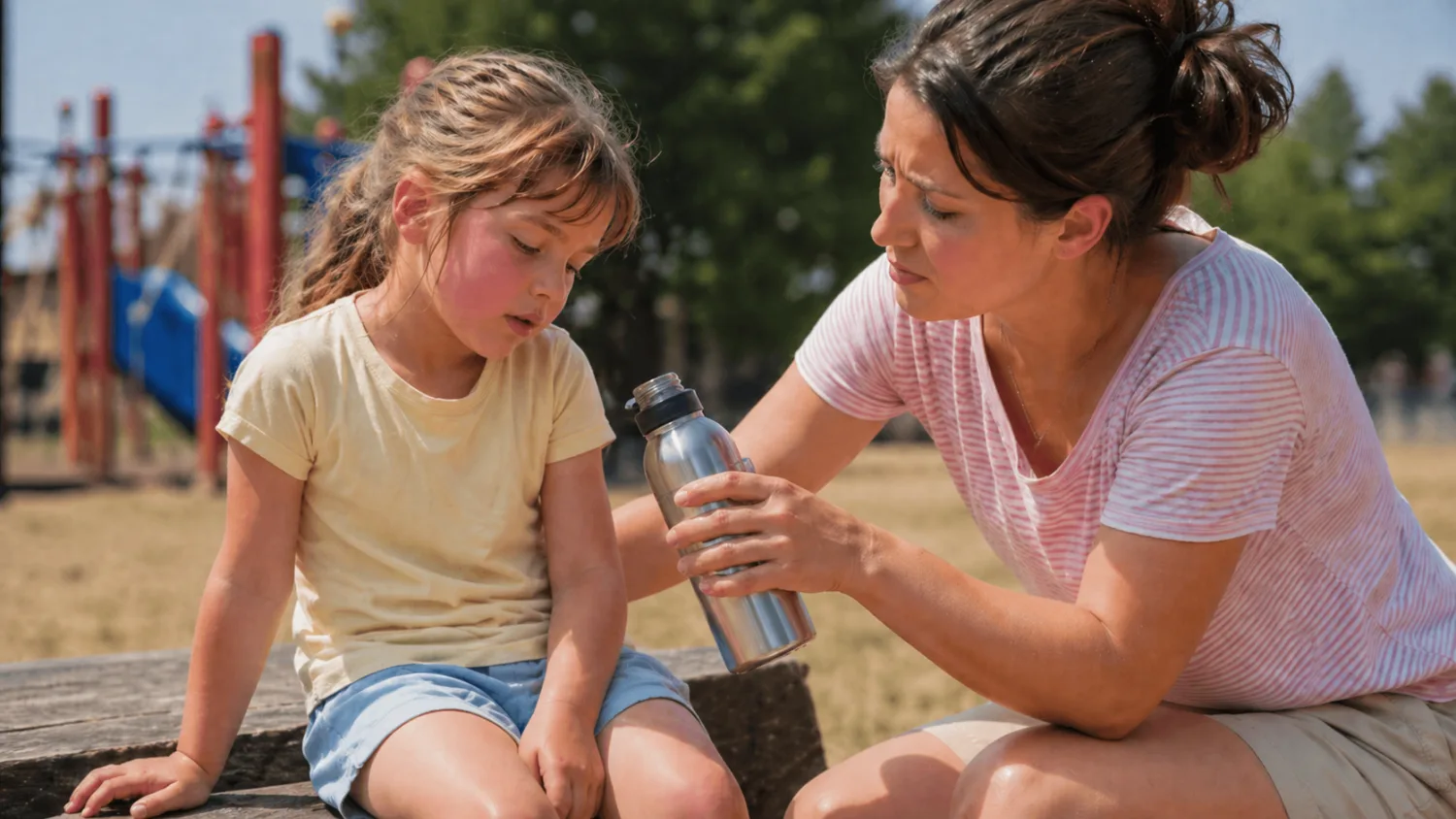
Dehydration happens when the body loses more fluid than it takes in. It can affect adults, children and babies, and it can develop more quickly than many people expect — especially during hot weather, after exercise, during illness, or when someone has diarrhoea or vomiting.
Mild dehydration can often be managed at home with fluids and rest. But dehydration can become serious, particularly in babies, young children, older adults and people with long-term health conditions. Knowing the early signs can help you act before someone becomes very unwell.
This guide explains common dehydration symptoms, how they can look different in adults and children, what may help, and when to seek medical advice.
Important: Seek urgent medical help if someone is confused, very drowsy, fainting, breathing fast, has a fast heartbeat, is unable to keep fluids down, or is a baby with very few wet nappies.
What is dehydration?
The body needs fluid to keep blood circulating, regulate temperature, digest food, remove waste and support normal organ function. We lose fluid all the time through breathing, sweating, urine and bowel movements. Usually, drinking and eating replace what we lose.
Dehydration develops when that balance is disturbed. This might happen because a person is not drinking enough, is sweating more than usual, has a fever, is vomiting, has diarrhoea, or is passing more urine than normal.
In everyday life, dehydration is often mild. You may feel thirsty, tired or headachey and notice that your urine is darker than usual. But if fluid loss continues, symptoms can become more serious.
Common symptoms of dehydration in adults
In adults, dehydration often starts subtly. You may feel a bit “off”, more tired than usual, or develop a headache. If it is hot, you are busy, or you are caring for others, it can be easy to ignore the early signs.
Common dehydration symptoms in adults include:
- feeling thirsty
- dry mouth, lips or tongue
- dark yellow, strong-smelling urine
- peeing less often than usual
- headache
- feeling tired, weak or lightheaded
- dizziness, especially when standing up
- muscle cramps
- feeling unusually warm or flushed
- constipation
Urine colour can be a useful clue. Pale yellow urine usually suggests you are reasonably hydrated. Dark yellow or amber urine, especially if you are passing less than usual, can be a sign that you need more fluid. However, some vitamins, medicines and foods can also change urine colour, so it is only one part of the picture.
If dehydration is linked to hot weather, it may overlap with symptoms of heat exhaustion, such as dizziness, sweating, nausea, weakness and cramps. You may also want to read our guide to heat exhaustion and heatstroke if symptoms started during a hot day, after sun exposure, or after physical activity.
Symptoms of dehydration in children
Children can become dehydrated more quickly than adults, especially if they are vomiting, have diarrhoea, have a fever, or are not drinking well. Younger children may not be able to explain that they feel thirsty or dizzy, so parents and carers often need to look for behaviour changes.
Signs of dehydration in children can include:
- being unusually tired, sleepy or irritable
- dry mouth or cracked lips
- crying with few or no tears
- peeing less often than usual
- dark yellow urine
- cold hands or feet
- sunken eyes
- fast breathing or a fast heartbeat
- dizziness or seeming weak
In babies, fewer wet nappies are an important warning sign. A baby who has significantly fewer wet nappies than usual, is very sleepy, is not feeding well, or has a sunken soft spot on the head should be assessed urgently.
The NHS has helpful guidance on dehydration symptoms and when to get help, including signs to look for in babies and children.
Dehydration in babies: signs to take seriously
Babies are more vulnerable because they have smaller fluid reserves and rely on adults for feeds. They can become dehydrated if they are feeding poorly, vomiting, have diarrhoea, have a fever, or are too hot.
Watch for:
- fewer wet nappies than usual
- a dry mouth
- no tears when crying
- unusual sleepiness or floppiness
- poor feeding
- sunken eyes
- a sunken fontanelle, the soft spot on the top of the head
- fast breathing or a fast heartbeat
If a baby is showing signs of dehydration, it is better to seek advice early. Babies can worsen quickly, particularly if they are under 6 months old, have repeated vomiting, or are not keeping feeds down.
What causes dehydration?
Dehydration can happen for several reasons. Sometimes it is simply a case of not drinking enough on a busy or hot day. At other times, it is linked to illness or medication.
Common causes include:
- hot weather or heatwaves
- heavy sweating from exercise or outdoor work
- fever
- diarrhoea or vomiting
- not drinking enough fluids
- drinking a lot of alcohol
- some medicines, including diuretics, sometimes called water tablets
- poor appetite or reduced drinking during illness
- diabetes or high blood sugar causing increased urination
Digestive illnesses are one of the most common reasons people become dehydrated. With diarrhoea and vomiting, the body can lose water and salts quickly. The NHS advises that the most important thing during diarrhoea and vomiting is to drink plenty of fluids to avoid dehydration. You can read the NHS advice on diarrhoea and vomiting.
If you are unsure whether symptoms are part of a wider digestive problem, our guide to digestive health symptoms and common conditions may also be useful.
Who is more at risk?
Anyone can become dehydrated, but some people are more vulnerable. This is not always because they are drinking less. It may be because their body has less reserve, they are losing fluid faster, or they cannot easily access drinks or ask for help.
People at higher risk include:
- babies and young children
- older adults
- people with dementia or memory problems
- people with mobility problems or disabilities
- people with fever, vomiting or diarrhoea
- people with diabetes
- people with kidney, heart or bowel conditions
- people taking medicines that increase fluid loss
- people who work outdoors or exercise heavily
- people who drink a lot of alcohol
Older adults may be less likely to feel thirsty, and some may avoid drinking because they worry about needing the toilet. During hot weather, it is worth checking on older relatives, neighbours or vulnerable adults, especially if they live alone.
Dehydration during hot weather
Hot weather increases fluid loss through sweating. If you are also walking, exercising, gardening, commuting, working outdoors or sitting in a warm room, dehydration can develop gradually through the day.
In the UK, people sometimes underestimate this risk because very hot weather may only last a few days at a time. But homes, public transport, workplaces and care settings can become very warm, especially during heatwaves.
During hot weather, try to drink regularly rather than waiting until you feel very thirsty. Water is usually a good choice. You can also get fluid from milk, diluted squash, soups, fruit and other foods. Limit alcohol if you are already hot, sweaty or unwell, as it can make dehydration more likely.
For related seasonal advice, you may also find our guides to sunburn and sun safety and hay fever symptoms and treatment useful.
Can dehydration cause a headache?
Yes. Headache is a common symptom of dehydration. Some people also feel tired, foggy, irritable or lightheaded. In hot weather, dehydration headaches may come with sweating, thirst, dry mouth and darker urine.
A mild dehydration headache may improve with fluids, rest and cooling down. But seek urgent help if a headache is sudden and severe, follows a head injury, comes with confusion, weakness, speech problems, stiff neck, rash, chest pain, fainting, or symptoms of heatstroke.
Can dehydration cause dizziness?
Dehydration can make you feel dizzy or lightheaded, especially when standing up. This can happen because the body has less fluid available to maintain blood pressure and circulation.
If dizziness quickly improves after sitting down, drinking fluids and resting, it may be mild. But dizziness that does not go away, causes fainting, happens with confusion, chest pain, breathlessness, weakness or a fast heartbeat should be assessed urgently.
If you also monitor your blood pressure at home, you may find our guide to home blood pressure monitoring helpful.
How to treat mild dehydration at home
For mild dehydration, the main treatment is to replace fluid gradually. Small, frequent drinks are often better than trying to drink a large amount quickly, especially if you feel sick.
Try the following:
- drink water regularly
- take small sips if you feel nauseous
- rest somewhere cool if heat is involved
- avoid alcohol
- eat light foods if you feel able
- use oral rehydration solution if advised or if fluid and salt loss is likely
Oral rehydration solution, often called ORS, is available from pharmacies. It contains a balanced mix of salts and sugar to help replace what the body loses through diarrhoea, vomiting or heavy sweating. It may be especially useful for children or adults who are losing fluid through a stomach bug.
If you are caring for a child with vomiting or diarrhoea, offer small amounts often. Even if they vomit, some fluid may still be absorbed. If they cannot keep fluids down, are becoming drowsy, or have signs of dehydration, seek medical advice.
What should you drink when dehydrated?
For most mild dehydration, water is fine. You do not always need sports drinks or special products. However, what is best may depend on why you are dehydrated.
If dehydration is due to hot weather or not drinking enough, water and regular meals may be enough. If it is due to diarrhoea, vomiting or heavy sweating, an oral rehydration solution may be more useful because it replaces salts as well as water.
Fruit juice and fizzy drinks can sometimes worsen diarrhoea in children, so ask a pharmacist, GP or NHS 111 if you are unsure. Babies should continue breast or bottle feeds unless a healthcare professional advises otherwise.
People with heart failure, kidney disease, fluid restrictions or certain medical conditions should follow their own clinician’s advice, as “drink more” is not always suitable for everyone.
When to speak to a pharmacist
A pharmacist can often help with mild dehydration, oral rehydration salts, diarrhoea, vomiting, heat-related symptoms and advice about medicines. This can be useful if symptoms are not severe but you want practical guidance.
For example, a pharmacist may advise on oral rehydration solutions, medicines that may not be suitable during dehydration, and when you should contact NHS 111 or a GP.
Our article on when to see a pharmacist instead of a GP explains the types of everyday health problems pharmacists can help with.
When to call NHS 111 or seek urgent medical advice
Dehydration can become serious. Do not wait too long if symptoms are worsening or the person is vulnerable.
Contact NHS 111, request an urgent GP appointment, or seek urgent medical advice if:
- you or your child feel unusually tired, drowsy or weak
- you feel confused or disorientated
- dizziness when standing does not go away
- you are peeing much less than normal
- your urine is very dark yellow
- a baby has fewer wet nappies than usual
- a baby or child has few or no tears when crying
- there is fast breathing or a fast heartbeat
- a baby has a sunken soft spot on the head
- vomiting or diarrhoea is stopping you from keeping fluids down
- you have a long-term condition and are unsure what to do
You can use NHS 111 online for advice if you are in England, or call 111 if you need help deciding what to do.
When to call 999
Call 999 if someone is severely unwell, unconscious, having a seizure, very confused, has blue lips, has severe breathing problems, has chest pain, or you think they may have heatstroke.
Call 999 if a baby or child is floppy, difficult to wake, not responding normally, or has signs of severe dehydration. Trust your judgement — if someone looks seriously unwell, it is safer to get emergency help.
Dehydration and medical conditions
Some health conditions can make dehydration more likely or more serious. Diabetes is one example. High blood sugar can cause increased urination, which may lead to fluid loss. Kidney problems, heart conditions and bowel conditions can also affect hydration and fluid balance.
If dehydration keeps happening, or you are very thirsty and peeing a lot without an obvious reason, speak to a healthcare professional. Tests may be needed to check for causes such as diabetes, kidney problems or medication effects.
You may find these related guides helpful:
- HbA1c and blood sugar results explained
- Kidney blood test results explained
- How to understand blood test results
How to prevent dehydration
Preventing dehydration is usually easier than treating it once symptoms have developed. The best approach is to drink regularly and adjust your fluid intake when your body is losing more than usual.
During hot weather, illness or exercise:
- keep a drink nearby
- drink regularly through the day
- offer children drinks often, especially when playing outside
- check babies are feeding and having wet nappies
- limit alcohol in hot weather
- take breaks from heat and physical activity
- use oral rehydration solution when advised for diarrhoea, vomiting or heavy fluid loss
- check on older or vulnerable people during hot spells
It can also help to build drinking into routines: a glass of water with meals, a drink after waking, a bottle when travelling, and regular drink breaks for children during outdoor play or sport.
Quick dehydration checklist
If you are unsure whether you or someone else may be dehydrated, ask:
- Are they thirsty?
- Is their mouth dry?
- Are they peeing less than usual?
- Is their urine dark yellow or strong-smelling?
- Are they dizzy, weak or unusually tired?
- Have they had vomiting, diarrhoea, fever, sweating or hot weather exposure?
- For babies: are there fewer wet nappies than usual?
If the answer is yes to several of these, start replacing fluids and monitor closely. If symptoms are severe, worsening, or involve a baby, young child, older adult or vulnerable person, get medical advice.
Final thoughts
Dehydration is common, but it should not be ignored. Early symptoms such as thirst, headache, tiredness, dizziness and dark urine are signs that the body needs more fluid. In children and babies, fewer wet nappies, no tears, drowsiness and poor feeding are especially important warning signs.
Most mild dehydration improves with fluids, rest and treating the cause. But urgent help is needed if someone is confused, very drowsy, breathing fast, has a fast heartbeat, cannot keep fluids down, is peeing very little, or is a baby or child with concerning symptoms.
For official advice, see the NHS guide to dehydration and NHS advice on diarrhoea and vomiting.
This article is for general information only and should not replace medical advice. If you are worried about your symptoms or someone else’s, contact NHS 111, your GP, or call 999 in an emergency.