Spring can be a difficult season for children with allergies. The weather improves, playgrounds get busier, windows open again and families spend more time outdoors — but for some children, this is when the sneezing, itchy eyes, blocked nose and night-time coughing begin.
Parents often describe it as “a cold that will not go away”. A child may seem fine in themselves, but they keep rubbing their eyes, sniffing, coughing at night or waking up tired. Some children become grumpy or distracted at school, not because anything serious is happening, but because they are sleeping badly and spending the day breathing through a blocked nose.
Spring allergies are usually manageable, but they are worth taking seriously. In children, hay fever and allergic rhinitis can affect sleep, concentration, sport, school and asthma control. This guide explains what to look for, why coughs happen, what simple steps can help, and when to speak to a pharmacist, GP or seek urgent help.
What causes spring allergies in children?
Spring allergies are usually caused by pollen. In the UK, tree pollen often becomes more noticeable from late March and April, while grass pollen tends to become a bigger problem later in spring and early summer. The Met Office pollen forecast can help parents spot patterns, especially if symptoms seem worse on dry, breezy days.
When a child has hay fever, their immune system reacts to pollen as if it is a threat. This causes inflammation in the nose, eyes and throat. The medical term is allergic rhinitis when the nose is affected, and allergic conjunctivitis when the eyes are involved. Most parents simply call it hay fever.
Not every child reacts in the same way. One child may sneeze constantly and have streaming eyes. Another may mainly have a blocked nose and a cough at night. A third may become wheezy during football or PE. The pattern matters because it helps you choose the right treatment and decide when extra help is needed.
Common symptoms of spring allergies in children
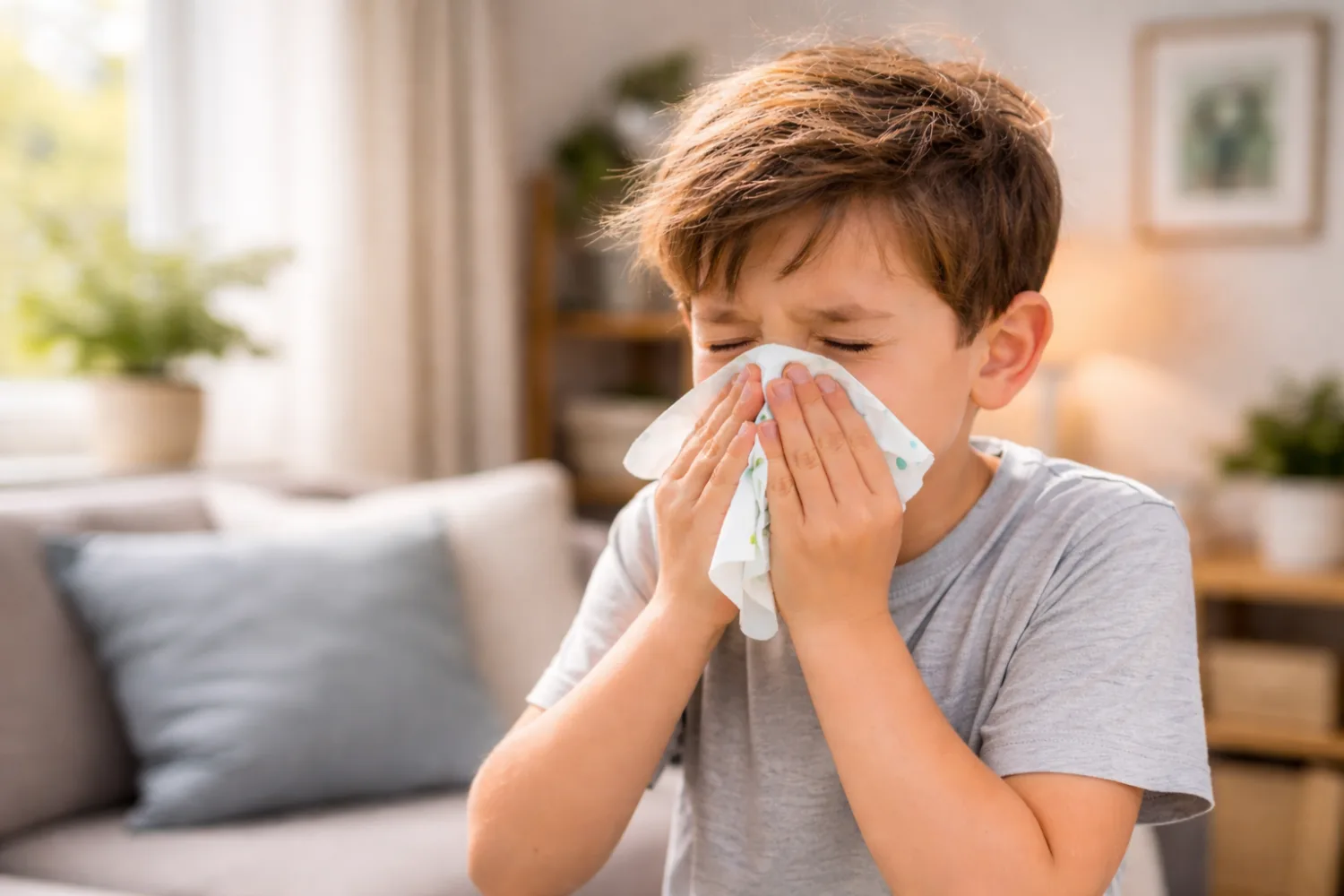
The most recognisable symptoms are sneezing, a runny or blocked nose, itchy eyes and watery eyes. Children may also complain of an itchy throat, itchy ears, headache or tiredness. Some children do not explain it clearly; they simply rub their nose upwards with the palm of the hand, blink more than usual, breathe through their mouth or ask for tissues all day.
The NHS hay fever guidance lists symptoms such as sneezing, coughing, a runny or blocked nose, itchy or watery eyes, and itching of the throat, mouth, nose and ears. In children, those symptoms can look slightly different from adults because children may not have the words to describe “itchy sinuses” or “postnasal drip”.
A typical example is a seven-year-old who starts rubbing their eyes every afternoon after school. They wake with a blocked nose, cough for the first hour of the morning, then seem better by lunchtime. At the weekend, symptoms are worse after playing in the park. That pattern is much more suggestive of allergy than a new infection every few days.
Why spring allergies can cause a cough
A cough is one of the symptoms that worries parents most. Understandably, many people associate a cough with infection, asthma or something on the chest. But hay fever can also cause coughing, often because mucus drips from the back of the nose into the throat. This is sometimes called postnasal drip.
This type of cough is often worse at night, first thing in the morning, or when the child lies down. The child may clear their throat a lot, sound “nasal”, snore more than usual or wake with a dry mouth because they have been breathing through their mouth.
However, not every cough during pollen season should be assumed to be hay fever. A cough with wheezing, chest tightness, breathlessness or reduced ability to run around may suggest asthma or viral-triggered wheeze. Asthma + Lung UK explains that allergies, including pollen allergy, can sometimes trigger asthma symptoms in children. Their advice on spotting asthma symptoms in children is useful if your child’s cough comes with breathing symptoms.
Hay fever cough or asthma cough?
There is some overlap, and that is why parents often feel unsure. A hay fever-related cough is usually linked to nose and throat symptoms: blocked nose, sneezing, throat clearing, itchy eyes or mucus dripping down the throat. The child may cough more when lying down but breathe normally when running around.
An asthma-type cough is more likely if the child also wheezes, gets breathless, has chest tightness, coughs after exercise, coughs at night even when the nose is not blocked, or has symptoms triggered by cold air, pollution, pollen or viral infections. Some children with asthma do not wheeze loudly, so a repeated night cough or exercise cough should not be ignored.
If your child already has asthma and their hay fever starts flaring, it is especially important to keep both under control. Poorly controlled hay fever can make asthma symptoms worse. If your child is using their reliever inhaler more often than usual, waking at night with cough or wheeze, or avoiding activity because of breathing symptoms, they need medical advice.
Could it just be a cold?
Colds are common in children, especially in nursery and primary school years, so it is not always obvious at first. A cold often comes with a sore throat, fever, aches, thicker mucus and symptoms that change over a few days before improving. Hay fever tends to last longer, returns around the same time of year, and often causes itch — itchy eyes, itchy nose, itchy throat or itchy ears.
Another clue is timing. If symptoms are worse after outdoor play, on high-pollen days, after the grass is cut, or when windows are open overnight, allergy becomes more likely. If the child is completely better on rainy days or after being indoors for a while, that can also point towards pollen.
Simple things parents can try at home
You do not need to turn your home into a sealed bubble. Children still need fresh air, play and normal routines. The aim is to reduce pollen exposure enough to make symptoms easier to control.
On high-pollen days, it can help to keep bedroom windows closed, especially in the evening and overnight. After outdoor play, washing the child’s face and changing their top can remove pollen from the skin and clothes. If symptoms are bad, a quick shower before bed may stop pollen transferring to pillows. Drying bedding indoors during high-pollen periods can also help, because outdoor drying can collect pollen.
For itchy eyes, wraparound sunglasses can be surprisingly useful for older children who will tolerate them. Younger children may simply need reminders not to rub their eyes, because rubbing usually makes redness and swelling worse.
These measures are not a substitute for treatment if symptoms are significant, but they often reduce the “pollen load” enough that medicines work better.
When to speak to a pharmacist
For mild to moderate hay fever symptoms, a pharmacist is often the best first step. This is especially true if your child has a familiar seasonal pattern, is otherwise well, and does not have breathing problems. Pharmacists can advise on age-appropriate treatments, including antihistamines, nasal sprays and eye drops where suitable.
This matters because children are not just small adults. Some medicines are only suitable from certain ages, and doses vary. Decongestant nasal sprays, for example, are not suitable for young children and should not be used casually. The NHS allergic rhinitis guidance notes that a pharmacist can advise on treatments such as antihistamines, steroid nasal sprays and salt water sprays, while also warning that some options are not suitable for younger children.
If you are not sure whether to use the pharmacy, GP or another service, your guide on when to see a pharmacist instead of a GP is a useful internal link for parents who want quick, practical advice.
Antihistamines for children
Antihistamines can help with sneezing, itching, runny nose and watery eyes. Some are more likely to cause drowsiness than others, so it is worth asking the pharmacist about non-drowsy options, especially if symptoms are affecting school or concentration.
A common mistake is giving an occasional dose only after symptoms have become severe. For children with predictable seasonal hay fever, regular use during the worst weeks may work better than waiting until they are already miserable. The right approach depends on age, symptoms and medical history, so check the product instructions and ask a pharmacist if unsure.
Nasal sprays: useful when the nose is blocked
If your child’s main problem is a blocked nose, mouth breathing, snoring, poor sleep or postnasal drip cough, tablets alone may not be enough. Nasal sprays can be very helpful, but they need to be chosen carefully for the child’s age and used correctly.
Salt water sprays or rinses may help clear pollen and mucus from the nose. Steroid nasal sprays can reduce inflammation and are often useful for more persistent allergic rhinitis, but suitability depends on age and the specific product. If a spray is recommended, technique matters. Spraying gently away from the middle wall of the nose can reduce irritation and make it easier to use.
Many children dislike nasal sprays at first. It can help to explain that it is not a punishment or a “big medicine”, but something to help them breathe better at night. For younger children, keeping the routine calm and brief is often more successful than turning it into a battle.
Eye symptoms: what helps itchy, watery eyes?
Itchy eyes can be one of the most frustrating symptoms for children. They rub, the eyes get redder, then they rub again. Cool compresses can soothe irritation. Sunglasses may reduce exposure outdoors. Allergy eye drops may be suitable for some children, depending on age and symptoms, so it is worth asking a pharmacist.
If your child has ongoing gritty, sore or irritated eyes outside the pollen season as well, it may not be simple hay fever. Some children also have dry eye, eyelid inflammation or other eye conditions. Your article on dry eye syndrome symptoms, causes and treatment in the UK may be helpful for readers trying to understand the difference.
School, sleep and behaviour: the hidden impact
Spring allergies can affect children in ways that are easy to miss. A blocked nose can disturb sleep. Itchy eyes can make reading uncomfortable. A cough at night can leave a child tired the next day. Some children become irritable, tearful or less able to concentrate, especially if symptoms carry on for weeks.
If symptoms are affecting school, it may be worth telling the teacher. A child with bad hay fever may need tissues available, permission to drink water, or understanding if they seem tired during a high-pollen week. Older children may need reminders not to leave medication until symptoms are severe.
For children sitting exams or important assessments, controlling hay fever early can make a real difference. It is much better to get advice before the worst weeks than to start experimenting with treatments the night before an exam.
Children with eczema, food allergies or asthma
Children with one allergic condition are more likely to have others. A child with eczema may also develop hay fever. A child with hay fever may have asthma symptoms triggered by pollen. This does not mean every child with itchy eyes has asthma, but it does mean parents should watch for patterns.
If your child has eczema that worsens during spring, pollen may be one of several triggers. Your guide to eczema and psoriasis symptoms, differences and treatment can be a helpful related read for families dealing with skin flares as well as hay fever.
If your child has diagnosed asthma, make sure their asthma plan is up to date and that hay fever is treated properly. If pollen season regularly causes coughing, wheezing or more reliever inhaler use, this should be discussed with a GP, asthma nurse or appropriate clinician.
When to see a GP
See a GP if your child’s symptoms are not improving with pharmacy treatment, are affecting sleep or school, are severe every year, or you are unsure whether it is hay fever. You should also seek GP advice if there is persistent cough, wheeze, breathlessness, repeated night waking, or symptoms that limit exercise.
A GP may review the diagnosis, check for asthma or other causes of cough, adjust treatment, or consider referral if symptoms are severe. Some children with difficult allergic rhinitis may need specialist advice. Immunotherapy, which aims to reduce the immune system’s reaction to allergens, is usually reserved for selected children with severe symptoms that do not respond to usual treatment.
If getting an appointment feels difficult, your article on how to get a GP appointment quickly in the UK is a natural next step for parents who need practical help navigating access.
When to get urgent help
Most spring allergy symptoms are not emergencies. But breathing symptoms can be different. Get urgent medical help if your child is struggling to breathe, breathing very fast, too breathless to speak or feed normally, has blue lips, becomes unusually drowsy, or has severe wheezing. Asthma + Lung UK advises calling 999 if a child is coughing, wheezing and finding it hard to breathe.
If your child has asthma and needs their reliever inhaler much more often than usual, or symptoms are not improving after following their asthma plan, seek urgent advice. Do not assume it is only hay fever if the chest is involved.
You should also seek urgent help for severe swelling of the lips, tongue or face, collapse, or signs of a serious allergic reaction. These are not typical hay fever symptoms.
A realistic parent-friendly plan
Imagine a nine-year-old who starts coughing at night every April. They also have itchy eyes after school and wake with a blocked nose. They are otherwise well, have no fever and are still active, but they are tired and snappy in the mornings. A sensible first step would be to check the pollen forecast, reduce pollen in the bedroom, wash face and hair after outdoor play, and speak to a pharmacist about age-appropriate hay fever treatment.
If the cough settles as the nose improves, that supports the idea that postnasal drip was part of the problem. But if the child starts wheezing, gets breathless during PE, wakes repeatedly at night, or needs an inhaler more often than usual, that becomes a GP or urgent-care issue depending on severity.
The key is not to panic, but not to dismiss it either. Spring allergies are common, but children should still be able to sleep, learn and play comfortably.
The bottom line
Spring allergies in children are common in the UK and often start with sneezing, itchy eyes, blocked nose or a cough that keeps coming back. Many children can be helped with simple pollen-reduction habits and the right pharmacy treatment. The most important thing is to match treatment to symptoms: antihistamines may help itch and sneezing, nasal sprays may help congestion and postnasal drip, and eye drops may help itchy eyes.
But coughs need a little extra attention. A cough linked to a blocked nose may be hay fever. A cough with wheeze, breathlessness, chest tightness, exercise symptoms or night waking may need asthma assessment. If your child is struggling to breathe, seek urgent help.
Frequently asked questions
Can children get hay fever?
Yes. Children can develop hay fever and other spring allergies. Symptoms may include sneezing, blocked or runny nose, itchy eyes, watery eyes, coughing, throat clearing and tiredness.
Why does my child cough more during pollen season?
Pollen allergies can cause mucus to drip from the back of the nose into the throat, which can trigger coughing, especially at night or first thing in the morning. However, cough with wheeze, breathlessness or exercise symptoms may suggest asthma and should be checked.
How can I tell if it is hay fever or a cold?
Hay fever often causes itching, watery eyes and symptoms that return during pollen season or after outdoor exposure. A cold is more likely to come with fever, sore throat, thicker mucus and symptoms that improve over several days.
Should I take my child to a pharmacist or GP?
A pharmacist is a good first step for mild to moderate seasonal symptoms. See a GP if symptoms are severe, persistent, affecting sleep or school, not improving with treatment, or if your child has cough, wheeze, breathlessness or asthma symptoms.
Are hay fever medicines safe for children?
Many hay fever treatments can be used in children, but suitability depends on age, symptoms and medical history. Always check the label and ask a pharmacist, especially for younger children or if your child takes other medicines.
Can hay fever make asthma worse?
Yes. Pollen allergy can trigger asthma symptoms in some children. If your child has asthma and starts coughing, wheezing, waking at night or using their reliever inhaler more often during pollen season, seek medical advice.
What can I do at home to reduce pollen symptoms?
Keep bedroom windows closed on high-pollen days, wash your child’s face after outdoor play, change clothes before bed, avoid drying bedding outside when pollen counts are high, and consider sunglasses for eye symptoms.
When is a child’s cough urgent?
Get urgent help if your child is struggling to breathe, breathing very fast, too breathless to speak normally, has blue lips, is unusually drowsy, or has severe wheezing. If your child has an asthma plan, follow it and seek urgent help if symptoms do not improve.