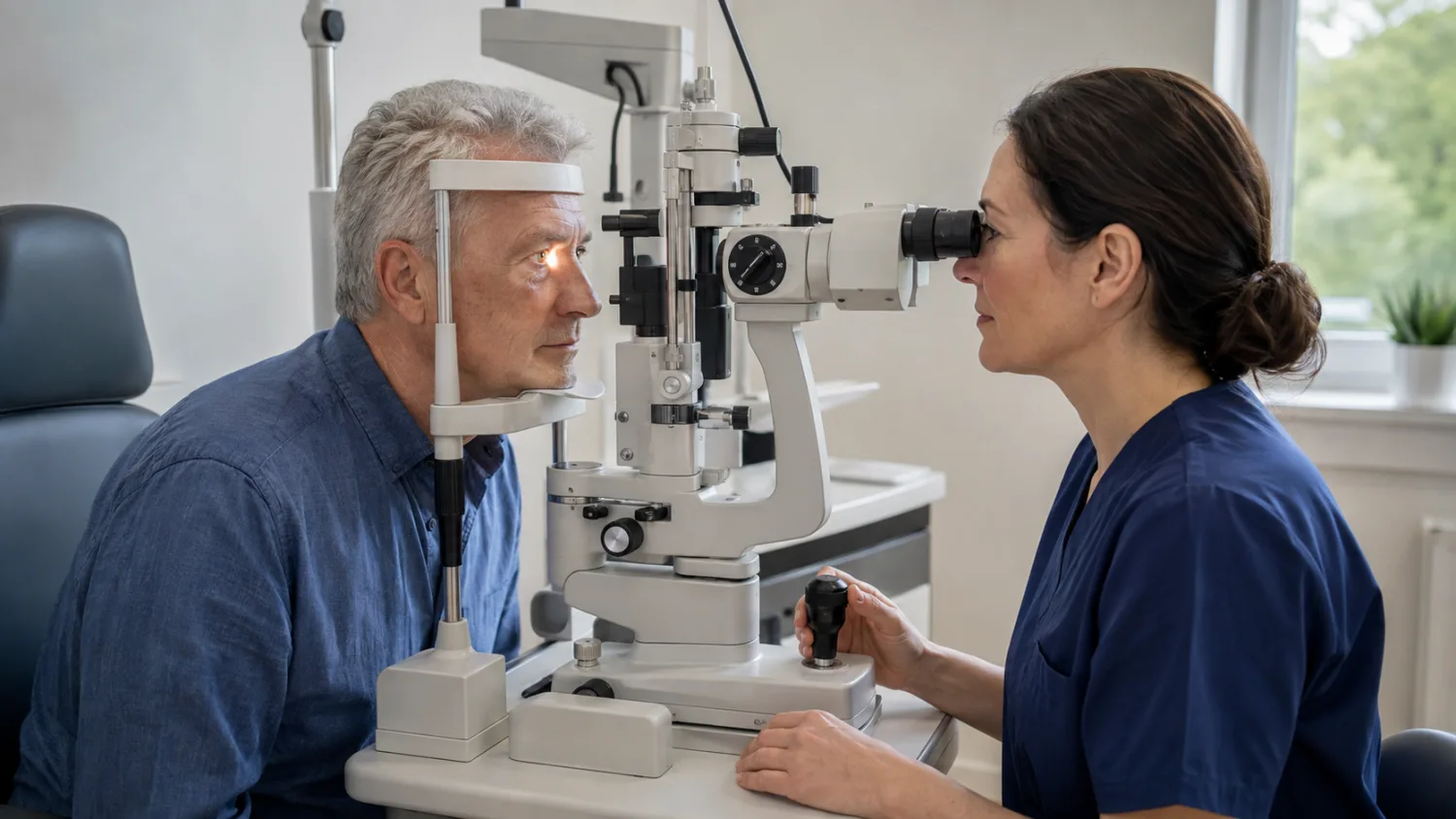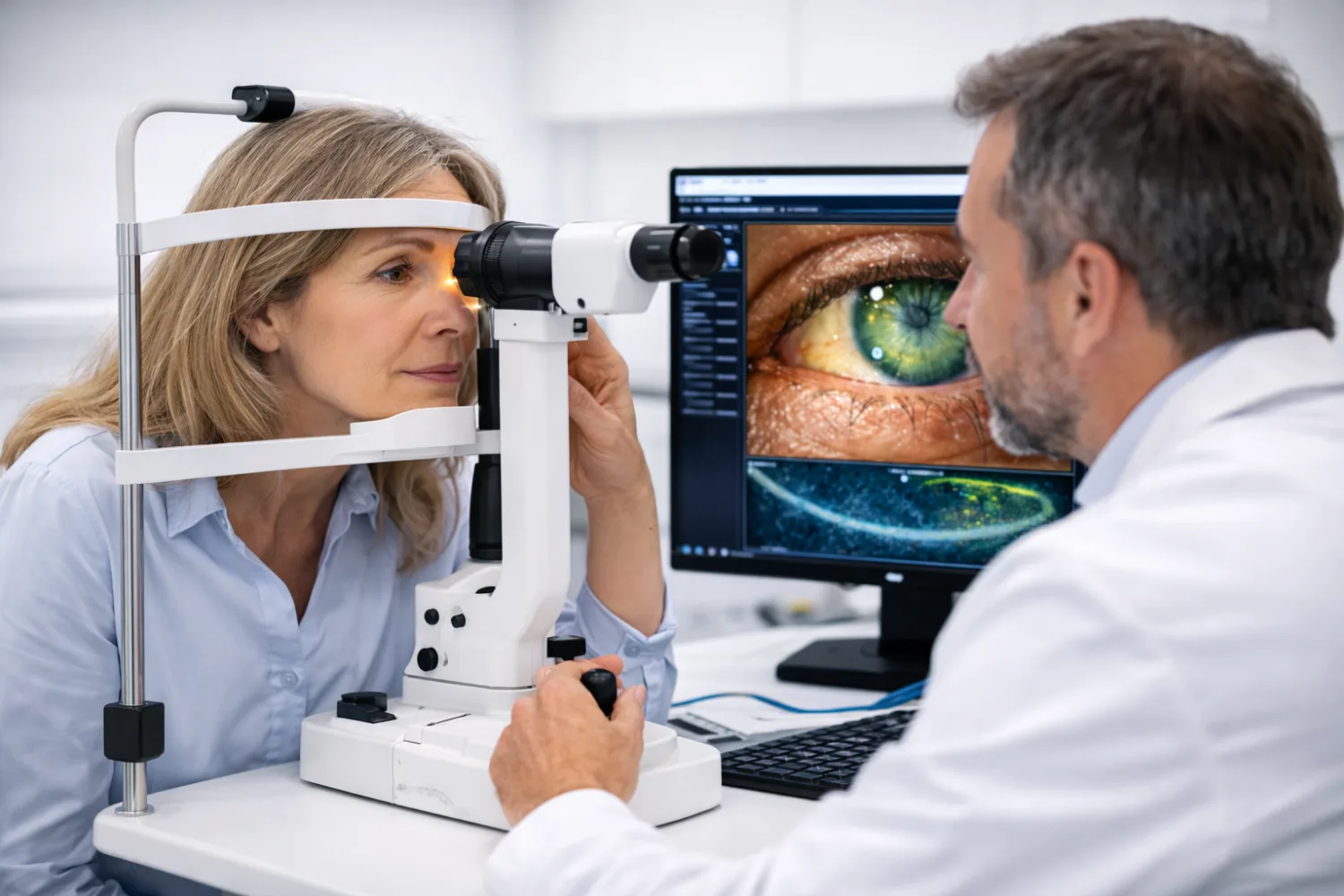
Dry eye syndrome is a common condition that happens when your eyes do not make enough tears, or when the tears you do make evaporate too quickly. Although the name suggests simply “dry” eyes, the condition can also cause watering, irritation, burning, blurred vision and a gritty feeling, as if there is sand in the eye.
Dry eye is very common in the UK and can range from mildly annoying to persistent and frustrating. For some people, it mainly causes discomfort during screen use, driving or reading. For others, it becomes a long-term condition that affects work, sleep, concentration and quality of life.
The reassuring news is that dry eye syndrome is usually manageable. Many people improve with eyelid cleaning, regular screen breaks, artificial tears and treatment of related eyelid problems. More stubborn cases may need specialist assessment and stronger treatment.
This guide explains dry eye syndrome, including symptoms, causes, diagnosis, NHS and private treatment options in the UK, and when to seek medical help.
What dry eye syndrome means
Your eyes need a healthy tear film to stay comfortable and keep vision clear. Tears do much more than show emotion. They lubricate the eye, protect the surface, help fight infection and create a smooth layer for clear vision.
Dry eye syndrome happens when the quantity or quality of tears is poor. This can irritate the surface of the eye and cause symptoms.
Dry eye is sometimes called dry eye disease. It is often a long-term condition rather than a short-lived problem. In many people, it is linked to inflammation of the eye surface or problems with the oily glands in the eyelids, which help stop tears from evaporating too quickly.
Despite the name, dry eye does not always mean the eyes look dry. Some people have watery eyes because irritation triggers reflex tearing. These tears are often poor quality and do not solve the underlying problem.
The NHS has patient information on dry eyes, including symptoms and self-care advice.
Symptoms of dry eye
Dry eye syndrome can cause a wide range of symptoms. These may come and go or become persistent.
Common symptoms include:
- stinging or burning eyes
- gritty or sandy feeling
- itching
- redness
- watery eyes
- blurred vision that comes and goes
- sensitivity to light
- stringy mucus around the eyes
- tired or heavy eyes
- discomfort during screen use
- difficulty wearing contact lenses
- symptoms that worsen later in the day
Why dry eyes can water
Watery eyes can be confusing. Many people assume watering means the eyes cannot be dry, but watering can happen when irritation triggers reflex tears.
These tears may run down the face, but they often do not lubricate the eye surface properly. This is why someone can have watery eyes and dry eye syndrome at the same time.
What makes dry eye worse?
Dry eye symptoms are often worse in certain environments or during activities that reduce blinking.
Common triggers include:
- long periods of screen use
- reading for a long time
- driving, especially with air vents on
- windy weather
- air conditioning
- central heating
- smoke or dusty environments
- contact lens wear
- not drinking enough fluids
- poor sleep
Screen use is a common trigger because people blink less often and less fully when concentrating on a computer, phone or tablet.
Causes of dry eye syndrome
Dry eye usually happens for one of two main reasons: the eyes do not make enough tears, or tears evaporate too quickly. Some people have both.
Meibomian gland dysfunction
One of the most common causes is a problem with the eyelid oil glands, also called the meibomian glands. These glands release oil that helps stop tears evaporating too quickly.
If the glands become blocked or inflamed, the tear film becomes unstable and symptoms develop more easily.
Blepharitis
Blepharitis is inflammation of the eyelid edges. It can cause crusting, irritation, redness, gritty eyes and unstable tears. It is commonly linked with dry eye.
When blepharitis is part of the problem, eyelid cleaning and warm compresses can be just as important as eye drops.
Ageing and hormonal changes
Dry eye becomes more common with age. Hormonal changes, including those around menopause, can also contribute to eye dryness in some people.
Screen use
Long periods of screen use can worsen dry eye because blinking becomes less frequent and less complete. This allows tears to evaporate more quickly.
Contact lenses
Contact lenses can make dry eye symptoms worse, especially if worn for long hours or in dry environments. Some people need to reduce wearing time, change lens type or use glasses during flare-ups.
Medicines
Some medicines can worsen dry eye symptoms. These may include:
- antihistamines
- some antidepressants
- diuretics
- some beta-blockers
- isotretinoin
- some medicines used for anxiety, sleep or bladder symptoms
Do not stop prescribed medication without medical advice. If you think a medicine is worsening your symptoms, speak to a pharmacist, GP, optometrist or specialist.
Health conditions
Certain health conditions can increase the risk of dry eye, especially autoimmune conditions. Dry eyes together with a persistently dry mouth may need broader medical assessment.
Who is most at risk?
Dry eye can affect anyone, but some people are more likely to develop it.
Risk factors include:
- older age
- female sex
- menopause or hormonal changes
- contact lens use
- long hours using screens
- blepharitis
- meibomian gland dysfunction
- autoimmune conditions
- some medications
- dry or windy environments
- smoking or exposure to smoke
If symptoms are mild, a pharmacist or optician may be a good first point of contact. See when to see a pharmacist instead of a GP.
How dry eye is diagnosed in the UK
Many people start by discussing symptoms with an optician, pharmacist, GP or contact lens practitioner. Mild cases are often recognised from symptoms and a basic examination.
More persistent or severe cases may need a detailed eye assessment. An optometrist or eye specialist may check:
- the eyelids
- the tear film
- the surface of the eye
- blink quality
- signs of blepharitis
- meibomian gland function
- contact lens fit and wearing habits
- whether another eye condition could be causing symptoms
They may ask about medicines, screen habits, contact lens use, general health and symptoms such as dry mouth or joint pain.
If symptoms are not settling and referral is needed, see how hospital referrals work in the UK.
Treatment for dry eye syndrome
Many cases of dry eye improve with self-care and over-the-counter lubricating drops. Treatment becomes more important when symptoms are frequent, vision is affected, the eye surface is inflamed, or simple measures are not enough.
The aim of treatment is to:
- make the eyes more comfortable
- improve tear film quality
- reduce inflammation
- protect the surface of the eye
- treat eyelid problems that contribute to dryness
- reduce flare-ups
Dry eye can be chronic, so consistency matters. Drops, lid care and environmental changes often work best when used regularly rather than only during severe flare-ups.
Self-care and lifestyle measures
Simple changes can make a real difference, especially when symptoms are linked to screens, heating, air conditioning or contact lenses.
Helpful measures include:
- cleaning the eyelids daily if advised
- taking regular breaks from screens
- positioning screens slightly below eye level
- blinking consciously during screen use
- using a humidifier if indoor air is dry
- avoiding fans or air vents blowing directly at the face
- wearing wraparound sunglasses in wind
- resting from contact lenses during flare-ups
- staying well hydrated
- avoiding smoky or dusty environments where possible
Artificial tears and lubricating drops
Artificial tears are usually the first treatment for dry eyes. Many are available over the counter without a prescription.
Options include:
- thin lubricating drops for daytime use
- preservative-free drops for frequent use or sensitive eyes
- gels for longer-lasting relief
- ointments for night-time use
There is no single best product for everyone. Finding the right option can involve trial and error. If you need drops very frequently, preservative-free options may be recommended.
Warm compresses and eyelid cleaning
When dry eye is linked to blepharitis or meibomian gland dysfunction, treatment may include warm compresses, lid massage and regular eyelid cleaning.
This helps loosen blocked oils and improve the quality of the tear film. Lid care often needs to be continued long term to prevent symptoms returning.
Medication review
If dry eye may be linked to medication, a clinician or pharmacist can review whether alternatives are possible. Do not stop prescribed medication suddenly without advice.
Contact lens changes
If contact lenses worsen symptoms, an optometrist may suggest reducing wearing time, changing lens material, changing cleaning solutions, using lubricating drops suitable for contact lenses, or switching to glasses during flare-ups.
Prescription treatments
For more persistent or inflammatory dry eye, a specialist may consider prescription treatments. These depend on the cause and severity and may include anti-inflammatory eye drops or other specialist options.
Punctal plugs and specialist procedures
Some people with significant dry eye may be offered punctal plugs. These are tiny devices placed in the tear drainage channels to help tears stay on the eye surface for longer.
Some private clinics also offer specialist dry-eye treatments aimed at meibomian gland dysfunction. Suitability and evidence vary, so ask what benefit is expected, what the risks are and whether simpler treatments have been tried first.
NHS and private treatment options
NHS care
In the UK, mild dry eye is often managed with self-care, pharmacists, opticians and primary care. Over-the-counter lubricants are commonly used first.
In some areas, mild to moderate dry eye treatments are expected to be bought over the counter rather than prescribed routinely.
NHS referral may be appropriate if symptoms are severe, persistent, affecting vision, linked to another eye disease, or not improving with standard treatment.
Private eye care
Private eye clinics may offer faster access to specialist dry-eye assessment, tear-film testing, meibomian gland evaluation and follow-up appointments.
Some patients choose private care when symptoms are ongoing, when they want a more detailed work-up, or when dry eye is affecting contact lens wear, work or plans for other eye treatment.
If you are comparing routes to care, see NHS vs private healthcare in the UK and private GP services in the UK.
Risks, complications and long-term outlook
Most dry eye is uncomfortable rather than dangerous. However, persistent inflammation and poor tear-film protection can sometimes affect the surface of the eye more seriously if symptoms are severe or ignored.
Dry eye may come and go, especially with changes in weather, screen use, sleep, medicines or contact lens wear. Some people have a long-term condition that needs regular management.
With the right combination of eyelid care, lubrication, environmental changes and review of contributing factors, symptoms can often be improved significantly.
If you are also exploring age-related eye problems, see cataracts symptoms, treatment and surgery options in the UK.
When to seek professional or urgent advice
You should seek professional advice if symptoms do not improve with pharmacy treatment, keep coming back, or get worse.
Arrange an assessment if you have:
- persistent dry, gritty or burning eyes
- symptoms affecting reading, driving or screen work
- blurred vision that keeps returning
- difficulty wearing contact lenses
- lumps or crusting on the eyelids
- significant redness
- light sensitivity
- dry eyes with a dry mouth or joint symptoms
When to seek urgent eye advice
Seek urgent eye advice if:
- one eye becomes very painful
- vision drops suddenly
- redness is severe
- you are very sensitive to light
- there has been an eye injury
- you wear contact lenses and develop a painful red eye
These symptoms may suggest a different eye problem rather than routine dry eye. If getting help quickly is difficult, see how to get a GP appointment quickly in the UK.
Living well with dry eye syndrome
Dry eye can be frustrating because it affects small but important parts of daily life, including reading, driving, laptop work, applying makeup, wearing contact lenses and sleeping comfortably.
Practical habits often help:
- blink consciously during screen use
- follow the 20-20-20 approach during long screen sessions
- avoid air blowing directly at your face
- clean eyelids regularly if advised
- use lubricants consistently
- keep drops nearby at work or when travelling
- wear sunglasses outdoors in wind
- take breaks from contact lenses during flare-ups
Dry eye management is often about routine. Small daily habits can reduce flare-ups and make symptoms easier to control.
FAQ: dry eye syndrome in the UK
What are the main symptoms of dry eye?
Common symptoms include burning, stinging, gritty eyes, redness, watering, blurred vision that comes and goes, light sensitivity and discomfort during screen use or reading.
Can dry eyes make my eyes water?
Yes. Irritation from dry eye can trigger reflex tears. These tears may make the eyes water but often do not lubricate the eye surface properly.
What causes dry eye syndrome?
Dry eye can happen when the eyes do not make enough tears or when tears evaporate too quickly. Common contributors include eyelid gland problems, blepharitis, ageing, screen use, contact lenses, medicines and dry environments.
Is dry eye serious?
Most dry eye is uncomfortable rather than dangerous, but severe or untreated dry eye can sometimes affect the eye surface. Persistent pain, worsening redness or vision changes should be assessed.
What is the best treatment for dry eyes?
There is no single best treatment for everyone. Many people improve with artificial tears, eyelid cleaning, warm compresses, screen breaks and treating blepharitis or meibomian gland dysfunction.
Can I buy dry eye drops without a prescription?
Yes. Many artificial tears, gels and ointments are available over the counter. A pharmacist or optometrist can help you choose a suitable option.
Are preservative-free eye drops better?
Preservative-free drops may be better for people who need drops very frequently, have sensitive eyes or wear contact lenses. An optometrist or pharmacist can advise.
Can screen use cause dry eyes?
Screen use can worsen dry eye because people blink less often and less fully while concentrating. Regular breaks and conscious blinking can help.
Can contact lenses make dry eye worse?
Yes. Contact lenses can worsen dryness in some people. You may need to reduce wearing time, change lens type or use glasses during flare-ups.
Should I see a GP or optician for dry eyes?
An optician or optometrist is often a good first choice for eye symptoms. A pharmacist can help with mild symptoms, while a GP may be useful if symptoms are linked to medicines, general health or autoimmune concerns.
When should I seek urgent help for dry eyes?
Seek urgent advice if you have severe pain, sudden vision loss, marked redness, light sensitivity, eye injury, or a painful red eye while wearing contact lenses.
Can dry eye be cured permanently?
Some cases settle when triggers are removed, but many people have a long-term tendency to dry eye. With regular treatment and good habits, symptoms can often be controlled well.
Final takeaway
Dry eye syndrome is common, uncomfortable and sometimes surprisingly disruptive, but it is usually manageable with the right treatment and daily habits.
The most effective approach often combines self-care, lubricating drops, eyelid care and attention to underlying causes such as blepharitis, contact lens wear, medicines or prolonged screen use.
If symptoms are persistent, painful or affecting vision, it is worth getting assessed properly rather than trying random drops for months. A proper eye check can identify whether dry eye is mild and lifestyle-related or part of a more complex eye-surface problem.