Glaucoma is a common eye condition that damages the optic nerve, the part of the eye that sends visual information to the brain. It is one of the leading causes of preventable sight loss in the UK because it often develops slowly and without obvious symptoms in the early stages.
Many people with early glaucoma feel perfectly well and notice no change in vision. By the time sight loss becomes obvious, some damage may already be permanent.
The good news is that glaucoma can often be detected through routine eye tests, and treatment can usually slow or stop further damage. Treatment cannot bring back vision that has already been lost, but it can help protect the sight you still have.
This guide explains glaucoma, including symptoms, risk factors, diagnosis, NHS and private treatment options in the UK, and when to seek urgent help.
What glaucoma means
Glaucoma is the name for a group of eye conditions that damage the optic nerve. In many cases, this damage is linked to pressure inside the eye, although glaucoma can sometimes develop even when eye pressure is within the normal range.
Inside the eye, a clear fluid is constantly produced and drained away. If drainage does not work properly, pressure can build up. Over time, this pressure may damage the optic nerve and affect the signals travelling from the eye to the brain.
Glaucoma is not a single disease. The most common type in the UK is primary open-angle glaucoma, which usually develops slowly over many years. Another important type is angle-closure glaucoma, which can develop suddenly and needs urgent medical attention.
Because glaucoma usually affects peripheral vision first, many people do not realise anything is wrong until the condition is advanced. This is why regular eye tests are so important, especially as you get older or if glaucoma runs in your family.
The NHS has official patient information on glaucoma, including symptoms, diagnosis and treatment.
Symptoms of glaucoma
The symptoms of glaucoma depend on the type. The most common form often develops silently, while sudden angle-closure glaucoma can cause severe symptoms and needs urgent care.
Open-angle glaucoma
Open-angle glaucoma is the most common form. It usually develops so gradually that there are no early warning signs. Vision can feel normal for a long time.
The first part of sight to be affected is usually the outer side vision, also called peripheral vision. Because the brain and the other eye can compensate, early changes may go unnoticed.
As glaucoma progresses, symptoms may include:
- patchy blind spots
- reduced side vision
- difficulty noticing objects to the side
- problems with driving safety
- bumping into objects
- tunnel vision in advanced cases
Reading may still seem possible because central vision can remain clear until later stages. This is one reason glaucoma can be missed without routine eye tests.
Angle-closure glaucoma
Angle-closure glaucoma is different. It can come on suddenly and cause severe symptoms.
Symptoms may include:
- intense eye pain
- a red eye
- blurred vision
- halos around lights
- headache
- feeling sick or being sick
- sudden vision changes
This is a medical emergency. Sudden angle-closure glaucoma needs urgent treatment to reduce eye pressure and protect sight.
It is important to remember that the most common form of glaucoma usually causes no pain in the early stages. Relying on symptoms alone can be risky.
Who is most at risk?
Glaucoma can affect adults of any age, but it becomes more common as people get older. Risk increases from the 40s onwards and especially later in life.
You may be at higher risk if:
- a parent, sibling or child has glaucoma
- you have raised eye pressure
- you are very short-sighted
- you are very long-sighted
- you have diabetes
- you have used steroid medication for a long time
- you have had previous eye injury
- you have had previous eye surgery
- you are of African, Caribbean or Asian family background
Family history matters. In England, people aged 40 or over with a parent, sibling or child diagnosed with glaucoma may be eligible for an NHS-funded sight test every two years.
If you are unsure how specialist care works after an optician referral, see how hospital referrals work in the UK.
How glaucoma is diagnosed in the UK
Glaucoma is often picked up during a routine eye test at an optician before any symptoms are noticed. This is one of the most important things to understand: early glaucoma is often silent.
If an optometrist suspects glaucoma, you are usually referred to a specialist eye service for further assessment. This may be through a hospital eye clinic or, in some areas, a community glaucoma service.
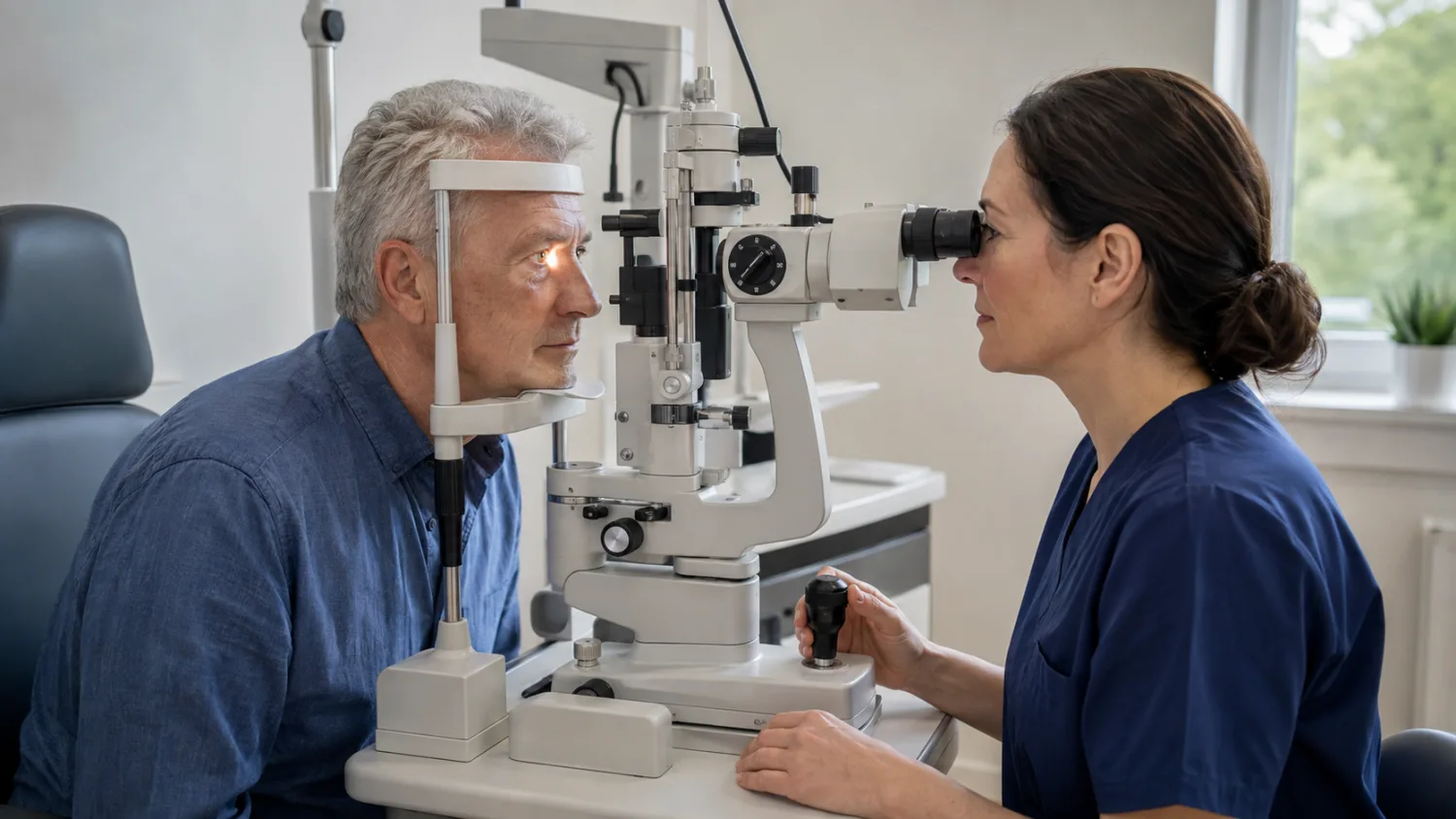
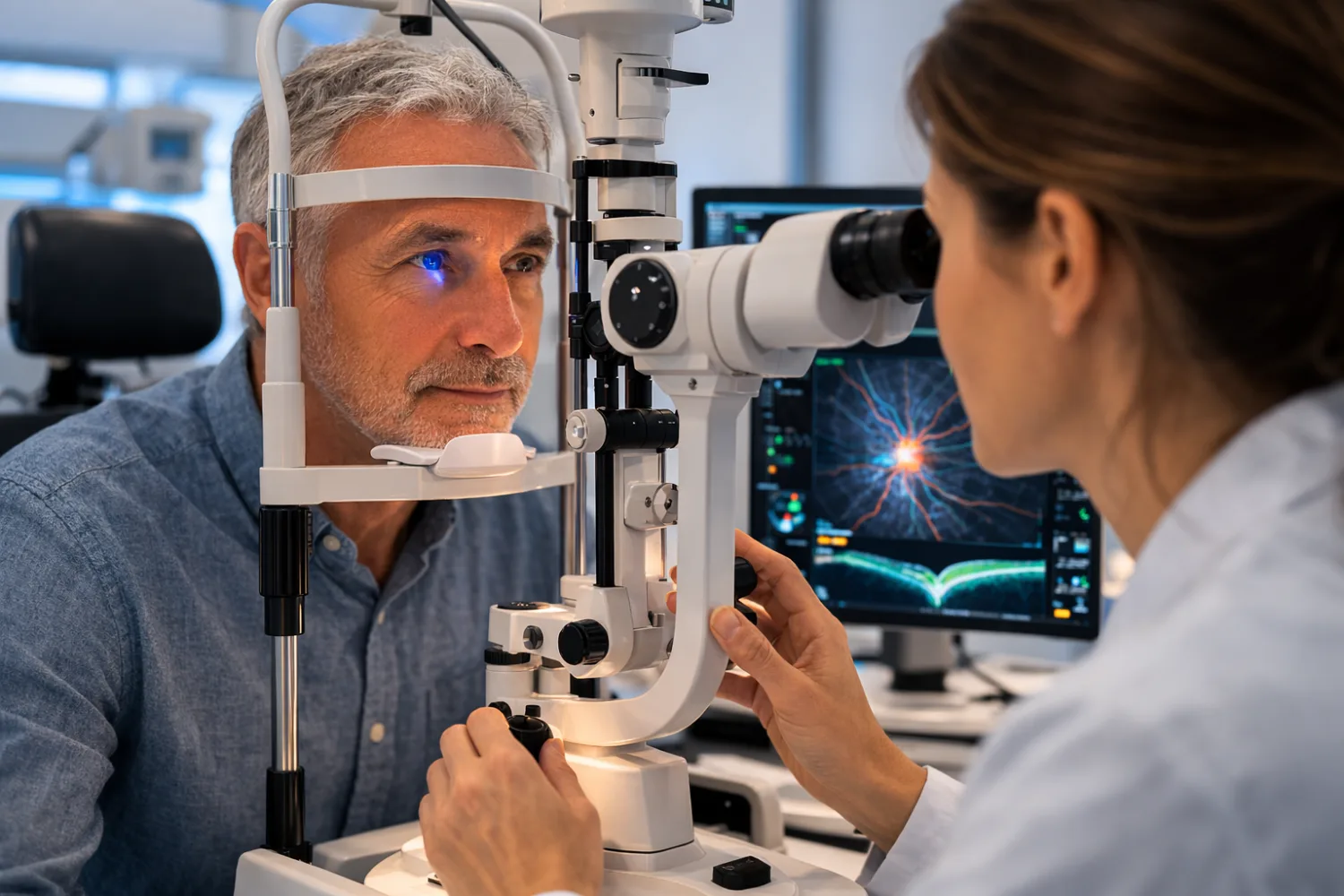
Diagnosis usually involves several painless tests.
- Eye pressure test: measures pressure inside the eye.
- Optic nerve examination: checks the appearance of the optic nerve at the back of the eye.
- Visual field test: checks whether side vision has been affected.
- OCT scan or imaging: takes detailed images of the optic nerve and retina.
- Gonioscopy: checks the drainage angle of the eye in some patients.
- Corneal thickness measurement: helps interpret eye pressure readings more accurately.
No single test gives the full picture. Glaucoma diagnosis is usually based on a combination of eye pressure readings, optic nerve appearance, retinal imaging and visual field results.
NICE provides a guideline on glaucoma diagnosis and management for more detailed clinical information.
Types of glaucoma
Glaucoma has several forms. The type matters because symptoms, urgency and treatment can differ.
Primary open-angle glaucoma
This is the most common type in the UK. The drainage channels remain physically open, but they do not drain fluid efficiently enough. Eye pressure may build up slowly, and optic nerve damage develops over time.
Symptoms are usually absent until later stages.
Angle-closure glaucoma
In angle-closure glaucoma, the drainage angle becomes blocked. This can happen suddenly, causing a rapid rise in eye pressure and severe symptoms, or more gradually in some people.
Sudden angle-closure glaucoma is an emergency.
Normal-tension glaucoma
Some people develop glaucoma even though their eye pressure is not especially high. In these cases, the optic nerve may be more vulnerable to damage.
Ocular hypertension
Ocular hypertension means raised eye pressure without clear glaucoma damage. It does not always lead to glaucoma, but it increases the risk, so monitoring or treatment may be recommended.
Secondary glaucoma
Secondary glaucoma happens because of another eye problem, injury, inflammation, medication or surgery. Treatment depends on the underlying cause as well as lowering eye pressure.
Treatment for glaucoma
Glaucoma treatment is not about removing a cloudy lens or restoring lost sight. The main aim is to lower eye pressure and prevent further damage.
This difference is important. Once glaucoma has damaged the optic nerve, lost vision usually cannot be recovered.
Treatment is usually recommended when tests show glaucoma, or when the risk of future damage is high enough to justify treatment. The exact plan depends on:
- the type of glaucoma
- eye pressure readings
- optic nerve appearance
- visual field test results
- how advanced the condition is
- how quickly it seems to be changing
- age and general health
- how well treatment is tolerated
Some people need treatment immediately. Others may be monitored closely before a decision is made. Either way, glaucoma usually requires long-term follow-up rather than a one-off appointment.
If you are also researching other age-related eye conditions, see cataracts symptoms, treatment and surgery options in the UK and macular degeneration symptoms, diagnosis and treatment in the UK.
Eye drops
Eye drops are a common treatment for glaucoma. They work either by reducing the amount of fluid the eye makes or by helping fluid drain away more effectively.
Drops need to be used exactly as prescribed, often for the long term. Missing doses can allow pressure to rise and increase the risk of further damage.
Different drops can have different side effects, such as:
- eye irritation
- redness
- dry eyes
- blurred vision shortly after use
- changes to eyelashes or eyelid skin with some drops
- side effects elsewhere in the body with some medicines
If drops are difficult to use or tolerate, tell your specialist. Changing treatment may be possible.
Laser treatment
Laser treatment is an important part of glaucoma care in the UK. A common procedure called selective laser trabeculoplasty, or SLT, can help fluid drain better and lower eye pressure.
Laser treatment is usually done as an outpatient procedure. It is quick, and recovery is normally straightforward. Some people still need drops afterwards or later on.
Surgery
If drops and laser treatment do not control eye pressure well enough, surgery may be needed. Surgical options create a better drainage route for fluid or use tiny implanted devices to lower pressure.
Surgery is generally reserved for situations where glaucoma is progressing or eye pressure remains too high despite other treatment.
Your specialist will explain the risks, benefits and expected results before any operation.
NHS and private glaucoma treatment
NHS treatment
Most glaucoma diagnosis and long-term monitoring in the UK happens within NHS-connected eye care pathways. If your optician suspects glaucoma, you are usually referred for specialist assessment.
Treatment and follow-up are based on clinical need and risk of sight loss. NHS care is appropriate for many patients because glaucoma usually needs repeated monitoring over time.
Waiting times and follow-up schedules can vary depending on where you live and how urgent your condition is.
Private treatment
Private eye clinics may offer faster access to consultant appointments, visual field testing, imaging, laser treatment and surgery.
Some patients choose private care for quicker assessment, shorter waiting times, continuity with one specialist or easier appointment scheduling.
Private costs vary depending on consultation fees, scans, visual field tests, medicines, laser treatment, surgery and follow-up.
For a wider comparison, read NHS vs private healthcare in the UK.
Risks, safety and long-term monitoring
Glaucoma itself is a long-term condition, and so is its follow-up. Even when treatment is working well, regular monitoring matters because eye pressure can change and optic nerve damage can still progress in some cases.
Treatment is usually safe, but every option has possible downsides.
- Eye drops may cause irritation or side effects.
- Laser treatment may not work equally well for everyone or may wear off over time.
- Surgery can be very effective but carries risks such as infection, inflammation, scarring or pressure problems after the operation.
The most important point is that glaucoma care is usually about ongoing protection of vision, not a one-time cure.
Driving and everyday life
Glaucoma can affect driving because it may reduce your visual field, even when central vision seems good.
Some people with glaucoma need to tell the DVLA, depending on which eye is affected, the type of licence they hold and whether the condition affects safe driving.
Official GOV.UK guidance on eye conditions and driving explains when notification may be required.
Everyday life may also change if peripheral vision becomes reduced. Helpful steps include:
- using good lighting at home
- keeping walkways clear
- attending regular eye appointments
- using reminders for eye drops
- asking for help if reading medication labels is difficult
- having honest conversations about driving and safety
Living well with glaucoma
Many people with glaucoma continue to live full, active and independent lives for many years. The condition can feel frightening at first because it is linked to permanent sight loss, but early detection and consistent treatment make a major difference.
Helpful habits include:
- using prescribed drops exactly as directed
- setting reminders for medication
- attending every follow-up appointment
- telling your eye team about side effects
- asking for help if drops are difficult to put in
- having regular eye tests
- checking whether relatives should have eye tests
- reviewing driving rules if vision is affected
Support organisations can also help with practical advice and reassurance. Glaucoma UK is a well-known source of patient support and information.
If accessing care is difficult, see how to get a GP appointment quickly in the UK and private GP services in the UK.
When to seek urgent help
Seek urgent medical help if you develop:
- sudden severe eye pain
- sudden blurred vision
- a red eye with halos around lights
- headache with nausea or vomiting alongside eye symptoms
- sudden loss of vision
These symptoms can suggest acute angle-closure glaucoma, which needs urgent treatment.
You should also seek prompt advice if your vision seems to be worsening, if you are struggling with prescribed drops, or if you have missed glaucoma follow-up appointments.
FAQ: glaucoma in the UK
What is glaucoma?
Glaucoma is a group of eye conditions that damage the optic nerve. It is often linked to raised eye pressure and can cause permanent sight loss if not detected and treated.
What are the first signs of glaucoma?
The most common type often has no early symptoms. Later signs may include reduced side vision, patchy blind spots or tunnel vision. Sudden painful glaucoma can cause severe eye pain, redness, blurred vision and halos.
Can glaucoma be cured?
Glaucoma cannot usually be cured, and lost vision cannot normally be restored. Treatment aims to slow or stop further damage.
How is glaucoma diagnosed?
Diagnosis usually involves eye pressure measurement, optic nerve examination, visual field testing, OCT imaging and sometimes drainage angle assessment.
Is glaucoma painful?
The most common type, open-angle glaucoma, is usually painless. Acute angle-closure glaucoma can be very painful and is an emergency.
Who is at risk of glaucoma?
Risk is higher with increasing age, family history, raised eye pressure, short-sightedness or long-sightedness, diabetes, long-term steroid use, previous eye injury and some ethnic backgrounds.
How is glaucoma treated?
Treatment usually involves lowering eye pressure with eye drops, laser treatment or surgery. The best option depends on the type and severity of glaucoma.
Do glaucoma eye drops have to be used forever?
Many people need long-term treatment. Some may have laser or surgery that reduces the need for drops, but follow-up remains important.
Can glaucoma make you blind?
Untreated glaucoma can cause severe sight loss. Early detection and consistent treatment greatly reduce the risk of losing useful vision.
Can I drive with glaucoma?
Some people with glaucoma can drive safely, but others may need to tell the DVLA or stop driving if visual field loss affects safety. Follow official DVLA guidance and your eye specialist’s advice.
How often should I have an eye test?
Frequency depends on age, risk factors and previous findings. People with a family history of glaucoma may need regular checks, and some may be eligible for NHS-funded sight tests.
What should I do if glaucoma runs in my family?
Book regular eye tests and tell the optician about your family history. Close relatives of someone with glaucoma may have a higher risk.
Final takeaway
Glaucoma is one of the most important eye conditions to catch early because the damage it causes is usually irreversible. The challenge is that the commonest form often develops silently, without pain or obvious early warning signs.
Routine eye tests matter. A simple appointment at an optician can detect changes long before you notice a problem yourself. In many cases, early diagnosis and treatment can protect useful sight for life.
If you are worried about glaucoma, have a family history of the condition, or notice any change in vision, booking an eye test is the best first step.