Digestive problems are one of the most common reasons people look for health advice. Some symptoms are mild and settle with time. Others keep coming back, disrupt daily life, affect sleep, work and eating, or turn out to need proper medical treatment.
This guide explains digestive health in plain English for UK patients. It covers the most common symptoms, what they may mean, which conditions doctors often look for, how diagnosis usually works in the UK, what tests you may be offered, and what treatment options are available.
It is designed to help you understand what might be going on, what you can try safely at home, and when it is time to speak to a pharmacist, GP or specialist.
What digestive health actually means
Your digestive system includes the oesophagus, stomach, small bowel, large bowel, rectum, anus, liver, gallbladder and pancreas.
Its job is to break down food, absorb nutrients, manage fluids and remove waste.
When something is wrong, the symptoms can be surprisingly varied. You might get:
- stomach pain or cramping
- bloating or trapped wind
- heartburn or acid reflux
- constipation
- diarrhoea
- nausea or vomiting
- a change in bowel habit
- blood in the stool or bleeding from the bottom
- unexplained weight loss
- ongoing tiredness linked to poor absorption, inflammation or anaemia
One of the difficult things about digestive symptoms is that different conditions can overlap.
For example, bloating and abdominal pain may happen with IBS, constipation, coeliac disease, food intolerance, inflammatory bowel disease or, more rarely, bowel cancer.
That is why persistent, worsening or unusual symptoms should not be dismissed as “just a sensitive stomach”.
Common digestive symptoms and what they may mean
Digestive symptoms are often pattern-based. Where the symptom is, when it happens, what makes it better or worse, and whether there are warning signs all matter.
Stomach pain or cramping
Abdominal pain can come from many causes, including indigestion, constipation, IBS, viral infections, gallstones, ulcers, diverticular disease and inflammatory bowel disease.
The exact pattern matters.
- A dull, crampy pain that improves after opening your bowels may fit IBS.
- A burning pain high in the abdomen after meals may point more towards reflux, gastritis or an ulcer.
- A sharp pain under the right ribs after a rich meal can suggest gallstones.
- Severe worsening pain with fever, vomiting or a swollen abdomen needs urgent assessment.
Bloating
Bloating is very common. Sometimes it is linked to diet, constipation, eating too quickly, fizzy drinks or IBS.
Sometimes it is related to coeliac disease, gut inflammation, or an underlying gynaecological or bowel problem.
A common real-life pattern is someone who feels flat in the morning but increasingly swollen by evening, especially after rushed meals, lots of fizzy drinks, chewing gum or a diet high in onions, beans and other fermentable foods.
Another common pattern is bloating that goes hand in hand with constipation and the feeling of not fully emptying the bowel.
Heartburn, reflux and indigestion
Heartburn is a burning sensation in the chest or upper abdomen, often after food or when lying down.
Acid reflux happens when stomach contents move back up into the oesophagus. GORD is the longer-term condition where reflux happens often enough to cause troublesome symptoms or inflammation.
Many people notice symptoms after large meals, alcohol, late-night eating, smoking, lying flat too soon after food, or regular use of anti-inflammatory medicines such as ibuprofen.
Recurrent heartburn should not be ignored, especially if you also have swallowing problems, vomiting, weight loss or persistent symptoms despite treatment.
Constipation
Constipation does not only mean “not going often”. It can also mean hard stools, straining, feeling blocked, needing to sit for a long time, or feeling that the bowel has not emptied properly.
Common causes include not drinking enough, low fibre intake, a sedentary routine, ignoring the urge to go, pregnancy, some medicines, underactive thyroid, bowel disorders and pelvic floor problems.
One practical example is someone who starts a desk job, stops moving much, drinks more coffee than water, delays going to the toilet during meetings, and then develops hard stools, bloating and piles.
That is a very typical constipation pattern.
Diarrhoea
Diarrhoea may be caused by a short-term infection, food poisoning, stress, IBS, inflammatory bowel disease, coeliac disease, medicines including antibiotics, or other gut conditions.
The danger with diarrhoea is not just inconvenience. It can lead to dehydration, weakness and, in some people, serious complications.
Short-lived diarrhoea that clearly follows a virus is different from diarrhoea that keeps returning for weeks, wakes you from sleep, contains blood or mucus, or comes with weight loss.
Blood in the stool or bleeding from the bottom
This symptom frightens people, and rightly so.
Often the cause is something more common such as piles or a small tear called an anal fissure. But bleeding can also be caused by bowel inflammation, diverticular disease, polyps or bowel cancer.
Do not assume that bright red blood automatically means piles. If bleeding is persistent, increasing, mixed with the stool, or happens with weight loss, change in bowel habit or abdominal pain, it needs proper medical assessment.
Change in bowel habit
This means a lasting change from what is normal for you. It could be going more often, less often, having looser stools, harder stools, urgency, or alternating diarrhoea and constipation.
Short changes can happen with travel, stress or infection. Ongoing change is different.
If your bowel habit has clearly changed for several weeks, especially with bleeding, weight loss, abdominal pain or tiredness, speak to a GP.
Common digestive conditions in the UK
Many digestive conditions share symptoms, so the aim is not to self-diagnose from one symptom. It is to recognise patterns and know when to get proper help.
Irritable bowel syndrome
Irritable bowel syndrome, or IBS, is one of the most common digestive conditions. It can cause abdominal pain, bloating, diarrhoea, constipation or a mix of both.
It is a real condition, but it does not cause the kind of bowel inflammation seen in Crohn’s disease or ulcerative colitis.
Symptoms often flare with stress, certain foods, irregular eating, poor sleep or after a stomach bug. Many people go for years thinking they “just have a bad stomach” before realising there is a pattern.
What often helps:
- regular meals rather than long gaps followed by large meals
- eating more slowly
- reducing obvious trigger foods
- cutting back on excess caffeine, alcohol and fizzy drinks
- managing constipation or diarrhoea properly rather than ignoring it
- considering structured diet support, such as a low-FODMAP approach with professional guidance
What to avoid: random, highly restrictive diets without a clear plan; repeatedly taking over-the-counter remedies without understanding the pattern; assuming every flare is “just IBS” when symptoms are changing or becoming more severe.
You can read more UK-specific digestive articles in our Digestive Health category.
Heartburn, acid reflux and GORD
Reflux is very common, and for some people it is occasional. For others it becomes frequent enough to interfere with sleep, appetite and quality of life.
Common triggers include:
- large meals
- eating late at night
- being overweight
- alcohol
- smoking
- pregnancy
- some medicines
What often helps:
- not eating within a few hours of going to bed
- smaller meals
- identifying and reducing trigger foods
- weight loss if needed
- pharmacy treatment such as antacids or alginates for mild symptoms
- GP review if symptoms are frequent or persistent, because acid-suppressing medicines may be needed
Example: someone who works late, eats a takeaway at 10pm, lies down soon after, then gets burning in the chest and sour-tasting fluid in the throat at night. That strongly suggests reflux.
For official information, see the NHS guide to heartburn and acid reflux.
Constipation
Constipation is often under-treated because people wait too long before dealing with it.
The longer hard stools sit in the bowel, the more water is absorbed, making them harder and more painful to pass.
What often helps:
- drinking enough fluid
- regular meals
- gradually improving fibre intake if your diet is low in fibre
- physical activity
- not ignoring the urge to open your bowels
- a better toilet position, such as using a small footstool to raise the knees
- pharmacist-advised laxatives when appropriate
What to avoid: repeatedly straining, relying on stimulant laxatives for long periods without advice, and assuming that more fibre always helps.
In some people, especially if bloating is severe, suddenly adding lots of bran can make symptoms worse.
If you are not sure whether to start with self-care, a pharmacy or a GP, this may help: When to See a Pharmacist Instead of a GP.
Coeliac disease
Coeliac disease is an autoimmune condition triggered by gluten. It is not the same as a simple food intolerance.
It can cause diarrhoea, bloating, weight loss, mouth ulcers, fatigue, anaemia and poor absorption of nutrients. Some people have very subtle symptoms and mainly feel tired or “foggy”.
A major mistake is starting a gluten-free diet before testing. That can make the tests less accurate and delay diagnosis.
If you suspect coeliac disease: keep eating gluten until you have spoken to a clinician and been tested.
For official diagnosis and treatment information, see NHS coeliac disease guidance.
Inflammatory bowel disease
Inflammatory bowel disease, or IBD, mainly refers to Crohn’s disease and ulcerative colitis. These are long-term inflammatory conditions, and they are different from IBS.
Common symptoms can include:
- persistent diarrhoea
- abdominal pain
- blood in the stool
- urgency
- weight loss
- fatigue
- flare-ups followed by quieter periods
Example: a person in their 20s or 30s develops repeated episodes of abdominal pain, loose stools, urgency and tiredness, then begins noticing blood and starts losing weight. That pattern is not something to put down to stress alone.
IBD usually needs specialist assessment and proper long-term management. For a general overview, see the NHS IBD overview.
Gallstones
Gallstones form in the gallbladder. Many people never know they have them, but when they do cause symptoms the classic pattern is pain in the upper right side or middle upper abdomen, often after fatty food, sometimes with nausea.
If gallstones start causing repeated attacks, treatment may involve surgery to remove the gallbladder.
Diverticular disease and diverticulitis
Diverticula are small pouches in the bowel wall, often in the large bowel. Some people have them without symptoms.
When symptoms develop, this may be called diverticular disease. When one of these pouches becomes inflamed or infected, it is called diverticulitis.
This can cause left-sided abdominal pain, bloating, changes in bowel habit and sometimes fever. Mild disease may settle with conservative treatment, but severe symptoms need medical review.
Piles and anal fissures
These are common causes of pain, itching and bleeding from the bottom.
Piles often bleed bright red blood, especially on the toilet paper or after straining. An anal fissure is a small tear that can cause sharp pain during and after passing stool.
These problems are often linked to constipation and straining, so the long-term solution is not just creams. It is also fixing the bowel habit that caused the problem in the first place.
When symptoms can be managed at home
Some digestive problems improve with simple changes. Home management may be reasonable if symptoms are mild, short-lived and there are no warning signs.
Safe first steps often include:
- drinking more water if you are constipated or mildly dehydrated
- eating regular meals rather than grazing all day or skipping meals
- reducing very fatty, spicy or highly processed foods if they clearly trigger symptoms
- cutting down on excess alcohol and fizzy drinks
- slowing down when eating
- staying active
- keeping a simple symptom diary for 2 to 4 weeks
A symptom diary should track:
- what you ate and drank
- bowel habit
- pain or bloating
- stress, sleep and travel
- medicines taken
This is often more useful than guessing. For example, some people discover their “food problem” is actually a pattern of late meals, poor sleep and stress-related bowel urgency rather than one single ingredient.
When to speak to a pharmacist
A pharmacist can often help with mild reflux, occasional constipation, short-term diarrhoea, suspected piles and simple indigestion.
They can also advise which over-the-counter treatment is appropriate and which symptoms need GP review instead.
Pharmacy advice is useful when:
- the problem is mild and recent
- you do not have red-flag symptoms
- you want advice on antacids, alginates, anti-diarrhoeal treatment, oral rehydration or laxatives
- you need help choosing safe treatment alongside your usual medicines
When to book a GP appointment
Book a GP appointment if:
- symptoms keep coming back
- you have ongoing bloating, pain, constipation or diarrhoea
- you think you may have IBS but have never been properly assessed
- you suspect coeliac disease
- you have reflux most weeks
- you are relying on over-the-counter treatments repeatedly
- there has been a clear change in your usual bowel habit
If access is an issue, you may find this useful: How to Get a GP Appointment Quickly in the UK.
Red-flag digestive symptoms
Some digestive symptoms should not be self-managed for long.
Seek urgent medical advice if you have:
- blood in your stool or bleeding from the bottom that is persistent, heavy or unexplained
- black, tarry stools
- vomiting blood or material that looks like coffee grounds
- difficulty swallowing
- unexplained weight loss
- new persistent abdominal pain, especially if severe
- a change in bowel habit lasting several weeks
- persistent diarrhoea with weight loss or night-time symptoms
- fever, dehydration or severe weakness
- yellowing of the skin or eyes, known as jaundice
- symptoms of anaemia such as unusual fatigue, breathlessness or looking pale
For bowel cancer warning symptoms and screening information, the NHS has a useful overview here: Symptoms of bowel cancer.
How digestive diagnosis usually works in the UK
Diagnosis usually starts with a history rather than a scan.
A clinician will ask:
- where the pain is
- when symptoms started
- what makes them worse or better
- what your stools are like
- whether there is bleeding, weight loss or vomiting
- whether symptoms wake you at night
- what medicines you take
- whether there is family history of bowel disease, coeliac disease or cancer
They may examine your abdomen and, in some cases, your bottom. That can feel awkward, but it can be very helpful.
Delaying examination out of embarrassment is one reason some digestive conditions go on longer than they need to.
Blood tests
Blood tests can check for anaemia, inflammation, infection, liver problems, thyroid issues, vitamin deficiency and coeliac disease antibodies.
Example: someone who mainly complains of tiredness and bloating may turn out to have iron-deficiency anaemia and then need investigation for coeliac disease or bowel blood loss.
Stool tests
Stool tests are increasingly important in digestive assessment. Depending on the situation, they may be used to look for infection, inflammation or blood.
A FIT test looks for tiny amounts of blood in stool and can help guide referral when bowel symptoms may need further investigation.
A faecal calprotectin test may be used in some settings to help distinguish inflammatory bowel disease from non-inflammatory problems.
Gastroscopy
A gastroscopy looks at the upper digestive tract, including the oesophagus and stomach. It may be used for ongoing reflux, swallowing problems, suspected ulcers, bleeding, or unexplained upper abdominal symptoms.
A thin flexible camera goes through the mouth into the stomach, and biopsies can be taken if needed.
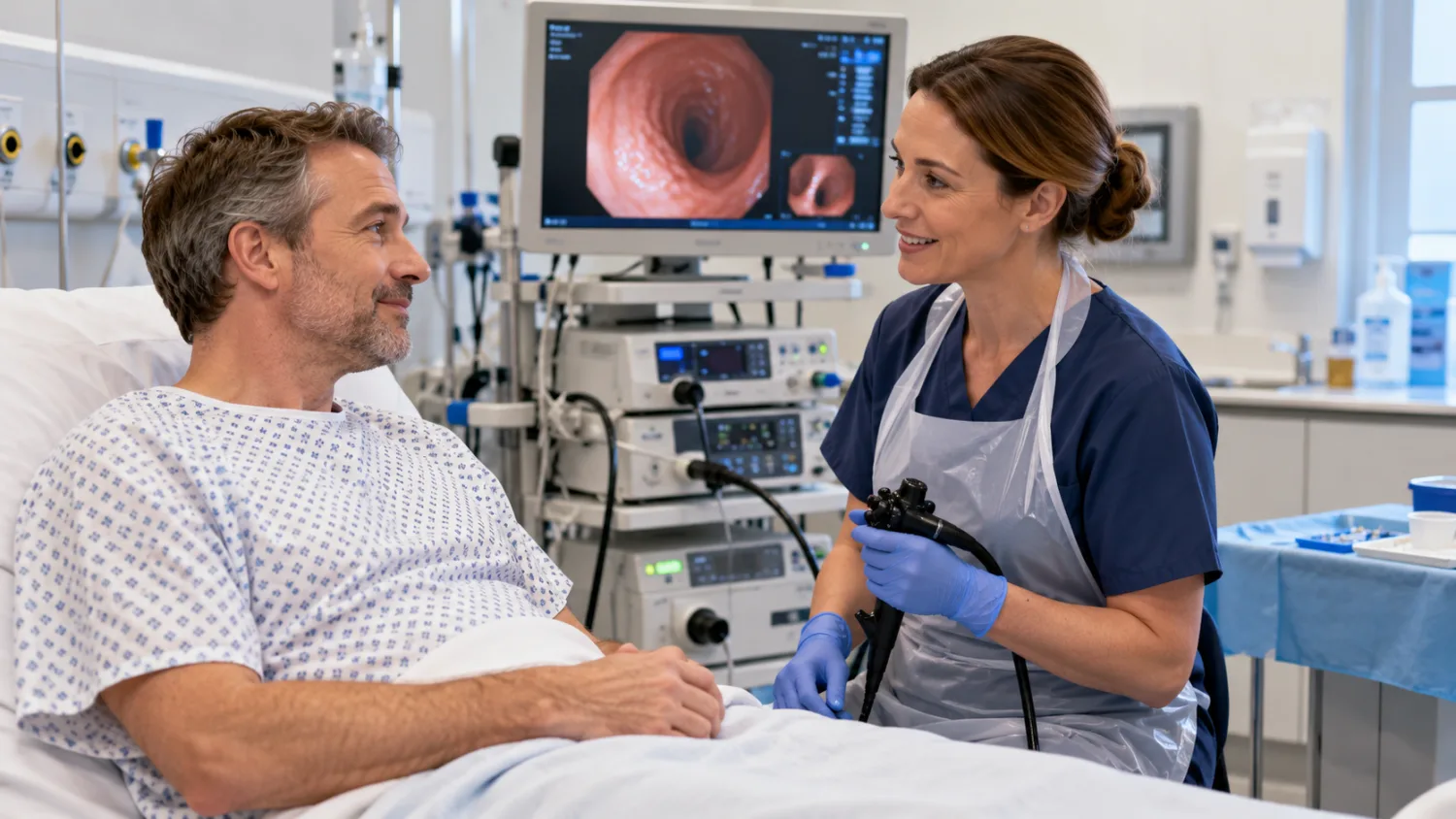
Colonoscopy
A colonoscopy examines the bowel using a thin camera passed into the bottom. It may be used for bleeding, persistent bowel habit change, suspected IBD, abnormal FIT results, unexplained anaemia or concern about bowel cancer.
Many people worry more about the idea of colonoscopy than the test itself. In reality, the bowel preparation is often the part people dislike most.
The test can feel uncomfortable, but it is routine, very commonly performed, and can be extremely valuable.
Ultrasound or other imaging
If gallstones are suspected, an ultrasound is often used.
CT scans or MRI scans may be used in more complex situations or if there is concern about inflammation, complications or other abdominal disease.
Treatment options for digestive problems
Treatment depends on the cause. There is no one digestive treatment that fits everyone.
Diet and lifestyle changes
Diet and lifestyle changes are often the first step, but they need to be sensible.
Helpful changes may include:
- more regular meals
- adequate fluid intake
- reducing obvious trigger foods instead of cutting out everything
- less alcohol
- less caffeine if it worsens urgency, reflux or diarrhoea
- stopping smoking
- weight loss where appropriate
- improving sleep and stress management
What to avoid: copying extreme “gut health” diets from social media, spending heavily on supplements before getting a diagnosis, or assuming gluten, dairy or fibre are always the enemy.
For one person, more soluble fibre helps. For another, the problem is actually coeliac disease. For another, it is reflux worsened by late meals and alcohol.
Medicines from a pharmacist or GP
Medicines may include:
- antacids or alginates for short-term reflux relief
- acid-suppressing medicines such as proton pump inhibitors for reflux and ulcers
- laxatives for constipation
- anti-diarrhoeal treatment in selected cases
- antispasmodics for IBS-type cramps
- antibiotics when there is a confirmed infection or specific diagnosis
- condition-specific treatment for IBD or coeliac disease
If you are considering private assessment for faster access to GP review, tests or referral, see Private GP Services in the UK: Costs.
Dietitian support
Dietitian support is often underrated. A skilled dietitian can be extremely helpful for IBS, coeliac disease, food-related symptom patterns, nutritional deficiencies, and managing symptoms without unnecessary restriction.
Specialist treatment
Some people need gastroenterology or colorectal review, endoscopy, surgery, long-term medicines or monitoring.
Examples include recurrent gallstone attacks, suspected IBD, severe reflux not responding to treatment, bleeding, unexplained anaemia, or positive cancer-referral pathways.
Gut health trends and everyday habits
The phrase “gut health” is everywhere, but it is often used loosely.
What is usually worth taking seriously
- regular meals
- adequate fibre from foods you tolerate
- physical activity
- sleep
- stress management
- appropriate medical assessment when symptoms persist
What is often overhyped
Be cautious about:
- expensive test packages with unclear clinical value
- multiple supplements started all at once
- claims that one powder, probiotic or detox will “heal the gut”
- cutting out major food groups without a diagnosis
Some people do benefit from targeted probiotics or diet changes, but these should sit within a sensible plan, not replace proper diagnosis.
Simple habits that often make a real difference
- Eat at regular times instead of chaotic grazing.
- Chew properly and slow down.
- Drink enough water, especially if constipated.
- Walk daily if you can; the bowel often responds well to movement.
- Do not ignore the urge to use the toilet.
- Notice whether symptoms are linked to stress, night shifts, travel or alcohol.
- Do not keep self-treating the same symptom for months without asking why it is happening.
FAQ: digestive health symptoms
Is bloating always caused by food?
No. Food can play a part, but constipation, IBS, coeliac disease, bowel inflammation and other medical problems can also cause bloating.
Does blood in the stool always mean cancer?
No. Piles and fissures are common causes, but bleeding still needs proper assessment if it is persistent, unexplained or linked with other warning symptoms.
Should I go gluten-free if I think I have coeliac disease?
Not before testing. Starting a gluten-free diet too early can make the tests less reliable.
Is IBS dangerous?
IBS can be very disruptive, but it does not cause the bowel inflammation or tissue damage seen in IBD. The important thing is making sure the diagnosis is right and that warning signs are not being missed.
Can stress really affect the gut?
Yes. The gut and brain are closely linked. Stress does not explain every digestive symptom, but it can worsen reflux, IBS-type pain, urgency and bloating.
When should digestive symptoms be checked?
Symptoms should be checked if they are persistent, recurrent, worsening, or linked with bleeding, weight loss, swallowing difficulty, severe pain, ongoing diarrhoea, night-time symptoms, anaemia or a clear change in bowel habit.
What tests are commonly used for digestive symptoms?
Common tests include blood tests, stool tests, FIT, faecal calprotectin, gastroscopy, colonoscopy, ultrasound, CT or MRI depending on the symptoms and suspected cause.
Can a pharmacist help with digestive symptoms?
Yes. A pharmacist can help with mild reflux, occasional constipation, short-term diarrhoea, suspected piles and simple indigestion. They can also tell you when GP or urgent review is needed.
Final takeaway
Digestive symptoms are common, but they should not be normalised to the point that people put up with them for years.
The right approach is not panic, but pattern recognition. Mild symptoms may respond to simple lifestyle changes. Recurrent, persistent or worrying symptoms deserve proper assessment.
If there is one message to take from this guide, it is this: do not guess for too long.
If your digestive system is repeatedly telling you something is wrong, listen to it, track the pattern, and get the right help.
And if symptoms include bleeding, weight loss, swallowing difficulty, severe pain, persistent bowel habit change or ongoing unexplained fatigue, do not rely on internet reassurance alone. Get checked.