Piles, also called haemorrhoids, are swollen blood vessels inside or around the bottom (anus and lower rectum). They are very common, and although they can be uncomfortable, itchy, painful or alarming when they bleed, many cases improve with simple treatment and self-care. NHS guidance notes that piles often get better on their own after a few days, and many people never need surgery.
The problem is that people often ignore symptoms for too long, feel embarrassed to seek help, or assume that any bleeding from the bottom must be piles. Sometimes it is piles. Sometimes it is something else. That is why it helps to understand the usual symptoms, what treatment actually works, what prevents them coming back, and when bleeding or pain needs proper medical assessment.
This guide explains what piles are, what they feel like, what commonly causes them, what treatments may help, and when to see a pharmacist or GP. If bowel habit problems are part of the picture, you may also find these helpful: Constipation in Adults: Causes, Remedies, Laxatives and When to Seek Help, Bloating: Common Causes, Relief and When to Worry, and Digestive Health: Symptoms, Common Conditions and Treatments.
What are piles?
Piles are swellings containing enlarged blood vessels found inside or around the anus. They may be internal, meaning inside the back passage, or external, meaning closer to the outside and more likely to be felt as lumps. Internal piles may not be visible unless they protrude, while external piles may cause a tender swelling or discomfort around the anus.
Some people develop small internal piles that mainly cause light bleeding. Others get larger prolapsing piles that come down after opening the bowels and may go back by themselves or need to be gently pushed back in. External piles can be more painful, especially if a clot forms inside them.
Common symptoms of piles
According to NHS guidance, symptoms of piles can include:
- bright red blood after you poo
- itching around the anus
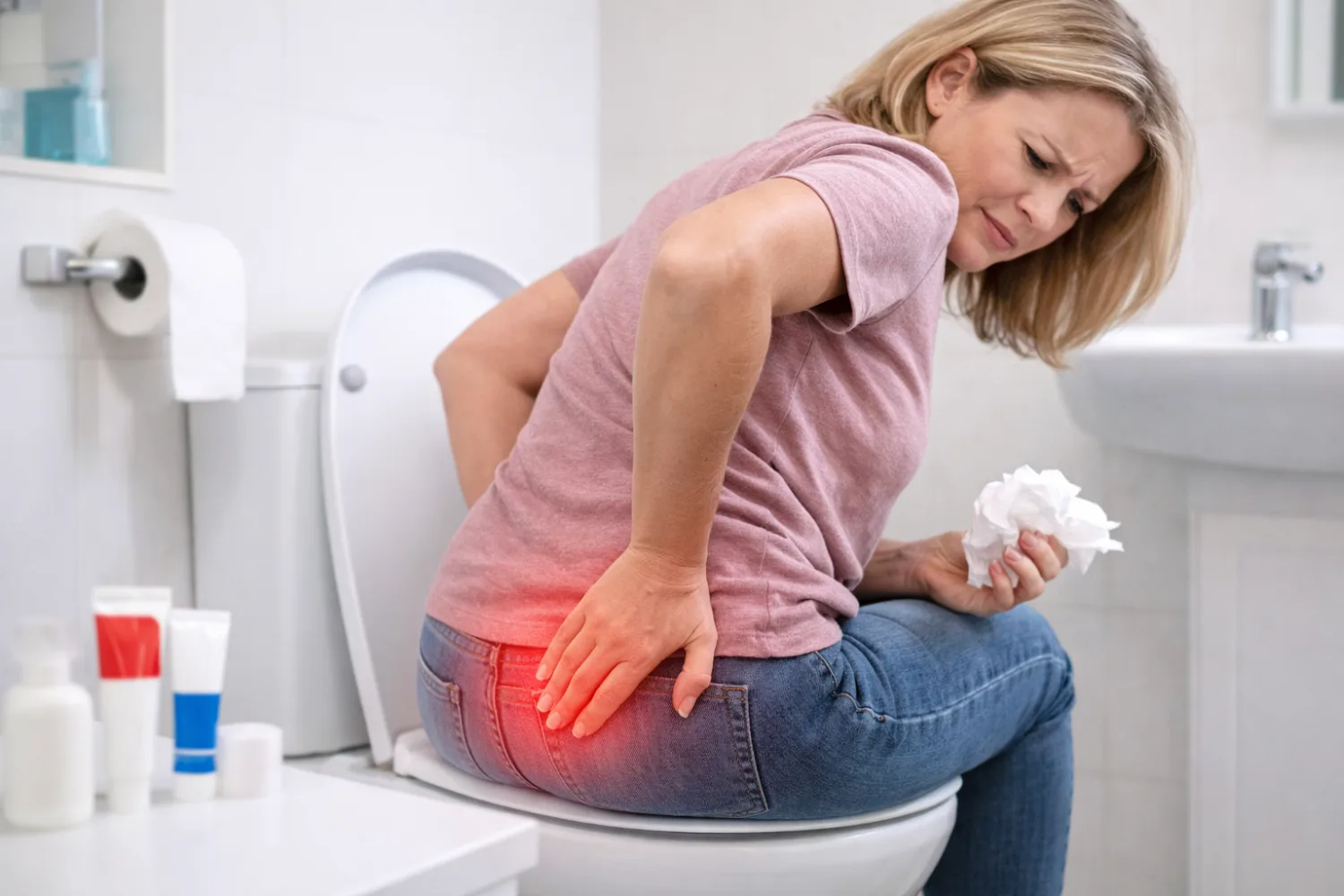
- pain or soreness around the anus
- mucus on toilet paper or in underwear
- a lump around the anus
- feeling like you still need to poo after going to the toilet
Bright red blood after opening the bowels is one of the most typical symptoms. It may be seen on the toilet paper, on the outside of the stool, or in the toilet bowl. Larger piles may also itch, leak mucus or feel uncomfortable after going to the toilet.
Real-life examples
Example 1: someone with constipation strains repeatedly, then notices bright red blood on the toilet paper and itching afterwards.
Example 2: a person feels a soft lump at the bottom after a bowel movement and notices mucus staining in their underwear.
Example 3: someone sits for a long time, becomes constipated during travel, and then develops soreness and bleeding when opening their bowels.
What causes piles?
Piles are usually linked to increased pressure in and around the blood vessels of the anus. Common triggers and contributing factors include constipation, straining on the toilet, pregnancy, being overweight, spending long periods sitting, and sometimes persistent diarrhoea. NHS guidance also notes that anyone can get piles, and they do not only happen in pregnancy.
The biggest day-to-day pattern behind piles is often difficult bowel habit. If stool is hard, you strain more. If you strain more, pressure increases. Over time, that can enlarge the blood vessels and make symptoms more likely.
Constipation and piles often go together
Constipation is one of the commonest reasons piles develop or keep coming back. Hard stools, straining, sitting on the toilet for too long and feeling blocked all increase pressure at the bottom. NICE CKS management guidance focuses strongly on making stools soft and easy to pass, because treating the bowel habit is often just as important as treating the pile itself.
This is why creams alone often do not solve the problem. If you treat the itching but keep straining every day, the pile may settle temporarily and then return.
What helps piles at home?
Many mild cases improve with practical self-care. Helpful steps often include:
- drinking enough fluid
- gradually increasing fibre
- avoiding straining
- going to the toilet when you feel the urge rather than delaying
- keeping the area clean and dry
- using pain relief if needed
Hospital and NHS patient guidance commonly advises eating more fruit, vegetables and other fibre-rich foods, along with drinking more water, because softer stools are easier to pass and reduce irritation. Some local NHS guidance also suggests moist wipes or gentle cleaning followed by patting the area dry, rather than harsh rubbing.
Simple practical habits that often make a difference
- Do not sit reading on the toilet for long periods.
- Try not to push or strain if nothing is happening.
- Respond to the urge to poo instead of holding it in.
- Treat constipation early rather than waiting until stools are very hard.
- Keep physically active if you can.
A small change in routine can matter. Someone who starts walking daily, drinking more water and treating constipation early often improves more than someone who only buys another tube of cream.
Pharmacy treatment for piles
A pharmacist can often help with mild piles. Over-the-counter treatments may include creams, ointments or suppositories to reduce itching, swelling and discomfort. NHS guidance notes that these can help treat symptoms inside and around the bottom, though they are not a cure for the underlying cause if constipation and straining continue.
Some people may also need a laxative or stool-softening approach if hard stools are a major trigger. NICE CKS management guidance supports treating constipation where present as part of haemorrhoid care.
What to avoid
- ignoring repeated bleeding without ever getting checked
- straining regularly on the toilet
- sitting on the toilet for long periods
- using piles creams again and again without addressing constipation
- assuming every anal pain is piles
Anal pain can have other causes, including anal fissures, which are often much sharper and more painful during bowel movements. NHS symptom guidance on anal pain specifically notes that piles are only one possible cause.
When to see a GP
See a GP if piles do not improve, keep coming back, are very painful, or are causing repeated bleeding. NHS guidance also advises getting checked if you are not sure it is piles. This matters because rectal bleeding has several possible causes, and persistent bleeding should not simply be self-diagnosed forever.
Book an appointment sooner if:
- bleeding keeps happening
- you have a lasting change in bowel habit
- you have weight loss you cannot explain
- you are tired all the time or may be anaemic
- pain is severe or the lump is very swollen
Several NHS and NICE-linked sources emphasise that persistent bleeding or unclear symptoms need proper assessment rather than automatic assumptions.
When bleeding from the bottom should not be ignored
A small one-off amount of bright red bleeding may be due to piles and is often not serious, but ongoing, heavy or unexplained bleeding needs medical review. NHS guidance on rectal bleeding notes that blood may appear on toilet paper, in the toilet bowl or mixed with stool, and not all of these patterns should be assumed to be piles.
This is especially important if the blood seems mixed into the stool, the stools are very dark, bowel habit is changing, or you have other symptoms such as weight loss or abdominal pain. Those patterns need a clinician rather than guesswork.
When specialist treatment may be needed
Most piles improve with conservative treatment, but some need procedures. Non-surgical treatments may include rubber band ligation, injection treatment or infrared treatment. Larger or persistent piles may sometimes need surgery. NHS hospital guidance commonly lists banding and surgery among options when simpler measures have not worked.
Specialist treatment is more likely if:
- bleeding is persistent
- piles keep recurring
- they prolapse significantly
- symptoms continue despite good conservative treatment
Piles in pregnancy
Piles are common in pregnancy because of pressure changes and constipation. NHS pregnancy guidance notes that symptoms are similar: itching, aching, soreness, swelling, a lump, mucus discharge and bright red bleeding after passing stool. Treatment still focuses mainly on keeping stools soft, avoiding straining and relieving symptoms safely.
How to help prevent piles coming back
Prevention is mainly about bowel habit and pressure reduction. The most useful strategies are:
- eat enough fibre
- drink enough water
- stay active
- avoid constipation
- avoid sitting on the toilet too long
- do not strain
Guy’s and St Thomas’ NHS guidance notes that higher-fibre eating and adequate fluids can help soften stool and reduce recurrence.
Frequently asked questions
Do piles always bleed?
No. Some cause mainly itching, soreness, mucus or a lump. Bright red bleeding is common, but not universal.
Are piles dangerous?
Usually not, but they can be painful and bothersome, and bleeding should not just be assumed to be harmless if it keeps happening.
Can piles go away on their own?
Yes. NHS guidance notes that many piles improve after a few days without treatment.
What is the difference between piles and an anal fissure?
Piles more often cause itching, a lump and bright red bleeding. An anal fissure often causes sharp pain during or after passing stool.
Should I worry about bright red blood after pooing?
A small one-off amount may not be serious, but repeated or unexplained bleeding should be checked by a GP.
Final thoughts
Piles are common, uncomfortable and often very treatable. The best approach is usually simple: soften the stool, stop straining, use short-term symptom relief when needed, and get checked if bleeding or pain keeps coming back. Treating the bowel habit is often the real long-term solution, not just treating the swelling itself.
The biggest mistake is embarrassment-driven delay. If symptoms are mild, pharmacy treatment and self-care may be enough. But if you are bleeding repeatedly, in significant pain, or not sure it really is piles, it is better to get checked than keep guessing. For official patient guidance, see the NHS piles page and the NHS rectal bleeding page.