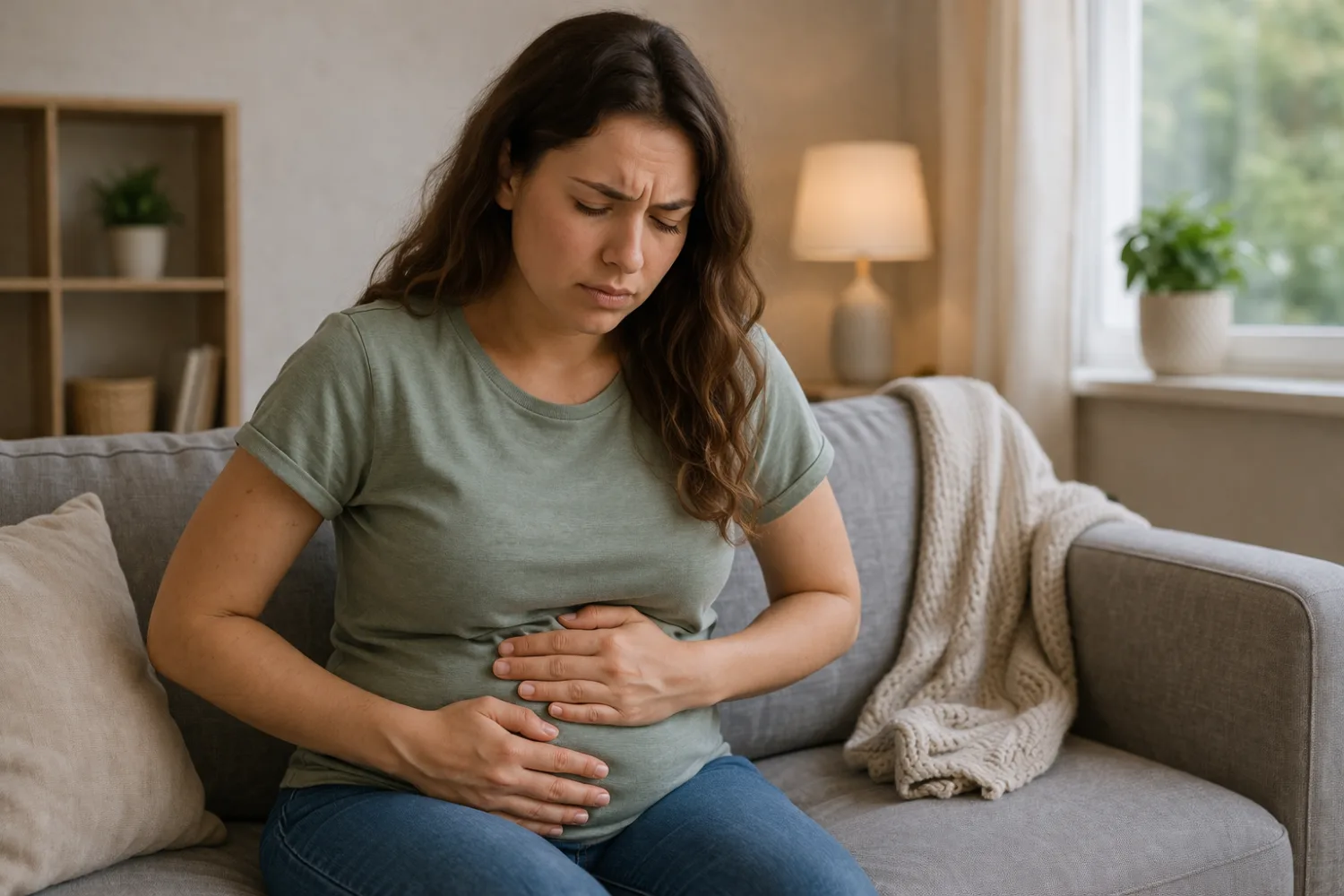
Bloating is one of the most common digestive complaints in the UK. It may feel like fullness, pressure, tightness, trapped wind, or a visibly swollen abdomen that gets worse as the day goes on. Sometimes bloating is short-lived and linked to eating too quickly, constipation, fizzy drinks or a rich meal. Sometimes it keeps coming back and is part of a longer-term pattern that needs proper assessment.
This guide explains what bloating is, the most common causes, what you can try at home, when to see a pharmacist or GP, and which symptoms should never just be put down to “a bit of wind”. It is written for UK patients who want practical, plain-English advice.
If your symptoms also include cramping, diarrhoea or constipation, you may find our guide to IBS (Irritable Bowel Syndrome): Symptoms, Diagnosis and Treatment useful. For a broader overview, see Digestive Health: Symptoms, Common Conditions and Treatments.
What bloating actually means
People use the word bloating in different ways. Some mean a tight, uncomfortable feeling in the tummy. Others mean visible abdominal swelling or distension. Some mainly notice trapped wind, burping or excessive farting. All of these can happen together, but they are not always caused by the same thing. NHS guidance describes bloating as a symptom that may come with feeling full, discomfort, tummy pain, diarrhoea, constipation or excessive wind.
A common real-life pattern is someone who feels fairly normal when they wake up, then progressively more swollen and uncomfortable by evening. Another is someone who feels bloated for days because they are constipated, then feels temporarily better after a proper bowel movement. Others bloat mostly after certain meals, especially when eating fast or having lots of fizzy drinks.
Common causes of bloating
Bloating has many possible causes. Some are minor and settle with simple changes. Others need proper diagnosis. Common causes listed by the NHS include constipation, trapped wind, food intolerance, coeliac disease, irritable bowel syndrome, and swallowing air while eating or drinking.
1. Trapped wind and swallowing air
One of the simplest causes is excess gas in the digestive system. This can happen if you eat too quickly, talk while eating, chew gum a lot, drink through straws, or have plenty of fizzy drinks. Some people also swallow more air when anxious. In these cases, bloating may come with burping, noisy digestion or lots of wind later in the day.
2. Constipation
Constipation is a very common cause of bloating. If stool is sitting in the bowel for longer than it should, the abdomen can feel tight, heavy or swollen. You may also feel uncomfortable after meals, have cramping, or feel that you have not fully emptied your bowels. NHS guidance links bloating and stomach pain with difficulty pooing in constipation.
Example: someone starts a sedentary office job, drinks less water, ignores the urge to use the toilet and becomes increasingly constipated. Within a few weeks they notice bloating most days, especially in the afternoon and evening. That is a very common pattern.
3. IBS (irritable bowel syndrome)
IBS is one of the most common longer-term causes of bloating. People often also have abdominal pain, diarrhoea, constipation, or alternating bowel habit. Bloating with IBS often fluctuates. It may be worse after meals, during stress, or when constipation is not well controlled. NHS symptom guidance lists bloating with pain and diarrhoea or constipation as a possible IBS pattern.
4. Food intolerance or poorly tolerated foods
Some people notice bloating after particular foods, such as dairy, beans, onions, wheat-heavy meals or very fatty food. Lactose intolerance is one recognised cause, and NHS guidance lists bloating, diarrhoea, tummy pain and nausea among possible symptoms. But it is important not to self-diagnose too quickly. One difficult meal does not always mean a true intolerance.
What to avoid: cutting out several major food groups at once without a clear reason. That makes it harder to see what is actually driving the symptoms and can leave your diet unnecessarily restricted.
5. Coeliac disease
Coeliac disease can cause bloating, diarrhoea, stomach pain, weight loss, nutritional deficiency and tiredness. Some people have relatively subtle symptoms and mainly complain of bloating and fatigue. NHS symptom guidance notes that bloating with indigestion, constipation, diarrhoea and tummy pain can fit coeliac disease.
If coeliac disease is a possibility, do not start a gluten-free diet before speaking to a clinician. Testing is more reliable if you are still eating gluten.
6. Indigestion and reflux
Some people use the word bloating when the main problem is actually upper abdominal fullness, indigestion or reflux. If the discomfort is mostly high in the abdomen, linked to burning in the chest, burping, or a sour taste in the mouth, reflux may be part of the picture rather than lower-bowel bloating alone.
7. Menstrual cycle and hormonal changes
Many women notice bloating changes during the menstrual cycle. Hormonal shifts can affect digestion, water retention and bowel habit, making bloating worse at certain times of the month. If that pattern is consistent and otherwise uncomplicated, it may be part of the explanation. But persistent or progressive bloating should still be assessed, especially if it is new.
8. More serious underlying illness
Most bloating is not caused by cancer, but persistent bloating should not be ignored. NHS guidance lists bloating among possible symptoms of bowel cancer, especially when it happens with change in bowel habit, tummy pain, weight loss, bleeding or a lump in the abdomen. NICE guidance also highlights persistent or frequent abdominal distension in women, especially over 50, as an important symptom that may need investigation for ovarian cancer.
When bloating is more likely to be harmless
Bloating is more likely to be a minor, self-limiting problem if it is short-lived, clearly linked to eating habits or constipation, and improves with simple changes. Examples include feeling bloated after a large takeaway, after several fizzy drinks, during travel, or after a few days of constipation.
Even then, “probably harmless” is not the same as “ignore it forever”. If it keeps returning or starts to change, it is worth reassessing rather than assuming it will always be fine.
Simple things that often help bloating
- eat more slowly and chew properly
- avoid very large meals
- cut down on fizzy drinks if they clearly make it worse
- drink enough water
- walk daily if you can
- treat constipation early rather than waiting
- keep meals more regular
- notice whether chewing gum or straws make symptoms worse
- keep a short food and symptom diary for 2 to 4 weeks
A symptom diary can be more useful than guessing. It may show that the real trigger is not one specific food, but a pattern such as late meals, poor hydration, constipation and stress.
Relief for trapped wind and bloating
If trapped wind seems to be the problem, the aim is usually to reduce swallowed air, improve bowel movement, and limit obvious triggers rather than searching for one miracle remedy. For some people, burping and farting reduce when they stop rushing meals and drinking multiple fizzy drinks a day. For others, the biggest improvement comes from treating constipation properly. NHS guidance on flatulence also links excessive wind with constipation, IBS, coeliac disease and lactose intolerance, which is why a repeated problem should be looked at properly.
When to see a pharmacist
A pharmacist can often help if bloating is mild, recent and seems linked to constipation, trapped wind or a short-term digestive upset. Pharmacy advice can be useful if you want help choosing a laxative, managing simple indigestion or deciding whether your symptoms sound minor or need GP review.
This can be a good starting point if you have no warning signs and the symptoms are straightforward. But it is not a substitute for medical assessment if bloating is persistent, unexplained or getting worse.
When to see a GP
Book a GP appointment if bloating keeps coming back, lasts for several weeks, is affecting your daily life, or comes with other symptoms such as pain, bowel habit change, weight loss, fatigue or poor appetite. NHS symptom guidance advises seeing a GP if bloating lasts a long time or keeps coming back.
You should also book an appointment if you suspect IBS, coeliac disease or lactose intolerance but have never been properly assessed. Self-diagnosis is common with bloating, but it is not always accurate.
Red flags: when bloating needs proper assessment
Do not just put bloating down to wind if you also have:
- unexplained weight loss
- blood in your stool
- bleeding from the bottom
- persistent change in bowel habit
- ongoing diarrhoea or new constipation that is unusual for you
- a lump in the abdomen
- persistent tummy pain
- feeling full quickly and loss of appetite
- unusual tiredness or possible anaemia
- persistent or frequent abdominal distension, especially in women over 50
These features do not automatically mean cancer, but they are important. NHS bowel cancer guidance lists bloating, tummy pain, bowel habit change, bleeding, a tummy lump and unexplained weight loss among symptoms that should be checked. NICE guidance also highlights persistent abdominal distension in women as a possible ovarian cancer symptom needing primary care investigation.
How bloating may be investigated in the UK
Diagnosis usually starts with a careful history. A GP may ask when the bloating happens, whether the abdomen actually swells, whether you are constipated, whether symptoms relate to meals, periods or stress, and whether there are any red flags such as weight loss or bleeding.
Depending on the symptoms, tests may include blood tests, stool tests, coeliac screening and other investigations. The purpose is not to “test for bloating” itself, but to look for the conditions causing it, such as constipation, coeliac disease, infection, inflammation or more serious disease.
What to avoid
- assuming all bloating is “just IBS”
- starting a very restrictive diet without a plan
- ignoring constipation for weeks
- living on fizzy drinks and gum if these obviously trigger symptoms
- relying on internet trends instead of getting assessed when symptoms persist
- ignoring bloating that is persistent, progressive or linked with red-flag symptoms
One of the biggest mistakes is normalising symptoms for too long. People often say, “I’ve always had a bloated stomach,” when in fact the pattern has changed, become more frequent, or is now happening with other warning signs.
Frequently asked questions
Is bloating always caused by food?
No. Food can play a role, but constipation, IBS, coeliac disease, lactose intolerance and more serious medical conditions can also cause bloating.
Can constipation really cause a lot of bloating?
Yes. Constipation is one of the most common reasons people feel bloated, heavy or uncomfortable in the abdomen.
When should I worry about bloating?
You should worry less about one-off bloating after a heavy meal and more about bloating that is persistent, keeps returning, is progressive, or comes with weight loss, bleeding, bowel habit change, pain or loss of appetite.
Can bloating be a sign of cancer?
Sometimes, yes, but most bloating is not cancer. The important point is that persistent bloating, especially with other warning symptoms, should be checked rather than assumed to be harmless.
Final thoughts
Bloating is common, but it is not one single diagnosis. It can be caused by trapped wind, constipation, IBS, food intolerance, coeliac disease, indigestion or, less commonly, more serious illness. The best approach is practical: look for patterns, fix obvious triggers, manage constipation properly, and do not ignore persistent or changing symptoms.
If bloating is short-lived and clearly linked to something simple, home measures may be enough. But if it lasts, keeps coming back, or is associated with weight loss, bleeding, bowel habit change, pain or early fullness, get checked. For official information, see the NHS bloating page and the NHS guide to bowel cancer symptoms.