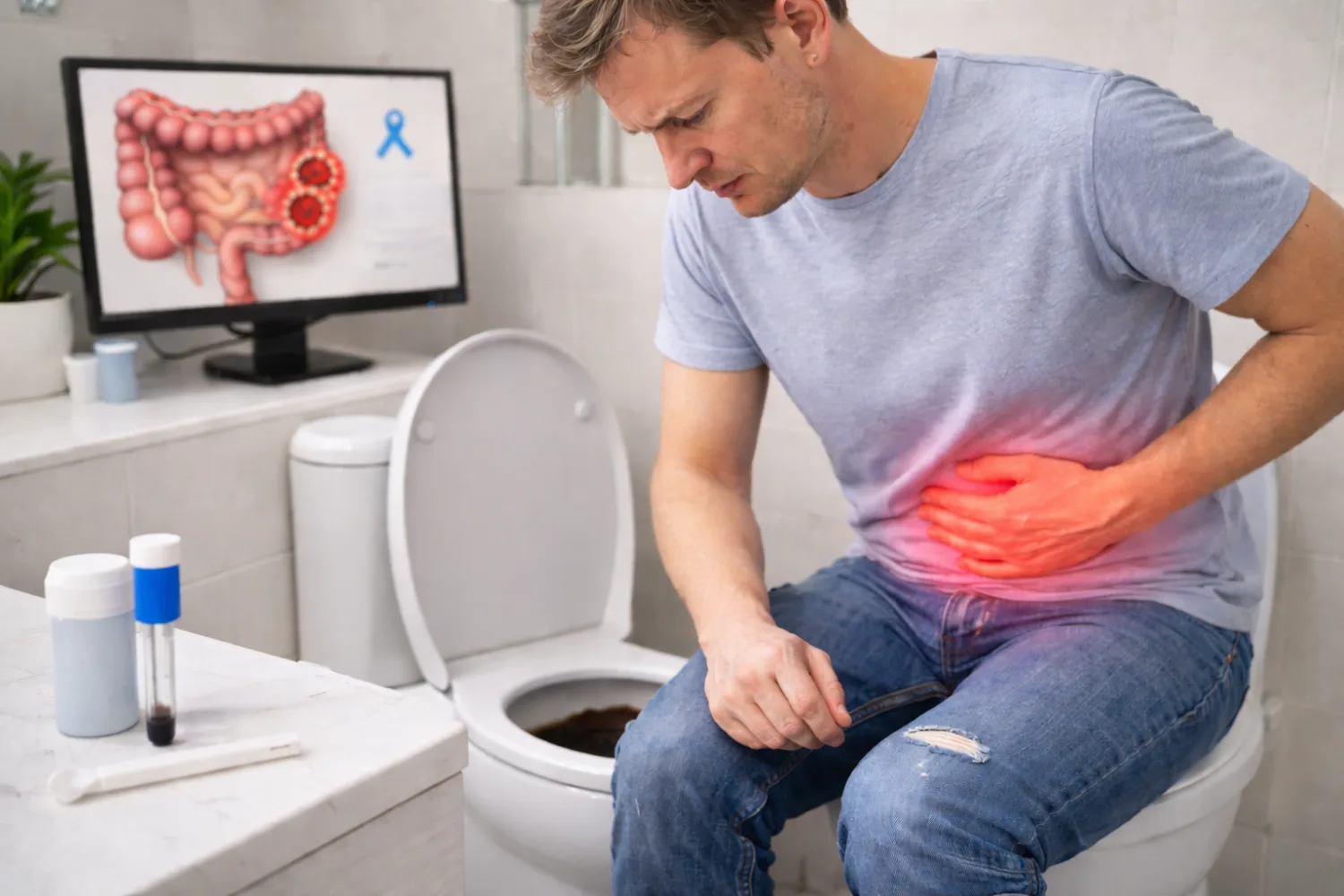
Seeing blood in your stool can be frightening. Sometimes the cause is something common and treatable, such as piles, also called haemorrhoids, or a small tear in the skin around the anus.
But blood in the stool should never be ignored, especially if it keeps happening, is mixed with the stool, or comes with symptoms such as a change in bowel habit, abdominal pain, weight loss or tiredness.
This guide explains what blood in stool can look like, the most common causes, what tests doctors may use, and when bleeding could be a sign of something more serious. It is written for UK patients and families who want a clear, practical explanation rather than vague reassurance.
If you want a broader overview first, see Digestive Health: Symptoms, Common Conditions and Treatments. If constipation, piles or inflammatory bowel symptoms may also be relevant, these may help too: Constipation in Adults: Causes, Remedies, Laxatives and When to Seek Help, Piles (Haemorrhoids): Symptoms, Treatment and Prevention, and Inflammatory Bowel Disease (IBD): Crohn’s Disease vs Ulcerative Colitis Explained.
What blood in stool can look like
Blood in stool is not always obvious in the same way. It may appear as:
- bright red blood on toilet paper
- red streaks on the outside of the stool
- blood dripping into the toilet bowl
- darker red blood mixed with stool
- black, tarry stools
The appearance can give clues, but it does not confirm the cause on its own.
Bright red bleeding is often from lower down in the bowel or around the anus. Black or very dark stools can suggest bleeding higher up in the digestive tract and need urgent assessment.
NHS guidance specifically advises urgent help if poo is black or dark red.
Common causes of blood in stool
Blood in stool is a symptom, not a diagnosis. The cause may be simple and local, such as piles or a fissure, or it may come from inflammation, infection, diverticular disease, polyps or bowel cancer.
Piles, also called haemorrhoids
Piles are one of the most common causes of bright red rectal bleeding. The blood is often seen on the toilet paper or on the outside of the stool rather than mixed all the way through it.
People may also have:
- itching
- soreness
- a lump around the anus
- discomfort after opening the bowels
- the feeling of not quite finishing after going to the toilet
Typical example: someone with constipation strains, then notices a small amount of bright red blood when wiping. That pattern often fits piles, especially if there is itching or discomfort too.
Anal fissure
An anal fissure is a small tear in the skin around the anus. It often causes sharp pain during or after opening the bowels, especially if the stool is hard.
There may also be a small amount of bright red blood. Fissures are commonly linked to constipation and straining.
Constipation and straining
Constipation itself can lead to bleeding by causing piles, fissures or trauma from passing hard stool.
If you are straining, spending a long time on the toilet, or passing very hard stool, those are important clues that the bleeding may be from the lower back passage rather than deep inside the bowel.
Inflammatory bowel disease
Crohn’s disease and ulcerative colitis can both cause blood in the stool, often alongside diarrhoea, urgency, abdominal pain, weight loss and fatigue.
In these conditions, the bleeding usually reflects bowel inflammation rather than a simple local tear or pile. NICE notes that several conditions, including inflammatory bowel disease, may cause blood in faeces.
Diverticular disease
Diverticular disease can sometimes cause bleeding from the bowel. This may be painless, or it may happen alongside other bowel symptoms.
The amount of blood can vary, and heavier bleeding needs urgent medical advice.
Infection
Bloody diarrhoea can happen with bowel infections.
NHS advice is clear that bloody diarrhoea is a reason to seek urgent GP or NHS 111 help rather than simply waiting for it to pass.
Bowel polyps or bowel cancer
Blood in the stool can be a symptom of bowel cancer, especially if it happens with a change in bowel habit, abdominal pain, a lump in the tummy, bloating, unexplained weight loss or tiredness.
NHS guidance lists blood in your poo, bleeding from the bottom, change in bowel habit, tummy pain and weight loss among the main symptoms of bowel cancer.
This does not mean most people with blood in their stool have cancer. Many do not. But it is one of the key reasons bleeding should not just be self-diagnosed forever as “probably piles”.
When bleeding is more likely to be minor
A small amount of bright red blood after passing a hard stool, especially with pain, itching or straining, is more likely to be caused by piles or a fissure.
A one-off episode may settle with better bowel habits and treatment of constipation. This might include drinking enough fluids, increasing fibre gradually, avoiding straining, and using pharmacy treatments where appropriate.
However, even bleeding that seems minor should be reassessed if it keeps recurring or if the pattern changes.
It is also important not to assume that bleeding is harmless just because you have had piles before. Piles can bleed, but having piles does not rule out other bowel problems.
When blood in stool could be more serious
You should be more concerned if the blood is:
- mixed into the stool
- dark red or black
- happening repeatedly
- associated with diarrhoea
- associated with weight loss, abdominal pain or tiredness
- part of a clear change in bowel habit
NHS guidance highlights black or dark red stool and bloody diarrhoea as urgent warning signs.
NHS bowel cancer guidance also lists blood in the poo alongside bowel habit change, tummy pain, bloating, a tummy lump and unexplained weight loss as important symptoms that should be checked.
Symptoms that should not be ignored
Blood in stool should be taken more seriously if it comes with:
- new or persistent diarrhoea
- a change from your normal bowel habit
- unexplained constipation that is new for you
- unexplained weight loss
- ongoing abdominal pain
- bloating that does not settle
- extreme tiredness or possible anaemia
- a lump or swelling in the tummy
- black or tarry stools
- large amounts of blood or clots
These symptoms do not automatically mean cancer, but they do mean the bleeding deserves proper medical assessment.
What doctors will usually ask about
If you speak to a pharmacist, GP or hospital doctor, they will usually want to know:
- what the blood looks like
- whether it is on the paper, on the stool, or mixed in
- whether the stool is black, dark red or tarry
- whether you have pain
- whether you are constipated or have diarrhoea
- whether your bowel habit has changed recently
- whether you have lost weight
- whether you feel unusually tired
- whether there is abdominal pain or bloating
- whether there is a family history of bowel disease or bowel cancer
- whether you take blood-thinning medicines
This history matters because blood in stool is not one diagnosis. It is a symptom with many possible causes.
The more clearly you can describe the blood and any other symptoms, the easier it is for a clinician to decide how urgently you need tests or referral.
Tests for blood in stool
The tests used depend on your age, symptoms, the amount of bleeding, whether it keeps happening, and whether there are any red flags.
Examination
A GP may examine the anus and rectal area if piles, a fissure or another obvious local cause is suspected.
This can feel awkward, but it can be very useful. You can ask what the examination involves before it happens, request a chaperone, and ask to stop at any point.
Blood tests
Blood tests may be used to check for anaemia, inflammation or infection. If bleeding has been happening for a while, anaemia can become an important clue.
For example, a full blood count may show low haemoglobin if there has been ongoing blood loss. Inflammatory markers may be considered if symptoms suggest bowel inflammation or infection.
FIT test
A faecal immunochemical test (FIT) looks for tiny traces of blood in a stool sample that may not be visible.
In the UK, FIT is used both in bowel cancer screening and in investigating some bowel symptoms in primary care. NHS screening information explains that FIT checks for blood in a sample of poo, while NICE guidance supports offering FIT to adults with certain symptoms that could be caused by colorectal cancer.
NICE also says people with certain higher-risk features should not have referral delayed just because a FIT result is not yet available, and people with a rectal mass, unexplained anal mass or unexplained anal ulceration do not need FIT before referral is considered.
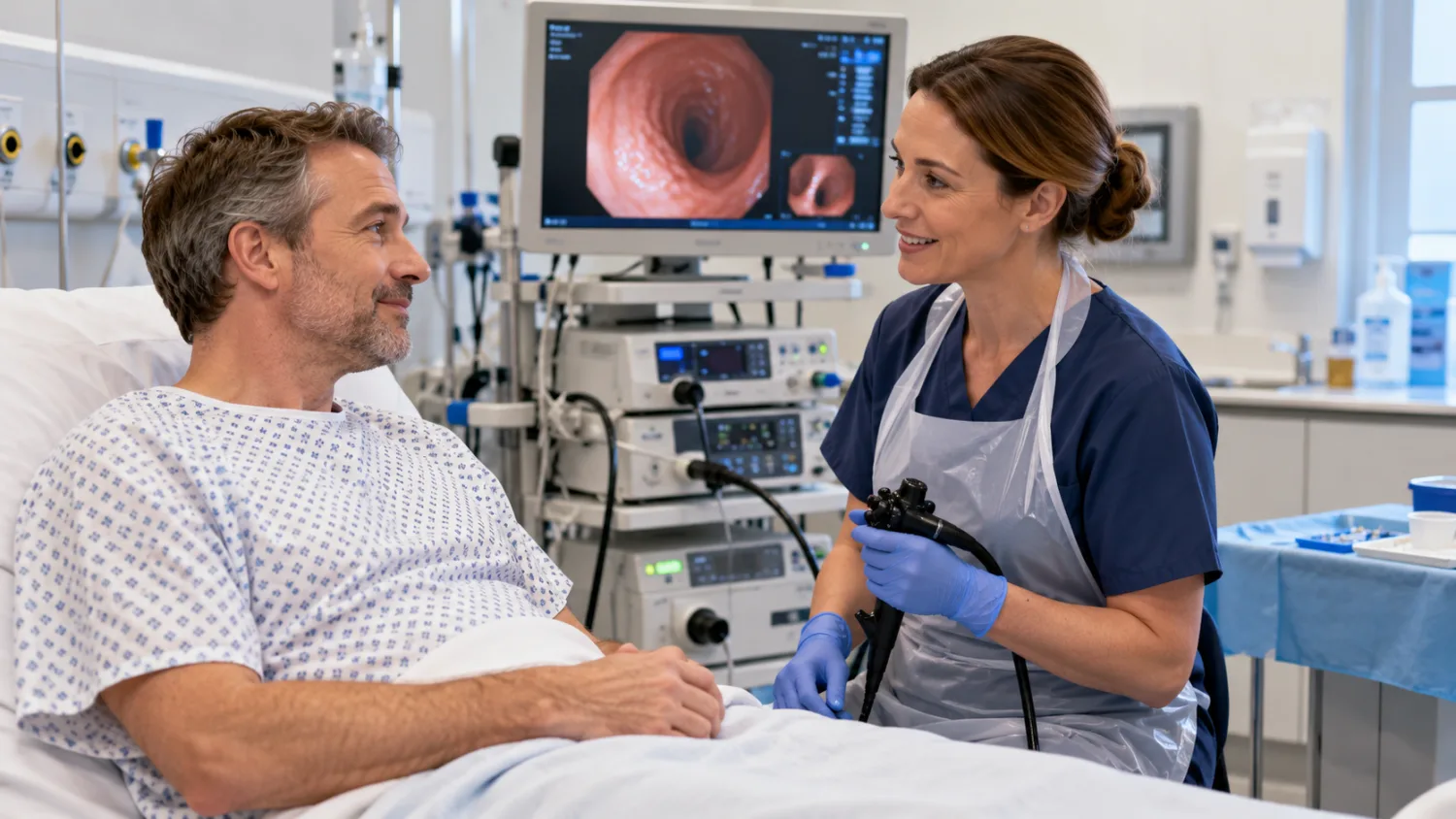
Colonoscopy or sigmoidoscopy
If the cause of bleeding is unclear, or if symptoms suggest something more serious, you may be referred for a colonoscopy or sigmoidoscopy.
These tests allow the bowel to be examined directly and can help identify polyps, inflammation, bleeding sources or cancer.
What the FIT test can and cannot tell you
The FIT test can be very useful, but it is not a diagnosis on its own.
It looks for blood in the stool and helps guide how urgently further investigation may be needed. A positive result does not automatically mean cancer, and a negative result does not mean symptoms should always be ignored if clinical concern remains.
NICE’s colorectal referral guidance reflects both points: FIT helps guide referral, but referral should not be delayed if there is ongoing concern.
Positive FIT result
A positive FIT means blood has been detected in the stool sample. It does not tell you the cause. Possible causes include piles, inflammation, polyps, infection or cancer.
A positive result usually needs follow-up according to your symptoms and clinical pathway.
Negative FIT result
A negative FIT is reassuring in some situations, but it should not be used to dismiss ongoing symptoms automatically.
If bleeding continues, symptoms change, or there are red flags such as weight loss, anaemia or a concerning examination finding, further review may still be needed.
NICE specifically states that FIT should still be offered for symptomatic patients even if they have previously had a negative FIT result through the NHS bowel cancer screening programme.
When to get help
The right place to seek help depends on the amount of bleeding, what it looks like, how often it is happening, and whether you have other symptoms.
When to see a pharmacist
A pharmacist may help if the bleeding seems mild and clearly linked to piles, constipation or a fissure, especially if there are no red-flag symptoms.
They can advise on constipation treatment, piles creams and when GP review is more appropriate.
But persistent bleeding is not something to keep treating indefinitely with over-the-counter products.
When to see a GP
Book a GP appointment if:
- blood in your stool keeps happening
- you are not sure it is piles
- you have constipation, diarrhoea or bowel habit change
- you have abdominal pain or bloating
- you feel tired or may be anaemic
- you have weight loss you cannot explain
NHS rectal bleeding guidance recommends urgent GP or NHS 111 help for black or dark red stool and bloody diarrhoea, while NHS bowel cancer guidance stresses that persistent blood in the poo or bleeding from the bottom should be checked.
When to seek urgent help
Seek urgent help if:
- your poo is black or dark red
- you have bloody diarrhoea
- there is a large amount of blood
- you feel faint, weak or unwell with the bleeding
- you have severe abdominal pain as well
- the bleeding is heavy or does not stop
- you pass large blood clots
NHS guidance is clear that black or dark red stool and bloody diarrhoea need urgent advice. NHS piles guidance also advises urgent action if bleeding is heavy, does not stop, or if there are large blood clots.
What to avoid
Blood in stool is common enough that many people try to explain it away. That can be reasonable after one clearly minor episode, but it becomes risky if symptoms continue.
Avoid:
- assuming all bleeding is “just piles”
- ignoring bleeding that keeps coming back
- continuing to strain with constipation without treating it
- delaying medical advice because of embarrassment
- assuming a negative bowel screening result means new symptoms do not matter
- using over-the-counter piles treatment for weeks without review if bleeding continues
Embarrassment is very common, but clinicians deal with bowel symptoms every day. Getting checked early is usually far easier than worrying for months.
FAQ: blood in stool
Is bright red blood always piles?
No. Piles are a common cause, but fissures, inflammation, infection and bowel disease can also cause bright red bleeding.
Is black stool serious?
Yes, it can be. NHS guidance says black or dark red stool is a reason for urgent medical help.
Does blood in stool mean cancer?
Not necessarily. Many cases are caused by piles or other non-cancer causes. But it is also a recognised symptom of bowel cancer, which is why persistent or unexplained bleeding needs assessment.
What if I only see blood once?
A one-off small amount may not be serious, especially if you were constipated or had pain from a fissure. But if it happens again, get it checked.
What does the FIT test do?
It checks for tiny traces of blood in a stool sample and is used in both bowel cancer screening and the assessment of some bowel symptoms.
Can constipation cause blood in stool?
Yes. Constipation can cause bleeding by triggering piles, anal fissures or irritation from passing hard stool. Bleeding linked to constipation should improve when the constipation is properly managed, but recurrent bleeding still needs review.
Can diarrhoea with blood be an infection?
Yes. Bloody diarrhoea can happen with bowel infections, but it can also be caused by inflammatory bowel disease or other problems. NHS advice is to seek urgent GP or NHS 111 help for bloody diarrhoea.
Should I still see a doctor if I already have piles?
Yes, if the bleeding is persistent, changing, heavy, mixed into the stool, or associated with symptoms such as bowel habit change, weight loss, abdominal pain or tiredness. Having piles does not automatically explain every episode of bleeding.
Final takeaway
Blood in stool is a symptom, not a diagnosis. Sometimes the cause is minor and easily treated. Sometimes it points to bowel inflammation, infection, polyps or cancer.
The safest approach is not panic, but pattern recognition: notice what the blood looks like, whether it keeps happening, and whether there are other symptoms such as bowel habit change, pain, weight loss or fatigue.
If the bleeding is black, dark red, heavy, or comes with bloody diarrhoea, get urgent help.
If it is recurring or unexplained, book a GP appointment rather than guessing. Early assessment is often what turns a frightening symptom into a manageable diagnosis.