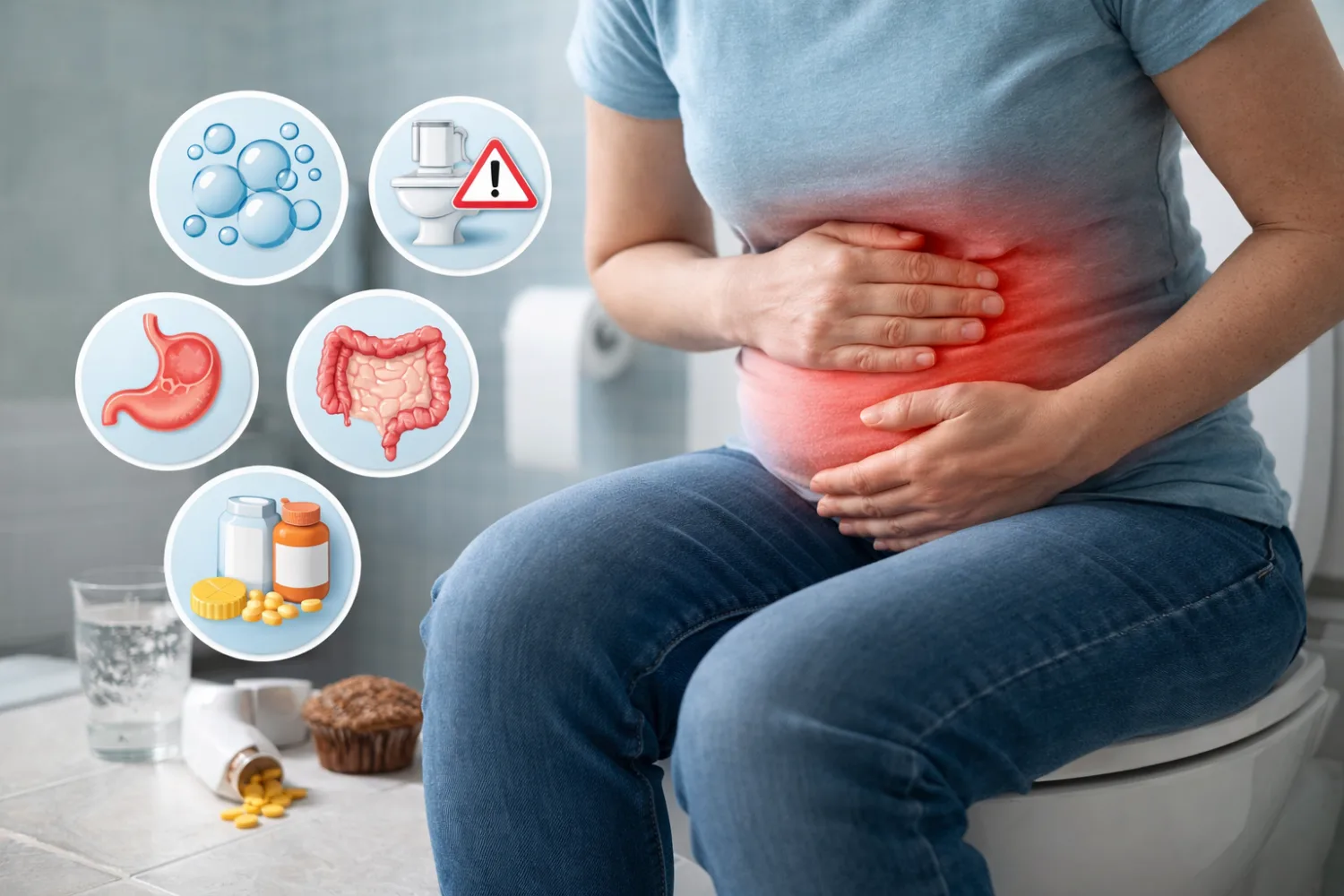
Constipation is one of the most common digestive problems in adults. It can mean going to the toilet less often than usual, passing hard or dry stools, straining, feeling blocked, or feeling that the bowel has not fully emptied. Some people also get bloating, cramping, nausea, reduced appetite or piles because of it.
Many cases improve with simple changes such as better fluid intake, more movement, regular toilet habits and the careful use of laxatives. But constipation should not always be brushed off as a minor issue. If it keeps coming back, is getting worse, or comes with symptoms such as blood in the stool, weight loss, severe tummy pain or a sudden change in bowel habit, it needs proper medical assessment.
This guide explains what constipation is, common causes, what remedies often help, how laxatives work, what to avoid, and when to see a pharmacist, GP or seek urgent help. If you also have upper digestive symptoms, see our guide to Heartburn, Acid Reflux and GORD. If bloating is a major part of the picture, read Bloating: Common Causes, Relief and When to Worry.
What constipation actually means
People often think constipation only means “not going often enough”, but it is broader than that. You may be constipated if your stools are hard, dry, small, difficult to pass, or if you need to strain. Some people go every day but still feel constipated because they never feel properly empty.
A common real-life example is someone who starts eating more irregularly, drinks less water, sits for most of the day and keeps putting off going to the toilet because they are busy. Over time their stools become harder, they spend longer in the bathroom, and bloating starts building up most afternoons. That is a very typical constipation pattern.
Common symptoms of constipation
- opening your bowels less often than usual
- hard, dry or lumpy stools
- straining to pass stool
- feeling that the bowel has not emptied properly
- bloating or a swollen-feeling tummy
- cramping or tummy discomfort
- feeling sick or off your food
- pain or bleeding from piles or an anal fissure after straining
Constipation and bloating often go together. Some people also feel heavy, sluggish or uncomfortable after meals because the bowel is moving more slowly than it should.
What causes constipation?
Constipation usually has more than one cause. The most common reasons include not eating enough fibre, not drinking enough fluids, being less active, ignoring the urge to go to the toilet, changes in routine, travel and some medicines. NHS guidance also notes that constipation can be linked to medicines such as opioid painkillers. If prescribed medication may be the cause, you should not stop it without medical advice.
1. Not enough fluid
If you are not drinking enough, stool can become dry and harder to pass. This is especially common in people who drink lots of tea or coffee but very little water, or who get busy and forget to drink during the day.
2. Too little movement
Physical activity helps stimulate the bowel. Constipation is more common when people become more sedentary, for example after changing jobs, after illness, after surgery or during a period of low mobility.
3. Ignoring the urge to go
Putting off going to the toilet can make stool harder and more difficult to pass later. This often happens at work, while travelling or when people feel uncomfortable using unfamiliar toilets.
4. Diet changes
A diet low in fibre may contribute, but this is not always as simple as “just eat more bran”. Some people do well with more fibre, especially if their diet has been very low in it. Others become more bloated if they suddenly add large amounts too quickly.
5. Medicines
Common culprits include opioid painkillers, and constipation can also happen with other medicines. If you think medication is contributing, speak to a pharmacist or GP rather than stopping prescribed treatment on your own.
6. Underlying bowel or digestive conditions
Constipation can also be part of IBS, pelvic floor problems, thyroid problems, neurological conditions or other bowel disorders. If it keeps coming back or does not improve with straightforward treatment, a clinician may need to look for an underlying cause.
When constipation is more likely to be simple and short term
Constipation is often straightforward if it appears after travel, a change in routine, poor diet for a few days, reduced fluid intake, or a short period of inactivity, and then settles with lifestyle changes or short-term treatment. For example, someone may become constipated during a holiday, after not drinking enough water, or while recovering from a minor illness.
Even then, it is worth paying attention if it becomes a repeated pattern rather than a one-off problem.
Simple remedies that often help
Drink enough fluid
Water helps keep stools softer and easier to pass. This matters even more if you are using certain laxatives. Someone who increases fibre without increasing fluids may actually feel worse.
Move more
Walking, gentle exercise and general day-to-day movement can help the bowel work more normally. You do not need intense training. For many people, regular walking is enough to make a difference.
Give yourself time and privacy
Rushing toilet visits often makes things worse. Try to respond to the urge to go rather than delaying it. Some people find a routine helps, such as sitting on the toilet after breakfast when the bowel is naturally more active.
Improve your toilet position
Many people find it easier to open their bowels if their knees are slightly higher than their hips. A small footstool under the feet can help create a better angle and reduce straining.
Adjust fibre gradually
Fibre can help, but add it slowly. Sudden large increases can cause more bloating and wind. Soluble fibre is often better tolerated than simply adding lots of bran all at once.
What foods can help?
There is no one “constipation diet” that works for everyone, but many people improve with more fibre from foods such as oats, fruit, vegetables, pulses and wholegrains, alongside enough fluid. Prunes, kiwifruit and similar foods help some people. The key is not to overhaul your whole diet overnight in a way you cannot stick to.
A practical example: someone who normally skips breakfast, grabs processed snacks and barely drinks water is unlikely to fix constipation just by taking one sachet of fibre. Regular meals, fluids and routine often matter just as much.
Laxatives: what they are and when they help
Laxatives are medicines that help with constipation. They can be very useful, but they work best when chosen sensibly for the kind of constipation you have. NHS guidance warns against taking laxatives every day without supervision, because that can be harmful. In some cases, a regular laxative is appropriate, but that should be guided by a GP or specialist.
Main types of laxative
Bulk-forming laxatives help stool hold on to water and become easier to pass. They are usually more suitable if you can drink enough fluid.
Osmotic laxatives draw water into the bowel to soften stool.
Stimulant laxatives encourage the bowel to move stool along.
Suppositories or mini-enemas may sometimes be used for more immediate lower-bowel relief in selected situations.
Which laxative is best?
That depends on the problem. Hard, dry stool may need a different approach from constipation where the stool is softer but difficult to get out. This is one reason pharmacist advice can be useful. Someone taking the wrong type repeatedly may feel frustrated because they are treating the symptom in the wrong way.
How long should you take laxatives?
Short-term use is common, but some people need them for longer under supervision. NHS guidance says you should not keep taking laxatives every day without advice, though in some situations a regular laxative is prescribed and monitored. Some NHS prescribing guidance also notes that when laxatives are being reduced, this is usually done gradually rather than stopped suddenly.
What to avoid
- ignoring constipation for weeks and hoping it will sort itself out
- straining repeatedly, which can worsen piles and fissures
- suddenly adding huge amounts of bran if you already feel very bloated
- taking laxatives every day long term without advice
- stopping prescribed medicines on your own if you think they are the cause
- assuming all constipation is harmless if your bowel habit has changed suddenly
One common mistake is waiting until the problem is severe before doing anything. Constipation is often easier to manage early than after days of hard stool, bloating and painful straining.
When to see a pharmacist
A pharmacist can often help if constipation is recent, mild to moderate, and you do not have red-flag symptoms. They can suggest an appropriate laxative, explain how to use it, and advise whether you need GP review instead.
This is especially useful if you are unsure which product to choose or whether a medicine you already take may be contributing.
When to see a GP
NHS guidance advises seeing a GP if constipation is not getting better with treatment, if you are regularly constipated or regularly bloated, if you have blood in your poo, lose weight without trying, feel tired all the time, have tummy pain, or notice a sudden change in the way you poo. It also advises GP review if a medicine such as opioid painkillers may be causing the problem.
You should also book a GP appointment if constipation keeps coming back, you increasingly rely on laxatives, or you feel your bowel habit is changing without a clear explanation.
When to seek urgent help
Urgent assessment may be needed if constipation is severe and comes with vomiting, worsening swelling, inability to pass wind, or strong cramping abdominal pain. These can be warning signs of bowel obstruction rather than routine constipation.
If you have severe abdominal pain, repeated vomiting, a swollen abdomen and you are not passing stool or wind, do not just keep trying home remedies.
Red flags: when constipation could be something more serious
- blood in the stool
- unexplained weight loss
- ongoing tummy pain
- feeling tired all the time, which may point to anaemia or another cause
- a sudden lasting change in bowel habit
- constipation that is not improving with treatment
- constipation plus persistent bloating, especially if symptoms are changing
These features do not automatically mean cancer or another serious disease, but they do mean constipation should not simply be treated as routine without proper assessment.
Constipation and IBS
Some adults do not just have simple constipation. They have constipation as part of IBS, often alongside bloating, abdominal pain and periods where bowel habit changes. NICE guidance on IBS stresses the importance of checking for red-flag features rather than assuming all constipation-related symptoms are functional.
If constipation comes with recurrent cramping, bloating and a long-term stop-start pattern, our article on IBS (Irritable Bowel Syndrome): Symptoms, Diagnosis and Treatment may also help.
Frequently asked questions
How often should I open my bowels?
There is no single normal number. Some adults go several times a day, others every couple of days. What matters more is what is normal for you and whether stools are difficult or uncomfortable to pass.
Can constipation cause bloating?
Yes. Constipation is one of the most common reasons people feel bloated, tight or heavy in the abdomen.
Is it bad to use laxatives?
No, laxatives can be very helpful when used properly. The problem is using them continuously without guidance, or choosing the wrong type for the situation.
Should I stop opioid painkillers if they are making me constipated?
Not without medical advice. NHS guidance says to speak to a GP before stopping prescribed medicines.
When is constipation an emergency?
It is more urgent if it comes with vomiting, severe abdominal pain, marked swelling, or inability to pass wind, because bowel obstruction may need to be ruled out.
Final thoughts
Constipation in adults is common and often improves with simple measures, but it should not be normalised to the point that people put up with it for months or years. A sensible plan usually includes fluids, movement, toilet routine, gradual dietary change and the right laxative when needed.
But persistent constipation, sudden bowel habit change, blood in the stool, weight loss, ongoing pain or possible medication-related constipation deserve proper review. If the pattern is becoming regular rather than occasional, or if you are depending on laxatives more and more, it is time to get help rather than keep guessing.