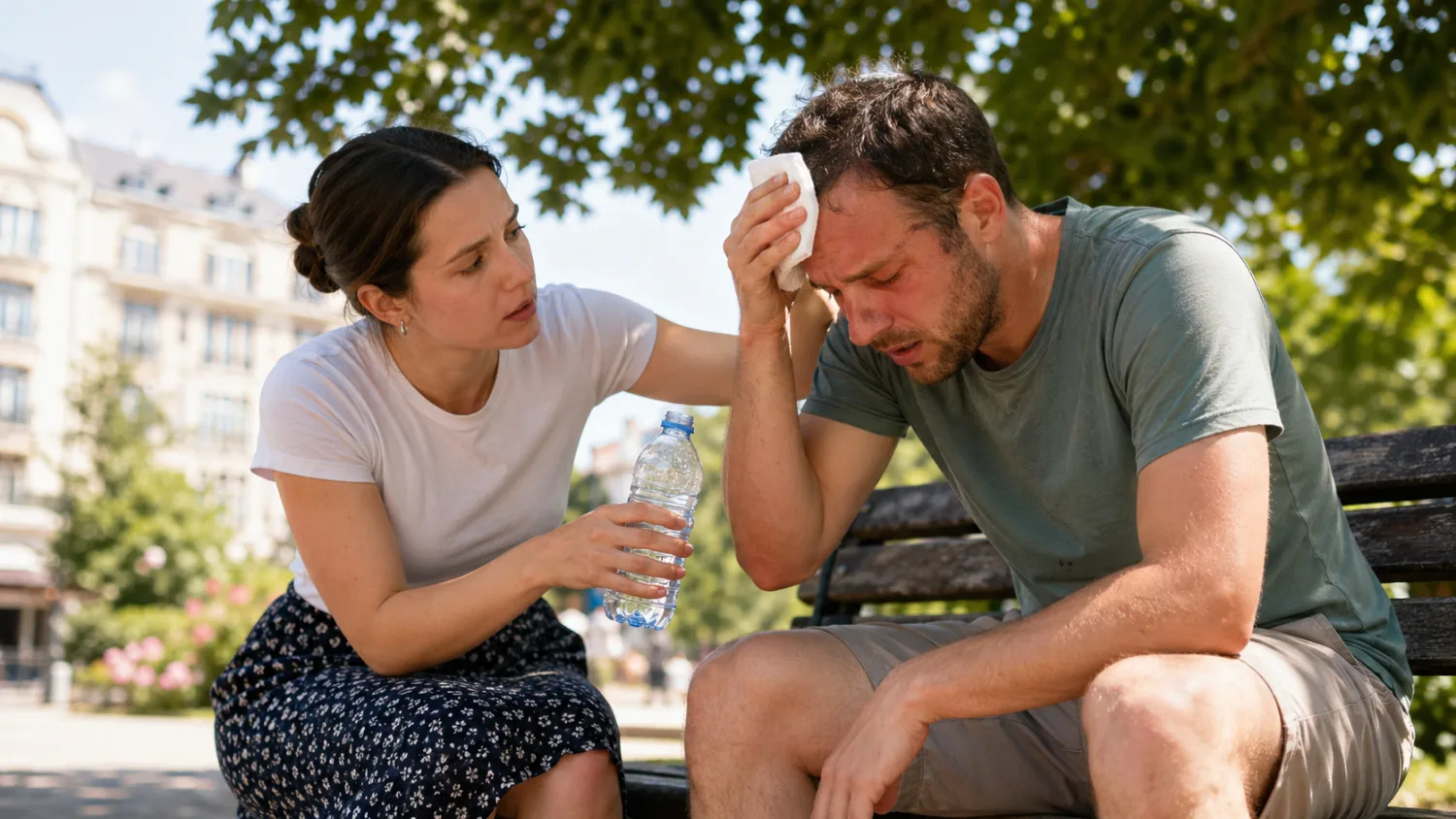
Hot weather can feel welcome in the UK, especially after a long winter. But when the body gets too hot and cannot cool itself down properly, heat-related illness can develop quickly. This can happen during a heatwave, after sitting in a hot room, while travelling, during sport, at work, at festivals, on holiday, or even after spending too long in the garden.
Most heat-related illness starts as heat exhaustion. At this stage, the person may feel unwell, weak, dizzy, sweaty or sick, but they can often recover if they are cooled down quickly. Heatstroke is different. It is a medical emergency and can be life-threatening if not treated quickly.
This guide explains the difference between heat exhaustion and heatstroke, what symptoms to look for, what to do straight away, and when to call NHS 111 or 999.
If you are trying to avoid symptoms developing in the first place, read our guide to how to prevent heat exhaustion and heatstroke in hot weather.
Important: If you think someone has heatstroke, call 999. Do not wait to see if they improve.
What is heat exhaustion?
Heat exhaustion happens when the body becomes too hot and starts to struggle to cool itself. It is often linked with dehydration, heavy sweating and loss of salts from the body. It can affect anyone, but it is more likely during hot weather, physical activity, long journeys, crowded events, or when someone has not had enough fluids.
Heat exhaustion is not usually a medical emergency if the person can be cooled down and starts to feel better within about 30 minutes. The key is to act early. If symptoms are ignored, heat exhaustion can turn into heatstroke.
Heat exhaustion can happen indoors as well as outdoors. A poorly ventilated room, a hot workplace, a warm car, a crowded train, or a care home without effective cooling can all become risky during hot weather.
What is heatstroke?
Heatstroke is more serious. It happens when the body can no longer control its temperature properly. The person may become confused, collapse, have a seizure, stop sweating despite being very hot, or become unconscious.
Heatstroke should always be treated as an emergency. NHS advice is clear that if heat exhaustion develops into heatstroke, urgent medical help is needed. You can read more on the NHS page for heat exhaustion and heatstroke.
Heat exhaustion symptoms
Heat exhaustion can feel like suddenly “hitting a wall”. Someone may have been coping with the heat for a while, then become weak, dizzy or nauseous. In children, it can sometimes show as unusual tiredness, irritability or sleepiness.
Common symptoms of heat exhaustion include:
- feeling tired, weak, faint or dizzy
- headache
- heavy sweating
- feeling very thirsty
- feeling sick or being sick
- muscle cramps, especially in the arms, legs or stomach
- fast breathing or a fast pulse
- cool, pale or clammy skin
- a high temperature
These symptoms can overlap with dehydration. If someone has dark yellow pee, is peeing less often than usual, feels lightheaded, has a dry mouth, or seems unusually tired, dehydration may also be playing a part. The NHS has more detail on dehydration symptoms.
Heatstroke symptoms: when it becomes an emergency
Heatstroke can develop from untreated heat exhaustion, but it can also come on suddenly, especially during intense exercise or very high temperatures. The warning signs are usually more severe and may affect the person’s behaviour, alertness or consciousness.
Call 999 immediately if someone:
- is still very unwell after 30 minutes of cooling down
- has a very high temperature
- feels hot but is not sweating, or has hot, dry skin
- is confused, agitated, unusually drowsy or behaving strangely
- has a seizure or fit
- loses consciousness
- has fast breathing, shortness of breath or chest pain
- is a baby, young child, older person or vulnerable adult and symptoms are severe or worsening
While waiting for emergency help, move the person somewhere cooler if you can do so safely, remove unnecessary clothing, and cool their skin with water, fans, cool cloths or cold packs wrapped in a towel. If they are unconscious, do not give them anything to drink.
What to do straight away for heat exhaustion
If someone appears to have heat exhaustion, the aim is simple: cool them down and replace fluids. Do not wait for symptoms to become severe.
Move the person out of the sun or heat. A shaded area is better than direct sun, but an air-conditioned room, cool building or fan-cooled space is better still. Help them sit or lie down. Remove unnecessary layers such as jackets, sports gear, hats or heavy clothing.
Offer cool water or a rehydration drink if they are awake, alert and able to swallow. Small, frequent sips are often easier than trying to drink a lot at once, especially if they feel sick.
Cool the skin. You can use cool water, a damp cloth, a fan, a cool shower, or cold packs wrapped in a towel and placed around the neck, armpits or groin. Avoid using ice directly on the skin.
The person should start to feel better within about 30 minutes. UKHSA’s Beat the Heat guidance also advises seeking medical advice if symptoms are worsening or not improving.
Simple rule: If someone with heat exhaustion is not improving after 30 minutes of cooling, or you are worried they may have heatstroke, get urgent medical help.
Who is most at risk in hot weather?
Heat illness can affect fit and healthy people, especially during exercise or outdoor work. But some people are more vulnerable because their bodies may not regulate temperature as easily, they may be less able to move somewhere cooler, or they may be more likely to become dehydrated.
People at higher risk include:
- babies and young children
- older adults, especially those living alone
- people with heart, lung, kidney or diabetes-related conditions
- people with mobility problems or disabilities
- people with dementia or severe mental health conditions
- pregnant women
- people taking certain medicines, including some water tablets, blood pressure medicines or medicines that affect sweating or hydration
- people who work outdoors or do strenuous physical activity
- people who are homeless or living in housing that gets very hot
If you care for an older relative, neighbour or vulnerable adult, it is worth checking in during hot spells. Heat can build up indoors over several days, and someone may become unwell even if they have not been outside much.
Heat exhaustion in children
Children can become overheated faster than adults, especially when they are running around, wearing too many layers, travelling in a warm car, or spending time in direct sun. They may not always explain how they feel, so behaviour can be an important clue.
A child with heat exhaustion may become unusually tired, grumpy, floppy, dizzy, headachey or sick. They may complain of tummy pain or cramps. They may also be very thirsty, have fewer wet nappies or go to the toilet less often.
Move them somewhere cool, encourage small sips of water, remove extra clothing and cool their skin. If they do not improve, seem very sleepy, are confused, have a seizure, or you are worried, seek urgent medical help.
If your child’s symptoms seem linked to pollen, coughing or seasonal allergies rather than heat, you may also find our guide to spring allergies in children helpful.
Heat, dehydration and alcohol
Dehydration makes heat exhaustion more likely. In hot weather, the body loses more fluid through sweating. If you are also drinking alcohol, exercising, travelling, vomiting, or not drinking enough water, dehydration can develop more quickly.
Alcohol can make things worse because it may increase fluid loss, affect judgement, and make it easier to miss early symptoms. This is one reason heat illness can happen at festivals, barbecues, sporting events and holidays.
Try to drink regularly throughout the day. Water is usually enough for most people, but oral rehydration drinks may help if someone has been sweating heavily, has diarrhoea or vomiting, or is struggling to rehydrate. People with medical conditions such as heart failure, kidney disease or fluid restrictions should follow their clinician’s advice about how much to drink.
Can sunburn lead to heat exhaustion?
Yes. Sunburn and heat illness are different problems, but they often happen together. Severe sunburn can make it harder for the body to regulate temperature and can be associated with heat exhaustion or heatstroke.
If you have been in the sun and feel dizzy, sick, very tired, shivery, headachey or crampy, do not treat it as “just sunburn”. Get out of the sun, cool down and drink fluids. If symptoms are severe, worsening, or a baby or young child has sunburn, seek medical advice.
For more on preventing skin damage, read our guide to sunburn and sun safety. You can also check the NHS guide to sunburn.
How to prevent heat exhaustion
Prevention is mostly about planning ahead. In the UK, people sometimes underestimate heat because very hot days can arrive suddenly. Homes, schools, workplaces and public transport may not always be designed for high temperatures.
On hot days, try to keep out of the strongest heat where possible, especially during the middle of the day. Plan exercise, gardening, dog walking and errands for early morning or evening. Wear loose, light clothing, use shade, and take breaks before you feel unwell.
At home, close curtains or blinds in rooms that face the sun, open windows when the air outside is cooler, and move to the coolest part of the home if possible. A cool shower, damp cloth, fan or bowl of cool water for feet can help some people feel more comfortable.
When travelling, carry water, avoid leaving anyone in a parked car, and remember that cars, buses and trains can become very hot quickly. Babies, children, older people and pets should never be left in a vehicle in warm weather.
Exercise, sport and outdoor work
Heat exhaustion is common during sport, outdoor jobs and physical activity because the body is producing heat from exertion while also trying to cope with the weather. This can happen to runners, cyclists, footballers, hikers, construction workers, delivery riders, gardeners and festival staff.
If you are exercising or working outdoors, build in rest breaks, drink before you feel very thirsty, and reduce intensity during hot spells. Watch for early warning signs such as headache, dizziness, cramps, unusual fatigue or nausea. Pushing through these symptoms can be dangerous.
If someone develops symptoms during exercise, stop the activity. Move them somewhere cool and begin cooling immediately. Do not encourage them to “walk it off” or continue playing.
When to call NHS 111, a GP or 999
It is not always easy to judge how serious heat illness is, especially in children, older adults or people with existing health conditions. Use the severity of symptoms and the response to cooling as your guide.
Call NHS 111 or seek medical advice if:
- symptoms are not improving after cooling down
- you are worried about a baby, young child, older person or vulnerable adult
- the person has signs of dehydration and is struggling to drink
- they keep vomiting
- they have a medical condition that may be affected by heat
- they are taking medicines and you are unsure whether heat or dehydration is a concern
Call 999 if:
- you think someone has heatstroke
- they are confused, very drowsy, unconscious or having a seizure
- they have chest pain, severe breathlessness or collapse
- they remain very unwell after 30 minutes of cooling
- their condition is rapidly worsening
If you need help deciding where to seek care for a less urgent problem, our guide on when to see a pharmacist instead of a GP may be useful. For problems that need a GP appointment, you may also find how to get a GP appointment quickly in the UK helpful.
Heat illness and other symptoms: what else could it be?
Heat exhaustion can look like several other problems. Dizziness, tiredness, nausea and headache can also happen with dehydration, viral illness, migraine, low blood sugar, alcohol, anxiety, medication side effects or infections.
The context matters. If symptoms start during hot weather, after sun exposure, during exercise, in a hot room, or after not drinking enough, heat illness should be considered. But if symptoms are severe, unusual, one-sided, associated with chest pain, fainting, confusion, weakness, speech problems or a sudden severe headache, seek urgent medical help.
Heat can also worsen existing health conditions. People with high blood pressure, heart disease, breathing problems or diabetes may feel more unwell during hot spells. If you are monitoring your health at home, you may find our guides to high blood pressure and home blood pressure monitoring useful.
Quick first aid summary
If you remember only one thing, remember this: move, cool, drink, monitor.
- Move the person to a cooler place.
- Cool their skin with water, fans, cool cloths or wrapped cold packs.
- Drink cool fluids if they are awake and able to swallow.
- Monitor closely. If they do not improve within 30 minutes, or heatstroke symptoms appear, get urgent help.
Final thoughts
Heat exhaustion is common and can often be reversed if it is recognised early. The danger is waiting too long, especially when someone is older, very young, dehydrated, physically active, or already unwell.
During hot weather, take symptoms seriously. A person who is dizzy, weak, sick, crampy or unusually tired may need cooling down, fluids and rest straight away. If they become confused, collapse, have a seizure, stop responding normally, or do not improve after cooling, treat it as an emergency.
For official UK advice, see the NHS guide to heat exhaustion and heatstroke and UKHSA’s Beat the Heat: staying safe in hot weather guidance.
This article is for general information only and should not replace medical advice. If you are worried about your symptoms or someone else’s, contact NHS 111, your GP, or call 999 in an emergency.