High blood pressure, also called hypertension, is one of the most common health problems in the UK and one of the most misunderstood.
Many people think they would know if their blood pressure was too high. In reality, that is often not true. High blood pressure usually does not cause obvious symptoms, even when it has been high for years.
That is one reason it is taken so seriously: it can quietly increase the risk of heart attack, stroke, kidney disease and other complications without making you feel unwell day to day.
The good news is that high blood pressure can usually be improved. Sometimes that means lifestyle changes alone. Sometimes it means medication as well. In many cases, the best results come from doing both properly and consistently.
This guide explains what high blood pressure actually is, what causes it, what readings mean, how it is diagnosed in the UK, what treatments are used, what you can do yourself, and when symptoms need urgent attention.
What high blood pressure is
Blood pressure is the force of blood pushing against the walls of your arteries as your heart pumps it around your body.
A blood pressure reading has two numbers, for example 138/86 mmHg.
- The top number is the systolic pressure, which is the pressure when the heart contracts.
- The bottom number is the diastolic pressure, which is the pressure when the heart relaxes between beats.
If your blood pressure stays too high over time, it puts extra strain on your blood vessels, heart, brain and kidneys. That extra strain is what raises long-term risk.
Why high blood pressure matters
High blood pressure is not only about a number on a screen. It matters because long-term uncontrolled hypertension damages the body gradually.
It can:
- increase the risk of heart attack and stroke
- contribute to heart failure
- damage the kidneys
- damage blood vessels in the eyes
- increase the risk of peripheral arterial disease and other cardiovascular problems
That is why blood pressure is such an important part of overall cardiovascular prevention.
If you have not already read it, our complete guide to cardiovascular risk explains how blood pressure fits into the bigger picture of preventing heart attack and stroke.
Does high blood pressure cause symptoms?
Usually, no. Most people with high blood pressure do not have clear symptoms.
One of the biggest problems with hypertension is that many people assume illness should feel obvious. That is not how it usually works.
You can have persistently high blood pressure and still go to work, exercise, sleep reasonably well, and think everything is normal. Some people only discover it during an NHS Health Check, a pharmacy check, a GP appointment for something unrelated, or when buying a home monitor after a family member is diagnosed.
This is why checking matters more than guessing.
Symptoms sometimes linked with very high blood pressure
Very high blood pressure can sometimes be associated with symptoms such as:
- headaches
- blurred vision
- shortness of breath
- chest pain
- nosebleeds in some cases
These symptoms are not specific to blood pressure and can happen for many other reasons.
But the key point is this: you should not rely on symptoms to tell you whether your blood pressure is high.
What causes high blood pressure?
In most adults, there is no single dramatic cause. Blood pressure often rises because of a combination of age, genetics, lifestyle and other health factors.
Common contributors include:
- carrying excess weight
- eating too much salt
- drinking too much alcohol
- low physical activity
- poor sleep
- chronic stress
- smoking
- diabetes
- kidney disease
- family history
Sometimes there is a more specific secondary cause, such as kidney disease, hormonal disorders, certain medicines, or obstructive sleep apnoea.
This is more likely to be considered if blood pressure is very high, begins unusually young, is hard to control, or behaves in a way that does not fit the typical pattern.
What increases your risk?
High blood pressure becomes more common with age, but age is only part of the story. Risk rises when several factors come together over time.
Important risk factors include:
- family history of hypertension
- being overweight, especially around the waist
- low activity levels
- high salt intake
- drinking too much alcohol
- smoking
- diabetes
- kidney disease
- poor sleep or sleep apnoea
- some medicines, including certain hormonal and anti-inflammatory drugs in some people
For many patients, the question is not “what is the one cause?” but “what are the main drivers in my case?”
Real-life examples
“I thought it was only stress”
Mark is 47, busy, tired and often rushing. He blames his occasional headaches on work. At a pharmacy check his blood pressure is high. He repeats it at home for a week and the average is still raised.
The issue: he assumed stress explained everything.
The reality: stress can affect readings, but persistent hypertension still needs proper assessment.
“I’m active, so I assumed I couldn’t have it”
Leanne is 42, slim and walks regularly. She does not smoke and generally eats well. Her GP notices her readings have been borderline high on several visits. Further checks confirm hypertension.
The issue: people often think only older or visibly unhealthy people get high blood pressure.
The reality: family history, genetics and other factors still matter.
“I bought a monitor, took one reading, then panicked”
Raj checks his blood pressure at home straight after climbing the stairs and drinking coffee. The reading is high and he becomes alarmed.
The issue: one rushed reading is not the full story.
The reality: technique matters. Rest, timing and repeated measurements are important.
How high blood pressure is diagnosed in the UK
In the UK, doctors do not usually diagnose hypertension based on a single rushed clinic reading.
Current guidance emphasises confirming raised clinic readings with ambulatory blood pressure monitoring, known as ABPM, or, if that is not suitable, home blood pressure monitoring, known as HBPM.
This matters because some people have a temporary rise in clinic due to anxiety, often called a “white coat effect”, while others may have blood pressure that looks acceptable in clinic but runs high at home or in daily life.
You can read the full UK clinical recommendations in the NICE guideline on hypertension in adults.
How to check your blood pressure properly at home
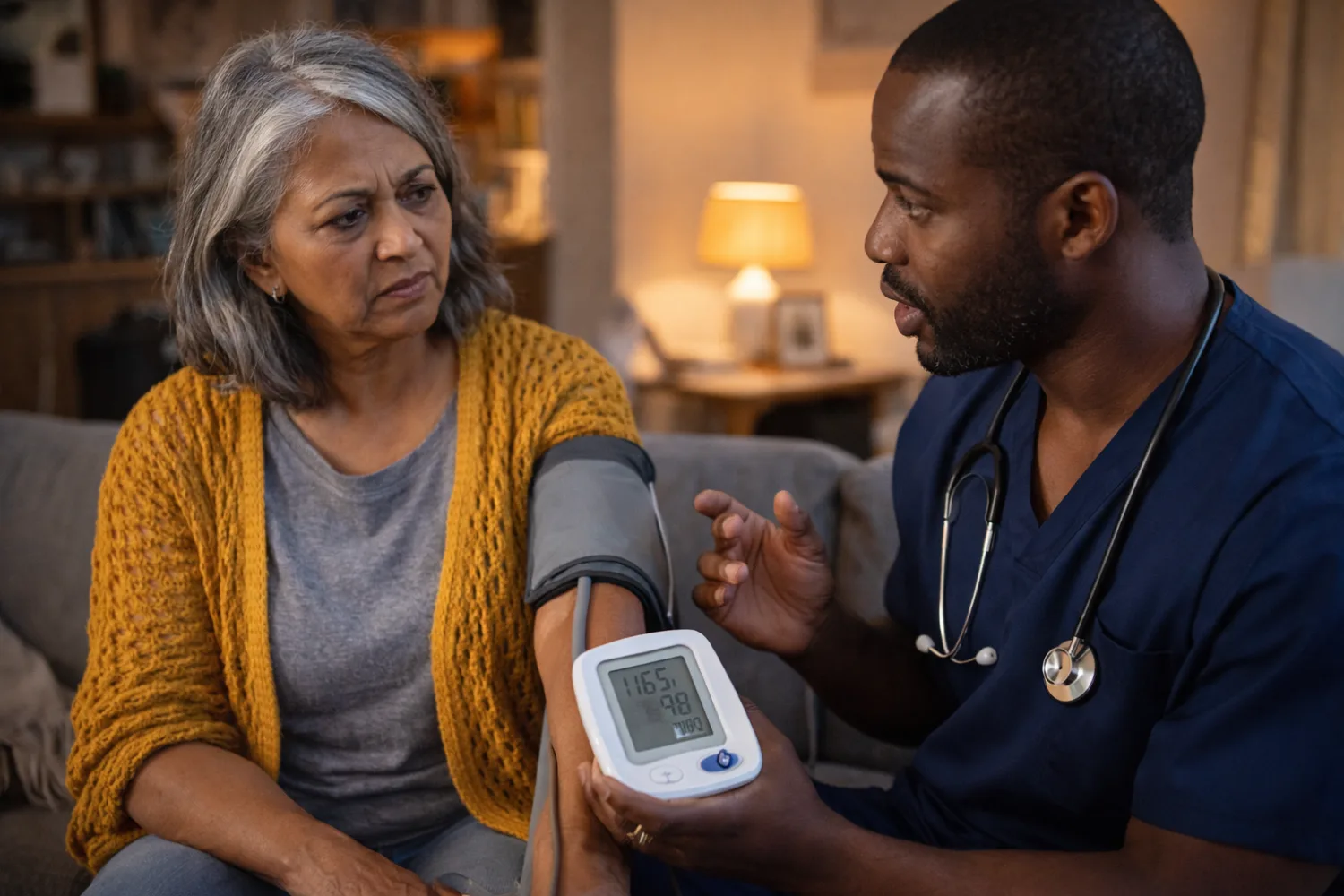
Home monitoring can be extremely useful, but only if it is done correctly. A monitor is not magic on its own. Technique matters.
Before checking your blood pressure:
- sit quietly for a few minutes
- use a chair with back support
- keep both feet flat on the floor
- rest your arm so it is supported
- do not talk during the reading
- avoid checking immediately after exercise, rushing, smoking or caffeine if possible
It is also worth making sure you are using a proper upper-arm monitor rather than relying on devices that may be less dependable.
For general guidance, see the NHS advice on blood pressure tests.
What blood pressure readings mean
People often want a simple answer such as “what number is dangerous?” In practice, interpretation depends on context, age, overall cardiovascular risk, home versus clinic readings, and whether there is evidence of diabetes, kidney disease or organ damage.
As a rule, a one-off reading is less useful than a pattern.
Broadly speaking:
- a reading that is mildly raised may still need follow-up, especially if repeated
- persistently raised readings at home or on ambulatory monitoring matter more than one isolated result
- very high readings, especially with symptoms such as chest pain, severe headache, confusion, breathlessness or neurological symptoms, may need urgent assessment
The NHS has a useful patient-friendly tool on checking what your blood pressure reading means.
How to lower high blood pressure
This is where many articles become unrealistic. They either promise dramatic natural cures or reduce everything to “eat less salt and exercise more”.
Real improvement is usually more practical than that. Start with the measures that are both effective and sustainable.
Lose excess weight if needed
Even a modest reduction in weight can improve blood pressure, especially if you carry weight around your middle.
You do not need a crash diet. In fact, crash dieting often leads to rebound weight gain and frustration.
Reduce salt without becoming obsessive
Most people do not add the majority of their salt at the table. A large amount comes from processed foods, takeaway meals, sauces, ready meals, crisps, breads and restaurant food.
Small changes add up. Cooking more at home, checking labels, and cutting down heavily salted convenience food can make a real difference.
Move more every week
You do not need to train for a marathon. Walking more, cycling, swimming, light jogging, fitness classes and even consistently choosing the stairs all help.
What matters most is regularity.
Cut back on alcohol
Alcohol is often overlooked. It can raise blood pressure directly and also contribute to poor sleep, weight gain and unhealthy eating.
Improve sleep
If you snore heavily, wake unrefreshed, or are extremely sleepy during the day, do not ignore it.
Sleep apnoea is common and can contribute to hypertension.
Stop smoking
Smoking is not only a blood pressure issue. It adds broader cardiovascular risk and damages blood vessels.
Stopping smoking is one of the most valuable changes you can make for long-term heart health.
When lifestyle change is not enough
Some people feel disappointed or even guilty when lifestyle changes do not fully normalise their readings.
But blood pressure is not purely a question of effort. Genetics, age, kidney function and other factors can all play a role.
Medication is not a sign that you have failed. In many people it is the sensible next step.
Common medicines used for high blood pressure
The exact treatment depends on your age, ethnicity, other health conditions, kidney function, side effects and how high your blood pressure is.
Common medication groups include:
- ACE inhibitors
- angiotensin receptor blockers
- calcium channel blockers
- thiazide-like diuretics
- other medicines added when needed
Some people need one medicine. Others need two or more. That does not necessarily mean the condition is severe; it often reflects how blood pressure control works in real life.
The main goal is not to collect tablets. It is to lower risk safely and consistently.
Problems people run into with treatment
High blood pressure treatment often works well, but there are some common traps.
Stopping tablets because you feel fine
This is extremely common. The whole point of treatment is often to prevent future harm while you still feel well.
Expecting instant perfect numbers
Blood pressure usually improves over time, not always overnight. Readings can vary from day to day.
Checking too often and becoming anxious
Monitoring is useful. Constant checking is not. Repeated readings taken in a worried state can become counterproductive.
Ignoring side effects instead of reviewing them
If a medicine does not suit you, the answer is usually to discuss it with a clinician, not just abandon treatment completely.
When to see a pharmacist, GP or specialist
A pharmacist can be helpful for an initial blood pressure check, repeat advice, and general support on medicines and lifestyle.
If you are unsure whether a pharmacy or GP is the best first stop, our guide on when to see a pharmacist instead of a GP may help.
You should book a routine GP appointment if:
- your readings are repeatedly high
- you have been told before that your blood pressure is borderline or raised
- you have diabetes, kidney disease, or a strong family history of cardiovascular disease
- you are already on treatment but readings remain high
- you think side effects are affecting your medication adherence
If getting an appointment is difficult, our guide on how to get a GP appointment quickly in the UK may be useful.
NHS and private treatment
Most people can have their blood pressure assessed and treated very effectively through NHS primary care, including GP practices, pharmacies and NHS Health Checks in eligible groups.
Private care may be useful if you want faster appointments, more time to discuss prevention in detail, quicker access to ambulatory monitoring, or more specialist assessment where the picture is complicated.
But more testing is not automatically better. The best care is targeted, evidence-based and practical.
When high blood pressure may be urgent
Most high blood pressure is managed routinely, not as an emergency. But some situations should not be ignored.
Seek urgent medical help if a very high reading is accompanied by symptoms such as:
- chest pain
- severe shortness of breath
- weakness on one side of the body
- difficulty speaking
- new confusion
- severe visual disturbance
- collapse
And of course, if you think someone may be having a heart attack or stroke, call 999 immediately.
What to avoid
- Do not assume no symptoms means no problem.
- Do not base conclusions on one bad reading taken in a rush.
- Do not rely on supplements or internet cures instead of proper assessment.
- Do not stop medication without review.
- Do not dismiss persistent high readings as “just stress” forever.
A practical plan if you are worried about your blood pressure
- Get it checked properly.
- If it is raised, repeat it in the right way rather than panicking over one result.
- Review your weight, alcohol, salt, exercise and sleep honestly.
- See your GP or pharmacist if readings remain high.
- Take treatment seriously if it is prescribed.
- Think about blood pressure as part of overall cardiovascular risk, not as an isolated issue.
FAQ: high blood pressure
Can anxiety raise blood pressure?
Yes, temporarily. But that does not mean all high readings are “just anxiety”. Repeated checks and proper monitoring help separate a one-off stress response from persistent hypertension.
Can you lower blood pressure naturally?
Often yes, at least to some degree. Weight loss, lower salt intake, less alcohol, more activity and better sleep can all help. But some people still need medication.
Is coffee a problem?
Caffeine can affect some people’s readings, especially around the time of measurement, but it is only one part of the picture.
How quickly can blood pressure improve?
Sometimes within weeks, especially with medication or effective lifestyle changes. But the real goal is stable long-term control, not one impressive reading.
Do young people get high blood pressure?
Yes. It is more common with age, but younger adults can absolutely develop hypertension too.
Can high blood pressure cause headaches?
Most people with high blood pressure do not have symptoms. Headaches can happen for many reasons. If a very high reading comes with severe headache, confusion, chest pain, breathlessness or neurological symptoms, seek urgent help.
Should I stop tablets if my readings improve?
No. Do not stop prescribed blood pressure medication without medical review. Your readings may be better because the medicine is working.
Is one high reading enough to diagnose hypertension?
Usually not. In the UK, raised clinic readings are normally confirmed with ambulatory or home blood pressure monitoring, unless the situation is urgent or clinically obvious.
Final takeaway
High blood pressure is common, often silent, and important because it raises the risk of heart attack, stroke and other serious problems over time.
Most people do not feel it. That is why checking matters.
Many cases improve with lifestyle changes, and many people also benefit from medication. The best approach is usually calm, consistent and long term: good monitoring, realistic changes, proper follow-up, and acting quickly if warning symptoms appear.
If you know your blood pressure is high, this is not a reason to panic. It is a reason to take it seriously and do something about it.