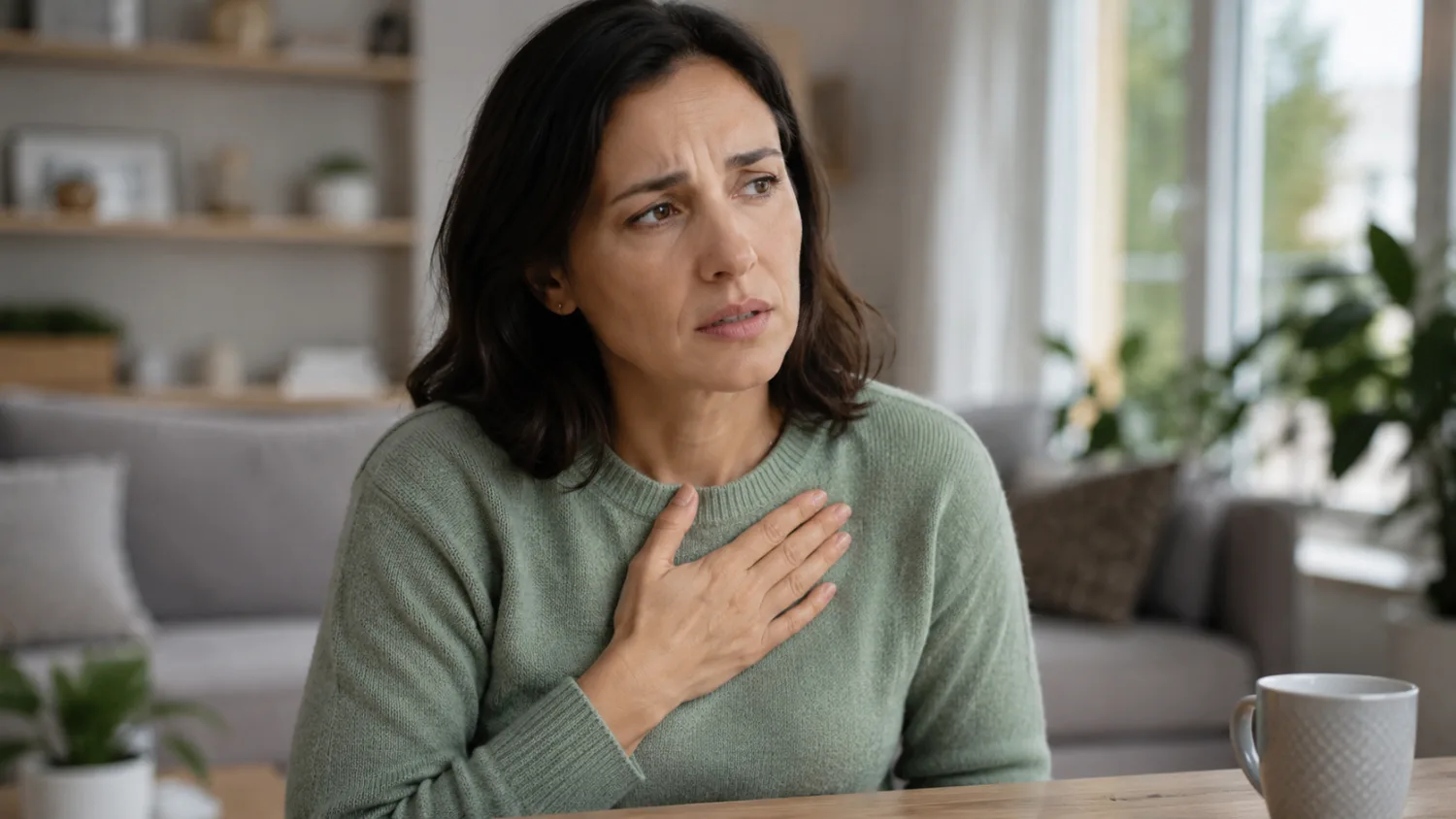
Chest pain can be frightening. It is natural to think of the heart first, and sometimes that instinct is right. Chest pain can be a sign of a heart attack, angina, a blood clot in the lung, pneumonia or another condition that needs urgent care.
But chest pain is not always caused by the heart. It can also come from acid reflux, indigestion, anxiety, panic attacks, strained chest muscles, rib problems, chest infections, inflammation, or irritation around the lungs. Some causes are serious, some are uncomfortable but not dangerous, and many need a proper assessment to be sure.
This guide explains when chest pain is an emergency, what heart-related chest pain can feel like, common non-heart causes, and when to speak to a GP, pharmacist or NHS 111.
Important: If you have sudden chest pain that does not go away, chest pain spreading to your arm, neck, jaw, back or stomach, or chest pain with sweating, sickness, lightheadedness or shortness of breath, call 999. You could be having a heart attack.
When chest pain is an emergency
Some chest pain needs immediate medical help. Do not drive yourself to hospital and do not wait to see if it passes if symptoms suggest a heart attack or another serious problem.
Call 999 now if you have chest pain that:
- comes on suddenly and does not go away
- feels like pressure, heaviness, tightness, squeezing or crushing
- spreads to the left or right arm, neck, jaw, back, stomach or shoulders
- comes with shortness of breath
- comes with sweating, nausea, vomiting or feeling clammy
- comes with dizziness, fainting or feeling like you may collapse
- comes with pale, blue or grey lips or skin
- happens with severe difficulty breathing
- happens after a collapse or loss of consciousness
The NHS advises calling 999 for sudden chest pain or discomfort that does not go away, especially if it spreads or comes with sweating, sickness, lightheadedness or breathlessness. You can read the NHS page on chest pain and the NHS guide to heart attack symptoms.
What heart-related chest pain can feel like
Heart-related chest pain is not always a dramatic, sharp pain. Many people describe it as pressure, heaviness, squeezing, tightness or a weight across the chest. It may feel like indigestion, burning or discomfort rather than pain.
The pain may stay in the centre of the chest or spread to other areas, including the arm, jaw, neck, back, shoulders or upper stomach. Some people feel breathless, sweaty, sick, lightheaded or unusually anxious. Others feel generally unwell without being able to explain why.
Women, older adults and people with diabetes may sometimes have less typical symptoms. They may feel breathless, sick, unusually tired, dizzy or have pain in the jaw, back or upper stomach rather than classic crushing chest pain.
If symptoms could be a heart attack, call 999. It is better to be checked urgently than to miss a serious problem.
Heart attack or angina?
A heart attack happens when the blood supply to part of the heart is suddenly blocked. Symptoms often come on suddenly, may happen at rest, and do not settle quickly. A heart attack needs emergency treatment.
Angina is chest pain or tightness caused by reduced blood flow to the heart muscle. It is often triggered by physical activity, stress, cold weather or heavy meals, and may improve with rest or prescribed angina medicine. But new chest pain that could be angina still needs medical advice.
The NHS says angina can be a sign of a heart problem, so it is important to see a GP as soon as possible if you think you may have it. You can read more in the NHS guide to angina.
If you are interested in broader heart risk, you may also find our guides to cardiovascular risk, high blood pressure and how to reduce your risk of heart attack and stroke useful.
Chest pain that may not be your heart
Not all chest pain comes from the heart. The chest contains muscles, ribs, cartilage, lungs, nerves, the oesophagus, stomach connections and large blood vessels. Pain can come from any of these areas.
However, it is not always possible to tell the cause by how the pain feels. Acid reflux can feel like burning chest pain. A heart attack can feel like indigestion. Anxiety can cause chest tightness and breathlessness. Muscle pain can feel sharp and alarming. That is why new, severe, unexplained or persistent chest pain should be taken seriously.
Common non-heart causes include:
- heartburn or acid reflux
- indigestion
- muscle strain
- rib or chest wall pain
- anxiety or panic attacks
- chest infection
- pleurisy, which is inflammation around the lungs
- asthma or other breathing conditions
- shingles before or during the rash
- gallbladder pain or upper abdominal pain spreading upwards
Heartburn, acid reflux and indigestion
Heartburn is a burning feeling in the chest caused by stomach acid travelling up towards the throat. It may happen after meals, when lying down, after alcohol, after spicy or fatty foods, during pregnancy, or when wearing tight clothing around the stomach.
Reflux pain can feel like burning behind the breastbone. You may also get a sour taste in the mouth, burping, bloating, nausea, hoarseness or a cough. It may improve with antacids or sitting upright.
But be careful: heart-related chest pain can sometimes feel like indigestion. If the pain is sudden, severe, does not go away, spreads to the arm, neck, jaw, back or stomach, or comes with sweating, breathlessness, sickness or lightheadedness, call 999.
For more on reflux symptoms and treatment, read our guide to heartburn, acid reflux and GORD. The NHS also has advice on heartburn and acid reflux.
Muscle strain and chest wall pain
Chest wall pain is pain from the muscles, ribs, joints or cartilage around the chest. It may happen after exercise, lifting, coughing, an injury, awkward movement, poor posture or a strain you did not notice at the time.
Muscle or rib pain is often worse when you move, twist, stretch, lift, breathe deeply or press on the sore area. It may feel sharp, aching or tender. If pressing a specific spot clearly reproduces the pain, that can point towards a chest wall cause.
Even so, do not assume chest pain is muscular if it is new, severe, persistent, or comes with breathlessness, sweating, sickness, dizziness or pain spreading to the arm, neck or jaw.
Anxiety and panic attacks
Anxiety can cause real physical symptoms, including chest tightness, chest pain, a racing heart, shortness of breath, trembling, sweating, dizziness, tingling and a sense of fear. A panic attack can feel very similar to a heart problem, especially the first time it happens.
Panic-related chest pain may come on during stress or fear, but it can also seem to appear out of nowhere. Breathing may become fast or shallow, which can make chest tightness and tingling worse.
It is still important not to self-diagnose. If chest pain is new, severe, different from previous panic symptoms, or has emergency features, get urgent help.
If anxiety or panic is a recurring issue, support is available. You may find our guides to mental health support options in the UK, how to access mental health services and online therapy and counselling helpful.
Chest infections, pneumonia and pleurisy
Chest pain can come from the lungs or the lining around the lungs. This type of pain may be sharp and worse when breathing deeply, coughing or moving. It may come with a cough, fever, chills, wheezing, breathlessness, tiredness or coughing up phlegm.
Pneumonia and pleurisy can cause chest pain and may need medical assessment. Seek medical advice if you have chest pain with fever, worsening cough, breathlessness, coughing up blood, or if you are older, pregnant, immunosuppressed or have a long-term lung or heart condition.
Call 999 if breathing is severe, you cannot speak in full sentences, your lips or skin look blue or grey, you are confused, or you feel like you may collapse.
Could chest pain be a blood clot in the lung?
A pulmonary embolism is a blood clot in the lung. It can be life-threatening and needs urgent medical care. Symptoms can include sudden shortness of breath, sharp chest pain that may be worse when breathing in, coughing up blood, fainting, a fast heartbeat, or feeling very unwell.
The risk may be higher after recent surgery, long-distance travel, immobility, pregnancy, some hormone treatments, cancer, a previous clot, or if one leg is swollen, painful, red or warm.
Call 999 if you have sudden chest pain with breathlessness, fainting, coughing blood, or symptoms that could suggest a pulmonary embolism.
Shingles and nerve pain
Shingles can sometimes cause burning, tingling or sharp pain on one side of the chest before a rash appears. The pain often follows a band-like pattern around one side of the body. A blistering rash may appear later.
If you develop a painful rash, especially if you are older, pregnant, immunosuppressed or the rash is near the eye, seek medical advice promptly. Antiviral treatment works best when started early.
Chest pain after exercise
Chest discomfort during exercise should be taken seriously, especially if it feels like pressure, tightness or heaviness and improves with rest. This pattern can suggest angina. Chest pain with exercise can also come from asthma, reflux, muscle strain or anxiety, but heart causes need to be considered.
Stop exercising if you develop chest pain. Call 999 if the pain is severe, does not go away, spreads, or comes with breathlessness, sweating, nausea, dizziness or feeling faint. If chest discomfort happens repeatedly during exertion and settles with rest, book a GP appointment urgently.
Chest pain at rest
Chest pain at rest can be more concerning, especially if it is sudden, persistent or associated with other symptoms. Heart attack pain often happens at rest or does not improve quickly with rest.
Do not ignore chest pain because you were “not doing anything strenuous”. If it has emergency features, call 999.
Chest pain in women
Women can have classic heart attack symptoms, including chest pressure, tightness and pain spreading to the arm, jaw, neck, back or stomach. But women are also more likely than men to report symptoms such as feeling sick, sweaty, dizzy, breathless or unusually tired.
This can lead some women to delay seeking help because the symptoms do not match the dramatic chest-clutching image often shown on TV. If symptoms are sudden, unusual, persistent or worrying, get urgent help.
Chest pain in women can also be linked with reflux, anxiety, muscle strain, breast or chest wall pain, infections and hormonal changes, but heart causes should not be dismissed.
Chest pain in younger adults
Younger adults can also get chest pain. In many cases it is related to muscle strain, anxiety, reflux or infection, but serious causes can still happen. Smoking, vaping, recreational drugs, high blood pressure, diabetes, inherited cholesterol problems, clotting conditions and family history can all affect risk.
Chest pain after cocaine or stimulant use should be treated as urgent because these substances can put strain on the heart and blood vessels.
No matter your age, call 999 if chest pain is sudden, severe, persistent, spreading, or comes with breathlessness, sweating, fainting or feeling very unwell.
What tests might be needed?
If chest pain needs assessment, clinicians may ask about the type of pain, when it started, what makes it better or worse, whether it spreads, and whether you have breathlessness, fever, palpitations, dizziness, cough, reflux symptoms or risk factors.
Depending on the situation, tests may include:
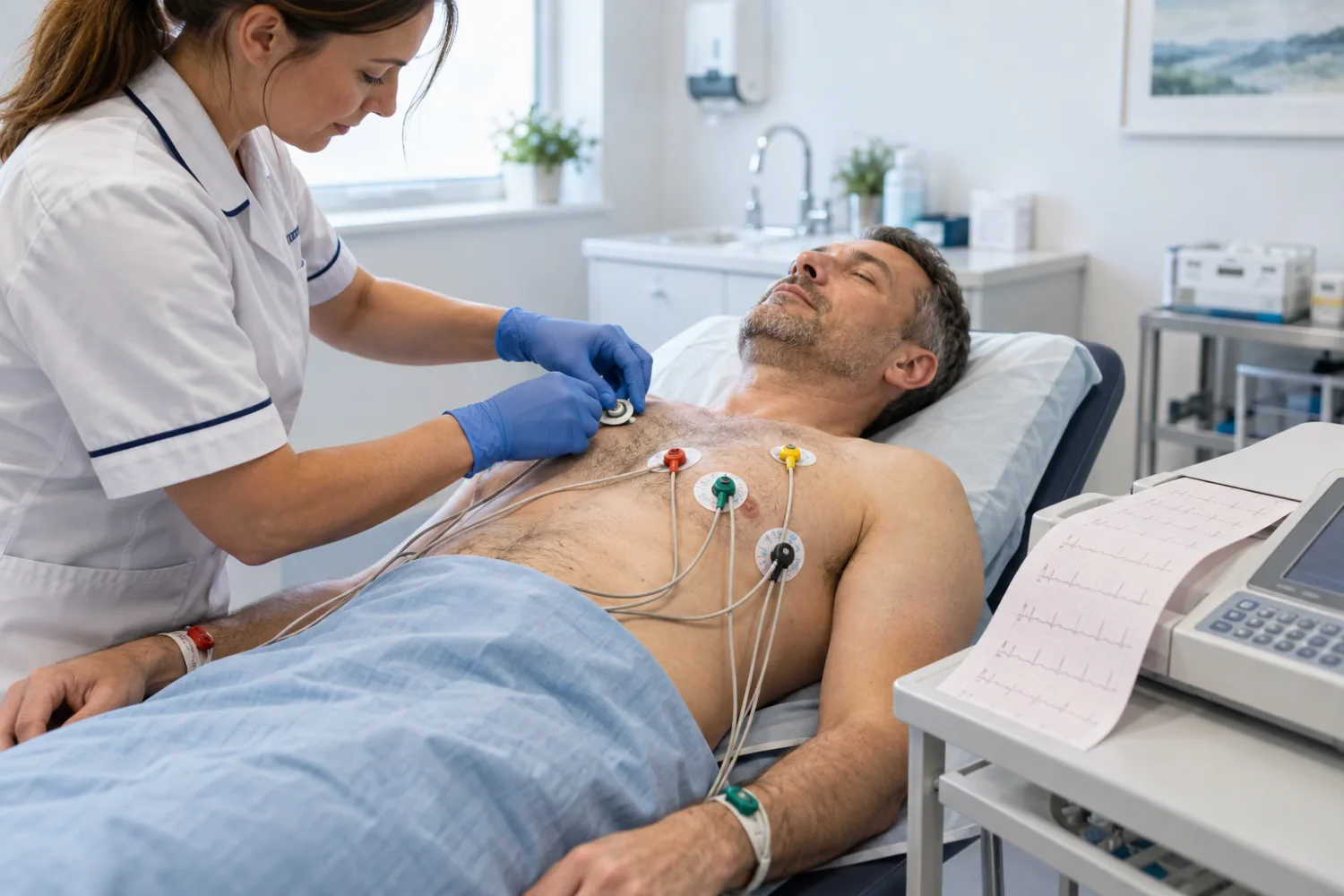
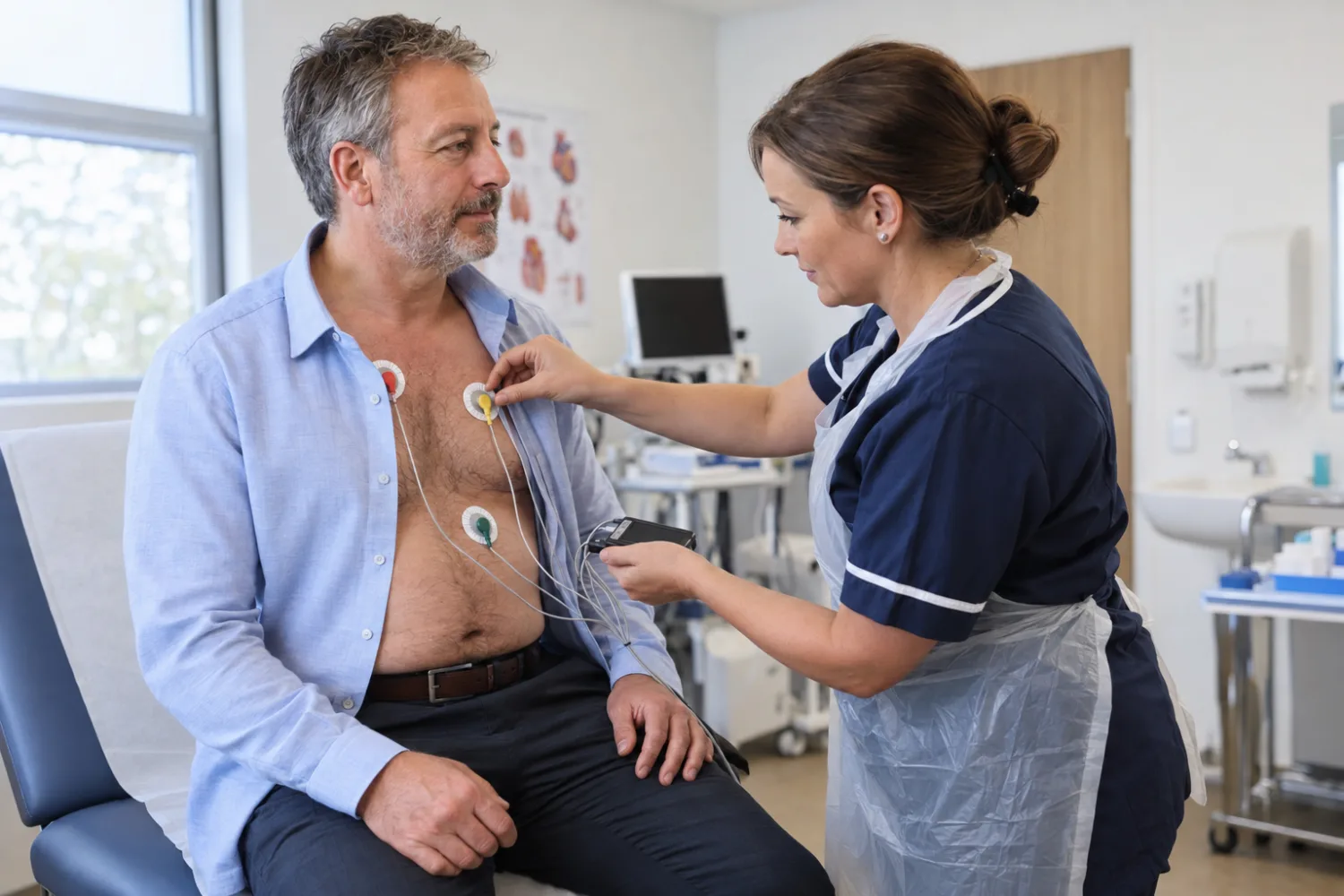
- an ECG to check the heart’s electrical activity
- blood tests, including heart enzyme tests in urgent settings
- blood pressure, pulse and oxygen level checks
- a chest X-ray
- blood tests for inflammation, infection, anaemia or clot risk
- further heart tests, such as an echocardiogram or exercise-related assessment, if needed
If you have had an ECG and want to understand the basics, read our guide to ECG results explained. You may also find how to understand blood test results useful.
When to contact NHS 111 or a GP
If chest pain is not an emergency but is new, unexplained, recurring or worrying, get medical advice. Do not ignore it simply because you think it might be reflux or stress.
Contact NHS 111 or book a GP appointment if:
- you have chest pain that comes and goes
- you get chest discomfort with exertion that settles with rest
- you have recurring burning chest pain or reflux symptoms
- you have chest pain with a cough, fever or feeling unwell
- you have chest wall pain after injury or strain that is not improving
- you have palpitations, dizziness or breathlessness
- you have risk factors such as high blood pressure, diabetes, high cholesterol or a family history of heart disease
- you are unsure whether symptoms are serious
You can use NHS 111 online if you are in England. If you need help arranging an appointment, our guide to how to get a GP appointment quickly in the UK may help.
When a pharmacist may help
A pharmacist may be able to help if your symptoms strongly suggest a minor issue such as occasional heartburn, indigestion or mild muscle pain, and there are no red flag symptoms. They can advise on antacids, reflux medicines, pain relief and when to seek medical help.
However, pharmacists are not a substitute for emergency care. If chest pain is sudden, persistent, spreading, severe, or linked with breathlessness, sweating, sickness, dizziness or collapse, call 999.
For everyday health problems where pharmacy advice may be suitable, see our guide to when to see a pharmacist instead of a GP.
How to describe chest pain clearly
If you speak to a clinician, it helps to describe the pain as clearly as possible. You do not need medical words. Simple details are useful.
Try to explain:
- when the pain started
- whether it came on suddenly or gradually
- where the pain is
- whether it spreads anywhere
- whether it feels sharp, burning, tight, heavy, stabbing or aching
- how long it lasts
- what you were doing when it started
- whether it changes with breathing, movement, meals or position
- whether you feel breathless, sweaty, sick, dizzy or faint
- any medical conditions, medicines or family history
If you are calling 999, answer the call handler’s questions as calmly as you can and follow their instructions.
Final thoughts
Chest pain should always be treated with respect. Many cases are not caused by the heart, but it is not always possible to know this safely without considering the full picture.
Call 999 for sudden, persistent, spreading or severe chest pain, especially if it comes with breathlessness, sweating, sickness, dizziness, fainting or feeling very unwell. If chest pain is milder but new, recurring or unexplained, speak to NHS 111 or a GP.
For official advice, see the NHS pages on chest pain, heart attacks and angina.
This article is for general information only and should not replace medical advice. If you are worried about your symptoms or someone else’s, contact NHS 111, your GP, or call 999 in an emergency.
Frequently asked questions
How do I know if chest pain is serious?
Chest pain is more concerning if it comes on suddenly, does not go away, feels like pressure or tightness, spreads to the arm, neck, jaw, back or stomach, or comes with sweating, sickness, shortness of breath, dizziness or fainting. If you have these symptoms, call 999.
Can indigestion feel like a heart attack?
Yes. Indigestion and acid reflux can cause burning chest pain, discomfort behind the breastbone and nausea. But heart attack pain can also feel like indigestion. If the pain is sudden, persistent, spreading, severe or comes with breathlessness, sweating, sickness or lightheadedness, call 999.
Can anxiety cause chest pain?
Yes. Anxiety and panic attacks can cause chest tightness, chest pain, a racing heart, breathlessness, dizziness, sweating and tingling. These symptoms can feel very frightening. If chest pain is new, severe, different from usual anxiety symptoms, or has emergency warning signs, seek urgent medical help.
What does angina feel like?
Angina often feels like tightness, heaviness, pressure or discomfort in the chest. It may spread to the arm, neck, jaw, back or stomach. It is often triggered by activity, stress, cold weather or heavy meals and may improve with rest. If you think you may have angina, book a GP appointment as soon as possible. If pain does not go away, call 999.
Can chest pain be caused by muscle strain?
Yes. Muscle strain or chest wall pain can cause sharp, aching or tender pain that is worse with movement, twisting, lifting, deep breathing or pressing on the area. However, do not assume chest pain is muscular if it is severe, persistent, spreading, or comes with breathlessness, sweating, sickness, dizziness or fainting.
Should I go to A&E for chest pain?
If chest pain is sudden, severe, persistent, spreading, or comes with shortness of breath, sweating, sickness, dizziness, fainting or feeling very unwell, call 999. For milder but new, recurring or unexplained chest pain, contact NHS 111 or your GP for advice.
Can reflux cause chest pain every day?
Acid reflux can cause frequent burning chest pain, especially after meals or when lying down. If reflux symptoms keep happening, you may have gastro-oesophageal reflux disease, also called GORD. A pharmacist or GP can advise on treatment, but urgent symptoms should still be treated as possible heart symptoms.
What tests are done for chest pain?
Tests depend on the symptoms. They may include an ECG, blood tests, blood pressure and oxygen checks, a chest X-ray or further heart tests. In urgent settings, blood tests may check for signs of heart muscle damage. A clinician will decide what is needed based on your symptoms and risk factors.