Most insect bites and stings are uncomfortable rather than dangerous. A bite may itch for days. A sting can be sharp, painful and swollen. Sometimes the skin around the area becomes red, warm or raised, which can be worrying if you are not sure what is normal.
In the UK, bites and stings are more common in spring and summer, when people spend more time outdoors, windows are open, children are playing outside, and insects are more active. Mosquitoes, midges, horseflies, fleas, bedbugs, bees, wasps and ticks can all cause different reactions.
For many people, simple self-care is enough. But sometimes a bite or sting needs medical advice — for example, if swelling is severe, symptoms are getting worse, the area looks infected, the sting is near the mouth or eyes, or there are signs of a serious allergic reaction.
This guide explains what is normal after an insect bite or sting, what you can do at home, how to spot infection or allergy, and when to contact a pharmacist, GP, NHS 111 or 999.
Emergency warning: Call 999 if someone has difficulty breathing, swelling of the lips, tongue, throat or face, feels faint, collapses, becomes confused, or you think they may be having a serious allergic reaction.
What happens when an insect bites or stings?
A bite usually happens when an insect punctures the skin to feed. A sting happens when an insect injects venom, usually as a defence. The body then reacts to saliva, venom or irritation around the skin.
This immune reaction can cause redness, itching, swelling, warmth and pain. For some people, the reaction is tiny. For others, it can be large, uncomfortable and last several days. Children may scratch the area more, which can make swelling and irritation worse and increase the risk of infection.
The NHS explains that most insect bites and stings are not serious and usually get better within a few hours or days. You can read the official NHS guide to insect bites and stings for more information.
Common symptoms of insect bites and stings
The symptoms depend on the insect, the person’s sensitivity, and whether the skin has been scratched or irritated. A mosquito bite may be mostly itchy, while a wasp or bee sting is usually painful at first. Horsefly bites can be larger and more sore, and tick bites may be painless.
Common symptoms include:
- a small red bump or raised area
- itching or irritation
- pain or tenderness
- swelling around the bite or sting
- warmth in the surrounding skin
- a visible puncture mark
- a blister or small area of broken skin
Some swelling is normal, especially after a sting. It can look alarming, particularly on the hands, feet, face or around joints, where the skin has less room to expand. The important question is whether symptoms are gradually settling or getting worse.
What to do straight away
If you have been bitten or stung, move away from the insect if needed. Wasps can sting more than once, and disturbing a nest or swarm can lead to multiple stings.
If a sting is still visible in the skin, remove it as soon as you can. Scrape it sideways with a fingernail, bank card or similar firm edge. Avoid squeezing the sting with tweezers if possible, as this may push more venom into the skin.
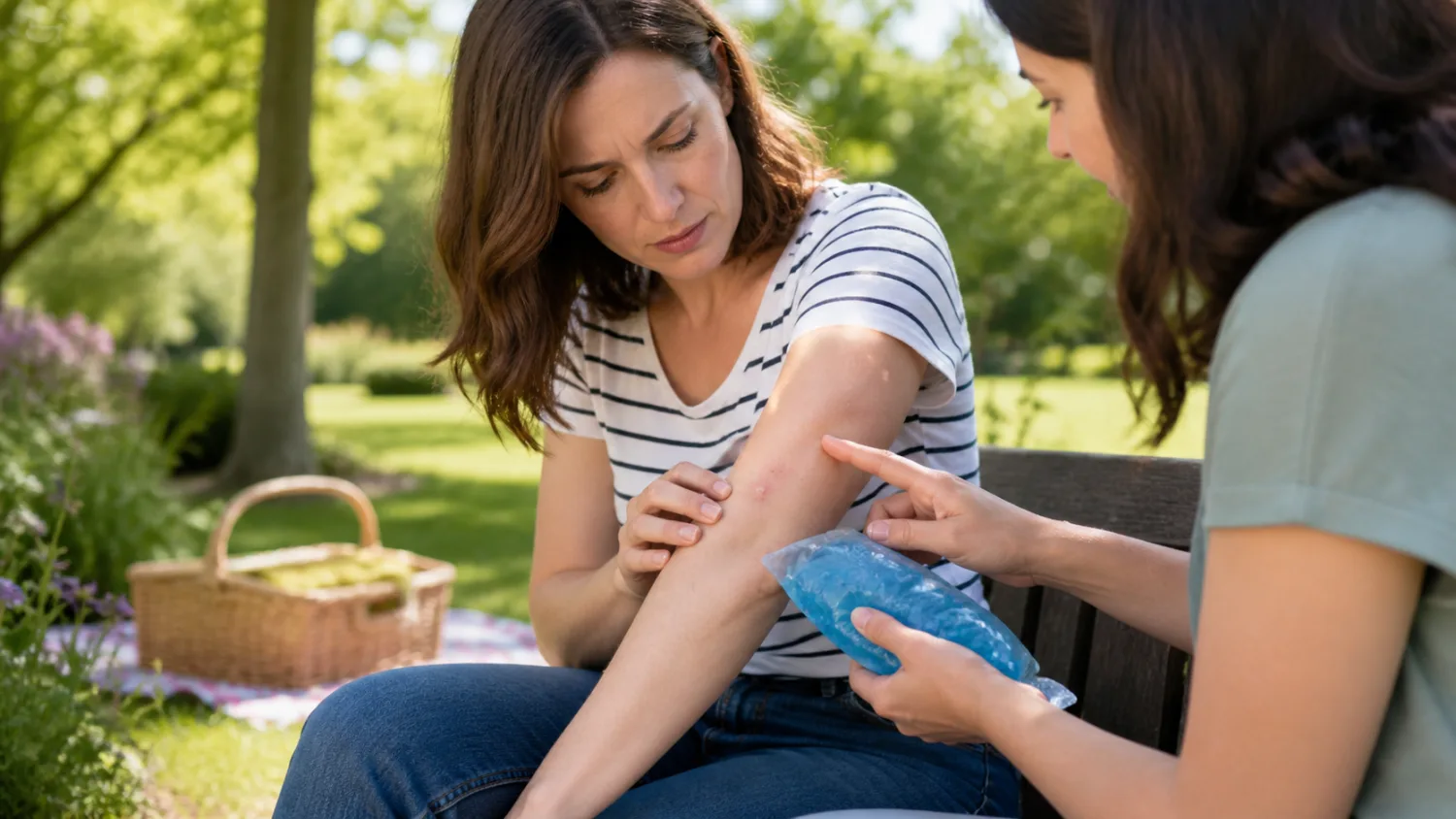
Then wash the area with soap and water. A cold compress or cool cloth can help reduce pain and swelling. Try not to scratch, even if it itches, because scratching can break the skin and increase the risk of infection.
For pain, you may be able to use simple pain relief such as paracetamol or ibuprofen, if these are suitable for you. For itching or swelling, a pharmacist may suggest an antihistamine, hydrocortisone cream or another treatment depending on your symptoms and age.
How long should swelling last?
Mild swelling often improves within a few hours, but it can last for several days. Some people get a larger local reaction where swelling spreads beyond the bite or sting area. This can be uncomfortable but is not always dangerous.
For example, a sting on the finger may make much of the hand look puffy. A bite on the ankle may make the area feel tight, hot or itchy. If the swelling is gradually improving, and there are no signs of infection or allergy, it may settle with self-care.
However, swelling should not keep getting worse day after day. You should seek advice if swelling is severe, spreading, very painful, near the eyes or mouth, or not improving.
When swelling may be a problem
Swelling becomes more concerning when it affects breathing, swallowing, vision, circulation, or general wellbeing. A sting in the mouth or throat can be dangerous because swelling may affect the airway. Swelling near the eyes may need assessment because the skin around the eye is delicate and infections can occasionally spread.
You should seek urgent advice from NHS 111, an urgent GP appointment or urgent care if:
- you were stung in the mouth or throat
- the bite or sting is near the eyes
- swelling is getting worse or not improving
- you were stung more than once and feel unwell
- you feel dizzy or lightheaded
- you have tummy pain and vomiting after a sting
- you have a high temperature or swollen glands
- you have had a serious allergic reaction to a bite or sting before
These are also red flags highlighted in NHS advice for insect bites and stings.
Signs an insect bite or sting may be infected
Infection can happen if bacteria enter broken skin. This is more likely if the bite has been scratched, picked, blistered, or irritated by clothing. Children are more likely to scratch bites, so it is worth keeping nails short and using simple itch relief where appropriate.
Possible signs of infection include:
- redness that is spreading rather than settling
- increasing warmth around the bite
- worsening pain or tenderness
- pus or yellow crusting
- red streaks spreading from the area
- swollen glands
- fever or feeling generally unwell
A small amount of redness and warmth can be part of a normal reaction. Infection is more likely when symptoms are getting worse, the area becomes increasingly painful, or you feel unwell.
If you think a bite or sting is infected, speak to a pharmacist, GP or NHS 111. In England, some pharmacies can provide treatment for infected insect bites through Pharmacy First where appropriate. Our guide to when to see a pharmacist instead of a GP explains how pharmacists can help with common minor illnesses and skin problems.
Allergic reactions to insect bites and stings
Many people describe any swelling or itching as an “allergy”, but there are different levels of reaction.
A local reaction means symptoms are mainly around the bite or sting. This can include redness, itching, swelling and soreness. A larger local reaction can spread further, such as swelling of most of a hand or foot, but the person otherwise feels well.
A serious allergic reaction, called anaphylaxis, affects the whole body and can become life-threatening very quickly. It is more commonly linked with stings, such as bee or wasp stings, but can happen after some bites too.
Signs of a serious allergic reaction
Call 999 immediately if someone has signs of anaphylaxis after a bite or sting.
Symptoms may include:
- difficulty breathing or wheezing
- swelling of the lips, tongue, throat, mouth or face
- tightness in the throat or trouble swallowing
- feeling faint, dizzy or suddenly very weak
- collapse or loss of consciousness
- confusion or extreme drowsiness
- a widespread rash or hives
- tummy pain, nausea or vomiting
- a fast heartbeat
If the person has an adrenaline auto-injector, such as an EpiPen, Jext or Emerade, help them use it if they cannot do so themselves. Call 999 even if they start to feel better, because symptoms can return and they may need monitoring. NHS advice on anaphylaxis explains that it is a life-threatening allergic reaction that needs emergency help.
Bee stings, wasp stings and multiple stings
Bee and wasp stings usually cause sudden pain, redness and swelling. A bee may leave its sting behind, while a wasp usually does not and can sting more than once.
After a sting, remove any visible sting, wash the area, use a cold compress and monitor symptoms. Most stings improve with simple care. However, multiple stings can cause more venom exposure and may make someone feel unwell, especially a child, older adult or person with allergies.
Get urgent advice if someone has been stung more than once and feels unwell, or if the sting is in the mouth, throat or near the eyes. Call 999 if there are any signs of anaphylaxis.
Mosquito, midge and horsefly bites
Mosquito and midge bites are usually itchy, small and raised. They may appear in clusters, especially on exposed skin such as arms, legs, ankles and neck. Scratching is often the main reason they become sore or infected.
Horsefly bites can be more painful and may cause a larger raised area. They can sometimes take longer to settle and may be more likely to become infected if the skin is broken.
For itchy bites, try not to scratch. A cold compress, pharmacy cream or antihistamine may help. Seek advice if the area becomes increasingly red, hot, painful, swollen, or you develop a fever.
Flea and bedbug bites
Flea bites often appear as small itchy red bumps, commonly around the ankles or lower legs. They may happen after contact with pets or carpets where fleas are present.
Bedbug bites may appear in lines or clusters, often on skin exposed during sleep. The bites can be very itchy, but the main issue is usually identifying and treating the source at home.
If bites keep appearing overnight or after being in a particular room, consider whether fleas or bedbugs could be involved. A pharmacist can advise on itch relief, but the environment may also need treatment.
Tick bites: when to think about Lyme disease
Ticks are small spider-like creatures that attach to the skin and feed on blood. They are often found in grassy, wooded or heathland areas, but they can also be picked up in gardens and parks. Tick bites are often painless, so you may not notice one straight away.
If you find a tick attached to the skin, remove it as soon as possible using a tick removal tool or fine-tipped tweezers. Grasp it close to the skin and pull steadily upwards. Do not burn it, cover it in oil, or squeeze the body of the tick.
After removal, clean the area and monitor for symptoms. A small red mark after a tick bite is common and does not always mean Lyme disease. However, you should seek medical advice if you develop a spreading circular rash, sometimes described as a bullseye rash, or flu-like symptoms such as fever, headache, tiredness, muscle aches or joint pain.
For more detail, read our guide to tick bites and Lyme disease. You can also see UKHSA information on tick bite risks and Lyme disease prevention.
Insect bites and stings in children
Children often react strongly to bites and stings because they scratch, become upset, or have swelling on smaller hands, feet or faces. A bite that looks dramatic is not always dangerous, but it should be watched carefully.
Try to wash the area, use a cool compress and discourage scratching. If the child is old enough, explain that scratching can make it worse. Keeping nails short and covering the area lightly may help.
Seek medical advice if your child has swelling that is getting worse, signs of infection, a bite or sting near the eyes or mouth, repeated vomiting, fever, dizziness, or if they seem unusually sleepy or unwell. Call 999 for breathing problems, swelling of the face or throat, collapse, severe drowsiness or other signs of anaphylaxis.
If your child’s symptoms seem more like pollen-related sneezing, coughing, itchy eyes or seasonal allergy, you may find our article on spring allergies in children useful.
When can a pharmacist help?
A pharmacist is often a good first step for mild to moderate bites and stings. They can suggest suitable treatments for itching, swelling and pain, and advise whether the bite looks infected or needs medical assessment.
Depending on symptoms, age and medical history, they may suggest:
- antihistamine tablets or liquid
- hydrocortisone cream for short-term use where suitable
- pain relief
- antiseptic measures
- advice on whether infection treatment may be needed
Do not use hydrocortisone cream on children, the face, broken skin or infected skin unless a pharmacist or clinician says it is suitable. Always check medicine labels and ask for advice if you are pregnant, breastfeeding, taking other medicines, or treating a baby or young child.
When to contact NHS 111 or a GP
Contact NHS 111, request an urgent GP appointment, or seek urgent care if:
- symptoms are getting worse or not improving
- the area looks infected
- redness or swelling is spreading
- there is pus, red streaking, fever or swollen glands
- the bite or sting is near the eye
- you were stung in the mouth or throat
- you feel dizzy or lightheaded
- you have tummy pain and vomiting after a sting
- you were stung more than once and feel unwell
- you have had a serious allergic reaction to a bite or sting before
- a tick bite is followed by a spreading rash or flu-like symptoms
You can use NHS 111 online if you are in England, or call 111 if you need advice about what to do next.
If you need a GP appointment and are unsure how to arrange one quickly, our guide to how to get a GP appointment quickly in the UK may help.
When to call 999
Call 999 immediately if someone has symptoms of a serious allergic reaction or looks seriously unwell after a bite or sting.
This includes:
- difficulty breathing
- wheezing or noisy breathing
- swelling of the lips, tongue, throat, mouth or face
- collapse or fainting
- confusion or severe drowsiness
- a widespread rash with breathing symptoms or feeling faint
- severe weakness, clamminess or a sense that something is very wrong
If they have an adrenaline auto-injector, help them use it and call 999. Do not wait to see if symptoms pass.
How to reduce your risk of bites and stings
You cannot avoid every bite or sting, but simple steps can reduce the risk, especially in summer.
- Use insect repellent where appropriate.
- Wear long sleeves and trousers in grassy or wooded areas.
- Avoid walking barefoot on grass where bees or wasps may be present.
- Keep food and sweet drinks covered outdoors.
- Stay calm and move away slowly if wasps or bees are nearby.
- Check skin, clothing, children and pets for ticks after walks in grassy or wooded areas.
- Use window screens or keep windows closed at dusk if insects are a problem indoors.
- Treat pets and home environments if fleas are suspected.
People with a known serious allergy to stings should follow their allergy plan, carry prescribed adrenaline auto-injectors, and make sure family, friends or colleagues know what to do in an emergency.
Quick guide: normal reaction or medical advice?
A small itchy bump, mild swelling, and discomfort that gradually improves is usually manageable at home. A bite or sting that becomes increasingly painful, hot, swollen or red may need medical advice. Any breathing symptoms, throat or facial swelling, faintness or collapse should be treated as an emergency.
It can help to take a photo of the bite or sting if you are monitoring swelling or redness. This makes it easier to see whether the area is spreading or settling over time.
Final thoughts
Insect bites and stings are common, especially in warmer months, and most improve with simple care. Wash the area, remove any visible sting, cool the skin, avoid scratching and ask a pharmacist if itching or swelling is troublesome.
Get medical advice if symptoms are worsening, the area looks infected, swelling is severe, the sting is near the mouth or eyes, or you feel unwell. Call 999 immediately for breathing problems, swelling of the face or throat, collapse, confusion, or any signs of a serious allergic reaction.
For official advice, see the NHS guides to insect bites and stings and anaphylaxis.
This article is for general information only and should not replace medical advice. If you are worried about your symptoms or someone else’s, contact NHS 111, your GP, or call 999 in an emergency.