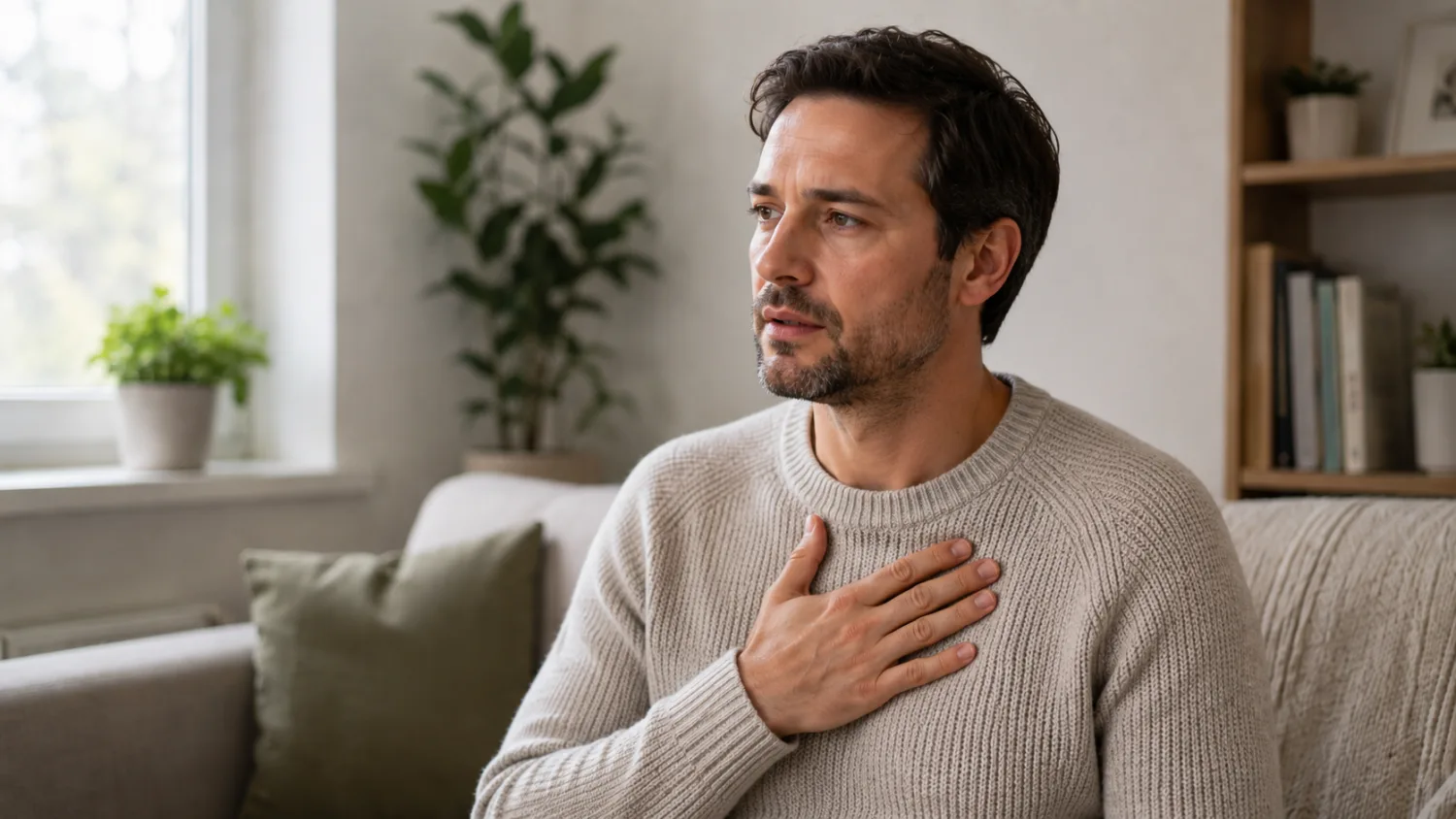
Heart palpitations are when your heartbeat suddenly becomes more noticeable. It may feel like your heart is racing, pounding, fluttering, skipping a beat, or beating irregularly. Some people feel it in the chest, while others notice it in the throat or neck.
Palpitations can feel alarming, especially if they happen out of nowhere. The good news is that they are often harmless and may be linked to stress, caffeine, alcohol, lack of sleep, dehydration or exercise. But sometimes palpitations can be a sign of a heart rhythm problem or another medical condition that needs assessment.
This guide explains what palpitations can feel like, common causes, when they may be linked to anxiety or lifestyle triggers, what tests a doctor may arrange, and when to seek urgent medical help.
Important: Call 999 if palpitations happen with chest pain or tightness, severe shortness of breath, fainting, blackouts, or feeling very dizzy or lightheaded. These symptoms need urgent medical assessment.
What do heart palpitations feel like?
Palpitations are not the same for everyone. Some people feel one odd beat, like a thud or a skipped beat. Others feel a run of rapid heartbeats that lasts seconds, minutes or longer. Sometimes the heartbeat feels regular but too fast; at other times it feels irregular or fluttery.
You might describe palpitations as:
- a racing heartbeat
- a pounding or thumping feeling
- fluttering in the chest
- missed beats or skipped beats
- extra beats
- a sudden fast heartbeat that starts and stops abruptly
- a heartbeat you can feel strongly in your throat or neck
The NHS describes heart palpitations as when your heartbeat becomes more noticeable, and says they are usually harmless but should be checked if they keep happening or come with other symptoms. You can read the NHS guide to heart palpitations.
Are palpitations usually serious?
Many palpitations are not dangerous. It is common to notice your heartbeat during stress, after caffeine, after exercise, when dehydrated, during illness, or when lying quietly in bed. Some people are simply more aware of normal changes in heart rhythm.
However, palpitations should not be ignored if they are new, frequent, prolonged, worsening, or associated with symptoms such as chest pain, breathlessness, dizziness, fainting or blackouts. The British Heart Foundation advises speaking to a GP if palpitations are frequent or prolonged, or if they occur with symptoms such as chest pain or dizziness. It advises calling 999 if palpitations come with severe shortness of breath, chest pain or tightness, dizziness, lightheadedness, fainting or blackouts. British Heart Foundation: palpitations.
If you are unsure whether symptoms are serious, it is safer to seek advice.
Common causes of heart palpitations
Palpitations can be triggered by everyday factors, emotional stress, hormone changes, medicines or medical conditions. Sometimes no clear cause is found, especially if episodes are brief and infrequent.
Common causes and triggers include:
- stress, anxiety or panic attacks
- caffeine from coffee, tea, cola or energy drinks
- alcohol
- smoking or nicotine products
- recreational drugs, especially stimulants
- lack of sleep
- dehydration
- strenuous exercise
- fever or infection
- low blood sugar
- pregnancy or hormone changes
- menopause or perimenopause
- some medicines, including certain inhalers, decongestants or thyroid medicines
- anaemia or low iron
- an overactive thyroid
- heart rhythm problems, also called arrhythmias
If palpitations happen after a clear trigger, such as too much caffeine or poor sleep, they may settle when the trigger is reduced. But recurring, unexplained or worrying palpitations should be discussed with a healthcare professional.
Stress, anxiety and panic attacks
Stress and anxiety are very common causes of palpitations. When your body is in “fight or flight” mode, adrenaline can make the heart beat faster and more forcefully. This can feel like a racing or pounding heart.
Panic attacks can be especially frightening because they may cause palpitations, chest tightness, breathlessness, sweating, trembling, dizziness and a sense that something terrible is happening. These symptoms can feel very similar to a heart problem.
Even if anxiety seems likely, it is still worth getting medical advice if palpitations are new, severe, frequent, prolonged, or linked with chest pain, fainting or breathlessness. Once serious causes have been ruled out, support for anxiety can help reduce episodes.
If stress or anxiety are part of the picture, you may find our guides to mental health support options in the UK, how to access mental health services and online therapy and counselling helpful.
Caffeine, alcohol and energy drinks
Caffeine can make the heart feel faster or more forceful, especially if you have more than usual or drink it on an empty stomach. Coffee, tea, cola, energy drinks and some pre-workout supplements can all contribute.
Alcohol can also trigger palpitations. Some people notice them after a night of drinking, during a hangover, or after drinking more than usual. Alcohol can affect sleep, hydration and heart rhythm, which may all make palpitations more likely.
If you think caffeine or alcohol may be a trigger, try keeping a short diary. Note what you drank, when palpitations happened, how long they lasted, and whether there were other symptoms. Reducing caffeine, avoiding energy drinks and limiting alcohol may make a clear difference.
Dehydration and low blood sugar
Dehydration can make your heart work harder and may make your heartbeat more noticeable. This can happen during hot weather, after exercise, after alcohol, or during vomiting and diarrhoea. You may also feel dizzy, weak, headachey or lightheaded.
Low blood sugar can also cause palpitations, shakiness, sweating, hunger, weakness and anxiety-like symptoms. This may happen if you skip meals, exercise without enough food, drink alcohol without eating, or take diabetes medicines that can lower blood sugar.
If your palpitations happen alongside dark urine, dry mouth or dizziness, read our guide to dehydration symptoms in adults and children. If you are concerned about blood sugar, our guide to HbA1c and blood sugar results may also be useful.
Exercise and fitness
It is normal for your heart to beat faster during exercise. You may also notice a strong heartbeat after climbing stairs, running, cycling, heavy lifting or intense training. This is usually expected and settles gradually as you recover.
However, palpitations during exercise should be taken more seriously if they are new, feel irregular, come on suddenly, are associated with chest pain, dizziness, fainting or breathlessness, or do not settle with rest.
Stop exercising and seek urgent help if palpitations happen with chest pain, severe breathlessness, feeling faint or collapse.
Hormones, pregnancy and menopause
Hormone changes can make palpitations more likely. Some people notice them around their period, during pregnancy, after childbirth, during perimenopause or after menopause. Hot flushes, anxiety, poor sleep and changes in body temperature can also make the heartbeat more noticeable.
In pregnancy, palpitations can happen because the heart is working harder and blood volume changes. They are often harmless, but should be checked if they are frequent, prolonged, severe, or linked with chest pain, fainting, breathlessness, swelling or feeling very unwell.
If symptoms are linked with menopause, you may find our guides to menopause symptoms, HRT and treatment and menopause and weight gain helpful.
Medicines and supplements
Some medicines and supplements can trigger palpitations or make them more noticeable. These may include some asthma inhalers, decongestants, thyroid medicines, stimulant medicines, some antidepressants, some cold and flu remedies, weight-loss products, herbal supplements or high-caffeine fitness supplements.
Do not stop prescribed medicine without medical advice. If palpitations started after a new medicine, dose change or supplement, speak to a pharmacist or GP. A pharmacist can check common side effects and interactions and advise whether you need medical review.
Our guide to when to see a pharmacist instead of a GP explains when pharmacy advice may be a useful first step.
Low iron, anaemia and thyroid problems
Palpitations can sometimes be linked to conditions outside the heart. Low iron or anaemia can make the heart beat faster because the body is trying to deliver enough oxygen. You may also feel tired, weak, dizzy, breathless on exertion or look pale.
An overactive thyroid can also cause palpitations, a fast heartbeat, weight loss, sweating, tremor, anxiety, diarrhoea or feeling unusually hot. An underactive thyroid is more often linked with tiredness, coldness and weight gain, but thyroid testing may still be part of an assessment depending on symptoms.
Useful related guides include iron, ferritin and anaemia blood test results explained, full blood count results explained and thyroid blood test results explained.
Heart rhythm problems and arrhythmias
Sometimes palpitations are caused by an abnormal heart rhythm, known as an arrhythmia. This may mean the heart is beating too fast, too slowly or irregularly. Some arrhythmias are mild, while others need treatment or monitoring.
Examples include ectopic beats, atrial fibrillation, supraventricular tachycardia and other rhythm problems. The NHS says symptoms of heart rhythm problems can include palpitations, shortness of breath, dizziness, feeling faint, tiredness and chest pain or discomfort. See the NHS guide to heart rhythm problems.
One rhythm problem that can cause episodes of rapid heartbeat is supraventricular tachycardia, or SVT. It can cause a very fast heartbeat that starts and stops suddenly. The NHS notes that SVT may be associated with chest pain or discomfort, weakness, breathlessness, lightheadedness, dizziness or tiredness. NHS: supraventricular tachycardia.
Atrial fibrillation and stroke risk
Atrial fibrillation, often called AF, is a common heart rhythm problem where the heartbeat is irregular and sometimes fast. Some people feel palpitations, fluttering, breathlessness, tiredness or dizziness. Others have no obvious symptoms and AF is found during a pulse check or ECG.
AF matters because it can increase the risk of stroke in some people. Treatment may include medicines to control heart rate or rhythm and, for some people, blood-thinning medicines to reduce stroke risk.
If you have been told you have atrial fibrillation, or you suspect an irregular heartbeat, read our guide to atrial fibrillation and stroke risk.
When to call 999
Call 999 if palpitations happen with symptoms that may suggest a serious heart or breathing problem.
Call emergency services if palpitations come with:
- chest pain, pressure or tightness
- severe shortness of breath
- fainting or blackouts
- feeling very dizzy or like you may collapse
- blue or grey lips
- severe weakness, confusion or sudden drowsiness
- symptoms of a stroke, such as face drooping, arm weakness or speech problems
If chest pain is part of your symptoms, you may also find our guide to chest pain: when to worry and when it’s not your heart useful — but do not delay calling 999 if symptoms are urgent.
When to see a GP
You should speak to a GP if palpitations are new, keep happening, last a long time, are getting worse, or worry you. You should also seek medical advice if you have a history of heart problems, high blood pressure, diabetes, thyroid disease, anaemia, or a family history of sudden heart problems.
Book a GP appointment if:
- palpitations happen often
- episodes last more than a few minutes
- your heartbeat feels irregular
- your heart suddenly races without a clear trigger
- palpitations wake you from sleep
- you feel unusually tired, breathless or lightheaded
- you have started a new medicine or supplement
- you are pregnant and palpitations are frequent or worrying
- you are concerned, even if symptoms seem mild
If you are unsure how to arrange care, our guide to how to get a GP appointment quickly in the UK may help.
What tests might a doctor arrange?
A GP or clinician will usually start by asking what the palpitations feel like, how often they happen, how long they last, what you are doing when they start, and whether you have symptoms such as chest pain, breathlessness, dizziness or fainting.
They may check your pulse, blood pressure and oxygen levels. They may also listen to your heart and ask about medicines, caffeine, alcohol, stress, sleep, exercise, periods, pregnancy, medical conditions and family history.
Tests may include:
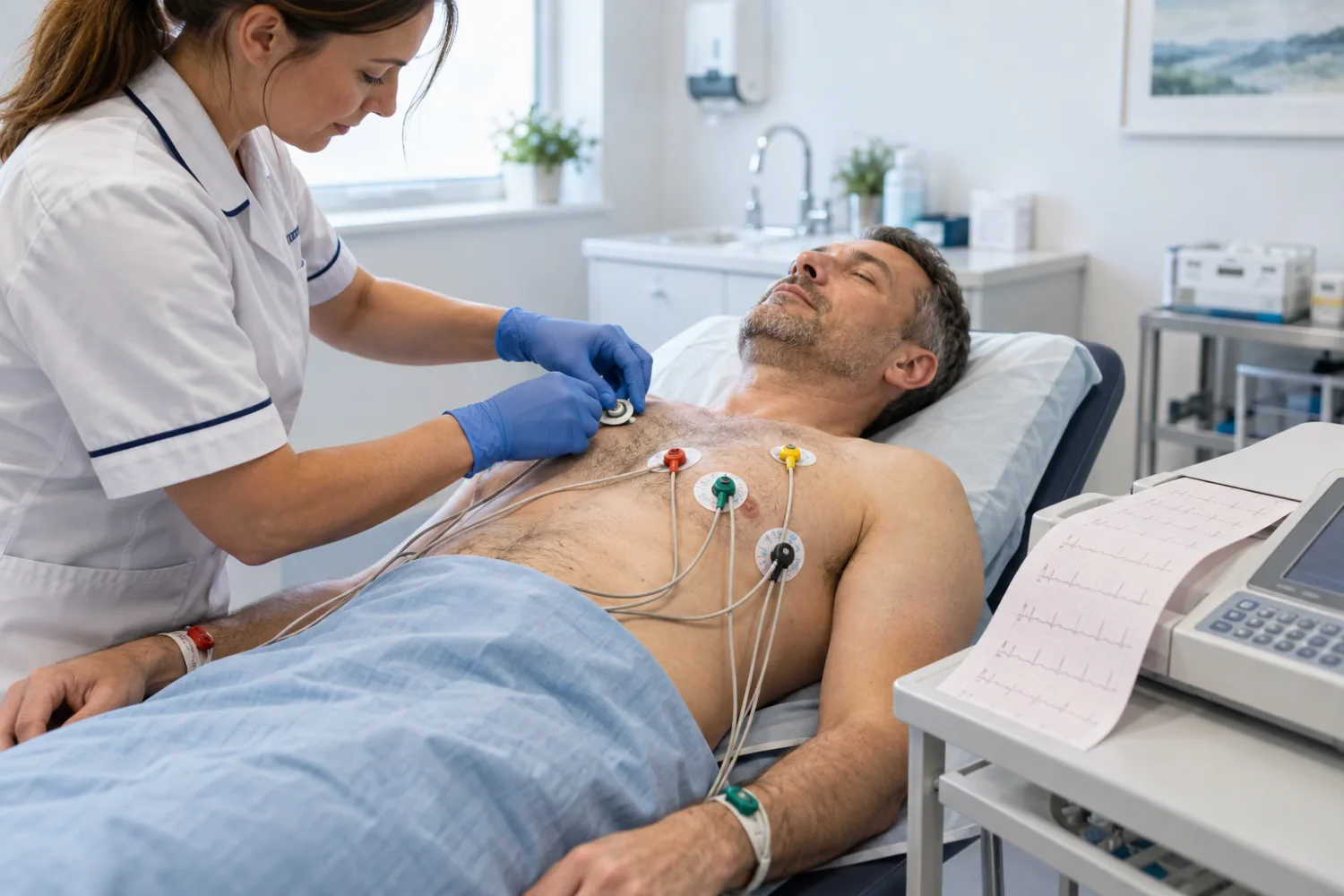
- an ECG to record the heart’s electrical activity
- blood tests, such as full blood count, thyroid function, kidney function and electrolytes
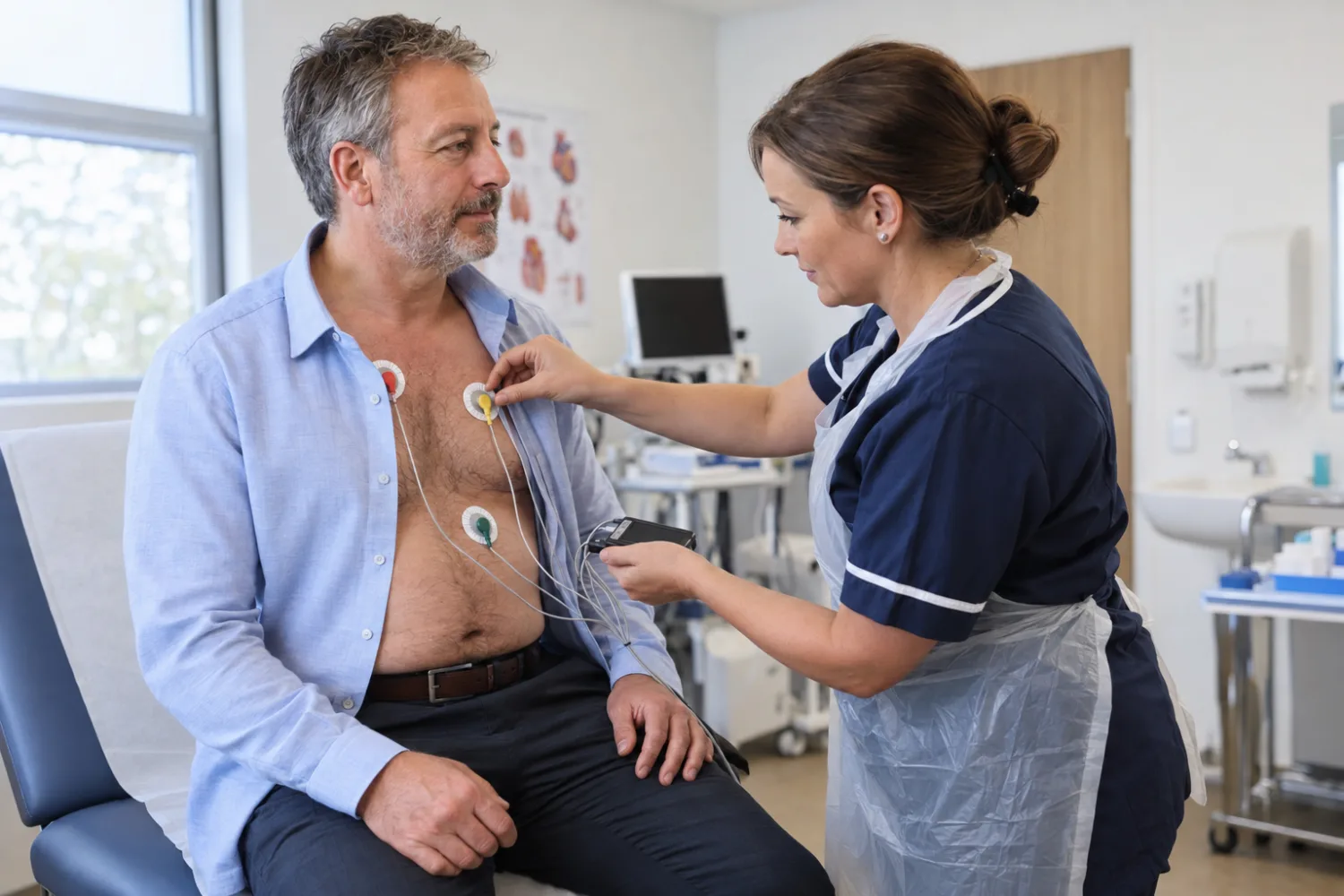
- a longer heart monitor, such as a 24-hour or 7-day ECG monitor
- an echocardiogram, which is an ultrasound scan of the heart, if needed
- referral to a heart specialist if symptoms or test results suggest this is necessary
An ECG can be normal if palpitations are not happening during the test, which is why longer monitoring may be useful for symptoms that come and go. For more background, read ECG results explained and how to understand medical test results.
Can smartwatches help?
Smartwatches and fitness trackers can sometimes record pulse rate or rhythm during symptoms. This may be useful information, especially if episodes are brief and hard to capture at a GP appointment.
However, wearable devices are not perfect. They can produce false alarms, miss some rhythm problems, or make anxiety worse if you keep checking repeatedly. If your watch flags an irregular rhythm, or you have symptoms you are worried about, speak to a healthcare professional rather than relying on the device alone.
What you can do to reduce palpitations
If serious causes have been ruled out, reducing triggers can help. The right approach depends on what seems to set off your symptoms.
You may want to try:
- cutting down caffeine gradually
- avoiding energy drinks and high-caffeine supplements
- limiting alcohol
- stopping smoking or nicotine use
- drinking enough fluids
- eating regular meals
- getting enough sleep
- building exercise up gradually
- managing stress with breathing exercises, counselling or relaxation techniques
- reviewing medicines and supplements with a pharmacist or GP
If palpitations are linked with anxiety, slow breathing may help during an episode. Try breathing gently in through your nose and out slowly, keeping your shoulders relaxed. If symptoms are severe or feel different from your usual anxiety symptoms, seek medical help.
Keeping a palpitation diary
A simple diary can make it easier for a clinician to understand what is happening. You do not need anything complicated — notes on your phone can be enough.
Record:
- date and time of the episode
- how long it lasted
- what it felt like: racing, fluttering, skipped beats or irregular
- what you were doing when it started
- your pulse rate if you can safely check it
- caffeine, alcohol, exercise, stress or poor sleep that day
- any symptoms such as chest pain, dizziness, breathlessness or fainting
- whether it stopped suddenly or gradually
Bring this information to your appointment. It may help decide whether you need an ECG, blood tests or longer heart monitoring.
Final thoughts
Heart palpitations are common and often harmless. They can be triggered by stress, caffeine, alcohol, dehydration, poor sleep, exercise, hormone changes, medicines or anxiety. But they can also be caused by heart rhythm problems, thyroid disease, anaemia or other medical conditions.
Call 999 if palpitations come with chest pain or tightness, severe shortness of breath, fainting, blackouts, or feeling very dizzy or lightheaded. Book a GP appointment if palpitations keep happening, last a long time, feel irregular, are getting worse, or concern you.
For official advice, see the NHS guide to heart palpitations, the NHS guide to heart rhythm problems, and the British Heart Foundation guide to palpitations.
This article is for general information only and should not replace medical advice. If you are worried about your symptoms or someone else’s, contact NHS 111, your GP, or call 999 in an emergency.
Frequently asked questions
Are heart palpitations dangerous?
Heart palpitations are often harmless, especially if they are brief and linked to triggers such as stress, caffeine, alcohol, exercise or lack of sleep. They may be more concerning if they are frequent, prolonged, irregular, worsening, or come with chest pain, breathlessness, dizziness, fainting or blackouts.
When should I call 999 for palpitations?
Call 999 if palpitations happen with chest pain or tightness, severe shortness of breath, fainting, blackouts, severe dizziness, blue or grey lips, or sudden weakness or confusion. These symptoms need urgent medical assessment.
Can anxiety cause palpitations?
Yes. Anxiety and panic attacks can cause a racing, pounding or fluttering heartbeat. They can also cause chest tightness, breathlessness, sweating, trembling and dizziness. However, new or severe palpitations should be checked, especially if they come with chest pain, fainting or breathlessness.
Can caffeine cause heart palpitations?
Yes. Coffee, tea, cola, energy drinks and some pre-workout supplements can trigger palpitations in some people. If symptoms happen after caffeine, try reducing it gradually and keep a diary to see whether episodes improve.
What tests are done for heart palpitations?
Tests may include an ECG, blood pressure and pulse checks, blood tests for anaemia or thyroid problems, and sometimes longer heart monitoring such as a 24-hour or 7-day ECG monitor. Some people may need an echocardiogram or referral to a heart specialist.
Why do I get palpitations when lying down?
Some people notice palpitations more when lying quietly because there are fewer distractions and the heartbeat is easier to feel. Caffeine, alcohol, stress, reflux, dehydration and anxiety can also contribute. If palpitations are frequent, irregular, prolonged or worrying, speak to a GP.
Can low iron cause palpitations?
Yes. Low iron or anaemia can make the heart beat faster or more noticeably because the body is trying to carry enough oxygen. Other symptoms may include tiredness, weakness, dizziness, breathlessness on exertion and looking pale. Blood tests can check this.
Should I see a doctor if my smartwatch says I have an irregular rhythm?
Yes, it is sensible to speak to a healthcare professional if your smartwatch repeatedly flags an irregular rhythm, especially if you also have palpitations, dizziness, breathlessness, chest pain or fainting. Wearables can be useful, but they are not a substitute for medical assessment.