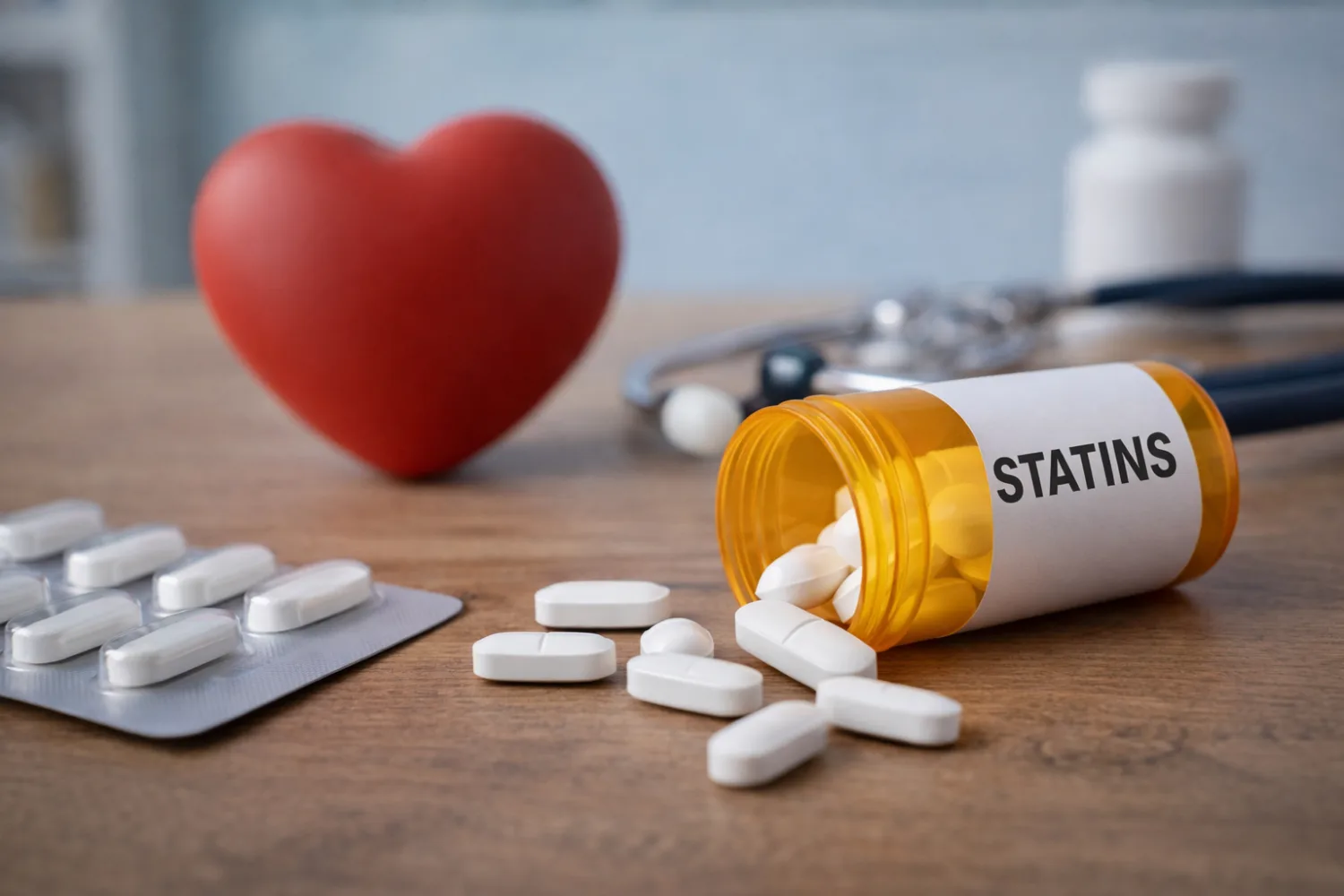
Statins are among the most commonly prescribed medicines in the UK, and also among the most argued about.
Some people see them as life-saving preventive treatment. Others worry they are overused, badly tolerated, or pushed too quickly. Many patients sit somewhere in the middle: they have been offered a statin, they are not sure whether they really need it, and they want a straight answer without being talked down to.
The truth is that statins are neither miracle tablets nor villains. They are a well-studied group of medicines that can reduce the risk of heart attack, stroke and other cardiovascular problems in the right people. But like any medicine, they also have downsides, limitations and side effects that need to be taken seriously.
This guide explains what statins do, who they are for, how much benefit they can offer, what side effects may happen, what to do if you cannot tolerate one, and how statins fit into the bigger picture of cardiovascular prevention.
What statins are
Statins are medicines that lower cholesterol production in the liver. More specifically, they help reduce levels of LDL cholesterol and non-HDL cholesterol, the types more closely linked with fatty plaque build-up in arteries.
Over time, that matters because cholesterol-related plaque can contribute to atherosclerosis, the narrowing and hardening of arteries that increases the risk of:
- heart attack
- stroke and TIA
- angina
- peripheral arterial disease
Statins do not “cure” cardiovascular risk. They are one part of risk reduction, alongside blood pressure control, smoking cessation, diet, exercise, weight management and diabetes care.
What statins actually do
Statins reduce the liver’s production of cholesterol and help the body clear more cholesterol from the blood.
The practical result is usually a reduction in LDL and non-HDL cholesterol, which lowers the chance of cholesterol-rich plaque building up further or becoming unstable.
That does not usually produce a sensation you can feel. Most people do not “feel better” because they have started a statin. The benefit is largely preventive. It is about lowering the chance of future harm.
This is one reason statins can be hard to judge emotionally. A person may feel perfectly well before treatment and perfectly well after treatment, so the benefit is not obvious day to day. But prevention is often like that.
Why statins are prescribed
Statins are generally prescribed for two main reasons: primary prevention and secondary prevention.
Primary prevention
Primary prevention means reducing the risk of a first heart attack, stroke or other cardiovascular event in someone who has not already had one.
In UK practice, this often depends on the person’s overall cardiovascular risk rather than cholesterol alone. That includes factors such as age, sex, blood pressure, smoking status, diabetes, kidney disease, weight, family history and cholesterol profile.
If you want the broader context, see our complete guide to cardiovascular risk.
Secondary prevention
Secondary prevention means reducing the risk of another event in someone who already has cardiovascular disease, for example after a heart attack, stroke, TIA or diagnosis of angina or peripheral arterial disease.
In this group, statins are usually considered much more clearly beneficial, because the person’s baseline risk is already known to be higher.
Who is most likely to be offered a statin?
A statin may be offered if you:
- have already had a heart attack, stroke, TIA or other established cardiovascular disease
- have raised overall cardiovascular risk on formal assessment
- have type 1 or type 2 diabetes in situations where guidelines support lipid-lowering treatment
- have chronic kidney disease in some circumstances
- have familial hypercholesterolaemia or another inherited lipid problem
- have clearly raised cholesterol plus other important risk factors
NICE guidance for primary prevention recommends atorvastatin 20 mg as the usual starting choice in many adults offered a statin.
Does everyone with high cholesterol need a statin?
No. This is one of the most important points to understand.
High cholesterol does not automatically mean a statin is essential, just as a normal-looking cholesterol number does not automatically mean no treatment will ever be discussed.
Statin decisions are usually based on the whole picture.
For example:
- a younger person with mildly raised cholesterol but otherwise low short-term risk may focus mainly on lifestyle first
- an older smoker with high blood pressure and diabetes may be advised to take a statin even if the cholesterol result is not dramatic
- a person with previous stroke or heart attack will usually be treated more aggressively because the risk is already proven
That is why our high cholesterol guide and cholesterol results explained guide are useful alongside this one.
How much statins help
This is the question most people really mean when they ask whether statins are “worth it”.
The answer depends heavily on your starting risk.
If your chance of a heart attack or stroke is already quite high, reducing that risk can be very worthwhile. If your short-term risk is low, the absolute benefit is smaller, even if the medicine still lowers cholesterol in a measurable way.
That is why doctors often talk about absolute risk rather than only cholesterol numbers.
A medicine can have the same biological effect in two people but a different practical value depending on how likely they were to have a cardiovascular event in the first place.
Which statins are commonly used in the UK?
The best-known statins include:
- atorvastatin
- rosuvastatin
- simvastatin
- pravastatin
Atorvastatin is commonly used in current UK practice. NICE guidance retains atorvastatin 20 mg as the recommended starting dose for primary prevention in many adults.
Different statins vary in strength, dose, interactions and tolerability. If one does not suit you, that does not automatically mean all statins are impossible for you.
How long do you need to take a statin?
Usually, statins are long-term treatment.
That is because the risk they are addressing is usually long term too. If a statin is being used to reduce future cardiovascular risk, stopping it means the protective effect also tends to reduce over time.
This is another reason people sometimes feel disappointed. They hope for a short course that “fixes” the issue.
But in most cases statins are more like blood pressure medicines: they help manage ongoing risk rather than providing a one-off cure.
Common worries about statins
“If I start one, will I be on it forever?”
Possibly for the long term, yes. But that is because the risk factor is usually long term as well.
It does not mean you can never review the decision. It means you should not stop without understanding why it was started and what stopping could mean for your risk.
“Does taking a statin mean I’ve failed?”
No. Needing medication is not a moral issue.
Some people can improve cholesterol enough through lifestyle alone. Others cannot, especially if inherited factors play a big role. Some people do everything “right” and still have a high enough cardiovascular risk to benefit from medicine.
“Can I just improve my diet instead?”
Sometimes lifestyle improvement is enough, especially in lower-risk cases. Sometimes it is helpful but still not enough on its own.
This is not either-or for many people. It is often both.
“I heard statins are dangerous.”
Like all medicines, statins can cause side effects and are not suitable for everyone.
But they are also among the most studied preventive drugs in medicine. The right question is whether the likely benefits outweigh the downsides in your case.
Statin side effects
Many people take statins with no obvious problems. Others get side effects, and some of those side effects are significant enough that dose changes, a different statin, or a different plan may be needed.
Commonly reported issues can include:
- muscle aches or soreness
- indigestion or stomach upset
- headache
- feeling sick
- changes in liver blood tests
NHS patient information notes that many people experience no or only minor side effects, while muscle aches and digestive symptoms are among the more commonly discussed problems.
There are also rarer but more serious muscle-related complications, which is why unexplained severe muscle pain, weakness or tenderness should not be ignored.
Statins and muscle pain
This is probably the most talked-about statin side effect.
Some people genuinely do develop muscle aches on statins. Others may develop symptoms for other reasons and understandably link them to the medicine because they started around the same time.
Sometimes the connection is clear; sometimes it is not.
The practical point is this: do not suffer in silence, but do not stop the medicine without discussion if it has been prescribed for an important reason.
If muscle symptoms appear, a clinician may want to know:
- when the pain started
- whether it is mild or severe
- whether it affects large muscle groups
- whether weakness is present as well as pain
- whether other illnesses, exercise changes or medicines could be involved
Do statins damage the liver?
Statins can affect liver blood tests in some people, which is why monitoring may be recommended in certain situations.
But this does not mean they routinely “damage the liver” in the dramatic way people often fear.
NHS Specialist Pharmacy Service guidance says statins should be used with caution in people with liver impairment or a history of liver disease, but stable chronic liver disease does not automatically rule them out.
If there is known liver disease, heavy alcohol use, or abnormal liver tests, that should be part of the prescribing discussion.
Can statins increase diabetes risk?
This is a concern people sometimes raise, and it is worth discussing honestly.
In some people, statins may slightly increase the likelihood of developing diabetes, but this has to be weighed against the cardiovascular protection they can provide, especially in people already at higher risk of heart attack or stroke.
That balance is one reason statin decisions should be individual rather than ideological.
What if you cannot tolerate a statin?
Not everyone who struggles with one statin is truly “unable to take statins” altogether.
Possible next steps may include:
- reviewing whether the symptoms are likely to be statin-related
- reducing the dose
- trying a different statin
- checking for drug interactions or other causes of symptoms
- using an alternative lipid-lowering medicine if statins are not tolerated or are contraindicated
NICE-linked quality measures and NHS prescribing guidance recognise that alternative lipid-lowering therapies may be considered when statins are contraindicated or not tolerated.
Alternatives if statins are not suitable
Depending on your clinical situation, alternatives or additions can include medicines such as ezetimibe, and in selected higher-risk cases, newer injectable or specialist lipid-lowering treatments.
These are not first-line for everyone, and they are usually considered in a more targeted way, especially when statins are not tolerated or cholesterol remains too high despite treatment.
Statins and lifestyle changes
Statins do not replace lifestyle change. This is a major misunderstanding.
A statin can be very helpful, but it does not cancel out smoking, poor diet, uncontrolled blood pressure, inactivity or untreated diabetes.
The most effective cardiovascular prevention usually combines medication with lifestyle improvement.
That includes:
- not smoking
- improving diet
- being more active
- managing weight
- controlling blood pressure
- addressing diabetes and sleep problems where relevant
Our guides to reducing your risk of heart attack and stroke and high blood pressure fit naturally alongside this topic.
What happens after you start a statin?
Usually, the aim is not just to hand over a prescription and forget about it.
Follow-up may include:
- review of side effects and tolerability
- repeat cholesterol testing
- checking how much non-HDL cholesterol has fallen
- reviewing adherence
- adjusting dose if needed
NICE says that for primary prevention, the aim is a greater than 40% reduction in non-HDL cholesterol after starting statin treatment.
Real-life examples
“My cholesterol improved, so I stopped the statin”
Graham starts atorvastatin, improves his diet, and sees a better cholesterol result. He assumes the problem is solved and stops the tablets.
The issue: the improved result may partly reflect the statin doing its job.
Better approach: review with a clinician before stopping treatment.
“I got mild aches and thought I could never take statins again”
Linda develops muscle discomfort a few weeks after starting treatment and stops immediately.
The issue: the symptoms may still need assessment, but that does not always mean all statins are impossible.
Better approach: discuss whether dose change, review, or an alternative statin would help.
“I thought statins meant I could relax about everything else”
Peter takes his statin regularly but continues smoking and ignores raised blood pressure.
The issue: statins reduce risk, but they do not erase other major risk factors.
Better approach: treat statins as one part of a wider prevention plan.
What to avoid and when to get advice
Statin decisions work best when they are based on your personal risk and side-effect experience, not fear, online arguments or someone else’s story.
What to avoid
- Do not assume online horror stories reflect what will happen to you.
- Do not stop a statin without review if it was prescribed for an important reason.
- Do not ignore new muscle pain, weakness or significant side effects.
- Do not think a statin replaces healthy lifestyle habits.
- Do not assume one statin that did not suit you means all statins are impossible.
When to speak to your GP or clinician
Book a review if:
- you have been offered a statin and want to understand whether it is right for you
- you have started treatment and have side effects
- you are unsure whether the medicine is working
- you have stopped taking it and want to revisit the decision
- you have a strong family history of early heart disease or suspected familial hypercholesterolaemia
Urgent help is needed not because of the statin itself, but because of symptoms that may suggest heart attack, stroke or other acute illness.
For those warning signs, see our guide to stroke symptoms and TIA.
FAQ: statins
What are statins used for?
Statins are used to lower LDL and non-HDL cholesterol and reduce the risk of cardiovascular events such as heart attack and stroke in people whose overall risk makes treatment worthwhile.
Does everyone with high cholesterol need a statin?
No. Statin decisions usually depend on overall cardiovascular risk, not cholesterol alone. Age, blood pressure, smoking, diabetes, kidney disease, family history and previous cardiovascular disease all matter.
Do statins make you feel better?
Usually not in an immediate way. Statins are mainly preventive. They reduce future risk rather than treating a symptom you can feel day to day.
What are the most common statin side effects?
Many people have no obvious side effects. Possible side effects include muscle aches, stomach upset, headache, feeling sick and changes in liver blood tests. Severe muscle pain or weakness should be reviewed promptly.
Can statins damage the liver?
Statins can affect liver blood tests in some people, but they do not routinely cause serious liver damage. Known liver disease or abnormal liver tests should be discussed with your clinician before and during treatment.
What if one statin does not suit me?
One poorly tolerated statin does not always mean all statins are impossible. Your clinician may consider a lower dose, a different statin, checking for interactions, or alternative lipid-lowering treatment.
Can I stop my statin if my cholesterol improves?
Do not stop without medical review. The improved result may partly reflect the statin working. Stopping can reduce the protective effect over time.
Do statins replace diet and exercise?
No. Statins are one part of risk reduction. Blood pressure control, not smoking, diet, activity, weight management and diabetes care remain important.
Final takeaway
Statins are widely used because they can meaningfully reduce the risk of heart attack and stroke in the right people.
They are not a cure-all, and they are not automatically necessary for everyone with raised cholesterol. The real question is whether they make sense in the context of your overall cardiovascular risk.
Many people take statins with few or no problems. Some do develop side effects, and those side effects deserve proper review rather than dismissal.
But statins should not be judged only by anecdote or fear. They should be judged by the likely balance of benefit and harm in the individual person sitting in front of the clinician.
The best approach is usually neither blind acceptance nor blanket rejection. It is an informed decision based on risk, benefit, side effects and realistic prevention goals.