Atrial fibrillation, usually shortened to AF, is one of the most important causes of preventable stroke.
That matters because AF is common, especially as people get older, and it does not always announce itself dramatically. Some people feel obvious palpitations. Some feel breathless, tired or light-headed. Others have no symptoms at all and only discover it during a routine check, after an ECG, or after a stroke or TIA has already happened.
AF is not just an “irregular heartbeat”. It is a heart rhythm problem that can allow blood to pool and clot inside the heart. If a clot travels to the brain, it can cause an ischaemic stroke.
NHS guidance describes AF as a condition where the heartbeat is not steady, and both the BHF and NHS emphasise that stroke prevention is one of the main reasons AF needs proper assessment and treatment.
This guide explains what atrial fibrillation is, why it raises stroke risk, what symptoms it can cause, how it is diagnosed in the UK, how doctors decide who needs anticoagulants, what those medicines actually do, and what else can be done to reduce risk.
What atrial fibrillation is
Atrial fibrillation is a type of arrhythmia, meaning an abnormal heart rhythm.
Instead of the upper chambers of the heart beating in a coordinated way, they quiver or beat chaotically. That makes the heartbeat irregular and often faster than normal.
NHS guidance describes AF as a type of heart rhythm problem where the heartbeat is not steady.
Some people have AF all the time. Others have episodes that come and go. Those episodes may last minutes, hours or longer, and sometimes stop on their own.
From a patient’s point of view, AF can feel very different from one person to another. One person may say their chest feels fluttery and fast. Another may say they simply feel washed out or short of breath. Another may have no symptoms at all.
Why AF increases stroke risk
In a normal heartbeat, blood moves through the heart in a more efficient way. In AF, the upper chambers do not contract properly, and blood can stagnate, especially in part of the left atrium.
That stagnant blood can clot. If the clot then travels from the heart to the brain, it can block blood flow and cause an ischaemic stroke.
This is why AF is so important in stroke prevention.
The BHF says AF increases stroke risk fivefold, and recent BHF patient information also notes that the risk rises further with age and with conditions such as high blood pressure and diabetes.
That does not mean every person with AF has the same risk. A younger person with no other medical problems may have a much lower stroke risk than an older person with diabetes, high blood pressure and previous vascular disease.
This is exactly why UK care does not treat every AF diagnosis in the same way.
Symptoms of atrial fibrillation
AF does not always feel dramatic. Common symptoms can include:
- palpitations or a fluttering heartbeat
- a fast or irregular pulse
- shortness of breath
- tiredness or reduced exercise tolerance
- dizziness or light-headedness
- chest discomfort in some people
NHS advice says AF can cause a noticeable heartbeat, tiredness, breathlessness and chest pain in some cases, although some people have no symptoms.
This variation is one reason AF can be missed. Someone expecting dramatic heart symptoms may ignore vague fatigue, poorer stamina or odd fluttering sensations for months.
Can you have AF without symptoms?
Yes, and that is one of the reasons it can be dangerous.
The BHF notes that even if you do not have symptoms, AF can still increase the risk of stroke.
This means an apparently “mild” or unnoticed case is not automatically a low-risk case. The main issue is not how uncomfortable the rhythm feels. The main issue is whether it is increasing the chance of a blood clot and stroke.
What AF-related stroke can look like
Sometimes the first sign that AF has been present is a TIA or stroke. That is why sudden neurological symptoms should never be ignored.
Typical stroke or TIA warning signs include:
- facial droop
- arm weakness
- speech difficulty
- sudden one-sided numbness or weakness
- sudden confusion
- sudden visual loss or major visual change
If these happen, call 999 immediately. Our guide to stroke symptoms and TIA explains the warning signs in more detail.
Who is more likely to develop AF?
AF becomes more common with age, but age is not the only factor.
NHS and BHF information both note that the chances of AF rise as people get older, and that other medical conditions can make it more likely.
Risk factors and associated conditions can include:
- older age
- high blood pressure
- coronary heart disease
- heart valve disease
- heart failure
- diabetes
- thyroid disease
- obesity
- sleep apnoea
- excess alcohol in some people
If blood pressure is part of the picture, see our guide to high blood pressure.
How AF is diagnosed in the UK
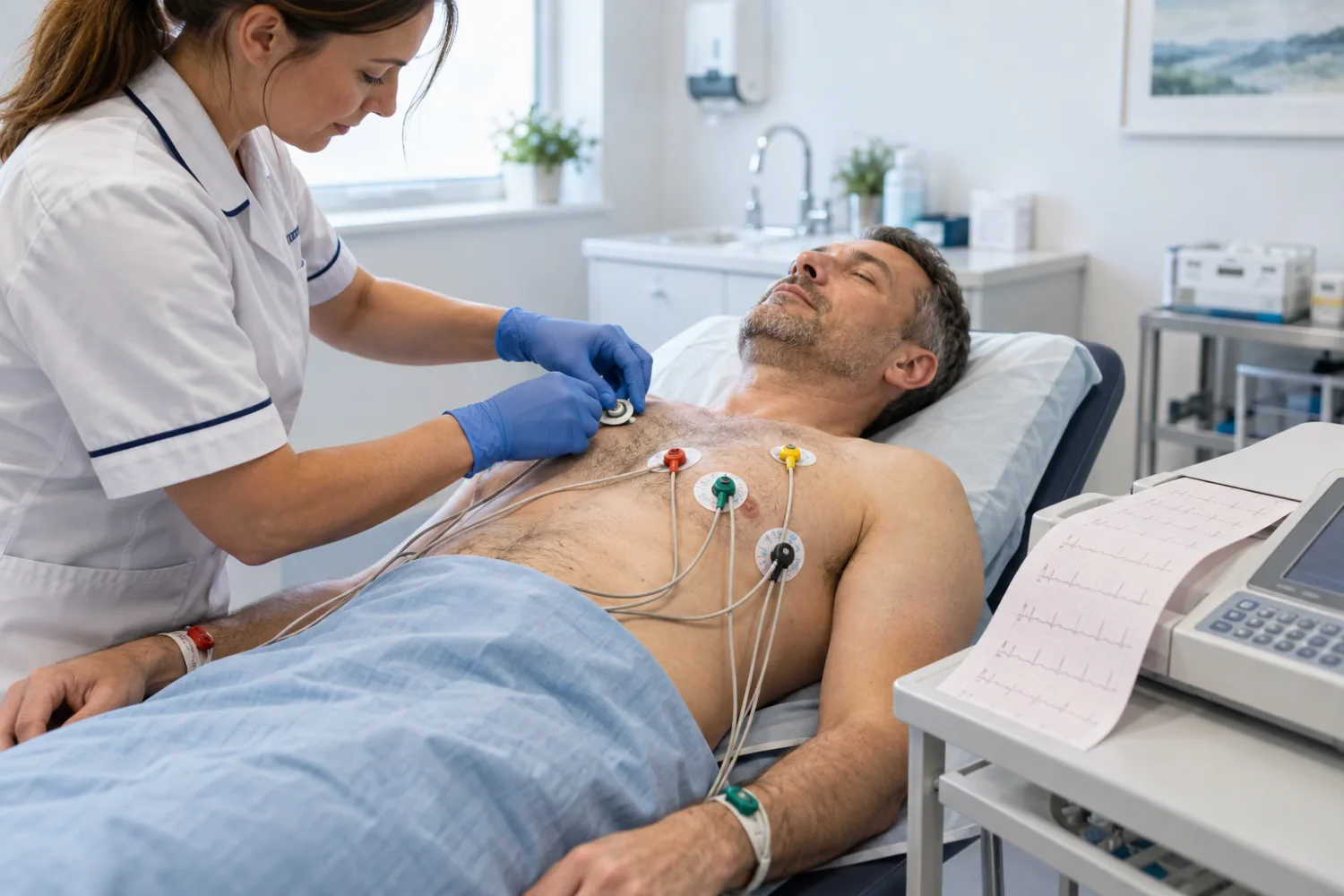
Diagnosis usually starts with a pulse check, ECG and symptom history.
NHS guidance says you should see a GP if you think you may have AF. NICE guidance covers the diagnosis and management of AF in adults and includes assessment of stroke and bleeding risk.
Tests may include:
- an ECG
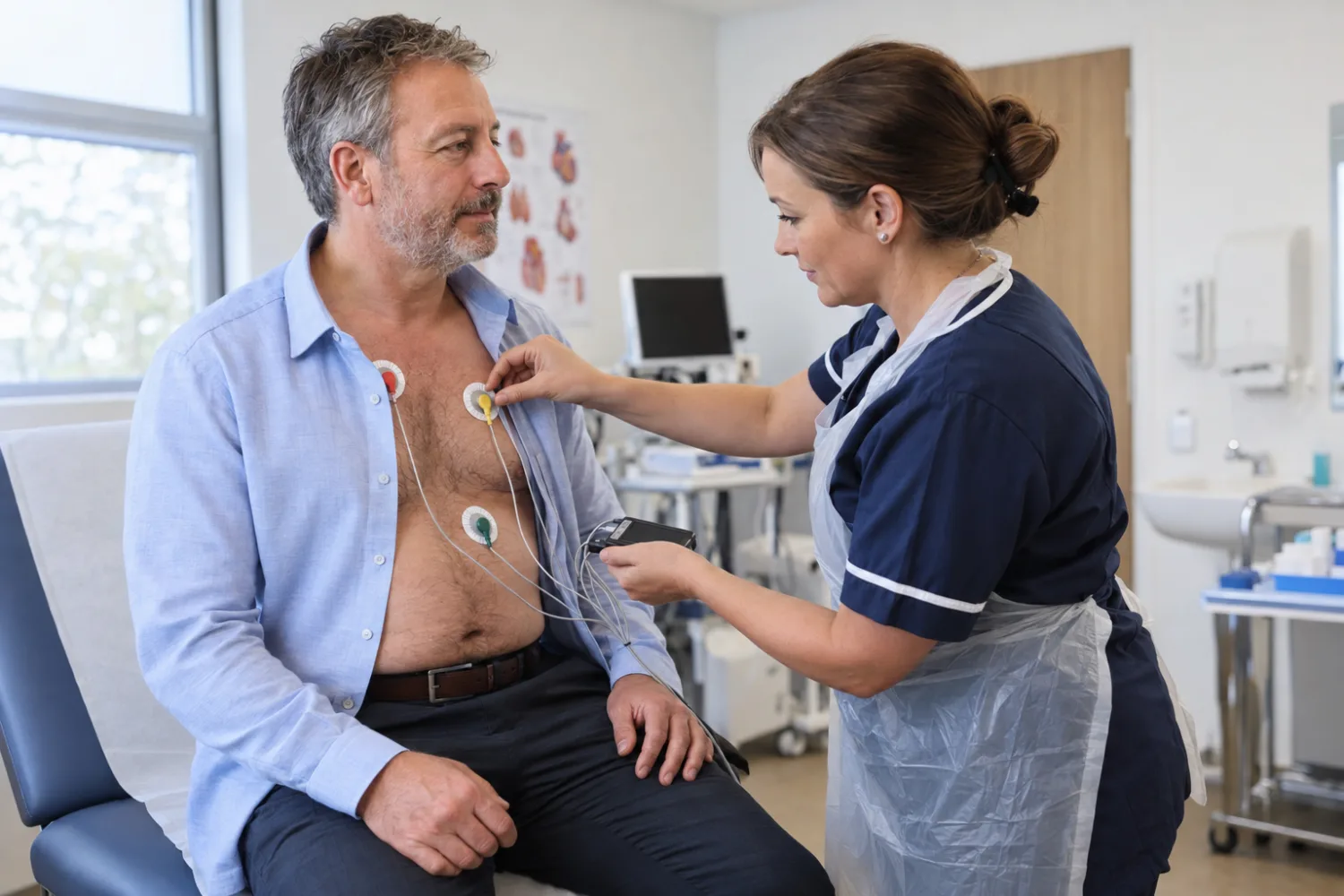
- a longer heart monitor if episodes come and go
- blood tests
- an echocardiogram in some cases
- blood pressure checks and assessment of other cardiovascular risk factors
If AF only appears intermittently, a short ECG done when the rhythm is normal can miss it. That is why some people need ambulatory monitoring or event recording.
For more detail on heart tracing results, see ECG results explained. If blood tests are also being arranged, see how to understand blood test results.
How doctors decide your stroke risk
This is where AF care becomes more individual.
NICE quality standards and AF guidance use formal stroke-risk assessment, commonly with the CHA2DS2-VASc score in non-valvular AF.
NICE quality statements say adults with non-valvular AF and a CHA2DS2-VASc score of 2 or above should be offered anticoagulation.
You do not need to memorise the score, but it reflects things such as:
- age
- high blood pressure
- heart failure
- diabetes
- prior stroke or TIA
- vascular disease
- sex category as part of the scoring framework
The reason for using a score is simple: not everyone with AF has the same clotting risk, and treatment decisions should reflect that.
Bleeding risk also matters
Stroke risk is only one side of the decision. NICE AF guidance also covers assessing bleeding risk.
The clinical conversation is not simply “stroke versus nothing”. It is “stroke risk versus bleeding risk, overall health, practicalities and patient preference”.
In many people with meaningful AF-related stroke risk, the benefit of anticoagulation still outweighs the bleeding risk, but this needs proper individual review.
That is one reason you should never borrow someone else’s experience and assume it applies directly to you. The right decision depends on your own balance of risk.
Blood thinners for AF: what they really do
The most important medicines for stroke prevention in AF are anticoagulants, often called blood thinners.
They do not actually make the blood “thin”. What they do is reduce the blood’s tendency to clot. That makes clot-related stroke less likely.
The BHF says anticoagulant drugs, including DOACs, are the most effective treatments to reduce stroke risk in people with AF.
This is the key point many people miss: anticoagulants are not mainly given to make the heartbeat feel more regular. They are given to reduce stroke risk.
What kinds of anticoagulants are used?
In modern UK practice, common options include direct oral anticoagulants, often called DOACs, and warfarin in selected cases.
NICE guidance on AF sits alongside technology appraisals for anticoagulants, and NHS/BHF patient information refers to anticoagulants as a central part of AF stroke prevention.
From a patient’s point of view, the exact medicine matters less than the bigger decision: do the benefits of reducing stroke risk outweigh the bleeding risks and practical downsides in this individual person?
Do anticoagulants stop strokes completely?
No treatment removes risk completely, but anticoagulants can reduce AF-related stroke risk substantially.
NHS England patient decision material says anticoagulant medicines can help prevent most AF-related strokes.
That is why being offered an anticoagulant should not be seen as a small or optional add-on. In the right person, it is one of the most important decisions in the whole treatment plan.
Are blood thinners the same as aspirin?
No. In AF, anticoagulants are the main medicines used to reduce clot-related stroke risk, and they are not the same as taking aspirin.
NICE and BHF guidance focus on anticoagulants for stroke prevention in AF.
Other AF treatments besides stroke prevention
AF treatment is not only about blood clots. Doctors also think about symptoms, heart rate, rhythm control and underlying causes.
Treatment may include:
- rate control, slowing the heartbeat if it is too fast
- rhythm control, trying to restore or maintain normal rhythm in some people
- cardioversion
- ablation in selected cases
- treatment of underlying contributors such as high blood pressure, thyroid disease or sleep apnoea
The BHF lists medications, cardioversion, ablation and sometimes pacemaker treatment among AF management options, depending on the case.
Some of these treatments improve symptoms. Some improve quality of life. But the question of stroke prevention still needs to be addressed separately.
Can AF be cured?
Some people can have rhythm restored or improved with treatments such as cardioversion or ablation, but the management plan depends on the type of AF, symptoms and overall risk.
Even if symptoms improve, your clinician may still need to review stroke risk separately.
How to lower stroke risk if you have AF
For many people, the biggest step is taking anticoagulants properly if they have been prescribed.
Beyond that, the same cardiovascular basics still matter:
- control blood pressure
- stop smoking if you smoke
- manage diabetes properly
- address cholesterol where needed
- reduce excess alcohol
- maintain a healthier weight
- stay active within your medical limits
If cholesterol is part of your risk picture, see our guide to high cholesterol.
What to avoid if you have AF
- Do not assume no symptoms means no risk.
- Do not stop anticoagulants without medical review.
- Do not treat palpitations as trivial if they keep recurring.
- Do not ignore high blood pressure, diabetes or other risk factors that raise stroke risk further.
- Do not rely on supplements or internet claims instead of evidence-based treatment.
Real-life examples
“I only noticed fluttering now and then”
David is 68 and gets brief episodes of racing heartbeat a few times a week. He assumes it is stress or too much coffee. After an ECG confirms AF, he is surprised to learn the main concern is not just palpitations but stroke prevention.
The lesson: AF symptoms may feel minor, but the longer-term clot risk can still matter.
“I feel absolutely fine, so I didn’t think treatment mattered”
Sheila is 74 and AF is picked up incidentally at a routine review. She has no symptoms at all. She wonders why she would need treatment if she feels normal.
The lesson: symptom severity and stroke risk are not the same thing.
“I thought blood thinners were only for people with obvious heart disease”
Imran has AF and high blood pressure but no previous heart attack. He is offered anticoagulation because his stroke-risk score is high enough.
The lesson: AF-related stroke prevention often depends on overall risk scoring, not only on whether someone has already had a major cardiac event.
When to see a GP or specialist
Book a review if:
- you have palpitations, a fluttering heartbeat or an irregular pulse
- you are becoming more breathless or fatigued without a clear reason
- you have AF and are unsure why you were or were not offered anticoagulants
- you have side effects or concerns about your blood thinner
- you have AF plus high blood pressure, diabetes or previous TIA/stroke
Seek urgent help if you develop stroke symptoms such as facial droop, arm weakness or speech difficulty. Call 999 immediately.
FAQ: atrial fibrillation and stroke risk
Can AF cause a stroke even if I feel fine?
Yes. AF-related clot risk can still be present even when symptoms are mild or absent. This is why stroke-risk assessment matters even in people who do not feel palpitations.
Does everyone with AF need blood thinners?
No. Treatment depends on formal stroke-risk assessment and bleeding risk, not just the diagnosis on its own. Some people have a low risk, while others benefit strongly from anticoagulation.
Are blood thinners the same as aspirin?
No. Anticoagulants are different from aspirin. In AF, anticoagulants are the main medicines used to reduce clot-related stroke risk.
Do blood thinners make the heart rhythm normal?
No. Anticoagulants reduce the blood’s tendency to clot. They help lower stroke risk, but they do not usually make the heartbeat regular. Rate or rhythm treatments are considered separately.
Can AF be cured?
Some people can have rhythm restored or improved with cardioversion, ablation or other treatment. However, stroke risk still needs proper assessment because symptom improvement and clot risk are not always the same thing.
What symptoms suggest AF?
Possible symptoms include palpitations, a fluttering heartbeat, an irregular pulse, breathlessness, tiredness, dizziness or chest discomfort. Some people have no symptoms at all.
What should I do if I think I have AF?
Book a GP review if you notice palpitations, an irregular pulse, unexplained breathlessness or reduced exercise tolerance. Seek urgent help for chest pain, fainting, severe breathlessness or stroke symptoms.
Can lifestyle changes replace anticoagulants?
Lifestyle changes can reduce overall cardiovascular risk, but they should not replace anticoagulants if anticoagulation is recommended for AF-related stroke prevention. Always discuss this with your clinician.
Final takeaway
Atrial fibrillation matters because it can cause blood clots that lead to stroke.
The main danger is not always how the heartbeat feels. It is the risk that an irregular rhythm allows a clot to form and travel to the brain.
That is why AF care in the UK focuses so strongly on stroke prevention. Diagnosis usually leads to a formal review of stroke risk and bleeding risk, and for many people anticoagulants are the most important treatment for preventing a serious event.
If you have AF, or think you might, the right response is not panic. It is proper assessment, a clear discussion of risk, and treatment that matches your personal situation.