High cholesterol is one of the most common long-term health issues in the UK, but it is also one of the easiest to misunderstand.
Many people hear the word “cholesterol” and immediately think of greasy food, clogged arteries and obvious warning signs. Real life is usually more complicated than that.
You can have high cholesterol and feel completely well. You can eat reasonably well and still have an unfavourable cholesterol profile. You can also have only mildly abnormal numbers on paper, but a much bigger cardiovascular problem when those numbers are combined with smoking, high blood pressure, diabetes or a strong family history.
That is why cholesterol should never be looked at in isolation. It is part of your wider cardiovascular risk picture.
This guide explains what cholesterol actually is, what different results mean, what causes high cholesterol, how it is tested in the UK, what treatments are used, when statins are considered, and what practical steps genuinely help.
What cholesterol is
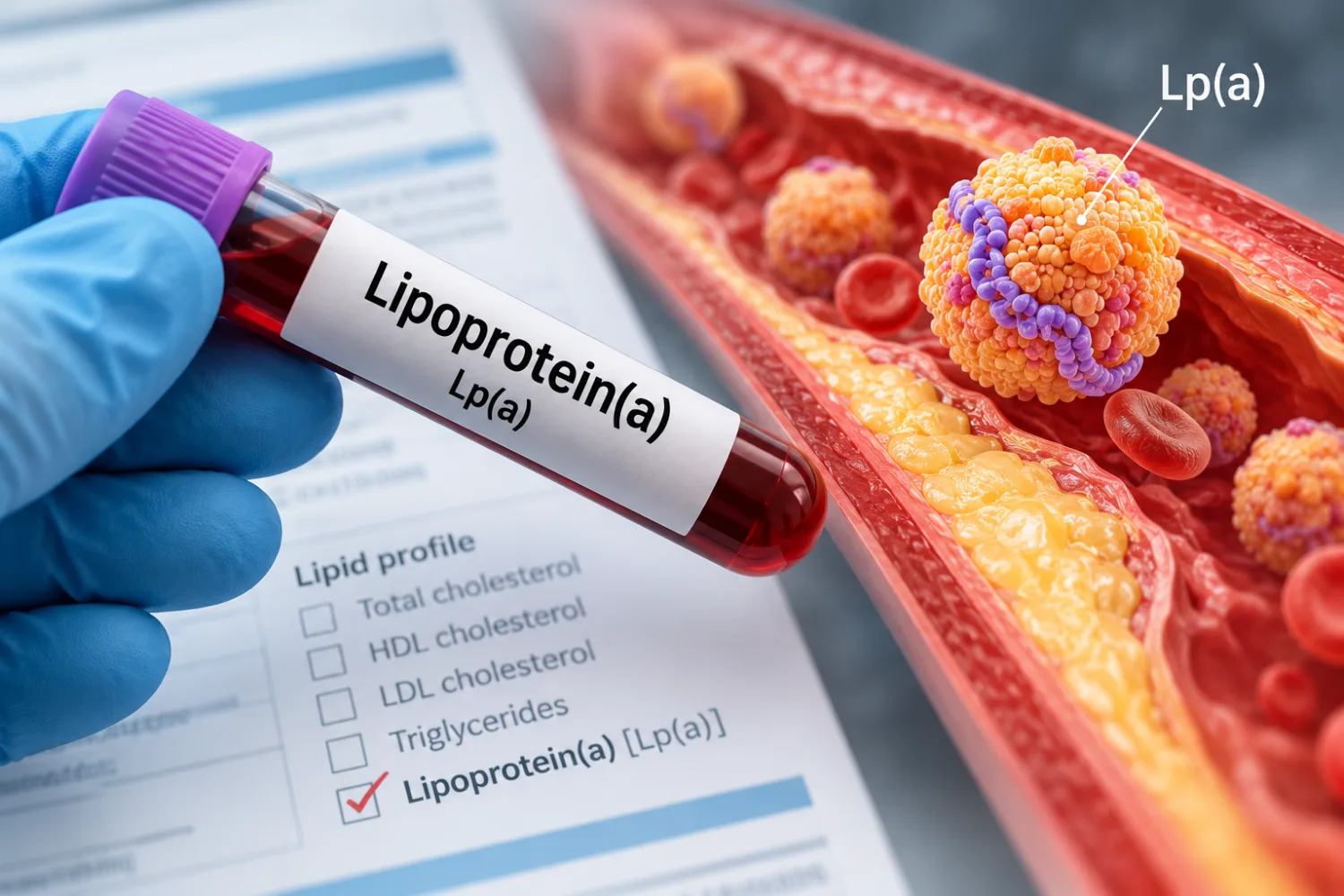
Cholesterol is a fatty substance carried in your blood. Your body needs it. It is used to make cells, hormones and other essential substances.
The problem is not cholesterol existing at all. The problem is when the balance of blood fats increases the build-up of fatty deposits in arteries over time.
That build-up can contribute to atherosclerosis, the gradual narrowing and hardening of arteries that raises the risk of heart attack, stroke and other cardiovascular disease.
Why high cholesterol matters
High cholesterol usually does not make you feel ill. It does not usually cause pain, tiredness, dizziness or warning symptoms you can rely on.
That is part of the problem: artery disease can develop quietly for years.
Raised cholesterol matters because it can contribute to plaque build-up in blood vessels, especially when it sits alongside other risk factors such as:
- high blood pressure
- smoking
- type 2 diabetes
- excess weight
- low activity levels
- a strong family history of heart disease
If you want the bigger picture of how cholesterol fits into long-term prevention, read our complete guide to cardiovascular risk.
High cholesterol usually has no symptoms
This is one of the biggest misconceptions around cholesterol. Many people assume they would know if it was high. In reality, most do not.
The NHS is very clear that high cholesterol does not usually cause symptoms and is usually only found with a blood test. That is why routine checks, targeted testing and risk assessment matter so much.
Some people discover it after a health check. Some find out because they already have another risk factor such as high blood pressure. Others only learn about it after a cardiovascular event or because a close relative develops heart disease unusually early.
What cholesterol numbers mean
A cholesterol test may include several figures rather than one simple “good” or “bad” result. This is where a lot of confusion starts.
Total cholesterol
Total cholesterol is the overall amount of cholesterol in your blood. On its own, it is useful but incomplete.
HDL cholesterol
HDL is often called “good” cholesterol because it helps carry cholesterol away from the arteries.
Non-HDL cholesterol
Non-HDL cholesterol represents the cholesterol that can contribute more directly to plaque build-up. It is often very useful in routine cardiovascular risk assessment.
LDL cholesterol
LDL is often called “bad” cholesterol because raised levels are associated with atherosclerosis.
Triglycerides
Triglycerides are another type of blood fat. They matter too, especially in people with diabetes, insulin resistance, excess weight or metabolic syndrome.
The NHS gives general healthy guide levels as total cholesterol below 5 mmol/L, non-HDL below 4 mmol/L, HDL above 1.0 mmol/L in men and above 1.2 mmol/L in women.
But these figures are only part of the story. A cholesterol result should be interpreted alongside age, blood pressure, smoking status, diabetes, weight, family history and overall cardiovascular risk.
NICE guidance for adults without established CVD recommends using QRISK3 for many people aged 25 to 84 to estimate 10-year risk and guide shared decisions about prevention.
For more detail on individual results, see our guide to cholesterol test results explained.
Why one cholesterol number never tells the whole story
Two people can have the same total cholesterol result and very different actual risk.
For example, a younger non-smoker with normal blood pressure, no diabetes and no family history may not face the same level of concern as an older smoker with raised blood pressure and the same cholesterol number.
This is why clinicians look at the whole person, not just the lab report.
Real-life examples
“I’m slim, so I assumed my cholesterol was fine”
Emma is 44, not overweight, active and generally feels healthy. A routine test shows clearly raised cholesterol, and when her family history is explored properly, it turns out her father had a heart attack in his early fifties.
The issue: she assumed body shape alone predicted risk.
The reality: genetics can play a major role, and slim people can absolutely have high cholesterol.
“My total cholesterol looks only a bit high, so I ignored it”
Paul is 57, smokes, has borderline high blood pressure and has not exercised regularly in years. His cholesterol is not dramatically abnormal, but taken together his risk factors are concerning.
The issue: he focused on one number instead of overall risk.
The reality: several modest risks together can be much more important than one number viewed in isolation.
“I improved my diet, but my cholesterol barely changed”
Nadia cuts down on takeaways and loses weight, but her LDL remains quite high.
The issue: she assumes she must have done something wrong.
The reality: lifestyle helps, but inherited factors can still mean medication is worth discussing.
What causes high cholesterol?
High cholesterol is often caused by a mixture of lifestyle, inherited traits and other health conditions. Sometimes there is no single dramatic explanation.
Common contributors include:
- a diet high in saturated fat and ultra-processed foods
- low physical activity
- being overweight
- smoking
- type 2 diabetes
- kidney disease
- hypothyroidism in some cases
- family history and inherited lipid disorders
That last point matters more than many people realise.
Familial hypercholesterolaemia
Some people have persistently high cholesterol because of an inherited condition called familial hypercholesterolaemia, often shortened to FH.
NICE has separate guidance for identifying and managing FH because it significantly increases the risk of early coronary heart disease and can run through multiple family members.
Possible clues include:
- very high cholesterol at a relatively young age
- a family history of early heart attack or heart disease
- multiple relatives known to have high cholesterol
If the pattern suggests FH, it should not be brushed off as “just a bit of high cholesterol”. It may need further assessment and family tracing.
How cholesterol is tested in the UK
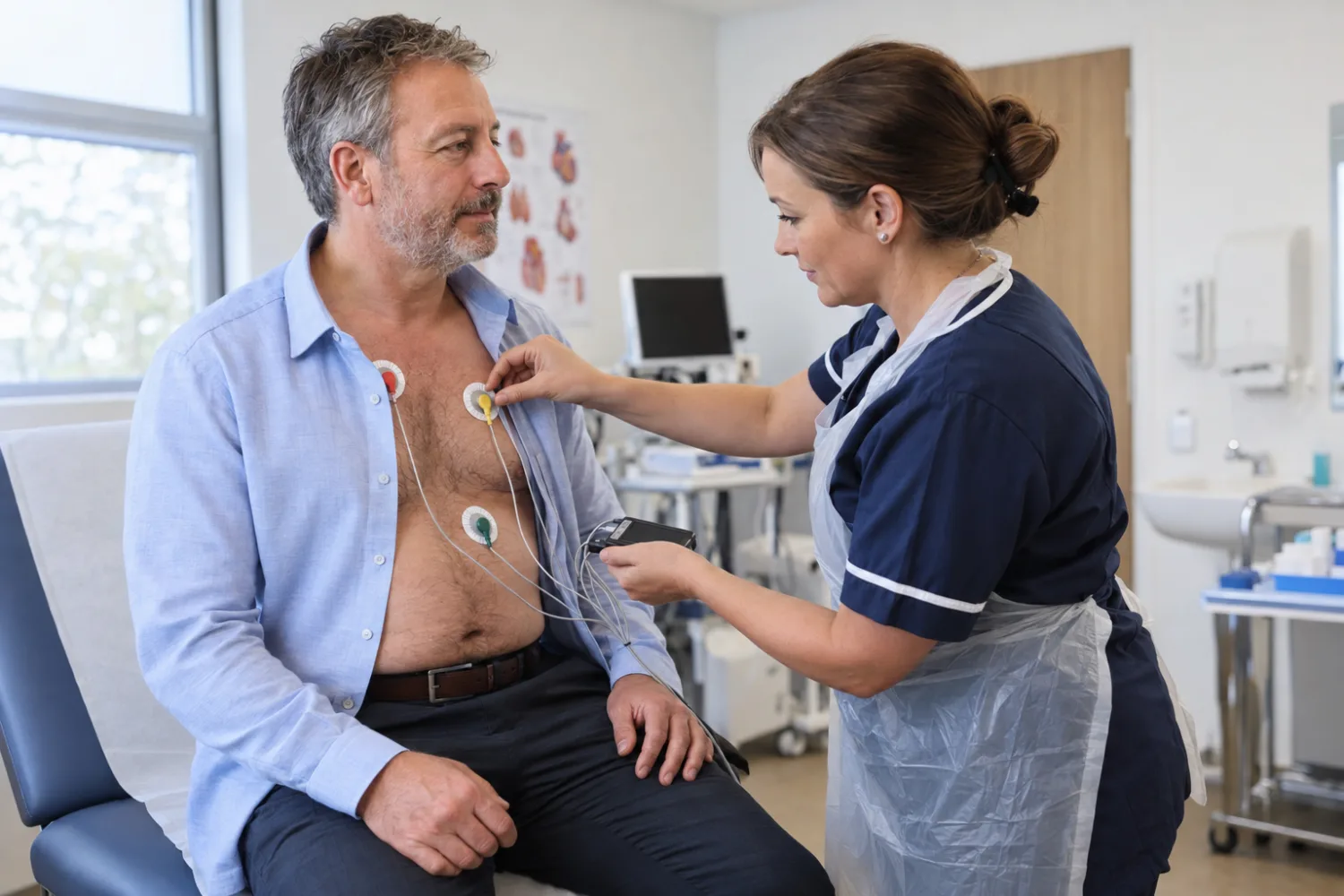
Cholesterol is measured with a blood test. This may be offered as part of an NHS Health Check, routine GP assessment, private screening, diabetes review, or cardiovascular risk assessment.
Sometimes a finger-prick test is used for screening, but a venous blood sample may be used when a fuller assessment is needed.
A clinician may also look at other results at the same time, such as blood sugar, kidney function, blood pressure, weight and smoking status.
That is because cholesterol management is part of broader prevention, not a standalone exercise.
How doctors decide whether treatment is needed
People often want a simple rule such as “above this number, you need tablets.” In practice, treatment decisions are more nuanced.
NICE guidance on cardiovascular risk reduction covers lifestyle advice and lipid-lowering treatment for primary and secondary prevention.
For many adults without established cardiovascular disease, QRISK3 is used to estimate 10-year risk, and statin treatment is commonly discussed when that risk is high enough, alongside a shared decision-making conversation.
This means treatment may be influenced by:
- your cholesterol profile
- your age
- whether you smoke
- your blood pressure
- whether you have diabetes or kidney disease
- your family history
- whether you already have cardiovascular disease
For example, someone with existing cardiovascular disease is treated very differently from someone who simply has mildly raised cholesterol but otherwise low short-term risk.
Lifestyle changes that genuinely help
This is the point where many articles become either too simplistic or too extreme.
You do not need to chase internet detoxes, miracle oils or dramatic “cholesterol resets”. The best improvements usually come from steady, realistic changes that can be maintained.
Improve the overall pattern of your diet
A heart-healthier diet usually means more vegetables, fruit, beans, pulses, oats, whole grains, nuts, seeds and fish, while cutting down on foods high in saturated fat and heavily processed convenience food.
In practical terms, that might mean:
- swapping frequent takeaway meals for simple home-cooked meals
- choosing high-fibre breakfasts more often
- using less processed meat
- reducing pastries, fried foods and regular high-fat snacks
- being careful with portion sizes even when food is marketed as “healthy”
Lose excess weight if needed
Weight loss can improve cholesterol, triglycerides, blood sugar and blood pressure at the same time. It is especially helpful when excess fat is carried around the waist.
Exercise regularly
You do not need elite fitness. Consistent walking, cycling, swimming, gym work or active daily movement can help improve HDL, weight control, insulin sensitivity and overall cardiovascular health.
Stop smoking
Smoking makes cholesterol-related vascular risk more dangerous. Even if your cholesterol was perfect, smoking would still matter. When both are present, the risk picture worsens further.
Cut back on alcohol if it is excessive
Alcohol can contribute to weight gain and raised triglycerides, while also affecting sleep and general metabolic health.
When lifestyle change is not enough
Some people feel frustrated when they make genuine changes and their cholesterol does not fall as much as they expected.
That does not necessarily mean those changes were pointless. They may still be improving blood pressure, weight, blood sugar and long-term risk overall.
But it can also mean lifestyle alone is not enough in that person. Genetics and metabolic factors matter. This is where medication can be entirely appropriate.
Statins and cholesterol-lowering medicines
Statins are the most commonly used medicines for lowering cholesterol-related cardiovascular risk. They work by reducing cholesterol production in the liver and are among the most widely studied preventive drugs in medicine.
NICE guidance includes statins as part of lipid modification for primary and secondary prevention of cardiovascular disease.
That does not mean everyone with any cholesterol abnormality should be put on a statin. It means the pros and cons should be considered properly in context.
Other points to remember:
- the aim is risk reduction, not just a prettier blood test
- some people need medication because of overall risk, not because their total cholesterol looks extreme
- people with existing cardiovascular disease are often treated more intensively
- if one medicine is not suitable, alternatives or dose adjustments may be possible
For a fuller explanation, see our guide to statins explained.
Common worries about statins
Statins generate a lot of anxiety online. Some concerns are reasonable, because every medicine can cause side effects in some people. But there is also a great deal of exaggerated or misleading information around them.
The sensible question is not “Are statins good or bad?” but “Given this person’s real cardiovascular risk, are the likely benefits worth it?”
For many people, the answer is yes. For others, especially at lower short-term risk, the conversation may focus more heavily on lifestyle and monitoring first.
High cholesterol and blood pressure
Cholesterol and blood pressure often travel together. They may be driven by some of the same lifestyle factors, and when both are raised, cardiovascular risk becomes more concerning.
If your cholesterol is high and your blood pressure has not been checked recently, it is worth looking at both.
Our guide to high blood pressure explains how hypertension is diagnosed, what readings mean and how treatment works.
When to see a GP or clinician
Book a routine review if:
- your cholesterol has come back high on testing
- you have a strong family history of early heart disease
- you already have diabetes, kidney disease or high blood pressure
- you are unsure whether medication is appropriate
- you think you may have side effects from treatment
You should also seek review if you have been told in the past that your cholesterol was high but nothing was followed up properly.
When high cholesterol is not the main issue anymore
High cholesterol itself is usually a long-term risk factor, not an emergency symptom. But symptoms that may suggest an active cardiovascular problem should never be brushed off as “just cholesterol”.
Seek urgent help if there are symptoms such as:
- chest pain or pressure
- sudden shortness of breath
- facial droop, arm weakness or speech problems
- collapse or severe new confusion
If you think someone may be having a heart attack or stroke, call 999 immediately.
NHS and private cholesterol assessment
Most cholesterol testing and management can begin perfectly well through the NHS, including GP care, NHS Health Checks and cardiovascular risk assessment in primary care.
Private care may be useful if you want faster access to testing, more time for detailed prevention discussions, or specialist lipid assessment where family history or complex results raise concern.
But more testing is not always better. The best cholesterol care is targeted and clinically sensible.
What to avoid
- Do not assume no symptoms means no risk.
- Do not focus only on total cholesterol and ignore the rest of the picture.
- Do not assume being slim protects you from inherited high cholesterol.
- Do not replace proven treatment with supplements and social media advice.
- Do not stop a statin without review if it has been prescribed for a good reason.
- Do not ignore a strong family history of early heart disease.
A practical plan if your cholesterol is high
- Do not panic over one figure in isolation.
- Understand which parts of the profile are raised.
- Review blood pressure, smoking, weight, exercise and family history honestly.
- Make realistic dietary and lifestyle changes you can sustain.
- Ask whether your overall cardiovascular risk has been assessed properly.
- Discuss medication calmly if your risk level suggests it may help.
- Take family history seriously, especially if heart disease happened early.
FAQ: high cholesterol
Can you have high cholesterol if you eat well?
Yes. Genetics can play a major role, particularly in familial hypercholesterolaemia. Diet matters, but it is not the only factor.
Is cholesterol only caused by fatty food?
No. Diet matters, but so do inherited factors, weight, activity, diabetes, kidney disease, thyroid problems and wider metabolic health.
Can younger adults have high cholesterol?
Yes. This is especially important if there is a strong family history or inherited lipid disorder.
Do I need to fast before a cholesterol test?
Not always. Whether fasting is needed depends on the test and local practice. Many routine cholesterol checks can still provide useful information without fasting.
Can cholesterol improve without medication?
Sometimes yes, especially with meaningful diet, weight and activity changes. But not everyone will reach the right risk-reduction target through lifestyle alone.
Does high cholesterol cause symptoms?
Usually not. Most people with high cholesterol feel completely well. It is usually found through a blood test or cardiovascular risk assessment.
When are statins considered?
Statins are considered when overall cardiovascular risk is high enough, when someone already has cardiovascular disease, or when cholesterol levels and risk factors suggest medication is likely to provide meaningful benefit.
Can being slim rule out high cholesterol?
No. Slim and active people can still have high cholesterol, especially if inherited factors or familial hypercholesterolaemia are involved.
Final takeaway
High cholesterol is common, usually silent, and important because it contributes to long-term cardiovascular risk rather than obvious day-to-day symptoms.
The most useful question is not “Is cholesterol bad?” but “What does this result mean in the context of my overall risk?”
For some people, better diet, more activity and weight loss will make a major difference. For others, lifestyle improvement and medication both have an important role.
The best approach is calm, evidence-based and individual: understand the numbers, understand the wider risk picture, and take action before heart attack or stroke becomes the first sign something was wrong.