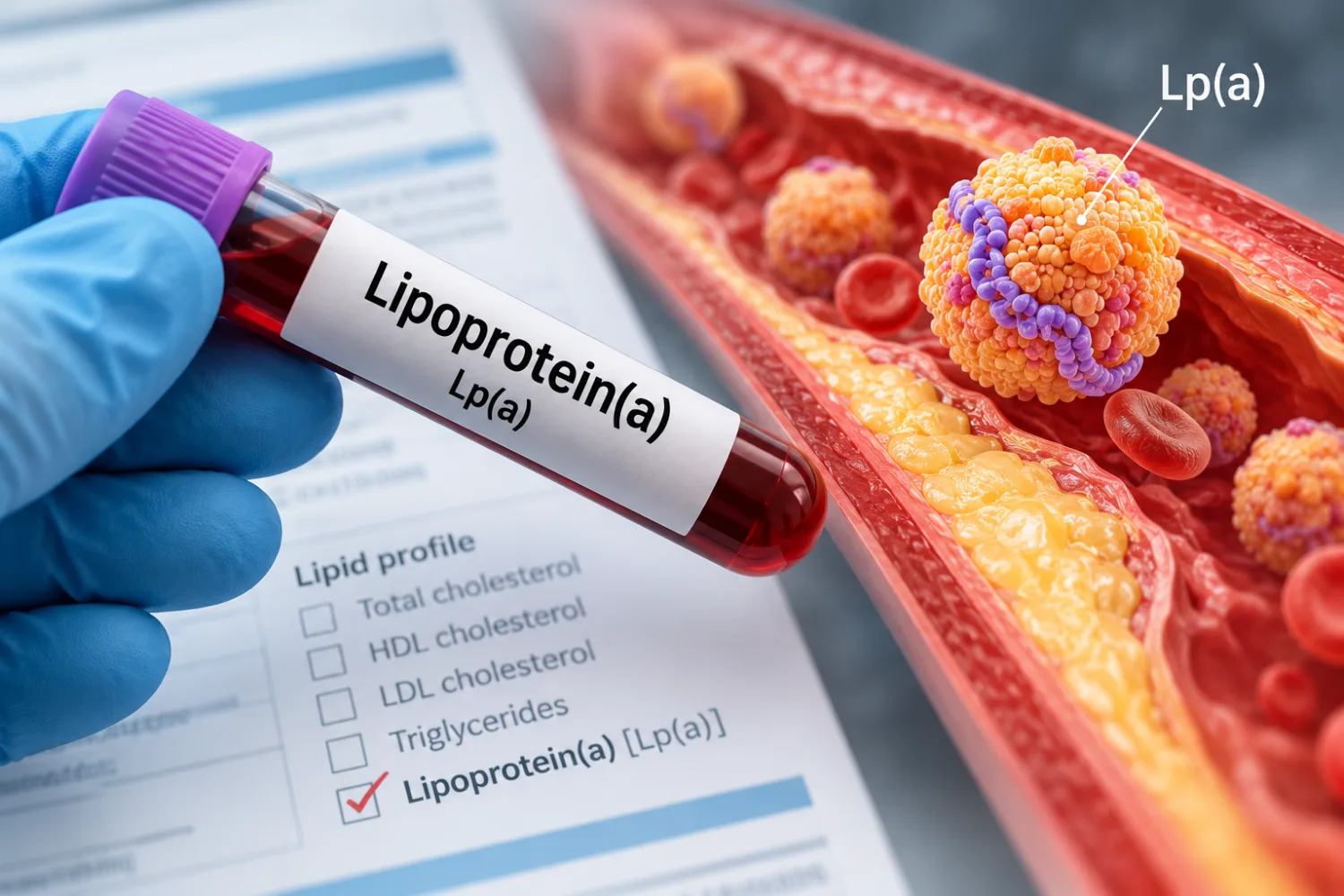
Getting cholesterol test results back can be confusing, especially because there is not just one number to understand. You may see total cholesterol, HDL cholesterol, non-HDL cholesterol, LDL cholesterol, triglycerides and a cholesterol ratio, all reported together on the same result.
The most important thing to know is this: a cholesterol test is not a simple pass-or-fail score. Your results only make sense when they are read alongside your age, sex, blood pressure, smoking status, diabetes risk, kidney health, weight, family history and whether you have already had heart or circulation problems.
This guide explains what each cholesterol result means, what is usually considered a healthy range in the UK, when results may be more concerning, what can affect the numbers, and what usually happens next if your cholesterol is raised.
Important: This article is for general information only and should not replace medical advice. Cholesterol results should be interpreted by a GP, pharmacist or qualified clinician, especially if you have diabetes, kidney disease, thyroid disease, liver problems, a history of heart disease, or a strong family history of early heart attacks or strokes.
What is cholesterol and why does it matter?
Cholesterol is a fatty substance that your body needs in small amounts. It helps make cell membranes, hormones, vitamin D and bile acids, which help digest fats. Your liver makes cholesterol naturally, and you also get some cholesterol and other fats from food.
Cholesterol itself is not automatically bad. The problem is when there is too much of the wrong type of cholesterol or fat-carrying particles in the blood over time. These particles can contribute to fatty deposits inside artery walls. This process is called atherosclerosis.
Atherosclerosis can slowly narrow the arteries and increase the risk of conditions such as:
- heart attack
- stroke or TIA
- angina
- peripheral arterial disease
- other cardiovascular problems linked to narrowed or damaged arteries
High cholesterol usually does not cause symptoms. Many people feel completely well. This is why cholesterol testing is mainly about future risk rather than current symptoms.
For the wider picture, you may also find these guides useful: Cardiovascular Risk: The Complete Guide to Heart Attack and Stroke Prevention, High Cholesterol: Causes, Treatment and How to Lower It and High Blood Pressure: Symptoms, Causes and Treatment.
What does a cholesterol test measure?
A cholesterol test is often called a lipid profile or lipid panel. It measures different types of fat and cholesterol-carrying particles in your blood. A full result usually gives a better picture than total cholesterol alone.
Total cholesterol
Total cholesterol is the overall amount of cholesterol in your blood. It includes cholesterol carried in both more protective and more harmful particles.
It is useful as a headline number, but it should not be interpreted on its own. Two people can have the same total cholesterol result but very different risk profiles depending on their HDL, non-HDL, LDL, triglycerides and personal health background.
HDL cholesterol
HDL stands for high-density lipoprotein. It is often called “good cholesterol” because it helps carry cholesterol away from the bloodstream and back to the liver, where it can be processed.
A higher HDL cholesterol level is generally more favourable, but it is not a magic shield. Good HDL does not cancel out high LDL cholesterol, high blood pressure, diabetes, smoking or a strong family history of early heart disease.
Non-HDL cholesterol
Non-HDL cholesterol is calculated by subtracting HDL cholesterol from total cholesterol. It represents the cholesterol carried in the potentially harmful particles, including LDL and other artery-damaging lipoproteins.
In the UK, non-HDL cholesterol is commonly used because it gives a practical view of the overall “bad cholesterol” burden. The NHS cholesterol levels page explains that non-HDL cholesterol is the difference between total cholesterol and HDL cholesterol.
LDL cholesterol
LDL stands for low-density lipoprotein. It is commonly called “bad cholesterol” because high levels can contribute to cholesterol build-up in artery walls.
LDL cholesterol is often a key treatment target, especially for people at higher cardiovascular risk, people who have already had a heart attack or stroke, and people with inherited cholesterol problems.
LDL may be measured directly, but it is often calculated from other parts of the lipid profile. In some situations, such as very high triglycerides, calculated LDL may be less reliable.
Triglycerides
Triglycerides are another type of fat in the blood. They are not the same as cholesterol, but they are measured as part of a lipid profile because they matter for cardiovascular and metabolic health.
Triglycerides can rise after eating, after alcohol intake, with weight gain, poorly controlled diabetes, fatty liver disease, kidney problems, thyroid problems, some medicines and inherited lipid disorders.
Total cholesterol to HDL ratio
The total cholesterol to HDL ratio compares your total cholesterol with your HDL cholesterol. A lower ratio is generally better. This ratio can help give a more balanced view than total cholesterol alone, but it should still be read alongside the rest of the lipid profile.
Cholesterol results: healthy ranges in the UK
Cholesterol results in the UK are usually measured in millimoles per litre, written as mmol/L. The table below gives common adult guide levels used in UK patient information. Your personal target may be lower if you already have cardiovascular disease, diabetes, chronic kidney disease, familial hypercholesterolaemia or a high calculated cardiovascular risk.
| Marker | General UK guide level | What it means |
|---|---|---|
| Total cholesterol | Below 5.0 mmol/L | A useful headline number, but not enough on its own. |
| HDL cholesterol | Above 1.0 mmol/L for men; above 1.2 mmol/L for women | Higher is usually more favourable, but it does not cancel out other risks. |
| Non-HDL cholesterol | Below 4.0 mmol/L | A practical measure of the main harmful cholesterol burden. |
| LDL cholesterol | Below 3.0 mmol/L | Often an important treatment target, especially in higher-risk people. |
| Triglycerides | Below 1.7 mmol/L fasting, or below 2.3 mmol/L non-fasting | High levels can be linked with diet, alcohol, diabetes, weight, liver health, medicines or inherited causes. |
| Total cholesterol to HDL ratio | Lower is better; below 6 is often used as a broad guide | A risk-related ratio, but not the only number that matters. |
These figures are general guide levels, not personalised treatment targets. UK organisations such as the British Heart Foundation, HEART UK and the NHS give similar public-facing ranges.
People who have already had a heart attack, stroke, TIA, angina or peripheral arterial disease may be advised to aim for lower levels than the general population. This is because their treatment is about reducing the risk of another serious event, not simply reaching a “normal” public guide range.
How to understand total cholesterol, HDL and cholesterol ratio
Some cholesterol results are easy to notice because they appear first on the report. But the most obvious number is not always the most useful one.
What does high total cholesterol mean?
High total cholesterol means the overall amount of cholesterol in your blood is above the usual guide range. However, it does not tell you whether the increase is mainly from HDL, LDL or other cholesterol-carrying particles.
For example, a total cholesterol of 5.8 mmol/L could mean different things in different people. If HDL is high and non-HDL is only mildly raised, the result may be less concerning. If LDL, non-HDL and triglycerides are raised, the same total cholesterol result may be more important.
Common causes of high total cholesterol include:
- a diet high in saturated fat
- being physically inactive
- carrying excess weight, especially around the waist
- smoking
- drinking too much alcohol
- type 2 diabetes or insulin resistance
- an underactive thyroid
- kidney disease
- liver or bile flow problems
- some medicines
- inherited conditions such as familial hypercholesterolaemia
What does low HDL cholesterol mean?
Low HDL cholesterol means your level of “good cholesterol” is lower than expected. Low HDL is often associated with higher cardiovascular risk, especially when it appears alongside high triglycerides, type 2 diabetes, smoking, insulin resistance or excess abdominal weight.
Common reasons for low HDL include smoking, physical inactivity, obesity, high triglycerides, type 2 diabetes, a diet high in refined carbohydrates and inherited factors.
Raising HDL itself is not usually the main treatment target. The focus is normally on improving overall risk: lowering LDL or non-HDL cholesterol where needed, stopping smoking, increasing activity, improving diet, managing weight, controlling blood pressure and treating diabetes if present.
What does high HDL cholesterol mean?
Higher HDL cholesterol is generally considered favourable, but it does not make you immune from heart disease. A high HDL result does not cancel out very high LDL cholesterol, smoking, diabetes, high blood pressure or a strong family history.
If your HDL is high and your other results are healthy, that may be reassuring. But if your LDL, non-HDL cholesterol or triglycerides are high, you should still take the overall lipid profile seriously.
What does the cholesterol ratio mean?
The total cholesterol to HDL ratio compares your total cholesterol with your HDL cholesterol. A lower ratio usually suggests a healthier balance.
A ratio below 6 is often used as a broad guide in patient information, but it should not be used alone. Someone with a reasonable ratio may still need treatment if their LDL is high and their wider cardiovascular risk is high.
How to understand non-HDL and LDL cholesterol
Non-HDL and LDL cholesterol are often the results clinicians pay closest attention to when thinking about artery disease and long-term cardiovascular risk.
What does high non-HDL cholesterol mean?
High non-HDL cholesterol means the combined amount of cholesterol carried in potentially harmful particles is raised. This includes LDL cholesterol and other particles that can contribute to plaque build-up in arteries.
Non-HDL is useful because it gives a broader picture of harmful cholesterol particles than LDL alone. It can also be used when the blood test was not fasting, which is one reason it is commonly used in UK cholesterol interpretation.
If your non-HDL cholesterol is high, your clinician may consider your overall cardiovascular risk, blood pressure, blood sugar, kidney function, thyroid function, liver function, medicines and family history before advising on next steps.
What does high LDL cholesterol mean?
High LDL cholesterol means there is more LDL cholesterol circulating in your blood than is ideal for your level of risk. LDL particles can enter artery walls and contribute to fatty plaque build-up over time.
High LDL cholesterol is especially important if you also have other cardiovascular risk factors, such as:
- high blood pressure
- smoking
- diabetes or prediabetes
- chronic kidney disease
- a previous heart attack, stroke, TIA, angina or peripheral arterial disease
- a strong family history of early cardiovascular disease
- obesity or central weight gain
LDL cholesterol can be affected by diet and lifestyle, but genetics are also important. Some people have high LDL cholesterol even if they are slim, active and eat a generally healthy diet.
Why your personal target may be lower than the general guide
Public guide levels are useful, but they are not the same as personalised treatment targets. If you already have cardiovascular disease or are at high risk, your clinician may aim for lower LDL or non-HDL cholesterol.
This is why two people with similar cholesterol results can be given different advice. A mildly raised LDL may be managed with lifestyle changes in one person, while another person with the same LDL may be offered medication because their overall risk is higher.
If medication is being discussed, you may also find this guide useful: Statins Explained: Benefits, Side Effects and What to Expect.
What do triglycerides mean?
Triglycerides are a type of fat in the blood. They often rise after food, so your result may be interpreted differently depending on whether the test was fasting or non-fasting.
Mildly raised triglycerides are common and may be linked to recent meals, alcohol, excess weight, insulin resistance or diabetes. Persistently high triglycerides may suggest a wider metabolic issue.
Raised triglycerides are commonly linked with:
- type 2 diabetes
- prediabetes or insulin resistance
- excess weight, especially around the waist
- high alcohol intake
- fatty liver disease
- kidney disease
- an underactive thyroid
- some medicines
- inherited lipid disorders
Very high triglycerides need medical attention because they can increase the risk of pancreatitis, which is inflammation of the pancreas. Pancreatitis can cause severe upper abdominal pain, nausea, vomiting and feeling very unwell. If you have severe abdominal pain or feel seriously unwell, seek urgent medical help.
If your triglycerides are raised alongside abnormal liver results, see Liver Function Test Results Explained. If diabetes or blood sugar is part of the picture, see HbA1c and Blood Sugar Results Explained.
Why cholesterol results are about risk, not just “normal” or “abnormal”
It is tempting to read cholesterol results as a simple normal-or-abnormal result. In reality, cholesterol is about risk.
A result that is only mildly raised in one person may be less urgent than the same result in someone with diabetes, high blood pressure, chronic kidney disease or a previous heart attack.
For example, a 30-year-old non-smoker with normal blood pressure and no family history may be managed differently from a 65-year-old smoker with diabetes and high blood pressure, even if their cholesterol numbers look similar.
This is why doctors often combine cholesterol results with cardiovascular risk assessment. In UK primary care, tools such as QRISK are commonly used to estimate the chance of developing cardiovascular disease over the next 10 years. NICE guidance on cardiovascular disease risk assessment and lipid modification recommends assessing overall risk rather than treating cholesterol numbers in isolation. You can read the recommendations in NICE NG238.
Examples of how context changes the meaning
Mildly raised total cholesterol in a low-risk person: A 38-year-old who does not smoke, has normal blood pressure, no diabetes and no strong family history may be advised to focus on lifestyle and repeat testing, depending on the full result.
Moderate cholesterol with high overall risk: A 62-year-old smoker with high blood pressure and type 2 diabetes may be offered medication even if the cholesterol result does not look dramatically high.
Very high LDL in a younger person: A 32-year-old with very high LDL cholesterol and a parent who had a heart attack at a young age may need assessment for inherited high cholesterol.
For a wider explanation of reading blood tests in context, see How to Understand Blood Test Results and How to Understand Medical Test Results.
What can affect cholesterol blood test results?
A cholesterol result is useful, but it is still a snapshot. Several factors can affect your lipid profile or change how it should be interpreted.
Fasting or non-fasting sample
Many cholesterol tests in the UK can now be done without fasting. NICE guidance says that a full lipid profile for primary prevention can include total cholesterol, HDL cholesterol, non-HDL cholesterol and triglycerides without needing a fasting sample.
However, a clinician may still ask for a fasting sample if triglycerides are very high, if a previous result was difficult to interpret, or if a more detailed lipid assessment is needed.
Recent food or alcohol
Eating shortly before a test can particularly affect triglycerides. Alcohol can also raise triglycerides, especially after heavier intake or repeated drinking in the days before the test.
Weight change and physical activity
Weight gain can worsen LDL cholesterol, non-HDL cholesterol and triglycerides. Regular physical activity and sustainable weight loss can improve triglycerides, HDL cholesterol, blood pressure and blood sugar control.
Diabetes and blood sugar control
Type 2 diabetes and insulin resistance can raise triglycerides, lower HDL cholesterol and increase cardiovascular risk. Poor blood sugar control can make the lipid profile worse. You may find Understanding Your Diabetes Blood Test Results helpful if glucose or HbA1c results were checked at the same time.
Thyroid disease
An underactive thyroid can raise cholesterol, especially LDL cholesterol. If your cholesterol is unexpectedly high, your clinician may check thyroid function. See Thyroid Blood Test Results Explained.
Kidney disease
Kidney disease can affect cholesterol and triglycerides and also increases cardiovascular risk. This means cholesterol targets and treatment decisions may be different. See Kidney Blood Test Results Explained or eGFR and Creatinine Results Explained.
Medicines
Some medicines can affect cholesterol or triglycerides. These may include steroids, some diuretics, some beta-blockers, some hormonal treatments, some immunosuppressants, some HIV medicines and certain acne treatments. Do not stop prescribed medicine without speaking to a clinician.
Pregnancy and recent illness
Cholesterol and triglyceride levels naturally rise during pregnancy. Recent illness, inflammation or a major health event can also affect results. In some cases, a repeat test may be recommended later.
When could high cholesterol be inherited?
Inherited high cholesterol should be considered if your LDL cholesterol is very high, if high cholesterol is found at a young age, or if there is a family history of early heart attacks, strokes or sudden cardiac death.
Familial hypercholesterolaemia, often shortened to FH, is an inherited condition that affects how the body clears LDL cholesterol from the blood. People with FH can have high cholesterol even if they are slim, active and eat a healthy diet.
Possible clues include:
- very high LDL cholesterol
- very high non-HDL cholesterol
- high cholesterol found in childhood or early adulthood
- a close relative with a heart attack or coronary disease at a young age
- known familial hypercholesterolaemia in the family
- cholesterol deposits around the tendons or eyes
- cholesterol that does not improve much with lifestyle changes alone
If this sounds relevant, speak to your GP. Family members may also need testing, because FH can run through families.
What happens after a high cholesterol result?
What happens next depends on how abnormal the result is, which part of the lipid profile is raised, and what your overall cardiovascular risk looks like.
Your GP, pharmacist or clinician may:
- review your medical history and family history
- check your blood pressure
- calculate your cardiovascular risk using a tool such as QRISK
- check for diabetes using HbA1c or glucose testing
- check thyroid, liver or kidney blood tests
- ask about smoking, alcohol, diet and exercise
- repeat the cholesterol test if the result is unexpected
- discuss lifestyle changes
- consider cholesterol-lowering medicine if your risk is high enough
- refer you to a lipid clinic if inherited or severe lipid problems are suspected
When medication may be considered
Cholesterol-lowering medicine may be considered if your risk of cardiovascular disease is high, if you have already had a heart attack, stroke, TIA, angina or peripheral arterial disease, or if you have certain conditions that increase risk, such as diabetes or chronic kidney disease.
Statins are the most commonly used cholesterol-lowering medicines. They reduce LDL cholesterol and help lower the risk of heart attacks and strokes in people who are at increased risk.
Other medicines, such as ezetimibe, PCSK9 inhibitors, inclisiran or bempedoic acid, may be used in some circumstances depending on cholesterol levels, risk, response to treatment and side effects.
Medication decisions should be made with a clinician. Your cholesterol number matters, but so do your overall risk, personal preferences, other medical conditions and the balance of benefits and possible side effects.
Lifestyle changes that can improve cholesterol
Lifestyle changes can improve cholesterol results and reduce cardiovascular risk. The most useful changes are the ones you can maintain long term.
- Reduce saturated fat: Saturated fat can raise LDL cholesterol. Common sources include butter, ghee, lard, fatty meats, processed meats, cream, cheese, pastries, cakes and many takeaway foods.
- Use healthier unsaturated fats: Olive oil, rapeseed oil, nuts, seeds, avocado and oily fish are often better choices than butter, lard or heavily processed high-fat foods.
- Eat more soluble fibre: Oats, barley, beans, lentils, chickpeas, fruit, vegetables and psyllium husk can help lower cholesterol.
- Choose a Mediterranean-style diet: This usually means plenty of vegetables, fruit, beans, lentils, wholegrains, nuts, seeds, olive oil and fish, with less red meat, processed meat, butter, cream and sugary foods.
- Be physically active: Brisk walking, cycling, swimming, dancing, gym sessions or sport can improve triglycerides, HDL cholesterol, blood pressure, insulin sensitivity and weight.
- Stop smoking: Smoking increases cardiovascular risk and can lower HDL cholesterol. Stopping smoking is one of the most powerful ways to reduce heart and stroke risk.
- Limit alcohol: Alcohol can raise triglycerides and contribute to weight gain, high blood pressure and liver problems.
- Manage weight if needed: If you are carrying excess weight, especially around the waist, modest weight loss can improve triglycerides, HDL cholesterol, blood pressure and blood sugar control.
If cholesterol is being checked as part of wider health monitoring, you may also find Private Blood Test Costs in the UK, NHS vs Private Blood Tests and What to Do After Abnormal Private Blood Test Results useful.
Private, home and finger-prick cholesterol tests
Cholesterol testing is available through GP surgeries, NHS Health Checks for eligible adults, pharmacies, private clinics and home testing providers.
Private cholesterol tests may be sold as a single lipid profile or as part of a wider heart health, general health, diabetes, hormone or wellbeing panel. A useful cholesterol test should ideally include more than total cholesterol alone. Look for total cholesterol, HDL cholesterol, non-HDL cholesterol, LDL cholesterol and triglycerides.
Finger-prick tests vs venous blood tests
Cholesterol can be tested using a venous blood sample taken from a vein in the arm or, in some settings, a finger-prick sample.
A venous blood sample sent to an accredited laboratory is generally the standard method for a full lipid profile. Finger-prick tests can be useful for screening, home testing or quick checks, but the quality of the result can depend on the device, sample collection, timing, storage, calibration and laboratory process.
If you receive an unexpected, very high or concerning result from a home or finger-prick test, it is sensible to discuss it with a healthcare professional. They may recommend repeating the test using a venous sample before making long-term treatment decisions.
For more detail, see Finger-Prick vs Venous Blood Tests: What’s the Difference? and At-Home Blood Test Kits: Are They Accurate?.
What to check before buying a private test
Before choosing a private or home cholesterol test, check:
- whether it includes a full lipid profile, not just total cholesterol
- whether the sample is finger-prick or venous
- whether the laboratory is appropriately accredited
- whether clinical support is available if your result is abnormal
- whether fasting is needed
- how quickly results are returned
- what you should do if results are high or unclear
UKAS accreditation is one important quality marker for laboratories in the UK. UKAS explains that accreditation helps give confidence that laboratories have the required competence, equipment and processes for testing. You can read more from UKAS information for patients.
When to speak to a GP or seek urgent help
You should speak to a GP, pharmacist or qualified clinician if:
- your total cholesterol, LDL cholesterol or non-HDL cholesterol is high
- your triglycerides are high, especially if very high
- you have diabetes, kidney disease, high blood pressure or thyroid disease
- you have had a heart attack, stroke, TIA, angina or peripheral arterial disease
- you have a strong family history of early heart disease or stroke
- you are under 40 and have very high cholesterol
- you have cholesterol deposits around the eyes or tendons
- you are unsure whether you need medication
- you are already taking cholesterol-lowering treatment and want to know whether it is working
- you received an abnormal result from a private or home test
High cholesterol itself is usually not an emergency. But symptoms of a heart attack or stroke need urgent medical help.
Call 999 if you or someone else has symptoms that could suggest a heart attack or stroke.
Possible heart attack symptoms include chest pain or pressure, pain spreading to the arm, jaw, neck, back or stomach, shortness of breath, sweating, nausea, light-headedness or a feeling of impending doom.
Possible stroke symptoms include face drooping, arm weakness, speech problems, sudden confusion, sudden vision loss, severe dizziness, loss of balance or a sudden severe headache.
You may also find these guides useful: Chest Pain: When to Worry, Stroke Symptoms and TIA and Heart Palpitations: Causes and When to See a Doctor.
Frequently asked questions
What is a good cholesterol result?
As a general UK guide, total cholesterol is often considered healthier below 5.0 mmol/L, non-HDL cholesterol below 4.0 mmol/L, LDL cholesterol below 3.0 mmol/L, HDL cholesterol above 1.0 mmol/L for men and above 1.2 mmol/L for women, and triglycerides below 1.7 mmol/L fasting or below 2.3 mmol/L non-fasting. Your personal target may be lower if you have cardiovascular disease, diabetes, kidney disease or high calculated risk.
Which cholesterol number is most important?
There is no single number that matters most for everyone. LDL cholesterol and non-HDL cholesterol are often especially important because they reflect harmful cholesterol particles. Clinicians also consider HDL cholesterol, triglycerides and your overall cardiovascular risk.
Is total cholesterol enough to assess heart risk?
No. Total cholesterol alone can be misleading because it includes both “good” and “bad” cholesterol. A full lipid profile gives a better picture.
What is non-HDL cholesterol?
Non-HDL cholesterol is your total cholesterol minus your HDL cholesterol. It represents cholesterol carried in potentially harmful particles. It is commonly used in UK cholesterol interpretation.
What is LDL cholesterol?
LDL cholesterol is often called “bad cholesterol”. High LDL cholesterol can contribute to fatty build-up in artery walls and increase the risk of heart attack and stroke over time.
What is HDL cholesterol?
HDL cholesterol is often called “good cholesterol”. It helps remove cholesterol from the blood and transport it back to the liver. Higher HDL is generally more favourable, but it does not cancel out high LDL or other risk factors.
What are triglycerides?
Triglycerides are a type of fat in the blood. They can rise after food, alcohol, weight gain, diabetes, liver problems, kidney problems, some medicines and inherited conditions. Very high triglycerides can increase the risk of pancreatitis.
Do I need to fast before a cholesterol test?
Often, no. Many cholesterol tests can be done without fasting. However, fasting may be requested if triglycerides are very high or if your clinician needs a more specific assessment.
Can high cholesterol cause symptoms?
Usually not. High cholesterol often causes no symptoms. It is normally found through a blood test. Rarely, inherited very high cholesterol can cause visible cholesterol deposits around the eyes or tendons.
Can I have high cholesterol if I am slim?
Yes. Slim people can still have high cholesterol due to genetics, diet, thyroid disease, kidney disease, liver problems, medicines or other factors. Body weight is only one part of the picture.
What cholesterol level needs medication?
There is no single cholesterol level where everyone automatically needs medication. The decision depends on LDL or non-HDL cholesterol, your overall cardiovascular risk, existing medical conditions, family history and whether you have already had cardiovascular disease.
Are statins always needed for high cholesterol?
No. Some people can improve cholesterol with lifestyle changes, especially if their overall risk is low. Others benefit from statins because their cardiovascular risk is higher. This should be discussed with a clinician.
How quickly can cholesterol improve?
Lifestyle changes can begin to improve cholesterol within weeks, but meaningful reassessment is often done after a few months. Medication can lower LDL cholesterol more quickly, but monitoring schedules vary.
Should I repeat an abnormal cholesterol test?
Sometimes. A repeat test may be useful if the result is unexpected, if triglycerides are very high, if the sample may have been affected by recent food or alcohol, or before making long-term treatment decisions.
Are home cholesterol tests accurate?
Some home cholesterol tests can be useful, but accuracy depends on sample collection, test quality, laboratory standards and interpretation. Unexpected or very abnormal home test results should be discussed with a healthcare professional and may need confirmation with a venous blood test.
What should I do if my cholesterol is high?
Do not panic. Look at the full lipid profile, consider your wider risk factors and speak to a GP, pharmacist or qualified clinician. You may need lifestyle changes, repeat testing, further blood tests, cardiovascular risk assessment or medication.
Can cholesterol be too low?
Low cholesterol is usually not a problem if it is the result of effective treatment in someone at high cardiovascular risk. Unexpectedly low cholesterol without treatment may sometimes be linked with other health issues, such as malnutrition, overactive thyroid disease, liver disease, chronic illness or absorption problems. It should be interpreted with symptoms and other blood tests.
How often should cholesterol be checked?
How often you need cholesterol testing depends on your age, risk factors and previous results. Adults aged 40 to 74 in England may be invited for an NHS Health Check. People with diabetes, kidney disease, previous cardiovascular disease, familial hypercholesterolaemia or those taking cholesterol-lowering medicine may need more regular monitoring.
What is the bottom line?
A cholesterol test is not one number. Total cholesterol gives the headline, HDL is the more protective part, non-HDL and LDL are often the key artery-risk markers, and triglycerides can provide important clues about wider metabolic health. The best interpretation comes from reading the full lipid profile alongside your overall cardiovascular risk.