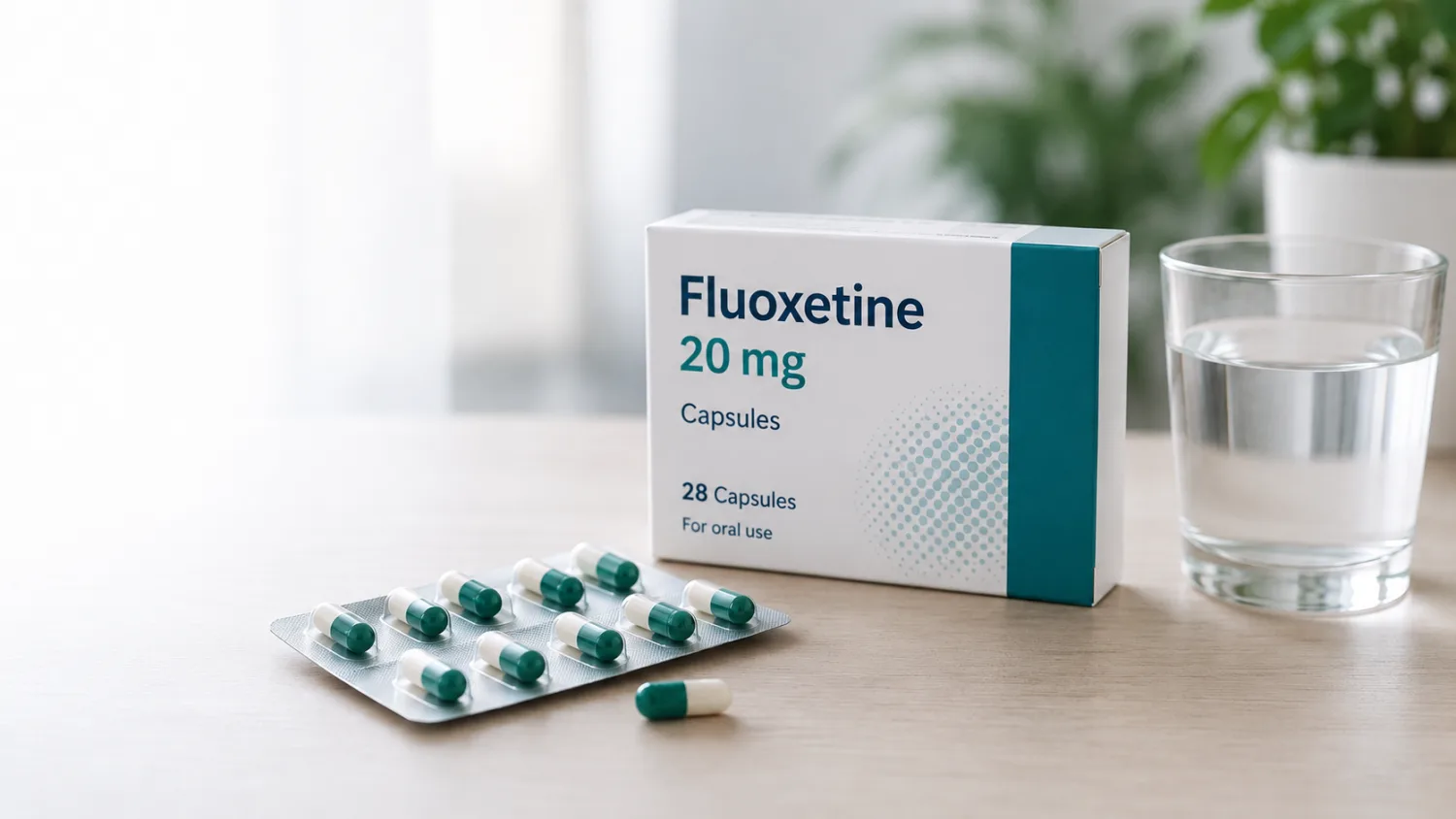
Fluoxetine is a selective serotonin reuptake inhibitor, or SSRI, antidepressant used to treat depression and several other mental health conditions. It is also widely known by the former brand name Prozac.
One of the most important things to understand before starting fluoxetine is that side effects can appear before the benefits do. Some people notice nausea, headache, disrupted sleep, increased anxiety or a slightly “wired” feeling during the first few days, while improvement in mood or obsessive thoughts takes several weeks.
That early mismatch can be unsettling. A person may wonder whether the medicine is making them worse when their body is still adjusting. For many people, the initial side effects become milder over the first couple of weeks. For others, they remain troublesome enough to justify changing the dose or trying another antidepressant.
Fluoxetine also stays in the body much longer than most SSRIs. This has advantages: missing a single dose is less likely to produce sudden withdrawal symptoms. It also means that side effects, interactions and dose changes can take longer to appear or disappear.
Seek urgent mental health help if you develop new or worsening suicidal thoughts, feel unable to keep yourself safe, become severely agitated, or experience a sudden major deterioration after starting fluoxetine or changing the dose.
Call 999 or go to A&E if there is immediate danger, a suicide attempt or overdose, severe difficulty breathing, collapse, a prolonged seizure, or severe confusion with high temperature, muscle rigidity or shaking.
Contact NHS 111 or your prescriber urgently for possible serotonin syndrome, mania, unexplained severe bleeding, black stools or other serious side effects.
What is fluoxetine and what is it used for?
Fluoxetine is an antidepressant from the selective serotonin reuptake inhibitor family.
SSRIs increase serotonin signalling between nerve cells by reducing the amount of serotonin that is taken back up after release. The biological explanation is more complicated than the popular idea of simply “correcting low serotonin”, and depression is not diagnosed by measuring serotonin levels.
In the UK, fluoxetine is used for conditions including:
- depression;
- obsessive compulsive disorder, or OCD;
- bulimia nervosa;
- depression in some children and young people under specialist guidance.
Clinicians may also use it in selected circumstances for other conditions where an SSRI is appropriate.
Why might a doctor choose fluoxetine?
Fluoxetine can be a useful option when someone wants an SSRI that is generally less sedating than medicines such as mirtazapine.
It may be considered when:
- depression includes low energy or excessive sleeping;
- OCD symptoms are prominent;
- a previous SSRI has worked;
- avoiding weight gain or sedation is particularly important;
- withdrawal from a shorter-acting antidepressant has previously been difficult.
It is not necessarily the best choice for everyone. Someone with severe insomnia, marked agitation or significant early anxiety may tolerate another antidepressant better.
Our guide to mirtazapine and its common side effects explains why a more sedating antidepressant may suit a very different symptom pattern.
Is Prozac the same as fluoxetine?
Yes. Prozac is a brand name for fluoxetine. Generic fluoxetine contains the same active medicine.
Different manufacturers may use different inactive ingredients, capsule designs or tablet coatings, but the active drug is fluoxetine.
Is fluoxetine a strong antidepressant?
“Strong” is not a particularly useful way to compare antidepressants.
The right medicine depends on:
- the condition being treated;
- previous response;
- side effects;
- other medicines;
- physical health;
- pregnancy considerations;
- individual preference.
A medicine that works very well for one person may be ineffective or poorly tolerated by another.
How long does fluoxetine take to work?
Fluoxetine does not work immediately.
The NHS advises that it can take several weeks before symptoms begin to improve. NICE recommends explaining that, when an antidepressant is going to work, benefit is generally expected within about 4 weeks.
This does not mean that nothing changes before week four. Improvement often develops gradually.
The first few days
Early effects may include:
- nausea;
- looser stools or diarrhoea;
- headache;
- reduced appetite;
- difficulty sleeping;
- feeling slightly restless or jittery;
- increased anxiety;
- dizziness;
- tiredness in some people.
These are adjustment effects rather than evidence that the antidepressant has already treated the underlying condition.
Week one
During the first week, some people feel little different. Others notice that side effects are more obvious than any benefit.
It is particularly important to monitor:
- agitation;
- significant worsening of anxiety;
- new suicidal thoughts;
- major sleep disruption;
- unusual impulsivity;
- marked changes in behaviour.
NICE recommends particularly close early monitoring in people aged 18 to 25 and anyone considered at increased risk of suicide.
Weeks two to four
Early improvement may begin to appear.
This can be subtle. Someone may notice:
- getting out of bed slightly more easily;
- less constant negative thinking;
- reduced crying;
- greater ability to concentrate;
- slightly less anxiety;
- more interest in ordinary activities;
- obsessive thoughts becoming easier to disengage from.
Recovery usually does not feel like waking up suddenly happy.
Weeks four to six
By this stage, the overall direction should be easier to judge.
If there has been no meaningful benefit, the prescriber may review:
- whether the dose is adequate;
- whether fluoxetine is being taken consistently;
- whether the diagnosis needs reconsidering;
- whether psychological treatment should be added;
- whether another antidepressant would be more suitable.
OCD may require a longer treatment period before the full response becomes clear.
Can it take longer than six weeks?
Yes. Different symptoms improve at different rates.
However, endlessly continuing an ineffective dose without review is not useful. Treatment should be actively reassessed rather than simply repeated.
What should you expect when starting fluoxetine?
Fluoxetine can feel more activating than some other antidepressants.
For one person this may mean improved daytime alertness. For another it may mean restless sleep, internal tension or feeling unusually wired during the first weeks.
Increased anxiety at first
SSRIs can temporarily increase anxiety when treatment begins.
This may feel like:
- butterflies or nervousness;
- physical restlessness;
- feeling more on edge;
- increased awareness of the heartbeat;
- difficulty relaxing;
- temporary worsening of panic symptoms.
This does not happen to everyone and often settles as treatment continues.
Marked or prolonged agitation should be discussed with the prescriber rather than simply tolerated.
People taking fluoxetine for anxiety may find our wider guide to anxiety disorders and treatment options useful.
Feeling restless
Some people develop a strong feeling that they cannot sit still.
Mild restlessness may settle, but severe internal agitation can represent akathisia, a clinically important medicine side effect.
Seek prompt medical advice if you feel compelled to pace constantly, cannot remain seated or experience severe distress after starting or increasing fluoxetine.
Sleep changes
Fluoxetine may cause:
- difficulty falling asleep;
- lighter sleep;
- frequent waking;
- vivid dreams;
- daytime sleepiness in some people.
People who find it stimulating are often advised to take it earlier in the day, but follow the instructions from your prescriber.
Appetite changes
Some people initially feel less hungry or lose a little weight, particularly when nausea is present.
Longer-term weight changes are less predictable. Depression recovery itself can change appetite in either direction.
Feeling emotionally different
As depression improves, people may feel less overwhelmed by negative emotions.
A smaller number describe emotional blunting, where positive and negative emotions both feel reduced.
If you feel disconnected, emotionally numb or unlike yourself, discuss this during medication review.
Common side effects of fluoxetine
Not everyone experiences side effects. Many become milder after the first couple of weeks as the body adapts.
Nausea
Feeling sick is one of the most common early effects.
It may help to:
- take the medicine with or after food;
- eat smaller meals;
- avoid very rich food when nausea is strongest;
- drink enough fluid.
Persistent vomiting needs review because dehydration can become a problem.
Diarrhoea
SSRIs can increase gastrointestinal activity because serotonin also has important functions in the gut.
Drink enough fluid and seek advice if diarrhoea is severe, prolonged, bloody or accompanied by dehydration.
Constipation
Although diarrhoea is often associated with SSRIs, some people develop constipation instead.
Regular fluids, fibre and movement may help.
Headache
Headaches are common early in treatment and usually settle.
Do not repeatedly take large amounts of ibuprofen or aspirin without checking with a pharmacist because SSRIs can increase bleeding risk when combined with NSAIDs.
Dizziness
Get up slowly when standing and avoid driving until you know whether fluoxetine affects balance or concentration.
Dry mouth
Regular water, sugar-free chewing gum and good dental care may help.
Long-term dry mouth increases the risk of tooth decay, so persistent symptoms are worth discussing with a dentist or pharmacist.
Sweating
Some people sweat noticeably more, including at night.
Persistent drenching night sweats, particularly when accompanied by fever, unexplained weight loss or other symptoms, should not automatically be attributed to the medicine.
Tremor
A fine hand tremor can occur.
Severe shaking combined with agitation, fever, diarrhoea, muscle twitching or confusion needs urgent assessment for serotonin syndrome.
Blurred vision
Do not drive while your vision is affected.
Severe eye pain, halos around lights, headache and nausea can rarely indicate an acute glaucoma problem and require urgent assessment.
Sexual side effects: what people are often not warned about
Sexual side effects are important because they can significantly affect quality of life and relationships.
SSRIs including fluoxetine can cause:
- reduced sexual desire;
- difficulty becoming aroused;
- reduced genital sensation;
- delayed orgasm;
- difficulty reaching orgasm;
- erectile difficulties;
- delayed ejaculation.
These symptoms can occur in any gender.
Depression itself can affect sex
Low libido is also a common symptom of depression.
This can make it difficult to know whether sexual difficulties come from the illness, the medicine or both.
A useful clue is timing. If sexual function worsens clearly after starting or increasing fluoxetine while mood improves, the medicine becomes a more likely contributor.
Do sexual side effects improve?
They sometimes become less noticeable with time, but they can persist throughout treatment.
Do not assume that nothing can be done.
A clinician may consider:
- waiting if the symptom is mild and treatment has just started;
- adjusting the dose;
- changing antidepressant;
- addressing another contributor such as hormonal or vascular problems;
- using additional treatment in selected situations.
Do not skip tablets before sex
Fluoxetine remains in the body for a long time, so missing one dose is unlikely to reverse sexual effects immediately.
Irregular dosing can also destabilise treatment.
Can sexual side effects continue after stopping?
Persistent sexual dysfunction after stopping an SSRI has been reported, although it appears to be uncommon and its exact frequency is uncertain.
Discuss persistent symptoms with a clinician rather than assuming they are permanent.
Serious side effects and warning signs
Serious reactions are uncommon, but certain symptoms should not be ignored.
Suicidal thoughts
Depression itself can cause suicidal thinking, and risk may temporarily change when antidepressant treatment starts or the dose changes.
NICE advises people and families to watch for:
- new suicidal thoughts;
- increased hopelessness;
- agitation;
- unusual negativity;
- major behavioural change.
Contact the prescriber or urgent mental health service if these appear.
Call 999 or go to A&E if there is immediate danger or you cannot keep yourself safe.
Serotonin syndrome
Serotonin syndrome is a rare but potentially serious reaction caused by excessive serotonergic activity.
Possible features include:
- agitation or confusion;
- rapid heartbeat;
- heavy sweating;
- high temperature;
- shaking;
- muscle twitching or jerking;
- muscle rigidity;
- diarrhoea;
- overactive reflexes;
- rapid deterioration.
Risk is greater when fluoxetine is combined with other serotonergic medicines or drugs.
Mania or hypomania
Fluoxetine can occasionally trigger or uncover mania in someone with bipolar disorder.
Warning signs include:
- needing very little sleep without feeling tired;
- extremely elevated or irritable mood;
- rapid speech;
- racing thoughts;
- unusually high confidence;
- reckless spending;
- sexual or other risk-taking;
- uncharacteristic grandiosity.
These symptoms require prompt medical assessment.
Bleeding
SSRIs can affect platelet function and increase bleeding risk.
Seek advice for:
- unexplained large bruises;
- frequent nosebleeds;
- blood in urine;
- vomiting blood;
- red or black stools;
- unusually heavy bleeding.
Risk can increase when fluoxetine is combined with aspirin, ibuprofen, naproxen, warfarin, apixaban and other medicines affecting clotting.
Low sodium
Fluoxetine can rarely contribute to hyponatraemia, particularly in older adults and people taking diuretics.
Possible symptoms include:
- headache;
- confusion;
- weakness;
- unsteadiness;
- vomiting;
- seizures in severe cases.
Seizures
People with epilepsy should tell their prescriber before starting treatment.
A first seizure requires urgent medical assessment. Call 999 for a seizure lasting 5 minutes or longer, repeated seizures without recovery or significant breathing difficulty or injury.
Severe allergic reaction
Call 999 for rapidly increasing swelling of the tongue, lips or throat, severe breathing difficulty, wheezing, collapse or another sign of anaphylaxis.
Dose, timing, alcohol and medicine interactions
Fluoxetine is usually taken once daily.
The exact dose depends on the condition being treated, age, response and side effects.
A common adult dose for depression is 20 mg daily, although lower starting doses or higher specialist doses may be used in some circumstances.
Morning or evening?
If fluoxetine interferes with sleep, taking it in the morning may be more comfortable.
If it makes you tired, the timing may need individual adjustment.
Take it at approximately the same time each day unless your prescriber advises otherwise.
With or without food?
Fluoxetine can be taken with or without food.
Taking it with food may make nausea easier for some people.
What if you forget a dose?
Take the forgotten dose when you remember unless it is nearly time for the next one.
If the next dose is due soon, skip the missed dose.
Do not double the dose.
Can you drink alcohol?
The NHS advises that it is best to avoid alcohol while taking fluoxetine because it may increase side effects such as drowsiness.
Alcohol can also worsen depression, anxiety and sleep even when it does not produce an obvious drug interaction.
Ibuprofen, aspirin and naproxen
These anti-inflammatory medicines can increase bleeding risk when combined with an SSRI.
Occasional use may still be appropriate for some people, but check with a pharmacist when:
- you use them regularly;
- you have had a stomach ulcer;
- you take anticoagulants;
- you bruise or bleed easily;
- you are older or medically frail.
Anticoagulants
Tell the prescriber if you take medicines such as:
- warfarin;
- apixaban;
- rivaroxaban;
- dabigatran;
- edoxaban.
The combination does not always need to be avoided, but bleeding risk must be considered.
Tramadol and opioids
Some opioid medicines can increase serotonin activity and may increase the risk of serotonin syndrome.
Tell any doctor or pharmacist prescribing pain relief that you take fluoxetine.
St John’s wort
Do not combine fluoxetine with St John’s wort. It can increase side effects and serotonin-related risk.
MAO inhibitors
Fluoxetine interacts dangerously with monoamine oxidase inhibitors.
Its long half-life makes this particularly important. UK product information advises waiting at least 5 weeks after stopping fluoxetine before starting an irreversible non-selective MAOI.
Switches involving these medicines must be managed by a clinician.
Tamoxifen
Fluoxetine can interfere with the metabolism of tamoxifen, a medicine used in breast cancer treatment.
Tell the oncology or prescribing team if you are taking either medicine.
Stopping fluoxetine and withdrawal symptoms
Fluoxetine has one major difference from many other SSRIs: it and its active metabolite remain in the body for a long time.
This means withdrawal symptoms are generally less abrupt than with shorter-acting antidepressants such as paroxetine or venlafaxine.
It does not mean fluoxetine should always be stopped without guidance.
What can withdrawal feel like?
Possible symptoms include:
- dizziness;
- irritability;
- anxiety;
- sleep disturbance;
- vivid dreams;
- headache;
- flu-like sensations;
- unusual sensory symptoms;
- low mood.
Because fluoxetine leaves the body slowly, withdrawal may begin later than expected.
Is withdrawal the same as addiction?
No.
Fluoxetine does not usually produce craving, intoxication or compulsive drug-seeking behaviour.
Withdrawal occurs because the nervous system has adapted to regular exposure to the medicine.
How should fluoxetine be stopped?
NICE advises discussing stopping with the prescriber and reducing antidepressants in stages.
Because of fluoxetine’s unusually long duration of action, NICE notes that some people taking 20 mg daily may use alternate-day dosing as part of a supervised reduction, while higher doses generally require a more gradual schedule.
This is different from many other antidepressants, where alternate-day dosing is often unhelpful because drug levels fluctuate too sharply.
Do not design your own taper without discussing it with the prescriber.
How long should you stay on fluoxetine?
For depression, treatment commonly continues for at least several months after symptoms have improved.
NICE advises that antidepressant treatment may need to continue for at least 6 months after remission, with regular review.
Longer treatment may be recommended when depression is:
- recurrent;
- severe;
- associated with previous suicide risk;
- slow to recover;
- likely to relapse because of ongoing circumstances.
Medication should not remain on repeat indefinitely without occasional discussion of whether it is still needed.
Pregnancy, breastfeeding and other health conditions
Pregnancy is not a reason to stop fluoxetine suddenly.
Untreated depression, OCD or another serious mental health condition can also affect pregnancy, self-care and postnatal wellbeing.
Pregnancy
The NHS says fluoxetine can be used during pregnancy when needed.
The prescriber should discuss:
- how severe the mental health condition is;
- how well fluoxetine has worked previously;
- possible pregnancy and newborn risks;
- risks of relapse if treatment is stopped;
- whether another medicine would offer a meaningful advantage.
Do not switch antidepressants simply because you discover you are pregnant without medical advice.
Breastfeeding
Fluoxetine can pass into breast milk and may be used in some situations, although another SSRI such as sertraline may sometimes be preferred.
The baby may be monitored for:
- unusual irritability;
- sleep changes;
- feeding difficulties;
- poor weight gain.
Epilepsy
Tell the prescriber if you have epilepsy or a history of seizures.
Any increase in seizure frequency needs review.
Diabetes
Fluoxetine can affect appetite, weight and blood glucose control in some people.
People with diabetes may need closer glucose monitoring when treatment starts or changes.
Heart disease
Tell your doctor about heart disease, fainting, rhythm problems or medicines affecting the heart.
An ECG is not necessary for every person taking fluoxetine, but individual risk factors can change prescribing decisions.
Glaucoma
People with glaucoma or risk of angle-closure glaucoma should discuss this before starting treatment.
Severe eye pain, blurred vision, coloured halos, headache and nausea require urgent medical assessment.
Older adults
Older people may be more vulnerable to:
- low sodium;
- falls;
- bleeding;
- medicine interactions;
- weight or appetite changes.
Regular medication review is particularly important when several medicines are being taken.
Fluoxetine compared with other antidepressants
Choosing an antidepressant is often about matching benefits and side effects to the person rather than ranking drugs from best to worst.
Fluoxetine vs sertraline
Both are SSRIs.
Sertraline is also commonly used for depression and anxiety disorders. Fluoxetine has a substantially longer half-life, meaning it remains in the body for longer and generally causes less abrupt withdrawal.
Both can cause nausea, sleep changes and sexual side effects.
See our guide to what to expect in the first weeks of sertraline.
Fluoxetine vs mirtazapine
The side-effect profiles are noticeably different.
Mirtazapine is often:
- more sedating;
- more likely to increase appetite;
- more associated with weight gain;
- less likely to cause some SSRI-type sexual side effects.
Fluoxetine may be:
- more activating;
- more likely to cause nausea or diarrhoea initially;
- more likely to cause sexual dysfunction;
- more likely to interfere with sleep in some people.
Someone with depression, severe insomnia and weight loss may therefore have different priorities from someone who already sleeps excessively and is concerned about appetite.
Fluoxetine vs citalopram or escitalopram
All are SSRIs, but they differ in interactions, half-life and individual tolerability.
Citalopram and escitalopram have greater relevance to QT-related heart-rhythm concerns at higher doses or in vulnerable people, whereas fluoxetine has particularly important interactions involving its long half-life and liver-enzyme effects.
Which antidepressant causes least weight gain?
Average weight effects differ between medicines, but individual responses vary too much to guarantee what will happen to one person.
Weight should be considered alongside symptom control, sleep, sexual effects, anxiety and other health risks.
Which causes fewer sexual side effects?
SSRIs frequently affect sexual function. Some non-SSRI antidepressants, including mirtazapine, may cause fewer sexual side effects for some people.
Changing medication purely to address this problem should still involve the prescriber because every alternative brings its own trade-offs.
Frequently asked questions about fluoxetine
What is fluoxetine used for?
It is an SSRI antidepressant used for depression, OCD and bulimia, as well as selected other conditions under medical guidance.
Is fluoxetine Prozac?
Yes. Prozac is a well-known brand name for fluoxetine.
How long does fluoxetine take to work?
Some improvement may begin within a few weeks. NICE advises that, when an antidepressant is going to work, benefits are generally expected within around four weeks, although full improvement can take longer.
Can fluoxetine work in the first week?
Some subtle changes may appear, but it is usually too early to judge the full antidepressant effect.
Why do I feel worse after starting fluoxetine?
Early nausea, anxiety, insomnia or agitation can occur before the benefit develops. Significant deterioration, prolonged agitation or suicidal thoughts require prompt medical advice.
Can fluoxetine increase anxiety?
Yes, particularly during the first days or weeks. This often settles but should be reviewed if severe.
Can it cause panic attacks at first?
Temporary activation can worsen panic symptoms in susceptible people. The prescriber may use a lower starting dose in some circumstances.
Can fluoxetine make you tired?
Yes, although it can also cause insomnia or feel activating. People respond differently.
Is it better to take fluoxetine in the morning?
Morning dosing may help when it interferes with sleep. Follow your prescription and discuss timing if side effects are troublesome.
Can I take it at night?
Yes, if advised and it does not disrupt sleep. The important point is to take it consistently.
Does fluoxetine cause insomnia?
It can. Taking it earlier in the day may help some people.
Does fluoxetine cause vivid dreams?
Some people notice more vivid or unusual dreams.
Does fluoxetine cause weight gain?
Weight can increase or decrease. Reduced appetite or mild weight loss may occur early, while longer-term effects vary.
Does fluoxetine reduce appetite?
It can, particularly when nausea is present during the first weeks.
Does fluoxetine cause sexual problems?
Yes. Reduced libido, delayed orgasm, erectile difficulties and difficulty reaching orgasm are recognised SSRI side effects.
Will sexual side effects go away?
They may improve, but they can continue during treatment. Discuss persistent problems because treatment options exist.
Does fluoxetine make you emotionally numb?
Some people report emotional blunting. Depression can also cause numbness, so timing and response to treatment matter.
Can fluoxetine make you more confident?
It is not a confidence-enhancing drug, but treating depression or anxiety may make social interaction and decision-making easier.
Can fluoxetine change your personality?
It should not fundamentally change who you are. Feeling markedly unlike yourself is a reason to review the treatment.
Can fluoxetine cause mania?
Rarely, antidepressants can trigger mania or hypomania, particularly in someone with bipolar disorder.
Can fluoxetine cause psychosis?
New hallucinations, paranoia or severe thought disturbance are not ordinary expected effects and require urgent medical assessment.
Can fluoxetine cause serotonin syndrome?
Rarely, particularly when combined with other serotonergic medicines or recreational drugs.
Can I drink alcohol?
The NHS advises that it is best not to drink alcohol while taking fluoxetine because it can increase side effects and may worsen mental health.
Can I drink coffee?
There is no standard prohibition, but caffeine can worsen early anxiety, tremor or insomnia. Reducing intake may help if these symptoms appear.
Can I take paracetamol?
Paracetamol is generally a more straightforward pain-relief option than regular NSAIDs for many people taking SSRIs, but follow dosing instructions and consider other medical conditions.
Can I take ibuprofen?
The combination can increase bleeding risk. Occasional use may be appropriate for some people, but ask a pharmacist if you use ibuprofen regularly or have other bleeding risks.
Can I take naproxen?
Naproxen is also an NSAID and can increase gastrointestinal bleeding risk when combined with an SSRI. Check with a pharmacist or prescriber.
Can I take St John’s wort?
No. It should not be combined with fluoxetine because serotonin-related side effects and interactions can increase.
What happens if I miss a dose?
Take it when you remember unless it is nearly time for the next dose. Do not double up.
What happens if I take too much?
Contact NHS 111 if you take more than the prescribed dose. Severe symptoms or intentional overdose may require emergency care.
Is fluoxetine addictive?
No in the usual sense of addiction, but the body adapts to antidepressants and withdrawal symptoms can occur when treatment is stopped.
Is fluoxetine easier to stop than other SSRIs?
Often, because it leaves the body slowly. Withdrawal can still occur and stopping should be discussed with the prescriber.
Why does fluoxetine stay in the body for so long?
Fluoxetine and its active metabolite norfluoxetine have long elimination half-lives. This means their levels fall gradually over days and weeks rather than hours.
How long after stopping fluoxetine can interactions continue?
For some medicines, clinically important interactions can continue for weeks. An important example is the requirement for a substantial washout period before certain MAOI antidepressants.
Can I take fluoxetine during pregnancy?
It can be used when clinically appropriate. Discuss the risks of treatment and of untreated mental illness with the prescriber rather than stopping suddenly.
Can I breastfeed while taking fluoxetine?
It may be possible, although another antidepressant may sometimes be preferred. Individual advice is needed.
How long should I stay on fluoxetine after feeling better?
For depression, treatment often continues for at least six months after remission, with longer treatment considered when relapse risk is high.
When should I contact my doctor?
Arrange review if side effects remain troublesome, symptoms worsen, there is no meaningful improvement after an adequate trial, sexual effects become unacceptable, or you want to change or stop treatment.
When is fluoxetine an emergency?
Seek emergency help for immediate suicide risk, severe allergic reaction, prolonged seizure, severe serotonin syndrome, major bleeding, collapse or another life-threatening reaction.