Measles is a highly contagious viral infection that usually begins with a high temperature, cough, runny nose and red, watery eyes before a blotchy rash develops. It is sometimes described as an ordinary childhood rash, but that description understates the illness. Measles can cause pneumonia, seizures, dehydration and inflammation affecting the brain, and a small number of people develop life-threatening complications.
The infection is now less familiar to many UK parents because vaccination previously made it uncommon. When cases increase, the earliest symptoms can easily be mistaken for a cold, flu or another viral infection. The combination of fever, cough, sore red eyes and a rash beginning around the face or behind the ears should therefore be taken seriously, particularly in someone who has not received two measles-containing vaccine doses or has recently been exposed to a confirmed case.
There is no routine medicine that removes the measles virus. Care focuses on fluids, rest, fever and pain relief, and early recognition of complications. Anyone who may have measles should stay at home and telephone their GP practice or NHS 111 before visiting a clinic, pharmacy, hospital or other healthcare setting. Measles spreads extremely easily in waiting rooms and can be especially dangerous to babies, pregnant women and people with weakened immune systems.
Call 999 if a child or adult with suspected measles is struggling to breathe, difficult to wake, confused, having a seizure, turning blue, grey, very pale or blotchy, or has a rash that does not fade when pressed alongside serious illness.
Seek urgent medical advice for signs of dehydration, severe headache, neck stiffness, repeated vomiting, worsening breathlessness, severe chest pain, unusual weakness, extreme drowsiness, ear pain with significant illness or a fever that is not settling.
Do not walk into a GP surgery, pharmacy, urgent-treatment centre or A&E without warning. Telephone first and explain that you suspect measles so arrangements can be made to reduce exposure to other patients.
What is measles?
Measles is caused by the measles virus. It infects the respiratory tract before spreading through the body and producing the characteristic fever, eye symptoms and rash.
The infection is transmitted through the air and through respiratory droplets released when an infected person coughs, sneezes, talks or breathes. The virus can remain in the air of an enclosed space after the infected person has left, which is one reason measles spreads more efficiently than many other childhood infections.
Most people recover, but the illness places substantial demands on the immune system. It can temporarily reduce the body’s ability to fight other infections, making bacterial ear infections and pneumonia more likely during or after the acute illness.
Who can catch measles?
Anyone who is not immune can catch it. Immunity usually comes from:
- having received two appropriately timed doses of a measles-containing vaccine;
- having had laboratory-confirmed measles in the past;
- occasionally, evidence from a blood test showing protective antibodies.
One vaccine dose provides substantial protection, but two doses are recommended because a small proportion of people do not develop adequate immunity after the first.
Measles can affect babies, children, teenagers and adults. Adults who missed vaccination when younger can still become infected and may experience significant illness.
Can someone catch measles twice?
Natural measles infection usually produces long-lasting immunity, so a second primary infection is uncommon. Breakthrough infections can occur in previously vaccinated people, but they are much less common and may be milder.
A previous self-diagnosed “measles-like rash” does not prove immunity because many childhood infections cause similar rashes. Vaccination records or laboratory confirmation are more reliable.
Why are cases still occurring?
Measles needs very high vaccination coverage to prevent sustained spread because it is so infectious. When enough children and adults remain unvaccinated or partly vaccinated, the virus can move quickly through families, schools and communities.
UKHSA reported continuing measles transmission across England during 2026, making it important for families to check vaccination records rather than assuming the disease has disappeared.
What are the symptoms of measles?
Symptoms usually appear around one to two weeks after exposure, although the exact timing varies. The illness generally develops in stages rather than beginning with the full rash immediately.
The first stage often resembles a heavy cold or flu-like infection. A person may develop:
- a high temperature;
- a persistent cough;
- a runny or blocked nose;
- sneezing;
- red, sore or watery eyes;
- sensitivity to bright light;
- tiredness and irritability;
- poor appetite;
- general aches or feeling very unwell.
The cough, runny nose and inflamed eyes occurring together are particularly characteristic, although no single symptom confirms the diagnosis.
Red and watery eyes
Measles commonly causes conjunctivitis. The whites of the eyes may appear pink or red, and the child may complain that light hurts or repeatedly turn away from windows and lamps.
Mild light sensitivity can occur with measles, but severe eye pain, marked visual change or an inability to tolerate any light needs urgent assessment because another serious eye or neurological problem may be present.
Koplik spots inside the mouth
Small white or bluish-white spots may appear inside the cheeks, often opposite the back teeth. They are known as Koplik spots and may look like tiny grains of salt on a red background.
They usually appear shortly before the skin rash and last only a few days. Because they are small and temporary, parents may never notice them.
Do not repeatedly force a distressed child’s mouth open to search for spots. Their absence does not rule out measles.
How high is the temperature?
The temperature may be high and can rise again around the time the rash appears. The child’s overall condition matters as much as the number.
A responsive child who is drinking and breathing comfortably is less concerning than a child with a lower measured temperature who is difficult to wake, dehydrated or struggling to breathe.
Any baby under 3 months with a temperature of 38°C or higher requires urgent medical advice. A baby aged 3 to 6 months with a temperature of 39°C or higher should also receive urgent advice.
What does the measles rash look like?
The rash normally appears a few days after the cold-like symptoms begin. By the time it is visible, the person may already have been infectious for several days.
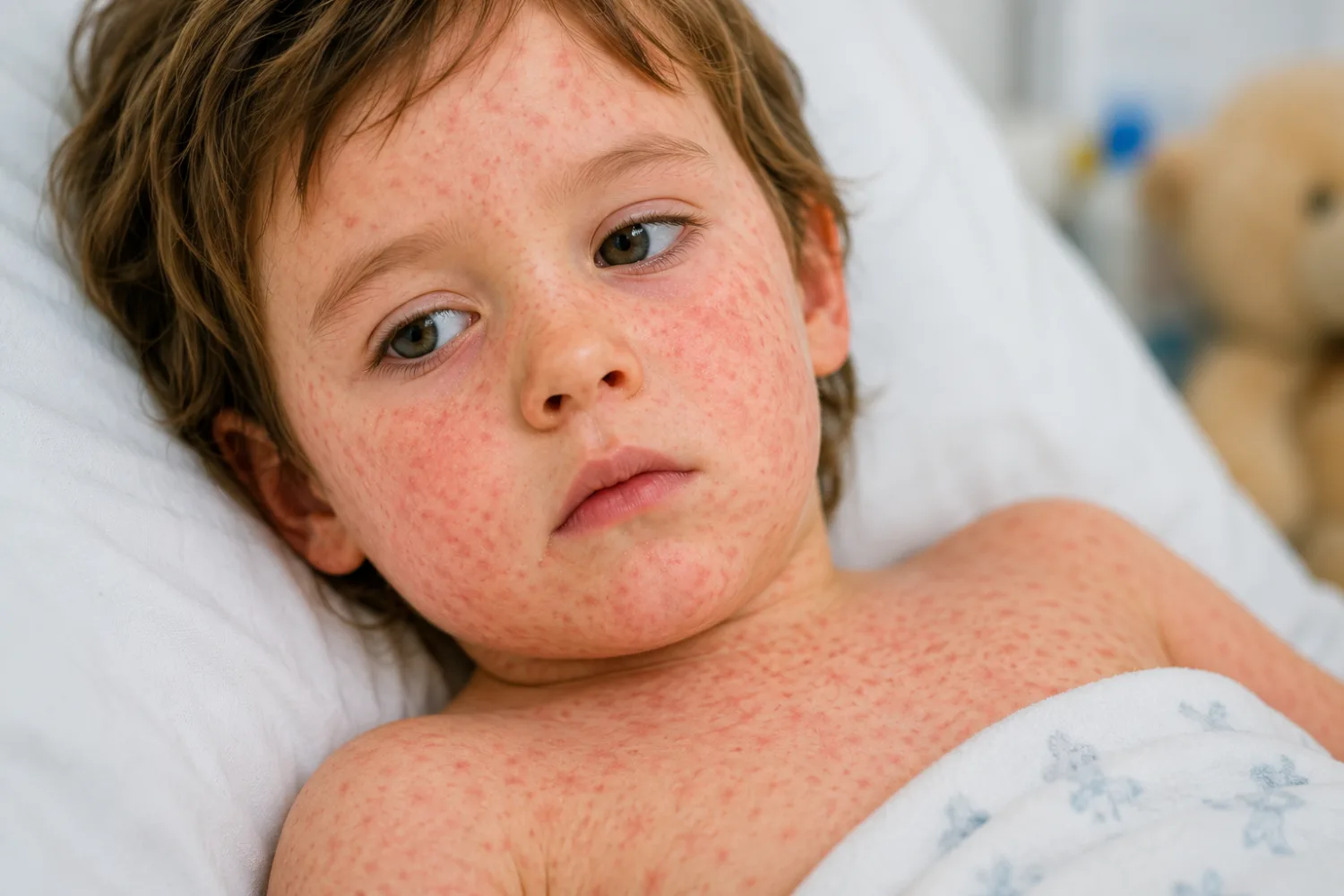
Measles commonly begins around the hairline, forehead, face or behind the ears. It then spreads downwards over the neck, upper body, arms and legs.
The spots are usually:
- red, red-brown, purple or darker than the surrounding skin;
- flat or slightly raised;
- blotchy rather than individually blistered;
- able to join together into larger patches;
- usually not intensely itchy.
The rash may become widespread, but the skin usually remains intact. Measles does not normally produce crops of fragile fluid-filled blisters like chickenpox.
What does measles look like on brown or black skin?
Redness may be less obvious on darker skin. The rash may appear purple, brown, grey or slightly darker than the surrounding skin rather than bright red.
Good natural light can help. Look for changes in texture and colour across the face, hairline and upper body rather than expecting a vivid red rash.
Other symptoms—particularly fever, cough, runny nose and sore watery eyes—remain important regardless of skin tone.
Does the rash fade when pressed?
A typical measles rash often lightens temporarily when pressed, particularly early in its development. This is known as blanching.
However, parents should not use a glass test to diagnose measles. A child who is seriously unwell with a red, purple or bruise-like rash that does not fade when pressed needs emergency assessment for conditions such as meningococcal infection or sepsis.
Can measles occur without a rash?
Atypical or modified infections can occasionally have a less obvious rash, particularly in someone with partial immunity. In most ordinary cases, however, the characteristic rash develops after the initial respiratory symptoms.
Does the rash peel?
As the illness resolves, the rash fades in approximately the same order in which it appeared. Fine flaking or mild peeling can sometimes follow, and temporary darker marks may remain on the skin.
Significant blistering, open sores, rapidly spreading skin pain or pus suggests another condition or a secondary infection.
How is measles different from other childhood rashes?
No parent is expected to diagnose every rash by appearance alone. The sequence of symptoms and the child’s general condition are often more useful than the colour of individual spots.
Measles versus hand, foot and mouth disease
Hand, foot and mouth disease usually causes painful mouth ulcers together with spots or small blisters on the palms, soles and sometimes the buttocks or nappy area.
Measles is more likely to begin with a high temperature, cough, runny nose and red watery eyes. Its rash usually starts around the face or behind the ears before spreading downwards.
Read our guide to hand, foot and mouth disease symptoms and care for a fuller comparison.
Measles versus chickenpox
Chickenpox typically produces itchy spots that develop into fluid-filled blisters and then crust over. New spots appear in crops, so several stages may be visible at the same time.
The measles rash is flatter, more blotchy and does not usually contain clear fluid.
Measles versus scarlet fever
Scarlet fever often begins with a sore throat and fever. Its rash feels rough like sandpaper and commonly starts on the chest or abdomen before spreading.
The tongue may become red and bumpy. Scarlet fever is caused by group A streptococcal bacteria and normally requires antibiotic treatment.
Measles versus rubella
Rubella can cause a milder pink rash, swollen lymph nodes and a low-grade illness. It may be difficult to distinguish clinically from other viral rashes.
Rubella is particularly important during pregnancy because it can harm the developing baby. Suspected exposure or rash illness during pregnancy should be discussed urgently with maternity services.
Measles versus roseola
Roseola mainly affects babies and toddlers. It often causes several days of high fever that improves suddenly just as a pink rash appears on the trunk.
With measles, the child usually remains unwell as the rash begins, and cough, coryza and red eyes are more prominent.
Measles versus an allergic rash
Hives caused by allergy are usually raised, itchy and mobile, with individual welts appearing and disappearing over hours.
Measles spots remain in place and occur with a febrile respiratory illness. Facial swelling, wheezing, breathing difficulty or swelling of the lips or tongue suggests a severe allergic reaction and requires emergency help.
How does measles spread?
Measles spreads through airborne particles and respiratory droplets. A susceptible person can become infected after sharing indoor air with someone who has measles, even without touching them.
Transmission is especially likely in:
- households;
- nurseries and schools;
- healthcare waiting rooms;
- public transport;
- places of worship;
- parties and family gatherings;
- other crowded indoor spaces.
Because the virus spreads before the rash appears, a person may attend school, work or appointments during the most infectious early stage while believing they have an ordinary cold.
When is someone infectious?
UKHSA considers people with primary measles infectious from 4 full days before the rash begins until 4 full days after its onset. Infectiousness is often greatest during the early phase when fever, cough and runny nose are present.
The day the rash starts is normally counted as day zero when public-health teams calculate the infectious period.
How long after exposure do symptoms begin?
Symptoms commonly begin around 10 days after exposure, with the rash appearing several days later. The interval can vary, so public-health teams may advise exposed people to monitor for symptoms over a defined period.
Can it spread from surfaces?
Airborne transmission is the main concern, but respiratory secretions can contaminate hands and objects. Handwashing, ventilation and respiratory hygiene remain sensible, although cleaning alone cannot compensate for lack of immunity.
How can transmission at home be reduced?
Someone with suspected measles should remain at home and avoid close contact with others, particularly:
- babies;
- pregnant women;
- people receiving chemotherapy;
- organ or bone-marrow transplant recipients;
- people taking substantial immune-suppressing medicines;
- anyone known to have a weakened immune system.
Open windows where practical, avoid visitors and do not share bedrooms when this can be managed safely. Follow any specific instructions from the health protection team.
How should measles be cared for at home?
There is no standard antiviral treatment for uncomplicated measles. Most people need supportive care while the immune system clears the infection.
The person should rest, drink regularly and receive suitable treatment for fever or discomfort. Parents should monitor breathing, alertness and hydration rather than focusing only on the rash.
Encourage fluids
Fever, faster breathing, poor appetite, vomiting and diarrhoea can all contribute to dehydration.
Offer frequent small amounts of:
- water;
- milk;
- usual breastfeeds or formula feeds;
- oral rehydration solution when advised;
- cool drinks preferred by the child.
A young child who refuses a full cup may accept a spoonful, syringe-sized amount or small sip every few minutes.
Signs of dehydration include fewer wet nappies, dark urine, dry mouth, no tears, sunken eyes and unusual sleepiness. See our guide to dehydration symptoms in adults and children.
Use suitable fever and pain relief
Paracetamol or ibuprofen may be used when appropriate for the person’s age and health and given according to the label or professional advice.
Do not give aspirin to anyone under 16 unless it has been specifically prescribed.
Ibuprofen may not be suitable for someone who is significantly dehydrated, has certain kidney or stomach conditions, or has previously reacted to it. Ask a pharmacist or clinician when uncertain.
Help sore eyes
Closing curtains or reducing bright light may make inflamed eyes more comfortable. Gently clean crusting from the eyelids with cooled boiled water and a clean pad, using a separate pad for each eye.
Do not share towels, flannels or eye products.
Severe eye pain, worsening light sensitivity or reduced vision is not something to manage solely at home.
Manage the cough comfortably
Encourage fluids and keep the room comfortably ventilated. Honey may soothe a cough in children over 1 year and adults.
Never give honey to a baby under 12 months because of the risk of infant botulism.
Over-the-counter cough and cold medicines are not suitable for all young children. Ask a pharmacist before using them.
Do antibiotics help?
Antibiotics do not treat measles because it is viral. They may be prescribed if a bacterial complication such as an ear infection or bacterial pneumonia develops.
Do not use leftover antibiotics or someone else’s prescription.
Should vitamin A be given?
Vitamin A is used as part of measles treatment in some countries and selected clinical situations, particularly where deficiency is common or illness is severe.
Parents in the UK should not give high-dose vitamin A without medical supervision. Excessive doses can be toxic and may cause liver damage, raised pressure around the brain and harm during pregnancy.
What complications can measles cause?
Many people recover without lasting harm, but it is impossible to predict from the first day who will develop a complication.
Commoner complications include:
- ear infection;
- diarrhoea;
- vomiting and dehydration;
- laryngitis or croup;
- chest infection or pneumonia;
- febrile seizures in young children.
Less common but serious complications can affect the brain, eyes, heart and other organs.
Pneumonia
Measles pneumonia may be caused directly by the virus or by a secondary bacterial infection.
Warning signs include:
- fast or difficult breathing;
- the ribs pulling in with each breath;
- persistent chest pain;
- blue or grey lips;
- grunting in a baby;
- inability to speak, drink or feed because of breathlessness;
- deterioration after seeming to improve.
Breathing difficulty requires urgent assessment, and severe breathing problems require a 999 call.
Ear infection
A child may develop increasing ear pain, discharge, reduced hearing or renewed fever.
Young children may pull at the ear, cry during feeding or become unusually irritable. Medical assessment is appropriate when pain is severe, discharge appears or the child is generally worsening.
Encephalitis and meningitis
Rarely, measles causes inflammation of the brain or tissues surrounding the brain and spinal cord.
Warning signs can include:
- severe headache;
- neck stiffness;
- confusion;
- unusual behaviour;
- extreme drowsiness;
- persistent vomiting;
- weakness or loss of coordination;
- seizures.
These symptoms require emergency assessment.
Eye complications
Measles can cause inflammation affecting the cornea and, in severe cases, sight. The risk is greater where malnutrition or vitamin A deficiency is present, but visual symptoms should always be taken seriously.
Subacute sclerosing panencephalitis
Subacute sclerosing panencephalitis, or SSPE, is a very rare progressive brain disorder that can develop years after measles infection.
It causes worsening neurological and cognitive problems and is usually fatal. The possibility of this delayed complication is one reason preventing the original infection matters, even though most children appear to recover fully.
Temporary weakening of immune memory
Measles can interfere with immune memory acquired from previous infections. This may leave someone more vulnerable to other illnesses for a period after recovery.
Who is at greater risk of severe measles?
Complications can occur in a previously healthy child, but certain groups deserve especially rapid assessment and public-health advice.
Babies and very young children
Babies may have little or no vaccine protection because they are too young to have completed the routine schedule. Maternal antibodies provide variable protection and decline during infancy.
Young infants are at increased risk of pneumonia, hospital admission and other complications.
Pregnant women
Measles during pregnancy can cause severe maternal illness and is associated with an increased risk of miscarriage, premature birth and pregnancy loss.
The measles-containing vaccines are live vaccines and are not routinely given during pregnancy. A pregnant person who has been exposed or develops possible symptoms should contact their maternity service, GP or NHS 111 urgently by telephone.
They should not enter a maternity unit or waiting room without warning.
People with weakened immune systems
Measles may be severe or atypical in people whose immune systems are suppressed by disease or treatment.
This includes some people receiving:
- chemotherapy;
- high-dose steroids;
- biological immune treatments;
- transplant medication;
- treatment for certain blood disorders;
- other substantial immunosuppressive therapy.
The rash may be less typical or even absent despite serious internal illness. Any exposure should be discussed urgently with the person’s specialist team.
Adults
Adults can develop more severe respiratory illness and may be more likely than children to require hospital care.
People who grew up when vaccination coverage was lower or who received only one dose should check their records.
People with malnutrition or vitamin deficiency
Malnutrition, particularly vitamin A deficiency, increases the risk of severe eye and respiratory complications. This is a major contributor to measles deaths globally.
What should you do if you suspect measles?
The first step is to reduce the chance of exposing others.
Stay at home and telephone:
- your GP practice;
- NHS 111;
- the relevant urgent-care service;
- 999 for a life-threatening emergency.
Tell them:
- that you suspect measles;
- when the symptoms began;
- when the rash appeared;
- whether the person has had one or two vaccine doses;
- whether there has been contact with a known case;
- whether anyone in the household is pregnant, an infant or immunosuppressed;
- whether there has been recent travel.
Why should you telephone before attending?
A person with measles can expose unvaccinated babies, pregnant women and immunosuppressed patients in a waiting room.
The healthcare service may arrange:
- a telephone or video assessment;
- an appointment at a specific time;
- entry through a separate door;
- assessment in a side room;
- a home or community testing arrangement;
- direct hospital review when necessary.
How is measles diagnosed?
The clinician considers the symptoms, vaccination history, exposure and appearance of the rash. Because several infections look similar, laboratory testing is normally used to confirm suspected cases.
Testing may involve an oral-fluid sample taken from the gum line. Blood, throat or urine tests may be used in particular circumstances.
Measles is a notifiable disease. Healthcare professionals must inform the local health protection team when they suspect it so contacts can be identified and protected.
What happens after exposure?
People who have had close contact may be contacted by the health protection team, school, workplace or healthcare service.
Advice depends on:
- the degree and timing of exposure;
- age;
- vaccination history;
- pregnancy;
- immune-system status;
- whether the person works with vulnerable patients.
Do not wait for symptoms before seeking advice if the exposed person is pregnant, under 1 year old or immunosuppressed. Post-exposure treatment is time sensitive.
Post-exposure vaccination and immunoglobulin
A measles-containing vaccine may be considered soon after exposure for susceptible people who can safely receive a live vaccine. Even when it is too late to prevent the current exposure, vaccination can protect against future contact.
Some vulnerable contacts may be offered human normal immunoglobulin or intravenous immunoglobulin. This provides temporary antibodies and aims to prevent or reduce severe disease.
The health protection and specialist teams decide who qualifies; it is not a routine treatment that can be requested or purchased independently.
Vaccination, school exclusion and preventing measles
Vaccination is the most effective way to prevent measles and its complications.
The NHS uses measles-containing vaccines as part of the childhood vaccination programme. Depending on a child’s date of birth and programme eligibility, this may be the combined MMRV vaccine, protecting against measles, mumps, rubella and chickenpox, or the MMR vaccine, protecting against measles, mumps and rubella.
Two doses are needed for the best long-term protection. Families should check the child’s personal child health record, NHS App where available, or GP vaccination record.
What if a child missed the vaccine?
Contact the GP practice. Catch-up vaccination is available through the NHS, and the doses do not usually need to be restarted simply because there has been a long gap.
Teenagers and adults who missed one or both doses can also ask about catch-up vaccination.
Can the vaccine cause measles?
The vaccine can occasionally cause a mild raised temperature or measles-like rash several days later as the immune system responds.
This is not ordinary contagious measles. The weakened vaccine virus does not spread in the same way as the wild measles virus.
Who cannot receive a live measles vaccine?
MMR and MMRV are live vaccines and are not suitable for everyone, including some people who are pregnant or severely immunosuppressed.
A clinician should review:
- pregnancy;
- immune-suppressing treatment;
- previous severe allergic reactions;
- recent blood products or immunoglobulin;
- other medical circumstances affecting live vaccination.
People who cannot be vaccinated depend partly on high uptake among everyone who can receive it.
How long should a child stay away from school or nursery?
Current UKHSA guidance says a person with measles should remain away from school, nursery or another children’s setting until 4 full days after the rash started.
The school or nursery should be informed because measles requires contact with the local health protection team. Some contacts may need urgent vaccination, medical assessment or temporary exclusion based on public-health advice.
A child should not return simply because four days have passed if they remain feverish or too unwell to participate normally.
Should unvaccinated siblings stay home?
Do not make this decision without advice. The health protection team may recommend vaccination, monitoring or temporary exclusion depending on the exposure and the sibling’s immunity.
Healthy vaccinated siblings may often continue attending, but individual public-health instructions take priority.
Can someone travel with suspected measles?
No one with suspected measles should use public transport or attend airports, stations, clinics or crowded places unless emergency arrangements have been discussed with healthcare services.
International travel may expose large numbers of people and complicate contact tracing.
Frequently asked questions about measles
What are the first signs of measles?
The illness usually begins with a high temperature, cough, runny or blocked nose and red, sore, watery eyes. The rash appears a few days later.
Where does the measles rash start?
It commonly begins on the face, hairline or behind the ears before spreading downwards over the neck, body, arms and legs.
Is the measles rash itchy?
It is not usually as itchy as chickenpox or hives, although some people experience mild itching or skin discomfort.
Does measles always cause a high temperature?
Fever is very common, but the exact temperature varies. Partly immune or immunosuppressed people can have less typical symptoms.
What are Koplik spots?
They are tiny white or bluish-white spots inside the cheeks that can appear shortly before the skin rash. They support the diagnosis but may be difficult to see and disappear quickly.
Can measles start with a cough?
Yes. Cough, runny nose and red watery eyes often begin before the rash.
How quickly does the rash spread?
It commonly spreads from the face and head downwards over one or several days.
Can vaccinated children get measles?
It is possible but uncommon, particularly after two doses. Breakthrough disease may be milder, although medical and public-health assessment is still required.
Can adults get measles?
Yes. Adults who lack immunity can catch it and may develop severe illness or pneumonia.
Can measles happen twice?
True repeat primary infection is uncommon because natural infection usually produces lasting immunity. Many people who believe they had measles in childhood actually had another rash illness.
How long is measles contagious?
A person is generally considered infectious from 4 full days before until 4 full days after the rash begins.
How long should a child stay off school?
UKHSA advises exclusion until 4 full days after the rash started. The setting must be informed, and public-health advice may affect close contacts.
Can measles spread before the rash?
Yes. People are infectious during the early cold-like stage, which is one reason the virus spreads so easily.
Can measles spread through the air?
Yes. Airborne spread is a major route, particularly in enclosed and poorly ventilated spaces.
Should I take my child directly to the GP?
No. Telephone the GP practice or NHS 111 first. They need to arrange assessment without exposing other patients.
How is measles tested?
An oral-fluid sample is commonly used. Other samples may be taken depending on the circumstances.
Do antibiotics treat measles?
No. Antibiotics do not kill the measles virus. They may be used when a bacterial complication develops.
Is there a medicine that cures measles?
There is no routine antiviral cure for uncomplicated measles. Treatment focuses on fluids, symptom relief and management of complications.
Should vitamin A be given?
High-dose vitamin A should only be given under medical guidance. Excessive supplementation can be harmful.
What can a child eat?
Offer normal foods according to appetite. Cool drinks, soft foods and smaller meals may be easier when the throat is sore. Fluids are the priority if appetite is temporarily reduced.
Can a child bathe with measles?
Yes, if they feel well enough and the water is comfortable. Bathing does not spread the rash or drive the infection deeper into the body.
Can measles cause diarrhoea?
Yes, especially in young children. Diarrhoea increases the risk of dehydration.
Can measles cause ear infections?
Yes. Increasing ear pain, discharge, hearing change or renewed fever should be assessed.
Can measles cause pneumonia?
Yes. Pneumonia is one of its most serious complications. Fast or difficult breathing, chest pain or blue-grey lips require urgent help.
Can measles affect the brain?
Rarely, it can cause encephalitis or meningitis during the acute illness. A very rare progressive brain disorder called SSPE can develop years later.
Is measles dangerous during pregnancy?
It can cause severe maternal illness and increases the risk of pregnancy loss and premature birth. A pregnant person who is exposed or symptomatic should seek urgent telephone advice.
What should an immunosuppressed person do after exposure?
Contact the specialist team or NHS 111 urgently, even without symptoms. Assessment for immunoglobulin treatment may be time sensitive.
Can babies be protected after exposure?
Some exposed infants may qualify for immunoglobulin or an early vaccine dose depending on their age and circumstances. The health protection team will advise.
Is MMR safe?
MMR has been used for decades and has a strong safety record. The risks from measles are much greater than the usual temporary vaccine side effects.
Does MMR cause autism?
No. Large studies have found no causal link between MMR vaccination and autism. The original claim was based on discredited research that was withdrawn.
What if I do not know whether my child had two doses?
Check the red book, NHS App or GP record. Contact the GP practice when records are incomplete. Receiving an additional dose is generally preferable to remaining unprotected, but the vaccination team should advise.
When should I call NHS 111?
Call NHS 111 when you suspect measles, particularly if the person is becoming more unwell, drinking poorly, breathing faster, has a persistent fever or belongs to a higher-risk group.
When should I call 999?
Call 999 for severe breathing difficulty, blue or grey colour, collapse, difficulty waking, confusion, a prolonged seizure, serious weakness or another life-threatening symptom.