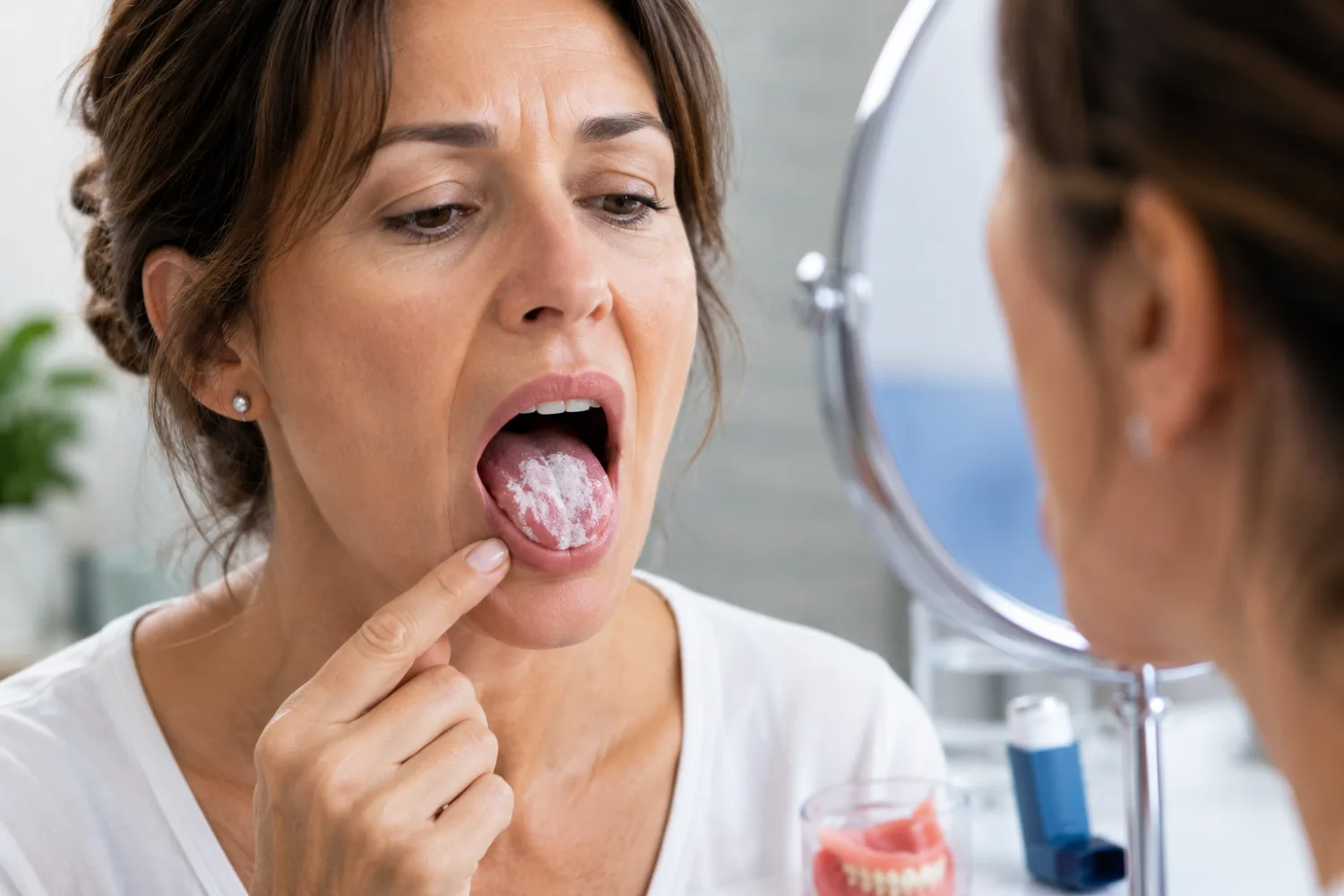
Oral thrush is a fungal infection that develops when yeasts called Candida grow excessively inside the mouth. It can cause creamy white patches, a sore red mouth, altered taste, cracks at the corners of the lips and discomfort when eating or drinking.
Candida is not an unusual organism picked up from an unclean surface. Small amounts commonly live harmlessly in the mouth. Thrush appears when the normal balance changes and the yeast gains an opportunity to multiply. Antibiotics, inhaled steroid medicines, dentures, dry mouth, diabetes and reduced immunity are among the factors that can create that opportunity.
Most cases respond well to antifungal treatment, but clearing the visible infection is only half of the job. If an inhaler is being used incorrectly, dentures remain contaminated or an underlying condition is affecting the mouth, thrush may return soon after treatment ends.
White patches are not always thrush. Mouth ulcers, irritation, lichen planus, leukoplakia and early mouth cancer can sometimes produce pale or persistent changes. A patch that cannot be gently wiped away, repeatedly bleeds or remains after treatment needs examination by a dentist or doctor.
Seek urgent medical help if mouth symptoms occur with severe difficulty swallowing, inability to swallow saliva, breathing difficulty, rapidly increasing swelling, severe dehydration or a person who is confused or seriously unwell.
Contact a GP, dentist or NHS 111 promptly if swallowing becomes painful, food feels stuck, symptoms extend into the throat, or oral thrush develops during chemotherapy, after an organ transplant or alongside substantial immune suppression.
Arrange an examination for any white, red or ulcerated mouth patch that does not resolve, cannot be wiped away, repeatedly bleeds or has persisted for more than three weeks.
What is oral thrush?
Oral thrush is also called oral candidiasis or oral candidosis. It most commonly involves Candida albicans, although other Candida species can occasionally cause infection.
These yeasts normally coexist with bacteria and other microorganisms in the mouth. Saliva, local immune defences, regular swallowing and the ordinary shedding of surface cells help keep their growth under control.
Thrush develops when that balance changes. This may happen because:
- helpful bacteria have been reduced by antibiotics;
- steroid medicine has weakened local immune activity;
- saliva production has fallen;
- dentures have created a warm, covered surface where yeast can grow;
- blood glucose is high;
- the wider immune system is suppressed;
- the mouth lining has become damaged or irritated.
The infection usually remains on the surface of the mouth. In people with substantial immune suppression, however, it can become more extensive and may involve the throat or oesophagus.
Is oral thrush contagious?
Oral thrush is not normally considered contagious in the same way as a cold, flu or strep throat. Candida already lives in many healthy mouths, and most people do not develop infection after ordinary social contact.
Sharing toothbrushes, dentures or oral-care equipment is still unhygienic and should be avoided. The purpose is to prevent transfer of saliva, bacteria and other infections rather than because adults routinely catch thrush from one another.
Is oral thrush a sexually transmitted infection?
No. Oral candidiasis is not classified as a sexually transmitted infection.
Close contact can move yeast between people, but whether an infection develops depends mainly on local conditions, medicines, immunity and other risk factors.
Is it caused by poor hygiene?
Not necessarily. Someone with excellent dental hygiene can develop thrush after antibiotics, steroid treatment or illness.
Poor denture hygiene and heavy plaque can contribute, but oral thrush should not be interpreted as evidence that a person has failed to look after themselves.
What does oral thrush look and feel like?
The classic presentation involves soft white or cream-coloured patches on a red surface. The patches may resemble cottage cheese, curdled milk or a thick coating.
They can appear on:
- the tongue;
- inside the cheeks;
- the roof of the mouth;
- the gums;
- the inner lips;
- around or beneath dentures;
- the back of the throat.
When a patch is gently wiped, some of the white material may come away and reveal tender red tissue underneath. The exposed surface may bleed slightly.
Not every case produces obvious white plaques. Some adults mainly develop a smooth, red, sore mouth.
Common symptoms
Possible symptoms include:
- creamy white patches;
- a red or inflamed mouth;
- burning or soreness;
- pain while eating;
- an unpleasant, metallic or altered taste;
- reduced ability to taste food;
- a cotton-like or coated feeling;
- cracks at the corners of the mouth;
- redness beneath dentures;
- mild bleeding after wiping a patch.
Symptoms can be surprisingly mild. Denture-related thrush may cause only diffuse redness beneath the fitting surface, and the person may not realise an infection is present.
Red oral thrush
Erythematous candidiasis causes red, smooth or burning areas rather than prominent white patches.
It may affect the tongue or palate and can appear after antibiotics or beneath dentures. The tongue may look unusually smooth because some of its tiny surface projections have been lost.
Angular cheilitis
Angular cheilitis causes painful cracks, redness or crusting at one or both corners of the mouth.
Candida may contribute, although bacteria, saliva pooling, poorly fitting dentures, iron deficiency and vitamin deficiencies can also be involved.
Treating only the visible crack may not work if denture height, nutritional deficiency or persistent moisture remains unaddressed.
Median rhomboid glossitis
This is a smooth, red, oval or diamond-shaped patch near the middle-back portion of the tongue. It is often associated with Candida, although it may cause no symptoms.
A dentist can confirm whether the appearance is typical or requires further investigation.
What causes oral thrush in adults?
Oral thrush often has more than one cause. A course of antibiotics may start the change, while dry mouth, smoking and dentures make it easier for the infection to persist.
Antibiotics
Antibiotics reduce susceptible bacteria throughout the body, including bacteria that normally compete with Candida in the mouth.
Broad-spectrum or prolonged treatment may therefore allow yeast to multiply. Thrush can develop during the course or shortly afterwards.
This does not mean an appropriately prescribed antibiotic was a mistake. It means the local microbial balance has changed as a recognised side effect.
Inhaled corticosteroids
Steroid inhalers are valuable treatments for asthma and chronic lung disease. Some of the medicine can remain in the mouth and throat, reducing local immune defence and encouraging thrush.
Risk may be higher when:
- the dose is high;
- inhaler technique is poor;
- a spacer is not used when appropriate;
- the mouth is not rinsed afterwards;
- dentures are worn;
- the person also has dry mouth or diabetes.
Do not stop a steroid inhaler because thrush has developed. Uncontrolled asthma can be dangerous. Ask a pharmacist, asthma nurse or clinician to review technique and whether a spacer is appropriate.
Oral steroid tablets and other immune-suppressing medicines
Long-term or high-dose corticosteroid tablets suppress immune activity throughout the body.
Other medicines that may increase susceptibility include:
- chemotherapy;
- some biological medicines;
- anti-rejection medicines after transplantation;
- treatments for autoimmune disease;
- certain cancer therapies.
People taking these treatments may require a different treatment plan and a lower threshold for specialist advice.
Dentures
Dentures cover the mouth lining and create a warm, moist environment. Yeast can adhere to the acrylic surface and repeatedly reintroduce infection after the mouth has been treated.
Risk is greater when dentures:
- are worn overnight;
- are not cleaned thoroughly;
- fit poorly and rub the tissues;
- are old, rough or porous;
- remain in place continuously;
- are combined with dry mouth.
The infection beneath a denture may look more red than white.
Dry mouth
Saliva washes the mouth, controls acidity and contains substances that limit microbial growth. Reduced saliva makes the mouth more vulnerable to thrush, tooth decay and soreness.
Dry mouth may result from:
- antidepressants and other medicines;
- dehydration;
- mouth breathing;
- Sjögren’s syndrome;
- radiotherapy to the head or neck;
- some cancer treatments;
- salivary-gland disease;
- age-related medicine burden.
Simply drinking more water does not always correct dry mouth when a medicine or salivary-gland disorder is responsible.
Diabetes
Persistently raised blood glucose can weaken immune responses and increase glucose in saliva, creating conditions that support yeast growth.
Repeated oral thrush may occasionally be one clue that diabetes is undiagnosed or poorly controlled, particularly when it occurs alongside:
- increased thirst;
- frequent urination;
- unexplained tiredness;
- blurred vision;
- recurrent infections;
- slow wound healing;
- unintentional weight loss.
Our guide to the early signs of type 2 diabetes explains when testing may be appropriate.
Smoking and vaping
Smoking changes the mouth environment, affects local immunity and increases the likelihood of several oral conditions, including candidiasis.
Vaping may also contribute to dryness and irritation, although the relationship with oral thrush is still being studied.
Nutritional deficiency
Iron, folate and vitamin B12 deficiency can alter the mouth lining and may contribute to soreness, angular cheilitis or susceptibility to infection.
Deficiency should not be assumed from appearance alone. Blood tests may be appropriate when symptoms recur or other signs are present.
HIV and other causes of reduced immunity
Oral thrush can occur in healthy adults, so a single episode does not mean someone has HIV or a serious immune disorder.
Persistent, extensive or repeatedly recurring infection without an obvious explanation may justify investigation for conditions affecting immunity.
Oral thrush, coated tongue or another mouth condition?
A white tongue is not automatically oral thrush. Food debris, dry mouth, smoking, poor tongue movement and harmless variations in tongue coating can all create a pale surface.
The diagnosis depends on the pattern, symptoms and whether the material can be removed.
Ordinary coated tongue
A coated tongue often has a relatively even white, cream or yellow film across its upper surface.
It may occur with:
- dry mouth;
- fever or illness;
- smoking;
- reduced eating;
- poor oral hygiene;
- mouth breathing;
- coffee or tea staining.
The coating may improve with hydration, gentle tongue cleaning and recovery from the underlying illness.
Leukoplakia
Leukoplakia creates a persistent white patch that cannot normally be wiped away. It may occur on the tongue, inside the cheek or elsewhere in the mouth.
Many patches are benign, but some contain precancerous changes. A persistent non-wipeable patch requires dental or medical assessment rather than repeated antifungal treatment.
Oral lichen planus
Lichen planus may produce fine white lines, lace-like markings, red areas or painful erosions inside the cheeks, on the tongue or gums.
It is an inflammatory condition, not a fungal infection, although secondary thrush can occasionally develop on top of it.
Geographic tongue
Geographic tongue causes smooth red patches surrounded by pale or white borders. The shapes may change location over time.
It is usually harmless and does not require antifungal treatment.
Hairy tongue
A hairy tongue develops when elongated surface projections trap bacteria, yeast, food pigments and debris.
It may appear white, brown, yellow, green or black. Smoking, antibiotics, dry mouth and poor tongue movement can contribute.
Oral hairy leukoplakia
Oral hairy leukoplakia produces corrugated white patches, usually along the sides of the tongue, and is associated with Epstein–Barr virus and reduced immunity.
The patches do not wipe away and need medical or dental assessment.
Mouth cancer
Mouth cancer can cause:
- a persistent white or red patch;
- an ulcer lasting more than three weeks;
- an unexplained lump;
- bleeding;
- numbness;
- difficulty swallowing;
- persistent pain;
- a neck lump;
- unexplained loosening of a tooth.
Most mouth patches are not cancer, but treating an unexplained persistent patch repeatedly as thrush can delay diagnosis.
How is oral thrush diagnosed?
A dentist, GP or other trained clinician can often diagnose oral thrush by examining the mouth and reviewing the person’s symptoms and risk factors.
They may ask about:
- recent antibiotic treatment;
- inhaled or oral steroid use;
- denture wear;
- dry mouth;
- diabetes;
- smoking;
- immune-suppressing treatment;
- weight loss or swallowing difficulty;
- previous episodes and treatment response.
The clinician may gently wipe a patch to see whether it lifts away and whether red tissue lies beneath it.
Are swabs needed?
A swab is not always necessary for a typical first episode.
Testing may be considered when:
- the appearance is unusual;
- treatment has failed;
- infection repeatedly returns;
- antifungal resistance is possible;
- the person is immunocompromised;
- another diagnosis is being considered.
Finding Candida on a swab does not automatically prove it is causing symptoms, because the organism can be present harmlessly.
Blood tests
Blood testing may be appropriate when no obvious trigger exists or infection keeps returning.
Tests may look for:
- diabetes;
- iron deficiency;
- vitamin B12 or folate deficiency;
- other causes of reduced immunity;
- additional medical conditions suggested by the history.
When is a biopsy needed?
A biopsy is not needed for ordinary wipeable thrush.
It may be recommended when a persistent patch:
- cannot be wiped away;
- has not responded to appropriate treatment;
- has an unusual texture or border;
- bleeds or ulcerates;
- could represent leukoplakia, lichen planus or another lesion.
Who should you see?
A community pharmacist may be able to recognise a typical mild case and advise on treatment availability.
A dentist is especially useful when:
- dentures are involved;
- a white patch has an uncertain diagnosis;
- there is dental pain or gum disease;
- a denture does not fit correctly;
- mouth cancer must be excluded.
A GP may be more appropriate when there are wider medical factors such as diabetes, immune suppression, significant dry mouth or recurrent infection.
How is oral thrush treated?
Oral thrush is treated with antifungal medicine. The product selected depends on severity, previous response, other medicines, pregnancy, immunity and whether the infection appears confined to the mouth.
For an otherwise healthy adult with mild localised disease, NICE generally recommends a topical antifungal first.
Miconazole oral gel
Miconazole gel is commonly used as a first-line treatment. It is spread around the affected areas and held in the mouth before swallowing, according to the prescribed or supplied instructions.
The gel needs direct contact with the mouth lining. Swallowing it immediately without distributing it around the mouth may reduce its local effect.
Miconazole can interact significantly with warfarin and some other medicines. People taking warfarin should not start miconazole oral gel without direct advice from the prescriber or anticoagulation service, as it can increase bleeding risk.
Tell the pharmacist or clinician about all regular medicines, including anticoagulants, diabetes treatments and medicines bought without prescription.
Nystatin suspension
Nystatin liquid is another topical antifungal and may be used when miconazole is unsuitable.
It is normally moved around the mouth for as long as practical before being swallowed. The exact dose and duration should follow the prescription.
Eating or drinking immediately after treatment may wash the medicine away too quickly, so follow the timing instructions provided.
Fluconazole
Fluconazole is an antifungal capsule or liquid absorbed into the body.
It may be considered when:
- infection is more extensive;
- topical treatment has not worked;
- topical products are impractical;
- the person is receiving certain immune-suppressing treatment;
- infection may extend further into the throat.
Fluconazole can interact with several medicines and may not be suitable during pregnancy or for people with certain liver, heart-rhythm or medication-related risks.
It should not be taken casually from leftover supplies or online without an appropriate assessment.
How long does treatment take?
Symptoms commonly start improving within several days, but the full prescribed course should be completed.
Treatment often continues for a short period after visible symptoms have settled to reduce the likelihood that infection remains.
Seek review when:
- symptoms are worsening;
- there is no meaningful improvement;
- the infection returns immediately;
- swallowing becomes painful;
- new lesions appear;
- the diagnosis remains uncertain.
Why treatment sometimes fails
Apparent treatment failure may result from:
- incorrect diagnosis;
- medicine not contacting the affected tissue long enough;
- missing doses;
- dentures remaining colonised;
- continuing high-dose inhaled steroid deposition;
- uncontrolled diabetes;
- severe dry mouth;
- antifungal resistance;
- infection extending into the oesophagus.
Repeatedly prescribing the same treatment without reviewing these factors may produce only temporary improvement.
Do antibiotics treat oral thrush?
No. Antibiotics treat susceptible bacteria, not yeast. They may actually make thrush more likely by altering the normal bacterial balance.
Dentures, oral hygiene and caring for the mouth
When dentures are involved, both the mouth and the appliance need attention. Treating one while ignoring the other allows yeast to move back and forth.
Remove dentures overnight
Unless a dentist has given a specific reason not to, dentures should usually be removed before sleep.
This allows the covered tissues to recover and dry and reduces the warm environment that supports yeast growth.
Leaving dentures in continuously is strongly associated with denture stomatitis.
Clean dentures every day
Clean all denture surfaces, including the areas contacting the gums and palate.
A practical routine may include:
- filling the sink with water or placing a towel beneath the denture to reduce breakage if it is dropped;
- brushing with a denture brush and suitable cleaning product;
- rinsing thoroughly;
- using a denture-soaking product suitable for the denture material;
- following any extra disinfection instructions given during thrush treatment.
Ordinary toothpaste can be too abrasive for some dentures and may create microscopic scratches that retain plaque and yeast.
Do not use boiling water, as heat can distort the appliance.
Clean the gums, palate and tongue
Even when no natural teeth remain, the mouth still requires cleaning.
Use a soft toothbrush or suitable cloth to gently clean:
- the gums;
- the tongue;
- the roof of the mouth;
- the inner cheeks.
Aggressive scrubbing can damage sore tissue. The aim is gentle plaque removal, not scraping away inflamed skin.
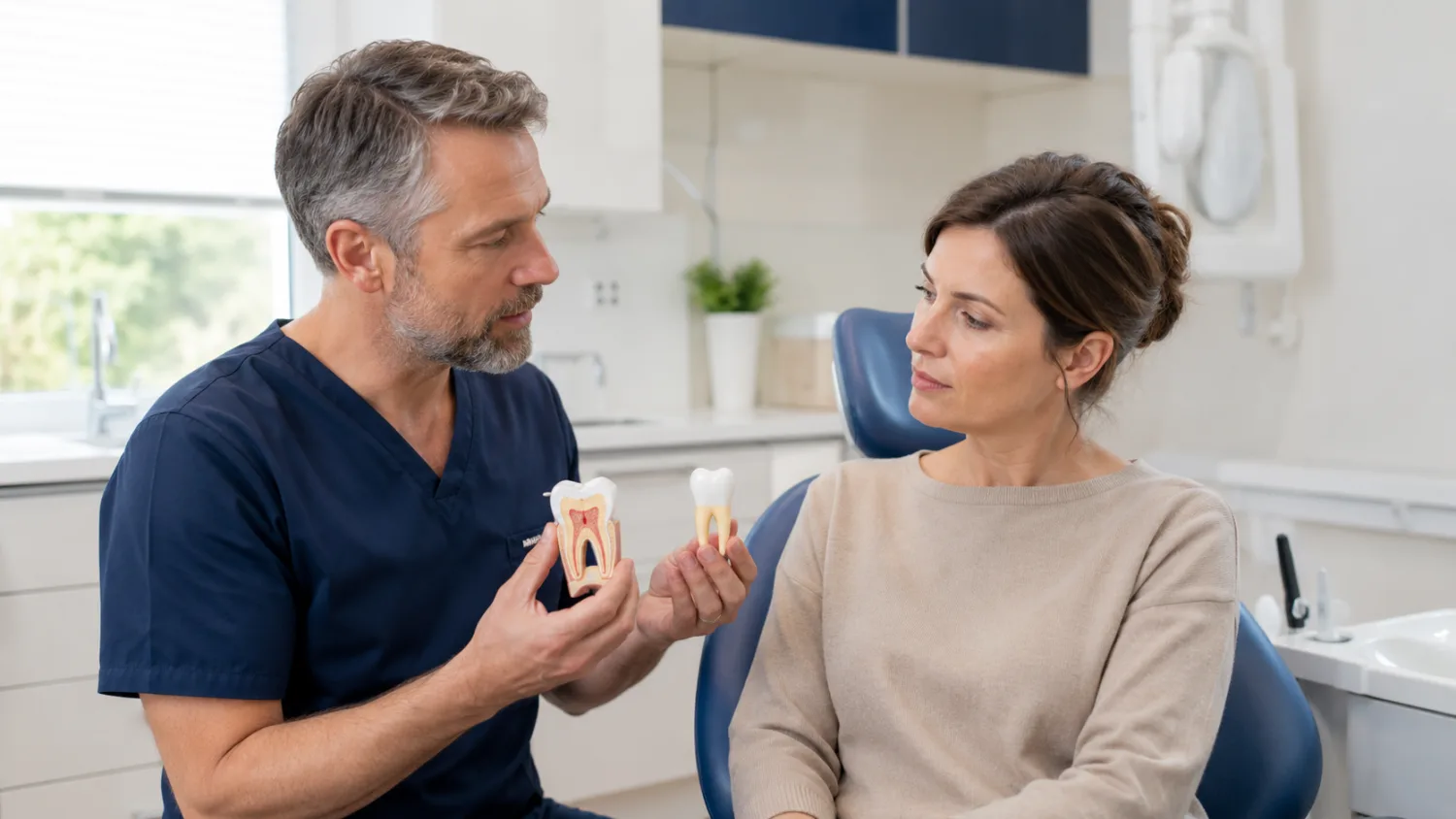
Have poorly fitting dentures checked
A denture that rocks, rubs or traps food can damage the mouth lining and encourage infection.
Do not rely indefinitely on adhesive to compensate for a seriously poor fit. A dentist can check whether adjustment, relining or replacement is needed.
Continue brushing natural teeth
Brush twice daily with fluoride toothpaste and clean between the teeth. Thrush can coexist with tooth decay and gum disease.
Spit after brushing rather than rinsing immediately so fluoride remains on the teeth.
Should the tongue be scraped?
Gentle tongue cleaning can remove ordinary coating and improve oral hygiene. Hard scraping of active thrush can make the tissue bleed and worsen soreness.
Use a soft brush or purpose-made cleaner without applying heavy pressure.
Manage dry mouth
Helpful measures can include:
- regular sips of water;
- sugar-free chewing gum when safe;
- saliva-replacement gels or sprays;
- avoiding alcohol-containing mouthwash when it worsens dryness;
- reviewing medicines with a GP or pharmacist;
- frequent dental prevention because decay risk is higher.
Do not stop a prescribed medicine without medical advice simply because it may contribute to dryness.
How can oral thrush be prevented from returning?
Recurrence prevention depends on the trigger. Someone who developed thrush after a single antibiotic course may never have another episode. Someone using dentures and a high-dose steroid inhaler may need an ongoing routine.
Rinse after using a steroid inhaler
After each inhaled corticosteroid dose:
- rinse the mouth thoroughly with water;
- gargle where possible;
- spit the water out rather than swallowing it.
If the inhaler type is compatible with a spacer, using one correctly can reduce medicine deposition in the mouth and improve delivery to the lungs.
Have inhaler technique checked periodically. A small error repeated every day can substantially change where the medicine lands.
Do not stop inhaled steroids independently
Thrush can usually be treated without abandoning effective asthma or lung treatment.
The prescriber may review:
- inhaler technique;
- spacer use;
- whether the dose remains appropriate;
- whether another device would be easier;
- how frequently rescue treatment is needed.
Control diabetes
Keeping blood glucose within the individually agreed range reduces the risk of recurrent infections and supports healing.
Repeated thrush despite treatment may justify reviewing HbA1c and the wider diabetes plan.
Avoid smoking
Stopping smoking benefits oral tissues, gum health, healing and cancer risk as well as reducing irritation that may support thrush.
A pharmacist or NHS stop-smoking service can provide behavioural support and suitable nicotine treatment.
Use antibiotics only when needed
Antibiotics should be taken when clinically indicated and exactly as prescribed.
They should not be used for viral colds, uncomplicated laryngitis or ordinary viral sore throats. Our guide to laryngitis symptoms, causes and treatment explains why antibiotics do not usually help acute hoarseness.
Maintain regular dental care
Dental examinations can identify:
- poorly fitting dentures;
- persistent mucosal changes;
- dry-mouth complications;
- tooth decay;
- gum disease;
- lesions that do not look like thrush.
Someone without natural teeth can still benefit from dental assessment because the gums, tongue, denture fit and oral lining remain important.
Avoid unnecessary restrictive “Candida diets”
Online advice sometimes recommends removing sugar, fruit, yeast, dairy products, gluten and many other foods to “starve Candida”.
There is no standard evidence-based oral-thrush diet that requires broad food-group elimination.
Very sugary foods and drinks can damage teeth, and balanced nutrition supports health, but restrictive diets do not replace antifungal treatment or correction of the underlying risk factor.
Do probiotics prevent oral thrush?
Research into probiotics is ongoing, but products vary widely and they are not a reliable replacement for proven antifungal treatment.
People who are severely immunocompromised should seek clinical advice before using live microbial supplements.
When should you see a dentist or doctor?
A first mild episode may be managed with pharmacist, dental or GP advice depending on local access and the person’s health.
Professional assessment becomes especially important when the appearance is uncertain, symptoms persist or there may be an underlying medical cause.
Arrange an appointment if:
- this is the first unexplained episode in an adult;
- white or red patches persist;
- symptoms are painful or affect eating;
- treatment has not worked;
- thrush repeatedly returns;
- dentures are painful, loose or poorly fitting;
- there is severe or persistent dry mouth;
- you have symptoms of possible diabetes;
- you take immune-suppressing medicine;
- you are uncertain whether the condition is thrush.
Contact a clinician promptly if:
- swallowing is painful;
- food feels stuck;
- pain extends behind the breastbone;
- the infection appears to reach the throat;
- you are receiving chemotherapy;
- you have had a transplant;
- you have HIV with concerns about immune control;
- you are taking substantial immune-suppressing treatment;
- you are losing weight because eating is difficult.
Painful swallowing may indicate oesophageal candidiasis or another throat condition requiring systemic treatment and investigation.
Persistent patches and ulcers
See a dentist or GP for:
- a mouth ulcer lasting longer than three weeks;
- a white patch that cannot be wiped away;
- a persistent red patch;
- a lump in the mouth or neck;
- unexplained bleeding;
- persistent numbness;
- progressive swallowing difficulty;
- unexplained tooth loosening.
Do not continue buying repeated thrush treatments when the lesion does not behave like thrush.
Seek urgent help if:
- breathing becomes difficult;
- the mouth, tongue or throat is rapidly swelling;
- saliva cannot be swallowed;
- there are signs of severe dehydration;
- the person is confused, collapsed or very unwell;
- there is severe infection during profound immune suppression.
Frequently asked questions about oral thrush
What is the main symptom of oral thrush?
The classic symptom is a creamy white patch that can often be wiped away to reveal red or tender tissue beneath. Some people instead develop a red, burning mouth without obvious white plaques.
What does oral thrush feel like?
It may cause burning, soreness, altered taste, a cotton-like sensation or discomfort while eating. Some cases cause very few symptoms.
Can thrush affect the tongue only?
Yes. It may produce a white coating, red smooth areas or soreness mainly on the tongue. A coated tongue has many other possible causes, so persistent changes should be assessed.
Does oral thrush wipe off?
The classic white plaques can often be gently removed, exposing red tissue beneath. A white patch that does not wipe away may have another cause.
Does oral thrush bleed?
The inflamed tissue underneath a plaque may bleed slightly when wiped. Spontaneous, repeated or substantial bleeding needs examination.
Does oral thrush hurt?
It can be painless, mildly uncomfortable or significantly sore. Painful swallowing suggests that infection or another condition may extend beyond the mouth.
Can oral thrush cause bad breath?
It may contribute to an unpleasant taste or odour, but gum disease, tongue coating, dry mouth, dental infection and tonsil stones are more common causes of persistent bad breath.
Can oral thrush cause a sore throat?
Yes, particularly when infection reaches the back of the mouth or throat. Severe throat pain or swallowing difficulty needs medical assessment.
Can oral thrush cause difficulty swallowing?
Mouth soreness may make eating uncomfortable. True painful or difficult swallowing can indicate oesophageal involvement or another throat problem and should be assessed promptly.
Is oral thrush contagious?
It is not normally spread through ordinary contact in the way respiratory infections are. Candida commonly lives in healthy mouths without causing disease.
Can you catch oral thrush by kissing?
Kissing can transfer microorganisms, but healthy adults do not usually develop oral thrush simply from kissing someone. Local risk factors are generally more important.
Is oral thrush an STI?
No. It is not classified as a sexually transmitted infection.
Can antibiotics cause oral thrush?
Yes. Antibiotics can reduce normal competing bacteria and allow Candida to multiply.
Can steroid inhalers cause thrush?
Yes. Medicine left in the mouth can suppress local defences. Rinsing, gargling and spitting after use and using a spacer where appropriate can reduce risk.
Should I stop my steroid inhaler?
No. Speak to the prescriber, asthma nurse or pharmacist. Thrush can usually be treated while essential respiratory treatment continues.
Can dentures cause oral thrush?
Dentures can create conditions that encourage yeast growth, particularly when worn overnight, poorly cleaned or badly fitting.
Should dentures be removed during treatment?
They should usually be removed overnight and cleaned and disinfected according to professional advice. Some treatment products require specific denture precautions.
Can dry mouth cause thrush?
Yes. Saliva helps control microbial growth. Persistent dry mouth increases the risk of thrush, decay and oral discomfort.
Can diabetes cause oral thrush?
Diabetes can increase susceptibility, especially when blood glucose is persistently high. Recurrent unexplained thrush may justify diabetes testing.
Does oral thrush mean I have diabetes?
No. Antibiotics, inhalers, dentures and dry mouth are also common causes. Diabetes becomes more relevant when thrush recurs or other symptoms are present.
Does oral thrush mean I have HIV?
No. A single episode is common and usually has another explanation. Persistent or extensive infection without a clear trigger may lead a clinician to consider tests for immune problems.
What is the quickest treatment?
An appropriate antifungal medicine is the most direct treatment. The exact product depends on other medicines, medical conditions and infection severity.
Can a pharmacist treat oral thrush?
A pharmacist can assess symptoms, check for medicine interactions and advise whether treatment or referral is appropriate. First, recurrent or atypical episodes may need a dentist or GP.
Can oral thrush clear without treatment?
A mild episode may occasionally improve when the trigger disappears, but established symptomatic infection often needs antifungal treatment.
How long does oral thrush last?
Symptoms often improve within several days of correct treatment. The full course should still be completed, and persistent symptoms need reassessment.
Why does thrush keep returning?
Common reasons include contaminated dentures, inhaler deposition, dry mouth, high blood glucose, immune suppression, incomplete treatment or an incorrect diagnosis.
Does salt water cure oral thrush?
Salt-water rinses may soothe the mouth but do not reliably eliminate the fungal infection.
Does mouthwash cure oral thrush?
Ordinary antiseptic mouthwash is not a substitute for antifungal treatment. Alcohol-containing products may worsen soreness or dry mouth.
Does yoghurt cure oral thrush?
Yoghurt may be easy to eat when the mouth is sore, but it should not replace antifungal treatment. Evidence that it cures established infection is limited.
Does sugar cause oral thrush?
Eating sugar does not independently explain most cases, although high blood glucose in uncontrolled diabetes can increase risk. Frequent sugar intake is more clearly harmful to teeth.
Do I need a special Candida diet?
No standard restrictive diet has been shown to replace medical treatment. Avoiding numerous food groups can create nutritional problems.
Can oral thrush spread to the oesophagus?
It can, particularly in people with significant immune suppression. Painful swallowing, difficulty swallowing or pain behind the breastbone needs prompt medical assessment.
Can oral thrush become dangerous?
It is usually superficial and readily treated. It can become more serious in profoundly immunocompromised people or when infection extends into the oesophagus.
Can white patches be mouth cancer?
Some persistent white patches have other causes, including leukoplakia and cancerous or precancerous change. A patch that cannot be wiped away or does not resolve must be examined.
When should I see a dentist?
See a dentist when dentures are involved, the diagnosis is uncertain, a patch persists, or there are other dental or gum symptoms.
When should I see a GP?
See a GP when thrush is recurrent, severe, associated with diabetes symptoms, immune suppression, significant dry mouth or painful swallowing.