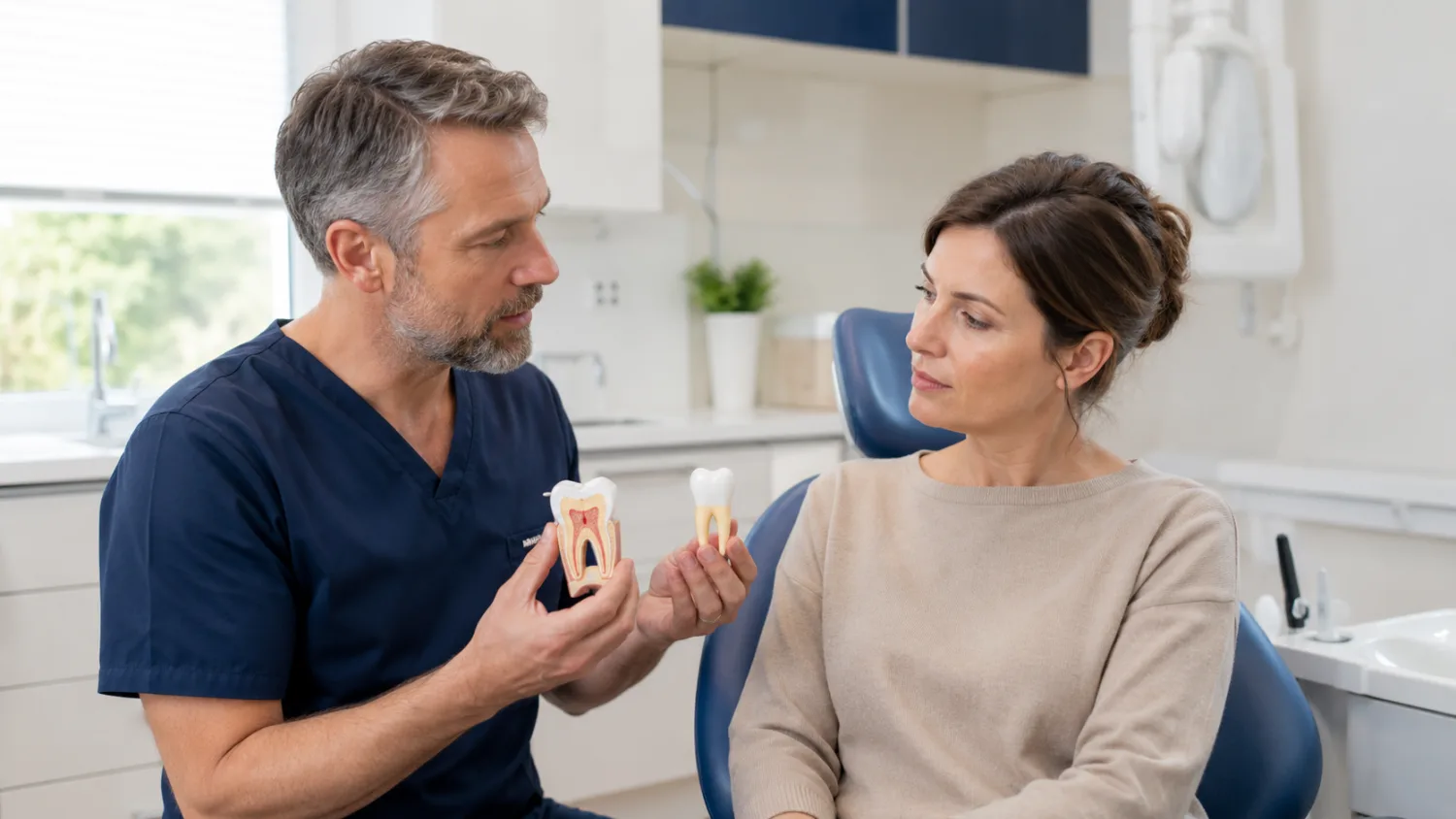
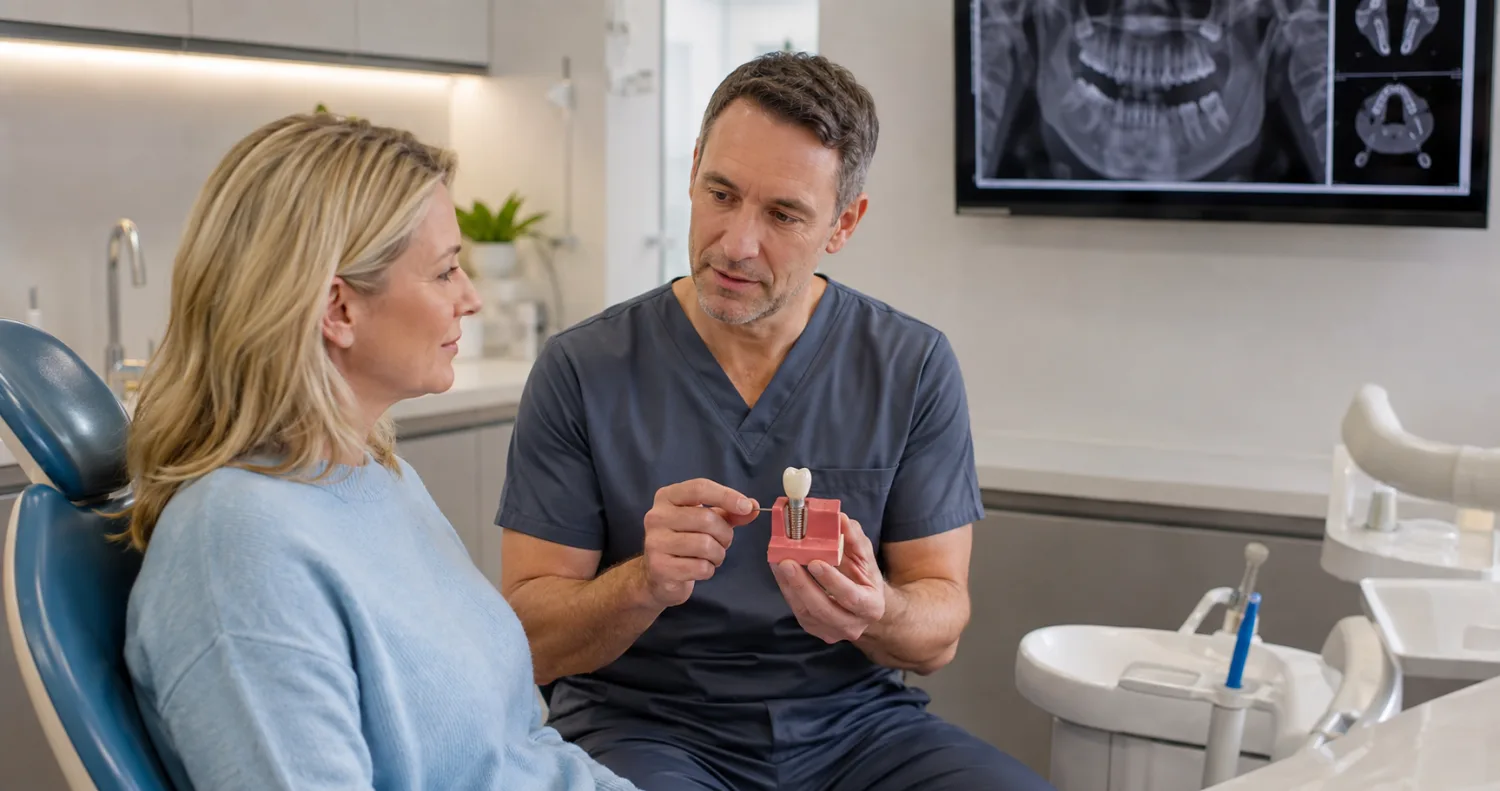
All-on-4 dental implants in the UK commonly cost approximately £9,000 to £18,000 per arch. Premium or complex treatment can exceed £20,000 per arch, particularly in central London or when extensive preparatory work and higher-cost final bridge materials are required.
Treating both the upper and lower arches often costs around £18,000 to £35,000 or more. An advertised price may include only implant placement and temporary teeth, so it is essential to confirm whether the final bridge, scans, extractions, sedation and follow-up are included.
All-on-4 is a form of fixed full-arch dental rehabilitation. Usually four implants are placed in one jaw to support a complete bridge of replacement teeth. Some people receive a temporary fixed bridge on the same day, followed by a stronger final bridge after the implants have healed.
“Teeth in a day” does not mean that the complete treatment is finished in one day. Planning happens beforehand, healing commonly takes several months, and the definitive teeth are normally fitted later.
All prices below are approximate self-pay figures. Your actual cost depends on your oral health, anatomy, materials, dentist, laboratory and treatment complexity.
How much do All-on-4 dental implants cost in the UK?
| Treatment | Typical private cost |
|---|---|
| Initial implant consultation | Free to approximately £250 |
| CBCT scan and diagnostic imaging | Approximately £150–£350 |
| All-on-4 treatment for one arch | Approximately £9,000–£18,000 |
| Premium or complex treatment for one arch | Approximately £18,000–£25,000+ |
| Upper and lower arches | Approximately £18,000–£35,000+ |
| Extractions | Included or approximately £100–£500+ per tooth |
| Intravenous sedation | Approximately £300–£1,000+ |
| Bone grafting | Approximately £500–£3,000+ depending on extent |
| Final premium bridge upgrade | Approximately £2,000–£8,000+ per arch |
| Replacement full-arch bridge in future | Approximately £3,000–£10,000+ per arch |
Published UK clinic prices currently begin at approximately £8,000 to £10,000 per arch at some providers. Other clinics quote around £12,000 to £18,000, while specialist or premium London services may charge £20,000 to £25,000 or more.
Price differences do not necessarily mean that one clinic is overcharging or another is offering a bargain. Quotes may describe very different treatments.
One may include four implants, temporary acrylic teeth and a final acrylic bridge. Another may include extractions, sedation, guided surgery, more than four implants and a titanium-reinforced zirconia restoration.
For comparison with individual implant treatment, see our guide to single-tooth implant costs in the UK.
What does All-on-4 mean?
All-on-4 describes a complete arch of replacement teeth supported by four dental implants. The implants are placed into the upper or lower jaw, and a fixed bridge is screwed onto them.
The two implants at the front are often placed relatively straight. The posterior implants may be angled to use available bone and reduce the need for extensive grafting.
The term is sometimes used loosely. Clinics may advertise similar treatment as:
- fixed full-arch implants;
- same-day teeth;
- teeth in a day;
- full-mouth dental implants;
- immediate-load implants;
- All-on-4 or All-on-6;
- fixed implant bridge treatment.
“Full mouth” usually means both the upper and lower arches, while “full arch” means one complete jaw. This distinction can double the quoted price, so check the wording carefully.
Four implants are not always the correct number. Depending on available bone, bite forces and prosthetic design, the dentist may recommend five, six or more implants for one arch.
Bupa Dental Care explains that same-day full-arch treatment commonly uses four to six implants and requires detailed examination and three-dimensional imaging beforehand.
What should be included in the quoted price?
A comprehensive fixed full-arch quote may include:
- initial consultation and medical-history review;
- full dental and gum examination;
- panoramic X-rays and a CBCT scan;
- digital scans, impressions and photographs;
- assessment of the bite and smile;
- digital implant planning;
- a written treatment plan;
- removal of failing teeth;
- four implant fixtures per arch;
- implant abutments and prosthetic components;
- local anaesthetic;
- a fixed temporary bridge;
- postoperative checks;
- adjustments during healing;
- the definitive full-arch bridge;
- initial maintenance instructions;
- a specified period of aftercare.
Do not rely on a verbal assurance that “everything is included”. Ask for an itemised written plan identifying each clinical and laboratory stage.
The most important question is whether the quoted package includes the final definitive bridge. A cheap headline figure may cover surgery and temporary teeth but require several thousand pounds more for the final restoration.
Also ask whether the fee covers:
- all planned implants or only four;
- replacement of an implant that does not integrate;
- repairing or remaking temporary teeth;
- additional scans during treatment;
- after-hours advice following surgery;
- bridge removal for cleaning or inspection;
- the first year of reviews;
- a night guard if you grind your teeth.
Which extra costs may not be included?
Additional procedures can substantially increase the final bill.
| Possible extra | Why it may be required |
|---|---|
| Treatment of gum disease | Active infection should be controlled before implant placement |
| Complex extractions | Remaining teeth may be fractured, impacted or difficult to remove |
| Bone grafting | Available bone may be insufficient despite angled implant placement |
| Sinus augmentation | May be considered when upper-jaw bone height is limited |
| Sedation | May help with extensive surgery or severe dental anxiety |
| General anaesthesia or hospital fees | Required only in selected cases and specialist settings |
| Extra implants | The treatment plan may change from four to five or six implants |
| Premium final bridge | Zirconia or reinforced restorations may cost more than acrylic or composite |
| Temporary denture | Needed if a fixed temporary bridge cannot be fitted or must be removed |
| Night guard | May protect the bridge where tooth grinding is present |
Ask what happens if one implant cannot be placed in the planned position or does not achieve sufficient stability for same-day loading.
The clinic should explain whether you would receive:
- a different number of implants;
- a removable temporary denture;
- a delayed fixed bridge;
- bone grafting;
- a revised treatment cost.
Dental finance can make a large bill appear manageable, but interest and fees may increase the overall price. Our guide to dental payment plans explains deposits, credit agreements and questions to ask before borrowing.
What is the difference between temporary and final teeth?
The teeth fitted immediately after surgery are usually a temporary bridge. They provide appearance and limited function while the implants integrate with the jawbone.
This temporary restoration is often made from acrylic or another lighter material. It may deliberately have a simplified shape and reduced biting surface to limit pressure during healing.
Patients usually need to follow a soft-food diet while the implants integrate. “Same-day teeth” should not be interpreted as permission to bite hard foods immediately.
After several months, the dentist assesses healing and takes new scans or impressions. The final bridge is then designed around the healed gum shape and confirmed implant positions.
Definitive bridge options may include:
- acrylic teeth on a metal or titanium framework;
- high-performance polymer or composite materials;
- monolithic zirconia;
- zirconia combined with titanium components;
- other laboratory-specific constructions.
Materials influence:
- strength and wear resistance;
- appearance and stain resistance;
- weight;
- repairability;
- how the bridge feels during biting;
- the cost of repair or replacement.
Acrylic or composite teeth may be easier and less expensive to repair, but can wear or chip. Zirconia can be strong and visually attractive but costs more and may be harder to repair if significantly damaged.
Ask to see the exact final material in the quotation. “Premium teeth” and “permanent bridge” are marketing descriptions, not precise material specifications.
What happens during All-on-4 treatment?
Assessment and planning
The dentist examines your teeth, gums, bite and existing dentures. A CBCT scan creates a three-dimensional image of the jawbone, sinuses, nerves and other anatomical structures.
Planning may also involve:
- digital photographs;
- intraoral scans or impressions;
- diagnostic models;
- a trial smile or tooth arrangement;
- blood tests or medical clearance in selected cases;
- coordination with your GP or medical specialist.
Surgery and temporary bridge
On the day of surgery, failing teeth may be removed and the implant sites prepared. The implants are placed under local anaesthetic, with sedation where agreed.
If the implants achieve sufficient initial stability, a temporary fixed bridge may be connected later that day or shortly afterwards.
If stability is inadequate, the implants may need to heal without immediate loading. A removable temporary denture may be used instead.
Healing period
Bone gradually integrates with the implant surfaces over the following months. Appointments may be required to check healing, remove sutures and adjust the temporary bridge.
Final bridge
Once integration is satisfactory, the temporary teeth are removed and the definitive bridge is made and fitted. The bite, speech, appearance and ability to clean beneath it should all be assessed.
The entire process commonly takes approximately three to six months, although complex cases can take longer.
Who may be suitable for All-on-4 implants?
Full-arch fixed implants may be considered for someone who:
- has lost all teeth in one or both jaws;
- has many teeth with a genuinely poor long-term prognosis;
- struggles with loose or painful removable dentures;
- wants a fixed rather than removable restoration;
- has sufficient bone for appropriately positioned implants;
- can undergo oral surgery safely;
- can maintain careful daily hygiene;
- accepts the need for lifelong professional maintenance;
- understands that repairs and future replacement remain possible.
It should not be used to justify removing maintainable natural teeth merely because an implant package appears quicker or more predictable.
Natural teeth with a reasonable prognosis may sometimes be preserved through periodontal treatment, root-canal therapy, crowns or other restorative care. Once a tooth is extracted, that decision cannot be reversed.
Our comparison of root-canal treatment and extraction explains why saving a damaged tooth may still be preferable when it has a reasonable outlook.
Who may not be suitable?
Suitability is individual, but risk may be increased by:
- active, uncontrolled gum disease;
- poor oral hygiene;
- heavy smoking;
- poorly controlled diabetes;
- severe tooth grinding or an unstable bite;
- insufficient bone in safe implant positions;
- some immune or bone-healing disorders;
- previous radiotherapy to the jaws;
- certain antiresorptive or antiangiogenic medicines;
- inability to tolerate surgery;
- unrealistic expectations about maintenance or permanence.
These factors do not always make treatment impossible, but they require careful risk assessment.
Smoking impairs healing and is associated with implant complications. Poorly controlled diabetes can also affect wound healing and infection risk.
The Association of Dental Implantology recommends controlling active periodontitis and considering smoking, diabetes, oral hygiene, medication and biting forces before implant surgery.
Tell the dentist about every medicine you take, including bisphosphonates, denosumab, steroids, anticoagulants and cancer treatments. Do not stop prescribed medication unless the relevant clinician advises you to do so.
What are the risks and possible complications?
All-on-4 treatment is extensive surgery followed by complex prosthetic rehabilitation. Successful treatment cannot be guaranteed.
Short-term effects may include:
- pain and tenderness;
- swelling and bruising;
- bleeding;
- difficulty eating;
- temporary speech changes;
- pressure areas from the temporary bridge;
- limited mouth opening.
Potential surgical complications include:
- infection;
- failure of an implant to integrate;
- damage to a nerve, causing altered sensation;
- sinus complications in the upper jaw;
- damage to nearby structures;
- bone loss around an implant;
- the need for grafting or additional surgery.
Prosthetic complications may include:
- loosening or fracture of a screw;
- chipping or breaking of teeth;
- fracture of the temporary or final bridge;
- food trapping;
- speech or bite problems;
- difficulty cleaning beneath the bridge;
- wear requiring repair or replacement.
Inflammation around an implant is called peri-implant mucositis. If it progresses with supporting bone loss, it becomes peri-implantitis and may eventually cause implant failure.
The Association of Dental Implantology’s peri-implant health guidance identifies poor hygiene, smoking and a history of periodontitis among important risk factors.
Contact the clinic promptly for increasing pain, swelling, pus, fever, persistent bleeding, new numbness or movement of the bridge. Significant swelling affecting breathing or swallowing requires emergency help.
What are the long-term maintenance costs?
All-on-4 teeth are fixed, but they are not maintenance-free. They must be cleaned around the implants and beneath the bridge every day.
Long-term costs may include:
| Maintenance | Possible cost |
|---|---|
| Implant review | Approximately £75–£250 |
| Implant hygienist appointment | Approximately £80–£200 |
| Periodic X-rays | Approximately £20–£150+ |
| Bridge removal and professional cleaning | Approximately £250–£800+ |
| Minor chip or tooth repair | Approximately £100–£600+ |
| Screw or component replacement | Approximately £100–£500+ |
| Replacement night guard | Approximately £150–£500 |
| Complete replacement bridge | Approximately £3,000–£10,000+ per arch |
These figures vary considerably. Ask the clinic to provide its current maintenance and repair fees before treatment begins.
Daily care may involve:
- brushing at least twice a day;
- using an electric toothbrush where suitable;
- cleaning beneath the bridge with specialist floss;
- using interdental brushes of the correct size;
- using a water flosser if recommended;
- attending regular implant-hygiene appointments;
- wearing a night guard when prescribed.
The bridge should be designed to allow effective cleaning. An attractive restoration that cannot be cleaned properly may create serious long-term problems.
The ADI advises that regular professional maintenance is essential and notes that a fixed prosthesis may sometimes need to be removed for cleaning and inspection.
How does All-on-4 compare with other options?
| Option | Main advantage | Main limitation |
|---|---|---|
| Conventional complete denture | Lowest initial cost and no implant surgery | Removable and may feel unstable |
| Implant-retained overdenture | Improved stability with fewer implants and lower cost | Still removable |
| All-on-4 fixed bridge | Fixed full arch using relatively few implants | High cost, complex cleaning and concentrated risk |
| All-on-6 or more implants | Additional support may benefit selected cases | More surgery, bone requirements and expense |
| Individual implants and bridges | Can create separate replaceable sections | Usually requires more implants and may cost more |
| Preserving natural teeth | Retains natural structures where prognosis is acceptable | May require several restorative or periodontal treatments |
An implant-retained overdenture can be a practical middle option. It clips onto implants for stability but can be removed for cleaning. It usually costs less and may be easier to maintain than a fixed full-arch bridge.
Traditional dentures do not require implant surgery and can be suitable for people with medical, anatomical or financial reasons to avoid implants.
There is no universally best option. The decision should consider prognosis, cleaning ability, health, anatomy, expectations and lifetime cost.
Are All-on-4 implants available on the NHS?
All-on-4 treatment is generally provided privately. Routine replacement of missing or failing teeth with a fixed full-arch implant bridge is not normally available through NHS dental care.
NHS-funded dental implants may occasionally be considered in exceptional clinical circumstances, such as:
- reconstruction after cancer treatment;
- major facial trauma;
- certain congenital conditions;
- complex cases where conventional alternatives are unsuitable.
Eligibility is strict and usually involves specialist assessment. Wanting fixed teeth instead of removable dentures does not normally qualify someone for NHS implant treatment.
Private dental insurance may contribute to extractions, consultations or routine dental care, but commonly excludes implants placed to replace teeth that were already missing or failing when the policy began. Some plans offer only a limited implant allowance.
Our guide to dental insurance in the UK explains common exclusions and annual limits.
How should you compare clinics and quotations?
Choose the clinical team and treatment plan before focusing on the finance offer.
Ask each clinic:
- Who will plan and perform the surgery?
- How much full-arch implant experience do they have?
- Who designs and manufactures the bridge?
- What implant system and components will be used?
- How many implants are planned for each arch?
- Why are four implants appropriate for me?
- Are scans, extractions and sedation included?
- Will I receive fixed temporary teeth on the day?
- What happens if immediate loading is not possible?
- What material will the temporary bridge use?
- What material will the final bridge use?
- Is the definitive bridge included in the price?
- What aftercare and maintenance are included?
- What does the guarantee cover and exclude?
- Who pays if an implant fails during healing?
- How much do future repairs and replacement bridges cost?
Check that every dentist involved is registered with the General Dental Council. In England, the dental provider should also be appropriately registered with the Care Quality Commission for the regulated care it delivers.
Clinical titles can be confusing. “Implant dentist” is not a protected GDC specialist title. Ask about postgraduate training, recent experience, audit, complication management and referral arrangements.
The implant team should provide enough information about benefits, risks, alternatives, likely prognosis, costs and maintenance for genuinely informed consent. Our guide to choosing a dentist in the UK provides a broader safety checklist.
Is it cheaper to have All-on-4 treatment abroad?
Clinics overseas often advertise substantially lower package prices. Some patients receive good care, but the headline saving does not show the complete financial or clinical risk.
Add the cost of:
- at least two treatment trips;
- flights and transfers;
- hotels and meals;
- travel insurance;
- time away from work;
- an accompanying person;
- unexpected extended stays;
- return visits for adjustments;
- UK emergency or remedial treatment.
Full-arch treatment commonly needs adjustments during healing. A bite problem, fractured temporary bridge or loose screw is harder to manage when the treating clinic is abroad.
Before travelling, establish:
- who provides aftercare in the UK;
- whether a local dentist has agreed to maintain the implants;
- which implant system is used;
- whether replacement components are available in the UK;
- which country’s law governs complaints and compensation;
- who pays for return travel if complications occur;
- whether the final bridge requires another trip.
Our guide to dental implants abroad versus the UK compares treatment, flights and follow-up costs in greater detail.
Frequently asked questions
How much does All-on-4 cost for one jaw in the UK?
One fixed arch commonly costs approximately £9,000 to £18,000. Complex or premium treatment may reach £20,000 to £25,000 or more.
How much does a full mouth of All-on-4 implants cost?
Upper and lower full-arch treatment commonly costs around £18,000 to £35,000 or more. Confirm that the quote covers two arches and includes both temporary and final bridges.
Does All-on-4 include the final teeth?
Some packages include the final bridge, while others advertise only implant surgery and temporary teeth. The written quote should name the final material and show its full cost.
Are extractions included in All-on-4 prices?
They may be included up to a specified number. Complex extractions, removal of impacted teeth or treatment of infection can be charged separately.
Are All-on-4 teeth fitted on the same day?
A temporary fixed bridge may be fitted on the day of implant surgery if the implants are sufficiently stable. The stronger definitive bridge is normally fitted after several months of healing.
Can I eat normally with same-day teeth?
Not immediately. A soft diet is normally required during early healing to avoid overloading the implants. Follow the clinic’s written instructions carefully.
How many teeth are on an All-on-4 bridge?
A full-arch bridge commonly contains around 10 to 14 replacement teeth, depending on anatomy and design. Four refers to the number of supporting implants, not the number of teeth.
Is All-on-4 removable?
The bridge is fixed to the implants and is not normally removed by the patient. A dental professional can unscrew it for repair, maintenance or inspection.
How long do All-on-4 implants last?
Implants and bridges do not have a guaranteed lifespan. Many remain functional for years, but complications, repairs and bridge replacement are possible. Longevity depends on hygiene, gum health, smoking, health, bite forces and professional maintenance.
Can one failed implant ruin the whole bridge?
A failed implant does not automatically mean the entire treatment is lost, but it can affect support and may require removal, replacement or redesign of the bridge. Ask how the clinic manages and charges for this possibility.
Is zirconia better than acrylic?
Zirconia is strong and stain-resistant but more expensive and potentially difficult to repair. Acrylic or composite can be lighter and easier to repair but may wear or chip sooner. The best choice depends on bite, design, budget and laboratory quality.
Can All-on-4 be done without bone grafting?
Angled implants can sometimes make better use of existing bone and avoid extensive grafting. They cannot eliminate the need in every patient, and a CBCT-based assessment is essential.
Can smokers have All-on-4 implants?
Some clinics will treat smokers, but smoking impairs healing and increases the risk of implant complications. Stopping smoking before treatment and remaining smoke-free improves the outlook.
Can I get All-on-4 implants on the NHS?
Usually not. NHS implant treatment is restricted to exceptional clinical circumstances, such as selected cases involving trauma, cancer reconstruction or congenital conditions.
Is the cheapest All-on-4 package good value?
Not necessarily. Compare the final bridge material, scans, extractions, number and brand of implants, sedation, failure policy, aftercare and future maintenance. A low initial fee can become expensive if essential stages are excluded.