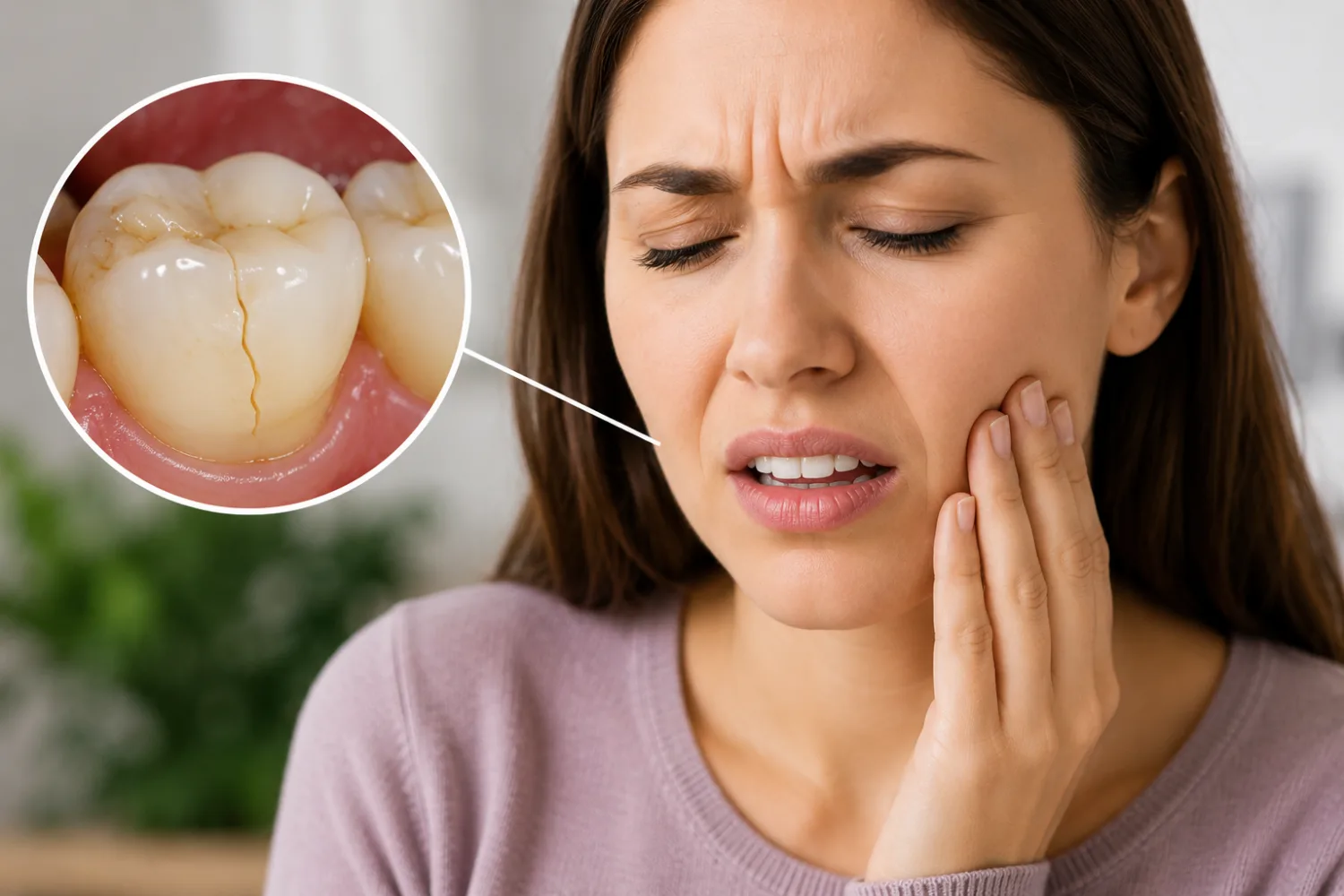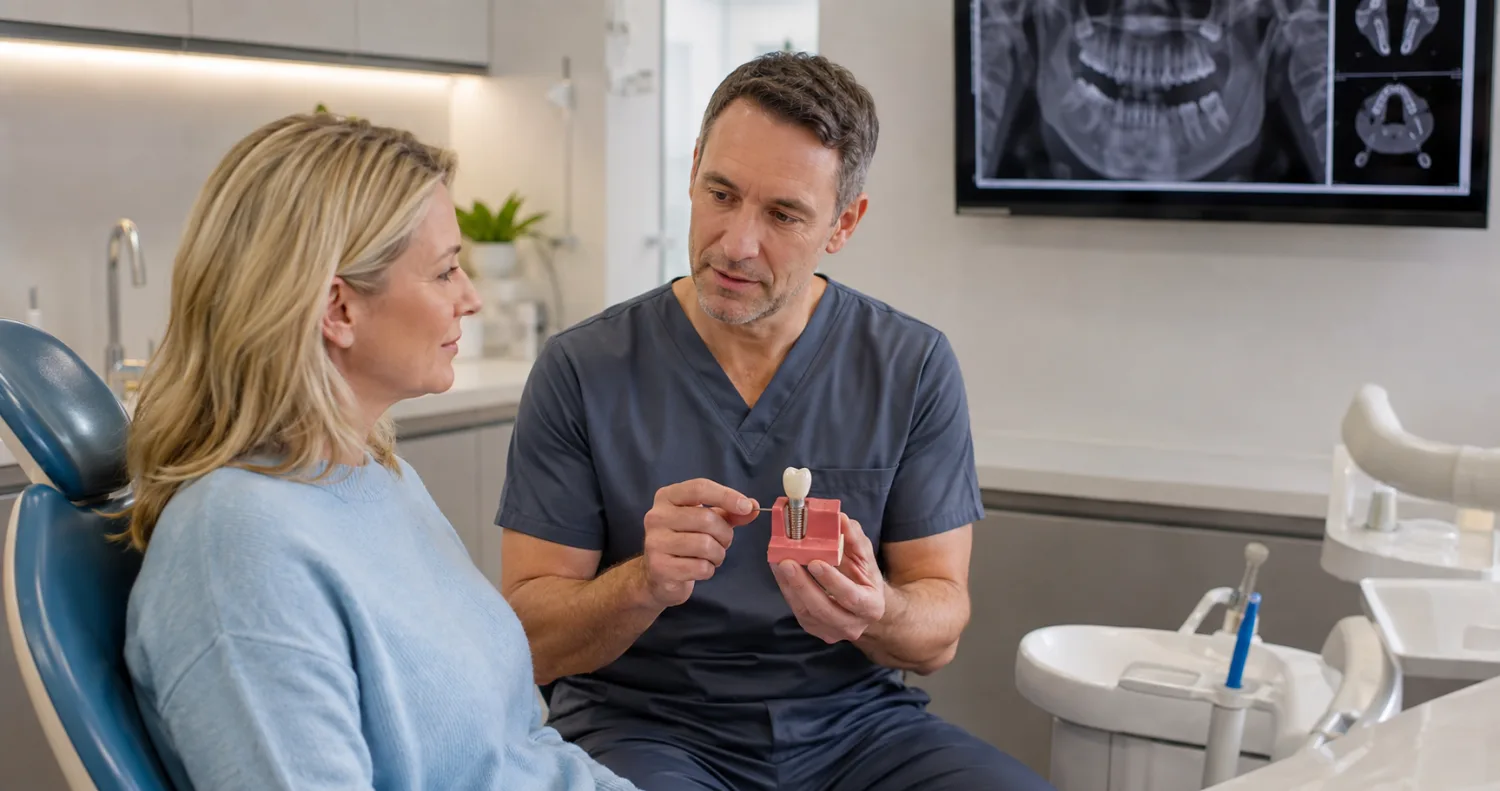
A single dental implant in the UK commonly costs around £2,000 to £3,500 when the implant fixture, connecting abutment and final crown are all included. In central London or a complex specialist case, the total may reach £4,000 or more.
That headline range assumes there is enough healthy bone and gum, the tooth has already been removed or can be extracted simply, and no major additional treatment is required. A CBCT scan, extraction, temporary tooth, bone graft, sinus lift or sedation can add hundreds—or occasionally thousands—of pounds.
This is why an advertised “implant from £995” may not resemble the eventual bill. The word implant is sometimes used to describe only the titanium fixture placed in the jaw. A complete replacement tooth also needs an abutment and crown.
The prices in this guide are broad UK private estimates for 2026. Every case is different, and a reliable final quotation normally requires an examination and appropriate imaging.
How much does a complete single tooth implant cost?
For a straightforward case, a realistic budget is approximately £2,000 to £3,500 from initial planning to the completed crown. Some competitive clinics offer packages below £2,000, while specialist and central London fees can exceed £4,000.
As a current real-world reference, Bupa Dental Care advertises a starting price of £2,400 for a single implant, abutment and screw-retained porcelain crown, subject to location and suitability. Other UK practices publish complete starting prices from approximately £1,900 to £2,800.
The potential costs across the full pathway may look like this:
| Stage or treatment | Typical private UK price |
|---|---|
| Initial implant consultation | Free to approximately £150 |
| Small dental X-ray | Approximately £10–£30 |
| Panoramic dental X-ray | Approximately £50–£120 |
| CBCT 3D scan | Approximately £100–£300 |
| Routine tooth extraction | Approximately £100–£250 |
| Complex or surgical extraction | Approximately £250–£600+ |
| Implant fixture placement | Approximately £900–£1,600 |
| Implant abutment | Approximately £200–£500 |
| Final implant crown | Approximately £600–£1,400 |
| Temporary tooth, if needed | Approximately £100–£500+ |
| Minor bone graft | Approximately £300–£900 |
| Larger staged bone graft | Approximately £1,000–£2,500+ |
| Sinus lift | Approximately £800–£2,500+ |
| Conscious sedation | Approximately £250–£700+ |
These items are not added in every case. Many patients need only a consultation, imaging and the core implant package. Others require several preparatory stages, making an itemised treatment plan essential.
What are the three parts of a dental implant?
A complete single-tooth implant restoration usually has three main components.
The implant fixture is a titanium or titanium-alloy post placed into the jawbone. It acts as an artificial tooth root. Over the following months, bone grows closely around its surface in a process called osseointegration.
The abutment is the connecting component between the fixture and replacement tooth. It may be a standard manufactured part or made specifically for the patient.
The implant crown is the visible tooth-shaped restoration. It is usually made from ceramic, zirconia, porcelain fused to metal or a combination of materials. It can be cemented onto the abutment or secured with a small screw.
A quotation that includes only the fixture is not a quotation for a completed tooth. Ask whether the advertised figure includes all three components, the surgery and the laboratory work.
Our broader guide to dental implants in the UK explains how implants work, who may be suitable and what recovery normally involves.
How much do the consultation and scans cost?
Some practices provide a free introductory consultation. This can be useful for discussing general suitability, but it may not include a full dental examination, diagnosis or final treatment plan.
A detailed implant assessment may cost approximately £50 to £150. The dentist should review your medical and dental history, examine the teeth and gums, assess the gap and discuss alternatives.
Imaging is then used to evaluate the bone and nearby structures. A normal two-dimensional dental X-ray can show useful information, but a three-dimensional cone beam CT—usually called a CBCT scan—may be needed for implant planning.
A small-field CBCT commonly costs around £100 to £300. It can show the height and width of the jawbone and the position of structures such as nerves, neighbouring tooth roots and the maxillary sinus.
Some implant packages include the scan, while others bill it separately. You may also be charged for the radiologist’s report, digital planning or a surgical guide.
Ask whether the scan remains yours and whether you can receive a copy. This can be helpful if you seek a second opinion, although another clinician may still require different or updated imaging.
Our guide to dental X-rays, safety and costs explains the difference between bitewing, periapical, panoramic and CBCT imaging.
What if the damaged tooth still needs to be extracted?
If the failing tooth is still present, extraction may be a separate charge. A straightforward private extraction commonly costs approximately £100 to £250. A difficult surgical extraction can cost £250 to £600 or more.
The price depends on the position of the tooth, root shape, previous dental work and whether it is broken below the gum. Removal by an oral surgeon or under sedation will generally cost more.
In some cases, the implant can be placed immediately into the fresh extraction socket. This is called immediate implant placement. It can reduce the number of surgical visits, but it is not suitable for every tooth or patient.
If the socket needs time to heal, implant placement may be delayed by several months. The dentist may recommend adding graft material at the time of extraction to help preserve the shape of the bone. This is often called socket preservation and may cost around £250 to £600.
Immediate placement does not always mean an immediate permanent tooth. The fixture may be inserted on the extraction day but left to integrate before the final crown is fitted.
Read our guide to tooth extraction, recovery and costs for more information about the removal stage.
How much do implant placement, abutment and crown cost?
When each stage is priced separately, placement of the implant fixture commonly costs around £900 to £1,600. This normally includes local anaesthetic and the surgical appointment, but may not include the implant components used later.
The abutment may add approximately £200 to £500. The final crown commonly costs around £600 to £1,400, depending on the material, laboratory and level of customisation.
For a front tooth, more work may be required to reproduce the shape, translucency and gum contour of the natural tooth. A custom abutment, premium ceramic and additional laboratory stages can increase the price.
A back tooth may have fewer cosmetic demands but must withstand strong chewing forces. The crown material and implant dimensions will be selected accordingly.
The final crown can be screw-retained or cement-retained. Neither is universally better for every situation. A screw-retained crown is often easier to remove for maintenance, but the access hole must be positioned and restored appropriately.
Our guide to dental crowns, materials and costs covers the visible restoration in more detail, although an implant crown attaches differently from a crown placed over a natural tooth.
When is a bone graft needed and what does it cost?
After a tooth is lost, the surrounding jawbone can shrink because it is no longer supporting a root. Infection, gum disease, trauma and the original extraction can also reduce the available bone.
An implant needs enough bone for stable placement in a safe and restorable position. If the bone is too narrow or low, grafting may be recommended.
A small graft carried out at the same time as implant placement might cost approximately £300 to £900. A larger staged graft can add £1,000 to £2,500 or more and require several months of healing before the implant is inserted.
Graft materials may include:
- a small amount of the patient’s own bone;
- processed human donor material;
- animal-derived biomaterial;
- a synthetic bone substitute;
- a membrane used to protect the graft.
The dentist should explain the proposed material, why it is needed and whether acceptable alternatives are available. Patients with dietary, religious or ethical concerns may want to ask specifically about the source.
Bupa’s overview of bone grafting for dental implants explains the difference between minor simultaneous augmentation and a larger staged graft.
What is a sinus lift and why can it increase the price?
The maxillary sinuses sit above the upper back teeth. After one of these teeth is lost, the remaining bone beneath the sinus may be too shallow to hold an implant of suitable length.
A sinus lift creates additional space for graft material beneath the sinus membrane. A small internal lift may sometimes be carried out through the implant site, while a larger lateral-window procedure is more involved.
The cost may range from approximately £800 to £2,500 or more, depending on the technique, material and whether the implant is placed at the same appointment.
A sinus lift can substantially extend the treatment timeline. A larger graft may need to heal for several months before implant placement, followed by another integration period before the crown is fitted.
Not every upper molar implant requires one. The CBCT scan helps the dentist measure the available bone and decide whether a shorter implant or another treatment plan is appropriate.
Will you need a temporary tooth?
Many patients do not want to live with a visible gap while the implant integrates. A temporary replacement may therefore be part of the plan, particularly for a front tooth.
Options include a small removable denture, an adhesive bridge, a temporary crown attached to the implant or another short-term restoration. Costs vary from around £100 for a simple temporary appliance to £500 or more for a more customised solution.
An immediate temporary crown can sometimes be fitted on the day of implant placement. This is known as immediate loading or immediate restoration. It is usually shaped to minimise biting pressure while the implant heals.
Same-day placement is not suitable when primary stability is insufficient, bone grafting is extensive or the bite creates too much force. Choosing a slower protocol can sometimes be the safer option.
Ask whether the temporary tooth is included, how it will look and function, and what happens if it breaks during the healing period.
How long does the complete treatment take?
A straightforward single implant commonly takes several months from planning to final crown. A more complex case involving extraction and grafting can take six to twelve months or occasionally longer.
A typical sequence may involve:
- consultation, examination and imaging;
- extraction or preparatory treatment if required;
- implant placement;
- healing and osseointegration;
- impressions or a digital scan for the crown;
- fitting and adjustment of the final restoration.
Guy’s and St Thomas’ NHS Foundation Trust explains that implant treatment often has three or four stages and may take six to twelve months, particularly where bone grafting is needed.
The gap between appointments is not necessarily an avoidable delay. Bone needs time to heal around the implant before it can safely support normal biting forces.
Payment is often divided between the surgical and restorative stages. Ask for the payment schedule before treatment begins, especially if the advertised monthly figure is linked to a finance agreement.
What other costs can appear on the treatment plan?
An implant should not be placed in a mouth with uncontrolled gum disease or untreated decay. Hygiene appointments, periodontal treatment, fillings or other dental work may therefore be needed first.
Additional charges can include antibiotics or other prescribed medicines, review appointments, removal of sutures, a surgical guide and laboratory modifications. Local anaesthetic is normally included in the surgical fee, but sedation is usually separate.
Conscious sedation may add approximately £250 to £700 or more, depending on the method, appointment length and provider. General anaesthesia is rarely needed for a single routine implant and requires an appropriate hospital or specialist setting.
Complex aesthetic cases may require gum grafting to improve tissue thickness or contour. This can add several hundred pounds or more and may require a separate healing period.
Ask what happens if the implant does not integrate. A clinic may replace it without charging another implant fee, but the guarantee may exclude grafting, laboratory work or failure linked to smoking, poor cleaning or missed maintenance appointments.
What should an implant quotation include?
A useful quotation should describe the complete pathway rather than present one unexplained total. It should separate essential treatment from possible additions that will only be confirmed during surgery.
Look for clear confirmation of whether the price includes:
- consultation and treatment planning;
- X-rays and CBCT imaging;
- extraction of the existing tooth;
- the implant fixture and surgical placement;
- the abutment;
- the final crown and laboratory work;
- a temporary replacement tooth;
- bone graft material and membrane;
- reviews, sutures and routine aftercare;
- treatment if the implant fails to integrate.
Ask for the implant manufacturer and exact system. An established system may make replacement screws, abutments and components easier to obtain years later.
The General Dental Council says valid consent involves explaining the available options, benefits, risks and cost of the proposed treatment. A signed form alone does not replace a proper discussion.
Do not be embarrassed to request clarification. “Does this include the final tooth?” is one of the most valuable questions an implant patient can ask.
Are dental implants available on the NHS or covered by insurance?
Dental implants are usually provided privately. The NHS states that implants are occasionally available for people with particular clinical needs—for example, in some cases involving major trauma, cancer treatment or an inability to wear conventional dentures—but routine replacement of one missing tooth is rarely funded.
If an NHS implant is not available, an NHS bridge or denture may still be an appropriate option. Ask your dentist to explain which alternatives can be provided through the NHS and which are private.
Standard private dental insurance often excludes implants or imposes a low annual benefit limit. A plan may contribute towards the crown, extraction or consultation without covering the main surgical fee.
Check waiting periods, pre-existing missing-tooth exclusions and annual limits before starting treatment. A policy purchased after the tooth has already failed is unlikely to pay the full cost.
Dental payment plans are different from insurance. They may spread the cost or cover routine maintenance but do not necessarily fund implant surgery. Our guides to dental insurance in the UK and dental payment plans explain the distinction.
How should you choose an implant dentist?
Any dentist providing treatment in the UK must be registered with the General Dental Council. You can check the GDC register and confirm the professional responsible for each part of the treatment.
“Implantologist” is commonly used in marketing but is not itself a GDC-recognised specialist title. Ask about the dentist’s postgraduate implant training, experience with cases similar to yours and arrangements for complications.
A more complex case may be managed by or referred to a dentist on a recognised specialist list, such as oral surgery, periodontics or prosthodontics. That expertise can increase the fee but may be appropriate when grafting, gum reconstruction or difficult aesthetic work is involved.
Look beyond before-and-after photographs. A good consultation should include discussion of alternatives, maintenance, failure risks and the possibility that the implant may need repair in future.
Our guides to choosing a dentist in the UK and what makes a good dental practice offer a broader checklist.
What are the alternatives to a single implant?
An implant is not the only way to replace a missing tooth. In some positions, leaving the gap may be reasonable if it does not affect appearance, eating or the stability of nearby teeth.
A dental bridge provides a fixed replacement tooth supported by neighbouring teeth. A conventional bridge requires those teeth to be prepared, while a resin-bonded bridge can sometimes be attached with much less drilling.
A removable partial denture is usually less expensive and can replace one or several teeth. It is not fixed in place, but modern designs can provide a practical result.
If the tooth is still present, root canal treatment and a crown may sometimes save it. Keeping a restorable natural tooth is often preferable to removing it purely to make space for an implant.
Read our guides to dental bridges and root canal treatment when comparing the likely costs, longevity and effect on surrounding teeth.
What about getting a dental implant abroad?
An overseas clinic may advertise a single implant for a fraction of the UK price. The saving can be real, but the comparison must include the complete treatment, travel and aftercare.
Implant treatment usually requires multiple stages separated by months. A low package price may not include the final crown, bone graft, temporary tooth, return flights or accommodation.
Find out who will manage pain, infection, implant failure or a loose temporary restoration after you return home. A UK dentist is not obliged to take responsibility for treatment performed elsewhere, and correcting complications can be expensive.
The implant system also matters. If an unfamiliar or discontinued system is used, obtaining compatible components in the UK may be difficult.
For a balanced comparison, see our guide to dental treatment abroad versus treatment in the UK and the wider treatment-abroad checklist.
Frequently asked questions
How much is one complete dental implant in the UK?
A complete straightforward single implant commonly costs around £2,000 to £3,500, including the fixture, abutment and crown. Scans, extraction, grafting, sedation and temporary teeth may increase the final price.
Does the advertised implant price include the crown?
Not always. Some prices refer only to the implant fixture or surgical stage. Ask for written confirmation that the abutment, final crown, laboratory work and fitting appointments are included.
How much is a CBCT scan for an implant?
A small-field dental CBCT scan typically costs approximately £100 to £300. Some clinics include it in the package, while others charge separately for the scan and report.
How much does extraction and one implant cost together?
A routine extraction may add £100 to £250, while a surgical extraction costs more. Including the complete implant and crown, a straightforward total might be around £2,200 to £3,800 before any grafting.
How much extra is a bone graft?
A small graft may add around £300 to £900. A larger staged graft or sinus procedure can add £1,000 to £2,500 or more. The amount and type of missing bone determine the cost.
Can I get a tooth extracted and implanted on the same day?
Sometimes. Immediate placement depends on infection, bone condition, gum health and whether the implant can be positioned securely. The final crown may still need to wait until healing is complete.
Can I have a permanent crown on the implant immediately?
Usually the final crown is fitted after osseointegration. A carefully shaped temporary crown may be placed immediately in selected cases, particularly at the front of the mouth.
How long does a single implant take from start to finish?
A simple case may take three to six months. Extraction, staged grafting or a sinus lift can extend the full process to six to twelve months or longer.
How long does a dental implant last?
The implant fixture can function for many years when it integrates successfully and is maintained well, but no implant lasts forever. The crown, screw or abutment may require repair or replacement sooner than the fixture.
Is the cheapest implant a bad implant?
Not necessarily. Efficient clinics can offer competitive prices, and expensive treatment is not automatically better. Compare what is included, the clinician’s experience, the implant system, aftercare and provisions for complications.
Can a dental implant fail?
Yes. An implant may fail to integrate or develop later problems such as peri-implant inflammation, bone loss, a loose screw or crown fracture. Smoking, uncontrolled gum disease, poor cleaning and some medical factors can increase risk.
Are single-tooth implants available on the NHS?
Only in limited clinical circumstances. Most routine single implants are private. NHS bridges or dentures may be available as alternatives, depending on clinical suitability.