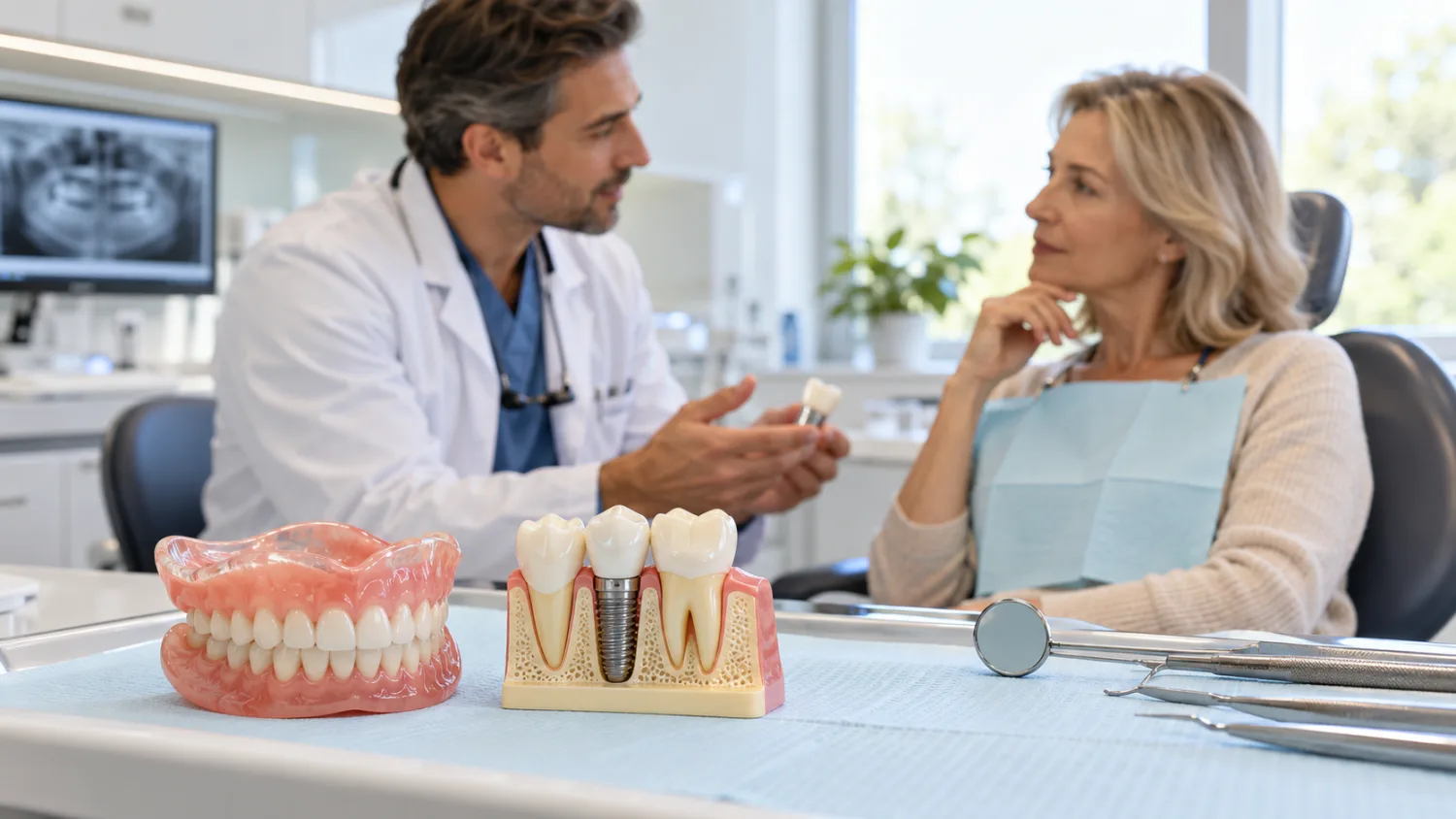
A dental bridge is one of the main ways to replace one or more missing teeth. It can fill a gap, improve chewing, help restore your smile and stop nearby teeth drifting into the empty space. For some people, a bridge is a practical alternative to a denture or dental implant.
But dental bridges are not all the same. Some are fixed to neighbouring teeth, some are bonded with metal or ceramic wings, and some are supported by dental implants. The right option depends on your mouth, your budget, your oral health, the position of the missing tooth and how much treatment you are willing to have.
This guide explains what dental bridges are, the different types, how much bridges cost in the UK, whether they are available on the NHS, what the procedure involves, how long they last, the risks, and the main alternatives.
If you are comparing related treatments, you may also find our guides to dental crowns, dental implants in the UK, private dentist prices in the UK and NHS dentist vs private dentist useful.
Quick summary
- A dental bridge is a fixed replacement for one or more missing teeth.
- Bridges can be supported by natural teeth or dental implants.
- Common types include traditional bridges, cantilever bridges, adhesive bridges and implant-supported bridges.
- Dental bridges are usually available on the NHS when clinically necessary.
- In England, NHS bridges fall under Band 3 treatment, which is £332.10 from 1 April 2026.
- Private bridges in the UK often cost around £700 to £2,500+, depending on type, material and number of teeth involved.
- Bridges can last 5 to 15 years or longer, but they need good cleaning and maintenance.
- Risks include decay in supporting teeth, gum problems, bridge loosening, fracture and future replacement.
- Alternatives include dentures, dental implants, orthodontic space closure or leaving the gap alone in selected cases.
What is a dental bridge?
A dental bridge is a fixed dental restoration used to replace a missing tooth or teeth. It literally “bridges” the gap between remaining teeth.
A bridge usually has one or more artificial replacement teeth, called pontics, held in place by supports. These supports may be crowns placed on neighbouring natural teeth, adhesive wings bonded to the back of teeth, or dental implants placed in the jawbone.
Unlike a denture, most bridges are fixed in place and are not removed by the patient each night. This can make them feel more stable and natural than removable dentures.
The NHS describes a bridge as a fixed replacement for a missing tooth or teeth, and includes bridges under Band 3 NHS dental treatment when clinically appropriate. You can read more on the NHS dental treatment costs page.
Why might you need a dental bridge?
A dental bridge may be considered if you have one or more missing teeth and want a fixed replacement. Missing teeth can affect appearance, speech, chewing and confidence. They can also allow neighbouring teeth to move over time.
Common reasons for needing a bridge include:
- A tooth has been removed because of decay, fracture or infection.
- A tooth is missing after trauma.
- A tooth never developed.
- A gap affects your smile or confidence.
- A gap makes chewing difficult.
- A denture feels uncomfortable or loose.
- A dental implant is not suitable or affordable.
- The neighbouring teeth already need crowns, making a bridge more practical.
A bridge is not always needed for every missing tooth. Some gaps can be safely left alone, depending on where they are and how they affect your mouth. Your dentist should explain whether replacing the tooth is necessary, optional or mainly cosmetic.
Are dental bridges available on the NHS?
Yes, dental bridges are usually available on the NHS when they are clinically necessary to maintain oral health and function. In England, bridges are included in NHS Band 3 treatment. From 1 April 2026, Band 3 costs £332.10 and includes crowns, inlays, onlays, dentures and bridges.
The NHS also explains that, with the exception of teeth whitening, implants and veneers, treatments such as crowns, bridges, root canals, fillings and dentures are usually available on the NHS when clinically needed.
However, NHS treatment is based on clinical need, not purely cosmetic preference. A bridge may be offered if it is appropriate, but your dentist may recommend a denture, no replacement or another option depending on your mouth.
If you are offered a private bridge at a mixed NHS/private practice, ask:
- Is a bridge clinically necessary?
- Is an NHS bridge available in my case?
- What type of bridge would be available on the NHS?
- Why is a private bridge being recommended?
- What are the differences in material, appearance, lifespan and cost?
- Are there NHS alternatives, such as a denture?
How much does a dental bridge cost privately in the UK?
Private dental bridges in the UK often cost around £700 to £2,500+. Larger or more complex bridges can cost more, especially if they involve multiple teeth, high-end ceramic materials, specialist planning or dental implants.
Bridge pricing can be confusing because many bridges are priced per “unit”. A unit means one crown or one replacement tooth within the bridge. For example, a three-unit bridge usually replaces one missing tooth and is supported by two neighbouring teeth. If a clinic charges per unit, the final cost may be three times the unit price.
| Bridge type | Typical private UK cost range | Notes |
|---|---|---|
| Adhesive bridge | Approximately £500 to £1,200+ | Often used for front teeth; less drilling than traditional bridges. |
| Traditional three-unit bridge | Approximately £1,200 to £3,000+ | Often replaces one missing tooth using crowns on neighbouring teeth. |
| Cantilever bridge | Approximately £800 to £2,000+ | Supported from one side only; suitable only in selected cases. |
| Porcelain-fused-to-metal bridge | Approximately £700 to £1,000+ per unit | Strong option with tooth-coloured porcelain over metal. |
| All-ceramic or zirconia bridge | Approximately £800 to £1,300+ per unit | Often chosen for better appearance, especially in visible areas. |
| Implant-supported bridge | Often £4,000 to £12,000+ | Depends on number of implants, number of teeth and whether grafting is needed. |
These are broad guide prices only. Your exact quote depends on the type of bridge, number of units, materials, condition of supporting teeth, laboratory costs and whether additional treatment is needed first.
Why do bridge prices vary so much?
Dental bridge prices vary because bridges differ in design, materials and complexity. A simple adhesive bridge replacing one front tooth is very different from a multi-unit implant-supported bridge replacing several back teeth.
Prices may vary because of:
- Number of units: more replacement teeth or supporting crowns increase the cost.
- Material: zirconia, ceramic, porcelain-fused-to-metal and metal have different costs.
- Tooth position: front teeth often need more aesthetic detail; back teeth need strength.
- Condition of supporting teeth: decay, cracks, old fillings or root canal needs can add treatment.
- Laboratory quality: high-quality dental technician work costs more.
- Dentist experience: complex restorative or cosmetic work may cost more.
- Clinic location: fees are often higher in London and major cities.
- Implants: implant-supported bridges involve surgery and separate implant components.
Types of dental bridges
There are several types of dental bridges. The best choice depends on the location of the gap, the health of nearby teeth, bite forces, appearance, budget and whether you want to avoid drilling natural teeth.
Traditional dental bridge
A traditional bridge is the most familiar type. It uses crowns on the teeth either side of the gap to support a false tooth in the middle.
For example, if one tooth is missing, the dentist may prepare the tooth on either side for crowns. These crowns are joined to the replacement tooth, forming a three-unit bridge.
Traditional bridges can be strong and stable, but they usually require drilling the supporting teeth. This can be a disadvantage if those teeth are healthy and untouched.
Adhesive bridge
An adhesive bridge, sometimes called a resin-bonded bridge or Maryland bridge, uses one or two wings bonded to the back of neighbouring teeth. It is often used to replace a missing front tooth.
Adhesive bridges are more conservative because they usually require little or no drilling. They can be a good option when the supporting teeth are healthy and you want to avoid crowns.
The main downside is that they can debond, meaning the bridge may come loose. They are also not suitable for every bite or every missing tooth.
Cantilever bridge
A cantilever bridge is supported from one side only. It may be used when there is only one suitable supporting tooth next to the gap.
Cantilever bridges must be planned carefully because they place extra force on the supporting tooth. They are not suitable for all areas of the mouth, especially where bite forces are heavy.
Implant-supported bridge
An implant-supported bridge is held by dental implants rather than natural teeth. This can be useful when several teeth are missing or when neighbouring teeth are healthy and you do not want them drilled for crowns.
Implant-supported bridges can be stable and long-lasting, but they are more expensive and involve surgery, healing time and implant maintenance. Bone grafting may also be needed in some cases.
If you are considering implants, read our detailed guide: Dental Implants in the UK: Costs, Procedure, Risks and Alternatives.
Dental bridge materials
Bridges can be made from different materials. The right material depends on strength, appearance, bite and budget.
Porcelain-fused-to-metal bridges
These bridges have a metal base covered with tooth-coloured porcelain. They can be strong and have been widely used for many years. However, the porcelain may chip, and a grey line may sometimes show near the gum if the gum recedes.
All-ceramic bridges
All-ceramic bridges can look very natural and are often considered for visible front teeth. They may not always be suitable for long spans or heavy bite forces, depending on the material used.
Zirconia bridges
Zirconia is a strong tooth-coloured material used for crowns and bridges. It can be suitable for front or back teeth, depending on the design and aesthetic requirements.
Metal bridges
Metal bridges are strong and durable but are not tooth-coloured. They may be used in less visible areas where function matters more than appearance.
Gold bridges
Gold alloy can be durable and kind to opposing teeth, but it is visible and often expensive. It is generally considered for back teeth rather than visible front teeth.
Dental bridge vs dental crown
A dental crown covers and protects one damaged tooth. A dental bridge replaces one or more missing teeth.
Crowns and bridges are closely related because many traditional bridges are supported by crowns on neighbouring teeth. If your dentist says you need a “three-unit bridge”, this may involve two crowns joined to one replacement tooth.
If the tooth is still present and can be saved, a crown may be used to restore it. If the tooth is missing, a bridge may be used to replace it.
For more background, read: Dental Crowns Explained.
Dental bridge vs dental implant
A bridge replaces a missing tooth by using nearby teeth or implants for support. A dental implant replaces the missing root with a small fixture placed in the jawbone, then supports a crown, bridge or denture.
A bridge may be better if:
- You want a fixed option without implant surgery.
- The neighbouring teeth already need crowns.
- You do not have enough bone for an implant and do not want grafting.
- You want a faster or lower-cost fixed option.
- You are not medically suitable for implant surgery.
An implant may be better if:
- The neighbouring teeth are healthy and you want to avoid drilling them.
- You want to replace a missing tooth independently.
- You have enough bone and good gum health.
- You are willing to have surgery and wait for healing.
- Your dentist believes it offers a better long-term plan.
Neither option is automatically better. It depends on the mouth.
Dental bridge vs denture
A bridge is fixed in place. A denture is removable. Both can replace missing teeth, but they feel different.
A bridge may feel more stable and natural, but it usually costs more and may involve drilling supporting teeth. A denture is usually cheaper and easier to repair or alter, but it may feel bulkier or less secure.
Dentures may be better if several teeth are missing, if you want a lower-cost option, if surgery is not suitable, or if the remaining teeth are not strong enough to support a bridge.
The dental bridge procedure: step by step
The procedure depends on the type of bridge. A traditional bridge usually takes at least two appointments, while adhesive bridges may be simpler and implant-supported bridges take longer because implant surgery and healing are involved.
1. Examination and diagnosis
Your dentist examines your teeth, gums and bite. They may take X-rays to check the supporting teeth, roots and bone.
The dentist should assess:
- How many teeth are missing.
- Whether neighbouring teeth are strong enough.
- Whether supporting teeth have decay, cracks or large fillings.
- Whether gum disease is present.
- How your bite will affect the bridge.
- Whether an implant, denture or no treatment may be better.
2. Treatment planning and consent
Your dentist should explain the bridge type recommended, why it is suitable, what alternatives exist, what risks are involved and what it will cost.
The General Dental Council says dental professionals must obtain valid consent before treatment, explaining relevant options and possible costs. You can read the GDC standard here: GDC Standards: Obtain valid consent.
3. Preparing the supporting teeth
For a traditional bridge, the supporting teeth are shaped so crowns can fit over them. This involves removing some tooth structure.
For an adhesive bridge, little or no drilling may be needed. The dentist prepares the surface so the wing can bond to the tooth.
4. Scan or impression
The dentist takes a digital scan or traditional impression so the bridge can be made to fit your mouth.
5. Temporary bridge
If teeth have been prepared for crowns, a temporary bridge or temporary crowns may be fitted while the final bridge is made. Temporary restorations protect the prepared teeth and help with appearance.
6. Laboratory work
A dental technician makes the bridge using the chosen material. The bridge must fit the prepared teeth, match your bite and look appropriate for your smile.
7. Fitting the bridge
At the fitting appointment, the dentist checks the bridge for fit, bite, comfort and appearance. If everything is suitable, the bridge is cemented or bonded in place.
8. Bite adjustment
Your dentist checks how your teeth meet. A bridge that feels high or uncomfortable may need adjustment.
9. Cleaning instructions
You should be shown how to clean under and around the bridge. This is essential because food and plaque can collect around the bridge and supporting teeth.
Does getting a dental bridge hurt?
Bridge preparation is usually carried out with local anaesthetic, so it should not be painful. You may feel pressure, vibration and water spray during the appointment.
Some sensitivity is possible after tooth preparation, especially while wearing a temporary bridge. If pain is severe, persistent or triggered by biting, contact your dentist.
How long does a dental bridge take?
A traditional bridge usually takes two or more appointments over one to three weeks. An adhesive bridge may be quicker in some cases. An implant-supported bridge can take several months because implants need time to heal before the final bridge is fitted.
How long do dental bridges last?
Dental bridges often last around 5 to 15 years, and some last longer. Lifespan depends on bridge type, material, oral hygiene, gum health, bite forces and the condition of the supporting teeth.
A bridge may fail earlier if:
- The supporting teeth develop decay.
- Gum disease affects support.
- The bridge comes loose.
- Porcelain chips or fractures.
- The bite places too much stress on the bridge.
- You grind or clench your teeth.
- Cleaning under the bridge is poor.
- The supporting tooth becomes infected or fractured.
A bridge can be long-lasting, but it is not fit-and-forget. Cleaning and check-ups matter.
How to clean a dental bridge
Cleaning a bridge is different from cleaning natural teeth because you need to clean under the false tooth as well as around the supporting teeth.
Your dentist or hygienist may recommend:
- Brushing twice daily with fluoride toothpaste.
- Cleaning around the bridge margins carefully.
- Using floss threaders to clean under the bridge.
- Using superfloss designed for bridges.
- Using interdental brushes where suitable.
- Using a water flosser as an extra aid, not a full replacement for brushing.
- Regular hygienist appointments if advised.
If you cannot clean under a bridge properly, plaque and food can build up. This can cause bad breath, gum inflammation and decay in the supporting teeth.
Can a bridge get decay underneath?
Yes. The bridge itself cannot decay, but the natural teeth supporting it can. Decay can develop at the crown edges or under bridge retainers if plaque is not removed.
This is one of the biggest long-term risks of traditional bridges. If decay affects a supporting tooth, the bridge may need to be removed, replaced or converted to another option.
Can a dental bridge come loose?
Yes. Bridges can debond or become loose. Adhesive bridges are particularly known for debonding in some cases, although they can often be rebonded if the bridge and tooth are still suitable.
If a bridge feels loose:
- Do not keep chewing on it.
- Do not use household glue.
- Keep the bridge safe if it comes out.
- Contact your dentist as soon as possible.
- Keep the area clean.
A loose bridge may indicate cement failure, decay, fracture or bite problems. It should be checked properly.
Risks and disadvantages of dental bridges
Dental bridges can be very useful, but they have risks and limitations.
- Drilling healthy teeth: traditional bridges often require preparing neighbouring teeth for crowns.
- Decay risk: supporting teeth can decay around bridge margins.
- Gum problems: plaque under the bridge can irritate gums.
- Debonding: bridges can come loose, especially adhesive bridges.
- Fracture: porcelain or ceramic can chip or crack.
- Root canal risk: supporting teeth may later need root canal treatment.
- Cleaning difficulty: bridges require special cleaning under the false tooth.
- Replacement: bridges do not last forever and may need replacing.
- Effect on supporting teeth: if a supporting tooth fails, the whole bridge may fail.
These risks do not mean bridges are bad. They mean the decision should be made carefully.
Advantages of dental bridges
Bridges can be a good option in the right situation.
- They replace missing teeth with a fixed restoration.
- They can improve chewing.
- They can improve appearance and confidence.
- They are usually quicker than implants.
- They avoid implant surgery.
- They may be available on the NHS when clinically needed.
- They can be useful when neighbouring teeth already need crowns.
- Adhesive bridges can be relatively conservative for front teeth.
Alternatives to dental bridges
A bridge is not the only way to replace missing teeth. Your dentist should explain reasonable alternatives before treatment starts.
Dentures
Dentures are removable appliances that replace missing teeth. They are often cheaper than bridges and can be useful when several teeth are missing.
Dentures may feel less fixed than bridges, but they avoid drilling supporting teeth and can be easier to repair or adjust.
Dental implants
Implants replace missing tooth roots and can support crowns, bridges or dentures. They can avoid drilling neighbouring teeth but involve surgery, higher costs and longer treatment times.
Orthodontic space closure
In selected cases, orthodontic treatment may close or redistribute spaces, avoiding the need for a bridge. This is not suitable for every gap.
Leaving the gap
Sometimes doing nothing is reasonable, especially if the gap is not visible, chewing is not affected and neighbouring teeth are stable. Your dentist should explain the likely consequences of leaving the gap untreated.
Saving the tooth instead
If the tooth is not yet missing but is damaged, it may be possible to save it with root canal treatment, a crown or another restoration. Read more: Root Canal Treatment Explained.
Questions to ask before getting a dental bridge
Before agreeing to a bridge, ask your dentist:
- Why do I need to replace this missing tooth?
- What type of bridge do you recommend and why?
- Is the bridge available on the NHS?
- What would the private option cost?
- How many units is the bridge?
- Will neighbouring teeth need to be drilled?
- Are the supporting teeth strong enough?
- Do I have gum disease that needs treating first?
- Would an implant be better?
- Would a denture be simpler or safer?
- How long should the bridge last?
- How do I clean under it?
- What happens if it comes loose?
- Can I have a written treatment plan?
Red flags to watch out for
Be cautious if a clinic or dentist:
- Recommends a bridge without explaining alternatives.
- Does not explain whether neighbouring teeth will be drilled.
- Does not check gum health before planning.
- Does not explain NHS vs private options clearly.
- Gives a vague price without saying how many units are involved.
- Does not explain cleaning and maintenance.
- Promises the bridge will last forever.
- Does not discuss risks to supporting teeth.
- Pressures you into treatment without time to think.
When should you get a second opinion?
A second opinion may be sensible if:
- You have been told several teeth need drilling for a bridge.
- The treatment is expensive.
- You are unsure whether an implant, denture or bridge is best.
- You have gum disease or many missing teeth.
- The supporting teeth are healthy and you are worried about drilling them.
- You are considering treatment abroad.
- You feel rushed or pressured.
A good dentist should not object if you want time to consider your options before major treatment.
How to choose a dentist for a bridge
Bridge treatment needs careful planning because it affects both the missing tooth area and the supporting teeth. A good dentist should explain the design, material, risks, cleaning and long-term maintenance.
Look for:
- Clear diagnosis and treatment plan.
- X-rays or scans where needed.
- Discussion of dentures and implants as alternatives.
- Explanation of NHS and private options.
- Transparent bridge pricing by unit.
- Good communication about cleaning and aftercare.
- No pressure selling.
- Clear aftercare if the bridge feels high, loose or uncomfortable.
You can browse local dental providers through All Health and Care, including our Top 10 Dentists in the UK and local pages such as Top 10 Dentists in London.
Final thoughts
Dental bridges can be an excellent way to replace missing teeth, especially when you want a fixed option and implants are not suitable, affordable or necessary. They can restore chewing, improve appearance and help maintain the shape of your smile.
But bridges also involve important trade-offs. Traditional bridges may require drilling neighbouring teeth. Adhesive bridges can come loose. Implant-supported bridges involve surgery and higher costs. All bridges need careful cleaning and future maintenance.
Before agreeing to a bridge, make sure you understand the type of bridge, what teeth will support it, whether NHS treatment is available, what it will cost privately, how to clean it, and what alternatives exist. A good bridge should be planned around your long-term oral health, not just filling the gap quickly.
For more patient-friendly dental guides, visit our Dental Health & Dentistry section.
Frequently asked questions about dental bridges
What is a dental bridge?
A dental bridge is a fixed replacement for one or more missing teeth. It uses crowns, adhesive wings or dental implants to hold artificial teeth in place.
Are dental bridges available on the NHS?
Yes, bridges are usually available on the NHS when clinically necessary. In England, bridges fall under Band 3 treatment, which is £332.10 from 1 April 2026.
How much does a private dental bridge cost in the UK?
Private dental bridges often cost around £700 to £2,500+, but larger or implant-supported bridges can cost much more. Prices depend on type, material, number of units and complexity.
What is a three-unit bridge?
A three-unit bridge usually replaces one missing tooth and uses crowns on the two neighbouring teeth for support. The two crowns and one false tooth make three units.
How long do dental bridges last?
Dental bridges often last around 5 to 15 years, and some last longer. Lifespan depends on bridge type, cleaning, gum health, bite and the condition of supporting teeth.
Is a bridge better than an implant?
Not always. A bridge may be quicker, cheaper and non-surgical. An implant may avoid drilling neighbouring teeth but costs more and involves surgery. The best option depends on your mouth.
Is a bridge better than a denture?
A bridge is fixed and may feel more stable. A denture is removable, usually cheaper and may be better when several teeth are missing or supporting teeth are weak.
Does getting a bridge hurt?
Bridge preparation is usually done with local anaesthetic, so it should not be painful. Some sensitivity may occur afterwards, especially with temporary bridges.
Do dental bridges damage teeth?
Traditional bridges require drilling supporting teeth, which permanently changes them. Adhesive bridges are usually more conservative. Your dentist should explain how much tooth preparation is needed.
Can a dental bridge come loose?
Yes. Bridges can come loose because of cement failure, decay, bite forces or debonding. Contact your dentist and do not use household glue.
Can food get under a bridge?
Yes, food and plaque can collect under the false tooth. You need special cleaning tools such as floss threaders, superfloss or interdental brushes.
Can a bridge get decay underneath?
The bridge material cannot decay, but the supporting natural teeth can. Decay around bridge margins is a common reason bridges fail.
Can a bridge be repaired?
Sometimes. Minor chips may be repaired, and some loose bridges can be recemented or rebonded. If there is decay, fracture or poor fit, replacement may be needed.
What is an adhesive bridge?
An adhesive bridge uses a wing bonded to the back of a neighbouring tooth. It is often used for front teeth and usually involves less drilling than a traditional bridge.
What is an implant-supported bridge?
An implant-supported bridge is held by dental implants rather than natural teeth. It can replace several missing teeth without relying on neighbouring teeth for support.
Can I whiten a dental bridge?
No. Whitening gel does not change the colour of bridge materials. If you plan to whiten your teeth, discuss this before the bridge is made.
How do I clean under a dental bridge?
Your dentist or hygienist may recommend floss threaders, superfloss, interdental brushes or a water flosser. Cleaning under the false tooth is essential.
Can I eat normally with a bridge?
Usually yes once the final bridge is fitted and comfortable. Avoid very hard or sticky foods if advised, especially with temporary or adhesive bridges.
What happens if I do not replace a missing tooth?
Sometimes leaving a gap is reasonable. In other cases, neighbouring teeth may drift, chewing may change or the bite may be affected. Ask your dentist what is likely in your case.
Should I get a second opinion before a bridge?
Consider a second opinion if several healthy teeth would need drilling, the treatment is expensive, or you are unsure whether a bridge, denture or implant is best.