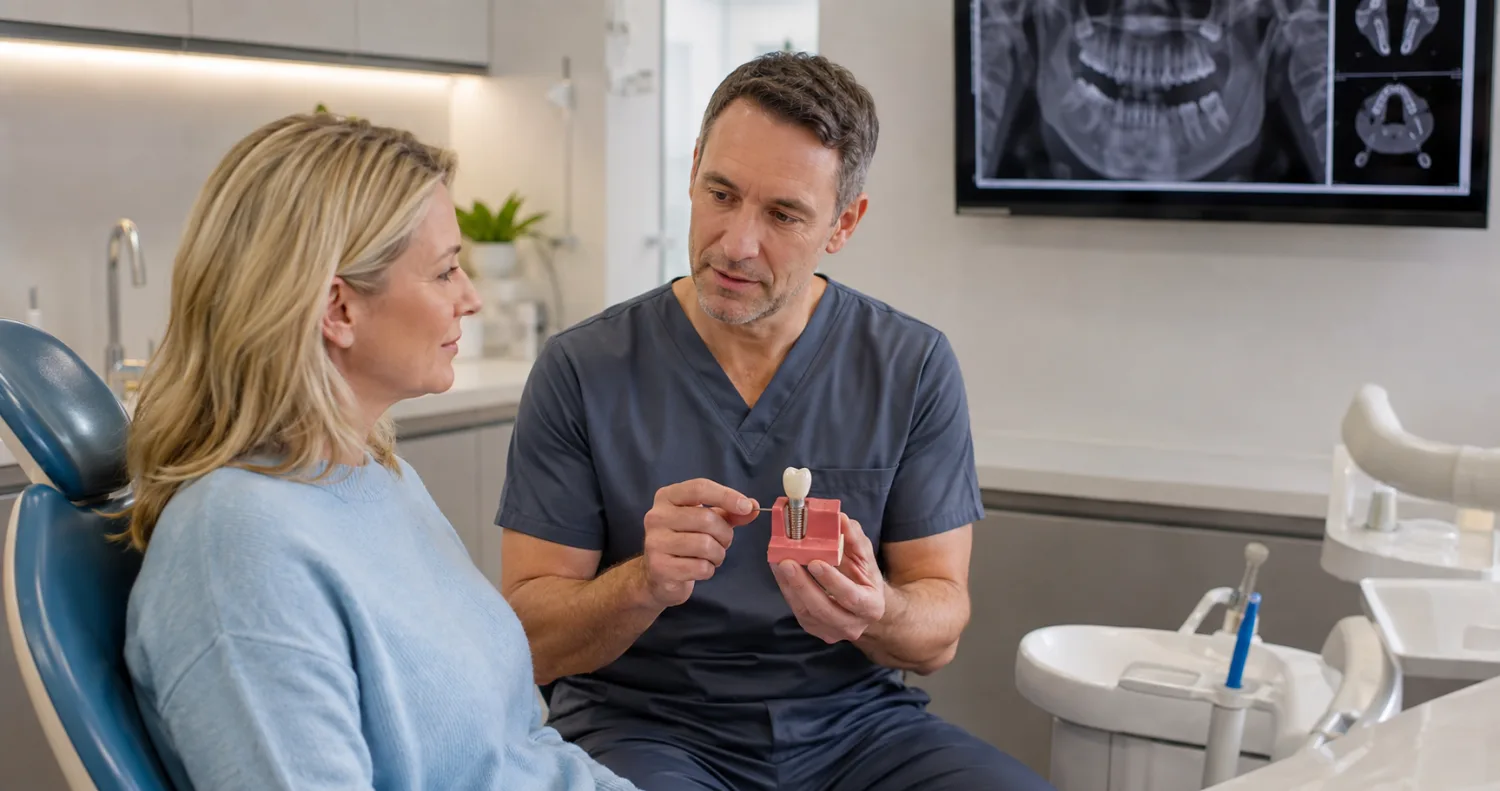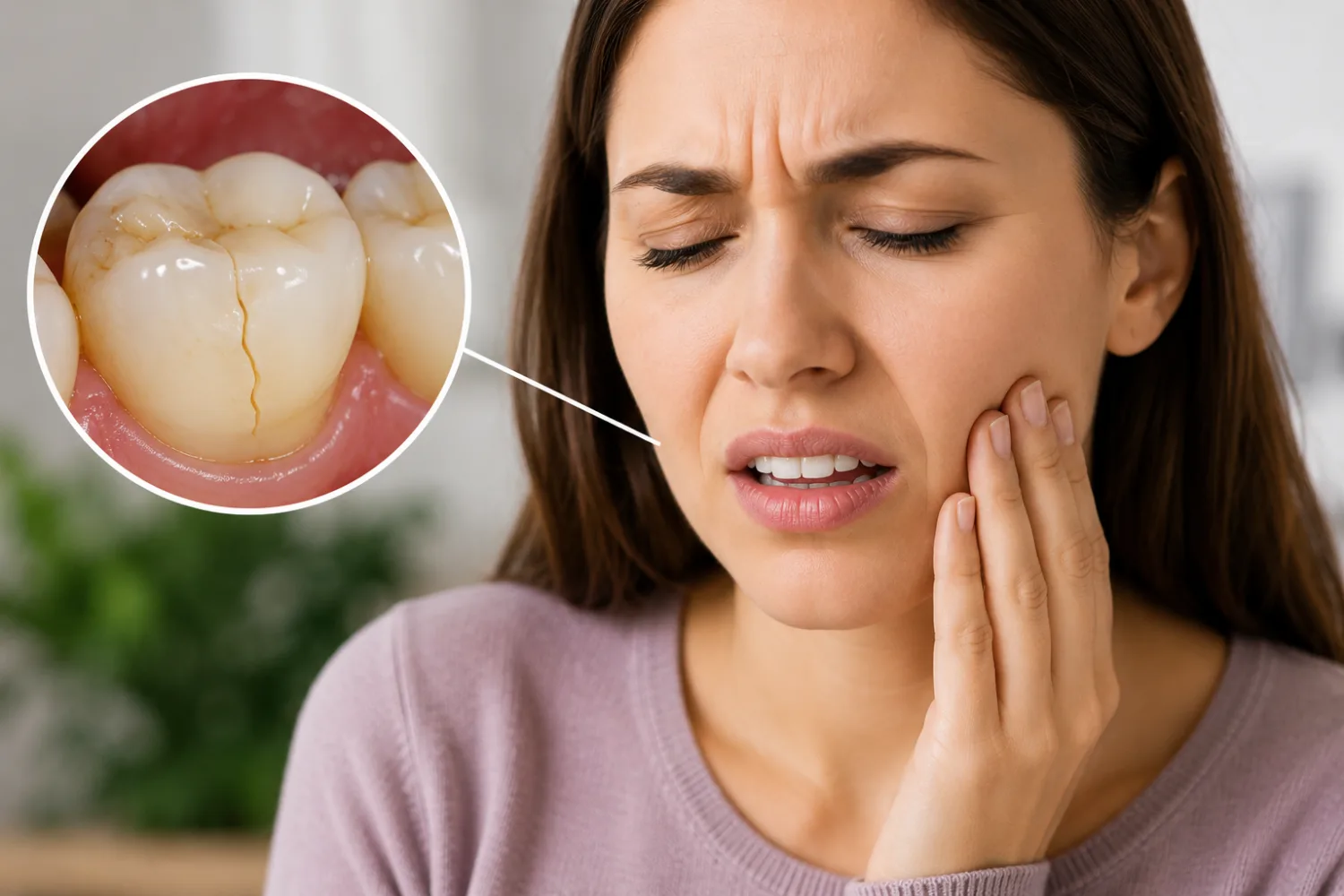
Cracked tooth syndrome can be frustrating because the pain is often hard to pin down. The tooth may look normal, an X-ray may not clearly show the crack, and the pain may come and go. One day you can chew normally, and the next day a sharp pain shoots through the tooth when you bite on something firm.
A cracked tooth is not always a dental emergency, but it should not be ignored. Small cracks can sometimes be repaired before they become serious. Deeper cracks can irritate the nerve, lead to infection, or split the tooth in a way that makes it difficult or impossible to save.
This guide explains what cracked tooth syndrome is, the symptoms to watch for, why diagnosis can be tricky, what treatments may be used, when it becomes urgent, and what you can do while waiting to see a dentist.
What is cracked tooth syndrome?
Cracked tooth syndrome usually means there is a crack running through part of the tooth, often from the biting surface towards the root. The crack may be too small to see clearly, but it can still move slightly when you bite. That movement can irritate the tooth and cause sharp pain.
It is most common in back teeth because molars and premolars take heavy chewing forces. These teeth also often have large old fillings, which can weaken the remaining tooth structure over time. Cracks may also happen after trauma, grinding, clenching, chewing very hard foods, or biting unexpectedly on something hard.
Not every crack is the same. Some are tiny surface lines in the enamel and cause no symptoms. Others pass deeper into the dentine, reach the nerve, extend below the gumline or split the root. The depth and direction of the crack largely determine whether the tooth can be repaired.
Cracked tooth syndrome can be difficult to diagnose because symptoms may be intermittent and the crack may not show clearly on a standard dental X-ray. Clinical examination, bite tests, magnification, light, staining and sometimes more advanced imaging may be needed.
Cracked tooth symptoms
The classic symptom is sharp pain when biting or releasing the bite. People often describe it as a sudden “zing” or electric pain when chewing. The pain may happen with certain foods, certain angles of pressure, or only when biting on one side of the tooth.
Common symptoms of a cracked tooth include:
- Sharp pain when biting down
- Pain when releasing the bite
- Sensitivity to cold, heat or sweet foods
- Occasional toothache that comes and goes
- Pain that is difficult to locate
- Discomfort when chewing hard foods, seeds or crusty bread
- A rough edge or visible line on the tooth
- Swelling, bad taste or throbbing if infection develops
Cleveland Clinic lists sharp pain when biting, sensitivity to temperature changes or sweet foods, swelling around the tooth and toothache when chewing as possible cracked tooth symptoms. Research on cracked tooth syndrome also notes that pain on biting is often triggered by small hard particles in food, such as seeds or muesli, and may be accompanied by cold sensitivity.
A cracked tooth may not hurt all the time. That is one reason people delay booking a dental appointment. But pain that comes and goes can still be a warning sign. If a crack deepens, the tooth may become much more painful and treatment can become more complicated.
Cracked tooth, chipped tooth or broken tooth: what is the difference?
These terms are often used together, but they do not always mean the same thing.
A chipped tooth usually means a small piece of enamel or tooth has broken off. It may be sharp or rough, but it may not involve a deep crack. Some chips can be smoothed or repaired with bonding, depending on size and location.
A broken tooth usually means a larger piece has fractured away. This can expose dentine or even the nerve inside the tooth. A broken tooth may need a filling, bonding, crown, root canal treatment or extraction depending on how much tooth is left.
A cracked tooth can be more hidden. The tooth may still look intact, but a crack runs through it. The problem is that the crack can open slightly under pressure, causing pain and allowing bacteria to irritate the nerve.
NHS guidance advises seeing a dentist if you or your child has chipped, cracked or broken a tooth, and says not to go to a GP because they cannot provide dental treatment. If your tooth injury happened because of a blow to the mouth, our guide to knocked-out teeth explains what to do if the tooth is loose, displaced or completely out.
What causes a tooth to crack?
Teeth are strong, but they are not indestructible. A crack often happens when a tooth is weakened or exposed to heavy force.
Common causes include large fillings, old restorations, tooth decay, grinding or clenching, biting hard foods, trauma, uneven bite pressure, root canal-treated teeth, and natural weakening over time. Back teeth are especially vulnerable because they do most of the chewing.
A large filling can leave less natural tooth supporting the biting surface. This does not mean the filling was wrong; it may have been the best way to repair decay at the time. But over years, the remaining tooth can flex under chewing pressure and develop cracks. If you have been told a tooth needs repair because of decay or an old filling, our guide to dental fillings explains when a filling may be suitable.
Grinding and clenching can also create repeated stress. People who grind at night may not realise they do it until they develop tooth wear, jaw pain, headaches, cracked fillings or cracked teeth.
Sudden accidents can crack teeth too. Biting on a popcorn kernel, olive stone, bone fragment, hard sweet or ice cube can create a sharp force through the tooth. Sports injuries, falls and blows to the face can cause cracks, fractures or displaced teeth.
How dentists diagnose a cracked tooth
Diagnosing a cracked tooth can take careful investigation. The dentist will usually ask about the pattern of pain: when it happens, what triggers it, whether it is worse on biting or release, and whether cold, heat or sweet foods cause symptoms.
The dentist will examine the tooth and surrounding gums. They may look for visible lines, stained cracks, old fillings, wear marks, swelling, gum pockets or a small isolated gum defect beside one tooth. They may gently test the tooth with cold, tapping, pressure or a bite test.
A bite test can be very useful. The dentist may ask you to bite on a small instrument or cotton roll on different parts of the tooth. Pain on release is often a clue that a crack is present.
Dental X-rays may be taken to check for decay, infection, bone changes, old filling problems or root issues. However, cracks do not always show on X-rays, especially if the crack direction does not line up with the X-ray beam. Our guide to dental X-rays explains what they can and cannot show.
In some cases, the dentist may use magnification, special lights, dye or referral to a specialist. Diagnosis can still involve uncertainty. Sometimes a temporary protective restoration or crown is used to see whether stabilising the tooth improves symptoms.
Treatment options for a cracked tooth
Treatment depends on where the crack is, how deep it goes, whether the nerve is involved, how much tooth structure remains, and whether the crack extends below the gumline.
Small cracks or chips may be repaired with composite bonding or a filling. This may be enough if the crack is shallow and the tooth is otherwise strong. Bonding can smooth rough edges, seal small defects and improve appearance.
If the crack affects a biting cusp or a heavily filled back tooth, a crown or onlay may be recommended. These restorations cover and protect the tooth so the cracked part is less likely to flex under chewing pressure. A crown is often used when the tooth needs stronger long-term protection. Our guide to dental crowns explains the procedure, costs and alternatives.
If the crack has irritated or infected the nerve, root canal treatment may be needed before the tooth is restored. Root canal treatment removes infected or inflamed tissue from inside the tooth, then the tooth is sealed and usually protected with a crown. You can read more in our guide to root canal treatment.
If the crack extends down the root or below the gumline, the tooth may not be saveable. In that situation, extraction may be the safest option. Our guide to tooth extraction explains what happens if a tooth needs to be removed.
When is a cracked tooth urgent?
A cracked tooth should be checked by a dentist, but the level of urgency depends on symptoms.
Book a dental appointment soon if you have pain on biting, sensitivity, a visible crack, a rough edge, or a piece of tooth has broken off. Avoid chewing on that side while waiting. Early treatment may prevent the crack from getting worse.
Seek urgent dental advice if you have severe pain, swelling, pus, fever, a bad taste, the tooth is loose or displaced, the crack happened after trauma, or you cannot eat or sleep because of pain. These symptoms may suggest infection, nerve involvement or a more serious fracture.
NHS guidance says to ask for an urgent dentist appointment or get help from NHS 111 if you think you have a dental abscess, and not to go to a GP surgery because GPs cannot provide dental treatment. NHS guidance on urgent dental care also says you can contact a dentist or get advice from NHS 111 if you need emergency or urgent dental care.
Call 999 or go to emergency care if there is serious facial trauma, heavy uncontrolled bleeding, swelling affecting breathing or swallowing, suspected broken jaw, loss of consciousness, or symptoms after a significant head injury.
If the tooth has been completely knocked out, the advice is different and very time-sensitive. See our guide to knocked-out tooth first aid.
What to do while waiting to see a dentist
While waiting for dental care, try to protect the tooth from further damage. Avoid chewing on that side, especially hard foods such as nuts, crusty bread, seeds, hard sweets, ice, bones or popcorn kernels.
If the tooth has a sharp edge, pharmacy temporary dental repair kits may sometimes help cover it for a short time, but they are not a permanent solution. Do not use household glues or DIY materials in your mouth.
If a piece of tooth has broken off, NHS guidance says to put the fragment in milk or saliva and take it to the dentist, as the dentist may be able to glue it back on.
You may be able to use pain relief such as paracetamol or ibuprofen if you can take them safely. Follow the packet instructions or ask a pharmacist if you are unsure. Do not place aspirin directly on the tooth or gum, as this can irritate or burn the soft tissues.
Keep the area clean by brushing gently. If food gets trapped, rinse gently with warm water. If there is swelling, fever, spreading pain or a bad taste, seek urgent dental advice rather than waiting for a routine appointment.
Can a cracked tooth heal by itself?
A cracked tooth does not heal in the same way as a cut in the skin. Tooth enamel and dentine cannot grow back across a crack. Symptoms may settle temporarily, but the crack itself remains.
This is why a cracked tooth can be deceptive. It may hurt for a few days, then seem better. But if the crack is still present, biting pressure can make it worse later. Bacteria can also enter through the crack and irritate the nerve or cause infection.
Very tiny surface cracks in enamel, sometimes called craze lines, may not need treatment if they are harmless and symptom-free. But a crack causing pain on biting, sensitivity or repeated symptoms should be assessed.
The earlier a meaningful crack is diagnosed, the more options there may be. A small crack may be restored. A cracked cusp may be protected with a crown or onlay. A deeper crack reaching the nerve may need root canal treatment. A vertical crack into the root may mean extraction.
How much does cracked tooth treatment cost?
The cost depends on what treatment is needed. A cracked tooth is not one fixed procedure. It might need smoothing, bonding, a filling, a crown, root canal treatment, extraction or replacement with a bridge, denture or implant.
On the NHS in England, costs depend on the treatment band. A simple examination and diagnosis is usually Band 1. Fillings, extractions and root canal treatment usually fall under Band 2 if clinically needed. Crowns are usually Band 3. NHS charges differ in Scotland, Wales and Northern Ireland, and some people qualify for free or reduced-cost NHS dental care.
Private costs vary much more. A simple composite repair may be relatively modest, while a crown, root canal treatment, specialist treatment or implant replacement can cost significantly more. Ask for a written treatment plan and estimate before agreeing to treatment.
It is also worth asking about prognosis. A cheap repair may not be good value if the crack is deep and the tooth is unlikely to last. Equally, a more expensive crown may not be appropriate if the tooth is already split below the gumline. The right decision depends on diagnosis, likely lifespan, symptoms, cost and your priorities.
For wider cost comparisons, see our guide to private dentist prices in the UK.
How to reduce the risk of cracked teeth
You cannot prevent every cracked tooth, but you can reduce the risk by protecting teeth from heavy forces and treating problems early.
Avoid chewing ice, hard sweets, popcorn kernels, pens or hard objects. Be careful with foods that contain stones, bones or seeds. If you grind or clench, ask your dentist whether a night guard may help. If your bite feels uneven or you keep breaking fillings, mention it at your check-up.
Do not ignore old fillings that are leaking, cracked or surrounded by decay. Large fillings may need monitoring because they can weaken the remaining tooth structure over time. Regular dental check-ups help dentists spot early signs of fracture, wear or failing restorations before the tooth breaks badly.
If you play contact sports, a custom mouthguard can help protect teeth from injury. This is especially important for people with prominent front teeth, previous dental trauma, crowns or large restorations.
Good everyday dental care also matters. Decay weakens teeth and makes cracks more likely. Brush twice daily with fluoride toothpaste, clean between teeth, and reduce frequent sugary snacks and drinks.
FAQ
What does cracked tooth syndrome feel like?
It often feels like sharp pain when biting or when releasing your bite. The pain may come and go and may be triggered by hard foods, cold drinks, sweet foods or chewing at a certain angle.
Can a cracked tooth be hard to diagnose?
Yes. Cracks can be very small or hidden under fillings or between cusps. They may not show clearly on X-rays. Dentists may use bite tests, magnification, light, dye and X-rays to help find the problem.
Is a cracked tooth an emergency?
It can be. A mild crack without severe pain may need a prompt dental appointment rather than emergency care. Severe pain, swelling, pus, trauma, a loose tooth or signs of infection need urgent dental advice.
Can a cracked tooth heal on its own?
No. Tooth structure does not heal across a crack. Symptoms may settle temporarily, but the crack can worsen or allow bacteria to irritate the nerve.
Can a dentist save a cracked tooth?
Sometimes. Treatment may include bonding, a filling, crown, onlay or root canal treatment. If the crack extends below the gumline or down the root, the tooth may need to be removed.
Will a cracked tooth show on an X-ray?
Not always. X-rays can show infection, decay, bone changes and some fractures, but many cracks are too fine or angled in a way that makes them difficult to see.
What happens if I ignore a cracked tooth?
The crack may deepen, the tooth may become more painful, the nerve may become inflamed or infected, and the tooth may eventually split. Early assessment gives the best chance of saving it.
Can a filling fix a cracked tooth?
A filling or bonding may help if the crack is small and shallow. Larger cracks or cracks in heavily loaded back teeth may need a crown or onlay for better protection.
Does a cracked tooth always need root canal treatment?
No. Root canal treatment is usually needed only if the crack has affected the nerve or caused infection. Many cracked teeth can be treated without root canal treatment if they are found early.
Why does my tooth hurt when I bite but not all the time?
A crack can open slightly under pressure and irritate the tooth, then close again when you stop biting. This can cause sharp, intermittent pain rather than constant toothache.
What should I avoid eating with a cracked tooth?
Avoid hard, crunchy or sticky foods, especially nuts, hard sweets, crusty bread, seeds, ice and chewing gum. Try not to chew on the affected side until a dentist has assessed it.
Can grinding cause cracked teeth?
Yes. Grinding and clenching put repeated heavy forces through the teeth, which can contribute to cracks, worn enamel, broken fillings and jaw pain. A dentist may recommend a night guard if grinding is a problem.