A knocked-out tooth is a dental emergency. If it is an adult tooth, acting quickly can sometimes save it. The tooth needs to be handled carefully, kept moist, and assessed by a dentist as soon as possible.
The most important thing is not to panic, not to scrub the tooth, and not to let it dry out. If it is a permanent adult tooth, it may be possible to put it back into the socket straight away. If that is not possible, place it in milk or saliva and get urgent dental help.
This guide explains what to do immediately after a tooth is knocked out, how to handle the tooth safely, what to do for children, when to call NHS 111 or 999, and what treatment may involve afterwards.
What to do immediately if a tooth is knocked out
If a tooth has been completely knocked out, the first few minutes matter. Stay as calm as possible and look for the tooth. Pick it up carefully by the crown, which is the white part normally visible in the mouth. Do not hold it by the root.
If the tooth is dirty, rinse it briefly with milk or cold running water. Do not scrub it. Do not use soap, disinfectant, alcohol or toothpaste. Do not scrape the root. The root surface contains delicate cells that may help the tooth reattach if it is replaced quickly.
If it is an adult tooth, try to put it back into the socket. Make sure it is facing the right way, then gently push it into position. Bite gently on a clean handkerchief, gauze or cloth to hold it in place while you get emergency dental care.
If you cannot put the tooth back in, keep it moist. Put it in a small container of milk, or keep it in saliva by placing it inside the cheek if the person is old enough and alert enough not to swallow it. For a child, using a container of milk is usually safer than putting the tooth in the mouth.
Then contact a dentist immediately. If you cannot reach a dentist, use NHS 111 for urgent advice. NHS guidance explains that a knocked-out tooth can often be saved by putting it back in place or placing it in milk as soon as possible before seeing a dentist.
Adult tooth or baby tooth: why it matters
The advice is different for adult teeth and baby teeth. This is very important.
If an adult tooth is knocked out, it may be possible to save it by putting it back into the socket quickly and seeing a dentist urgently. Adult teeth are permanent, so dentists will usually try to reimplant the tooth if it is suitable and if the injury is managed quickly enough.
If a baby tooth is knocked out, do not put it back into the socket. Re-inserting a baby tooth can damage the developing adult tooth underneath. Instead, contact a dentist or NHS 111 for advice as soon as possible.
NHS guidance is clear that you should never put a baby tooth back in. NHS Inform also says that if an adult tooth is knocked out or displaced, you should try putting it back in place and go to a dentist immediately, but should not reinsert a baby tooth.
If you are not sure whether it is a baby tooth or adult tooth, do not force it back in. Put the tooth in milk and get urgent dental advice. This is especially relevant for children around the mixed-dentition age, when baby teeth and adult teeth may both be present.
How to handle a knocked-out tooth safely
Handle the tooth as little as possible. Always hold it by the crown, not the root. The root may look dirty or have soft tissue attached, but it should not be scrubbed or scraped.
If the tooth has fallen on the ground, rinse it briefly. Use milk if available, or cold running water if not. The aim is only to remove visible dirt, not to make the tooth perfectly clean. Vigorous cleaning can damage the root surface.
Do not wrap the tooth in tissue. Do not keep it dry. Do not place it in plain water for a long time. Do not put it in alcohol, mouthwash or disinfectant. Do not try to clean it with a toothbrush.
The International Association of Dental Traumatology says milk or saliva is usually available and advises avoiding letting the tooth dry out. Dental Trauma UK gives similar public advice: pick the tooth up by the crown, do not touch the root, put an adult tooth back in if possible, and go straight to a dentist.
If the person is unconscious, confused, very young, at risk of swallowing the tooth, or has other serious injuries, do not place the tooth in their mouth. Store it in milk and get emergency help.
Should you put the tooth back in?
If it is definitely an adult tooth and the person is conscious, cooperative and able to hold it in place, putting it back into the socket quickly may give it the best chance. This is called reimplantation.
To do this, hold the tooth by the crown and check the direction. The smooth front surface should face outwards. Gently place the root into the socket and push the tooth into position. Do not force it if it will not go in. Bite gently on a clean cloth or gauze to hold it steady.
If you cannot put it back, do not keep trying repeatedly. Put it in milk or saliva and get urgent dental care. A dentist may still be able to reimplant it if the tooth has been kept moist and you are seen quickly.
Mayo Clinic first-aid advice says to try to put the tooth back into the socket and, if it does not go all the way in, bite gently on gauze, a napkin or damp paper towel to help keep it in place until seeing a dentist.
Do not put a baby tooth back in. Do not try to reinsert a tooth if there is a risk of choking, if the person cannot cooperate, or if there are serious facial injuries that need emergency medical assessment first.
What if the tooth is broken, chipped or loose instead?
A tooth that is chipped, broken, cracked, pushed out of position or loose after an injury still needs dental assessment, but the first aid is slightly different from a tooth that has been completely knocked out.
If a piece of tooth has broken off, try to find the fragment. Put it in milk or saliva and take it to the dentist. NHS guidance on chipped, broken or cracked teeth says that if a piece has broken off, it should be put in milk or saliva and taken to a dentist, as the dentist may be able to glue it back on.
If the tooth is loose or displaced but still in the mouth, do not keep wiggling it. Avoid biting on it. Contact a dentist urgently. A dentist may need to reposition and stabilise it.
If the injury has exposed the nerve, the tooth may be very sensitive or painful. Covering the area is not usually something you can do properly at home, so urgent dental care is needed.
For more general advice on tooth damage, see our guide to broken teeth. If the pain is severe or there is swelling, our guide to dental emergencies explains when to seek urgent help.
When to call a dentist, NHS 111 or 999
A knocked-out adult tooth needs emergency dental care. Contact a dentist immediately. Do not wait to see whether it settles. The sooner the tooth is managed, the better the chance that it can be saved.
If you cannot contact a dentist, use NHS 111. They can advise on urgent dental services in your area. Do not book a routine appointment days later for a knocked-out adult tooth.
Call 999 or go to emergency care if there are serious injuries, heavy bleeding that will not stop, loss of consciousness, vomiting after a head injury, confusion, suspected broken jaw, difficulty breathing, difficulty swallowing, severe facial swelling, or injuries around the eye.
If the knocked-out tooth happened during a sports injury, fall, accident or assault, think beyond the tooth. Head injury, jaw injury and cuts to the lips or face may need medical assessment as well as dental treatment.
If there is bleeding from the socket, bite gently on clean gauze or a clean cloth. If bleeding is heavy or does not slow with pressure, seek urgent help.
What will the dentist do?
The dentist will assess the tooth, the socket, nearby teeth, gums, lips, jaw and bite. They may ask when the injury happened, where the tooth was stored, whether it was put back in, and whether there were other injuries.
Dental X-rays are often needed. They can check whether the tooth is correctly positioned, whether the socket or jaw is damaged, whether neighbouring teeth are injured, and whether any root or tooth fragments remain. Our guide to dental X-rays explains why imaging may be recommended after dental trauma.
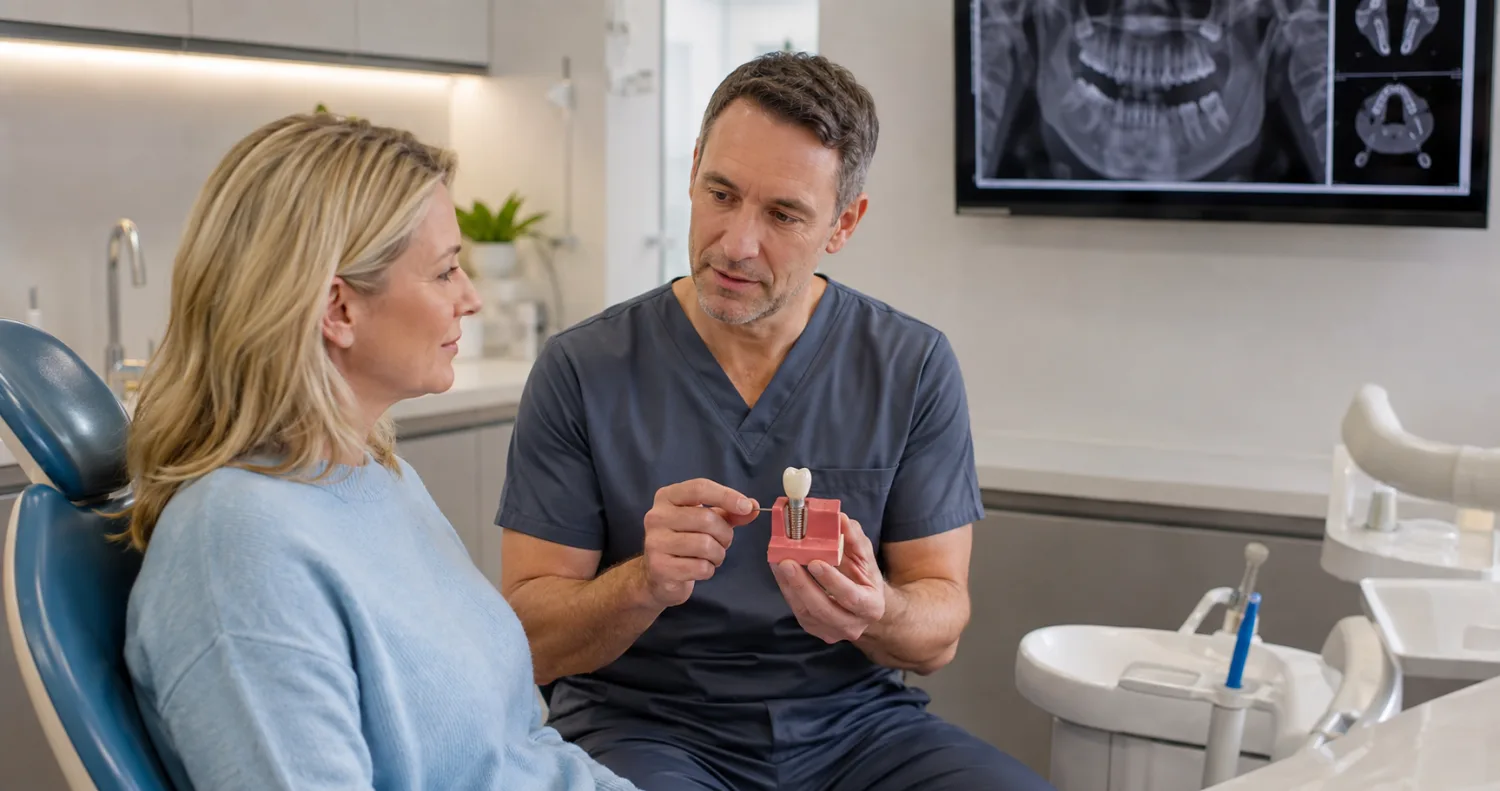
If the adult tooth has been reimplanted or can still be reimplanted, the dentist may position it correctly and stabilise it with a flexible splint attached to nearby teeth. This helps hold the tooth in place while the tissues begin to heal.
Further treatment is usually needed later. A knocked-out adult tooth often needs root canal treatment because the nerve and blood supply inside the tooth are damaged when it leaves the socket. The timing depends on the tooth, root development, injury type and the dentist’s assessment.
The dentist may also discuss pain relief, antibiotics in some cases, tetanus status if the tooth was contaminated, soft diet advice, cleaning instructions and follow-up visits. Follow-up is important because complications can develop weeks, months or even years later.
Can a knocked-out tooth be saved?
Sometimes, yes. A knocked-out adult tooth has the best chance if it is put back quickly or kept moist and treated urgently by a dentist. The longer it stays dry, the lower the chance of successful reimplantation.
The outcome depends on several factors: how long the tooth was out, whether it dried out, whether the root was touched or damaged, the person’s age, whether the root is fully developed, whether there are other injuries, and how quickly dental treatment is started.
The International Association of Dental Traumatology describes avulsion of permanent teeth as one of the most serious dental injuries and says prompt and correct emergency management is essential for the best outcome.
Even when a tooth is reimplanted successfully at first, it still needs monitoring. Possible complications include root resorption, infection, ankylosis, discolouration, gum problems and eventual tooth loss. This does not mean reimplantation is not worth trying. It means follow-up matters.
If the tooth cannot be saved, replacement options may include a temporary denture, bridge, adhesive bridge, orthodontic space closure or dental implant later, depending on age, jaw growth, tooth position, budget and clinical suitability. If replacement becomes necessary, our guides to dentures, dental bridges and dental implants explain the main options.
Aftercare after a knocked-out tooth is treated
After a knocked-out tooth is put back in place, the area may be sore and the tooth may feel tender. Follow the dentist’s aftercare instructions carefully.
You may be advised to eat soft foods, avoid biting directly on the injured tooth, keep the mouth clean, brush gently, use a recommended mouth rinse, and return for review appointments. Do not play contact sports again until your dentist says it is safe, and consider a custom sports mouthguard if the injury happened during sport.
If the tooth is splinted, do not pull at the splint with your fingers or tongue. Contact the dentist if the splint breaks, feels loose, or the tooth moves.
Watch for warning signs such as increasing pain, swelling, pus, fever, a bad taste, the tooth becoming very loose, or the tooth changing colour. Some colour change can happen after trauma, but it should be assessed because it may suggest nerve damage or infection.
Do not skip follow-up appointments even if the tooth looks fine. A reimplanted tooth can develop problems silently, and X-rays may be needed to monitor healing.
How to prevent knocked-out teeth
Not every accident can be prevented, but some risks can be reduced. Sports mouthguards are one of the most important protective measures for contact sports and activities where falls, elbows, balls or sticks can hit the mouth.
A custom mouthguard made by a dentist usually fits better than a basic shop-bought guard. A good fit matters because the guard needs to stay in place, allow breathing, and protect the teeth properly during impact.
Children and teenagers who play rugby, hockey, martial arts, boxing, basketball, skateboarding or other contact and collision sports may benefit from proper mouth protection. Adults who take part in sport should consider it too.
General accident prevention also helps: using seatbelts, wearing helmets where appropriate, avoiding running around swimming pools, not using teeth to open packaging, and treating dental problems that make teeth more vulnerable to fracture.
If you already have prominent front teeth, orthodontic problems, weakened teeth or large restorations, ask your dentist whether you are at higher risk of dental injury and whether extra protection would help.
FAQ
What should I do first if a tooth is knocked out?
Find the tooth, pick it up by the crown, avoid touching the root, and check whether it is an adult tooth. If it is an adult tooth, try to put it back into the socket. If you cannot, place it in milk or saliva and get emergency dental help immediately.
Should I put a knocked-out tooth in milk?
Yes, if you cannot put an adult tooth back into the socket, place it in milk and see a dentist immediately. Milk helps keep the tooth moist. Do not let the tooth dry out.
Can I put a knocked-out tooth in water?
A brief rinse with water may be used if the tooth is dirty and milk is not available, but the tooth should not be stored in water for a long time. Milk or saliva is usually preferred for keeping it moist while you get urgent dental help.
Should I clean a knocked-out tooth?
If it is dirty, rinse it gently and briefly. Do not scrub it, scrape it, use soap, use disinfectant, or brush the root. Handle it only by the crown.
Can I put a baby tooth back in?
No. Do not reinsert a baby tooth. It can damage the developing adult tooth underneath. Put the tooth somewhere safe if you have it and contact a dentist or NHS 111 for advice.
How quickly do I need to see a dentist?
Immediately. A knocked-out adult tooth is a dental emergency. The sooner it is reimplanted and stabilised, the better the chance of saving it.
What if I cannot put the tooth back in?
Place it in milk or saliva and contact a dentist immediately. Do not wrap it in tissue or let it dry out.
Will a knocked-out tooth need root canal treatment?
Often, yes, especially if it is a fully developed adult tooth. The nerve and blood supply are usually damaged when the tooth is knocked out. Your dentist will advise on timing and follow-up.
Can a dentist always save a knocked-out tooth?
No. The chance depends on how long the tooth was out, whether it dried out, whether the root was damaged, how quickly treatment starts, and the type of injury. Even if it cannot be saved long term, urgent care is still important.
What should I do if a tooth is pushed out of position but not fully knocked out?
Do not keep moving it. Avoid biting on it and contact a dentist urgently. A dentist may need to reposition and stabilise it.
Should I go to A&E for a knocked-out tooth?
For a straightforward knocked-out tooth, emergency dental care is usually needed rather than a GP appointment. Use NHS 111 if you cannot access a dentist. Go to A&E or call 999 if there is serious facial trauma, head injury, heavy bleeding, breathing problems, suspected broken jaw or other serious symptoms.
Can I prevent knocked-out teeth during sport?
A properly fitted sports mouthguard can reduce the risk of dental trauma during contact or collision sports. Ask your dentist about a custom mouthguard if you or your child plays sport with a risk of mouth injuries.