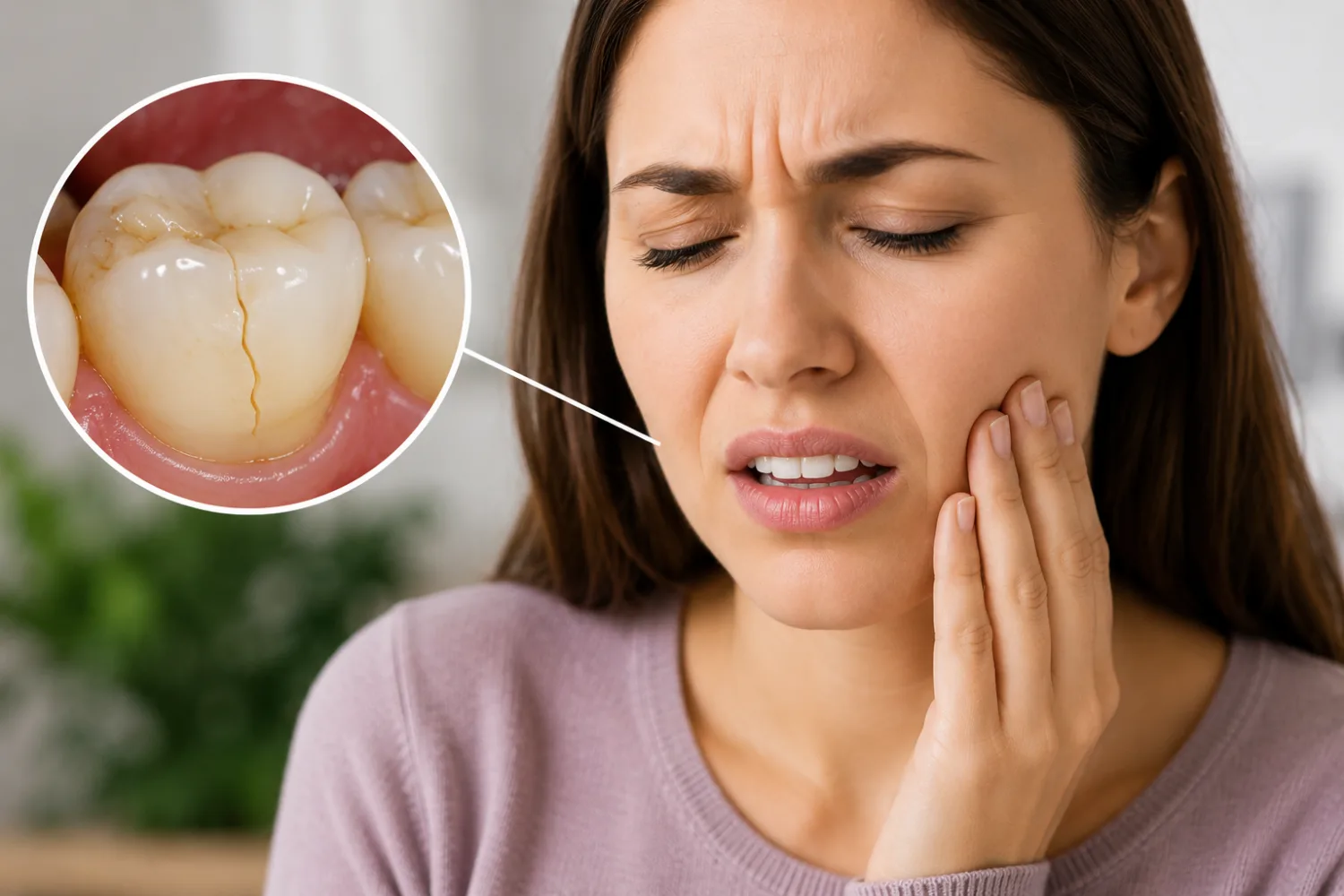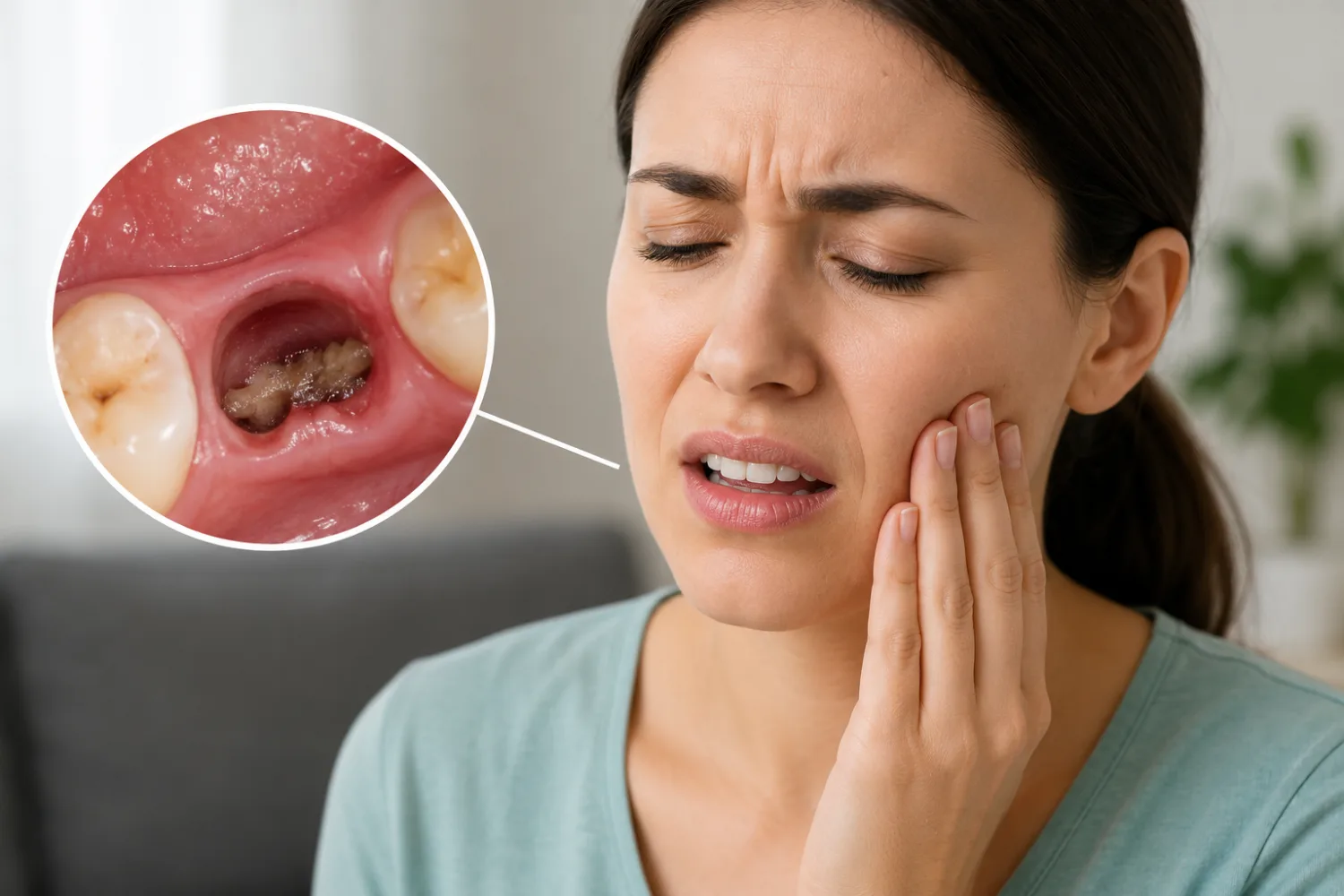
Dry socket is one of the most painful complications that can happen after a tooth extraction. It is not the same as normal soreness after having a tooth removed. The usual pattern is pain that starts to get worse a few days after the extraction, often with a bad taste, bad breath, and pain that may spread towards the ear, jaw or temple.
The good news is that dry socket is treatable. A dentist can usually reduce the pain by gently cleaning the socket and placing a soothing dressing. It is not something you should try to fix by poking the socket at home, rinsing aggressively, or repeatedly disturbing the area.
This guide explains what dry socket is, how to tell it apart from normal extraction pain, when it usually happens, what causes it, what treatment involves, and when to get urgent dental help.
What is dry socket?
After a tooth is removed, a blood clot normally forms in the empty socket. This clot is important. It protects the bone and nerve endings underneath while the gum and bone begin to heal.
Dry socket happens when this clot does not form properly, dissolves too early, or becomes dislodged before the socket has started healing. Without the clot, the bone inside the socket can become exposed and irritated. This can cause severe, deep, throbbing pain.
The clinical name for dry socket is alveolar osteitis. “Alveolar” refers to the tooth socket, and “osteitis” refers to inflammation of the bone. It is more common after difficult extractions and wisdom tooth removal, but it can happen after any tooth extraction.
Dry socket is painful, but it is usually manageable once a dentist treats it. It is different from a spreading dental infection, although the symptoms can sometimes overlap. If you have swelling, fever, pus, difficulty swallowing or feel very unwell, you should seek urgent advice because this may suggest infection rather than simple dry socket.
If you are looking for a broader overview of the extraction process, recovery and costs, see our full guide to tooth extraction.
When does dry socket happen?
Dry socket usually develops a few days after the extraction rather than immediately. Many patients feel sore on the day of treatment and the day after, which can be normal. With dry socket, the warning sign is that pain starts getting worse instead of gradually improving.
Guy’s and St Thomas’ NHS guidance describes dry socket as pain and inflammation after tooth extraction, with increasing pain, unpleasant taste and bad breath, usually happening 3 to 5 days after treatment. Guy’s and St Thomas’ NHS Foundation Trust
Another NHS patient leaflet from East Sussex Healthcare NHS Trust also explains that dry socket usually happens 3 to 5 days after extraction and may cause throbbing pain and halitosis, or bad breath. East Sussex Healthcare NHS Trust
This timing is useful because it helps separate dry socket from ordinary post-extraction soreness. Normal extraction pain is usually strongest in the first couple of days and then slowly settles. Dry socket often feels like the opposite: you may initially think you are recovering, then the pain becomes sharper, deeper or more intense.
Dry socket symptoms
The main symptom of dry socket is worsening pain after a tooth extraction. The pain can be severe and may not respond well to normal painkillers. It is often described as throbbing, deep, aching or radiating.
Common dry socket symptoms include:
- Increasing pain 2 to 5 days after tooth removal
- Severe throbbing or aching pain in the extraction area
- Pain spreading to the ear, jaw, temple, eye or neck on the same side
- A bad taste in the mouth
- Bad breath
- An empty-looking socket where the clot seems missing
- Visible bone in the socket in some cases
- Pain that feels worse than expected or is not improving
Mayo Clinic also lists severe pain within a few days of tooth removal, partial or complete loss of the blood clot, visible bone, pain radiating to the ear, eye, temple or neck, bad breath and bad taste as possible symptoms of dry socket. Mayo Clinic
You do not need to see bone for it to be dry socket. Many people cannot see the socket clearly, and trying to inspect it too aggressively can disturb healing. The more important clue is the pattern of pain: worsening pain a few days after extraction, especially with bad taste or bad breath.
Normal pain or dry socket?
Some pain after extraction is normal. The gum and bone have been through a procedure, and the area needs time to heal. It is common to have tenderness, mild swelling, stiffness, a little oozing, and soreness when eating or opening your mouth.
Normal extraction pain usually improves gradually. It may be uncomfortable for the first few days, but it should become easier to manage. Painkillers should help. The socket may feel tender, but the overall trend should be towards improvement.
Dry socket is different because the pain often gets worse after initially seeming manageable. It may become deep, throbbing and difficult to control. It may spread beyond the socket. You may also notice bad breath or a foul taste that was not there before.
A simple way to think about it is this: if the pain is slowly improving, it is more likely to be normal healing. If the pain is getting worse around days 3 to 5, especially if it is severe or spreading, contact a dentist.
However, dry socket is not the only possible complication. Worsening swelling, pus, fever, difficulty swallowing, difficulty breathing, or feeling very unwell are more concerning for infection or spreading inflammation. These symptoms need urgent advice.
What causes dry socket?
Dry socket happens because the protective blood clot is lost, breaks down too early, or fails to form properly. Several things can increase the risk, although sometimes it happens even when someone follows aftercare instructions carefully.
Risk factors include smoking, vaping, difficult extraction, surgical extraction, lower wisdom tooth removal, previous dry socket, poor oral hygiene, infection around the tooth before removal, and disturbing the socket too soon after treatment.
Smoking is one of the most important avoidable risks. It can interfere with healing, reduce blood flow, introduce heat and chemicals to the wound, and the suction action can disturb the clot. Some NHS aftercare guidance advises not smoking for at least 48 hours because smoking increases the risk of dry socket and infection. NHS Tayside
Rinsing too vigorously, spitting forcefully, drinking through a straw, poking the socket, chewing hard food on the extraction site, or returning to strenuous activity too early may also disturb the clot. This is why most aftercare instructions focus on being gentle during the first 24 hours.
Dry socket is also more common after wisdom tooth removal, especially lower wisdom teeth that are impacted or surgically removed. If your extraction was a wisdom tooth, you may want to read our guide to wisdom tooth pain and removal.
How to reduce the risk of dry socket
You cannot always prevent dry socket, but careful aftercare can reduce the risk. The main goal is to protect the clot while the socket begins to heal.
For the first 24 hours, follow the instructions given by your dentist. Avoid rinsing your mouth vigorously, spitting forcefully, drinking through a straw, smoking, vaping, alcohol, hot drinks, strenuous exercise, and touching the socket with your tongue or fingers.
NHS aftercare leaflets commonly advise avoiding rinsing or spitting for the first 24 hours because this can disturb the clot in the healing socket. Oxford Health NHS guidance says to brush as normal but be careful around the extraction site, and not to rinse or spit for 24 hours because this can disturb the clot. Oxford Health NHS Foundation Trust
After the first 24 hours, gentle warm salt-water rinses may be recommended, especially after eating. Do not swish aggressively. Let the water move gently around the mouth and fall out rather than spitting hard.
Eat soft foods for the first day or two and avoid hard, crunchy, seedy or spicy foods that could irritate the socket. Keep brushing your other teeth, but be careful near the extraction area. Good oral hygiene helps healing, but rough cleaning directly over the socket too soon can do harm.
If you smoke or vape, stopping even temporarily can make a real difference. The longer you avoid smoking after extraction, the better for healing.
How is dry socket treated?
Dry socket usually needs dental treatment. It is not something that can be reliably solved at home because the socket may need to be gently cleaned and dressed.
Your dentist may rinse or clean the socket to remove food debris and irritants. They may place a medicated or antiseptic dressing inside the socket to soothe the area and protect the exposed bone. This can provide significant pain relief, sometimes quite quickly.
Guy’s and St Thomas’ NHS guidance says dry socket can be treated by carefully washing the area and placing an antiseptic dressing, either in hospital or by a local dentist. Guy’s and St Thomas’ NHS Foundation Trust
Mayo Clinic also explains that treatment may involve flushing out the socket and dressing it with medicated gel, paste or a dressing to provide pain relief. Mayo Clinic
Sometimes the dressing needs to be changed if pain returns. In other cases, one treatment is enough. Your dentist may also advise suitable pain relief and give instructions on gentle cleaning at home.
Antibiotics are not always needed for dry socket because it is mainly a clot-healing problem rather than a typical spreading infection. However, antibiotics may be considered if there are signs of infection, spreading swelling, fever, immune risk or other clinical concerns. Your dentist should decide based on your symptoms and examination.
What can you do at home while waiting for a dentist?
If you suspect dry socket, contact the dental practice that removed the tooth, another dentist, or NHS 111 if you cannot access care. While waiting, the aim is to reduce irritation and avoid making the socket worse.
You can usually take pain relief such as paracetamol or ibuprofen if you can take these safely. Always follow the instructions on the packet or advice from a pharmacist, dentist or doctor. Avoid aspirin for dental extraction pain unless it has been prescribed for another medical reason, because it can increase bleeding risk. If you take prescribed aspirin or blood-thinning medication, do not stop it without medical advice.
After the first 24 hours, gentle warm salt-water rinses may help keep the area clean. Do not rinse forcefully. Do not poke the socket, scrape it, try to remove anything from it, or place random substances into the socket.
Avoid smoking, vaping, alcohol, straws, hot drinks and hard foods. Choose soft foods and chew on the other side. Keep brushing your other teeth gently so the mouth stays clean.
Home care may help you cope for a short time, but it may not relieve dry socket properly. If pain is severe or worsening, dental treatment is usually the quickest way to get relief.
When to get help urgently
Contact a dentist as soon as possible if you have increasing pain 2 to 5 days after extraction, pain that spreads to the ear or jaw, bad taste, bad breath, or pain that is not controlled by normal pain relief. These symptoms may suggest dry socket.
Get urgent dental advice if you have swelling, pus, fever, worsening pain, difficulty opening your mouth, or feel generally unwell. These may suggest infection or another complication.
Use NHS 111 if you need urgent dental help and cannot contact a dentist. NHS guidance for dental abscesses advises asking for an urgent dentist appointment or getting help from NHS 111, and not going to a GP surgery for dental treatment because GPs cannot provide dental treatment. NHS
Call 999 or go to emergency care if you have swelling that affects breathing, swallowing or the eye area, serious facial trauma, heavy uncontrolled bleeding, or you feel severely unwell with signs of spreading infection.
If you are unsure whether your symptoms are urgent, it is safer to ask for advice. Dry socket is painful but treatable, and other complications are easier to manage when checked early.
How long does dry socket last?
Dry socket pain often improves after the dentist cleans and dresses the socket. Some people feel relief quickly, while others need more than one dressing appointment. The socket still needs time to heal underneath.
Without treatment, dry socket can remain painful for longer than normal extraction healing. It may gradually settle as the socket heals, but there is no need to suffer through severe pain if dental treatment is available.
Most people improve over several days once treated. The gum may still feel tender while healing continues. Deeper bone healing takes longer, but the severe dry socket pain should not continue indefinitely.
Continue to follow aftercare advice even after symptoms improve. Keep the area clean, avoid smoking or vaping if possible, and return to your dentist if pain comes back or symptoms worsen.
FAQ
What does dry socket feel like?
Dry socket usually feels like severe, deep, throbbing pain after a tooth extraction. It often starts or worsens a few days after treatment and may spread to the ear, jaw, temple, eye or neck on the same side.
When does dry socket usually start?
Dry socket most often develops around 3 to 5 days after tooth extraction. The key warning sign is pain that gets worse instead of gradually improving.
Can dry socket happen the next day?
Pain the next day can be normal after extraction, especially after a difficult or surgical removal. Dry socket usually becomes more obvious a few days later, but if pain is severe or worrying, contact a dentist.
Can dry socket heal by itself?
It can eventually heal as the socket repairs itself, but it can be very painful. Dental treatment can clean and dress the socket, reduce pain and make recovery more manageable.
Do antibiotics treat dry socket?
Antibiotics are not always needed because dry socket is mainly related to loss or breakdown of the blood clot rather than a standard infection. A dentist may prescribe antibiotics if there are signs of infection or other risk factors.
How does a dentist treat dry socket?
The dentist may gently clean or rinse the socket and place a medicated or antiseptic dressing. This protects the area and can provide significant pain relief. Pain relief advice may also be given.
How can I prevent dry socket?
Follow your dentist’s aftercare instructions. Avoid smoking, vaping, straws, vigorous rinsing, spitting, alcohol, hot drinks, hard foods and disturbing the socket during the early healing period.
Does smoking cause dry socket?
Smoking increases the risk of dry socket and delayed healing. It can reduce blood flow, irritate the wound and disturb the blood clot. Avoiding smoking after extraction is one of the most useful ways to reduce risk.
Can drinking through a straw cause dry socket?
Drinking through a straw may increase the risk because suction can disturb the blood clot. It is usually best to avoid straws in the first few days after extraction, especially during the first 24 hours.
Is bad breath after extraction always dry socket?
No. Mild bad breath can happen during healing, especially if cleaning is difficult. But bad breath with worsening pain, bad taste and an empty-feeling socket may suggest dry socket and should be checked.
Should I rinse my mouth if I think I have dry socket?
After the first 24 hours, gentle warm salt-water rinses may help keep the mouth clean. Do not rinse forcefully or spit hard, as this may irritate the socket. Contact a dentist if pain is worsening.
When should I call 111 after tooth extraction?
Use NHS 111 if you need urgent dental help and cannot contact a dentist, especially if you have severe worsening pain, suspected dry socket, swelling, infection symptoms or bleeding that you cannot control with pressure.