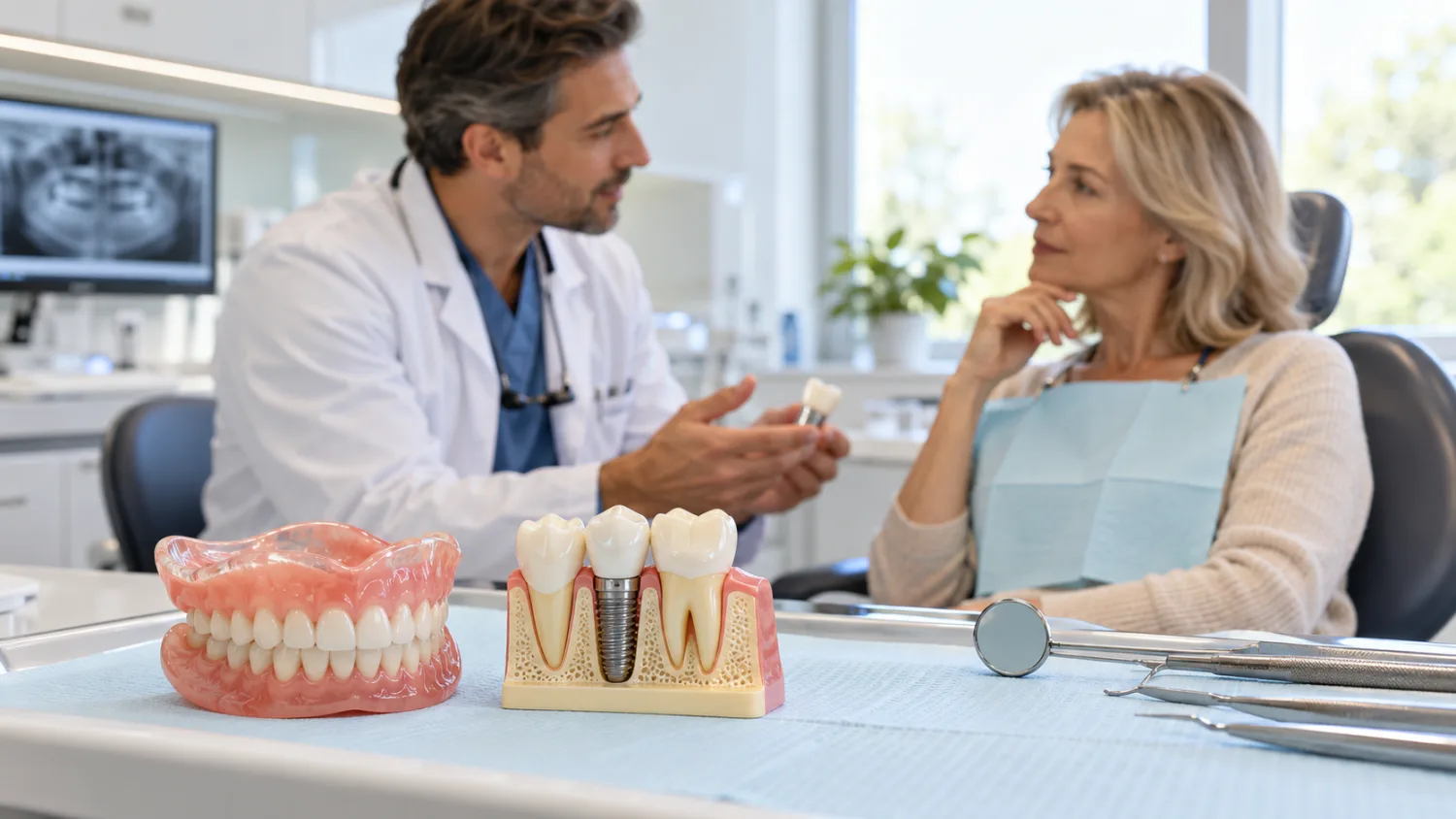
Wisdom tooth pain is common, especially in the late teens, twenties and early adulthood. For some people, wisdom teeth come through without causing any real trouble. For others, they become painful, swollen, infected or stuck under the gum. Sometimes the pain settles with cleaning and simple care. Sometimes the tooth needs to be removed.
The difficult part is knowing what is normal, what can wait, and what needs urgent dental attention. A sore wisdom tooth at the back of the mouth may be caused by gum inflammation, food trapping, tooth decay, infection, pressure from an impacted tooth, or pain from another tooth that feels like it is coming from the wisdom tooth area.
This guide explains why wisdom teeth cause pain, what impacted wisdom teeth are, when removal may be needed, how wisdom teeth are removed, what recovery is like, what risks to understand, and when to seek urgent help.
If you are comparing dental options or looking for a dentist, you may also find our guides to dental emergencies, toothache, dental abscesses, how to choose a dentist in the UK and Invisalign and clear aligners useful.
Quick summary
- Wisdom teeth are the third molars at the very back of the mouth.
- They commonly come through between the late teens and mid-twenties, although timing varies.
- Pain may be caused by inflammation around a partly erupted tooth, decay, infection, pressure, food trapping or gum problems.
- An impacted wisdom tooth is one that cannot come through properly because of lack of space or its position.
- Wisdom teeth do not always need removing. Removal is usually considered when they cause repeated or serious problems.
- NHS wisdom tooth removal may be available when clinically necessary.
- In England, routine extractions usually fall under NHS Band 2 treatment, currently £76.60 from 1 April 2026; urgent dental treatment is £27.90.
- Private wisdom tooth removal can vary widely, often from around £150 to £600+ for simple to surgical extraction, and more for complex specialist cases.
- Possible complications include pain, swelling, infection, dry socket and, rarely, nerve injury causing numbness or tingling.
- Seek urgent help for facial swelling, fever, spreading infection, difficulty swallowing, difficulty breathing, uncontrolled bleeding or severe worsening pain.
What are wisdom teeth?
Wisdom teeth are the third molars. They sit at the very back of the mouth, behind the second molars. Most adults have up to four wisdom teeth: one in each corner of the mouth. Some people have fewer, and some people have none.
Wisdom teeth often come through later than the other adult teeth. By the time they try to erupt, there may not be enough space at the back of the jaw. This is why wisdom teeth commonly become partly erupted, stuck under the gum, tilted, difficult to clean or painful.
The NHS explains that wisdom teeth sometimes become impacted, meaning they are not able to break through the gums properly. This can happen because there is not enough room, and the tooth may emerge at an angle or only partly come through. You can read the NHS wisdom tooth removal page here.
Why do wisdom teeth cause pain?
Wisdom tooth pain can have several causes. The same person may have more than one issue at the same time, such as gum inflammation and decay.
Common causes include:
- Pericoronitis: inflammation or infection of the gum around a partly erupted wisdom tooth.
- Impaction: the tooth is stuck, tilted or unable to come through properly.
- Food trapping: food and bacteria collect under a gum flap or between the wisdom tooth and the tooth in front.
- Tooth decay: wisdom teeth are hard to clean, so decay is common.
- Gum disease: plaque around the back teeth can inflame the gums.
- Pressure or crowding sensation: the area may feel tight or uncomfortable as the tooth erupts.
- Cyst or other pathology: uncommon, but impacted teeth can sometimes be associated with cysts or other changes.
- Pain from another tooth: pain from the second molar, jaw joint or muscles can feel like wisdom tooth pain.
Because causes overlap, it is worth seeing a dentist if wisdom tooth pain is severe, recurring, associated with swelling, or not settling.
What is pericoronitis?
Pericoronitis is inflammation around the crown of a partly erupted tooth. It is especially common around lower wisdom teeth. A flap of gum may partly cover the tooth, creating a small space where food and bacteria collect.
Symptoms may include:
- Pain at the back of the mouth.
- Swollen gum around the wisdom tooth.
- Bad taste or bad breath.
- Tenderness when biting.
- Difficulty cleaning the area.
- Pain spreading to the ear or jaw.
- Difficulty opening the mouth if inflammation is worse.
Mild pericoronitis may settle with careful cleaning and professional advice. Repeated or severe pericoronitis may lead to wisdom tooth removal being recommended.
What is an impacted wisdom tooth?
An impacted wisdom tooth is one that cannot erupt normally. It may be blocked by the tooth in front, trapped under gum or bone, angled sideways, tilted forwards, tilted backwards, or only partly through the gum.
Impacted wisdom teeth may be:
- Partially erupted: partly visible in the mouth.
- Fully impacted: completely under the gum or bone.
- Mesioangular: tilted forwards towards the tooth in front.
- Distoangular: tilted backwards.
- Horizontal: lying sideways.
- Vertical but trapped: upright but unable to erupt fully.
Not all impacted wisdom teeth need removal. Some are monitored if they are not causing problems and are not damaging nearby teeth.
Symptoms of wisdom tooth problems
Wisdom tooth symptoms can range from mild soreness to serious infection.
Common symptoms include:
- Pain at the back of the mouth.
- Swollen or red gum around the wisdom tooth.
- Tenderness when chewing.
- Bad taste or pus.
- Bad breath.
- Jaw stiffness.
- Difficulty opening the mouth.
- Pain spreading to the ear, throat or jaw.
- Swelling in the cheek or jaw.
- Decay or a hole in the wisdom tooth or tooth in front.
- Repeated infections in the same area.
If you have severe pain, swelling or signs of infection, do not ignore it. Dental infections can spread and occasionally become serious.
When is wisdom tooth pain urgent?
Wisdom tooth pain is more urgent if there are signs of spreading infection, airway risk or severe symptoms.
Seek urgent dental advice if you have:
- Facial swelling.
- Swelling under the jaw or around the neck.
- Fever or feeling very unwell.
- Pus, bad taste or spreading infection.
- Difficulty opening your mouth.
- Difficulty swallowing.
- Severe worsening pain.
- Uncontrolled bleeding.
- Pain after extraction that suddenly worsens after a few days.
Call 999 or go to emergency care if you have difficulty breathing, severe swelling affecting swallowing or breathing, or symptoms that feel life-threatening.
If you need urgent dental advice and cannot access a dentist, use NHS 111. For more general guidance, read our article: Dental Emergencies: What Counts as Urgent?.
What can you do at home for wisdom tooth pain?
Home care may help mild symptoms while you arrange a dental appointment. It should not replace dental care if symptoms are severe, recurring or worsening.
You may try:
- Gently brushing the wisdom tooth area with a soft toothbrush.
- Cleaning around the gum flap as well as you can without injuring it.
- Warm salt water rinses.
- Taking pain relief such as paracetamol or ibuprofen if suitable for you.
- Avoiding smoking, which can worsen healing and increase dry socket risk after extraction.
- Avoiding hard foods that irritate the gum.
- Keeping well hydrated.
Always follow the instructions on pain relief packaging. Do not take ibuprofen if you have been advised to avoid it, such as with certain stomach, kidney, asthma, blood-thinning or pregnancy-related concerns. Ask a pharmacist if unsure.
Do not place aspirin directly on the gum or tooth. It can burn the soft tissues.
Do antibiotics help wisdom tooth pain?
Antibiotics are not always needed for wisdom tooth pain. If the problem is local gum inflammation or food trapping, cleaning, drainage, dental treatment or removal of the cause may be more important.
Antibiotics may be considered if there are signs of spreading infection, fever, facial swelling, systemic illness or higher-risk circumstances. Your dentist or doctor will decide based on your symptoms and examination.
Antibiotics alone may reduce symptoms temporarily but may not solve the underlying problem if a wisdom tooth repeatedly traps bacteria or is decayed.
Will wisdom tooth pain go away by itself?
Sometimes mild wisdom tooth discomfort settles, especially if it is caused by temporary gum irritation as the tooth erupts. But recurrent pain often comes back because the underlying problem remains.
Pain is more likely to return if:
- The tooth is partly erupted.
- Food gets trapped under a gum flap.
- The tooth is difficult to clean.
- The wisdom tooth is decayed.
- The tooth in front is affected.
- There is repeated pericoronitis.
If symptoms keep returning, see a dentist for assessment and an X-ray if needed.
How does a dentist diagnose wisdom tooth problems?
A dentist will examine the back of your mouth, check the gum around the wisdom tooth and assess the tooth in front. They may also check your bite, jaw opening and signs of infection.
An X-ray is often used to see:
- The position of the wisdom tooth.
- Whether it is impacted.
- Whether there is decay.
- Whether the tooth in front is damaged.
- How close the roots are to nerves.
- Whether there are cysts or other changes.
- How difficult removal may be.
NHS Inform explains that if your dentist thinks wisdom teeth may need removal, they will usually take an X-ray to see the position of the teeth more clearly. You can read NHS Inform’s wisdom tooth removal guidance here.
When do wisdom teeth need removing?
Wisdom teeth are usually removed when they are causing significant or repeated problems, or when they are likely to damage nearby teeth or tissues.
Removal may be recommended if you have:
- Repeated infections around the wisdom tooth.
- Severe pericoronitis.
- Tooth decay in the wisdom tooth.
- Decay or damage to the second molar in front.
- Gum disease around the wisdom tooth or neighbouring tooth.
- A cyst associated with an impacted wisdom tooth.
- Abscess or spreading infection.
- Pain that does not settle and has a clear wisdom tooth cause.
- Problems with orthodontic or restorative treatment planning in selected cases.
Wisdom teeth are not always removed just because they are present or impacted. The decision should balance symptoms, risks, likely benefits and possible complications.
When might wisdom teeth be left alone?
Your dentist may advise monitoring rather than removal if the wisdom tooth is not causing problems and there is no clear risk to the tooth in front or surrounding tissues.
Monitoring may be considered if:
- The tooth is fully buried and symptom-free.
- There is no decay, infection or cyst.
- The tooth in front is not being damaged.
- Removal would carry a high risk compared with the benefit.
- Symptoms are mild and manageable with cleaning and review.
If a wisdom tooth is being monitored, regular dental check-ups are important.
Can wisdom teeth cause crowding?
Many people worry that wisdom teeth push other teeth forward and cause crowding. The relationship is not simple. Lower front tooth crowding is common in late teens and adulthood, and it can happen even in people who do not have wisdom teeth.
Wisdom tooth removal is not usually recommended solely to prevent front tooth crowding. If your concern is tooth alignment, speak to a dentist or orthodontist. You may also want to read our guide to Invisalign and clear aligners in the UK.
Can wisdom teeth damage the tooth in front?
Yes, this is one of the important reasons wisdom teeth may need treatment. A partly erupted or impacted wisdom tooth can trap food and bacteria against the second molar in front. This can lead to decay, gum pocketing or root damage.
Damage to the second molar can sometimes be more serious than the wisdom tooth problem itself because the second molar is an important chewing tooth.
Wisdom tooth removal on the NHS
Wisdom tooth removal may be available on the NHS when it is clinically necessary. Your dentist may remove the tooth in practice or refer you to an oral surgery service if the removal is more complex.
In England, extractions are usually included in NHS Band 2 treatment. From 1 April 2026, Band 2 costs £76.60. Urgent dental treatment costs £27.90. NHS charges can change, so check the latest information on the NHS dental treatment costs page.
More complex wisdom tooth removal may involve referral to hospital or a specialist oral surgery provider. Waiting times can vary depending on urgency, local services and complexity.
Private wisdom tooth removal cost in the UK
Private wisdom tooth removal costs vary widely. A simple private extraction may cost around £150 to £350+. Surgical or impacted wisdom tooth removal may cost around £300 to £800+, and specialist oral surgery cases may cost more.
The cost may depend on:
- Whether the tooth is upper or lower.
- Whether the tooth is fully erupted, partly erupted or impacted.
- How close the roots are to nerves or sinuses.
- Whether a surgical approach is needed.
- Whether sedation is used.
- Whether a 3D scan is needed.
- Whether treatment is by a general dentist, oral surgeon or specialist.
- Clinic location.
- Review and aftercare arrangements.
For wider dental cost guidance, read: Private Dentist Prices UK: What Common Treatments Cost.
What should be included in a wisdom tooth removal quote?
Before private wisdom tooth removal, ask what is included in the fee.
- Consultation.
- X-ray.
- 3D scan if needed.
- The extraction or surgical removal.
- Local anaesthetic.
- Sedation, if offered.
- Stitches, if needed.
- Written aftercare instructions.
- Review appointment.
- Emergency advice if bleeding, pain or swelling occurs.
- Treatment for complications such as dry socket.
Do not compare quotes only by price. A complex lower impacted wisdom tooth near a nerve is different from a simple upper wisdom tooth extraction.
How are wisdom teeth removed?
The procedure depends on the position of the tooth. Some wisdom teeth can be removed like a routine extraction. Others require surgical removal.
Simple wisdom tooth extraction
If the wisdom tooth has fully erupted and has a straightforward root shape, the dentist may loosen and remove it with dental instruments under local anaesthetic.
Surgical wisdom tooth removal
If the tooth is impacted or partly covered by gum or bone, surgical removal may be needed. This may involve:
- Local anaesthetic to numb the area.
- A small cut in the gum.
- Removing a small amount of bone if needed.
- Dividing the tooth into sections if needed.
- Removing the tooth.
- Cleaning the socket.
- Placing stitches if needed.
Milton Keynes University Hospital explains that because an impacted wisdom tooth has not fully erupted into the mouth, it is often necessary to make a cut in the gum over the tooth. Its patient leaflet explains impacted wisdom tooth removal in more detail.
Will you be awake for wisdom tooth removal?
Many wisdom teeth are removed under local anaesthetic while you are awake. The area is numbed, so you should not feel sharp pain, although you may feel pressure and movement.
Sedation may be offered for anxious patients or more complex procedures. Hospital removal under general anaesthetic may be considered in selected cases, but it is not needed for most wisdom tooth removals.
Does wisdom tooth removal hurt?
You should not feel sharp pain during the procedure if the anaesthetic is working. You may feel pressure, pushing or vibration. After the anaesthetic wears off, pain and swelling are common for a few days.
Your dentist or surgeon should give aftercare instructions and pain relief advice. Pain should gradually improve. Severe worsening pain after a few days may suggest dry socket or infection and should be checked.
How long does wisdom tooth removal take?
A simple extraction may take only a short time once the area is numb. Surgical removal can take longer, especially if the tooth is deeply impacted, close to a nerve or has difficult roots.
Appointment length also includes consultation, consent, anaesthetic, aftercare instructions and recovery time if sedation is used.
Recovery after wisdom tooth removal
Recovery varies from person to person. Simple extractions usually settle faster than surgical impacted wisdom tooth removal.
After removal, you may have:
- Bleeding for a short time.
- Swelling of the cheek or jaw.
- Bruising.
- Jaw stiffness.
- Pain or soreness.
- Difficulty opening the mouth fully.
- A bad taste for a short time.
- Stitches if the gum was opened.
The NHS says it may take up to 2 weeks to fully recover after wisdom tooth removal, with swelling and discomfort often improving after the first few days. The NHS wisdom tooth removal page includes recovery guidance.
Aftercare after wisdom tooth removal
Follow your dentist or surgeon’s specific advice. General aftercare usually includes:
- Bite on gauze as instructed to help bleeding stop.
- Rest for the remainder of the day.
- Avoid vigorous rinsing for the first 24 hours.
- Avoid smoking, vaping and alcohol during early healing.
- Avoid strenuous exercise for the first day or two, depending on advice.
- Eat soft foods while sore.
- Take pain relief as advised.
- Keep your mouth clean, but be gentle around the socket.
- Use warm salt water rinses after the first 24 hours if advised.
- Attend review if stitches need checking or symptoms worsen.
Do not poke the socket with fingers, toothpicks or cotton buds. The blood clot is part of normal healing.
What can you eat after wisdom tooth removal?
Choose soft, cool or lukewarm foods at first. Avoid hard, crunchy, spicy or very hot foods that may disturb the socket.
Suitable foods may include:
- Soup that is warm, not hot.
- Yoghurt.
- Mashed potato.
- Scrambled eggs.
- Porridge once cooled slightly.
- Pasta.
- Smoothies eaten with a spoon rather than a straw.
Avoid using straws early on because suction may disturb the blood clot and increase dry socket risk.
What is dry socket?
Dry socket is a painful complication that can happen after tooth extraction. It occurs when the blood clot in the socket does not form properly, dissolves too early or becomes dislodged before healing.
The NHS lists dry socket as a possible complication of wisdom tooth removal. Mayo Clinic also explains that dry socket happens when the blood clot at the extraction site does not form, comes out or dissolves before the wound has healed. You can read Mayo Clinic’s dry socket information here.
Symptoms of dry socket may include:
- Severe pain starting or worsening a few days after extraction.
- Pain spreading to the ear, temple or jaw.
- Bad taste or bad smell.
- An empty-looking socket.
- Pain not controlled by usual pain relief.
Dry socket is painful but treatable. Contact your dentist or oral surgery service. Treatment may involve cleaning the socket and placing a dressing to relieve pain.
Risks of wisdom tooth removal
Wisdom tooth removal is common, but it is still a surgical procedure. Your dentist or surgeon should explain the risks before treatment.
Possible risks include:
- Pain and swelling: common after removal, especially surgical extraction.
- Bleeding: usually settles, but persistent bleeding needs advice.
- Bruising: can occur around the jaw or cheek.
- Jaw stiffness: temporary difficulty opening the mouth can happen.
- Infection: may need treatment if symptoms worsen.
- Dry socket: painful loss or breakdown of the healing blood clot.
- Nerve injury: numbness or tingling in the lip, chin or tongue can occur, usually temporary but rarely permanent.
- Sinus communication: upper wisdom teeth can be close to the sinus, rarely causing sinus-related complications.
- Damage to nearby teeth: uncommon but possible, especially in difficult cases.
The NHS lists dry socket, infection and nerve damage causing numbness or tingling as possible complications of wisdom tooth removal. The British Association of Oral and Maxillofacial Surgeons explains that when a lower wisdom tooth is close to the inferior dental nerve, nerve injury risk can be higher; if away from the nerve the risk is less than 1%, but if very close it may be as high as 9%. BAOMS provides patient information on impacted wisdom tooth removal here.
What is nerve injury after wisdom tooth removal?
Lower wisdom teeth can sit close to nerves that supply feeling to the lower lip, chin, teeth, gums and tongue. If these nerves are bruised or injured during removal, you may experience numbness, tingling, altered sensation or, rarely, taste changes.
Nerve symptoms are often temporary, but they can last weeks or months and rarely may be permanent. This is why X-rays, and sometimes 3D scans, are important when lower wisdom tooth roots are close to the nerve.
Your dentist or surgeon should discuss nerve risk with you before surgery if it is relevant to your case.
What is coronectomy?
Coronectomy is a surgical option sometimes considered for lower wisdom teeth that are very close to the nerve. Instead of removing the whole tooth, the surgeon removes the crown of the tooth and leaves the roots in place to reduce nerve injury risk.
Coronectomy is not suitable for every case. It may be considered when the tooth is vital, the roots are close to the nerve and there is no active root infection. Your oral surgeon can explain whether it is appropriate.
Can wisdom tooth pain be prevented?
You cannot always prevent wisdom tooth problems, especially if the tooth is impacted. But good cleaning and regular dental checks can reduce some risks.
Helpful steps include:
- Brush carefully around the back teeth.
- Use a small-headed toothbrush if access is difficult.
- Clean between teeth where possible.
- Attend regular check-ups.
- Ask your dentist to check wisdom tooth position if symptoms start.
- Do not ignore repeated gum swelling or bad taste.
Wisdom teeth and orthodontic treatment
Wisdom teeth may be considered during orthodontic planning, but they do not automatically need removing before braces or clear aligners. The decision depends on symptoms, position, risk to neighbouring teeth and the orthodontic plan.
If you are thinking about tooth straightening, read: Invisalign and Clear Aligners in the UK.
Wisdom tooth pain vs toothache from another tooth
Pain at the back of the mouth is not always caused by the wisdom tooth. The second molar in front can develop decay, cracks, gum disease or infection. Jaw joint pain or muscle pain can also be felt near the wisdom tooth area.
See a dentist if you are unsure, especially if pain is severe, keeps returning or is associated with swelling. You can read more in our guide to toothache causes, relief and when to see a dentist.
Questions to ask before wisdom tooth removal
Before agreeing to wisdom tooth removal, ask your dentist or oral surgeon:
- Why does this wisdom tooth need removing?
- Can it be monitored instead?
- Is there infection, decay or damage to the tooth in front?
- Do I need an X-ray or 3D scan?
- Is the tooth close to a nerve?
- Will it be a simple or surgical removal?
- Will I need stitches?
- Can it be done under local anaesthetic?
- Is sedation available if I am anxious?
- What are the risks in my case?
- How long is recovery likely to take?
- What should I do if pain or swelling worsens?
- What will it cost on the NHS or privately?
Red flags to watch out for
Be cautious if a provider:
- Recommends removal without explaining why.
- Does not discuss whether monitoring is an option.
- Does not take or review an X-ray for impacted teeth.
- Does not explain nerve risk for lower wisdom teeth when relevant.
- Does not explain dry socket, infection or bleeding risks.
- Gives vague private costs without saying what is included.
- Does not provide aftercare instructions.
- Does not tell you who to contact if symptoms worsen.
When should you get a second opinion?
A second opinion can be useful if:
- You have no symptoms but have been told removal is needed.
- The tooth is close to a nerve.
- You are unsure whether removal or monitoring is best.
- You have been advised to remove several wisdom teeth at once.
- You are considering private surgical removal and the quote is expensive.
- You feel rushed or unclear about the risks.
A good dentist or oral surgeon should not object to you understanding your options before surgery.
How to choose a dentist or oral surgeon for wisdom tooth removal
Wisdom tooth removal ranges from simple extraction to specialist oral surgery. The right provider depends on the tooth position and complexity.
Look for:
- Clear diagnosis and explanation.
- X-ray assessment.
- Discussion of risks and alternatives.
- Clear NHS or private costs.
- Experience with impacted wisdom teeth if the case is complex.
- Option for referral if needed.
- Good aftercare and emergency contact arrangements.
- No pressure to proceed without time to consider.
You can browse local dental providers through All Health and Care, including our Top 10 Dentists in the UK and local pages such as Top 10 Dentists in London.
Final thoughts
Wisdom tooth pain is common, but it should not be ignored if it is severe, recurring or linked with swelling, fever, bad taste or difficulty opening your mouth. Sometimes the problem is temporary gum inflammation. Sometimes the tooth is impacted, infected, decayed or damaging the tooth in front.
Wisdom tooth removal can be straightforward, but impacted teeth may require surgical planning and careful discussion of risks, especially nerve injury and dry socket. The decision should be based on symptoms, X-rays, oral health and the balance between benefit and risk.
If your wisdom tooth is painful, get it assessed rather than guessing. The earlier a dentist identifies the cause, the easier it is to decide whether cleaning, monitoring, treatment or removal is the right next step.
For more patient-friendly dental guides, visit our Dental Health & Dentistry section.
Frequently asked questions about wisdom tooth pain and removal
What does wisdom tooth pain feel like?
Wisdom tooth pain may feel like soreness, pressure, throbbing or tenderness at the very back of the mouth. It may spread to the jaw, ear or throat, especially if there is inflammation or infection.
Why do wisdom teeth hurt?
They may hurt because they are partly erupted, impacted, infected, decayed, difficult to clean or causing gum inflammation around the tooth.
What is an impacted wisdom tooth?
An impacted wisdom tooth cannot come through properly because of lack of space, angle or obstruction. It may be partly or completely trapped under gum or bone.
Do all wisdom teeth need removing?
No. Wisdom teeth do not always need removing. Removal is usually considered when they cause repeated pain, infection, decay, gum problems or damage to nearby teeth.
Can wisdom tooth pain go away by itself?
Mild irritation may settle, but recurring or severe pain often returns if the underlying problem remains. See a dentist if symptoms persist or keep coming back.
When should I see a dentist for wisdom tooth pain?
See a dentist if pain is severe, recurring, associated with swelling, bad taste, difficulty opening your mouth or not settling with simple care.
When is wisdom tooth pain an emergency?
It is urgent if you have facial swelling, fever, spreading infection, difficulty swallowing, difficulty breathing, uncontrolled bleeding or severe worsening pain. Call 999 for breathing or swallowing difficulty.
Can NHS 111 help with wisdom tooth pain?
Yes. If you need urgent dental advice and cannot access a dentist, NHS 111 can advise you and direct you to urgent dental care where appropriate.
How much does wisdom tooth removal cost on the NHS?
In England, extractions are usually Band 2 NHS treatment, which costs £76.60 from 1 April 2026. Urgent dental treatment costs £27.90. Charges can change, and exemptions may apply.
How much does private wisdom tooth removal cost?
Private wisdom tooth removal may cost around £150 to £350+ for simple extraction and around £300 to £800+ or more for surgical or impacted removal.
Does wisdom tooth removal hurt?
The area is usually numbed with local anaesthetic, so you should not feel sharp pain during removal. Pain and swelling afterwards are common for a few days.
How long does recovery take after wisdom tooth removal?
Many people feel better after a few days, but full recovery can take up to 2 weeks, especially after surgical removal.
What can I eat after wisdom tooth removal?
Soft foods such as yoghurt, mashed potato, soup that is not hot, scrambled eggs and pasta are often easier at first. Avoid hard, crunchy, spicy or very hot foods early on.
Can I drink through a straw after wisdom tooth removal?
It is usually best to avoid straws early on because suction may disturb the blood clot and increase the risk of dry socket.
What is dry socket?
Dry socket is a painful complication where the blood clot in the extraction socket does not form properly, comes out or breaks down before healing.
What are the signs of dry socket?
Severe pain starting or worsening a few days after extraction, pain spreading to the ear or jaw, bad taste, bad smell or an empty-looking socket may suggest dry socket.
Can dry socket be treated?
Yes. A dentist can clean the socket and place a dressing to help relieve pain while it heals.
Can wisdom tooth removal cause nerve damage?
Rarely, lower wisdom tooth removal can affect nearby nerves, causing numbness or tingling in the lip, chin or tongue. This is often temporary but can rarely be long-lasting.
What is coronectomy?
Coronectomy is a procedure where the crown of a lower wisdom tooth is removed while roots close to a nerve are left in place. It may reduce nerve injury risk in selected cases.
Can wisdom teeth cause crowding?
Wisdom teeth are not usually removed solely to prevent front tooth crowding. Crowding can happen for many reasons, even in people without wisdom teeth.
Can wisdom teeth damage other teeth?
Yes. A partly erupted or impacted wisdom tooth can trap plaque and food against the second molar, increasing the risk of decay or gum problems.
Can antibiotics cure wisdom tooth infection?
Antibiotics may help if infection is spreading, but they may not solve the underlying cause. Cleaning, drainage or removal may still be needed.
Can I brush around a painful wisdom tooth?
Yes, gentle cleaning is usually helpful. Use a soft toothbrush and avoid injuring the gum. If pain or swelling is severe, see a dentist.
Should I remove all four wisdom teeth at once?
Sometimes multiple wisdom teeth are removed together, but it depends on symptoms, complexity, risks and your preference. Ask your dentist or surgeon to explain the pros and cons.
Can wisdom teeth come back after removal?
No. Once a wisdom tooth is fully removed, it does not grow back. Rarely, a retained root or extra tooth may cause confusion, but this is not the same as a tooth growing back.
How do I choose someone for wisdom tooth removal?
Choose a dentist or oral surgeon who explains the X-ray findings, risks, alternatives, costs and aftercare clearly. Complex impacted teeth may need referral to an oral surgery service.