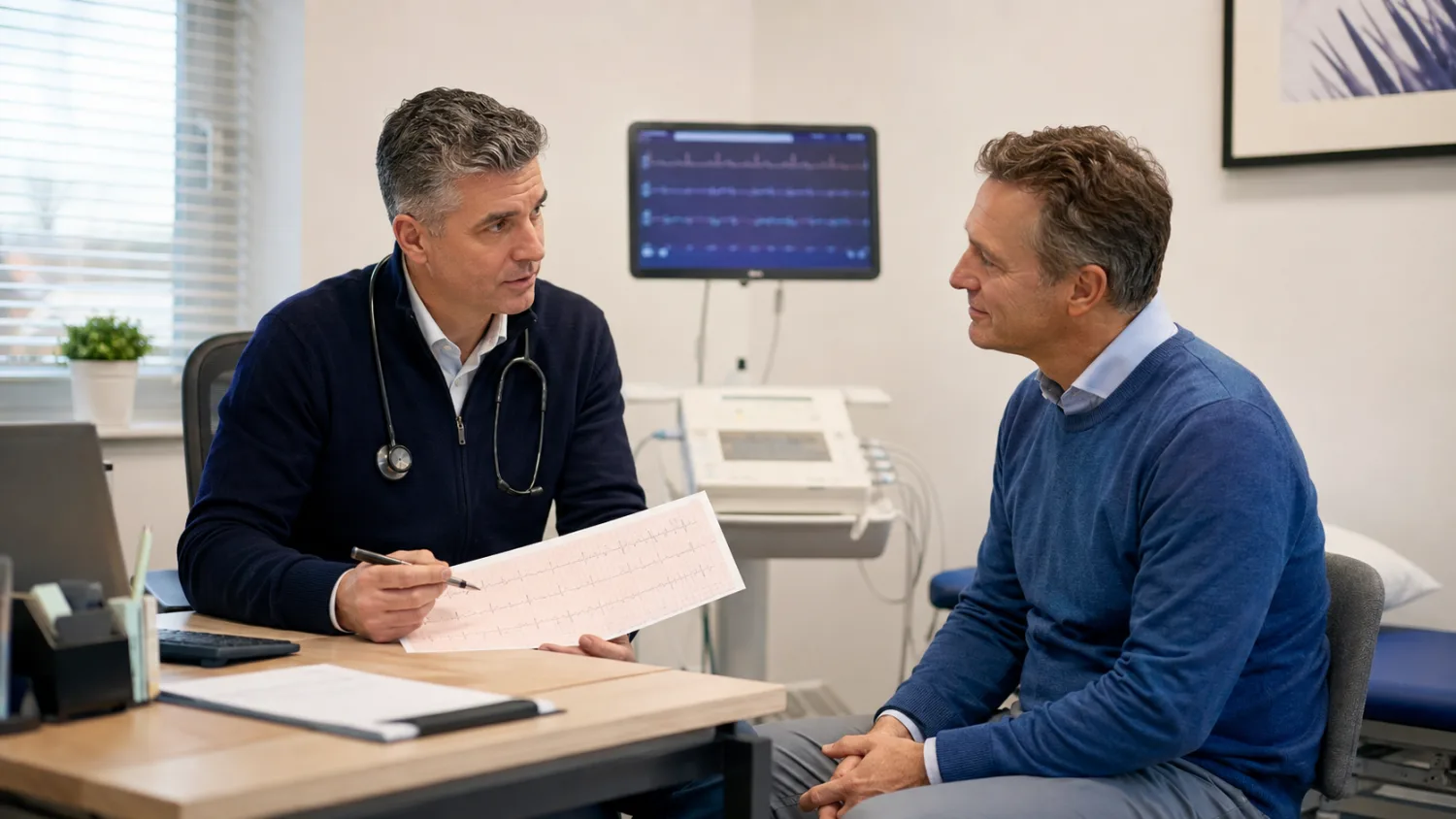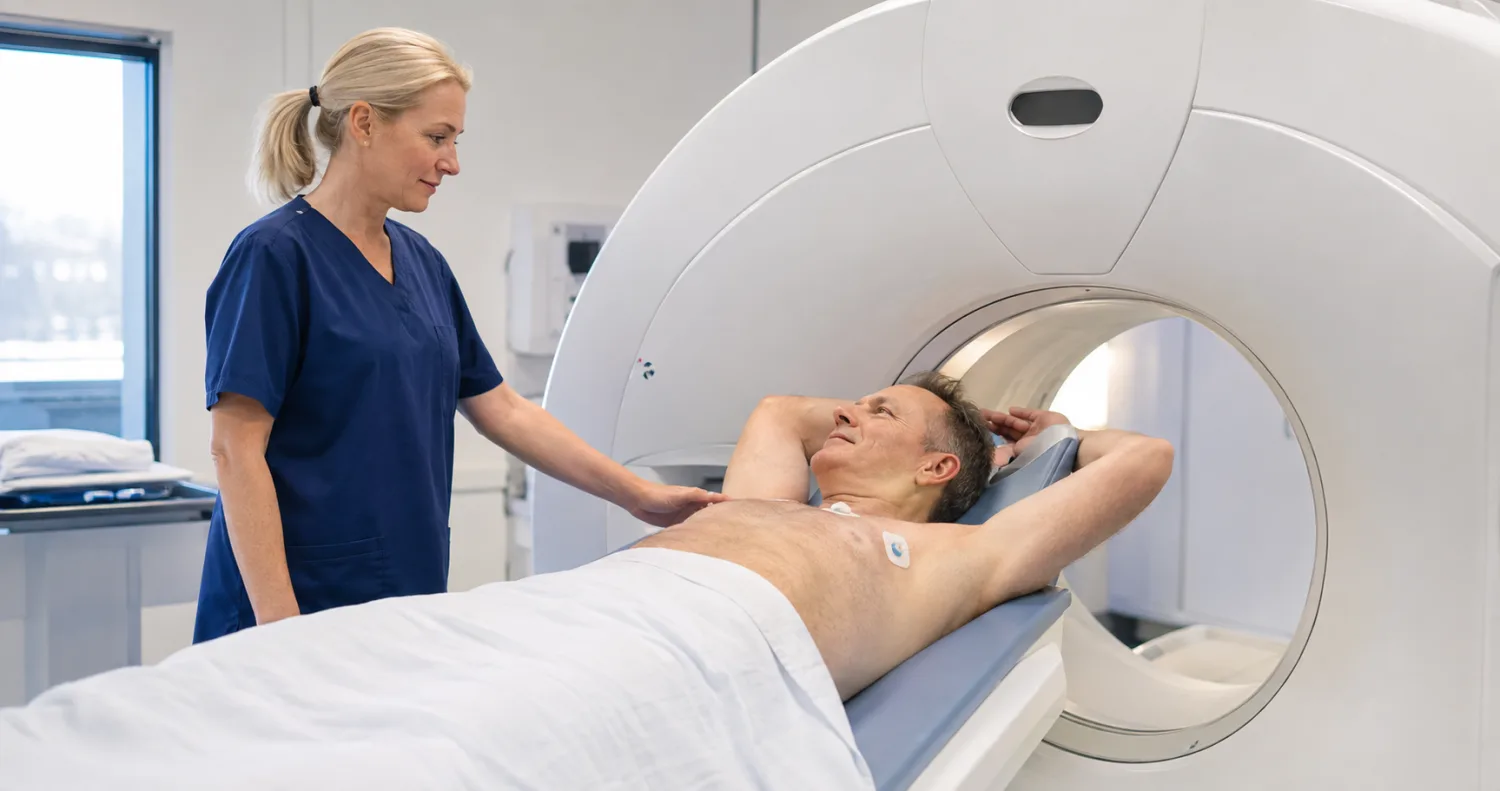
Postural tachycardia syndrome, usually shortened to POTS or written as PoTS in the UK, is a condition in which standing causes an excessive increase in heart rate together with symptoms such as dizziness, palpitations, weakness, fatigue and difficulty thinking clearly.
The symptoms are usually most noticeable while sitting or standing upright and improve, at least partly, after lying down. This pattern is known as orthostatic intolerance.
POTS is not simply a fast pulse, and it is not diagnosed from a smartwatch reading alone. The heart-rate change must occur in a characteristic pattern, symptoms should have been present over time, and other explanations—such as dehydration, anaemia, thyroid disease, infection, medication effects and an abnormal heart rhythm—must be considered.
The condition can range from manageable to severely disabling. Some people mainly experience brief dizziness when they stand. Others struggle with showering, preparing meals, walking around shops, working, studying or remaining upright for more than a few minutes.
Call 999 for chest pain, severe breathing difficulty, signs of a stroke, collapse with difficulty waking, a sustained very fast or irregular heartbeat with severe symptoms, or fainting during exercise.
Seek urgent medical advice if palpitations are new or worsening, fainting is repeated, symptoms follow significant bleeding or dehydration, or the heart rate remains very fast even while resting.
What is POTS?
POTS is a form of dysfunction affecting the autonomic nervous system. This is the part of the nervous system that automatically regulates functions such as:
- heart rate;
- blood-vessel constriction;
- blood pressure;
- temperature regulation;
- sweating;
- digestion;
- bladder function.
When a healthy person stands, gravity pulls a substantial amount of blood towards the legs and abdomen. The autonomic nervous system responds by narrowing blood vessels and making small adjustments to the heart rate. Leg and abdominal muscles also help push blood back towards the heart.
In POTS, this adjustment is less effective. Blood may pool excessively in the lower body, circulating blood volume may be reduced, blood-vessel constriction may be inadequate, or the body may release excessive stress hormones in an attempt to maintain circulation.
The heart then beats faster to preserve blood flow to the brain and other organs. This compensatory response can itself produce palpitations, chest discomfort, shakiness and exhaustion.
What does the name mean?
Postural refers to body position. Tachycardia means a faster-than-expected heart rate. Syndrome means a recognisable collection of symptoms and measurable findings rather than one single underlying disease.
The UK commonly uses the spelling PoTS, while POTS is more common internationally. They refer to the same condition.
Is POTS a heart disease?
POTS affects heart rate, but it is not usually caused by structural heart disease. The heart may be normal while the nervous system and circulation respond abnormally to standing.
Heart tests are still important because abnormal rhythms, valve disease, heart-muscle disease and other cardiac conditions can produce similar symptoms.
What are the symptoms of POTS?
The defining feature is that symptoms become worse while upright and improve after sitting or lying down. They may begin within moments of standing or build gradually over several minutes.
Common symptoms include:
- palpitations or awareness of a fast heartbeat;
- dizziness or light-headedness;
- feeling faint;
- blurred, dimmed or tunnel vision;
- weak or heavy legs;
- shakiness or internal trembling;
- shortness of breath;
- chest discomfort;
- nausea;
- headaches;
- sweating or difficulty regulating temperature;
- fatigue;
- poor concentration or “brain fog”;
- exercise intolerance;
- sleep disturbance.
Symptoms can vary considerably from day to day. A person may manage reasonably well on one day and be unable to remain upright for long on another.
Brain fog
People with POTS often describe difficulty finding words, following conversations, remembering information or completing mentally demanding tasks while upright.
This is commonly called brain fog. It is not a formal neurological diagnosis, but it can have a substantial effect on education, work and daily functioning.
Fatigue
POTS-related fatigue can be profound and may persist even after resting. The body is repeatedly compensating for an abnormal circulatory response, while sleep problems, deconditioning and coexisting illness may add to the exhaustion.
Fatigue should not automatically be attributed to POTS without checking for other causes such as anaemia, vitamin deficiency, thyroid disease, infection or sleep disorders.
Digestive symptoms
The autonomic nervous system also affects digestion. Some people experience:
- nausea;
- early fullness;
- bloating;
- abdominal pain;
- constipation;
- diarrhoea;
- symptoms worsening after meals.
These symptoms do not prove that POTS is the cause. Coeliac disease, inflammatory bowel disease, medication effects and other digestive conditions may require separate assessment.
Temperature and sweating problems
Some people struggle in hot environments, sweat excessively or sweat less than expected. Hands and feet may become cold, blotchy, red or purple while standing because of altered circulation.
Does everyone with POTS faint?
No. Many people feel close to fainting but remain conscious. Some do faint, especially when POTS overlaps with vasovagal syncope or another blood-pressure problem.
A first blackout, fainting during exercise, injury after a collapse or fainting with chest pain requires medical assessment.
What triggers or worsens POTS symptoms?
Anything that encourages blood pooling, reduces circulating fluid or increases demand on the cardiovascular system can make symptoms worse.
Common triggers include:
- standing still;
- getting out of bed quickly;
- hot weather;
- hot baths and showers;
- dehydration;
- fever or infection;
- vomiting or diarrhoea;
- large meals;
- meals high in refined carbohydrates;
- alcohol;
- menstruation;
- poor sleep;
- physical or emotional stress;
- prolonged inactivity;
- some medicines.
Why are mornings often difficult?
Fluid is lost overnight through breathing and urine, and the body has spent several hours lying flat. Standing after waking can therefore create a sudden circulatory challenge.
Some people find that drinking water before getting out of bed, moving the legs first and standing in stages reduces symptoms.
Why can meals trigger symptoms?
After eating, more blood is directed towards the digestive system. A large meal can therefore increase abdominal blood pooling and leave less blood readily available to the rest of the circulation.
Large portions and meals containing a lot of refined carbohydrate may be particularly troublesome for some people.
Why does heat make POTS worse?
Heat causes blood vessels near the skin to widen so the body can release warmth. This can increase pooling and make it harder to maintain blood flow to the brain while upright.
Hot showers can be especially difficult because they combine heat, standing and arm movement.
What causes POTS?
POTS is probably not one single disease. It is a syndrome that can arise through several overlapping mechanisms.
In some people, no clear trigger is identified. In others, symptoms begin after:
- a viral or bacterial infection;
- pregnancy;
- surgery;
- an injury;
- a prolonged period of bed rest;
- a major physical stress;
- another medical condition.
Symptoms can occasionally begin after COVID-19 or as part of a post-viral illness. This does not mean every episode of palpitations after an infection is POTS.
Low circulating blood volume
Some people with POTS appear to have a lower-than-expected effective blood volume. This makes it harder to maintain circulation when standing and may contribute to thirst, fatigue and exercise intolerance.
Neuropathic POTS
In some patients, small autonomic nerves controlling blood-vessel constriction may not work effectively, particularly in the legs and abdomen.
Blood vessels then fail to narrow enough during standing, leading to excessive pooling and a compensatory rise in heart rate.
Hyperadrenergic features
Some people produce an excessive sympathetic or adrenaline-like response while upright. Symptoms may include:
- marked shakiness;
- sweating;
- anxiety-like physical sensations;
- headache;
- a rise in blood pressure while standing;
- strong palpitations.
The physical release of stress hormones can feel similar to panic even when the person does not feel emotionally anxious.
Deconditioning
Long periods of illness and inactivity reduce cardiovascular fitness, leg-muscle strength and the body’s tolerance of upright activity.
Deconditioning can worsen POTS, but it should not be used to imply that the condition exists merely because someone is unfit. A person may become deconditioned because standing and exercise have already become difficult.
Autoimmune mechanisms
Research is investigating whether immune-system changes contribute to some cases. POTS can coexist with autoimmune conditions, but there is no single routine autoimmune blood test that confirms the diagnosis.
Associated conditions
POTS is sometimes seen alongside:
- joint hypermobility or hypermobility spectrum disorders;
- migraine;
- ME/CFS;
- mast-cell activation symptoms;
- autoimmune disease;
- gastrointestinal motility disorders;
- small-fibre neuropathy.
An association does not prove that one condition caused the other, and each diagnosis should be assessed on its own evidence.
How is POTS diagnosed?
POTS is a clinical diagnosis based on symptoms, heart-rate and blood-pressure changes during standing, symptom duration and exclusion of other explanations.
In adults, commonly used criteria include:
- symptoms of orthostatic intolerance that are worse upright and improve when lying down;
- a sustained heart-rate increase of at least 30 beats per minute within 10 minutes of standing;
- for people aged 12 to 19, an increase of at least 40 beats per minute;
- no sustained blood-pressure fall large enough to explain the symptoms as ordinary orthostatic hypotension;
- symptoms present for at least three months;
- no better explanation for the tachycardia.
A heart rate above a particular absolute number is not always required. For example, an increase from 65 to 100 beats per minute may meet the adult heart-rate criterion even though the final rate is not above 120.
The heart-rate rise should be sustained rather than a momentary spike immediately after standing.
The active stand test
An active stand test measures heart rate and blood pressure while lying down and at intervals after standing.
A typical supervised assessment may involve:
- resting flat for several minutes;
- recording baseline heart rate and blood pressure;
- standing in a safe position;
- repeating measurements during the following 10 minutes;
- recording symptoms alongside the readings.
The test can cause dizziness or fainting, so it should be performed with appropriate supervision when symptoms are severe or there is a history of collapse.
Tilt-table testing
During a tilt-table test, the person lies strapped safely on a motorised table. Heart rate, blood pressure and sometimes an ECG are monitored while the table is tilted upright.
This may be helpful when:
- an ordinary stand test is inconclusive;
- fainting needs further investigation;
- POTS must be distinguished from vasovagal syncope or postural hypotension;
- symptoms are severe or unusual.
A tilt-table test is not always required. Some people can be diagnosed from a carefully performed active stand test combined with an appropriate clinical assessment.
Why a smartwatch cannot diagnose POTS
Wearable devices can show useful trends, but they have limitations. Heart-rate readings can be affected by movement, poor skin contact, device algorithms and delayed sampling.
A smartwatch also does not reliably measure blood pressure, exclude an abnormal rhythm or determine whether dehydration, anaemia or another illness explains the tachycardia.
Home recordings can support a clinical discussion, but they should not replace formal assessment.
What tests may be needed to rule out other conditions?
A rise in heart rate while standing is not unique to POTS. It can occur when the body is dehydrated, anaemic, infected, in pain or responding to medication.
Assessment may include a medical history, physical examination and tests chosen according to the symptoms.
Blood tests
Blood tests may look for:
- anaemia;
- iron deficiency;
- thyroid disease;
- kidney problems;
- electrolyte abnormalities;
- blood-sugar disorders;
- vitamin deficiencies;
- inflammation or infection;
- adrenal problems when clinically suspected.
Low ferritin, vitamin B12 deficiency and thyroid disorders can all produce fatigue, palpitations and dizziness that overlap with POTS symptoms.
ECG
An ECG records the electrical activity of the heart. It helps identify abnormal rhythms, conduction problems and other cardiac clues.
Our guide to ECG results and common report terms explains the test in more detail.
Ambulatory heart monitoring
A portable ECG monitor may be worn for one or more days to determine whether palpitations are caused by ordinary sinus tachycardia or a different rhythm such as supraventricular tachycardia.
Echocardiogram
An ultrasound of the heart may be arranged when structural heart disease, valve disease or impaired pumping is a concern.
Blood-pressure monitoring
Some people need repeated or 24-hour monitoring to identify low blood pressure, high pressure while lying down, large fluctuations or symptoms after meals.
Other specialist tests
Depending on the symptoms, clinicians may consider:
- autonomic-function testing;
- exercise testing;
- neurological assessment;
- endocrine testing;
- sleep assessment;
- gastrointestinal investigations.
The aim is not to order every possible test. It is to identify important alternatives and select investigations that could change treatment.
What conditions can be confused with POTS?
POTS symptoms overlap with several common and serious conditions. A careful diagnosis matters because treatment for one cause may be inappropriate for another.
Postural hypotension
Postural hypotension is defined mainly by a significant fall in blood pressure after standing. POTS is defined mainly by an excessive heart-rate rise without the sustained blood-pressure drop that would better explain the symptoms.
The two can feel very similar, and some patients have overlapping features.
Read our guide to low blood pressure, postural hypotension and when to get help.
Vasovagal syncope
A vasovagal faint is a reflex in which blood pressure and sometimes heart rate fall, causing temporary loss of consciousness.
It may be triggered by prolonged standing, pain, needles, emotional distress or heat. Some people with POTS also experience vasovagal faints, but the conditions are not identical.
Inappropriate sinus tachycardia
In inappropriate sinus tachycardia, the heart rate may be persistently high even at rest and rise excessively with minimal activity.
POTS is more specifically linked to upright posture. There can be overlap, and heart monitoring may help distinguish the patterns.
Abnormal heart rhythm
Supraventricular tachycardia and other arrhythmias may cause sudden episodes of rapid heartbeat that start and stop abruptly.
POTS usually produces a more gradual heart-rate change related to standing. Sudden palpitations unrelated to posture may require rhythm monitoring.
Anaemia and iron deficiency
Low haemoglobin reduces oxygen delivery and can cause fatigue, dizziness, shortness of breath and a fast heart rate.
Iron deficiency may also be present before anaemia develops. Heavy periods and digestive blood loss are important potential causes.
Thyroid disease
An overactive thyroid can cause tachycardia, heat intolerance, sweating, weight loss, tremor and anxiety-like symptoms.
Dehydration
Fluid loss can cause an exaggerated heart-rate rise on standing. A diagnosis of POTS should not be made during an acute dehydrating illness without reassessment after recovery.
Anxiety and panic
Anxiety can cause palpitations, shakiness, chest tightness and dizziness. POTS can produce the same physical sensations through an abnormal autonomic response.
The existence of anxiety does not exclude POTS, and POTS should not be diagnosed solely because symptoms resemble anxiety. The relationship to posture and objective heart-rate measurements are important.
How is POTS treated?
There is no single treatment that works for everyone. Management is usually built in stages and tailored to the dominant symptoms, blood pressure, suspected mechanism and coexisting conditions.
The first steps generally involve:
- reviewing medicines that worsen symptoms;
- improving fluid intake where appropriate;
- adjusting salt intake under clinical guidance;
- using compression garments;
- managing meals and heat exposure;
- developing a carefully paced physical-conditioning plan.
Medication may be considered when non-drug measures are insufficient, but medicines used for POTS are generally prescribed off licence and require individual supervision.
Fluids
Drinking more can help expand circulating volume and reduce the heart-rate response to standing.
Needs vary. People with heart failure, kidney disease or another condition requiring fluid restriction should not substantially increase intake without medical advice.
Salt
Additional salt may help some people retain fluid and support blood volume. It is not appropriate for everyone.
Extra salt can worsen high blood pressure, kidney disease, fluid retention and some heart conditions. A clinician should advise whether it is suitable and how much is reasonable.
Compression clothing
Compression reduces blood pooling. Garments that cover the abdomen and upper legs may be more effective than short socks because substantial pooling occurs in the abdominal circulation and thighs.
Options include:
- waist-high compression tights;
- compression leggings;
- abdominal binders;
- combined abdominal and leg compression.
The garment must fit properly and may be unsuitable for people with significant arterial disease or certain skin conditions.
Exercise and physical reconditioning
Regular, structured movement can improve circulation, stroke volume, muscle pumping and physical tolerance over time.
Many people begin with recumbent or semi-recumbent activity, such as:
- recumbent cycling;
- rowing;
- swimming;
- floor-based strength exercises;
- resistance training for the legs and core.
Upright activity can be added gradually as tolerance improves.
Exercise should not be framed as simply pushing through severe symptoms. Starting too aggressively can cause setbacks, particularly when POTS overlaps with post-viral illness or post-exertional symptom worsening.
A physiotherapist or clinician familiar with orthostatic intolerance can help create a realistic plan.
Meal adjustments
Some people benefit from:
- smaller, more frequent meals;
- avoiding very large portions;
- reducing meals dominated by refined carbohydrates;
- remaining seated after eating;
- avoiding alcohol.
Managing heat
Useful adjustments may include:
- cooler showers;
- a shower seat;
- ventilation or fans;
- light clothing;
- cool packs;
- avoiding strenuous activity during the hottest part of the day.
Which medicines are used for POTS?
There is no medicine licensed specifically for every form of POTS, and drug treatment is usually individualised by a clinician familiar with the condition.
The same medicine can help one patient and make another worse. Blood pressure, resting heart rate, migraine, asthma, kidney function, pregnancy potential and other health conditions all influence the choice.
Beta blockers
A low dose of a beta blocker such as propranolol may reduce excessive heart rate and palpitations.
Potential problems include:
- fatigue;
- low blood pressure;
- slow heart rate;
- cold hands and feet;
- worsening asthma in susceptible people.
Ivabradine
Ivabradine slows the sinus node without lowering blood pressure as much as some other heart-rate medicines.
Possible side effects include an excessively slow pulse and temporary visual brightness or flashing sensations. It is not suitable during pregnancy and requires careful prescribing.
Midodrine
Midodrine narrows blood vessels and may help when pooling or low blood pressure is prominent.
It can cause:
- high blood pressure while lying down;
- scalp tingling;
- goosebumps;
- urinary difficulty.
Doses are usually timed to avoid lying flat soon after taking it.
Fludrocortisone
Fludrocortisone helps the body retain sodium and fluid. Monitoring is needed because it can cause swelling, high blood pressure, headache and low potassium.
Pyridostigmine
Pyridostigmine may improve communication within parts of the autonomic nervous system and reduce upright tachycardia in some patients.
Abdominal cramps and diarrhoea can limit its use.
Other medicines
Specialists may sometimes use medicines addressing particular features, including blood-vessel tone, excessive sympathetic activation, migraine, gastrointestinal symptoms or sleep.
Using several medicines at once increases the chance of side effects and interactions. Treatment should be reviewed regularly rather than continued indefinitely without assessing benefit.
Living with POTS day to day
Practical adaptations can reduce symptoms and make daily activities safer. They are not signs of giving in to the condition; they can conserve energy for activities that matter.
Getting out of bed
Before standing:
- drink water if this is safe for you;
- move the feet and ankles;
- tense the leg muscles;
- sit on the side of the bed;
- stand slowly while holding a stable surface;
- wait before walking.
Preventing fainting
At the first sign of fading vision, nausea, weakness or light-headedness:
- sit or lie down immediately;
- raise the legs where possible;
- cross and tense the legs if you cannot lie down;
- clench the buttocks and abdominal muscles;
- avoid trying to walk through the episode.
Showering
A shower combines heat, standing and arm movement, so it is a common trigger.
Helpful changes can include:
- using cooler water;
- sitting on a shower stool;
- keeping the room ventilated;
- showering at a time of day when symptoms are milder;
- resting afterwards.
Work and education
Possible adjustments include:
- a chair or stool for tasks normally performed standing;
- flexible start times;
- remote working or study;
- regular rest breaks;
- access to water;
- temperature control;
- avoiding prolonged queues;
- phased return after illness.
Driving
Dizziness, blackouts or unpredictable fainting can make driving unsafe. Stop driving during active unexplained episodes and seek medical advice.
DVLA notification requirements depend on the nature and cause of blackouts, not simply on the POTS label.
Pregnancy
Some people improve during pregnancy, some worsen and others notice little change. Medicines may need to be stopped or changed before conception.
Pre-pregnancy discussion with the relevant specialist, GP and maternity team is advisable, particularly when symptoms are severe or medication is required.
Mental wellbeing
Living with unpredictable symptoms, delayed diagnosis and reduced independence can affect mood and confidence.
Psychological support can help with adjustment and coping, but it should not be used to dismiss measurable orthostatic symptoms as imaginary.
When should someone with possible POTS get medical help?
POTS itself is usually a chronic condition rather than an immediate medical emergency. However, its symptoms overlap with serious heart, neurological and circulatory problems.
Arrange a GP appointment if:
- your heart rate repeatedly rises substantially after standing;
- dizziness, palpitations or weakness are affecting daily life;
- symptoms improve consistently when lying down;
- you repeatedly feel close to fainting;
- symptoms developed after an infection and are not resolving;
- fatigue or brain fog has become persistent;
- you have recorded a consistent postural pattern at home.
Seek urgent medical advice if:
- you faint for the first time;
- fainting is becoming more frequent;
- palpitations start and stop suddenly or occur unrelated to posture;
- the resting heart rate remains very fast;
- you have significant vomiting, diarrhoea or dehydration;
- symptoms began after bleeding or a medication change;
- you have a new irregular heartbeat;
- you fall or sustain an injury.
Call 999 if:
- you have chest pain or pressure;
- you have severe breathing difficulty;
- you develop signs of a stroke;
- you faint during exercise;
- you collapse and cannot be woken promptly;
- you have severe palpitations with collapse or marked breathlessness;
- there is major bleeding;
- the person appears cold, clammy, blue, grey or severely unwell.
A new diagnosis should never be assumed to explain every future symptom. People with POTS can still develop ordinary medical emergencies.
Frequently asked questions about POTS
What does POTS stand for?
POTS stands for postural tachycardia syndrome. It is also expanded as postural orthostatic tachycardia syndrome. PoTS is the spelling commonly used in the UK.
What heart-rate increase suggests POTS?
In adults, the commonly used threshold is a sustained increase of at least 30 beats per minute within 10 minutes of standing. For people aged 12 to 19, the threshold is usually at least 40 beats per minute. Symptoms and exclusion of other causes are also required.
Does the heart rate have to reach 120?
No. A person can meet the adult criterion through a sustained rise of 30 beats per minute even when the final heart rate remains below 120.
How long must symptoms last before POTS is diagnosed?
Current criteria generally require orthostatic symptoms to have been present for at least three months. Temporary tachycardia during dehydration, fever or another acute illness should not be labelled POTS prematurely.
Is POTS the same as low blood pressure?
No. POTS is defined mainly by an excessive rise in heart rate after standing. Postural hypotension is defined by a significant fall in blood pressure. Symptoms overlap, and some people have features of both.
Can blood pressure rise in POTS?
Yes. Some people, particularly those with hyperadrenergic features, experience an increase in blood pressure while upright. Others have stable or mildly reduced pressure.
Can POTS cause fainting?
It can, but many people never lose consciousness. Fainting may occur when POTS overlaps with vasovagal syncope or a blood-pressure drop.
Can POTS cause chest pain?
Chest discomfort can occur during tachycardia, but new or severe chest pain must not automatically be attributed to POTS. Emergency assessment may be needed.
Is POTS caused by anxiety?
No. Anxiety can increase heart rate and may coexist with POTS, but POTS involves a reproducible physiological response to upright posture. Physical symptoms can resemble a panic attack even when the person does not feel psychologically anxious.
Can POTS begin after COVID-19?
POTS and other forms of orthostatic intolerance have been reported after COVID-19 and other infections. Other post-viral conditions can produce similar symptoms, so formal assessment is needed.
Is POTS more common in women?
It is diagnosed more often in women and commonly begins during adolescence or early adulthood, although it can affect people of any sex or age.
Can men have POTS?
Yes. POTS is sometimes overlooked in men because of assumptions about who develops it.
Can children develop POTS?
Yes, particularly adolescents. Diagnostic thresholds differ from adults, and assessment should be performed by clinicians familiar with paediatric orthostatic intolerance.
Can POTS go away?
Some people improve substantially, particularly younger patients or those whose symptoms began after a temporary trigger. Others experience a fluctuating long-term condition. Recovery cannot be predicted from a single test.
Is there a cure for POTS?
There is no single cure, but many people improve through a combination of lifestyle measures, physical rehabilitation, treatment of contributing conditions and carefully selected medication.
Can exercise cure POTS?
Exercise is not an instant cure, but gradual physical reconditioning can improve symptoms and function in some people. Programmes need to be adapted to tolerance and any coexisting post-viral illness.
How much water should someone with POTS drink?
Fluid recommendations are individual. Many treatment plans advise increased intake, but people with heart failure, kidney disease or fluid restrictions need personalised advice.
Should everyone with POTS increase salt?
No. Extra salt may benefit selected patients but can be unsafe with high blood pressure, kidney disease, heart disease or fluid retention. It should be discussed with a clinician.
Can a smartwatch confirm POTS?
No. It may show a pattern worth discussing, but diagnosis requires symptoms, reliable heart-rate and blood-pressure measurements and exclusion of other causes.
Which specialist diagnoses POTS?
Depending on local services, assessment may involve cardiology, an arrhythmia or syncope clinic, neurology, general medicine or a specialist autonomic service.
Why can diagnosis take so long?
POTS symptoms overlap with anxiety, anaemia, thyroid problems, fainting disorders, long COVID and abnormal heart rhythms. Access to clinicians familiar with orthostatic syndromes also varies between regions.