Seeing a private cardiologist in the UK commonly costs £200 to £350 for an initial consultation. However, the consultation is often only the first part of the bill. An ECG may add £50 to £150, a standard echocardiogram approximately £250 to £500, and a follow-up appointment £150 to £250.
A relatively straightforward pathway involving a consultation, ECG, echocardiogram and follow-up may therefore cost around £650 to £1,200. The total can rise above £2,000 when symptoms require prolonged heart monitoring, an exercise test, CT coronary angiography or cardiac MRI.
Prices vary considerably between clinics, consultants and regions. London and major private hospitals are often more expensive, while some independent cardiology centres offer combined packages at a lower total price.
Call 999 rather than booking a routine private consultation if you have severe or persistent chest pain, pain spreading to an arm, jaw or back, severe breathlessness, collapse, or other symptoms that could indicate a heart attack. Private appointments are not a substitute for emergency care.
This guide provides general UK price information. It cannot tell you which heart tests you personally need, and advertised prices should always be confirmed directly with the provider.
How much does a private cardiologist cost in the UK?
Typical self-pay prices are:
| Private cardiology service | Typical UK price |
|---|---|
| Initial cardiologist consultation | £200–£350 |
| Higher-priced London or specialist consultation | £350–£600+ |
| Resting 12-lead ECG | £50–£150 |
| Standard transthoracic echocardiogram | £250–£500 |
| Follow-up consultation | £150–£250 |
| Consultation, ECG and echocardiogram package | £500–£850 |
| Consultation, ECG, echo and follow-up | Approximately £650–£1,200 |
These are useful planning ranges rather than fixed national tariffs. Consultants set their own professional fees, while the hospital or clinic may charge separately for facilities, tests and reporting.
Published examples illustrate the variation. Some regional cardiologists charge around £200 to £275 for an initial consultation with an ECG. Other centres quote approximately £250 to £300 for the consultation alone, £75 to £125 for an ECG and £400 to £500 for an echocardiogram.
Consultant fee information can also be checked through the Private Healthcare Information Network. PHIN profiles may show different prices for the same consultant at different hospitals, so check the exact location where you intend to be seen.
What might the complete cardiology pathway cost?
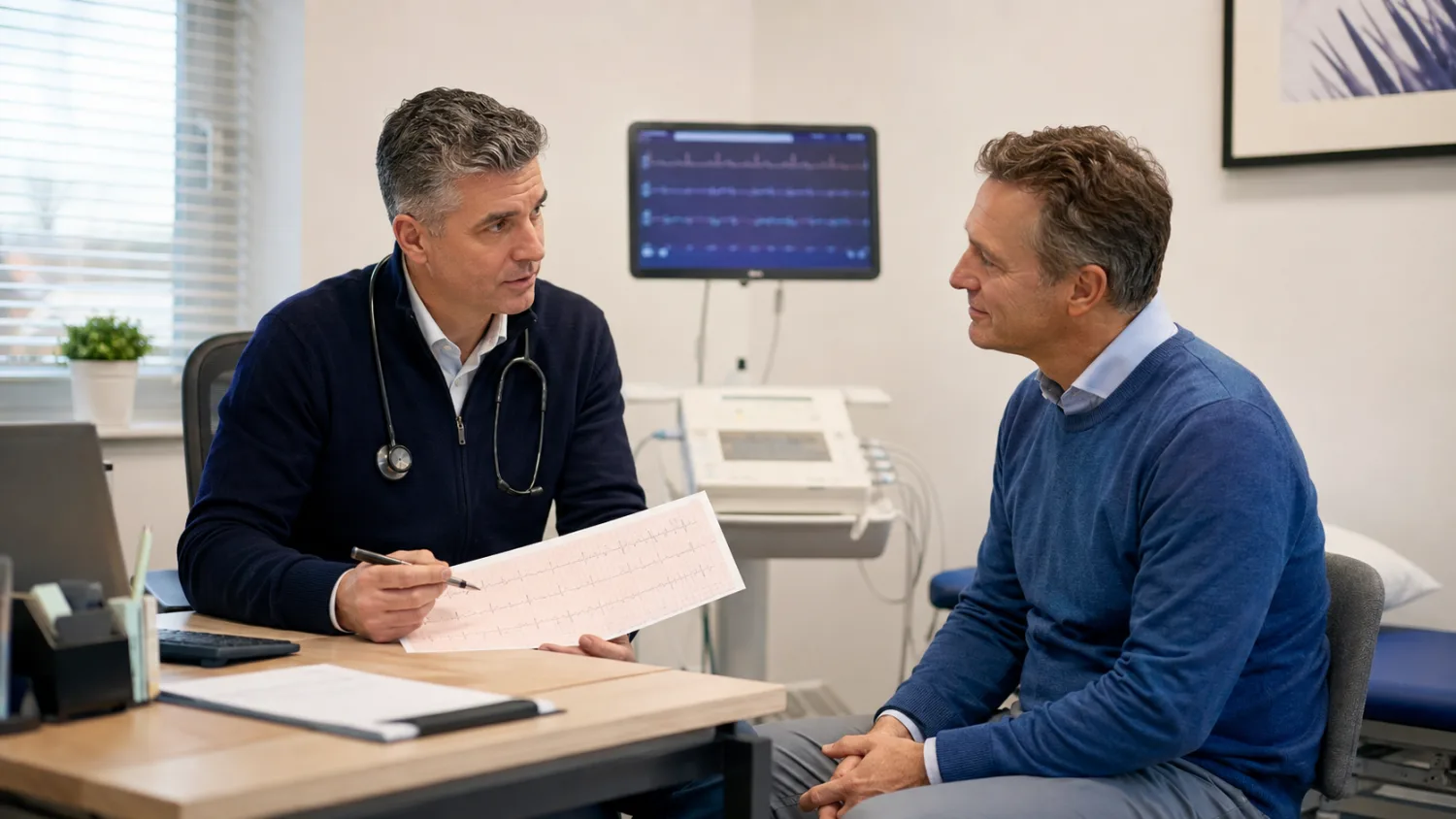
It is easy to focus on the advertised consultation fee and underestimate the cost of reaching a diagnosis. A cardiologist may need to review test results at a separate appointment before providing a final treatment plan.
| Example pathway | Possible total |
|---|---|
| Consultation and ECG only | £250–£500 |
| Consultation, ECG and follow-up | £400–£750 |
| Consultation, ECG and echocardiogram | £500–£1,000 |
| Consultation, ECG, echocardiogram and follow-up | £650–£1,200 |
| Palpitations pathway with consultation, ECG, monitor, echo and follow-up | £850–£1,600+ |
| Chest-pain investigation including advanced imaging | £1,200–£3,000+ |
For example, a clinic charging £250 for the consultation, £75 for an ECG, £400 for an echo and £160 for a follow-up would produce a total of £885.
A more expensive hospital might charge £350 for the first appointment, £150 for the ECG, £500 for the echo and £250 for the review, producing a total of £1,250.
Ask for a written estimate covering the complete likely pathway, not merely the first appointment. If the clinic cannot know which tests will be required until you have been examined, ask for its current price list in advance.
What is included in the initial consultation fee?
An initial private cardiology consultation usually lasts around 20 to 45 minutes. More complex appointments may be longer.
The cardiologist will normally:
- ask about your symptoms and when they occur;
- review your medical history;
- discuss current medicines and allergies;
- ask about heart disease and sudden death in the family;
- review blood-test results, ECGs or scans you already have;
- check relevant risk factors such as smoking, blood pressure, diabetes and cholesterol;
- perform a physical examination;
- explain which tests may be useful;
- provide an initial diagnosis or differential diagnosis;
- recommend treatment or further investigation;
- send a clinical letter to you and, with permission, your GP.
The fee does not necessarily include an ECG, blood pressure check, blood tests, prescription, hospital facility charge or written insurance report. Even when an ECG is performed during the same visit, it may appear as a separate item on the bill.
Ask before booking:
- How long is the consultation?
- Is a resting ECG included?
- Is there a separate hospital or facility fee?
- Does the price include a clinical letter?
- Will I receive a copy of my results?
- Are prescriptions charged separately?
- Is a follow-up required to discuss test results?
A video consultation may cost slightly less and can be useful for discussing existing results. However, it does not allow the cardiologist to examine you or perform an ECG, so an in-person visit may still be required.
How much does a private ECG cost?
A standard resting ECG commonly costs £50 to £150. Some clinics include it in a cardiology package, while others charge separately for performing and interpreting it.
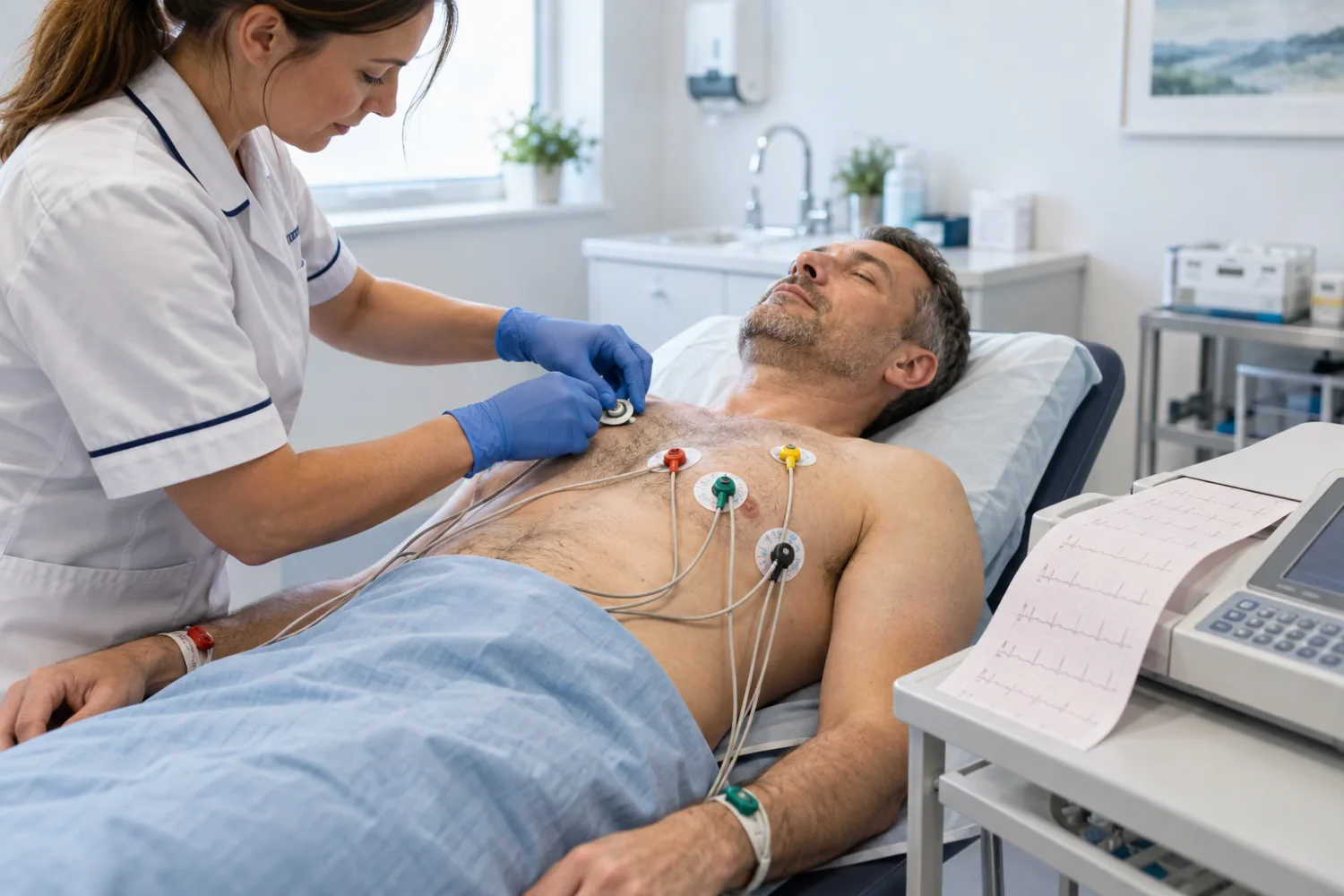
An electrocardiogram records the heart’s electrical activity through adhesive electrodes placed on the chest and limbs. It takes only a few minutes and can provide information about:
- heart rate and rhythm;
- atrial fibrillation and other arrhythmias;
- electrical conduction problems;
- possible previous heart damage;
- patterns suggesting heart-muscle strain;
- the effect of certain medicines or electrolyte abnormalities.
An ECG is a brief snapshot. A normal result cannot rule out an intermittent rhythm disturbance that was not happening during the recording. It also cannot show the heart valves or directly measure how strongly the heart pumps.
See our guide to ECG results and common measurements for an explanation of sinus rhythm, intervals and frequently used report terms.
How much does longer ECG monitoring cost?
If palpitations, dizziness or blackouts come and go, the cardiologist may recommend a portable monitor.
| Heart-rhythm test | Possible private cost |
|---|---|
| 24-hour Holter ECG | £200–£400 |
| 48-to-72-hour monitor | £250–£500 |
| Seven-day monitor | £300–£650 |
| Extended patch monitor | £450–£800+ |
| Implantable loop recorder | Potentially several thousand pounds |
Longer monitoring is not automatically better. The appropriate duration depends largely on how frequently symptoms occur. A 24-hour recording is unlikely to capture an episode that happens once every two months.
Confirm whether the monitoring price includes fitting the device, analysis, a written report and a cardiologist appointment to interpret the findings. Our guide to heart palpitations and when to seek help explains why symptoms such as fainting or exercise-triggered palpitations need particular attention.
How much does a private echocardiogram cost?
A standard private transthoracic echocardiogram usually costs approximately £250 to £500. An echo with a cardiologist consultation and interpretation may cost around £500 to £850, depending on what the package includes.
An echocardiogram uses ultrasound to create moving images of the heart. It can assess:
- the size of the heart chambers;
- heart-muscle thickness;
- pumping function and ejection fraction;
- heart-valve structure and movement;
- narrowed or leaking valves;
- regional wall-motion abnormalities;
- fluid around the heart;
- some congenital heart abnormalities;
- pressure estimates within parts of the heart.
The routine test is performed by moving an ultrasound probe across the chest. It usually takes around 20 to 45 minutes and does not involve radiation.
An echo is different from an ECG. The ECG records electrical activity, while the echo looks at the heart’s structure and movement. One test cannot simply replace the other.
See our detailed guide to private echocardiogram costs and results.
Do all echocardiograms cost the same?
No. More specialised forms of echocardiography cost more and may involve medication, exercise, sedation or additional clinical staff.
| Type of echocardiogram | Possible private cost |
|---|---|
| Standard transthoracic echo | £250–£500 |
| Stress echocardiogram | £500–£900+ |
| Transoesophageal echocardiogram | £700–£1,500+ |
| Specialist or contrast echo | Varies by provider |
Do not assume that the lowest advertised “heart scan” is a full diagnostic echocardiogram. Ask who performs it, whether they are appropriately accredited, who writes the report and whether a consultant will interpret the result in the context of your symptoms.
How much does a cardiology follow-up cost?
A private cardiology follow-up commonly costs £150 to £250. Higher-priced consultants and large London hospitals may charge £300 or more.
The follow-up may be used to:
- explain ECG, echo, blood-test or monitoring results;
- confirm or revise a diagnosis;
- start or adjust medication;
- discuss side effects;
- assess whether symptoms have changed;
- decide whether advanced testing is required;
- refer you for a procedure or another specialist opinion;
- agree how care will be shared with your GP.
Some clinics include a brief telephone explanation of normal results in the original test fee. Others require a full paid consultation regardless of the result.
Before having a test, ask:
- Who will communicate the result?
- How quickly will it be available?
- Is a review appointment included?
- Can results be discussed by telephone or video?
- Will my GP receive the report?
- What happens if the result requires urgent action?
A test without appropriate interpretation may provide limited reassurance. The result needs to be considered alongside your symptoms, examination, medicines and other risk factors.
Which additional costs might arise?
Chest pain, palpitations, breathlessness, high blood pressure and fainting do not all require the same investigation. Depending on the clinical question, the cardiologist may recommend additional tests.
| Additional investigation | Possible private cost |
|---|---|
| Blood tests | £50–£300+ |
| 24-hour blood-pressure monitoring | £150–£300 |
| Exercise treadmill ECG | £250–£500 |
| Stress echocardiogram | £500–£900+ |
| CT coronary calcium score | £300–£600 |
| CT coronary angiogram | £800–£1,500+ |
| Cardiac MRI | £1,000–£2,500+ |
| Specialist rhythm-monitoring patch | £450–£800+ |
| Private prescription | Prescription fee plus medicine cost |
Blood tests may include cholesterol, kidney function, thyroid function, blood count, electrolytes, glucose or HbA1c. The exact selection should be based on your symptoms and proposed treatment.
If high blood pressure is the main concern, a series of reliable home readings or 24-hour monitoring may be more informative than one clinic measurement. Read our guides to monitoring blood pressure at home and understanding blood-pressure readings.
If the assessment includes cholesterol testing, our guide to cholesterol test results explains LDL, HDL, non-HDL cholesterol and triglycerides.
Can you see a cardiologist through the NHS?
Yes. NHS cardiology consultations and medically necessary investigations are available without a direct charge to the patient. The usual route is an assessment by a GP followed by referral when specialist input is appropriate.
Your GP may first arrange:
- a physical examination;
- a resting ECG;
- blood tests;
- blood-pressure measurements;
- medication review;
- urgent or routine referral, depending on the symptoms.
Referral urgency depends on clinical risk rather than whether you would prefer an earlier appointment. Suspected acute heart attack, dangerous rhythm disturbance or an unstable patient needs emergency assessment. Suspected angina may be referred through a rapid-access chest-pain pathway, while stable non-urgent symptoms may follow a routine route.
Private care may provide faster access or greater appointment choice, but it does not necessarily mean every available test is clinically necessary. You can also have a private opinion and later return to NHS care, although the NHS clinician remains responsible for deciding what NHS treatment or investigation is appropriate.
See our guides to how UK hospital referrals work and NHS versus private healthcare.
Do you need a GP referral for a private cardiologist?
Many private cardiologists accept direct bookings from self-paying patients, so a GP referral may not always be compulsory. Nevertheless, referral can be helpful because it provides a medical summary, current medication list and results of investigations already completed.
A referral is more likely to be required when:
- you are claiming through private medical insurance;
- the hospital has its own referral policy;
- you need a specialised scan or invasive test;
- the consultant needs relevant records before accepting the appointment;
- another clinician needs to confirm that the proposed test is appropriate.
If you self-refer, bring details of your medicines, previous diagnoses and family history. Also bring copies of recent ECGs, blood tests, discharge summaries and scan reports where available. Repeating tests simply because records were not supplied can add several hundred pounds to the bill.
Do not book a routine private consultation while experiencing severe or rapidly worsening symptoms. The clinic may not have the facilities to provide emergency treatment.
Does private health insurance cover cardiology?
Private medical insurance may cover a cardiologist consultation and diagnostic tests when symptoms begin after the policy starts and the insurer considers the investigation medically necessary.
Coverage depends on:
- whether the condition is new or pre-existing;
- your outpatient benefit limit;
- the consultant and hospital network on your policy;
- whether your GP has referred you;
- whether the insurer has authorised the consultation and each test;
- your annual excess;
- co-payments or benefit shortfalls;
- policy exclusions for screening or chronic-condition monitoring.
Do not assume that authorisation for the consultation automatically covers an ECG, echo, monitor or scan. Obtain a separate authorisation code if the insurer requires one.
Ask the insurer:
- Is this consultant fee-assured or recognised under my policy?
- Is this specific hospital covered?
- How much outpatient cover remains?
- Do the ECG and echocardiogram need prior approval?
- Will the hospital and consultant bill separately?
- What excess or shortfall will I personally pay?
- Is follow-up treatment covered?
A new insurance policy will not normally cover symptoms or a heart condition that existed before cover began. Routine health screening may also be excluded even when diagnostic investigation of new symptoms is covered.
Our guides to private cardiology and health-insurance cover, pre-existing conditions and private health-insurance excesses explain these distinctions in more detail.
When should heart symptoms be treated as an emergency?
Cost comparisons are only appropriate for stable, non-emergency concerns. Call 999 if you may be having a heart attack or another serious cardiovascular emergency.
Emergency warning signs include:
- central chest pressure, heaviness, squeezing or tightness that does not settle;
- pain spreading to an arm, both arms, the jaw, neck, back or stomach;
- chest discomfort with sweating, nausea or severe breathlessness;
- sudden collapse or loss of consciousness;
- a very fast or irregular heartbeat with chest pain, fainting or severe breathlessness;
- sudden severe difficulty breathing;
- new weakness, facial drooping or speech difficulty;
- symptoms that are rapidly worsening or feel life-threatening.
The NHS advises calling 999 for suspected heart-attack symptoms. Read the NHS guidance on heart-attack warning signs.
Heart attacks do not always produce dramatic pain. Symptoms can be less typical in women, older people and those with diabetes. Do not drive yourself to hospital or delay while trying to arrange a cheaper private test.
Stable or recurring chest discomfort still requires medical assessment. Our guide to chest pain and when to seek urgent help explains common causes and warning signs.
How do you choose a private cardiologist?
Start with the clinical problem rather than simply selecting the nearest consultant. Cardiology includes several subspecialties, and the most appropriate doctor for an irregular heartbeat may differ from the best choice for valve disease or inherited heart conditions.
Relevant areas include:
- general adult cardiology;
- heart-rhythm disorders and electrophysiology;
- coronary artery disease and interventional cardiology;
- heart failure and cardiomyopathy;
- heart-valve disease and cardiac imaging;
- adult congenital heart disease;
- inherited cardiac conditions;
- preventive cardiology and cardiovascular risk.
Check that the doctor is registered with the General Medical Council and appears on the specialist register in cardiology. You can also review the hospital, clinic and consultant information available through PHIN.
Useful questions include:
- Does the consultant regularly assess my type of symptom or condition?
- What is the initial consultation fee?
- Is an ECG included?
- What are the likely additional test prices?
- Are consultant and hospital charges billed separately?
- Who performs and reports the echocardiogram?
- How will results be communicated?
- Will I need a paid follow-up?
- Can my GP manage prescriptions and monitoring afterwards?
- What happens if I need urgent treatment?
Be cautious about clinics selling the same large “heart screening package” to everyone. Testing should be guided by age, symptoms, examination, family history and cardiovascular risk. More tests can produce incidental findings, false alarms and further costs without necessarily improving care.
For a broader assessment of long-term risk, see our complete cardiovascular-risk guide.
Frequently asked questions
How much is a private cardiologist consultation in the UK?
An initial consultation commonly costs £200 to £350. Some specialist or central London appointments cost £350 to £600 or more.
How much is a cardiologist consultation with an ECG?
A consultation and resting ECG commonly cost approximately £250 to £500 in total. Some clinics advertise them as a combined package, while others bill each service separately.
How much is a consultation with an ECG and echocardiogram?
A combined consultation, ECG and standard echo generally costs around £500 to £1,000. Confirm whether consultant interpretation and a discussion of the results are included.
How much should I budget for the complete first assessment?
For a consultation, ECG, echo and follow-up, a sensible planning range is approximately £650 to £1,200. The cost can be higher if monitoring or advanced imaging is required.
Is an ECG included in a private cardiologist appointment?
Sometimes, but not always. An ECG may be performed during the visit yet billed separately. Ask for an itemised quotation before attending.
Is an echocardiogram included in the consultation price?
Usually not unless the clinic advertises a specific package. Standard echocardiography commonly adds £250 to £500.
What is the difference between an ECG and an echo?
An ECG records the heart’s electrical signals and rhythm. An echocardiogram uses ultrasound to examine the heart’s chambers, valves, movement and pumping function.
Can an ECG detect a blocked artery?
An ECG may show changes associated with an active or previous heart attack, but a normal resting ECG does not rule out narrowing of the coronary arteries. Further assessment may be needed depending on the symptoms.
Can an echocardiogram detect blocked arteries?
A standard resting echo does not directly show most coronary-artery narrowing. It can reveal effects on heart-muscle movement or function. CT coronary angiography, invasive angiography or another test may be used when coronary disease is suspected.
Can I book a private cardiologist without a GP referral?
Many self-paying patients can book directly, but individual providers differ. Insurers commonly require a GP referral and prior authorisation.
Will a private cardiologist prescribe medication?
Yes, when clinically appropriate. You may need to pay a private prescription fee and the full pharmacy cost. Your GP may later agree to continue prescribing, but is not obliged to adopt every private recommendation.
Does the NHS accept private cardiology results?
NHS clinicians can consider reports from private providers, but they remain responsible for deciding whether to rely on them, repeat investigations or offer NHS treatment.
Is a private heart check the same as seeing a cardiologist?
Not necessarily. Some heart checks are screening packages conducted without a consultant appointment. Check who reviews the history, interprets abnormal findings and takes responsibility for follow-up.
How quickly can you see a private cardiologist?
Availability varies, but appointments are often available within days or a few weeks. Highly specialised consultants may have longer waits. Urgent symptoms should still use NHS emergency pathways.
Is private cardiology worth the cost?
It may be valuable when you want faster access, a particular specialist or additional appointment time and can afford the complete diagnostic pathway. It is less useful when only the initial fee is affordable or when symptoms require emergency rather than scheduled care.