Private heart screening in the UK can cost anything from around £150 for a basic cardiovascular check to £1,000–£2,000 or more for a cardiologist-led package with scans and advanced testing.
The difficulty is not finding somewhere willing to test your heart.
It is deciding which tests are actually useful.
A £1,500 “executive cardiac MOT” may sound reassuring because it includes an ECG, echocardiogram, exercise test, blood tests and imaging. But more tests do not automatically mean better screening.
Some investigations are extremely useful when there is a specific reason for doing them. The same tests can add very little information when performed routinely in a healthy person with no symptoms and a low cardiovascular risk.
For many people, the most valuable heart screening starts with relatively simple measurements: blood pressure, cholesterol, diabetes risk, smoking history, family history and an overall cardiovascular risk calculation.
More expensive tests such as an echocardiogram, Holter monitor or CT scan are most useful when there is a particular clinical question they can answer.
This guide explains what private heart screening costs in the UK, what common packages include and which tests may genuinely be worth paying for.
How Much Does Private Heart Screening Cost in the UK?
A useful 2026 private-price guide is approximately:
| Heart screening service | Typical private cost |
|---|---|
| Basic cardiovascular health check | About £150–£300 |
| Private cardiologist consultation | About £150–£350 |
| Resting 12-lead ECG | About £70–£150 |
| Echocardiogram | About £250–£500 |
| 24-hour Holter monitor | About £250–£450 |
| Longer 7–14 day rhythm monitor | About £400–£800+ |
| CT coronary calcium score | About £150–£400 at many imaging centres |
| Cardiologist-led screening package | About £600–£1,000+ |
| Advanced cardiac screening package | About £1,000–£2,000+ |
Prices vary considerably between hospitals and regions.
For example, Spire Bushey and Spire Harpenden introduced private Heart Health Checks in 2026 at £995. The package includes a cardiologist review, ECG, echocardiogram and predefined blood tests.
At the other end of the market, a basic cardiovascular screen containing blood pressure, cholesterol, glucose and sometimes an ECG can cost around £150–£300.
Before comparing packages, check whether the quoted price includes the clinician who will actually interpret the results.
A folder containing ten test results is much less useful if nobody explains whether any of them matter.
Start With Cardiovascular Risk, Not a Scan
For somebody without heart symptoms, one of the most useful questions is:
What is my actual risk of developing cardiovascular disease?
In UK primary care, NICE recommends using QRISK3 to estimate 10-year cardiovascular risk in people aged 25 to 84 who do not already have cardiovascular disease.
The calculation uses factors including:
- age;
- sex;
- blood pressure;
- cholesterol;
- smoking;
- diabetes;
- kidney disease;
- some long-term health conditions;
- certain medicines.
For many people, these ordinary measurements tell you more about what you should do next than an expensive scan.
Someone with high blood pressure, high LDL cholesterol, diabetes and smoking exposure already has important modifiable risk factors.
Finding a normal echocardiogram would not make those risks disappear.
Our complete guide to cardiovascular risk explains how these factors work together.
Which Blood Tests Are Worth Paying For?
Blood testing is one of the more useful parts of cardiovascular screening because several results can directly influence prevention.
Cholesterol profile
A standard lipid profile usually measures:
- total cholesterol;
- HDL cholesterol;
- non-HDL cholesterol;
- LDL cholesterol;
- triglycerides.
This is highly relevant because reducing atherogenic cholesterol can lower cardiovascular risk.
If you already have a recent NHS lipid result, however, there is little value in paying to repeat exactly the same test simply because it comes inside a premium screening package.
See our guide to cholesterol test results for more on interpreting the numbers.
HbA1c
HbA1c can identify diabetes or prediabetes.
That matters because diabetes substantially affects long-term cardiovascular risk.
Kidney function
Kidney disease and cardiovascular disease are closely linked, so creatinine and estimated glomerular filtration rate may be useful as part of broader risk assessment.
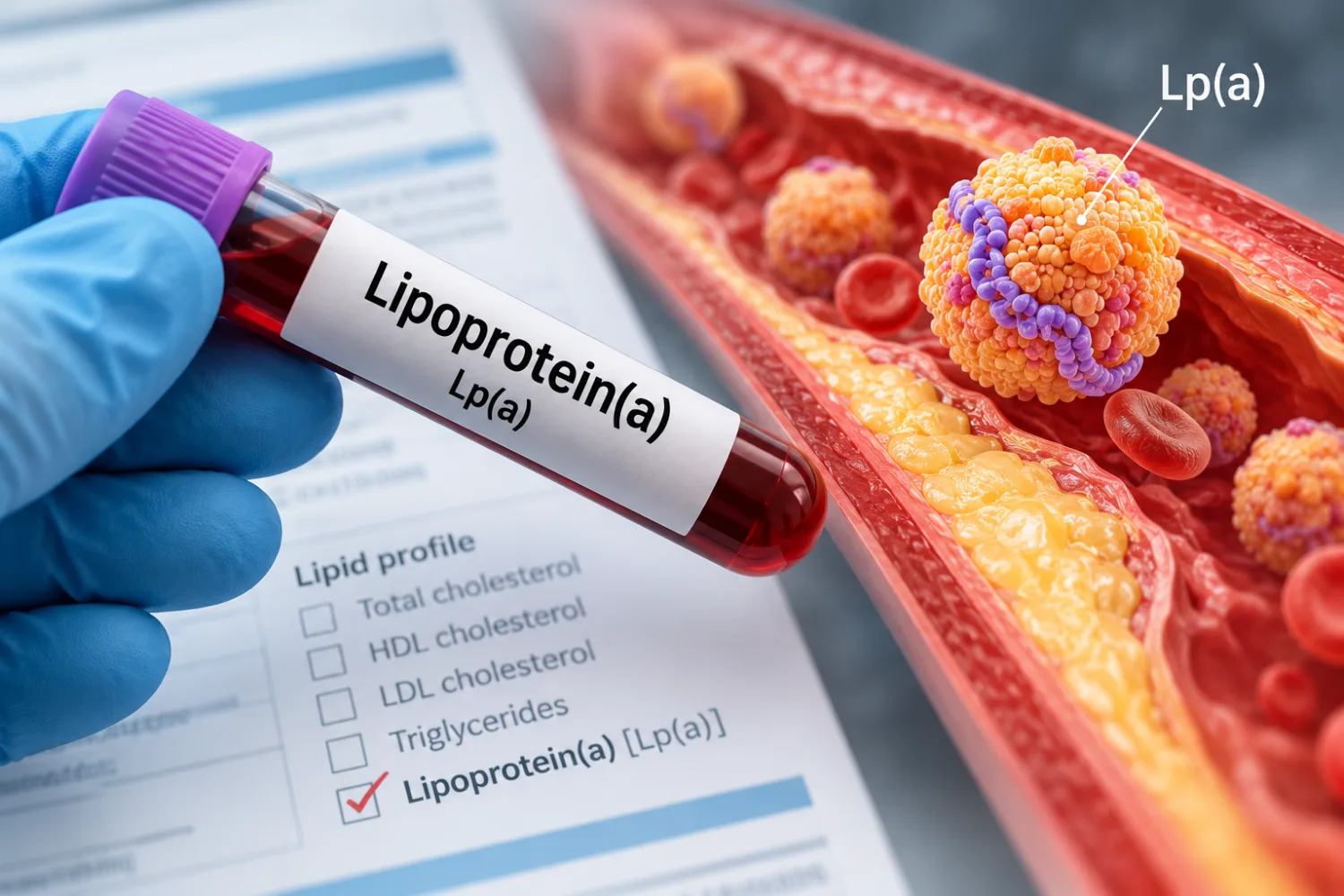
Lipoprotein(a)
Lipoprotein(a), or Lp(a), is a largely inherited cardiovascular risk factor.
Unlike ordinary cholesterol, it generally does not need measuring every year.
Once-in-a-lifetime testing can be particularly useful if you have a strong family history of premature heart attacks or strokes.
ApoB
ApoB estimates the number of atherogenic lipoprotein particles circulating in the blood.
It can provide additional information in some people, particularly when triglycerides are high or ordinary LDL measurements do not appear to fit the overall risk picture.
It is not essential in every basic heart screen.
Is a Resting ECG Worth Paying For?
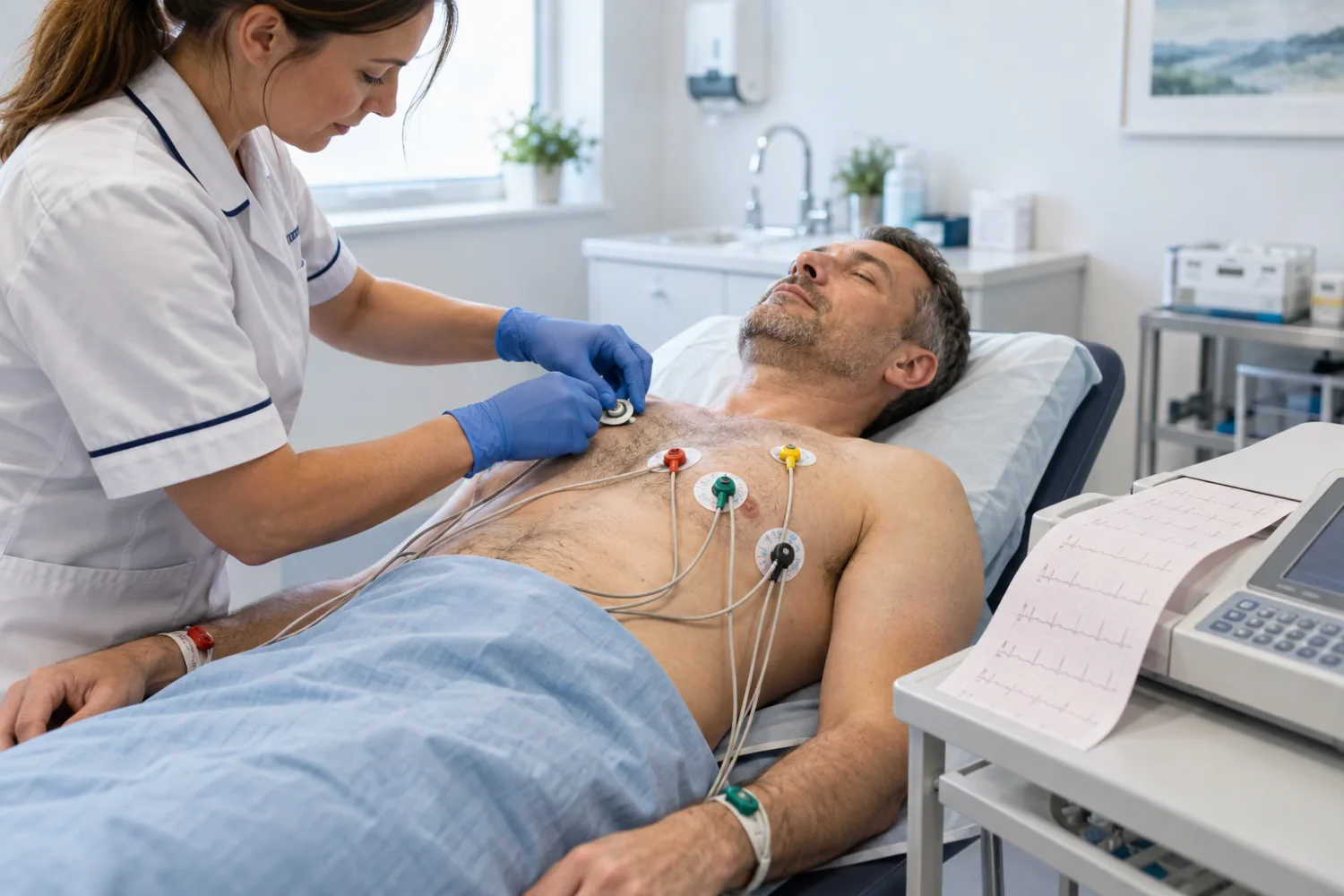
An electrocardiogram, or ECG, records the electrical activity of your heart.
It can identify:
- atrial fibrillation;
- some other rhythm abnormalities;
- conduction problems;
- signs of previous heart injury in some cases;
- certain inherited electrical abnormalities.
A private resting ECG commonly costs around £70–£150, although it is often included with a cardiology consultation.
You can see more detailed pricing in our guide to private ECG costs in the UK.
But an ECG has an important limitation:
A normal resting ECG does not prove that your coronary arteries are clear.
Someone can have significant coronary artery disease and still have a completely normal ECG while resting.
That means an ECG should not be sold as a simple “heart attack prevention scan”.
It becomes considerably more useful when there is a reason to look for an electrical or rhythm problem, such as palpitations, fainting or an irregular pulse.
When Is an Echocardiogram Worth Paying For?
An echocardiogram is an ultrasound scan of the heart.
It shows heart structure rather than coronary plaque.
An echo can assess:
- how well the heart pumps;
- heart-valve function;
- heart chamber size;
- heart-muscle thickness;
- some congenital abnormalities;
- some effects of longstanding high blood pressure.
The British Heart Foundation notes that echocardiography is commonly used when investigating heart failure, valve disease, congenital heart disease and some inherited heart conditions.
A standard private echocardiogram often costs around £250–£500. Our private echocardiogram cost guide gives a fuller breakdown.
An echo may be particularly worthwhile if you have:
- a heart murmur;
- unexplained breathlessness;
- suspected heart failure;
- known high blood pressure with concern about heart changes;
- a relevant family history of cardiomyopathy;
- an abnormal ECG suggesting structural disease.
It is less compelling as a routine yearly screening scan in a completely asymptomatic low-risk adult.
A normal echo also does not mean your coronary arteries are free from atherosclerosis.
What About Holter Monitoring and Palpitations?
A resting ECG records your heart for only a few seconds.
That creates a problem when symptoms are intermittent.
If your heart races for ten minutes every few days, there is a good chance a clinic ECG will be perfectly normal when you happen to attend.
This is where ambulatory rhythm monitoring becomes useful.
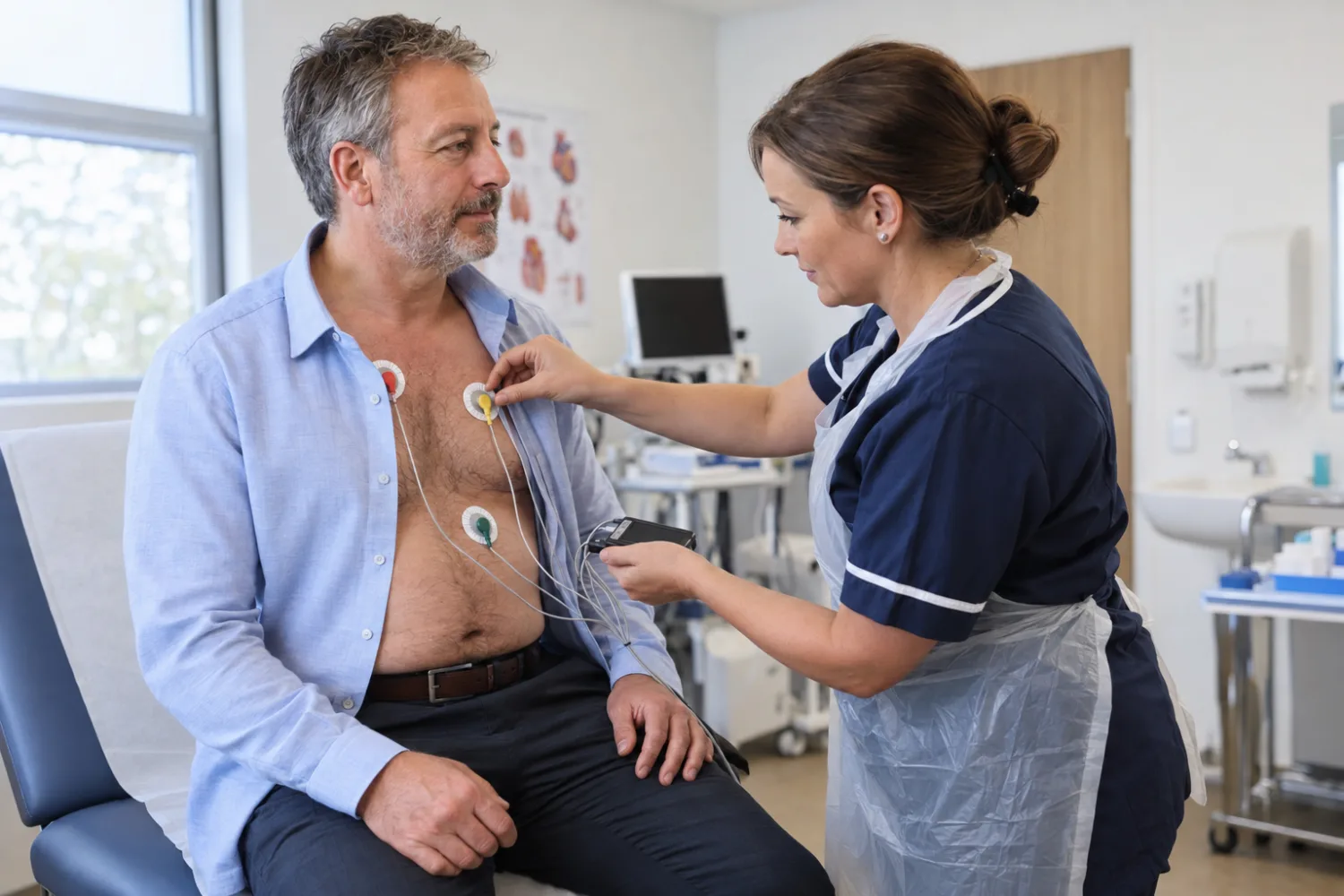
A Holter monitor continuously records the heart rhythm for 24 or 48 hours.
Longer patch monitors can record for seven, 14 or occasionally more days.
These tests can be particularly useful for:
- recurrent palpitations;
- suspected intermittent atrial fibrillation;
- unexplained fainting;
- episodes of rapid heartbeat;
- frequent unexplained dizziness where an arrhythmia is suspected.
They are not especially useful as routine screening for someone who has never experienced a rhythm-related symptom.
A private 24-hour monitor commonly costs around £250–£450, while longer monitoring can cost considerably more.
Our private Holter monitor cost guide compares the different recording periods.
Is a CT Calcium Score Worth Paying For?
A coronary artery calcium score is one of the more interesting optional screening tests because it looks for calcified plaque in the coronary arteries.
The scan is quick, normally does not require contrast dye and produces a numerical calcium score.
A score of zero means no calcified coronary plaque was detected.
Higher scores indicate increasing amounts of coronary calcification and generally higher cardiovascular risk.
This is very different from an echocardiogram, which looks at how the heart is built and how it pumps.
The British Heart Foundation describes calcium scoring as a simpler heart CT that measures calcified plaque rather than producing detailed images of coronary narrowing.
A calcium score may be useful when:
- you are middle-aged;
- your cardiovascular risk is neither clearly low nor clearly high;
- you have a strong family history of premature coronary disease;
- you are uncertain about starting preventive treatment such as a statin;
- the result could realistically change what you do next.
It is much less useful if you already have established coronary disease or already clearly need intensive risk-factor treatment.
It is also not the right self-booked investigation for somebody with new chest pain that could represent angina.
Which Expensive Heart Tests Are Usually Not Routine Screening Tests?
A good private service should not automatically give everybody the same long menu of cardiac investigations.
Some tests are best reserved for symptoms or abnormal findings.
CT coronary angiography
A CT coronary angiogram, or CTCA, uses contrast dye to provide much more detailed images of the coronary arteries.
It is an extremely useful diagnostic test in the right patient.
But it is not normally necessary as routine screening in every healthy adult.
If you have chest pain suspicious for coronary disease, CTCA may be much more appropriate than a simple calcium score — but that is now a diagnostic pathway rather than wellness screening.
Exercise or stress testing
Exercise testing can investigate how the heart behaves under physical stress.
Stress echocardiography and other functional tests may be valuable when a cardiologist is trying to answer a specific question about blood flow, symptoms or exercise-related problems.
They are not automatically useful simply because you have reached a particular age.
Cardiac MRI
Cardiac MRI is excellent for examining heart muscle, inflammation, scarring and some cardiomyopathies.
It is also relatively expensive and generally reserved for particular clinical indications.
A normal-risk person does not ordinarily need annual cardiac MRI screening.
Who Is Most Likely to Benefit From Private Heart Screening?
Paying privately makes more sense when you have a reason to believe your cardiovascular risk may deserve closer assessment.
Examples include:
- a strong family history of early heart attacks;
- high cholesterol;
- high blood pressure;
- diabetes;
- smoking history;
- known kidney disease;
- palpitations;
- unexplained breathlessness;
- an abnormal heart murmur;
- previous abnormal ECG results;
- a family history of inherited cardiomyopathy or sudden cardiac death.
But “screening” becomes the wrong word once you have symptoms.
For example, somebody with exertional chest pressure, unexplained fainting or significant breathlessness needs a proper medical assessment rather than simply selecting an off-the-shelf screening package.
In that situation, paying for a private cardiologist consultation first may be more useful than paying for a fixed package containing tests you may not need.
Can You Get Heart Screening Free on the NHS?
Yes, to an extent.
In England, eligible adults aged 40 to 74 without certain existing cardiovascular conditions should be offered a free NHS Health Check every five years.
This assesses risk of:
- heart disease;
- stroke;
- diabetes;
- kidney disease.
The assessment usually includes measurements such as blood pressure, cholesterol, height and weight alongside lifestyle and cardiovascular-risk information.
It does not routinely mean having an ECG and echocardiogram simply because you are over 40.
If you already have heart disease, diabetes, hypertension or another relevant diagnosis, you should usually be monitored through existing NHS pathways rather than the general NHS Health Check programme.
Scotland, Wales and Northern Ireland use different cardiovascular prevention arrangements, so availability differs across the UK.
How to Decide What Is Worth Paying For
A useful way to approach private screening is to ask what decision each test could change.
For example:
| Test | When it may be useful |
|---|---|
| Blood pressure | Almost everyone who has not checked it recently |
| Cholesterol profile | Routine cardiovascular risk assessment |
| HbA1c | Diabetes and metabolic-risk assessment |
| Lp(a) | Often useful once, especially with premature family heart disease |
| Resting ECG | Rhythm concerns, symptoms or certain clinical risk factors |
| Echocardiogram | Murmur, breathlessness, structural or inherited heart concerns |
| Holter monitor | Intermittent palpitations, fainting or suspected arrhythmia |
| Calcium score | Selected people where coronary-risk uncertainty affects prevention decisions |
| CT coronary angiogram | Usually a diagnostic test when coronary disease is suspected |
The best private screening programme is therefore not necessarily the one with the longest list of tests.
For a healthy 45-year-old, blood pressure, cholesterol, HbA1c, family history and QRISK assessment may provide far more actionable information than an expensive collection of heart scans.
For a 58-year-old with a father who had a heart attack at 48 and borderline cholesterol, adding Lp(a) or a coronary calcium score may provide useful additional context.
For someone experiencing palpitations, a Holter monitor may matter more than either.
Targeted testing is usually better value than testing everything.
Frequently Asked Questions
How much is a private heart check in the UK?
Basic cardiovascular checks commonly cost around £150–£300. Cardiologist-led packages with ECG and echocardiography may cost around £600–£1,000, while advanced packages can exceed £1,000–£2,000.
What is included in a private heart screening?
It varies by provider. Common components include blood pressure, cholesterol and diabetes blood tests, ECG, consultation and sometimes echocardiography. More expensive packages may add CT imaging, exercise testing or rhythm monitoring.
What is the best heart test for a healthy person?
There is no single best test. For many asymptomatic people, the most valuable assessment is blood pressure, cholesterol, diabetes screening, smoking and family history combined with a formal cardiovascular-risk calculation.
Is an ECG worth having as part of a health check?
It can identify rhythm and electrical abnormalities, but a normal ECG does not exclude coronary artery disease. Its value is higher when there are symptoms, an irregular pulse or a relevant medical or family history.
Can an ECG tell if my arteries are blocked?
No. A resting ECG records electrical activity rather than directly imaging coronary arteries. Significant coronary disease can exist despite a normal resting ECG.
Is an echocardiogram worth paying for?
It can be very useful for investigating a murmur, breathlessness, heart failure, valve disease or some inherited heart conditions. Routine echocardiography in a healthy low-risk person is less likely to change management.
Should everyone over 50 have an echocardiogram?
No. Age alone is not usually an indication for routine echocardiography.
Is a CT calcium score better than an ECG?
They answer different questions. An ECG assesses electrical activity and rhythm. A calcium scan measures calcified plaque within coronary arteries. One cannot replace the other.
Should I have a CT calcium score?
It may be useful if your cardiovascular risk is uncertain and the result could influence preventive treatment. It is not necessary for everyone and is not the appropriate self-screening test for new chest pain.
Do I need a Holter monitor if my ECG is normal?
Possibly, if you have intermittent palpitations, fainting or other symptoms that did not occur during the short resting ECG. A Holter or longer monitor records the rhythm over a much longer period.
Should I pay for a stress test?
Usually only when there is a clinical reason. Stress testing can be valuable in selected patients but is not automatically necessary as part of a general wellness screen.
Can private heart screening guarantee I will not have a heart attack?
No. No combination of normal tests can guarantee that somebody will never develop cardiovascular disease or have a heart attack.
What blood tests are most useful for heart risk?
A cholesterol profile and HbA1c are among the most useful general tests. Kidney function may also matter. Lp(a) can provide useful inherited-risk information, particularly when there is a strong family history.
Is private heart screening better than an NHS Health Check?
Not necessarily. An NHS Health Check already assesses many of the most important modifiable cardiovascular risk factors for eligible adults in England. Private testing is most useful when it adds clinically relevant information rather than simply duplicating recent NHS results.
Is a £1,000 heart screening package worth it?
It can be if you have meaningful risk factors, symptoms or a family history and the package includes appropriate cardiologist interpretation. For a healthy low-risk person with recent normal blood pressure and blood tests, paying for every available cardiac investigation may provide little additional benefit.
This guide provides general information about private cardiac screening rather than recommending specific tests for an individual. New chest pain, unexplained fainting, severe breathlessness or other significant cardiac symptoms need medical assessment rather than routine screening.