A private resting ECG in the UK typically costs between £60 and £150. Community pharmacies offering the service are often at the lower end of this range, while private GP clinics and cardiology centres may charge more when medical interpretation or a consultation is included.
A standalone ECG is relatively inexpensive, but the total cost can increase if you need a GP appointment, consultant cardiology review, prolonged rhythm monitoring or an echocardiogram.
| Private ECG service | Typical UK cost |
|---|---|
| Pharmacy 12-lead ECG | £60–£100 |
| Private GP resting ECG | £70–£150 |
| Private GP consultation and ECG | £130–£300 |
| Standalone ECG at a cardiology clinic | £70–£150 |
| Cardiologist consultation and ECG | £250–£500 |
| 24-hour ECG or Holter monitor | £200–£400 |
| 48- to 72-hour ECG monitor | £250–£500 |
| Seven- to 14-day rhythm monitor | £300–£750 |
| Exercise ECG | £300–£600 |
| Echocardiogram | £250–£600 |
These are broad self-pay estimates rather than fixed national prices. Always check whether the advertised fee includes clinical interpretation, a written report and advice about what to do next.
Call 999 if you have severe or persistent chest pain, pressure or tightness, particularly with breathlessness, sweating, nausea, collapse or pain spreading to an arm, jaw, back or stomach. Do not book a pharmacy or private GP ECG instead of seeking emergency help.
What is an ECG?
An electrocardiogram, usually shortened to ECG, records the electrical activity of the heart. It is also called an EKG in some countries.
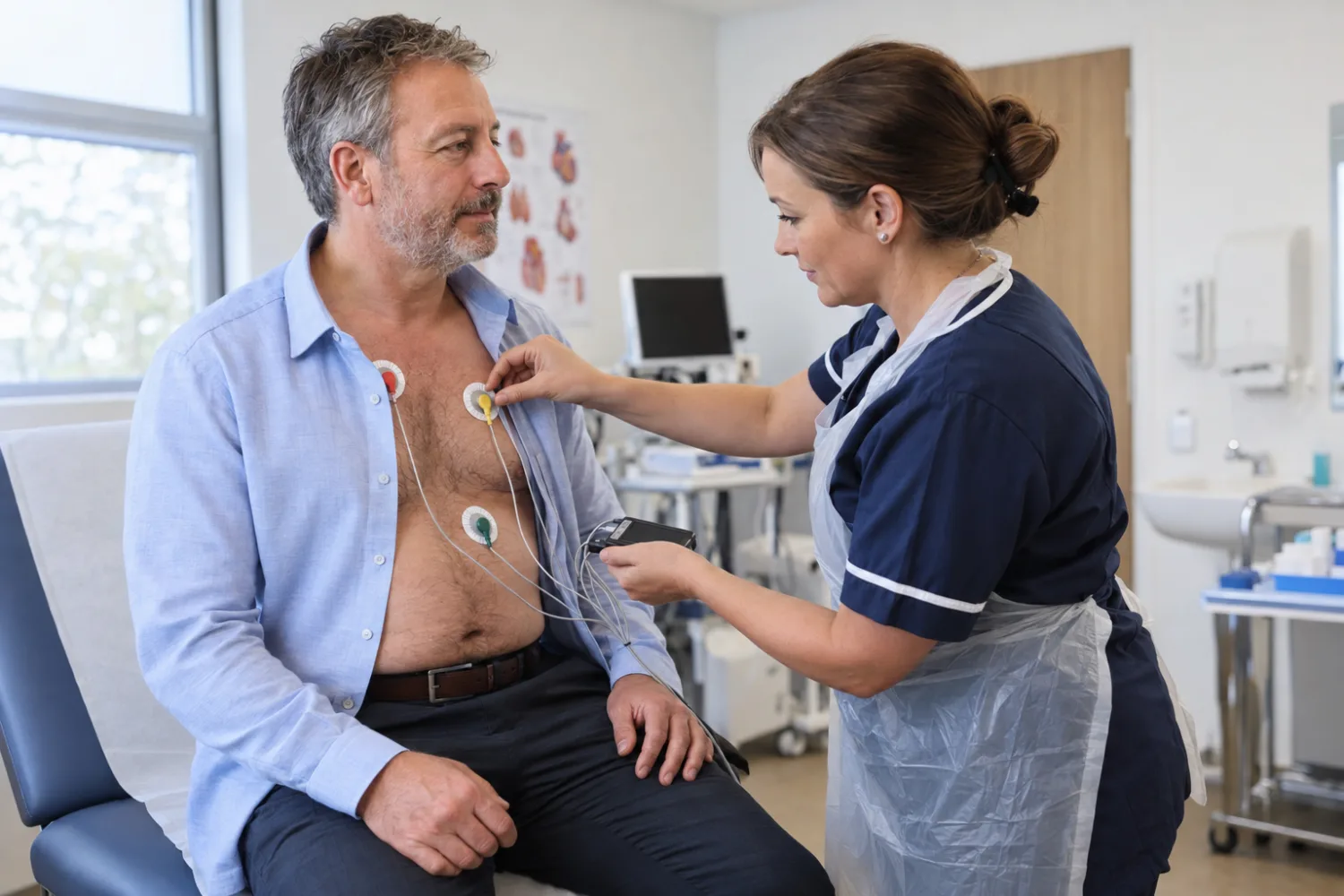
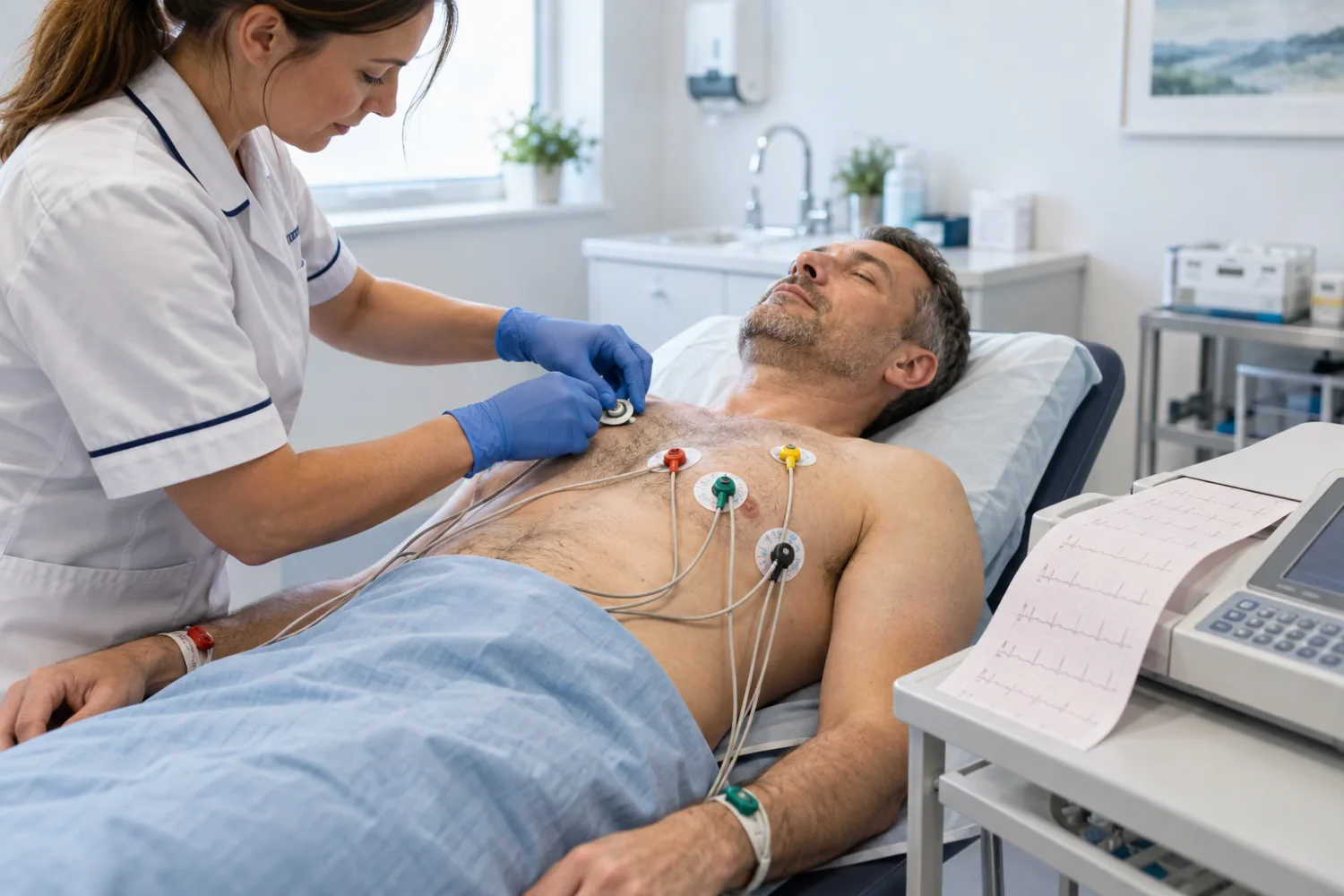
For a standard resting 12-lead ECG, small adhesive electrodes are attached to the chest, arms and legs. Wires connect these electrodes to the ECG machine, which records the electrical signals from several different directions.
Despite the name, a 12-lead ECG normally uses ten physical electrodes to create 12 electrical views of the heart.
The test can provide information about:
- heart rate;
- whether the rhythm is regular or irregular;
- atrial fibrillation and certain other arrhythmias;
- electrical conduction problems;
- patterns associated with previous heart damage;
- possible heart-muscle strain or enlargement;
- the effects of some medicines;
- changes associated with certain electrolyte abnormalities.
An ECG does not send electricity into the body. It only records the electrical activity already being produced by the heart.
How much does a pharmacy ECG cost?
A private 12-lead ECG at a community pharmacy commonly costs approximately £60 to £100.
Published examples include pharmacies charging:
- around £60 for a resting 12-lead ECG with interpretation;
- approximately £75 for results returned within 12 hours;
- around £99 for a faster report.
Pharmacy ECG services are not available everywhere. They are more likely to be offered by larger independent pharmacies with private consultation rooms and trained staff.
A pharmacy appointment may include:
- a short questionnaire about symptoms and medical history;
- a blood-pressure or pulse check;
- recording a 12-lead ECG;
- electronic review by a cardiac physiologist or doctor;
- a digital or printed report;
- advice to contact your GP or seek urgent care if an abnormality is found.
Ask who interprets the recording. The person attaching the electrodes may be a pharmacist, pharmacy technician or another trained member of staff, while the trace is reviewed remotely by a cardiac physiologist or doctor.
The pharmacy may provide the technical report but not diagnose the underlying cause or develop a complete treatment plan. An abnormal or uncertain result may still require a GP or cardiology consultation.
Is a pharmacy ECG the same as a hospital ECG?
A properly recorded 12-lead ECG can use the same basic technology and electrode arrangement as a GP surgery or hospital test. The main differences are usually the clinical setting, the person interpreting it and what happens after the result.
A hospital team can combine the ECG immediately with examination, blood tests, repeat recordings and emergency treatment. A pharmacy service is designed for stable, non-emergency situations.
Do not attend a pharmacy for testing when you have active symptoms that may represent a heart attack, dangerous rhythm disturbance or another medical emergency.
How much does a private GP ECG cost?
A private GP clinic commonly charges around £70 to £150 for a standalone resting ECG. If a GP consultation is required as well, the total is often approximately £130 to £300.
Published examples include London clinics charging around £85 to £100 for an adult ECG. Weekend appointments, urgent reporting or a longer medical consultation may cost extra.
A private GP pathway may be useful when:
- you have non-emergency palpitations;
- your pulse feels irregular;
- you have intermittent light-headedness;
- a clinician has requested an ECG before prescribing medicine;
- you need monitoring while taking particular medication;
- you require an ECG for work, sport or another administrative purpose;
- you want the result considered alongside your symptoms and medical history.
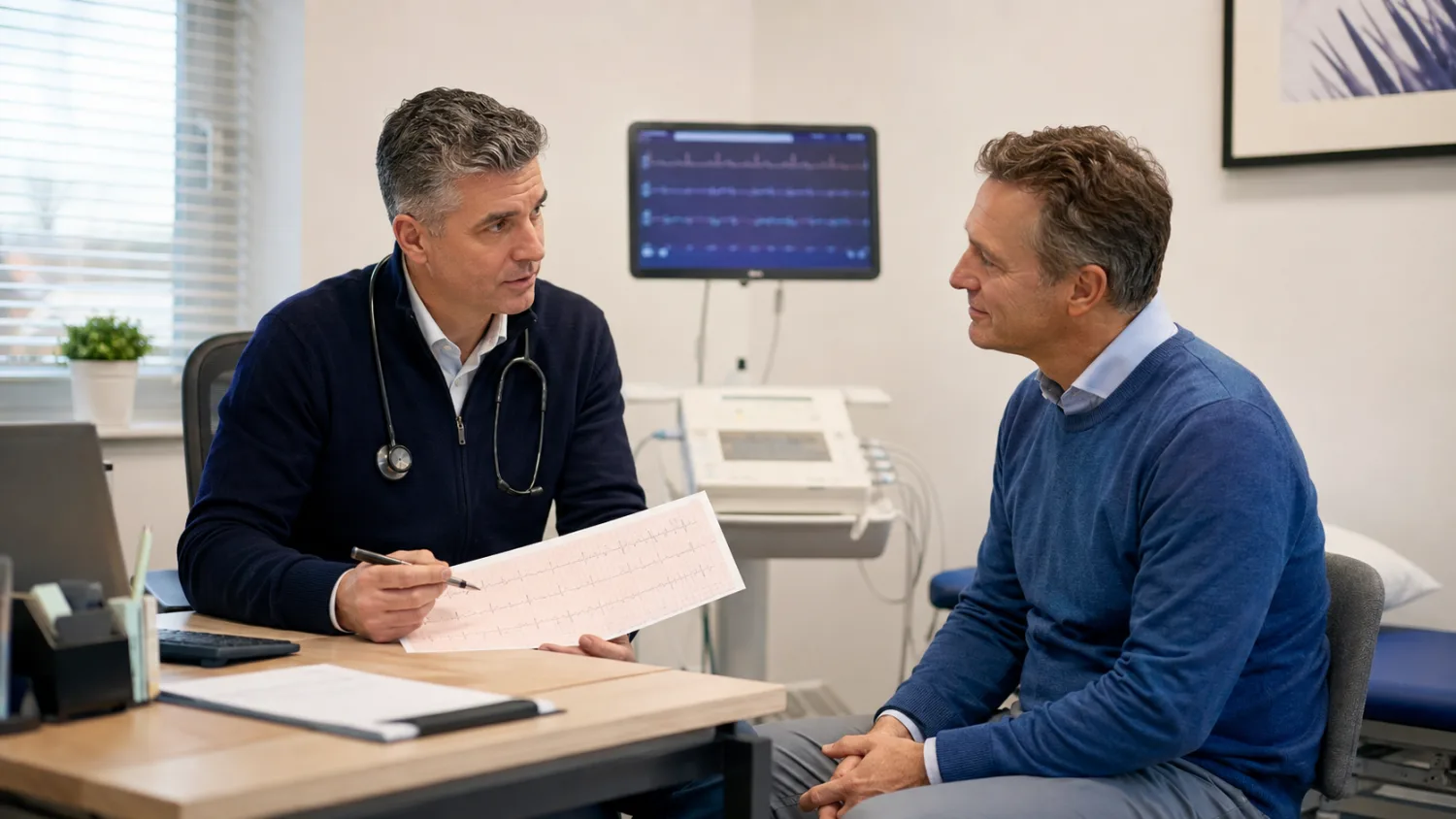
The advantage of booking through a GP is that the doctor can examine you, review medication and family history, assess cardiovascular risk and decide whether the ECG answers the clinical question.
The total fee may include:
- the consultation;
- recording the ECG;
- GP interpretation;
- a copy of the trace;
- a clinical report or referral letter;
- advice about further tests.
Some clinics charge the consultation and ECG separately. For example, a £90 ECG added to a £100 GP appointment would produce a total of £190.
Ask whether the GP will interpret the trace personally or whether it will be sent to a cardiologist or cardiac physiologist. A separate specialist report may add approximately £40 to £100.
How much does an ECG cost at a cardiology clinic?
A standalone ECG at an independent cardiology or diagnostic clinic commonly costs £70 to £150. A consultation with a cardiologist and an ECG typically costs around £250 to £500 in total.
Published prices demonstrate the variation:
- one London clinic advertises a standalone ECG for £70;
- a specialist cardiology centre charges £89 for an ECG or £129 with a report;
- another service charges £95 for recording and interpretation;
- a private diagnostic provider charges £99, including a cardiac physiologist’s report;
- some consultant-led services charge approximately £150 when a face-to-face discussion is included.
A cardiology appointment may cost more because it can include:
- a detailed review of symptoms;
- physical examination;
- specialist interpretation of the ECG;
- review of previous medical records and tests;
- an opinion on whether further cardiac testing is needed;
- a treatment or monitoring plan;
- a letter to you and your GP.
Our guide to private cardiologist costs in the UK explains consultation, echocardiogram, monitoring and follow-up fees in more detail.
What should the quoted price include?
The cheapest advertised ECG is not necessarily the lowest complete cost. Check exactly what the service provides before booking.
Ask whether the price includes:
- a full 12-lead ECG rather than a single-lead rhythm check;
- the appointment or consultation;
- interpretation by a qualified clinician;
- a written report;
- a copy of the ECG trace;
- same-day results;
- an explanation of abnormal findings;
- a letter to your NHS GP;
- onward referral when needed;
- VAT or other facility charges, if applicable.
A £60 pharmacy test with a reviewed report may offer better value than a £50 recording that you must take elsewhere for interpretation. Conversely, paying for a cardiology consultation may be unnecessary when a GP only needs a routine ECG before starting medication.
Ask what will happen if the trace is abnormal. A good service should have a clear process for urgent findings and should not simply hand you an automated report without clinical guidance.
What happens during the appointment?
A resting ECG is quick, non-invasive and usually painless. The recording itself takes only a few minutes, although the whole appointment may last 15 to 30 minutes.
You will normally be asked to:
- remove clothing from the upper body;
- lie flat on an examination couch;
- allow small sticky electrodes to be placed on the chest, wrists or arms, and ankles or legs;
- keep still and breathe normally while the recording is taken.
You may be offered a gown or covering. Ask for a chaperone if you would feel more comfortable.
Small areas of chest hair may need to be shaved so the electrodes make good contact. Skin may also be cleaned or lightly prepared.
The ECG machine produces a trace showing waves and intervals. The clinician checks the recording quality and may repeat it if there is movement, muscle tension or poor electrode contact.
There is no radiation, and the machine does not deliver an electric shock. The main minor side effect is temporary skin redness or irritation from the adhesive pads.
How should you prepare?
Most people do not need special preparation. It can help to:
- wear clothing that is easy to remove from the upper body;
- avoid applying body lotion or oily cream to the chest that day;
- bring a list of medicines and supplements;
- bring previous ECGs or cardiac reports if available;
- tell the clinician about a pacemaker or implanted device;
- explain exactly when symptoms occur and how long they last.
You can normally eat, drink and take usual medication before a resting ECG unless the clinic gives different instructions.
What can an ECG diagnose?
An ECG can detect or suggest several heart conditions, including:
- atrial fibrillation;
- atrial flutter;
- some fast or slow heart rhythms;
- heart block and other conduction disorders;
- patterns associated with a current or previous heart attack;
- possible heart-muscle thickening or strain;
- long-QT syndrome and certain other inherited electrical conditions;
- pericarditis;
- effects of electrolyte disturbance or medication.
The result must be interpreted alongside symptoms, examination and other tests. An automated machine interpretation is not a final diagnosis and can produce both false alarms and missed abnormalities.
What can a normal ECG not rule out?
A normal resting ECG does not prove that the heart is healthy in every respect.
It may not detect:
- an intermittent arrhythmia that was absent during the recording;
- coronary narrowing that produces symptoms only during exertion;
- all previous heart attacks;
- heart-valve disease;
- structural heart abnormalities;
- every inherited heart condition;
- the cause of all chest pain, breathlessness or fainting.
A resting ECG is a snapshot lasting only a few seconds. Someone who experiences palpitations once a week can have a completely normal trace between episodes.
A normal private ECG should not override concerning symptoms. Further assessment may still be needed even when the report says “sinus rhythm” or “no significant abnormality.”
Do you need a resting ECG or a heart monitor?
The correct test depends on how often symptoms occur.
| Test | What it records | Typical private cost |
|---|---|---|
| Resting 12-lead ECG | A short recording taken while lying still | £60–£150 |
| 24-hour Holter monitor | Continuous rhythm during normal daily activity | £200–£400 |
| 48- or 72-hour monitor | A longer continuous recording | £250–£500 |
| Seven- to 14-day monitor | Extended recording for less frequent symptoms | £300–£750 |
| Event recorder | Activated automatically or by the patient during symptoms | Varies by duration and device |
| Exercise ECG | Electrical activity while walking or cycling under supervision | £300–£600 |
A resting ECG may be suitable when:
- an irregular rhythm is present during the appointment;
- the pulse is persistently fast or slow;
- a baseline trace is required;
- a medicine requires electrical monitoring;
- a clinician wants to investigate an abnormal examination finding.
Longer monitoring may be more useful when palpitations, dizziness or faint feelings occur intermittently. The aim is to record the heart rhythm at the same time as the symptom.
Do not automatically pay for the longest monitor. A clinician should help choose a duration based on how often episodes happen.
Is an ECG the same as an echocardiogram?
No. The names sound similar, but they assess different aspects of the heart.
An ECG records electrical activity using electrodes on the skin. It is particularly useful for assessing rhythm and conduction.
An echocardiogram is an ultrasound scan showing the heart’s structure and movement. It can assess:
- heart-valve function;
- heart-chamber size;
- how strongly the heart pumps;
- heart-muscle thickness;
- fluid around the heart;
- certain congenital or structural abnormalities.
A resting ECG commonly costs £60 to £150, while a private echocardiogram is usually around £250 to £600. Some cardiology assessments include both tests.
One test does not replace the other. A person can have a normal ECG but an abnormal echocardiogram, or an abnormal ECG with a structurally normal heart.
Can a smartwatch or handheld device replace an ECG?
Some smartwatches and handheld devices can record a single-lead ECG. These can be useful for capturing an irregular rhythm during palpitations, particularly possible atrial fibrillation.
However, they are not equivalent to a clinical 12-lead ECG. They provide fewer electrical views and may produce unreadable or misleading recordings because of movement, skin contact or device algorithms.
A wearable recording may help a doctor decide what to investigate, but it should not be used to:
- rule out a heart attack;
- dismiss chest pain;
- diagnose every type of arrhythmia;
- replace medical assessment after fainting;
- change prescribed medication without advice.
If your device repeatedly reports atrial fibrillation, a very fast or slow heart rate, or another abnormality, save the recordings and arrange clinical assessment. Seek urgent help when abnormal readings accompany chest pain, collapse, severe breathlessness or significant dizziness.
Can you get an ECG through the NHS?
Yes. An ECG is available through the NHS when a clinician considers it medically necessary. It may be performed at:
- a GP surgery;
- a community diagnostic centre;
- an outpatient clinic;
- an urgent treatment centre;
- an emergency department;
- an ambulance;
- a hospital cardiology department.
There is no charge for an NHS ECG. Access depends on symptoms, clinical need and local services.
Urgent symptoms should be assessed through urgent or emergency NHS pathways. Paying privately should not be necessary to obtain an ECG during a suspected medical emergency.
A private ECG may be useful when:
- you want a faster non-emergency appointment;
- your GP has recommended a test but local waiting times are inconvenient;
- you need an administrative or occupational ECG not funded by the NHS;
- you want a specific cardiology review;
- you are not eligible for NHS care without charges.
If you have the test privately, ask for copies of the trace and report so they can be added to your NHS medical record.
Does private health insurance cover an ECG?
Private medical insurance may cover an ECG when it is part of an authorised investigation for new symptoms. Cover depends on the policy, referral requirements and outpatient limits.
Before booking, ask the insurer:
- whether a GP referral is required;
- whether the proposed clinic and specialist are recognised;
- whether the ECG and consultation require separate authorisation;
- whether an excess applies;
- whether the test uses the outpatient allowance;
- whether screening without symptoms is excluded.
Routine screening and tests required for employment, sport or licensing are often excluded. If the standalone ECG costs less than your policy excess, self-paying may be simpler.
When should you seek urgent medical help?
A private ECG appointment is appropriate only for stable, non-emergency concerns.
Call 999 if you have:
- sudden or severe chest pain, pressure, heaviness or tightness;
- chest discomfort spreading to an arm, shoulder, jaw, back or stomach;
- chest pain with sweating, nausea or breathlessness;
- collapse or loss of consciousness;
- severe difficulty breathing;
- a very fast or irregular heartbeat with chest pain, collapse or severe dizziness;
- symptoms suggesting a heart attack or another life-threatening emergency.
Seek prompt medical advice through NHS 111 or an urgent clinical service if you develop:
- new persistent palpitations;
- repeated unexplained dizziness;
- a very slow or rapid pulse;
- new breathlessness;
- near-fainting or fainting;
- symptoms that are becoming more frequent or severe.
An emergency assessment may require repeated ECGs and blood tests such as troponin. One normal ECG taken at a pharmacy or private clinic cannot safely exclude a heart attack.
Frequently asked questions
How much is a private ECG in the UK?
A resting 12-lead ECG generally costs £60 to £150. The price depends on where it is performed, who interprets it and whether a consultation is included.
How much is an ECG at a pharmacy?
Pharmacy ECG services typically cost approximately £60 to £100. Check whether the price includes professional interpretation and a written report.
How much is a private GP appointment with an ECG?
A consultation and ECG commonly cost around £130 to £300. Clinics may charge separately for the appointment, recording and specialist report.
How much is a cardiologist appointment with an ECG?
The combined cost is commonly £250 to £500. Some cardiologists include the ECG, while others charge an additional facility or test fee.
Can I book a private ECG without a GP referral?
Many pharmacy, GP and diagnostic services accept self-referrals. A cardiology clinic may also accept self-paying patients directly, although insurers commonly require a GP referral and prior authorisation.
How quickly will I receive the result?
The trace is produced immediately. Some services explain it during the appointment, while others send it for review and return a report within several hours or up to three working days.
Is an ECG painful?
No. It is non-invasive and does not send electricity into the body. Removing the adhesive pads may pull slightly, and some people develop temporary skin redness.
How long does an ECG take?
The recording usually takes only a few minutes. Allow approximately 15 to 30 minutes for preparation, electrode placement and discussion.
Do I need to remove my bra for an ECG?
Electrodes need to be positioned accurately across the chest, so a bra may need to be removed or adjusted. The clinic should protect your privacy, offer a covering and provide a chaperone on request.
Can an ECG detect blocked arteries?
A resting ECG can sometimes show changes associated with reduced blood supply or previous heart damage, but a normal trace cannot rule out narrowed coronary arteries. Other assessment may include blood tests, stress testing or coronary imaging.
Can an ECG detect a heart attack?
It can show patterns associated with certain heart attacks, but not every heart attack produces clear changes on the first recording. Emergency assessment may require repeat ECGs and troponin blood tests.
Can an ECG detect heart failure?
It may show abnormalities that support further investigation but does not directly measure pumping function. An echocardiogram is commonly used to assess heart structure and function.
Can an ECG detect atrial fibrillation?
Yes, if atrial fibrillation is occurring during the recording. Intermittent episodes may require a 24-hour or longer monitor.
What does “normal sinus rhythm” mean?
It usually means that the heartbeat originated from the heart’s natural pacemaker and followed a regular electrical pathway during the recording. It does not rule out every heart problem.
Is an abnormal ECG always serious?
No. Some variations are harmless or result from electrode positioning, movement or normal differences between people. However, an abnormal report should be interpreted by an appropriately qualified clinician in context.
Is a pharmacy ECG worth paying for?
It can be a convenient and reasonably priced option for a stable person seeking a 12-lead recording and professional report. It is less useful when a complete medical assessment is needed or when symptoms require urgent hospital care.