Seborrhoeic dermatitis is a common inflammatory skin condition that causes flaky, scaly and sometimes greasy patches. It most often affects the scalp, eyebrows, sides of the nose, beard area, ears and upper chest—places where the skin produces more oil.
On the scalp, mild seborrhoeic dermatitis may look like ordinary dandruff. More significant inflammation can cause persistent itching, redness or colour changes, thicker scale and soreness. In babies, a related form is commonly called cradle cap.
The condition is not caused by poor hygiene, is not contagious and does not usually damage the hair follicles. It tends to improve and flare repeatedly, so successful management often involves both an initial treatment and occasional maintenance.
This guide provides general information and does not diagnose an individual rash. Seek medical advice if the skin is painful, infected, rapidly worsening, associated with hair loss or not improving with appropriate pharmacy treatment.
What is seborrhoeic dermatitis?
Seborrhoeic dermatitis is a form of eczema affecting areas rich in sebaceous glands. These glands produce sebum, the oily substance that helps protect the skin and hair.
The condition is associated with an inflammatory reaction involving Malassezia, a type of yeast that normally lives harmlessly on human skin. People with seborrhoeic dermatitis appear to react differently to the yeast and the substances it produces.
This does not mean that the skin is dirty or that someone has caught a conventional fungal infection from another person. Sebum production, the skin barrier, immune responses and individual susceptibility all appear to contribute.
Seborrhoeic dermatitis has two main age patterns:
- Infantile seborrhoeic dermatitis, usually beginning during the first few months of life and commonly improving within the first year.
- Adolescent and adult seborrhoeic dermatitis, which can persist or recur over many years.
Adult seborrhoeic dermatitis is normally controllable, but treatment does not permanently remove the tendency to develop it.
What are the symptoms?
Symptoms range from fine dandruff with little visible inflammation to widespread, uncomfortable patches of scale.
Common features include:
- white, grey or yellowish flakes;
- dry-looking or greasy scale;
- itching or irritation;
- redness on lighter skin;
- darker, lighter, purple-grey or less clearly red patches on brown or black skin;
- soreness or sensitivity during a flare;
- scale that returns soon after ordinary washing;
- crusting around the scalp margin, eyebrows or ears.
The appearance can differ substantially between skin tones. In darker skin, inflammation may be easier to recognise through scale, texture and colour change than through obvious redness. Temporary pigmentation changes can remain after active inflammation has settled.
Scratching can break the skin and allow a secondary bacterial infection to develop. Increasing pain, warmth, swelling, pus or weeping needs medical assessment.
Where does seborrhoeic dermatitis occur?
The scalp is the most familiar location, but the condition can affect several areas at once.
Scalp and hairline
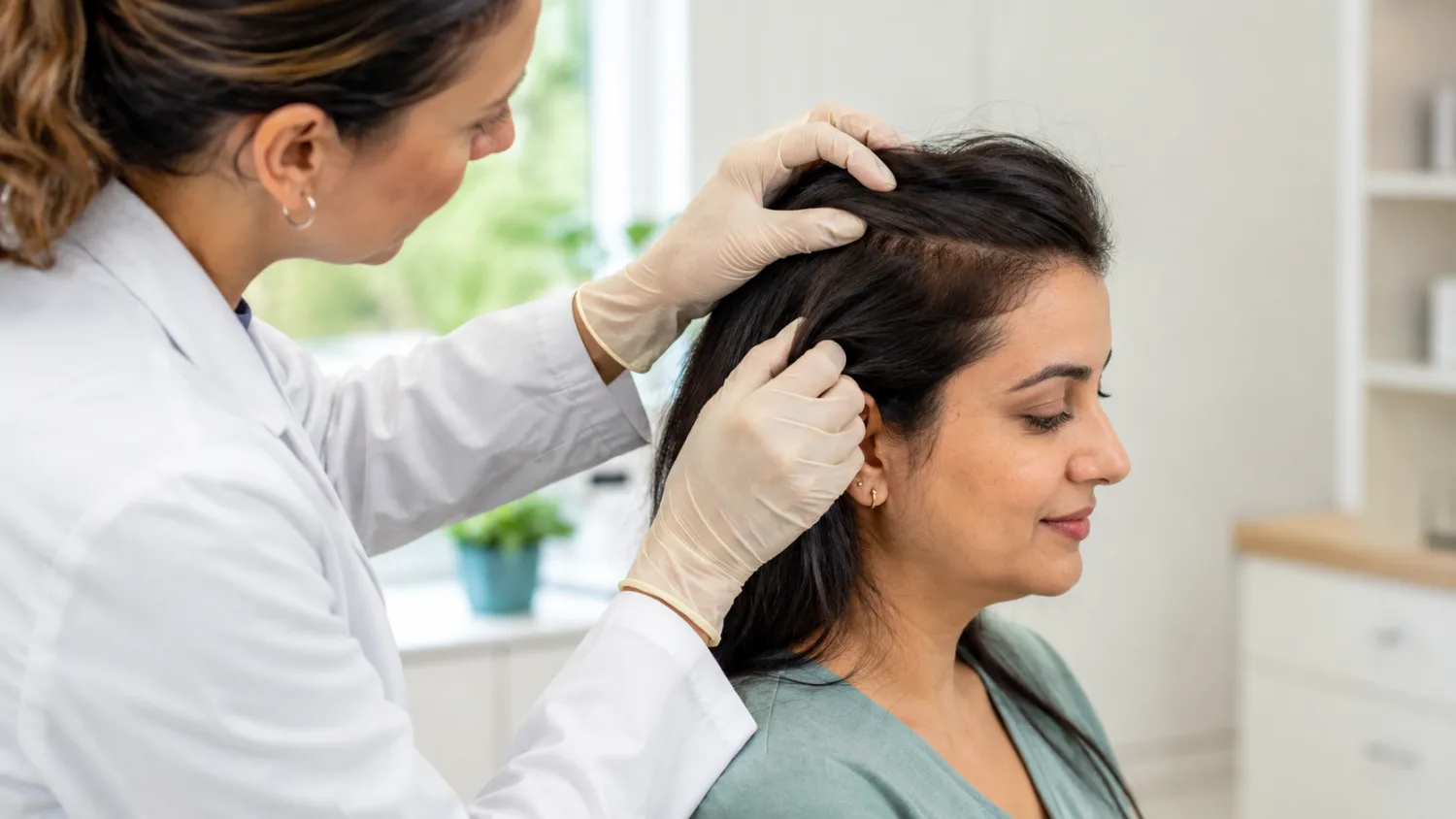
The scalp may produce loose dandruff, adherent greasy scale or inflamed patches. Scale sometimes extends slightly beyond the hairline or collects behind the ears.
Face
Facial seborrhoeic dermatitis commonly affects the eyebrows, the area between them, the creases beside the nose, the moustache and beard region, and occasionally the eyelid margins.
Ears
Flaking may develop behind the ears, around the entrance to the ear canal or within the folds of the outer ear. Cracks behind the ear can become sore or infected.
Do not insert cream, shampoo or cotton buds deeply into the ear canal. Symptoms inside the canal may require examination to exclude wax, infection or another form of dermatitis.
Chest and skin folds
Patches may occur over the breastbone, between the shoulder blades, under the breasts, around the groin or in other skin folds. Moisture and friction can make fold symptoms more uncomfortable.
Beard and moustache
Facial hair can trap scale and make treatment harder to apply to the skin beneath. The condition may appear as persistent “beard dandruff” with itching and irritation.
Is seborrhoeic dermatitis the same as dandruff?
Dandruff is often considered a mild, scalp-limited form of seborrhoeic dermatitis. It causes visible flakes and may cause itching, but there is usually little obvious inflammation.
Seborrhoeic dermatitis is more likely when the scalp is clearly inflamed, greasy, sore or heavily scaled, or when similar patches occur around the eyebrows, nose, ears or chest.
Both conditions can respond to anti-dandruff or antifungal shampoo. However, severe or persistent symptoms may be caused by psoriasis, eczema, contact allergy or a scalp infection instead.
The NHS recommends seeking GP advice when dandruff remains after at least four weeks of anti-dandruff shampoo, is severe or very itchy, causes a red or swollen scalp, or occurs with flaky facial or body patches. See the NHS guidance on dandruff and its treatment.
What causes flare-ups?
There is rarely one identifiable cause. Symptoms can return even when someone follows an effective skin-care routine.
Possible triggers and aggravating factors include:
- cold or dry weather;
- stress and poor sleep;
- illness or general poor health;
- harsh soaps and strongly fragranced products;
- hair dye, styling products or products left against the scalp;
- infrequent washing when scale and oil accumulate;
- overwashing with irritating shampoo;
- heat, sweat and friction in skin folds.
The amount of washing needed varies. An oily, heavily scaling scalp may benefit from regular cleansing, while frequent use of a harsh shampoo may worsen dryness and irritation. The aim is to find a routine that removes scale without damaging the skin barrier.
Seborrhoeic dermatitis is more common or severe in some people with Parkinson’s disease, neurological conditions or weakened immunity. A sudden severe eruption can occasionally prompt a clinician to consider whether another health issue is contributing, but most people with seborrhoeic dermatitis do not have a serious underlying condition.
How is seborrhoeic dermatitis diagnosed?
A GP, pharmacist or dermatologist can often recognise the condition from its appearance and distribution. There is no routine blood test for seborrhoeic dermatitis.
The clinician may ask:
- when the rash began and whether it comes and goes;
- which areas are affected;
- which hair and skin products you use;
- whether treatment has helped;
- whether there is hair loss, pain or discharge;
- whether you have psoriasis, eczema or allergies.
Tests are sometimes needed when the diagnosis is uncertain. Skin scrapings or hair samples can help identify a fungal infection such as tinea capitis. Patch testing may be considered when allergic contact dermatitis is suspected. A skin biopsy is rarely necessary.
What else can look like seborrhoeic dermatitis?
Several conditions can cause an itchy or flaky scalp, and using increasingly strong dandruff products will not correct the wrong diagnosis.
| Condition | Possible distinguishing features |
|---|---|
| Scalp psoriasis | Thicker, more sharply defined scale that may extend beyond the hairline; psoriasis may also affect elbows, knees or nails |
| Atopic eczema | Dry, very itchy skin elsewhere, often with a personal or family history of eczema, asthma or hay fever |
| Contact dermatitis | Burning, itching or swelling after hair dye, shampoo, fragrance or styling products |
| Tinea capitis | Fungal scalp infection that may cause broken hairs, patchy hair loss, inflammation or swollen glands |
| Rosacea | Facial flushing, persistent central facial redness and spots; it can occur alongside seborrhoeic dermatitis |
| Blepharitis | Crusting around eyelashes with gritty, irritated or watery eyes |
Scalp psoriasis and seborrhoeic dermatitis can overlap, sometimes called sebopsoriasis. This may require treatment addressing both yeast and inflammation.
Patchy hair loss, broken hairs or a boggy, painful scalp swelling is not typical uncomplicated dandruff and should be assessed promptly.
Which shampoos treat scalp seborrhoeic dermatitis?
Medicated shampoo is usually the first treatment for dandruff and mild-to-moderate scalp seborrhoeic dermatitis.
Products may contain:
- ketoconazole, an antifungal treatment targeting yeast;
- selenium sulphide, which reduces yeast and scaling;
- zinc-based ingredients used in some anti-dandruff preparations;
- coal tar, which can reduce scaling and inflammation;
- salicylic acid, which helps loosen thick scale.
Availability and formulations change, so ask a pharmacist which current UK product is appropriate. Check the instructions carefully because shampoos have different contact times, treatment schedules and age restrictions.
How to use ketoconazole shampoo
Ketoconazole shampoo is a common treatment for scalp seborrhoeic dermatitis. NHS guidance advises using it twice a week for two to four weeks, followed by once every one to two weeks to help prevent recurrence.
A typical application involves:
- wetting the hair and affected skin;
- applying the shampoo to the scalp rather than only the hair;
- massaging it gently into a lather;
- leaving it in place for three to five minutes;
- rinsing thoroughly and washing your hands.
Follow the instructions supplied with your particular product or advice from a clinician. Using extra shampoo or leaving it on much longer does not necessarily improve the result and may irritate the skin.
The NHS notes that ketoconazole commonly takes two to four weeks to improve dandruff and seborrhoeic dermatitis. Speak to a pharmacist or doctor if there is no improvement after four weeks. Detailed instructions are available in the NHS guide to using ketoconazole shampoo and cream.
How should you care for the scalp?
Medicated treatment works better when it reaches the scalp. Simply coating the hair without contacting the skin is unlikely to control the condition.
A practical routine may include:
- washing regularly enough to prevent heavy oil and scale accumulation;
- using lukewarm rather than very hot water;
- massaging shampoo gently with fingertips rather than scratching with nails;
- rinsing shampoo and conditioner thoroughly;
- using a mild regular shampoo between medicated washes if needed;
- keeping hairdryer heat low or moderate;
- reducing fragranced products, oils and styling preparations during a flare.
Thick adherent scale may prevent treatment from reaching inflamed skin. A pharmacist or clinician may suggest a scale-softening preparation containing salicylic acid or another keratolytic ingredient.
Do not forcefully pick the scale. Scraping can injure the scalp, worsen inflammation and introduce infection.
Can you alternate different dandruff shampoos?
Some people find one active ingredient becomes insufficient or controls only part of the problem. A pharmacist or clinician may recommend alternating an antifungal shampoo with a scale-removing or tar-based product.
Using several strong products at once can also cause irritant dermatitis. Introduce products carefully and stop any treatment that causes marked burning, swelling or a worsening rash.
Coal-tar products can have a strong smell, may stain light-coloured hair or fabric, and can increase sensitivity to sunlight. Selenium-containing shampoos may also affect certain hair colours or treated hair. Always check the product information.
How is seborrhoeic dermatitis on the face treated?
Facial skin is more delicate than the scalp and requires gentler treatment. Wash affected areas with a mild, soap-free cleanser and apply a light, fragrance-free moisturiser if the skin feels dry or tight.
A clinician or pharmacist may recommend an antifungal cream such as ketoconazole, clotrimazole or miconazole. NICE guidance advises ketoconazole 2% cream once or twice daily, or another suitable imidazole cream, for up to four weeks in adults with facial or body seborrhoeic dermatitis.
Product suitability differs, and miconazole can interact with some medicines, including warfarin. Check with a pharmacist when you take regular medication.
Keep treatment away from the eyes unless it has specifically been prescribed for the eyelids. A rash directly along the eyelashes may be blepharitis and can require a different cleaning and treatment plan.
Are steroid creams used?
A mild topical corticosteroid, such as hydrocortisone, may be recommended for a short period when inflammation is prominent. It reduces redness, itching and soreness but does not address the yeast component, so it may be combined with antifungal treatment.
Steroid creams should be used sparingly and for the recommended duration, particularly on the face and in skin folds. Excessive or prolonged use can cause:
- thinning of the skin;
- visible small blood vessels;
- stretch marks in susceptible areas;
- acne-like eruptions;
- perioral dermatitis around the mouth;
- rebound worsening after repeated inappropriate use;
- eye complications if applied repeatedly close to the eyes.
Do not repeatedly self-treat a facial rash with steroid cream without confirming the diagnosis. Steroids can alter the appearance of fungal infections and worsen some other skin conditions.
What if antifungal creams and shampoos are not enough?
A GP may prescribe a short course of a corticosteroid scalp lotion, mousse, gel or shampoo for a significant flare. These formulations are designed to reach hair-bearing skin more easily than an ordinary cream.
For recurrent facial disease, a dermatologist may sometimes recommend a non-steroid anti-inflammatory medicine such as tacrolimus or pimecrolimus. These are prescription treatments and are not appropriate for every person or every rash.
Very severe or widespread disease may require specialist assessment. Oral antifungal treatment is occasionally considered under medical supervision, but it is not routine treatment for ordinary dandruff.
Can seborrhoeic dermatitis cause hair loss?
Uncomplicated seborrhoeic dermatitis does not usually permanently damage hair follicles. Heavy inflammation and repeated scratching can contribute to temporary shedding or breakage, and scale may make shed hairs more noticeable.
The hair should generally recover when inflammation is controlled, provided there is no separate cause.
Seek assessment if you develop:
- clearly defined bald patches;
- broken hairs or black dots on the scalp;
- scarring or smooth shiny areas;
- pustules or a painful swollen patch;
- rapid or extensive shedding;
- hair loss that continues after the rash improves.
These features can indicate tinea capitis, alopecia areata, scarring alopecia or another disorder requiring different treatment.
Should you put oil on a flaky scalp?
Oil may soften thick scale and can make it easier to remove gently, but leaving heavy oils on the scalp for long periods may not help seborrhoeic dermatitis. Some oils can irritate sensitive skin, trap scale or make the scalp feel greasier.
If a scale-softening product is recommended, use it for the specified time and wash it out thoroughly. Stop if itching or redness becomes worse.
Essential oils are not a harmless substitute for medical treatment. Tea tree and fragranced oils can cause allergic contact dermatitis, particularly when used undiluted.
Can hair dye make it worse?
Hair dye, bleach, fragrance and styling products can irritate an already inflamed scalp. Hair-colouring chemicals can also cause allergic contact dermatitis, which may be mistaken for a severe seborrhoeic flare.
Possible signs of a dye reaction include intense burning, swelling around the face or ears, blistering and a rash extending beyond the usual areas.
Avoid colouring or chemically treating the hair while the scalp is actively inflamed. Follow the product’s allergy-test instructions before later use, although a previous uneventful application does not guarantee that an allergy cannot develop.
Facial swelling, breathing difficulty or swelling of the tongue or throat after using hair dye is an emergency requiring immediate help.
What is cradle cap?
Cradle cap is infantile seborrhoeic dermatitis affecting the scalp. It produces greasy yellow or white scales that can appear thick and firmly attached. Similar patches may occur around the eyebrows, ears, neck, armpits or nappy area.
Cradle cap can look dramatic but is usually harmless and does not normally bother the baby. It is not caused by inadequate washing and is not contagious.
Gentle care usually involves:
- washing the scalp with a mild, fragrance-free baby shampoo;
- softening scale with an appropriate emollient;
- gently loosening softened flakes with a soft brush;
- avoiding picking, scraping or forcibly removing crusts.
Do not use adult medicated dandruff shampoo, essential oils or topical steroids on a baby unless a pharmacist, GP or other qualified clinician has advised it.
Seek medical advice if the rash is widespread, weeping, bleeding, swollen, unpleasant-smelling, apparently painful or associated with poor feeding, fever or an unwell baby. Treatment may also be needed when cradle cap persists despite gentle care.
Is seborrhoeic dermatitis contagious?
No. You cannot catch seborrhoeic dermatitis by touching someone, sharing a home or using the same swimming pool.
Malassezia yeast is naturally present on most people’s skin. The condition reflects the affected person’s inflammatory response and skin environment rather than transmission from someone else.
However, some infections that resemble seborrhoeic dermatitis can spread. Tinea capitis, for example, may pass between people or occasionally from animals. This is another reason to obtain a diagnosis when there is patchy hair loss or when several household members develop scalp symptoms.
Does diet affect seborrhoeic dermatitis?
There is no established universal “seborrhoeic dermatitis diet”. Most people do not need to exclude dairy, gluten, yeast or sugar purely because of this condition.
A balanced diet supports general skin health, but extreme elimination diets can cause nutritional deficiencies without treating the underlying inflammation. If you notice a consistent personal association with a particular food, discuss it with a healthcare professional before making major restrictions.
Alcohol may worsen flushing or inflammation for some people, but responses vary. Treatment applied directly to the affected skin remains the main approach.
Can stress cause a flare?
Stress does not directly create yeast or prove that symptoms are psychological. However, many people notice that flares coincide with periods of stress, poor sleep or illness.
Stress management may help reduce an aggravating factor, but it should complement appropriate scalp and skin treatment rather than replace it.
How can you prevent seborrhoeic dermatitis returning?
Recurrence is common. Once symptoms have cleared, reducing treatment frequency rather than stopping every active product permanently may provide better control.
For example, NHS guidance says ketoconazole shampoo can be used once every one to two weeks after initial treatment to help prevent dandruff or seborrhoeic dermatitis returning.
A maintenance routine might include:
- medicated shampoo at the interval recommended for the product;
- a gentle shampoo on other wash days;
- promptly restarting an effective routine at the first signs of a flare;
- avoiding products known to irritate your skin;
- cleaning the skin beneath facial hair;
- using a light moisturiser on dry facial areas;
- avoiding repeated scratching and scale picking.
Maintenance should be adjusted if the treatment itself causes dryness or irritation. A pharmacist can help you balance antifungal treatment with ordinary scalp care.
When should you see a GP?
Arrange a routine GP appointment if:
- anti-dandruff treatment has not helped after four weeks;
- the scalp is very itchy, inflamed or swollen;
- the rash affects the face or several body areas;
- symptoms keep returning despite appropriate maintenance;
- you are uncertain whether the condition is psoriasis, eczema or an infection;
- there is patchy hair loss or broken hair;
- a baby’s cradle cap is widespread or not improving;
- the condition is affecting sleep, confidence or daily life.
Seek more urgent advice if the skin becomes rapidly painful, hot, swollen, weeping or pus-filled, or if you develop fever and feel unwell. These symptoms can indicate secondary infection.
Severe widespread seborrhoeic dermatitis in someone with weakened immunity should also be assessed rather than managed entirely with over-the-counter products.
Frequently asked questions
Is seborrhoeic dermatitis a fungal infection?
It is an inflammatory condition associated with the skin’s response to Malassezia yeast. The yeast normally lives on human skin, so seborrhoeic dermatitis is not a contagious fungal infection caught from another person.
What is the best shampoo for seborrhoeic dermatitis?
Ketoconazole shampoo is a common first option. Products containing selenium sulphide, coal tar, zinc-based ingredients or salicylic acid may also help. The best choice depends on whether yeast, inflammation or thick scale is the main problem.
How often should I use ketoconazole shampoo?
NHS guidance advises twice-weekly use for two to four weeks for seborrhoeic dermatitis, followed by once every one to two weeks to help prevent recurrence. Follow the instructions for your exact product.
Can I use normal shampoo between treatments?
Yes. A gentle shampoo can usually be used between medicated washes. Choose a fragrance-free or sensitive-scalp product if ordinary shampoo causes burning, dryness or itching.
Should I wash my hair every day?
Some people with an oily scalp benefit from frequent washing, but daily use of harsh shampoo may worsen irritation. Adjust the frequency according to oil, scale, hair type and how your scalp responds.
How long does treatment take to work?
Ketoconazole cream or shampoo commonly takes two to four weeks to control seborrhoeic dermatitis. If correctly used treatment has made no difference after four weeks, ask a pharmacist or GP to review the diagnosis and plan.
Can seborrhoeic dermatitis be cured permanently?
Adult seborrhoeic dermatitis usually has a recurring course. Treatment can clear or greatly reduce symptoms, while intermittent maintenance can make future flares less frequent or severe.
Does seborrhoeic dermatitis smell?
The condition itself does not normally produce a strong unpleasant smell. Odour with weeping, pain or discharge may indicate accumulated debris or secondary infection and should be assessed.
Can it affect the eyebrows and beard?
Yes. The eyebrows, sides of the nose, moustache and beard are common locations. Antifungal cream and gentle skin care may be more suitable for the face than repeatedly applying scalp shampoo.
Can I use hydrocortisone on my face?
A pharmacist or clinician may recommend a short course of mild hydrocortisone for facial inflammation. Avoid repeated or prolonged facial use unless specifically supervised, because topical steroids can thin the skin and cause other complications.
Can seborrhoeic dermatitis spread?
It can appear in additional oil-producing areas during a flare, but this is not infectious spread. Common locations include the scalp, eyebrows, nose creases, ears, chest and skin folds.
Does cradle cap make a baby’s hair fall out?
Some hair may come away temporarily with loosened scale, but cradle cap does not normally damage follicles. Do not pull or scrape adherent crusts from the scalp.
When is a flaky scalp not seborrhoeic dermatitis?
Patchy hair loss, broken hairs, thick sharply defined plaques, intense swelling, blisters or a clear reaction after using a hair product may suggest tinea capitis, psoriasis or contact dermatitis. These symptoms need an appropriate diagnosis rather than repeated dandruff treatment.