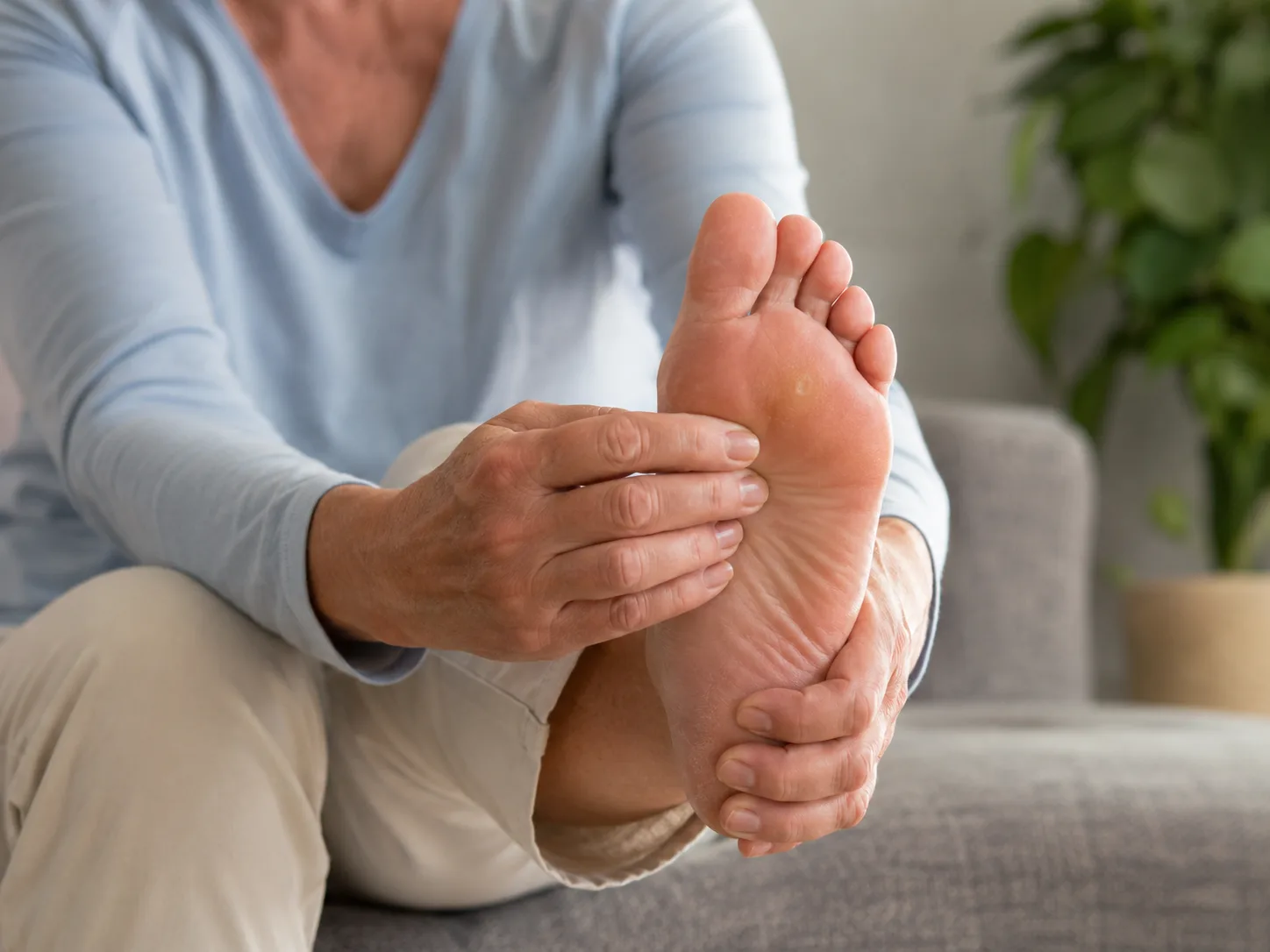
Corns and calluses are areas of thickened skin that develop when the skin repeatedly experiences pressure, rubbing or friction. They are especially common on the feet, where shoes, toe shape and the way a person walks can concentrate pressure onto a small area. Calluses can also form on the hands through work, exercise, musical instruments or repeated use of tools.
The thick skin is not random. It is the body’s attempt to protect the tissues underneath. That protective response becomes a problem when the pressure continues and the hard skin grows thicker. A corn can begin to feel as though a small stone is trapped inside the shoe, while a broad callus may burn, crack or make walking uncomfortable.
Simply removing the hard skin does not always solve the problem. Unless the pressure that created it is reduced, the corn or callus is likely to return. Lasting treatment therefore depends on footwear, padding, foot mechanics and any underlying toe or joint deformity as much as it depends on creams or filing.
Do not cut a corn or callus with a razor, knife, scissors or other sharp tool. It is easy to remove living skin accidentally and create bleeding, infection or an ulcer.
Do not use acid-based corn plasters or hard-skin removers without professional advice if you have diabetes, poor circulation, reduced feeling in your feet, significant kidney disease or a weakened immune system. These products can burn healthy skin without you noticing.
Seek prompt medical advice if the area becomes red, hot, swollen, increasingly painful, starts leaking fluid or pus, turns dark, develops an open wound, or is associated with fever or feeling unwell.
What are corns and calluses?
Corns and calluses are both forms of hyperkeratosis, meaning the outer layer of skin has become thicker than usual. The difference is mainly in their shape, location and how pressure is concentrated.
A callus is usually a broad, flatter area of thickened skin. It often develops across the ball of the foot, heel, side of the big toe or palm of the hand. The edges are usually less distinct, and the skin may appear yellowish, grey or slightly darker than the surrounding area.
A corn is normally smaller, more clearly defined and more likely to be painful. It often contains a dense central core of hard keratin. When body weight or a shoe presses on that core, the pressure is directed into the deeper skin, creating the familiar sharp “walking on a pebble” sensation.
Corns are commonly found over prominent toe joints, on the tips of curled toes and between toes that rub together. Calluses are more likely to form across a wider weight-bearing surface.
Hard corns
Hard corns usually develop on dry, exposed areas of the foot, particularly over the tops of toe joints or on the outer side of the little toe.
They tend to be:
- small and circular;
- firm or waxy;
- surrounded by thickened skin;
- painful when direct pressure is applied;
- positioned where footwear presses against a bony prominence.
Soft corns
Soft corns form between toes, where the skin remains moist. They often appear pale, white or rubbery rather than dry and yellow.
The most common site is between the fourth and fifth toes, where two toe joints press against one another inside a narrow shoe.
Soft corns can become very painful because the skin between the toes is delicate. Moisture may also encourage fungal or bacterial infection if the skin breaks down.
Seed corns
Seed corns are tiny, discrete areas of hard skin, often found on the sole or heel. They may occur in clusters.
Some are painless, while others become uncomfortable if they sit directly beneath a weight-bearing point. They can resemble small verrucas, so persistent lesions sometimes need professional assessment.
Calluses on the hands
Hand calluses may develop from:
- manual work;
- weight training;
- rowing or climbing;
- using tools;
- playing string instruments;
- repeated pressure from pens or equipment.
A modest hand callus can be useful because it protects the skin. Problems arise when it becomes excessively thick, splits or interferes with grip and movement.
What causes corns and calluses?
Every corn and callus has a mechanical story behind it. Somewhere, the skin is receiving more pressure or friction than it can comfortably tolerate.
The obvious explanation may be a tight shoe, but footwear is only one part of the picture. Toe shape, joint movement, foot posture and the pattern of a person’s walk can all determine where force is concentrated.
Poorly fitting footwear
Shoes that are too narrow compress the toes and create rubbing over their joints. Shoes that are too short force the toes against the front, while loose shoes allow the foot to slide and repeatedly rub.
High heels shift body weight towards the ball of the foot and increase pressure beneath the metatarsal heads. A shoe can therefore feel comfortable around the heel while still causing painful forefoot calluses.
Common footwear problems include:
- a narrow or pointed toe box;
- insufficient depth above curled toes;
- hard seams crossing a pressure point;
- thin soles with little cushioning;
- high heels;
- shoes that are worn unevenly or have compressed insoles.
Toe deformities
Hammer toes, claw toes and mallet toes change which parts of the toes contact the shoe and floor. A joint that sits higher than usual may rub against the upper part of the shoe, while the tip of a curled toe may press down into the sole.
A corn can therefore be the visible result of a deeper structural problem. Removing it provides temporary relief, but the concentrated pressure remains unless the toe is accommodated or corrected.
Bunions
A bunion changes the alignment of the big toe and creates a prominent joint on the inner side of the foot. Shoes may rub directly against the prominence, creating redness, callus or a painful corn.
The big toe may also push the smaller toes out of position, increasing pressure between them.
The way you walk
Foot posture and gait influence how pressure moves through the sole with every step.
A person may repeatedly overload:
- the inside of the big toe;
- the outer edge of the foot;
- one metatarsal head beneath the forefoot;
- the heel;
- the tip of one toe.
This does not mean every callus requires a complex gait assessment. A symmetrical, painless area of hard skin may simply reflect normal use. A painful callus that repeatedly returns in exactly the same spot is more likely to justify podiatry assessment.
Loss of natural cushioning
The fatty pads beneath the heel and forefoot act as natural shock absorbers. They can become thinner or shift with age, weight change, injury or certain foot conditions.
When less cushioning sits beneath a prominent bone, the skin takes more pressure and responds by forming callus.
Repeated activity
Running, long-distance walking, standing for work and some sports can increase friction and pressure, especially when activity rises suddenly or footwear is unsuitable.
The answer is not always to stop the activity. Better-fitting footwear, gradual training, moisture control and pressure redistribution may allow the skin to adapt safely.
Walking barefoot
Walking barefoot can encourage protective callus on the soles, particularly on hard or uneven surfaces. A modest amount may be harmless, but very thick callus can crack or conceal pressure injury.
How can you tell whether it is a corn or a callus?
The distinction can often be made by looking at the shape and asking how the area responds to pressure.
A callus is generally larger and more diffuse. It may feel rough or thick but is often painless unless it becomes very deep or cracked.
A corn is usually smaller and has a clearer central point. Pressing directly down onto it may produce a sharp, localised pain.
| Feature | Corn | Callus |
|---|---|---|
| Shape | Small and clearly defined | Broad and less clearly defined |
| Core | Often has a dense central core | Usually thickens more evenly |
| Pain | Often painful with direct pressure | Often painless unless thick, cracked or inflamed |
| Common sites | Toe joints, toe tips and between toes | Ball of foot, heel, side of big toe and palms |
| Main pressure pattern | Concentrated onto one small point | Spread across a wider area |
Does a corn have a root?
People often describe a corn as having a root, but it does not grow roots into the foot.
What looks like a root is a cone-shaped core of compacted keratin. The broad end sits at the surface and the narrower point presses inwards when weight or footwear applies pressure.
A podiatrist can remove the core, often providing rapid relief. However, another core can form if the original pressure continues.
Can a callus be painful?
Yes. Thick callus can become painful when it increases pressure beneath the foot instead of cushioning it.
It may also:
- split into painful heel cracks;
- press on sensitive deeper tissues;
- hide a blister, wound or ulcer;
- cause a burning sensation during walking;
- alter the way someone walks to avoid pressure.
Corn, verruca or something else?
Not every small painful area of hard skin is a corn. Verrucas, foreign bodies and other skin lesions can look similar, especially once a layer of callus covers them.
Corn versus verruca
A verruca is a wart caused by human papillomavirus. It commonly appears on the sole of the foot and may develop a layer of hard skin over the surface.
Features that can suggest a verruca include:
- tiny black or red dots representing small blood vessels;
- interruption of the normal skin lines;
- a rough or cauliflower-like surface after hard skin is reduced;
- pain when the lesion is squeezed from the sides;
- several nearby lesions forming a mosaic pattern.
A corn more commonly preserves skin lines and is painful when pressed directly from above.
These signs are useful but not perfect. Avoid repeatedly cutting into the lesion to look for black dots, because this can cause bleeding and infection.
Corn versus blister
A blister is a pocket of fluid beneath the skin caused by friction, pressure, heat or another injury. It usually develops more suddenly than a corn.
A blister may feel soft, raised and tender, while a corn is firm and develops gradually. Repeated blistering in one area can eventually contribute to callus formation.
Corn versus splinter or foreign body
A tiny piece of glass, wood or metal can become covered by thickened skin and resemble a corn. Pain may begin suddenly after walking barefoot or an injury.
A foreign body should be considered when a supposed corn appears without a history of repeated pressure, particularly if there is one sharply painful point.
Corn versus gout
Gout causes sudden severe inflammation of a joint, often the base of the big toe. The area becomes hot, red, swollen and extremely tender.
A corn is located in the skin rather than inside the joint and normally develops gradually. Read our guide to gout symptoms, causes and treatment if the entire joint becomes acutely painful and swollen.
When a skin lesion needs checking
Arrange an assessment if an area thought to be a corn:
- bleeds without being cut;
- changes colour or shape;
- ulcerates;
- continues to enlarge;
- does not sit over an obvious pressure point;
- does not improve when pressure is removed;
- has an uncertain diagnosis.
How to treat corns and calluses safely at home
Home treatment is appropriate only when the skin is intact, the diagnosis seems clear and there is no condition that makes foot injury more dangerous.
The goal should be gradual reduction and pressure relief, not aggressive removal in one session.
Start by changing the pressure
Before filing or applying a cream, look at what contacts the area.
Ask:
- Does the shoe press directly on the corn?
- Do the toes feel compressed?
- Does the foot slide forwards?
- Is the insole worn flat?
- Does one seam cross the painful spot?
- Has the callus appeared after a recent increase in walking or exercise?
Continuing to wear the same pressure-producing shoe while repeatedly removing the skin creates an endless cycle.
Soften the skin
Ordinary dry callus can be softened with warm water and regular moisturiser.
After bathing or showering, dry the feet carefully, especially between the toes. Apply moisturiser to the soles and heels but avoid leaving thick cream between the toes, where excess moisture can encourage skin breakdown or fungal infection.
File gently
If you have normal circulation and sensation and the skin is not cracked or inflamed, a pumice stone or foot file can be used gently after the skin has softened.
Remove only a small amount at a time. Stop if the area becomes:
- sore;
- pink or red;
- tender;
- thin;
- bleeding.
Do not try to make the skin completely smooth in one session. Some thickening may still be protecting an area of genuine pressure.
Use moisturisers containing urea
Urea draws water into dry skin and, at higher concentrations, helps soften thickened keratin.
A lower-strength urea cream may be suitable for regular dry-skin care, while stronger products are used for more substantial hard skin. Ask a pharmacist or podiatrist which strength is appropriate.
Do not apply strong creams to:
- open cracks;
- bleeding skin;
- infected areas;
- skin between the toes unless specifically advised;
- areas where sensation is reduced without professional guidance.
Protect the pressure point
Non-medicated felt, foam or gel pads can redistribute pressure around a corn.
A doughnut-shaped pad should surround the painful area rather than press directly on top of it. Poorly positioned padding can create a new pressure point.
Toe sleeves, soft separators and cushioned insoles may also help, but they must not make the shoe tighter.
What about salicylic-acid corn plasters?
Salicylic acid breaks down keratin and can remove a corn in some people. The difficulty is that it cannot recognise where the corn ends and healthy skin begins.
If the plaster moves, is left on too long or is applied to the wrong diagnosis, it can create a chemical burn.
Do not use acid corn treatments if you have:
- diabetes;
- poor circulation;
- peripheral neuropathy or reduced sensation;
- fragile or broken skin;
- a weakened immune system;
- an uncertain diagnosis.
Even without these conditions, ask a pharmacist for advice and follow the product instructions precisely. Stop if the surrounding skin becomes white, raw, painful or inflamed.
Never cut the skin yourself
Bathroom blades, scalpels sold online, nail clippers and scissors can easily remove healthy tissue. Foot skin may bleed more deeply than expected, and equipment that appears clean is not necessarily sterile.
A podiatrist uses sterile instruments, controlled technique and knowledge of skin anatomy. That is very different from shaving a callus at home.
Professional treatment from a podiatrist
A podiatrist does more than remove hard skin. The most useful appointment identifies why the lesion formed and how pressure can be reduced after it is treated.
Clinical examination
The podiatrist may examine:
- the position of the corn or callus;
- toe and joint alignment;
- footwear;
- skin condition;
- circulation;
- sensation;
- the way pressure passes through the foot while standing or walking.
This can reveal whether the problem is mainly footwear-related or whether a bunion, curled toe, prominent bone or gait pattern is contributing.
Debridement
Debridement means carefully reducing thickened skin with a sterile scalpel.
Because a callus consists mainly of dead outer skin, the procedure is often painless when performed correctly. Removing a corn’s dense core can provide immediate relief.
Debridement does not permanently cure the lesion. Its value is greatest when combined with pressure relief.
Padding and offloading
Offloading means moving force away from the painful point.
A podiatrist may use:
- felt padding;
- silicone toe devices;
- toe separators;
- shoe modifications;
- cushioned insoles;
- custom orthoses.
Custom insoles are not necessary for every corn. They are most useful when the pressure pattern is related to foot mechanics and simpler footwear changes have not been enough.
Footwear advice
Sometimes the most effective treatment is a shoe with greater width or depth.
A podiatrist may suggest looking for:
- a rounded or foot-shaped toe box;
- adequate depth above the toes;
- soft, flexible uppers;
- secure fastening;
- a cushioned sole;
- a low, stable heel;
- removable insoles where extra space or orthotics are needed.
Treatment of soft corns
Soft corns require the pressure between the toes to be reduced and the area kept appropriately dry.
A silicone separator or toe spacer can help, provided it fits comfortably and does not create additional rubbing. Infection or macerated broken skin may need separate treatment.
Surgery
Surgery is not usually performed simply to remove a corn. It may be considered when an underlying deformity repeatedly creates severe pain despite appropriate footwear, padding and podiatry care.
For example, surgery may straighten a rigid hammer toe or address a prominent bone. The decision requires a discussion about recovery time, complications and whether the structural problem is severe enough to justify an operation.
Corns and calluses in people with diabetes
Corns and calluses deserve particular attention in diabetes because they can mark an area of excessive pressure before an ulcer develops.
Diabetes can damage sensory nerves in the feet, a condition called peripheral neuropathy. A person may therefore have a thick callus or developing wound without feeling the amount of pain that would normally provide a warning.
Diabetes may also affect circulation and wound healing. A small cut from a blade or chemical burn from a corn plaster can become much more serious than expected.
NICE guidance treats callus, deformity, neuropathy and circulation problems as relevant features when assessing diabetic-foot risk.
Do not self-treat diabetic corns
If you have diabetes, avoid:
- corn plasters containing acid;
- hard-skin removing liquids;
- razors or callus blades;
- cutting with nail clippers;
- aggressive pumice-stone use;
- walking barefoot.
Ask your diabetes team, GP or podiatrist how the area should be managed. Diabetes UK similarly advises against blades and acid corn treatments because they can damage skin and create ulcers.
Check the feet every day
Look at the soles, heels, toe tips and spaces between the toes. Use a mirror or ask someone to help if you cannot see the whole foot.
Look for:
- new redness;
- blisters;
- cracks;
- blood beneath a callus;
- swelling;
- fluid or discharge;
- colour change;
- an open wound;
- a hot area compared with the other foot.
Blood beneath a callus can indicate deeper pressure injury even when the surface remains closed.
When a diabetic foot problem is urgent
Contact your diabetes foot service, GP or NHS 111 promptly for:
- a new break in the skin;
- an ulcer;
- redness or warmth;
- swelling;
- pus or an unpleasant smell;
- a dark, blue or black area;
- sudden change in foot shape;
- a foot that becomes unusually hot;
- new pain or unexplained loss of sensation.
Do not wait for a routine annual diabetes appointment.
Symptoms such as thirst, frequent urination, slow-healing wounds or new numbness may also justify diabetes testing. See our guides to the early signs of type 2 diabetes and numbness and tingling.
How to prevent corns and calluses
Prevention is largely an exercise in reducing repeated pressure before the skin has to defend itself.
Choose shoes by shape, not only by size
Two shoes labelled with the same size can have very different widths, depths and toe-box shapes.
A suitable shoe should:
- allow the toes to lie naturally;
- avoid pressure on prominent joints;
- hold the heel securely;
- have enough length for the longest toe;
- avoid seams over sensitive areas;
- remain comfortable after the feet have expanded later in the day.
Do not assume shoes will “stretch out” after a painful breaking-in period. Persistent pressure is exactly what creates corns.
Check the inside of footwear
A folded insole, exposed seam, small stone or worn lining can create a focused pressure point.
People with reduced foot sensation should check inside their shoes with a hand before putting them on.
Wear suitable socks
Socks can reduce friction and manage moisture. They should fit without wrinkling and should not have a tight band that marks the skin.
For sport or long walks, moisture-wicking socks and footwear appropriate to the activity may reduce blistering and callus.
Increase activity gradually
A sudden increase in walking, running or standing time can overload areas before the skin and footwear have adapted.
Build distance gradually and inspect the feet after new activities, particularly during the first few sessions in different shoes.
Moisturise dry skin regularly
Keeping heel and sole skin flexible reduces the chance of deep cracking.
Apply cream after washing, but keep the spaces between the toes dry unless a clinician has advised otherwise.
Address deformities early
A bunion or flexible hammer toe may initially be managed with wider shoes, padding and exercises or orthoses where appropriate.
Waiting until a toe becomes rigid and repeatedly ulcerates can make treatment more difficult.
Do not repeatedly remove protective callus without addressing pressure
A small amount of callus can be protective. Filing it aggressively while continuing the same source of pressure may leave sensitive skin exposed and encourage rapid regrowth.
The better question is not only “How do I remove this?” but “Why does this exact area need to protect itself?”
When should you see a GP or podiatrist?
Most ordinary corns and calluses are not medical emergencies. Professional advice becomes valuable when pain persists, the diagnosis is unclear or self-care would be unsafe.
Arrange a podiatry or GP assessment if:
- the corn or callus is painful;
- it keeps returning after treatment;
- you cannot find footwear that removes the pressure;
- there is a bunion, hammer toe or other deformity;
- the lesion may be a verruca or foreign body;
- walking is changing because of the pain;
- the callus is very thick or cracked;
- home care has not helped after several weeks;
- you cannot safely reach or see your feet.
Seek advice before self-treatment if you have:
- diabetes;
- poor circulation;
- peripheral neuropathy;
- significant swelling of the legs or feet;
- a weakened immune system;
- a history of foot ulcers;
- previous foot surgery;
- fragile skin or poor wound healing.
Seek prompt medical advice if the area becomes:
- red or hot;
- swollen;
- increasingly painful;
- open or bleeding;
- wet or leaking pus;
- dark blue, purple or black;
- associated with an unpleasant smell.
These can be signs of infection, ulceration, bleeding beneath the callus or reduced blood supply.
Call 999 or seek emergency care if:
- infection is spreading rapidly;
- you are confused or severely unwell;
- there is high fever with a rapidly worsening foot;
- the foot becomes suddenly cold, pale, blue or numb;
- there is severe pain with loss of circulation;
- you have signs of sepsis.
Frequently asked questions about corns and calluses
What is the quickest way to remove a corn?
A podiatrist can carefully remove the hard central core, often providing rapid relief. The corn will return unless the pressure from footwear, toe position or foot mechanics is also reduced.
Can you pull a corn out by the root?
No. A corn has no biological root. Its central core is compressed keratin that points into the skin because of repeated pressure.
Should you cut a corn out yourself?
No. Cutting can remove living skin and cause bleeding, infection or an ulcer. The risk is particularly high with diabetes, poor circulation or reduced sensation.
Do corn plasters work?
Salicylic-acid plasters can break down hard skin, but they may also burn healthy surrounding skin. They must not be used by people with diabetes, poor circulation or reduced sensation without professional advice.
Can a pharmacist help with corns?
Yes. A pharmacist can advise on non-medicated padding, moisturisers, suitable over-the-counter products and whether you should see a podiatrist or GP.
Can moisturiser remove a corn?
Moisturiser softens dry hard skin but does not remove the pressure that created the corn. It is most useful as part of a wider plan involving footwear and offloading.
Does urea cream remove calluses?
Urea can soften and gradually reduce thick dry skin. The appropriate strength depends on how severe the callus is and whether the skin is cracked or medically high risk.
Can a pumice stone remove a callus?
Gentle regular use can reduce ordinary callus in someone with healthy circulation and normal sensation. It should not be used aggressively or on broken, inflamed or high-risk diabetic skin.
Should feet be soaked before filing?
Brief softening in warm water can make gentle filing easier. Prolonged soaking may dry the skin afterwards and can be unsuitable for people with fragile skin or certain medical conditions.
Why does my corn keep coming back?
The original pressure remains. Common reasons include tight shoes, a prominent toe joint, hammer toe, bunion or the way weight passes through the foot.
Can corns become infected?
Yes, especially if the skin is cut, treated with acid, repeatedly picked or broken down by pressure. Redness, heat, swelling, pus and worsening pain require medical advice.
Can a callus turn into an ulcer?
It can, particularly in someone with diabetes, neuropathy or poor circulation. Thick callus can increase pressure and conceal tissue damage underneath.
Why is there blood beneath my callus?
Blood may indicate damage to deeper tissue from repeated pressure. This is particularly concerning in diabetes and should be assessed promptly.
Are corns contagious?
No. They are caused by mechanical pressure, not an infection. Verrucas are viral and can spread between people.
How can I tell a corn from a verruca?
A corn usually has a central hard core and hurts with direct downward pressure. A verruca may interrupt skin lines, show tiny black dots and hurt more when squeezed from the sides. A professional can confirm uncertain lesions.
Are corns caused by a virus?
No. Unlike verrucas, corns are not viral. They form because of repeated pressure and friction.
Can corns appear between the toes?
Yes. Soft corns commonly form between toes where the skin is moist and two bony areas press against each other.
Why does the corn between my toes look white?
Moisture softens and whitens the thickened skin. Reducing toe-to-toe pressure and keeping the area appropriately dry are important.
Can bunions cause corns?
Yes. A bunion creates a prominent joint and changes toe alignment, which can cause rubbing over the bunion and pressure between neighbouring toes.
Can high heels cause calluses?
Yes. High heels transfer more weight towards the ball of the foot and compress the toes, increasing the likelihood of forefoot calluses and corns.
Does being overweight cause calluses?
Greater load can increase pressure beneath the feet, but foot shape, footwear and gait also matter. Calluses can occur at any body weight.
Can corns go away on their own?
They may gradually improve when the pressure is completely removed. A long-standing corn is unlikely to disappear while the same shoe or toe position continues pressing on it.
Are calluses bad?
Not always. A modest callus is a protective adaptation. It becomes a problem when it is painful, very thick, cracked or hiding deeper skin damage.
Should all calluses be removed?
No. Removing every trace of hard skin can expose sensitive tissue while leaving the underlying pressure unchanged.
Can calluses crack?
Yes, especially around dry heels. Deep cracks can become painful, bleed and become infected.
Why do calluses burn when I walk?
The thickened skin may be increasing pressure on deeper tissues. Burning can also reflect nerve irritation, so persistent symptoms deserve assessment.
Can diabetes cause corns?
Diabetes does not directly create a corn, but neuropathy, altered foot shape and pressure distribution can increase risk. Corns and calluses are more important in diabetes because they may precede an ulcer.
Who should treat corns in someone with diabetes?
A podiatrist or diabetic-foot professional should advise on treatment. Acid products and sharp tools should not be used at home.
Will a pedicure remove a corn safely?
A cosmetic pedicure is not a substitute for podiatry assessment, particularly if the corn is painful, recurrent or associated with diabetes or poor circulation. Avoid any salon that uses blades or cannot assess medical risk.
When does a corn need surgery?
Surgery is rarely needed for the corn itself. It may be considered when a fixed toe or bone deformity repeatedly causes severe symptoms despite footwear and podiatry treatment.