A private dermatologist consultation in the UK commonly costs £200 to £350. Follow-up appointments generally cost £150 to £275, although highly specialised or central London consultants may charge more.
The consultation fee does not necessarily include investigations or treatment. Blood tests, allergy testing, skin biopsy, pathology, mole photography and minor procedures may all be billed separately.
A straightforward pathway involving consultation, a prescription and one follow-up may cost approximately £350 to £700, excluding medication. If you need a biopsy or lesion removal, the total may be £800 to £2,000 or more. Complex skin-cancer surgery, extensive allergy testing or long-term treatment can cost several thousand pounds.
Do not delay NHS assessment solely to arrange a private appointment if you have a rapidly changing or bleeding mole, a severe widespread rash, blistering or peeling skin, facial swelling, breathing difficulty, fever with a painful spreading skin infection or another rapidly worsening symptom.
This guide provides general UK self-pay price ranges. Ask the clinic for a written, itemised quotation based on your individual condition.
How much does a private dermatologist cost?
Typical self-pay prices include:
| Private dermatology service | Typical UK price |
|---|---|
| Initial dermatologist consultation | £200–£350 |
| Specialist or central London consultation | £350–£600+ |
| Follow-up consultation | £150–£275 |
| Video consultation | £180–£350 |
| Full-body skin or mole examination | £250–£450 |
| Basic blood tests | £50–£300+ |
| Skin biopsy with pathology | Approximately £500–£1,200+ |
| Mole or lesion removal | Approximately £400–£1,500+ per lesion |
Published consultant profiles on the Private Healthcare Information Network show considerable variation. Many dermatologists charge approximately £250 to £350 for a first appointment, while some highly specialised London consultations cost £400 to £600.
The same doctor may have different fees at different hospitals. The hospital may also bill separately for equipment, a treatment room, nursing support or pathology.
Before booking, ask whether the price includes:
- examination of one problem or several skin concerns;
- a full-body skin check, if required;
- dermoscopy;
- clinical photography;
- a written report or GP letter;
- a private prescription;
- hospital or facility charges;
- a follow-up discussion.
What might the complete dermatology pathway cost?
Comparing consultation prices alone can be misleading. Some skin conditions require repeated monitoring, blood tests or several treatment appointments.
| Example private pathway | Possible total cost |
|---|---|
| Consultation and private prescription | £200–£450 plus medicine |
| Consultation and one follow-up | £350–£625 |
| Consultation, blood tests and follow-up | £450–£900+ |
| Full-body mole check and mole mapping | £450–£900+ |
| Consultation, skin biopsy, pathology and follow-up | £850–£1,800+ |
| Consultation, lesion removal, pathology and review | £900–£2,200+ |
| Patch testing and specialist review | £700–£1,500+ |
| Privately managed isotretinoin course | Potentially £800–£2,500+ |
| Skin-cancer surgery | Approximately £1,500–£5,000+ |
For example, a £275 initial consultation, £750 biopsy and pathology package, and £200 follow-up would produce a total of £1,225.
If the biopsy shows that wider removal is required, the second procedure will normally create another charge.
Ask for both:
- the expected cost of reaching a diagnosis; and
- the possible cost of treatment after the result is known.
What happens during the initial consultation?
An initial appointment usually lasts approximately 20 to 30 minutes, although some specialist or full-body examinations are longer.
The dermatologist may ask about:
- when the problem started;
- how symptoms have changed;
- itching, pain, bleeding or discharge;
- previous treatment and whether it helped;
- current medicines and supplements;
- allergies and sensitivities;
- personal or family history of skin disease;
- sun exposure and previous sunburn;
- occupational and household exposures;
- other medical conditions;
- effects on sleep, work and mental wellbeing.
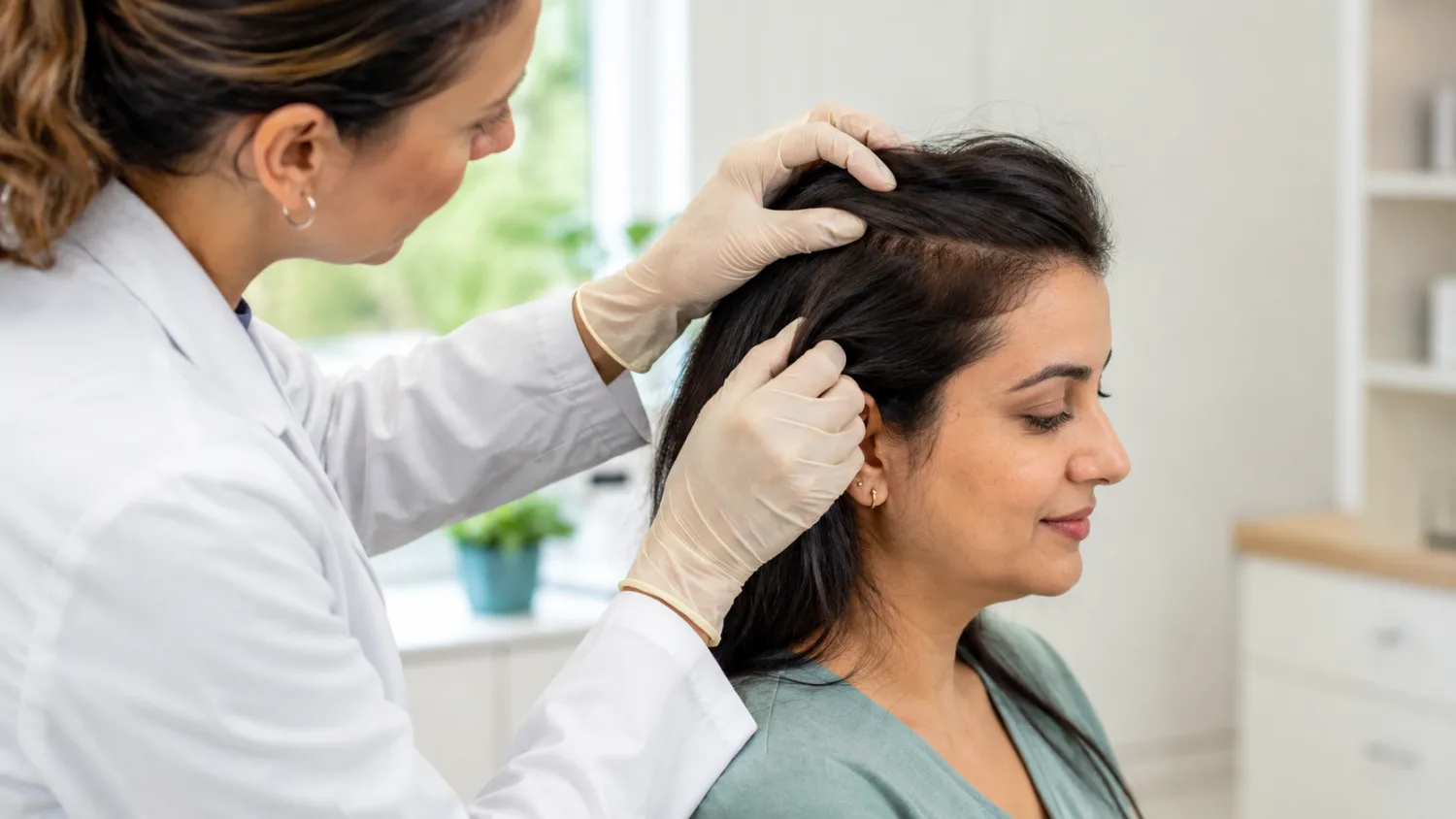
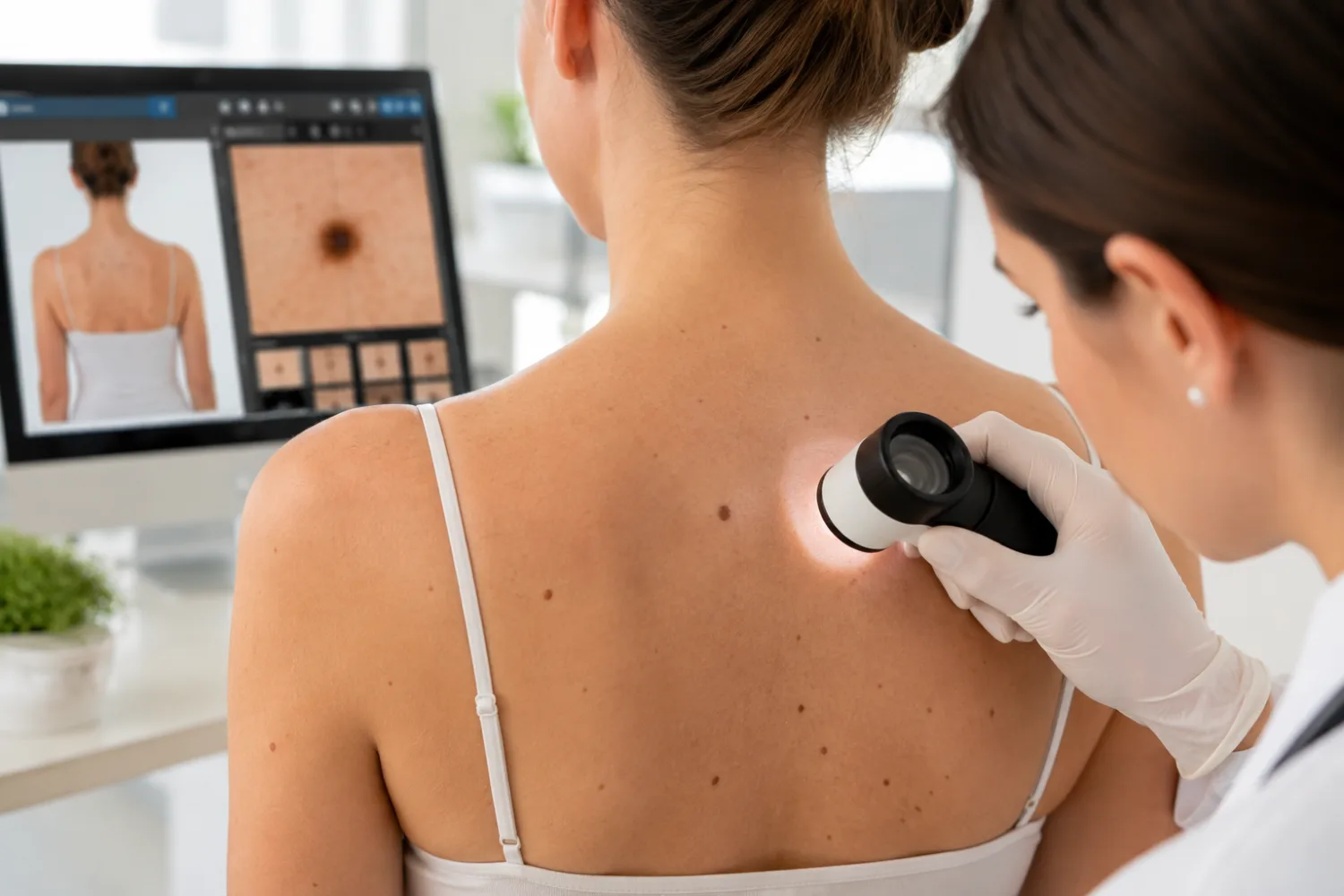
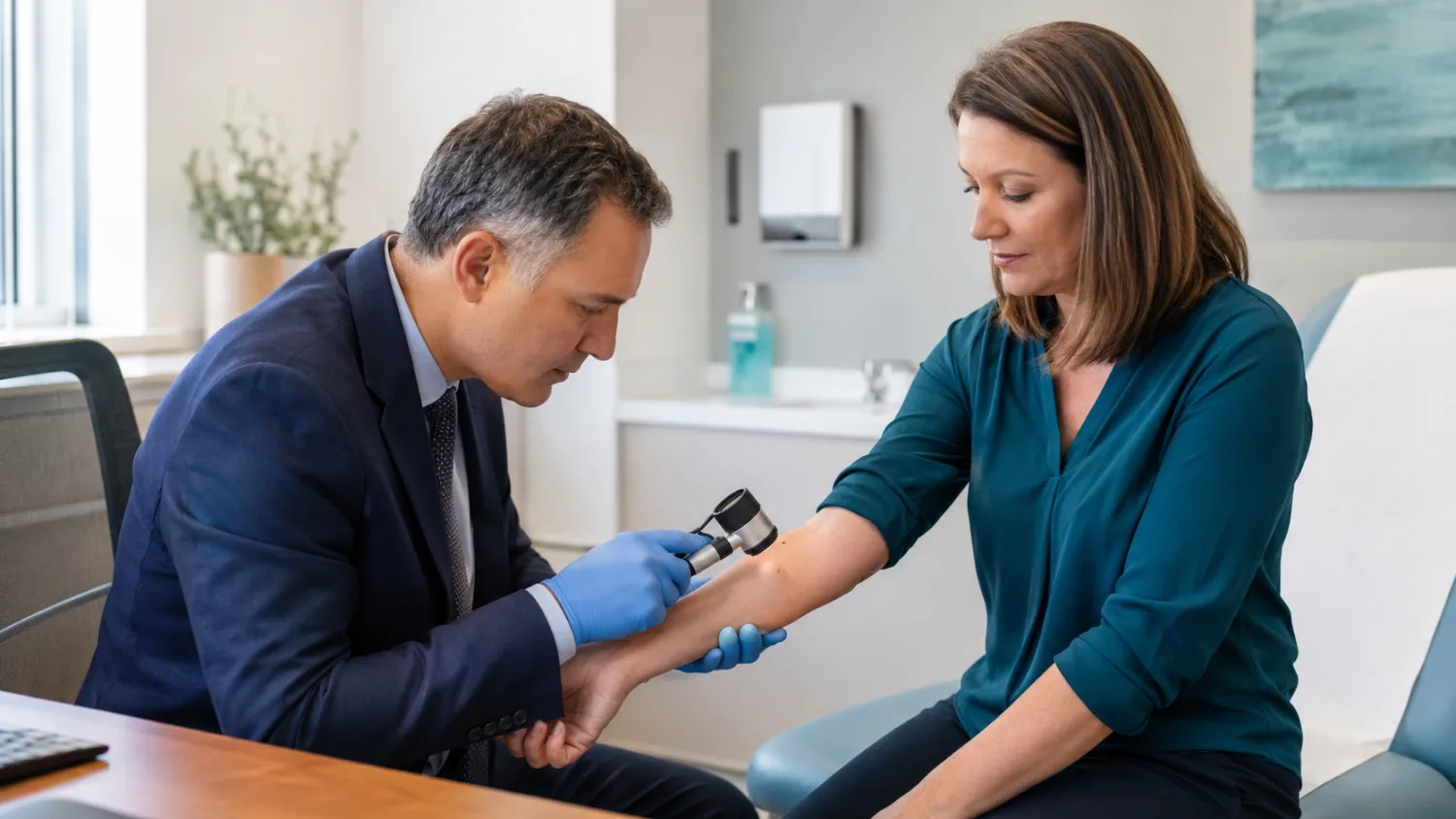
The doctor will examine the affected skin and may check the scalp, nails or mucosal surfaces if relevant. If a suspicious lesion is the concern, they may use a dermatoscope to examine structures beneath the skin’s surface.
You may receive:
- a diagnosis or list of likely causes;
- a treatment plan;
- a private prescription;
- advice about skin care and triggers;
- recommendations for tests or biopsy;
- a clinical letter for your GP;
- a date for review.
Bring photographs showing previous flares when the rash comes and goes. Also bring a complete list of products already tried, including prescription creams, cosmetics and treatments purchased online.
Can skin conditions be diagnosed by video?
A video consultation may help with visible acne, eczema, psoriasis or a previously diagnosed condition. However, lighting, camera quality and colour reproduction can be unreliable.
Video is less suitable when the doctor needs to:
- feel a lump or lesion;
- perform dermoscopy;
- examine the complete skin surface;
- take a swab, scraping or biopsy;
- closely assess a potentially cancerous lesion.
Ask whether an online fee will be deducted from a subsequent in-person appointment if physical examination is required.
How much do mole checks and dermoscopy cost?
A targeted mole consultation may be covered by the standard appointment fee. A full-body skin-cancer screening appointment commonly costs approximately £250 to £450.
Dermoscopy may be included, but some clinics charge an additional fee per lesion or for photography.
| Private mole service | Possible cost |
|---|---|
| Single concerning-mole consultation | £200–£350 |
| Full-body dermatologist examination | £250–£450 |
| Dermoscopy of selected lesions | Included or £50–£150+ |
| Digital mole photography | £100–£300+ |
| Whole-body mole mapping | £200–£500+ |
| Repeat surveillance appointment | £150–£350+ |
A dermatoscope provides magnification and polarised or specialised lighting. It can reveal patterns not visible to the unaided eye, but it does not replace biopsy when the diagnosis remains uncertain.
Mole mapping creates a photographic record that can help identify change over time. It may be most useful for selected higher-risk patients with many moles, unusual moles or a personal history of melanoma.
It is not a guarantee that every skin cancer will be detected. New or changing areas between scheduled checks still need assessment.
See our guide to private skin-cancer screening and mole-mapping costs.
How much does a skin biopsy cost?
A private skin biopsy with standard pathology commonly costs approximately £500 to £1,200. Some complex or central London services charge more.
The price may include several components:
- the dermatologist’s procedure fee;
- hospital or treatment-room charges;
- local anaesthetic;
- dressings and sutures;
- laboratory pathology;
- a clinical report;
- suture removal;
- a follow-up appointment.
A lower quotation may include only the procedure. Ask specifically whether pathology and discussion of the result are included.
What are the different types of skin biopsy?
The method depends on the condition and the depth of tissue needed.
- Punch biopsy: removes a small cylinder of skin and often requires one or more stitches.
- Shave biopsy: removes a superficial portion of a raised lesion.
- Incisional biopsy: removes part of a larger lesion or rash.
- Excisional biopsy: removes the complete lesion with a margin of surrounding skin.
- Curettage: scrapes selected superficial tissue for treatment or diagnosis.
A biopsy does not mean cancer has already been diagnosed. Samples may be used to identify eczema, psoriasis, inflammatory disease, infection, autoimmune blistering disorders and many other conditions.
More specialised laboratory work may increase the price. Examples include direct immunofluorescence, special staining, microbial analysis and expert dermatopathology review.
When will biopsy results be available?
Routine results may take several days to a few weeks. Complex cases can take longer if additional tests or a second specialist opinion are required.
Before leaving the clinic, establish:
- how the result will be communicated;
- whether a follow-up appointment is required;
- who will contact you if the result is urgent;
- whether you will receive a written copy;
- what happens if further removal is necessary.
How much do allergy and laboratory tests cost?
Not every rash is an allergy, and a large “allergy panel” is not always clinically useful. The test should be selected according to the pattern and timing of symptoms.
| Private dermatology test | Possible cost |
|---|---|
| Basic blood tests | £50–£300+ |
| Targeted allergy blood tests | £100–£500+ |
| Skin scraping or microscopy | £50–£200 |
| Bacterial or fungal culture | £50–£200+ |
| Patch testing | £500–£1,000+ |
| Specialist autoimmune testing | £150–£600+ |
What is patch testing?
Patch testing investigates delayed contact allergy. Small amounts of potential allergens are applied to the back under adhesive patches, normally requiring several clinic attendances over a number of days.
It may be useful for suspected allergy to substances such as:
- fragrances;
- preservatives;
- hair dye chemicals;
- metals;
- rubber ingredients;
- adhesives;
- topical medicines.
Patch testing is different from skin-prick testing and blood testing for immediate allergy. It is not a reliable way to diagnose food intolerance.
Ask whether the price includes all application and reading appointments, specialist allergen series and the final written avoidance advice.
Our guide to allergy blood-test results explains what specific IgE testing can and cannot establish.
How much do common skin treatments cost?
Treatment ranges from a prescription issued during the first appointment to surgery requiring specialist facilities.
| Private dermatology treatment | Possible cost |
|---|---|
| Cryotherapy for a small number of lesions | £100–£300 |
| Steroid injection into one lesion | £100–£300 |
| Curettage or cautery | £300–£900+ |
| Simple benign-lesion excision | £500–£1,500+ |
| Skin-cancer excision | £800–£2,500+ |
| Mohs surgery | £1,500–£5,000+ |
| Phototherapy course | £500–£2,000+ |
| Photodynamic therapy | £500–£1,500+ per area or session |
The size, location and number of lesions affect cost. Removal from the face, eyelid, nose, ear or another anatomically sensitive area may require a plastic surgeon, specialist reconstruction or Mohs surgery.
Pathology should normally be considered when tissue is removed because the precise diagnosis may not be certain from appearance alone. Ask whether the removed tissue will be analysed.
What is Mohs surgery?
Mohs micrographic surgery removes a skin cancer in stages. Each layer is examined while the patient waits, allowing the surgeon to continue until the margins are clear while conserving as much healthy tissue as possible.
It is used for selected cancers, particularly in high-risk or cosmetically sensitive sites. Not every basal cell carcinoma or other skin cancer requires Mohs surgery.
The final price may depend on:
- the number of stages required;
- the size and location of the cancer;
- the method of wound closure;
- whether a plastic surgeon is involved;
- hospital facility fees;
- pathology and follow-up.
How much does private acne treatment cost?
A first acne consultation commonly costs £200 to £350. Straightforward topical or oral treatment may then require one or more follow-ups and the cost of private prescriptions.
A basic pathway may involve:
- initial consultation;
- prescription creams or tablets;
- a review after several weeks or months;
- adjustment of treatment;
- advice about skin care and scarring.
The total may be approximately £400 to £900 over several months, excluding medicines. Costs rise when isotretinoin, procedures or scar treatments are used.
How much does private isotretinoin treatment cost?
Isotretinoin requires careful assessment and monitoring. The total private cost may be approximately £800 to £2,500 or more, depending on course length, consultation fees, blood tests, pregnancy-prevention requirements and medicine prices.
Possible charges include:
- initial dermatologist assessment;
- baseline blood tests;
- regular follow-up appointments;
- repeat liver and lipid testing;
- pregnancy tests where applicable;
- private prescriptions;
- the medicine itself.
Isotretinoin is not an ordinary online acne medicine. It requires appropriate risk discussion and monitoring, including consideration of pregnancy prevention, mood, sexual function and other possible adverse effects.
See our guide to acne treatment in the UK. If scarring is the main concern, our guide to acne-scar treatments and costs explains why active acne should generally be controlled first.
How much does treatment for eczema or psoriasis cost?
A consultation and one follow-up may cost approximately £350 to £625, plus medication. Long-term or severe disease can cost more because it may require repeated reviews, blood monitoring, phototherapy or injectable medicines.
Possible treatment includes:
- emollients and soap substitutes;
- topical corticosteroids;
- topical calcineurin inhibitors;
- vitamin D-based psoriasis treatments;
- antimicrobial treatment where appropriate;
- phototherapy;
- oral immunosuppressive medication;
- biological or targeted medicines.
Biological treatment can be extremely expensive when self-funded. The cost is not limited to the medicine: specialist reviews, infection screening and blood monitoring are also required.
A private dermatologist may recommend treatment that your GP cannot or does not agree to prescribe. Ask at the start who will provide ongoing prescriptions and monitoring.
Our comparison of eczema and psoriasis explains how the conditions and their treatment differ.
Are private prescriptions included?
The dermatologist may include the act of writing a prescription within the consultation fee, but the medicine is normally paid for separately at the pharmacy.
A private prescription is not charged at the standard NHS prescription rate. You may pay:
- a prescription administration fee;
- the pharmacy’s full price for the medicine;
- delivery or specialist pharmacy charges;
- repeat-prescription fees;
- monitoring costs.
Common generic creams may be inexpensive. Specialist preparations, oral retinoids, immunosuppressants and biological medicines can cost much more.
You can ask the dermatologist to write to your GP. The GP may agree to issue an NHS prescription when the recommendation is clinically appropriate and within local prescribing arrangements, but they are not obliged to take over every private treatment.
Before starting a long course, ask:
- How much will the medicine cost each month?
- How long might treatment continue?
- Which blood tests are required?
- Who will arrange and review monitoring?
- Can my GP safely take over prescribing?
- What happens if the medicine causes side effects?
What is medical dermatology rather than cosmetic treatment?
Medical dermatology assesses and treats disease. Cosmetic treatment aims primarily to change appearance where there is no medical need.
| Usually medical | Often cosmetic |
|---|---|
| Suspicious or changing mole | Stable mole removed only for appearance |
| Severe acne | Treatment of minor texture concerns |
| Eczema or psoriasis | Routine anti-ageing procedures |
| Inflammatory hair loss | Elective hair-restoration procedures |
| Painful or bleeding lesion | Harmless lesion removed for convenience |
| Suspected skin cancer | Injectables used to alter facial appearance |
The distinction affects insurance and NHS eligibility. A procedure can still carry medical risks even when performed for cosmetic reasons.
Before cosmetic treatment, check who will perform it, their registration, what product or device is used and who manages complications. Our guide to choosing a safe aesthetic clinic or practitioner provides a broader checklist.
Can you see a dermatologist through the NHS?
Yes. NHS dermatology assessment and medically necessary treatment are available without a direct charge to the patient.
The usual route is through a GP, although urgent hospital assessment may be needed for severe skin reactions, major infection or rapidly progressing disease.
Your GP may initially:
- examine and photograph the skin;
- prescribe first-line treatment;
- arrange blood tests or swabs;
- seek teledermatology advice;
- refer routinely to dermatology;
- use an urgent suspected-cancer pathway.
NICE states that people with suspected melanoma, squamous cell carcinoma or a rare skin cancer should be referred through an appropriate suspected-cancer pathway. An urgent referral does not mean cancer has already been diagnosed.
Do not assume that waiting privately is safer than contacting your GP about a changing lesion. NHS pathways are designed to prioritise clinically suspicious findings.
See our guides to how hospital referrals work and skin-cancer checks in the UK.
Do you need a GP referral for private dermatology?
Many private dermatologists accept self-paying patients without a GP referral. However, a referral is often useful and may be required by an insurer.
Bring:
- a list of previous diagnoses;
- current and previous medicines;
- photographs showing earlier stages;
- prior biopsy or pathology reports;
- allergy-test results;
- relevant blood tests;
- details of previous phototherapy or systemic treatment.
For a changing mole, include the earliest clear photograph you have. Do not edit the image or use beauty filters.
Does private health insurance cover dermatology?
Private medical insurance may cover specialist assessment and treatment of a new eligible medical skin condition. Coverage varies considerably.
Common limitations include:
- pre-existing conditions;
- outpatient financial limits;
- chronic-condition exclusions;
- consultant and hospital networks;
- requirements for GP referral;
- prior authorisation for biopsy or surgery;
- policy excess and co-payments;
- exclusion of cosmetic treatment;
- limited cover for acne, hair loss or routine mole surveillance.
Do not assume that authorisation for the consultation covers dermoscopy, biopsy, pathology or lesion removal. Ask the clinic for procedure codes and obtain confirmation from the insurer.
Questions to ask include:
- Is the consultant recognised and fee-assured?
- Is the chosen clinic in my network?
- Is this condition considered pre-existing or chronic?
- Is a full-body skin check covered?
- Do biopsy and pathology require separate authorisation?
- Is medically necessary lesion removal covered?
- What excess or shortfall will I pay?
- Are follow-up appointments and prescriptions covered?
Routine screening without symptoms and cosmetic removal of benign lesions are commonly excluded.
Read our guides to pre-existing conditions and private health-insurance excesses.
When do skin symptoms require urgent help?
Call 999 for:
- difficulty breathing with hives or swelling;
- swelling of the tongue, mouth or throat;
- collapse or signs of a severe allergic reaction;
- a rapidly spreading purple or non-blanching rash with severe illness;
- extensive blistering or peeling with breathing or circulation problems.
Seek urgent same-day advice for:
- a painful, rapidly spreading red or swollen area with fever;
- skin redness and pain around the eye;
- a severe rash affecting the mouth, eyes or genitals;
- blistering or peeling after starting a medicine;
- a widespread rash with fever or marked illness;
- rapidly worsening symptoms in someone who is immunosuppressed;
- signs of infection after a biopsy or procedure.
Our guide to rashes in adults and urgent warning signs explains when an eruption needs more than routine care.
Which moles or lesions should be checked?
Arrange a GP or dermatologist assessment for:
- a new or changing mole;
- a lesion becoming asymmetrical;
- an irregular border;
- several colours within one lesion;
- continued enlargement or other evolution;
- unexplained bleeding or crusting;
- a sore that does not heal;
- a growing firm or scaly lump;
- a dark mark beneath a nail without a clear injury;
- an area that looks different from your other moles.
Melanoma can occur in small lesions and on skin that is not frequently exposed to the sun. Warning signs can also look different on black or brown skin.
Read our guide to mole assessment and removal in the UK.
How do you choose a private dermatologist?
“Skin specialist” is a broad description. If you want consultant-level medical care, check that the doctor is registered with the General Medical Council and appears on the specialist register in dermatology.
Dermatology interests include:
- general medical dermatology;
- skin cancer and mole assessment;
- dermatological surgery;
- Mohs surgery;
- acne and rosacea;
- eczema and psoriasis;
- contact allergy;
- hair and scalp disease;
- paediatric dermatology;
- genital and vulval dermatology;
- autoimmune and blistering disease;
- skin of colour.
Ask:
- Does the dermatologist regularly treat my condition?
- Is an in-person appointment necessary?
- Is dermoscopy included?
- Can biopsy be performed at the same clinic?
- Are pathology and facility fees separate?
- How will results be communicated?
- Will I need a paid follow-up?
- Who handles complications?
- Can ongoing prescribing be transferred to my GP?
Be cautious when a clinic offers immediate laser or cosmetic removal of a pigmented lesion without an adequate diagnosis. Destroying a lesion can prevent proper pathology assessment.
Frequently asked questions
How much is a private dermatologist consultation?
An initial appointment commonly costs £200 to £350. Highly specialised or central London consultations may cost £350 to £600 or more.
How much is a dermatologist follow-up?
A follow-up generally costs £150 to £275. Ask whether a brief results discussion is already included in a test or procedure package.
How much does a private mole check cost?
A targeted or full-body mole assessment commonly costs £250 to £450. Mole mapping and additional photography may be charged separately.
How much does a private skin biopsy cost?
A biopsy with standard pathology commonly costs approximately £500 to £1,200. Confirm whether treatment-room charges, stitches, pathology and review are included.
How much is private mole removal?
Removal commonly costs £400 to £1,500 or more per lesion. Location, size, closure method and pathology all affect the total.
Can a dermatologist diagnose skin cancer without a biopsy?
Clinical examination and dermoscopy can show whether a lesion is suspicious, but tissue examination is often needed to confirm the exact diagnosis.
Can I book a private dermatologist without a referral?
Many self-paying patients can book directly. Private insurers commonly require a GP referral and authorisation.
Can a private dermatologist issue an NHS prescription?
No. A private clinician normally issues a private prescription. Your GP may later agree to prescribe through the NHS but is not obliged to adopt every recommendation.
Does private insurance cover mole removal?
It may cover medically necessary investigation or removal of a suspicious lesion. Cosmetic removal of a benign mole is commonly excluded.
Is mole mapping the same as a dermatologist examination?
No. Mole mapping creates photographs for comparison over time. A dermatologist interprets clinical and dermoscopic findings and decides whether biopsy is necessary.
Are online mole-checking apps reliable?
They may encourage awareness but should not replace a clinical assessment. Seek medical advice for a new, changing, bleeding or otherwise concerning lesion regardless of an app result.
Can a private dermatologist treat hair loss?
Yes, particularly when hair loss may be caused by an inflammatory, autoimmune, scarring or other medical scalp condition. Consultation, blood tests, biopsy and treatment may all have separate costs.
See our guide to hair-loss causes and treatment options.
Can dermatologists treat cosmetic concerns?
Some do, but cosmetic dermatology is normally self-funded. Verify the practitioner’s qualifications and whether they have appropriate experience with the proposed treatment.
How quickly can you see a private dermatologist?
Some clinics offer appointments within days, while highly specialised consultants may have longer waits. Urgent or rapidly worsening symptoms should use an appropriate NHS pathway rather than waiting solely for a preferred private appointment.
Is a private dermatologist worth the cost?
Private care may provide faster access, longer appointments or a chosen specialist. It offers better value when you understand the likely complete cost of tests, medication and follow-up rather than budgeting only for the initial consultation.