Skin cancer is one of the most common cancers in the UK, and the number of cases has been increasing in recent years.
The encouraging news is that when skin cancer is detected early, treatment is usually highly effective. This is why regular skin checks and early assessment of suspicious moles or skin lesions are so important.
Many people first notice a mole changing in appearance, a new patch of skin that does not heal, or a mark that slowly grows over time. These changes are often harmless, but they should always be checked if they persist or look unusual.
Early diagnosis can prevent more serious complications and usually means simpler treatment.
This guide explains how skin cancer checks work in the UK, what warning signs to look for, how the NHS assessment pathway works, when private clinics may offer faster access, and when to seek medical help.
If you are exploring related skin concerns, you may also find our guides to acne treatment in the UK and rosacea helpful.
What skin cancer is
Skin cancer happens when abnormal skin cells grow in an uncontrolled way.
According to the NHS skin cancer overview, the two main categories are non-melanoma skin cancer and melanoma.
Non-melanoma skin cancer
Non-melanoma skin cancers, such as basal cell carcinoma and squamous cell carcinoma, are the most common types.
They usually grow slowly and are often treatable when caught early.
Melanoma
Melanoma is less common but more serious because it can spread to other parts of the body if not treated promptly.
The Cancer Research UK melanoma guide explains that early detection dramatically improves outcomes.
Why skin cancer checks matter
Skin cancer checks are designed to identify suspicious lesions early.
Many cases are first noticed by the patient themselves, a partner, or a healthcare professional during a routine examination.
Early diagnosis can make a major difference. A small melanoma detected early may be treated with a relatively simple surgical procedure. The same cancer discovered later may require more complex treatment.
This is why dermatologists and cancer charities encourage people to become familiar with their own skin and to seek medical advice if something looks unusual.
Common warning signs of skin cancer
Changes in the skin are the most common early signs.
The NHS recommends seeing a GP if you notice a new mole, a change in an existing mole, or a patch of skin that looks unusual.
Possible warning signs include:
- a new mole or growth that appears over time
- a mole that changes size, shape or colour
- bleeding, crusting or itching in a mole
- a sore that does not heal within a few weeks
- a scaly patch or persistent lump
- a mark that looks different from others on your skin
The ABCDE rule for suspicious moles
The NHS uses the well-known ABCDE rule for identifying suspicious moles:
- A – Asymmetry: one half of the mole looks different from the other.
- B – Border: edges may be irregular, blurred or uneven.
- C – Colour: the mole may contain different shades.
- D – Diameter: larger than about 6mm, although melanomas can be smaller.
- E – Evolving: the mole is changing over time.
If you notice these signs, the NHS advises contacting a GP for assessment.
Other skin changes to take seriously
Not all skin cancers look like classic dark moles.
You should also pay attention to a patch, lump, sore or mark that keeps growing, bleeds, crusts, becomes painful, does not heal, or looks very different from the rest of your skin.
Who is most at risk?
Anyone can develop skin cancer, but certain factors increase risk.
According to the NHS and Cancer Research UK, higher risk groups include:
- people with fair skin that burns easily
- people with many moles or unusual moles
- people with a family history of melanoma
- people who have had severe sunburn in the past
- frequent users of sunbeds
- people who spend long periods in strong sunlight
Age can also increase risk, although melanoma can occur in younger adults.
Regular skin checks become more important if any of these risk factors apply.
How skin cancer checks work
A skin cancer check usually begins with a visual examination by a trained healthcare professional.
This may take place at a GP surgery, dermatology clinic, or specialist skin clinic.
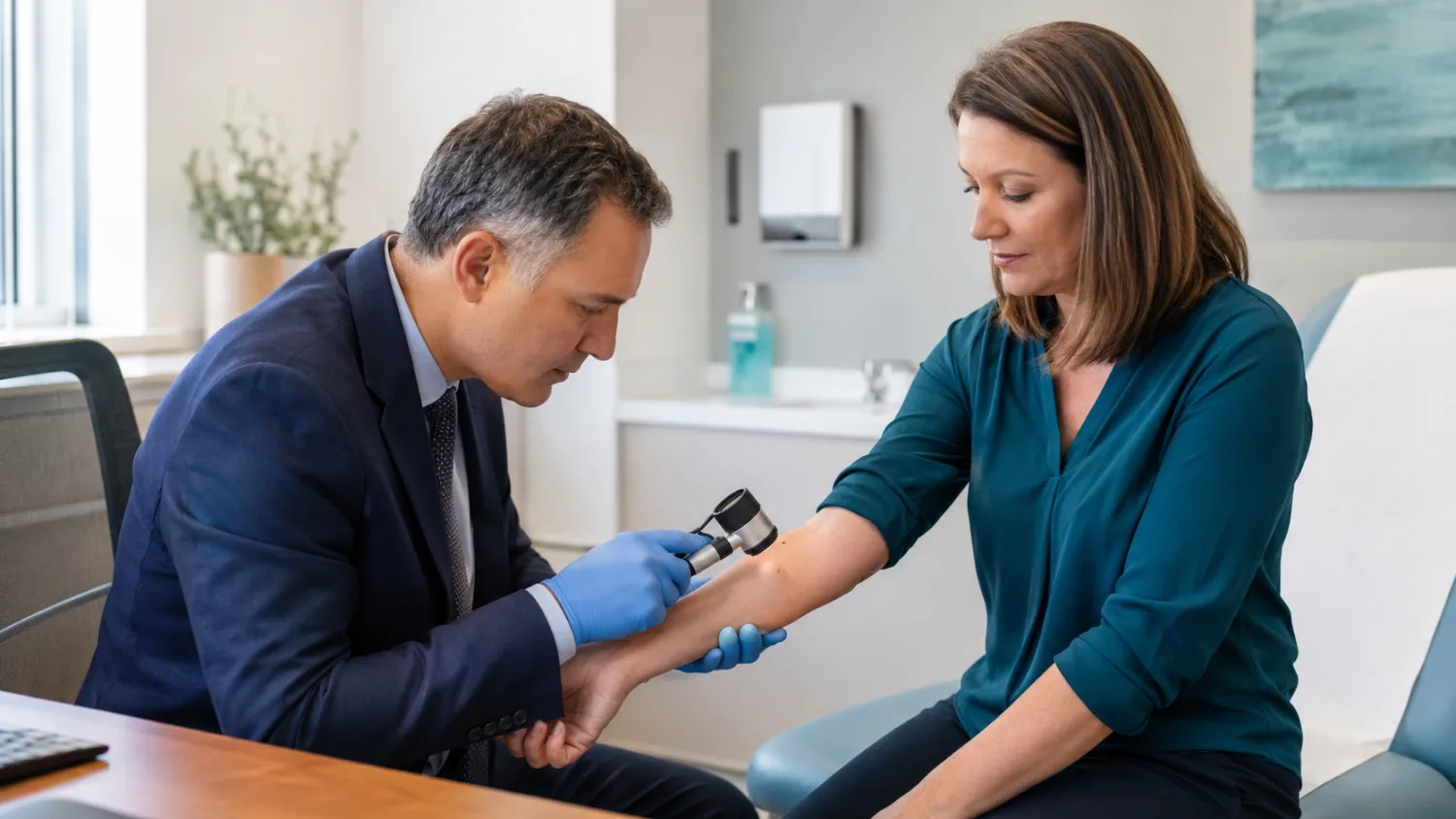
During the appointment, the clinician will examine the skin and ask about any changes you have noticed. They may check moles across the body, especially if there is a history of skin cancer or multiple atypical moles.
Dermoscopy
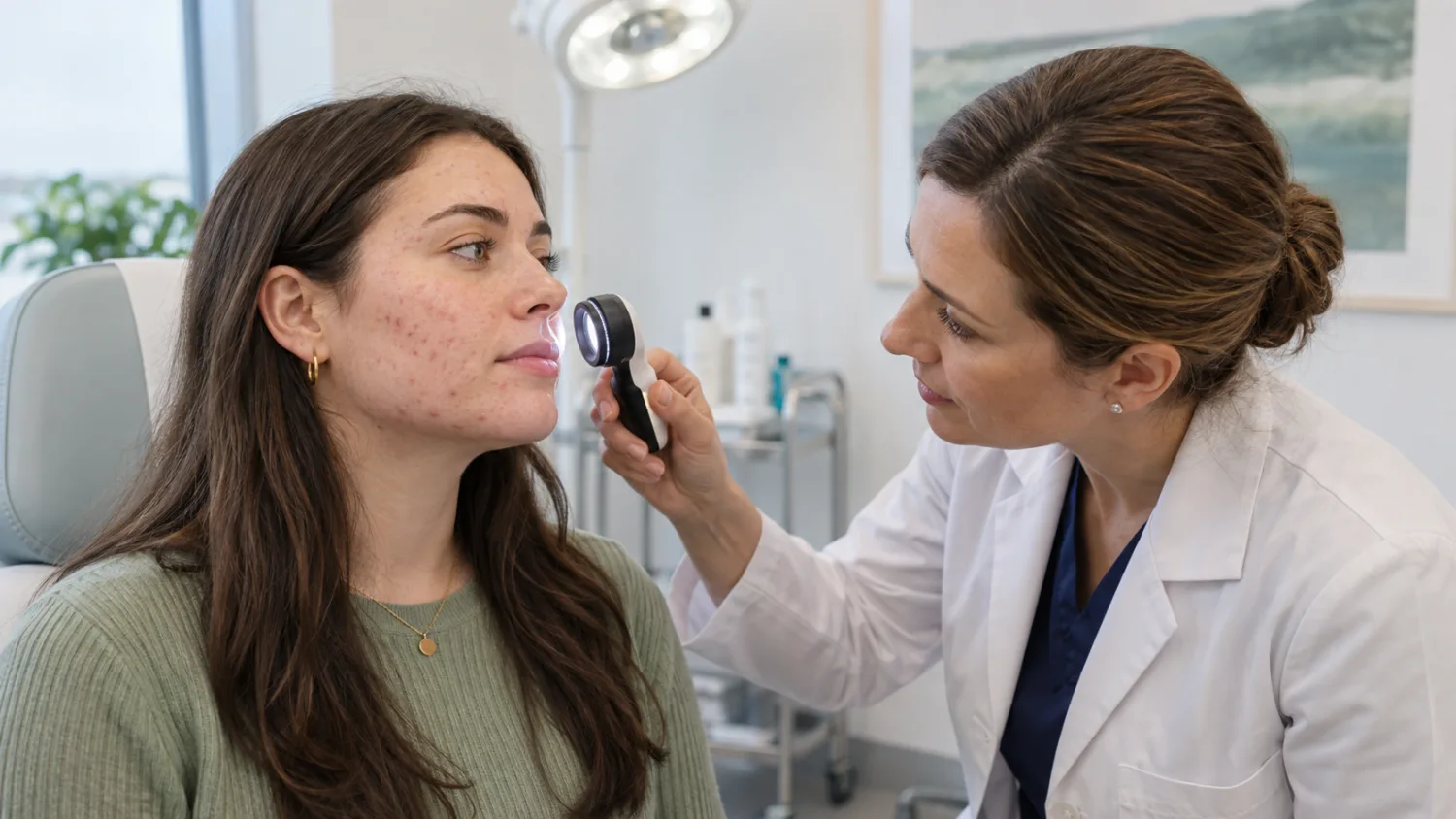
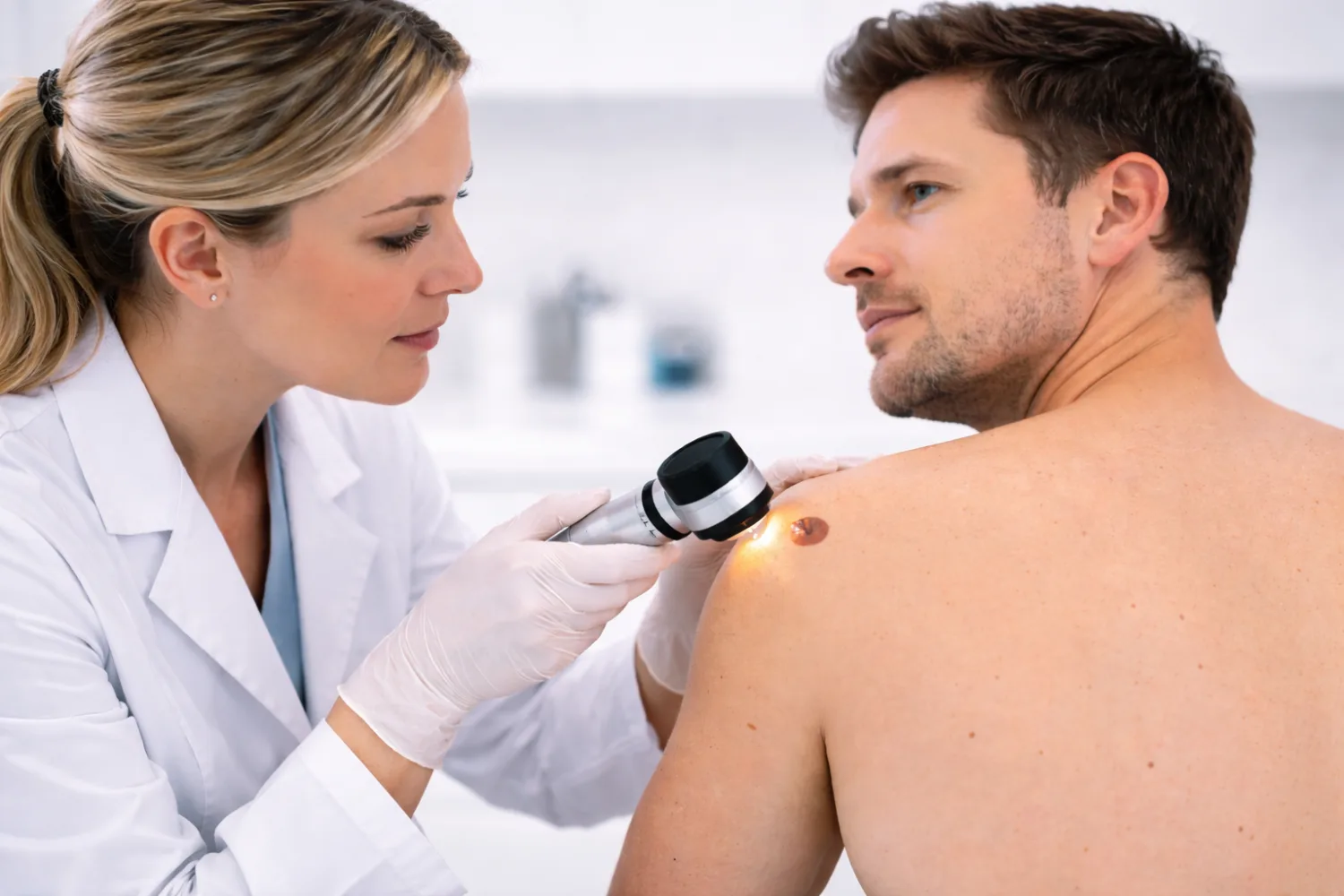
Dermatologists often use a device called a dermatoscope.
This is a handheld magnifying instrument with a light that allows the doctor to examine skin structures more closely.
Dermoscopy can help a clinician decide whether a mole or lesion looks reassuring, needs monitoring, or should be removed and tested.
Full-body skin checks
Some people only need one specific mole checked. Others, especially people with many moles or a previous skin cancer history, may benefit from a more complete skin examination.
A full-body check is not always necessary for everyone, but it can be useful when risk is higher or when several marks are being monitored.
NHS skin cancer assessment
In the UK, suspected skin cancer is usually assessed through the NHS referral pathway.
If a GP thinks a mole or lesion could be melanoma or another skin cancer, they may make an urgent referral to a dermatology clinic.
The NHS aims to see patients with suspected cancer within two weeks through the “two-week wait” referral pathway.
This allows dermatologists to assess suspicious lesions quickly and arrange treatment if needed.
More information about this process can be found in our guide on how hospital referrals work in the UK.
What happens if a mole needs testing?
If a dermatologist believes a mole may be cancerous, they may recommend removing it and sending it for laboratory testing.
This procedure is called a biopsy or excision.
The removed tissue is examined under a microscope by a pathologist. This confirms whether cancer is present and determines the exact type.
In many cases, removing the mole is also the treatment if the cancer is detected early. Additional treatment may be required depending on the type and stage of cancer.
Private skin cancer checks
Some people choose private skin cancer checks to access faster appointments or specialist mole mapping services.
Private dermatology clinics often offer full-body mole checks and digital dermoscopy imaging.
Mole mapping
Mole mapping uses high-resolution photography to track changes in moles over time.
This can be particularly useful for people with many moles, unusual moles, a personal history of skin cancer or a family history of melanoma.
It does not replace medical judgement, but it can help clinicians spot changes more accurately over time.
NHS vs private routes
Private clinics can often provide rapid assessment without needing a GP referral.
However, treatment for confirmed cancer may still involve NHS services depending on the situation.
If you are comparing access routes and waiting times, our guide to NHS vs private healthcare in the UK explains the main differences.
How to check your skin at home
Regular self-checks are one of the most effective ways to spot skin cancer early.
Dermatologists recommend examining your skin every few months, especially if you have many moles or a higher risk of skin cancer.
When checking your skin:
- use a mirror to check difficult areas such as the back
- ask a partner to help inspect areas you cannot easily see
- look for new marks as well as changes in existing moles
- photograph moles if you want to monitor changes over time
- compare any unusual mark with the rest of your skin
Pay particular attention to areas exposed to the sun, including the face, shoulders, back, arms and legs.
But remember that skin cancer can also appear in less obvious places, so do not ignore changes just because they are not in a sun-exposed area.
Reducing your risk of skin cancer
While not all skin cancers can be prevented, protecting the skin from ultraviolet radiation is the most effective way to reduce risk.
The NHS recommends:
- using sunscreen with a high SPF
- wearing protective clothing and hats in strong sun
- avoiding sunbeds
- seeking shade during peak sunlight hours
These steps are especially important during summer months or when travelling to sunny climates.
Sun protection is not only for holidays
Many people are careful abroad but forget about UV exposure during ordinary UK days, gardening, walking, sport or outdoor work.
The aim is not to avoid daylight. It is to reduce repeated burning and unnecessary high UV exposure over time.
When to seek medical advice
You should arrange a medical review if you notice a new mole, a change in an existing mole, or a skin lesion that does not heal.
It is also sensible to seek advice if:
- a mole begins itching or bleeding
- a mark becomes crusty or painful
- a skin patch grows quickly
- you notice a lesion that looks very different from others
- a sore, lump or scaly patch does not settle
If access to primary care is difficult, our guide on how to get a GP appointment quickly in the UK may help.
Living with a higher skin cancer risk
People with many moles or a strong family history of melanoma may benefit from regular dermatology checks.
In some cases, doctors recommend annual monitoring or digital mole mapping.
Although the possibility of skin cancer can feel worrying, most suspicious moles turn out to be harmless.
The key is not ignoring changes and seeking medical advice when something looks unusual.
What to avoid
- Do not ignore a changing mole because it is not painful.
- Do not try to remove or treat a suspicious lesion yourself.
- Do not rely only on online images to decide whether a mole is safe.
- Do not use sunbeds if you are worried about skin cancer risk.
- Do not delay assessment if a mole is evolving, bleeding, crusting or looks very different from your other moles.
FAQ: skin cancer checks in the UK
Does the NHS offer routine skin cancer screening?
The NHS does not usually offer routine whole-body skin cancer screening for everyone. However, suspicious moles or skin lesions can be assessed by a GP and referred urgently to dermatology if cancer is suspected.
When should I see a GP about a mole?
You should see a GP if a mole changes size, shape or colour, becomes itchy, painful, crusted or bleeding, or looks very different from your other moles.
Are most suspicious moles cancer?
No. Many suspicious-looking moles turn out to be harmless. But checking is important because early melanoma is much easier to treat than melanoma found late.
What is mole mapping?
Mole mapping uses digital photographs and dermoscopy images to monitor moles over time. It can be useful for people with many moles, unusual moles or a higher risk of melanoma.
Can private clinics diagnose skin cancer?
Private dermatologists can assess suspicious lesions and arrange biopsy or removal where appropriate. If cancer is confirmed, treatment may continue privately or through NHS services depending on the pathway and patient preference.
Can skin cancer appear somewhere that has not been sunburnt?
Yes. Sun exposure is a major risk factor, but suspicious skin changes should be checked wherever they appear on the body.
Should I photograph my moles?
Photographs can help you notice changes over time, especially for moles on areas that are hard to check. They should not replace medical assessment if a mole looks concerning.
Is itching always a sign of skin cancer?
No. Itching can happen for many harmless reasons. But a mole that is new, changing, bleeding, crusting or persistently itchy should be checked.
Final takeaway
Skin cancer is common, but early detection dramatically improves outcomes.
Regular self-checks and prompt assessment of suspicious lesions are among the most effective ways to protect your health.
If you notice a mole changing in shape, colour or size, or if a skin lesion does not heal, arranging a medical check is the safest next step.
Whether through NHS referral or a private dermatology clinic, early assessment provides reassurance and ensures that any serious conditions are treated as quickly as possible.