Moles are extremely common. Most adults have between 10 and 40 moles on their body, and in most cases they are completely harmless.
However, some people consider mole removal because a mole has changed in appearance, causes irritation, catches on clothing, or affects confidence and appearance.
In the UK, mole removal can be carried out for medical reasons or cosmetic reasons. Suspicious moles may be removed through the NHS as part of skin cancer assessment. Benign moles that cause discomfort or cosmetic concerns are often treated in private dermatology or aesthetic clinics.
This guide explains when mole removal may be recommended, how the procedure works, the difference between NHS and private treatment in the UK, likely costs, possible risks, and what recovery usually involves.
If you are concerned about a mole changing shape, colour, or size, it is important to read our guide on skin cancer checks before considering cosmetic removal.
What a mole is
A mole, also known medically as a naevus, is a small growth on the skin caused by clusters of pigment-producing cells called melanocytes.
According to the NHS guide to moles, most moles appear during childhood or early adulthood and remain stable throughout life.
Moles can vary widely in appearance. They may be flat or raised, smooth or slightly rough, and range in colour from light brown to almost black. Some people also have pink or flesh-coloured moles.
Most moles are harmless, but occasionally a mole may develop into melanoma, the most serious type of skin cancer. This is why any suspicious mole should always be checked before removal.
Why people consider mole removal
There are several reasons why someone might want a mole removed. In some cases the reason is medical. In others, it is related to comfort, irritation or appearance.
Common reasons for mole removal include:
- a mole changing in shape, size or colour
- a mole that bleeds, crusts or becomes itchy
- frequent irritation from shaving or clothing
- a raised mole that catches easily
- a mole on the face that affects confidence
- peace of mind if a mole looks unusual
If a mole shows signs of possible skin cancer, it should always be assessed medically rather than removed purely for cosmetic reasons.
Medical removal vs cosmetic removal
Medical mole removal is usually considered when there is concern that the mole may be abnormal, pre-cancerous or cancerous, or when it causes significant symptoms.
Cosmetic mole removal is usually considered when the mole appears benign but the person wants it removed because of appearance, confidence, catching, rubbing or irritation.
The distinction matters because suspicious moles need proper assessment and often laboratory analysis after removal. They should not simply be lasered or treated as a cosmetic blemish.
Warning signs that a mole should be checked
Doctors often use the ABCDE rule when assessing moles for possible melanoma.
- A – Asymmetry: one half of the mole does not match the other.
- B – Border: the edges are irregular, blurred or uneven.
- C – Colour: the mole contains multiple colours or shades.
- D – Diameter: the mole is larger than about 6mm.
- E – Evolving: the mole changes over time.
The NHS recommends seeing a GP if you notice these changes. Early assessment is the safest approach because melanoma is far more treatable when detected early.
Other changes to take seriously
You should also arrange medical advice if a mole becomes itchy, painful, crusted, inflamed, starts bleeding, looks very different from your other moles, or appears suddenly and continues changing.
Most changes are not cancer, but it is not worth guessing. A clinician can decide whether the mole is reassuring, needs monitoring, or should be referred for further assessment.
How mole removal works
Mole removal is usually a straightforward outpatient procedure. In most cases it can be carried out under local anaesthetic in a GP surgery, dermatology clinic, minor surgery clinic or private skin clinic.
The exact technique depends on the size, location and type of mole.
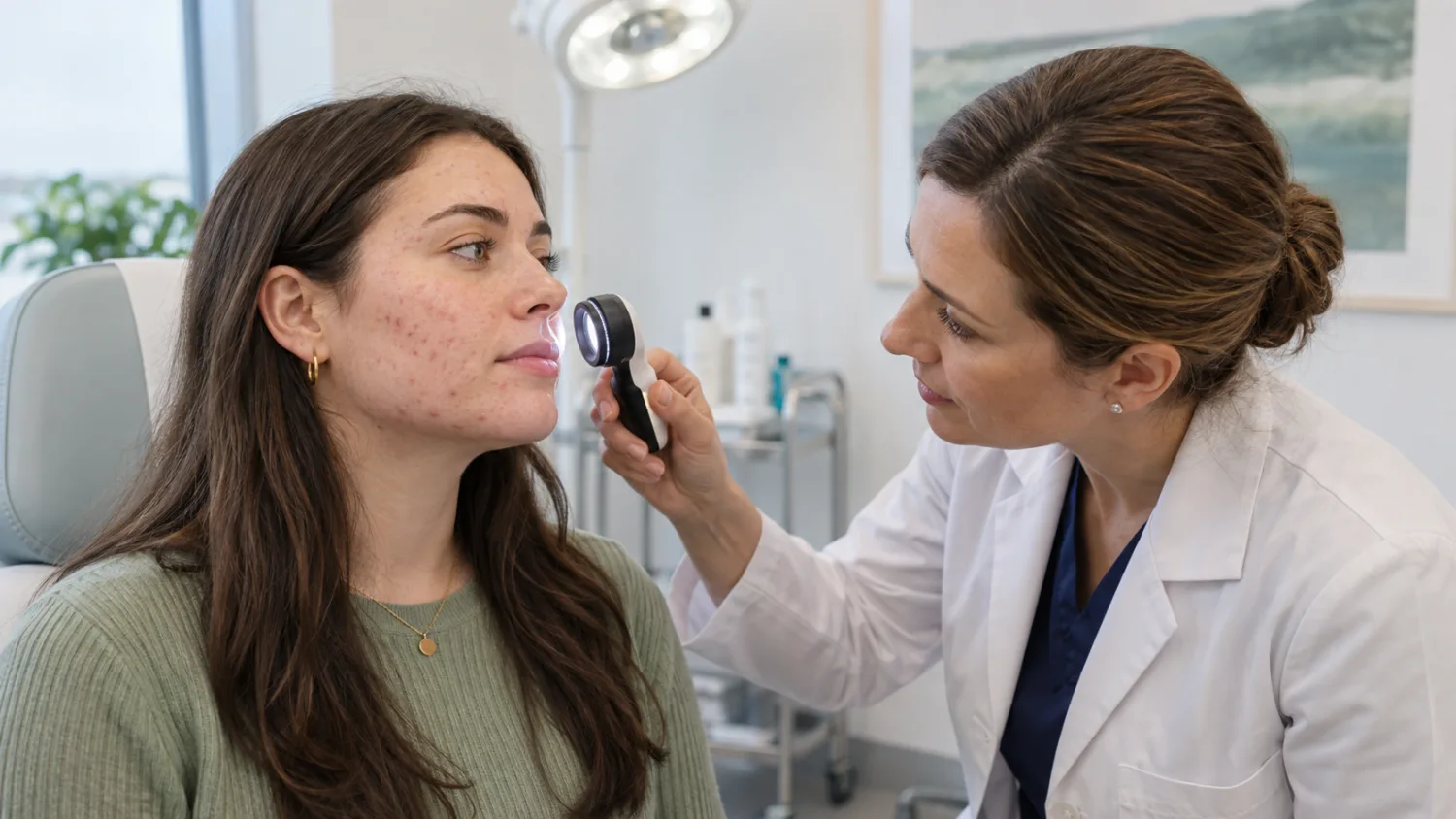
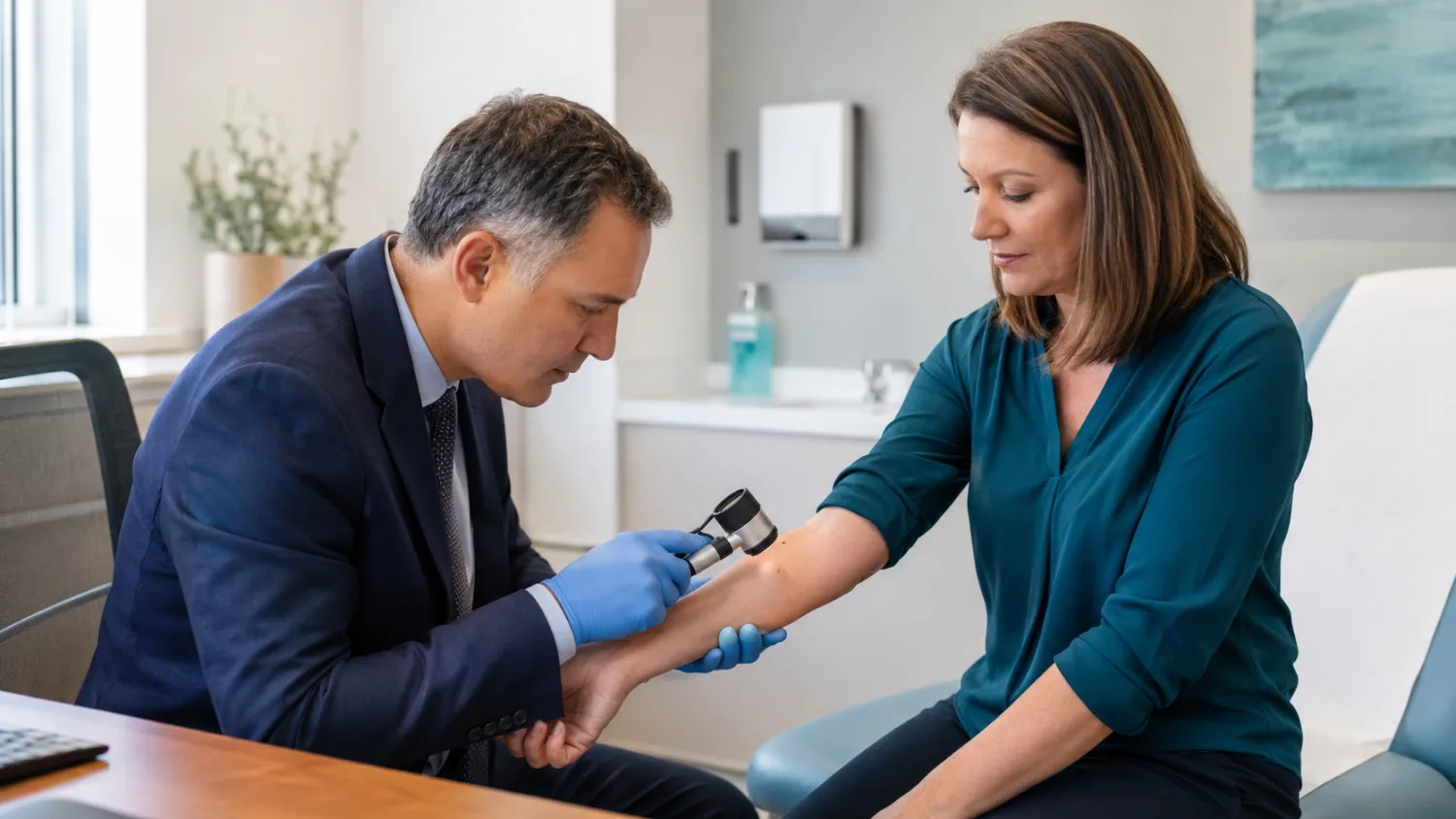
A doctor will normally examine the mole first, sometimes using a dermatoscope — a magnifying device that helps assess skin lesions in more detail.
If the mole appears suspicious, it will usually be removed and sent to a laboratory for analysis.
What happens before removal?
Before the procedure, the clinician should check why you want the mole removed, whether it has changed, whether there is any skin cancer concern, and which removal method is most suitable.
They should also explain scarring, wound care, possible recurrence, infection risk and whether the sample will be sent for histology.
This is especially important if the mole is being removed privately for cosmetic reasons. Cosmetic removal should still begin with proper skin assessment.
Common mole removal techniques
Surgical excision
Surgical excision is the most common method for removing suspicious or deeper moles.
The doctor removes the entire mole along with a small margin of surrounding skin. The wound is then closed with stitches.
Excision is often used when melanoma needs to be ruled out because it allows the tissue to be examined under a microscope.
Shave removal
Shave excision removes raised moles by carefully shaving them flush with the skin surface.
It is commonly used for benign moles that protrude above the skin.
This method usually does not require stitches, but a small scar may still form.
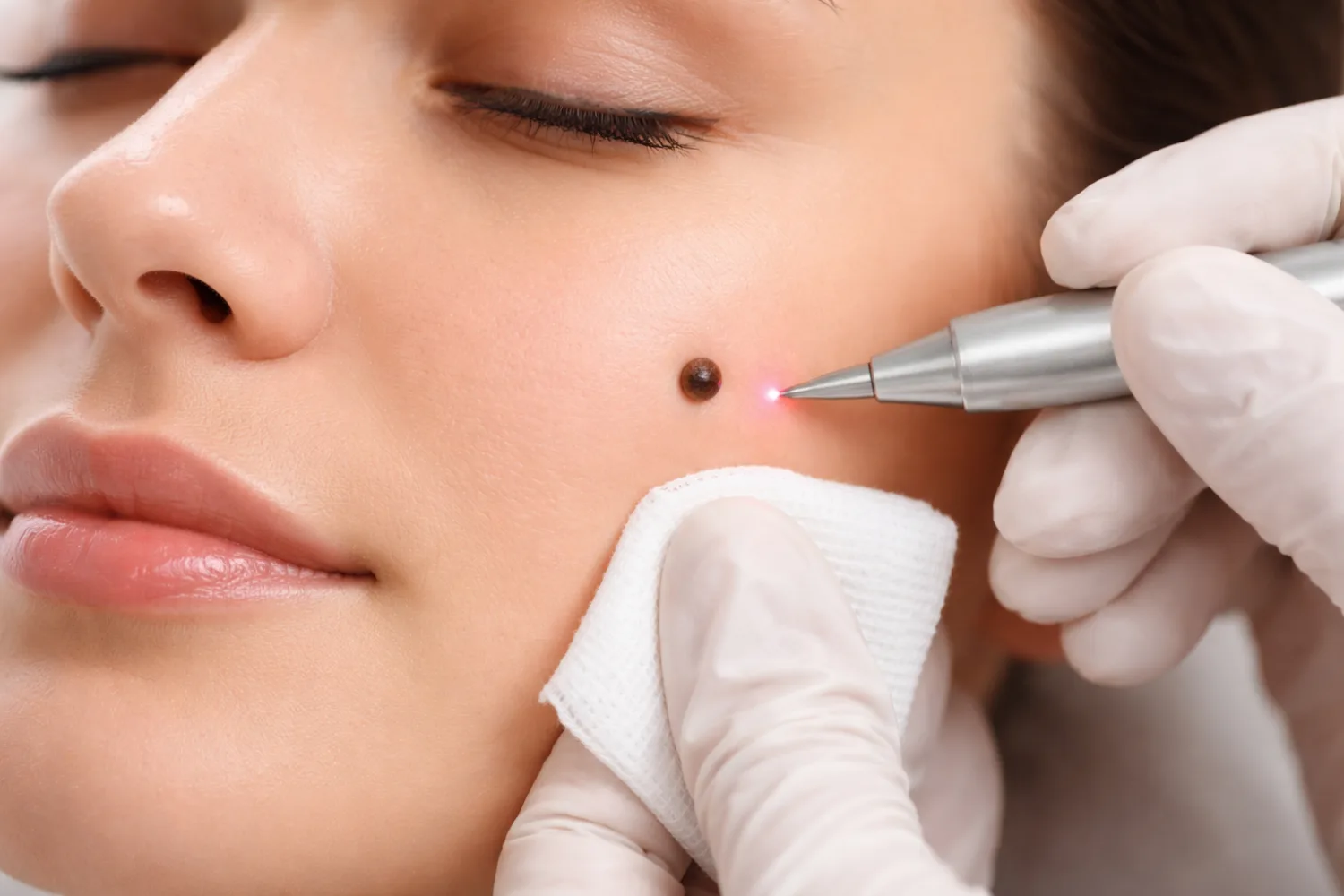
Laser removal
Laser treatment may be used for certain benign pigmented lesions. However, dermatologists often avoid laser treatment for typical moles because it does not allow tissue to be analysed for cancer.
For this reason, suspicious moles are usually removed surgically rather than with a laser.
NHS mole removal in the UK
In the UK, the NHS usually removes moles only when there is a medical reason.
This includes situations where a mole could be cancerous or when it causes significant symptoms.
If a GP suspects melanoma or another skin cancer, they may refer you urgently to a dermatology clinic under the two-week wait pathway.
You can learn more about this process in our guide on how hospital referrals work in the UK.
Cosmetic mole removal is not typically available on the NHS.
What if the mole is not suspicious?
If a mole looks harmless and the main reason for removal is cosmetic, you may be advised that NHS removal is not available.
That does not mean it cannot be removed. It usually means you would need to consider a private dermatology, GP minor surgery or aesthetic clinic route.
Private mole removal and costs
Many people choose private clinics for mole removal, particularly when the mole is benign but bothersome or cosmetically unwanted.
Private dermatology clinics can usually provide faster appointments and may offer mole checks, dermoscopy imaging, and removal during the same visit.
If you are comparing treatment routes, our guide to NHS vs private healthcare in the UK explains how waiting times, costs and access differ.
Private mole removal costs vary depending on the clinic, size of the mole, location of the mole, removal method, whether histology is included, and whether follow-up is needed.
As a rough guide, prices commonly range from around £150 to £600 per mole, although some clinics charge more for complex cases, multiple moles or consultant-led dermatology appointments.
Questions to ask a private clinic
- Will the mole be assessed by a suitably qualified clinician before removal?
- Will dermoscopy be used if appropriate?
- Will the removed tissue be sent for histology?
- Is histology included in the price?
- What type of scar is likely?
- What aftercare is included?
- Who should you contact if the wound becomes painful, red or infected?
Recovery after mole removal
Recovery after mole removal is usually straightforward.
The area may feel slightly sore for a few days, and a small scar will gradually form as the skin heals.
Doctors usually recommend:
- keeping the area clean and dry
- following wound care instructions carefully
- avoiding heavy exercise for several days
- protecting the area from sun exposure
- not picking scabs or disturbing the wound
If stitches were used, they are typically removed after one to two weeks depending on the location.
Will mole removal leave a scar?
Any mole removal can leave a scar. The size and appearance of the scar depends on the method used, mole size, location, your skin type, wound care and how your body heals.
Face, chest, back and shoulder scars can behave differently. Some people are more prone to raised or thickened scars than others.
A good clinician should explain the likely cosmetic outcome before treatment, especially if the mole is being removed for appearance reasons.
Possible risks and complications
Mole removal is generally very safe, but like any minor surgical procedure it carries some risks.
Possible complications include:
- scarring
- infection
- bleeding
- pigment changes in the skin
- rare recurrence of the mole
- the need for further treatment if abnormal cells are found
Choosing an experienced clinician helps minimise these risks.
Can moles grow back?
In most cases, a mole that has been fully removed does not grow back.
However, if a mole is only partially removed, some pigment cells may remain and the mole may reappear.
This is another reason why suspicious moles are usually excised completely rather than treated with cosmetic methods alone.
Checking your skin after mole removal
Even if a mole has been removed, it is important to continue checking your skin regularly.
New moles and skin changes can appear over time.
Dermatologists recommend examining your skin every few months and asking a partner to check areas that are difficult to see, such as the back.
If you notice any new or changing moles, arranging a medical assessment is the safest option.
When to seek medical advice
You should seek medical advice if:
- a mole changes in shape, size or colour
- a mole becomes itchy, painful or bleeds
- a new mole appears suddenly and keeps changing
- a skin lesion does not heal
- a removed mole seems to be returning or changing
If accessing a GP appointment is difficult, our guide on how to get a GP appointment quickly in the UK may help.
FAQ: mole removal in the UK
Can I get a mole removed on the NHS?
Usually only if there is a medical reason, such as concern about skin cancer or significant symptoms. Cosmetic mole removal is not typically available on the NHS.
How much does private mole removal cost?
Private costs vary by clinic, method and whether histology is included, but many treatments range from around £150 to £600 per mole.
Is mole removal painful?
The area is usually numbed with local anaesthetic, so the procedure itself should not be painful. You may feel pressure or mild soreness afterwards.
Should all removed moles be sent for testing?
Suspicious moles should be sent for laboratory analysis. For cosmetic removal of clearly benign lesions, practice varies, but it is worth asking the clinic whether histology is recommended or included.
Can a mole be removed without a scar?
No method can guarantee scar-free removal. The aim is usually to keep scarring as neat and minimal as possible.
Is laser mole removal safe?
Laser may be suitable for selected benign pigmented lesions, but it is not usually the preferred method for suspicious moles because it does not provide tissue for analysis.
Can I remove a mole myself?
No. Do not attempt DIY mole removal. It can cause infection, scarring and delay diagnosis of skin cancer if the mole is abnormal.
How long does healing take?
Initial healing often takes one to two weeks, but scar maturation can take several months. Sun protection is important while the area heals.
Final takeaway
Mole removal is a simple and common procedure, but it should always begin with a proper medical assessment.
Most moles are harmless, but any suspicious change should be evaluated before cosmetic removal is considered.
If a mole causes irritation, catches on clothing, or affects confidence, safe removal options are available through dermatology clinics.
The most important step is ensuring that any mole removed has first been properly assessed for skin cancer risk, and that suspicious lesions are treated through the right medical route rather than as cosmetic blemishes.