Choosing an aesthetic clinic can feel surprisingly difficult. Search online for almost any treatment and you will find polished clinic websites, dramatic before-and-after photographs, introductory discounts, practitioner titles and thousands of confident claims.
What is often less obvious is who has the right training, which services are independently regulated, what products are being used and whether the clinic is genuinely prepared to manage a complication.
This matters because “non-surgical” does not mean “risk-free”. Dermal fillers can interfere with blood flow, laser treatments can cause burns and pigmentation changes, chemical peels can injure the skin, and even a seemingly simple procedure can lead to infection, scarring or a result that is difficult to reverse.
A good practitioner does more than perform the treatment you request. They assess whether the procedure is appropriate, explain alternatives, identify risks, set realistic expectations and provide a clear plan for aftercare. Sometimes, the safest and most professional recommendation is not to treat at all.
This guide explains how to assess an aesthetic clinic or practitioner in the UK, which registrations you can check, what should happen during a consultation, which warning signs to recognise and what to ask before paying a deposit.
For a wider introduction to dermatology, cosmetic concerns and common procedures, read our guide to skin conditions and aesthetic treatments in the UK.
Important: This article provides general information rather than individual medical advice. Seek urgent medical help if you develop severe pain, visual symptoms, breathing difficulty, rapidly increasing swelling, weakness, blistering, spreading infection or unusual skin discolouration after a cosmetic procedure.
Why choosing an aesthetic practitioner requires more than reading reviews
Reviews can help you understand how a clinic communicates, whether appointments run on time and how previous clients felt about their experience. They cannot reliably prove clinical competence.
A practitioner may receive excellent reviews because they are friendly, the clinic looks attractive or the treatment initially produced a visible change. A reviewer may not know whether the correct product was used, whether consent was adequate or whether the treatment was performed according to appropriate clinical standards.
Complications may also emerge after a positive review has already been posted. In other cases, dissatisfied clients may feel pressured not to complain publicly, particularly when a clinic offers corrective treatment on the condition that comments are removed.
Before-and-after photographs have similar limitations. Lighting, camera angle, facial expression, makeup, swelling and image editing can all influence the apparent result. A photograph rarely shows what happened several months later or whether the patient experienced complications.
Social-media popularity is even less meaningful as a safety measure. A large following demonstrates marketing reach, not necessarily medical judgement. Some skilled practitioners have modest profiles, while some heavily promoted providers use aggressive sales techniques or build their brand around one fashionable procedure.
The safest decision therefore combines several checks:
- the practitioner’s verifiable professional identity;
- their qualifications and procedure-specific training;
- experience with the exact treatment you are considering;
- the regulation and suitability of the premises;
- the quality of the consultation and consent process;
- the products, medicines or devices being used;
- the clinic’s emergency arrangements;
- the availability of aftercare; and
- the practitioner’s willingness to discuss limitations and alternatives.
No single badge, membership, review score or certificate answers all of these questions.
Understand who is treating you
The aesthetics sector includes doctors, dentists, nurses, pharmacists, surgeons, dermatologists, beauty therapists and practitioners from many other backgrounds. Their education, legal responsibilities and ability to diagnose or manage complications can differ substantially.
Do not rely on a vague title such as “advanced aesthetic practitioner”, “skin expert”, “cosmetic specialist” or “medical aesthetics professional”. These descriptions may sound reassuring, but they do not automatically represent a protected qualification or recognised medical specialty.
Doctors
Doctors practising in the UK should be registered with the General Medical Council. The register allows you to confirm a doctor’s identity, registration status, licence to practise and, where applicable, specialist registration.
Being a registered doctor does not mean that someone is automatically an expert in every cosmetic treatment. Ask what specialty training they have completed, how long they have worked in aesthetics and how often they perform the procedure you are considering.
The title “dermatologist” usually refers to a doctor with specialist training in diseases of the skin, hair and nails. A dermatologist may also offer cosmetic procedures, particularly treatments for acne scarring, pigmentation, redness, benign lesions and sun-damaged skin.
A plastic surgeon has surgical training, but you should still check whether they regularly perform the specific operation being proposed. For cosmetic surgery, you can check whether a doctor appears on the GMC specialist register in plastic surgery and ask about relevant certification, hospital privileges and professional memberships.
Dentists
Dentists should be registered with the General Dental Council. Some dentists provide facial aesthetic treatments because their professional education includes facial anatomy, medicines and clinical procedures.
Registration as a dentist does not by itself prove extensive training in every injectable or cosmetic treatment. Ask about additional aesthetics education, current experience and complication management.
Nurses and midwives
Nurses and midwives should be registered with the Nursing and Midwifery Council. Some nurses have completed independent prescribing qualifications, while others work with a separate prescriber.
When a prescription-only medicine is involved, ask who is responsible for assessing you and issuing the prescription. Do not assume that the person performing the injection is also the prescriber.
Pharmacists
Pharmacists can be checked through the General Pharmaceutical Council register in Great Britain. Some pharmacists are independent prescribers and provide aesthetic treatments after completing additional education.
As with every profession, registration confirms the person’s underlying professional status, not mastery of a particular cosmetic procedure.
Beauty therapists and non-healthcare practitioners
Some non-medical practitioners have considerable practical experience and have completed relevant training. However, they may not have the same education in diagnosis, prescribing, anatomy, disease, medical emergencies or managing complex complications as a registered healthcare professional.
The level of risk should influence the level of clinical expertise you expect. A superficial beauty treatment is different from injecting a substance near important blood vessels or performing an aggressive procedure that deliberately injures deeper layers of skin.
For higher-risk treatments, ask who will recognise and manage a vascular complication, severe allergic reaction, infection, burn or unexpected neurological symptom. “We have never had a problem” is not an adequate emergency plan.
Check qualifications without being impressed by certificates alone
A wall filled with certificates may look convincing, but certificates vary enormously. One may represent years of regulated professional education; another may have been awarded after a short commercial course.
Ask the practitioner to explain:
- their original professional qualification;
- their current statutory registration, if any;
- the training completed for the particular procedure;
- whether the training included supervised practical assessment;
- how competence was evaluated;
- how frequently they now perform the treatment;
- what continuing education they complete; and
- how they maintain emergency skills.
Do not be embarrassed to ask for the practitioner’s full name and registration number. A responsible professional should make it easy for you to verify their identity.
Training should match the actual procedure
Experience with one injectable does not establish competence in all injectable treatments. Treating the forehead with botulinum toxin, augmenting lips with filler, performing tear-trough correction and using filler around the nose involve different anatomical considerations and risk profiles.
The same principle applies to devices. A practitioner familiar with basic hair-removal settings may not be qualified to treat vascular lesions, pigmentation or acne scars using a medical-grade laser.
Ask how many times they have performed the exact treatment and how regularly they perform it now. Someone who completed training several years ago but rarely uses the technique may be less prepared than a practitioner who performs it routinely and audits their outcomes.
Memberships and voluntary registers
Professional memberships and voluntary registers may provide additional reassurance when they impose meaningful entry standards, complaints procedures and continuing education requirements.
However, a logo should never be accepted without checking what it means. Some organisations are commercial directories or membership groups rather than statutory regulators. Look up the organisation independently and determine:
- whether it verifies qualifications;
- whether members are inspected or assessed;
- whether there is a public register;
- whether complaints can lead to investigation or removal; and
- whether membership is open to anyone who pays a fee.
A voluntary membership can support your decision, but it should not replace checks of professional registration, insurance, training and clinical arrangements.
Know what UK regulation does—and does not—tell you
Cosmetic treatment regulation is complex because it differs by procedure, professional background, setting and country within the UK.
England, Scotland, Wales and Northern Ireland do not all regulate aesthetic services in precisely the same way. Local-authority requirements can also apply to certain skin-piercing, laser or beauty activities.
In England, the Care Quality Commission regulates specified health and care services. Independent cosmetic surgery generally requires CQC registration, as do certain regulated activities delivered by healthcare professionals.
Nevertheless, not every non-surgical treatment, premises or practitioner falls under identical CQC oversight. A clinic displaying a CQC logo may also offer services that sit outside the precise scope of its regulated activities.
Check the clinic directly on the regulator’s website rather than trusting a logo. Read:
- which legal entity is registered;
- the address covered by registration;
- which regulated activities are included;
- the latest inspection report, where available;
- the rating and date of inspection; and
- any conditions, warnings or enforcement action.
The relevant regulators elsewhere in the UK are:
- Healthcare Improvement Scotland;
- Healthcare Inspectorate Wales; and
- the Regulation and Quality Improvement Authority in Northern Ireland.
Regulation is evolving
The UK government has announced plans to strengthen controls over non-surgical cosmetic procedures in England, including a licensing system and tighter restrictions for higher-risk procedures.
Until new arrangements are fully implemented, do not assume that every person legally offering a non-surgical treatment has completed a nationally standardised qualification or that every treatment room has been inspected under one consistent system.
Legal permission is a minimum threshold, not a guarantee that a treatment is suitable, evidence-based or well performed.
Regulated professional does not mean regulated clinic
A registered doctor or nurse may work from premises that are not independently inspected for every aesthetic service. Conversely, a regulated clinic may allow treatment by practitioners whose individual experience varies.
Check both parts of the equation:
- Who is the individual treating you?
- What oversight applies to the clinic, treatment and premises?
What should happen during a proper consultation?
The consultation is not a formality. It is the point at which the practitioner decides whether treatment is safe, appropriate and likely to meet your goals.
The NHS advises patients to consult the person who will actually perform the cosmetic procedure before making a final decision. Avoid clinics where a salesperson conducts the main consultation and the treating practitioner appears only after payment or immediately before treatment.
A good consultation should feel like an assessment, not a sales presentation.
Your medical history
The practitioner should ask about relevant health conditions, medicines, allergies, pregnancy, breastfeeding, previous procedures and past complications.
Depending on the treatment, they may need to ask about:
- blood-thinning medicines;
- bleeding or clotting disorders;
- autoimmune disease;
- neuromuscular conditions;
- diabetes;
- immunosuppression;
- cold sores;
- skin infections;
- allergic reactions;
- dental treatment;
- a tendency to develop raised scars;
- pigmentation after inflammation;
- previous filler or permanent implants; and
- mental health or body-image concerns relevant to the decision.
A clinic that asks almost nothing about your health is not conducting an adequate safety assessment.
Your reasons and expectations
The practitioner should ask what bothers you, why you want treatment and what change you expect. They should be able to explain whether the desired outcome is achievable.
Be cautious if the consultation creates new insecurities by identifying multiple “problems” you had not raised. Ethical aesthetic care should respond to your informed goals rather than expanding the treatment plan through pressure or criticism.
A responsible practitioner may recommend a smaller treatment, an alternative approach, medical assessment, time to reconsider or no procedure at all.
Examination and diagnosis
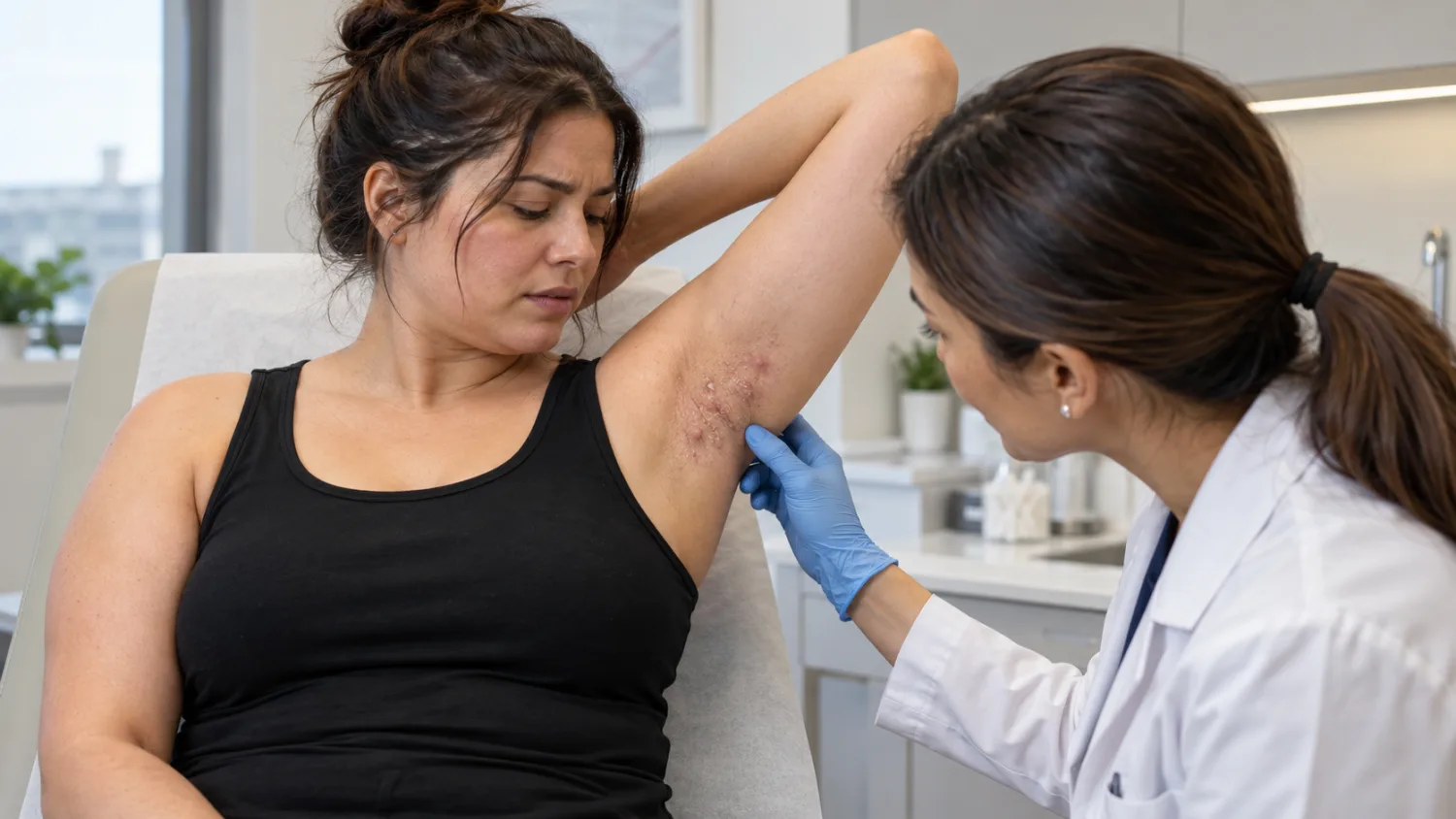
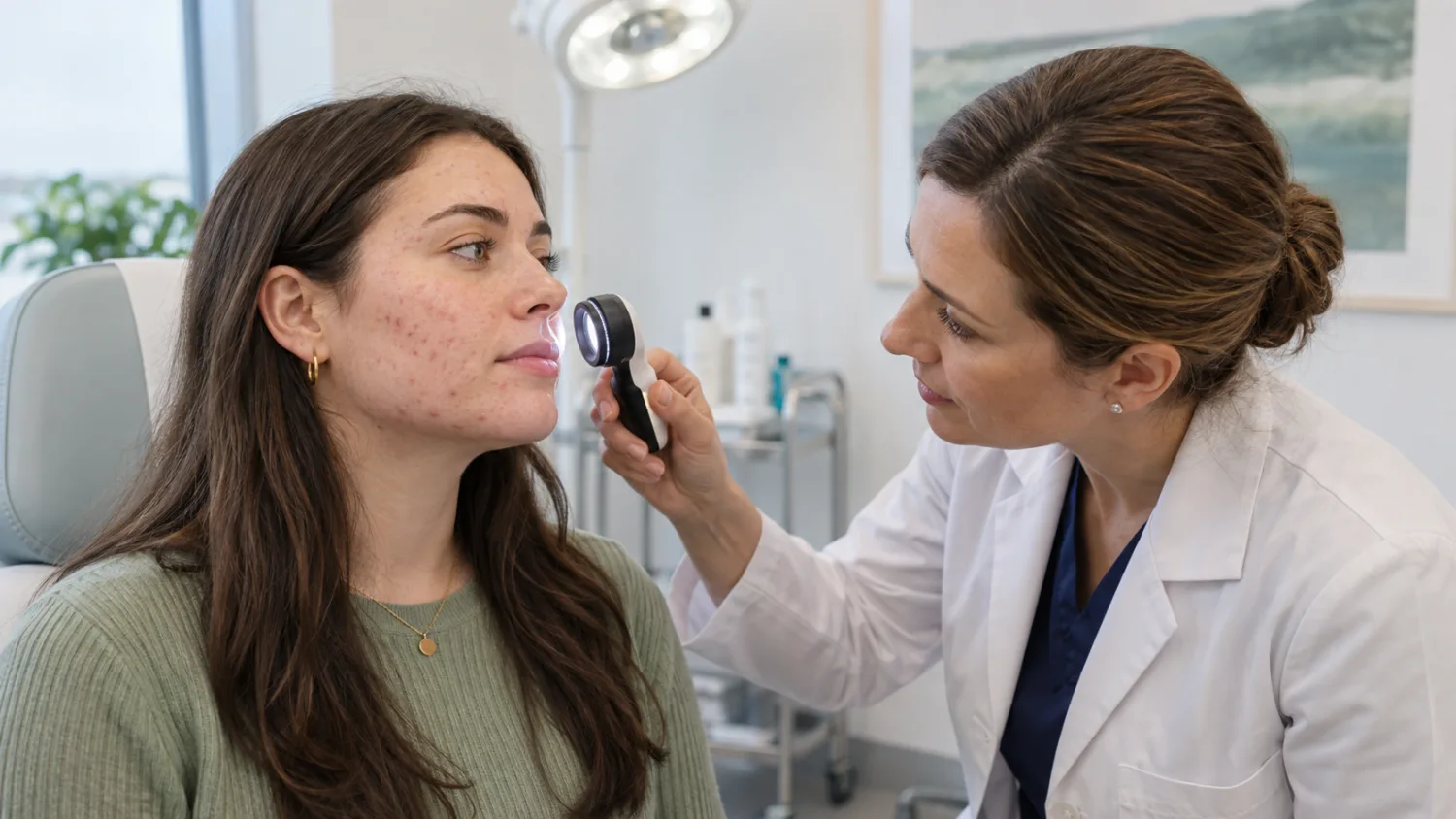
Concerns involving acne, rashes, pigmentation, hair loss, moles or unexplained skin lesions may require medical diagnosis before cosmetic treatment.
For example, persistent facial redness could be rosacea, irritation, sun damage or another inflammatory condition. Treating it with an unsuitable peel or laser may aggravate the problem.
A changing mole should not be destroyed cosmetically without appropriate assessment. If the practitioner cannot confidently identify a lesion or concern, they should refer you to a suitably qualified clinician.
Alternatives
You should hear about reasonable alternatives, including doing nothing. A clinic should not present its own machine, injectable or signature package as the only possible solution.
For acne scarring, alternatives might include microneedling, laser resurfacing, subcision, chemical techniques or combination treatment, depending on the scar type. For facial volume concerns, options may include no treatment, skincare, filler, fat transfer or surgery, each with different risks and longevity.
Risks and limitations
The discussion should cover common temporary effects, less common complications and rare but serious outcomes. It should also explain what the procedure cannot achieve.
Be suspicious of phrases such as “completely safe”, “risk-free”, “no downtime”, “permanent solution” or “guaranteed result”. Even familiar procedures have limitations and individual outcomes vary.
Products, prescriptions and devices: what you should know
You have a right to know what will be injected into your body or used on your skin.
Ask for the name of the product, manufacturer and intended purpose. For injectables, the clinic should maintain records such as product details and batch numbers. Packaging should be intact, appropriately stored and opened or prepared according to safe practice.
Do not accept treatment with an unnamed product, a syringe prepared out of sight without explanation, or a substance described only as a “premium filler”, “fat dissolver” or “skin booster”.
Botulinum toxin and prescribing
Botulinum toxin products used for aesthetic treatment are prescription-only medicines in the UK. A suitable prescriber must assess whether the medicine is appropriate for the individual patient.
Ask:
- who the prescriber is;
- what professional registration they hold;
- whether they personally assessed you;
- which product is being prescribed;
- who will administer it; and
- who is clinically responsible if a problem develops.
Be wary of toxin treatment organised entirely through messages, group events or brief remote contact without a meaningful individual assessment.
Dermal fillers
Fillers are not all equivalent. They vary in composition, consistency, duration and intended treatment area. Some are temporary and can potentially be dissolved; others are difficult or impossible to reverse.
Ask whether the product is temporary, semi-permanent or permanent and why it is suitable for the proposed location.
The practitioner should be able to explain vascular occlusion—the blockage or compression of a blood vessel—and the signs that require urgent action. Where hyaluronic acid filler is used, ask whether the clinic has immediate access to hyaluronidase and a written emergency protocol.
Having hyaluronidase available does not make filler risk-free. It does, however, indicate that the practitioner has considered one important part of complication management.
Lasers and energy-based devices
Ask for the exact name and type of device, what it is intended to treat and whether it is suitable for your skin tone.
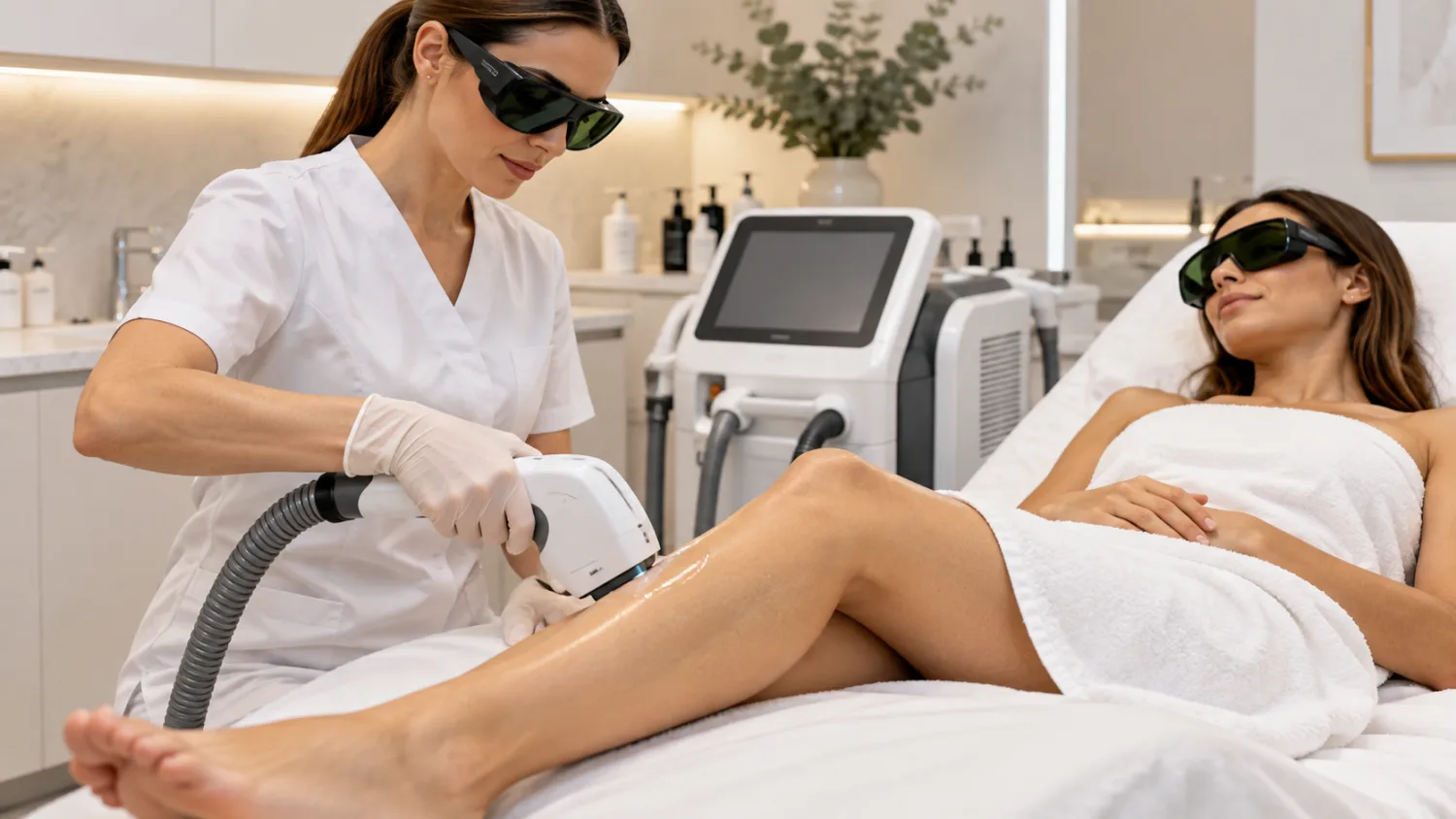
Different lasers target different structures. A device effective for hair reduction may not be appropriate for pigmentation or resurfacing. Incorrect settings or poor patient selection can cause burns, scarring, loss of pigment or darkening of the skin.
A patch test may be appropriate before some treatments, but it does not eliminate risk. Safe treatment still depends on diagnosis, device maintenance, correct settings, eye protection and aftercare.
Unlicensed or off-label use
Medicines and products are sometimes used outside the exact terms of their marketing authorisation. This is known as off-label use and can be a legitimate part of medical practice when supported by evidence and professional judgement.
The practitioner should explain when a proposed use is off-label, why they recommend it, what evidence supports it and whether reasonable alternatives exist.
Off-label use should not be confused with using an unknown, counterfeit or unauthorised product.
Clinic hygiene, premises and emergency preparation
The treatment environment should suit the procedure being performed. A clinic does not need to resemble a hospital, but invasive treatments require proper infection control, lighting, surfaces, handwashing arrangements, sharps disposal and emergency preparation.
Look for:
- a clean, uncluttered treatment area;
- handwashing or appropriate hand-hygiene facilities;
- single-use needles and other disposable items opened appropriately;
- safe sharps containers;
- cleanable treatment surfaces;
- proper storage of medicines and products;
- personal protective equipment where required;
- privacy for consultation and treatment;
- secure patient records; and
- access to suitable emergency equipment.
Treatment in a home, salon, hotel or temporary venue is not automatically unsafe, but the location should still support appropriate hygiene, privacy, product storage and emergency response.
Injectable treatments at parties or events deserve particular caution. Alcohol, social pressure, poor lighting, limited privacy and inadequate follow-up arrangements are incompatible with careful medical decision-making.
Ask what happens in an emergency
The answer should be more specific than “call us if you are worried”.
Ask:
- what complications are most important for this procedure;
- how staff recognise them;
- which emergency medicines and equipment are available;
- who provides clinical help outside normal hours;
- whether the treating practitioner can see you urgently;
- which hospital or specialist service would be contacted; and
- what you should do if the clinic cannot be reached.
A practitioner who performs filler should have a clear protocol for suspected vascular compromise. A clinic using lasers or strong peels should be prepared to assess burns, infection and pigmentary complications.
Emergency preparation is not evidence that a clinic expects things to go wrong. It is evidence that it takes known risks seriously.
Insurance, consent, records and aftercare
Ask whether the practitioner carries current professional indemnity insurance covering the exact procedure and premises. Public liability insurance is not necessarily the same as clinical negligence or treatment-specific cover.
It may not be practical for a clinic to provide you with an entire insurance policy, but it should be willing to confirm the insurer, type of cover and whether your treatment is included.
Informed consent
Consent is more than signing a form. You should understand:
- what will be done;
- the product, technique or device involved;
- the likely benefits;
- common side effects;
- material and serious risks;
- reasonable alternatives;
- expected recovery;
- maintenance requirements;
- the total cost; and
- what happens if you are dissatisfied or experience a complication.
You should have an opportunity to ask questions and enough time to make a voluntary decision. The practitioner should not minimise risks simply because they occur infrequently.
Cooling-off time
A good clinic should not pressure you to undergo an elective treatment immediately because an appointment is available or a discount expires that day.
Cooling-off time is especially important for surgery, permanent treatments, high-risk procedures and decisions made while distressed or uncertain.
For a minor, familiar treatment, some patients may reasonably choose same-day treatment after a proper consultation. However, the clinic should not make delay financially punitive or imply that reflection demonstrates a lack of commitment.
Clinical records and photographs
The clinic should keep an accurate record of your consultation, consent, treatment plan, products, batch details, injection sites or device settings and aftercare advice.
Clinical photographs may help document treatment planning and results. The clinic should explain how images will be stored and whether consent for clinical records is separate from consent to use photographs in marketing.
You should be able to refuse promotional use without losing access to treatment.
Aftercare
Written aftercare should explain what is normal, what to avoid, when improvement is expected and which symptoms need urgent review.
Ask whether follow-up is included and whether you will see the original practitioner if something goes wrong. Clinics that rely entirely on reception staff, social-media messaging or generic email replies may be poorly prepared for clinical problems.
Prices, deposits and packages
The cheapest clinic is not necessarily unsafe, and the most expensive is not necessarily excellent. Price should be assessed in the context of practitioner experience, products, facilities, consultation, aftercare and complication support.
Ask for a written breakdown covering:
- consultation fees;
- the procedure itself;
- prescription or product costs;
- follow-up appointments;
- planned top-ups;
- maintenance treatment;
- anaesthesia or facility fees;
- tests or pathology;
- aftercare products; and
- the cost of treating complications or revising the result.
Clarify whether a deposit is refundable and what happens if the practitioner decides you are unsuitable. Read cancellation and rescheduling terms before paying.
Discounts and limited-time offers
Discounts are not automatically unethical, but they can create pressure to make a medical or personal decision quickly.
Be careful with:
- countdown offers;
- same-day consultation discounts;
- “bring a friend” injectable deals;
- free extra treatment areas;
- packages created before you have been assessed;
- prizes involving prescription or invasive treatments; and
- finance presented before risks and alternatives are discussed.
A treatment should be chosen because it is appropriate, not because unused appointments need to be filled.
Treatment packages
A course of treatment can be reasonable where several sessions are normally required. However, avoid paying for a long course before knowing how your skin responds.
Ask what happens if you experience a reaction, achieve the desired result early, become medically unsuitable or decide not to continue.
Red flags that should make you pause or walk away
One concern may have an innocent explanation, but several warning signs together should prompt serious caution.
The practitioner cannot be clearly identified
Do not proceed when a clinic will not provide the treating practitioner’s full name, professional background or registration details.
You only meet a salesperson
A coordinator can discuss appointments and administration, but clinical suitability should be assessed by an appropriately qualified practitioner. For surgery, you should meet the surgeon who will operate on you.
The consultation focuses on your flaws
A practitioner should not invent insecurities, criticise unrelated features or recommend a growing list of procedures to make you look “balanced”, “younger” or “more feminine”.
Risks are dismissed
Claims that a treatment is harmless, completely reversible or incapable of producing serious complications demonstrate either poor knowledge or poor communication.
There is pressure to decide immediately
Walk away when you are told the price is available only if you pay immediately, the practitioner has a rare cancellation, or delay will allow your appearance to become significantly worse.
The product is unclear
Do not accept an injectable or topical substance when the clinic will not identify the product, source and purpose.
The clinic promises guaranteed or permanent results
Biology varies. Ethical practitioners discuss likely ranges of improvement rather than guaranteeing a precise result.
There is no complication plan
“Go to A&E” should not be the clinic’s entire strategy for predictable treatment complications. Emergency services may be necessary, but the treating provider should also understand its own responsibilities.
Reviews appear unnatural
Be cautious when reviews are repetitive, vague, posted in clusters or focus entirely on staff friendliness without describing treatment or follow-up. Look at several platforms and pay attention to how the clinic responds to criticism.
Before-and-after images are inconsistent
Different lighting, makeup, head position and facial expression can exaggerate changes. Look for consistent photographs and longer-term outcomes rather than immediate post-treatment swelling.
The clinic discourages second opinions
A confident practitioner should not object to you seeking another professional view, particularly before surgery or an irreversible treatment.
Questions to ask before agreeing to treatment
You do not need to interrogate the practitioner or ask every possible question. Focus on the issues most relevant to the procedure.
Questions about the practitioner
- What is your full name and professional registration?
- What training have you completed for this procedure?
- How often do you perform it?
- How many years have you offered this treatment?
- Do you treat patients with my skin tone, age or medical history regularly?
- Who supervises or supports you if a complex problem develops?
Questions about suitability
- What do you think is causing my concern?
- Am I a suitable candidate?
- Are there medical conditions or medicines that increase my risk?
- Would another treatment be safer or more effective?
- What would happen if I chose no treatment?
- Why might you refuse to treat me?
Questions about results
- What degree of improvement is realistic?
- How long will the result take to appear?
- How long is it likely to last?
- How many sessions might I need?
- Will maintenance be required?
- Can I see consistent examples involving patients with similar concerns?
Questions about risk
- What are the most common side effects?
- What are the rare but serious complications?
- Which warning symptoms require urgent help?
- How many complications have you personally managed?
- What emergency medicines or equipment do you keep?
- Who will assess me if a problem develops outside normal hours?
Questions about the product or device
- What exact product or device will you use?
- Why is it appropriate for this purpose?
- Is the proposed use licensed or off-label?
- Is the product temporary, reversible or permanent?
- Will the product and batch details be recorded?
- How is the equipment maintained and tested?
Questions about cost and aftercare
- What is the full expected cost?
- Is follow-up included?
- Are top-ups included or charged separately?
- Who pays for treatment if a complication occurs?
- What is the cancellation and refund policy?
- What happens if you decide I am unsuitable after I have paid a deposit?
A competent practitioner should answer clearly without becoming defensive. They may not be able to promise a precise outcome, but they should be transparent about uncertainty.
What to do if something goes wrong
Contact the clinic promptly if you experience an unexpected or worsening reaction. Describe the symptoms clearly, when they began and whether they are changing. Photographs may help, but they should not replace examination where a serious complication is possible.
Ask to speak with the treating practitioner or another qualified clinician rather than relying only on non-clinical reception advice.
Seek urgent medical help for symptoms such as:
- breathing difficulty or swelling of the mouth or throat;
- fainting or signs of a severe allergic reaction;
- visual disturbance, eye pain or loss of vision;
- severe or increasing pain after filler;
- pale, mottled, blue-grey or darkening skin;
- weakness, facial drooping or difficulty speaking;
- rapidly spreading redness or swelling;
- fever with worsening local symptoms;
- extensive blistering or skin peeling; or
- heavy bleeding or wound separation after surgery.
Call 999 for a life-threatening emergency. NHS 111 can advise when urgent medical assessment is needed but the situation is not immediately life-threatening.
Document the problem
Keep copies of:
- consultation and consent documents;
- receipts and payment records;
- product information;
- aftercare instructions;
- messages and emails;
- dated photographs; and
- medical reports or prescriptions.
Ask the clinic for a copy of your clinical records where necessary.
Making a complaint
Start with the clinic’s written complaints process unless urgent safety concerns require immediate escalation.
Depending on the issue, you may also be able to contact:
- the practitioner’s statutory professional regulator;
- the relevant healthcare regulator for the UK nation;
- the local authority;
- Trading Standards;
- the Advertising Standards Authority;
- the practitioner’s insurer;
- a voluntary register or professional body; or
- an independent legal adviser.
The correct route depends on whether the concern involves professional conduct, unsafe premises, misleading advertising, defective products, negligent treatment or poor customer service.
A poor cosmetic result is not automatically evidence of negligence. However, inadequate consent, inappropriate treatment, substandard technique, failure to recognise complications or lack of reasonable aftercare may justify formal investigation.
Frequently asked questions
Is it safer to choose a doctor for every aesthetic treatment?
A medical degree provides broad clinical training, but it does not automatically make every doctor skilled in every aesthetic procedure. Check procedure-specific education, current experience, insurance and complication management. The risk and complexity of the treatment should influence the level of expertise you seek.
Can nurses prescribe Botox?
Botulinum toxin is a prescription-only medicine. A nurse who holds an appropriate independent prescribing qualification may prescribe within their competence. A non-prescribing nurse must work with an authorised prescriber who properly assesses the patient and takes responsibility for the prescription.
Are dermal fillers regulated like prescription medicines?
No. Dermal fillers and prescription medicines do not have identical legal classifications or regulatory pathways. This is one reason patients should check the product, practitioner and complication arrangements carefully rather than assuming that every available filler has been assessed in the same way as a medicine.
Does CQC registration prove that an aesthetic clinic is safe?
CQC registration can provide important information about regulated services in England, but it is not a universal quality certificate for everything a clinic offers. Check the exact provider, premises, regulated activities and inspection findings, as well as the individual practitioner.
Should I avoid clinics that are not CQC registered?
Not every non-surgical aesthetic service is legally required to register with the CQC. A lack of registration does not automatically prove illegal or unsafe practice. However, you should establish what regulation applies, why registration is not required and what alternative safeguards are in place.
Is a Level 7 aesthetics qualification essential?
A relevant advanced qualification can be useful evidence of education, but no single certificate should decide the issue. Check the awarding body, practical assessment, practitioner’s original professional background, current experience and ability to manage emergencies.
Can I have treatment on the day of my consultation?
For some lower-risk, familiar procedures, same-day treatment may be reasonable after a proper assessment and informed decision. You should never feel pressured. Surgery, permanent procedures and major or high-risk treatments deserve adequate cooling-off time.
Should my filler practitioner keep hyaluronidase?
A practitioner injecting hyaluronic acid filler should understand the role, limitations and risks of hyaluronidase and have a credible plan for obtaining and administering it urgently when clinically indicated. Ask directly about the clinic’s vascular-occlusion protocol.
Are aesthetic treatments at home unsafe?
The address alone does not determine safety. However, the premises must still support hygiene, privacy, correct storage, sharps disposal, documentation and emergency care. Informal social settings and mobile treatment arrangements can make these standards harder to maintain.
Can I trust a clinic with thousands of five-star reviews?
Reviews are one source of information, not proof of competence. Verify the practitioner’s registration and training, examine the consultation and aftercare arrangements, and read critical reviews as well as positive ones.
What should I do if a practitioner refuses to tell me which product they use?
Do not proceed. You should know what substance or device is being used, why it has been selected and whether the clinic will record identifying details such as the brand and batch number.
How can I tell whether before-and-after photographs are genuine?
Look for consistent lighting, position, expression, camera distance and timing. Ask when the after photograph was taken and whether the images show the practitioner’s own patients. Even genuine photographs cannot guarantee your result.
What is the biggest warning sign when choosing a clinic?
The most concerning pattern is a clinic that combines poor clinical assessment with pressure to buy: little medical history, vague practitioner credentials, minimal discussion of risk, unclear products and an urgent discount. A safe clinic should make it easy to slow down, ask questions and walk away.
What is the safest way to make a final decision?
Verify the practitioner independently, attend a consultation with the person providing the treatment, obtain written information, understand the full cost and complication plan, and allow yourself time to reflect. When something feels unclear or pressured, seek a second opinion before proceeding.