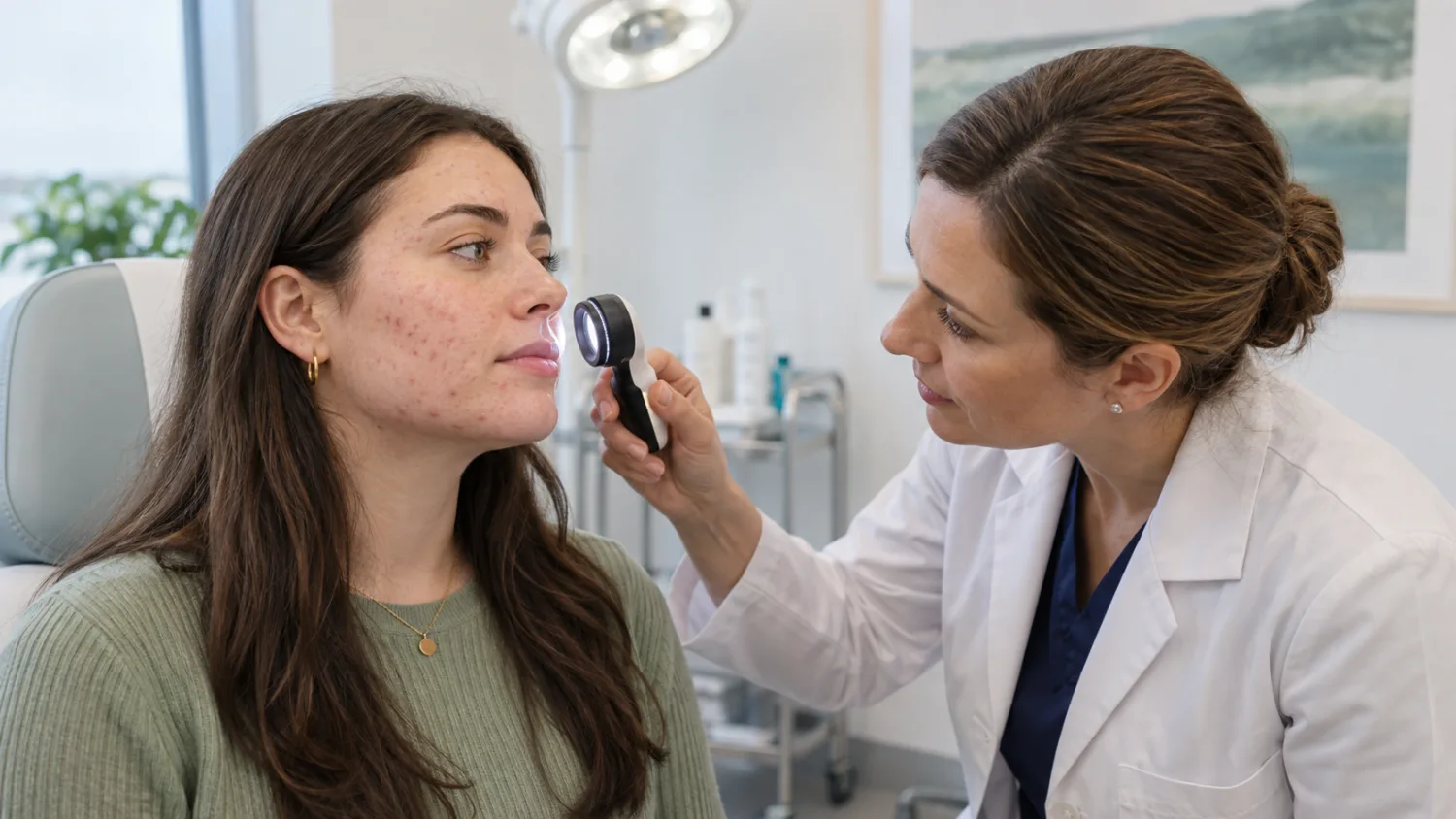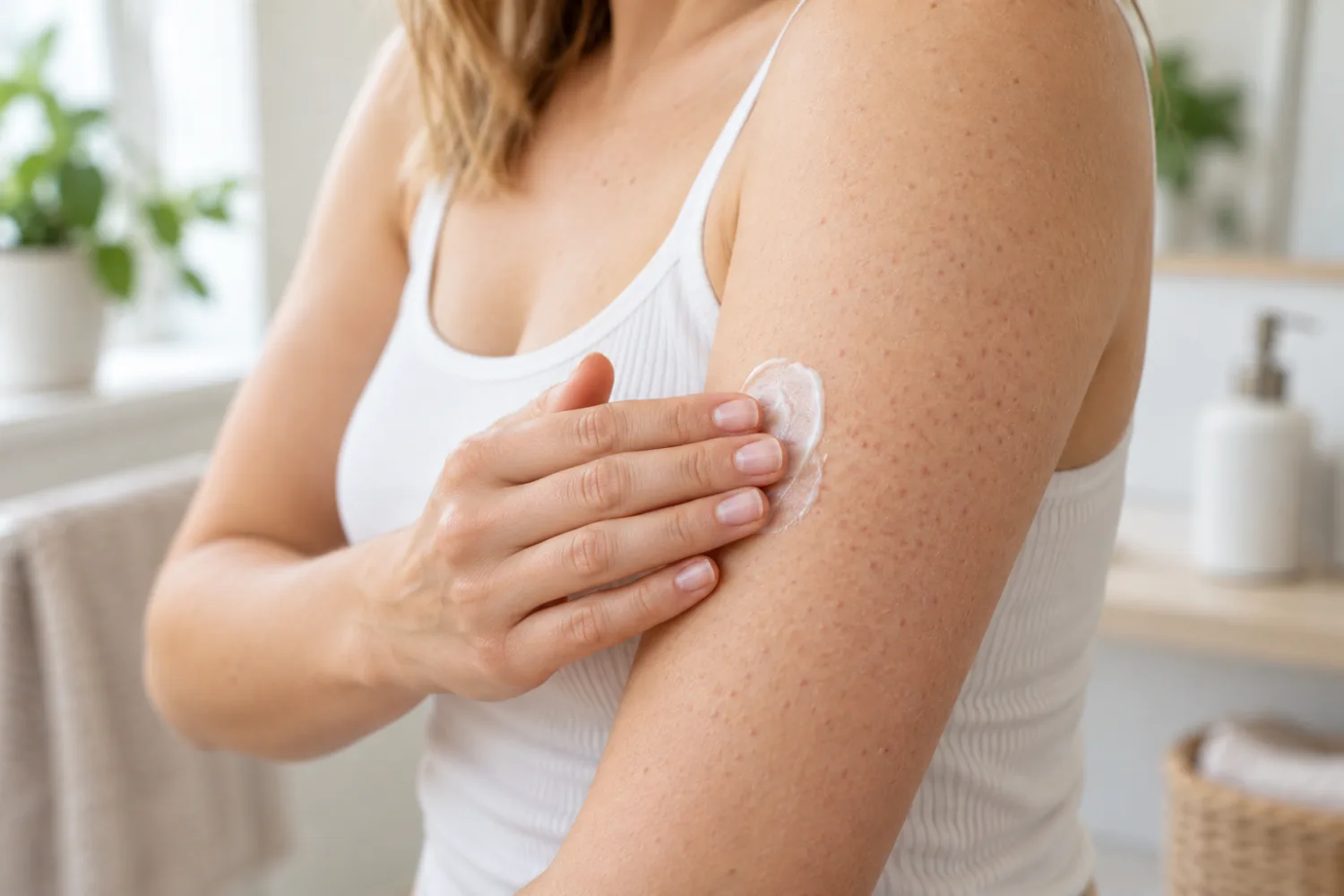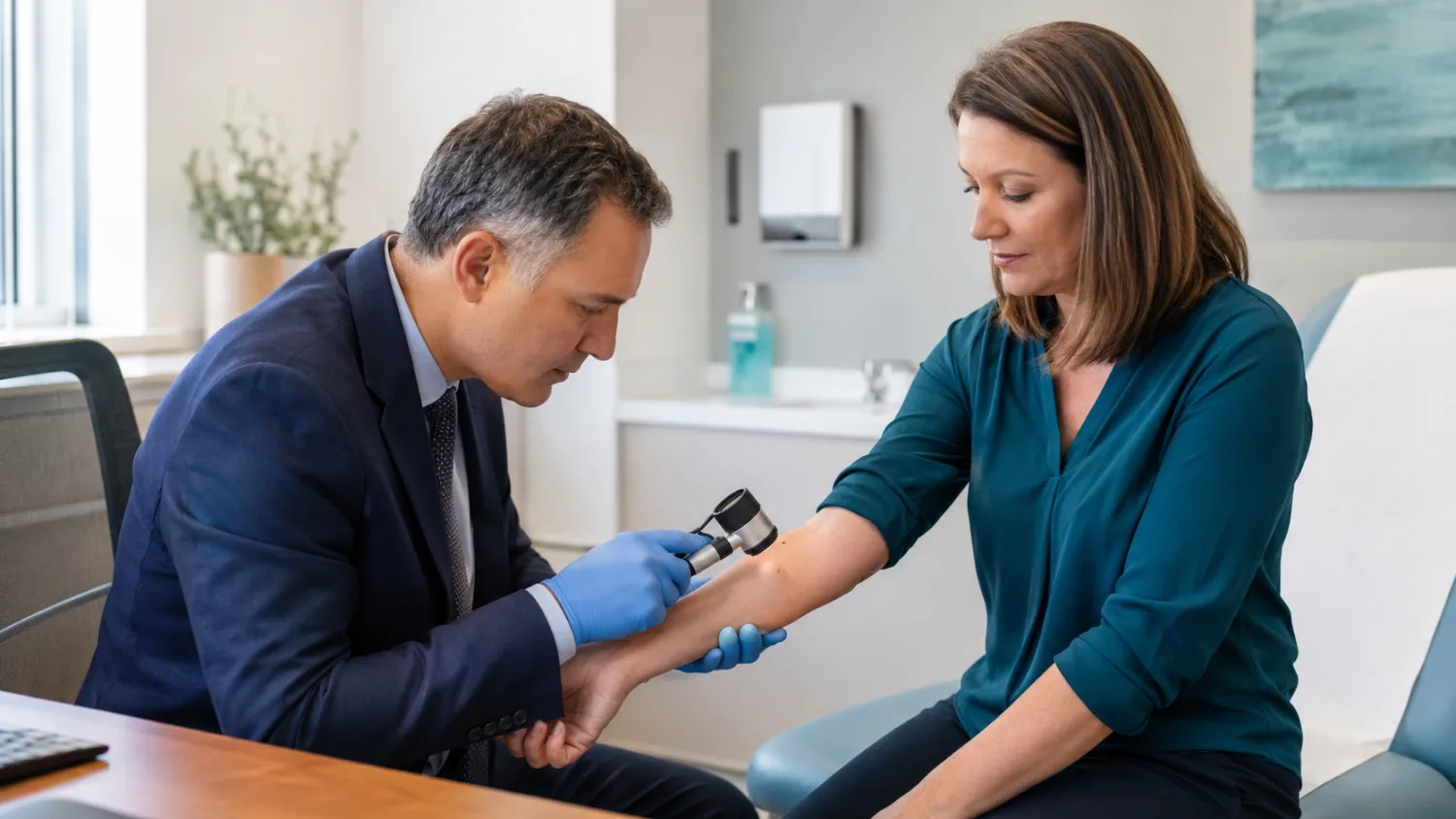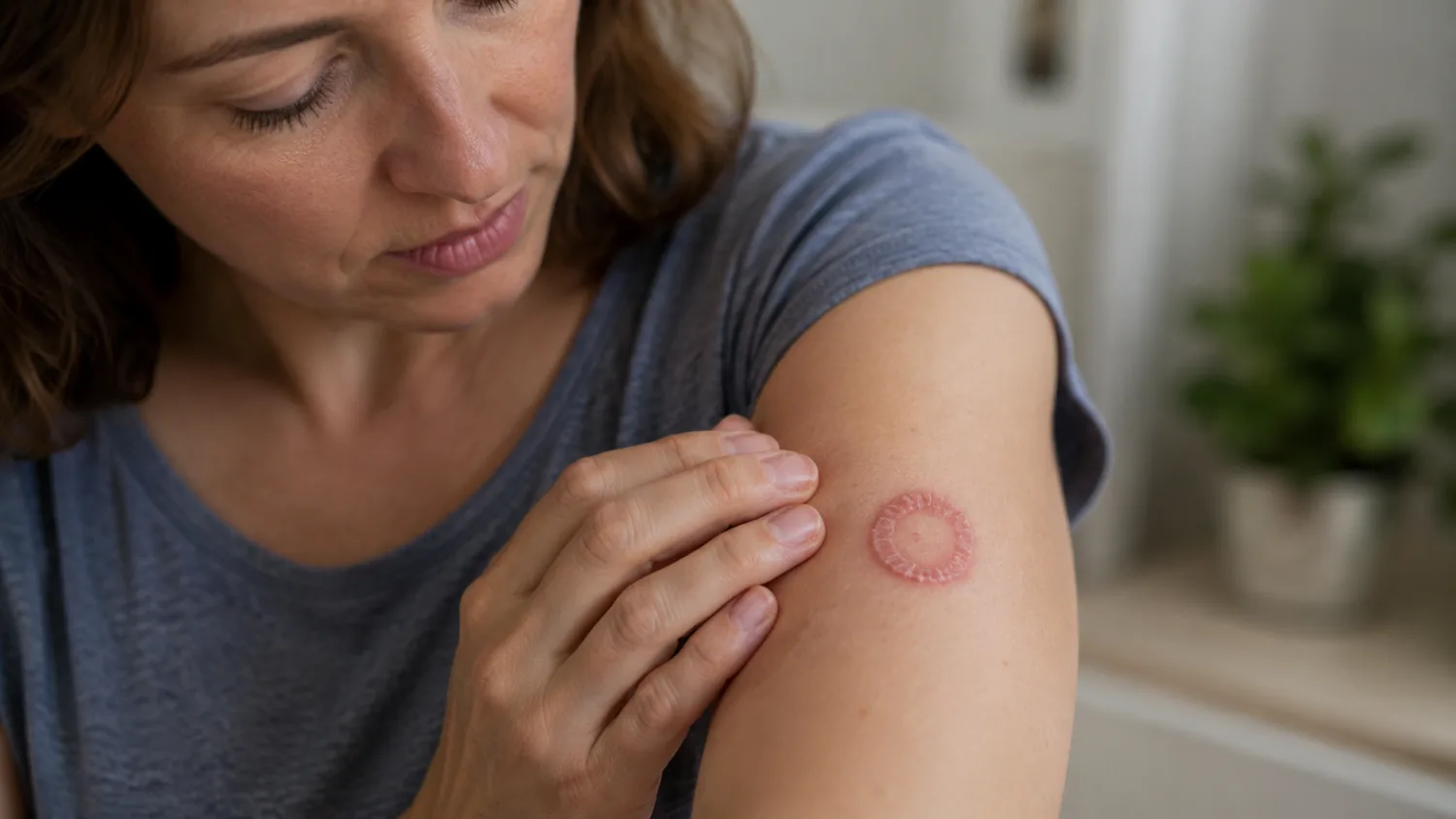
Ringworm is one of those conditions with a misleading name. It sounds like a parasite, but it is not caused by a worm. Ringworm is a common fungal skin infection. It can affect the body, scalp, feet, groin, beard area and nails, and it can spread between people, animals and shared surfaces.
For many people, ringworm is mild and can be treated with antifungal medicine from a pharmacy. But some types need prescription treatment, especially ringworm on the scalp, beard area or nails. It is also important to recognise when a rash may not be ringworm at all, because eczema, psoriasis, allergic rashes, bacterial infections and other skin conditions can sometimes look similar.
This guide explains what ringworm is, what it looks like, how it spreads, how to treat it, when to see a pharmacist or GP, how to stop it coming back, and what to do if pets or family members may be involved.
Quick answer: Ringworm is a contagious fungal infection of the skin, hair or nails. It often causes a scaly, itchy, ring-shaped rash. Mild body ringworm can often be treated with antifungal cream from a pharmacy, but scalp, beard and nail infections usually need GP advice and prescription treatment.
What is ringworm?
Ringworm is a skin infection caused by fungi known as dermatophytes. These fungi live on keratin, a protein found in the outer layer of the skin, hair and nails. The medical name for ringworm is tinea, followed by the body area affected.
Despite the name, there is no worm under the skin. The name “ringworm” comes from the way the rash can form a circular or ring-like shape, often with a clearer centre and a scaly, raised edge.
The NHS describes ringworm as a common fungal infection that can appear anywhere on the body, including the scalp and groin. The rash may be red or darker than the surrounding skin, depending on skin tone, and may be scaly, dry, swollen or itchy. You can read the NHS guide to ringworm.
Different names for ringworm
Ringworm has different names depending on where it appears. This can be confusing, because athlete’s foot and jock itch are both types of tinea infection.
- Tinea corporis: ringworm on the body
- Tinea capitis: ringworm on the scalp
- Tinea pedis: athlete’s foot
- Tinea cruris: jock itch or groin ringworm
- Tinea unguium: fungal nail infection
- Tinea faciei: ringworm on the face
- Tinea barbae: ringworm in the beard area
- Tinea manuum: ringworm on the hand
These infections are related, but they do not always look the same. Scalp ringworm can cause hair loss. Athlete’s foot may cause peeling and cracking between the toes. Nail infection can cause thickened, discoloured, brittle nails.
What does ringworm look like?
Classic ringworm on the body often looks like a circular or oval patch of irritated skin. The outer edge may be more raised, scaly or inflamed than the centre. As the rash spreads outward, the middle may look clearer, creating the ring-like appearance.
Ringworm may look different depending on your skin tone. On lighter skin, it may appear red or pink. On brown or black skin, it may look darker, grey-brown, purple, reddish-brown or more subtle than online images suggest.
Common features include:
- a round or ring-shaped rash
- a scaly, raised or flaky edge
- itching
- dry or cracked skin
- spreading patches
- one patch or several patches
- temporary darker or lighter skin after healing
Not every ringworm rash forms a perfect ring. Some patches are irregular, especially if they have been scratched, treated with steroid cream, infected with bacteria, or partly treated with antifungal medicine.
Is ringworm itchy?
Ringworm is often itchy, but not always. Some people have mild irritation rather than intense itching. Others have very itchy, inflamed patches, especially in warm, sweaty areas such as the groin, feet or skin folds.
Itching can make ringworm spread because scratching can move fungal spores to other areas of skin or under the nails. Scratching can also break the skin and increase the risk of bacterial infection.
How does ringworm spread?
Ringworm spreads through contact with fungal spores. These spores can live on skin, hair, clothing, towels, bedding, floors, gym mats, combs, brushes, hats and pet fur.
You can catch ringworm from:
- skin-to-skin contact with someone who has ringworm
- sharing towels, bedding, clothes, hats or hairbrushes
- walking barefoot in communal changing rooms, showers or pool areas
- contact with infected pets, especially cats, dogs, rabbits or guinea pigs
- touching contaminated surfaces
- spreading it from one part of your own body to another
NHS Inform describes tinea infections as contagious and easily spread, although they are usually not serious and are often treatable. You can read their overview of ringworm and other fungal infections.
Who is more likely to get ringworm?
Anyone can get ringworm, but some situations make it more likely. Fungi grow well in warm, moist environments, which is why feet, groin and sweaty skin folds are common sites.
Risk factors include:
- close contact sports, such as wrestling, rugby or martial arts
- sharing towels, bedding or sports equipment
- wearing tight, sweaty clothing
- walking barefoot in communal changing rooms
- having athlete’s foot or fungal nail infection
- living in a household where someone has ringworm
- contact with infected pets
- diabetes
- a weakened immune system
- eczema or broken skin
- working with animals
If ringworm keeps coming back, it is worth thinking about hidden sources such as untreated athlete’s foot, fungal nails, pets, shared towels, gym mats or household contacts.
Ringworm on the body
Ringworm on the body usually causes one or more itchy, scaly patches. These may slowly enlarge and form rings. It commonly affects the arms, legs, trunk or face, but can appear almost anywhere.
Mild body ringworm can often be treated with antifungal cream, gel or spray from a pharmacy. The NHS says a pharmacist can help with ringworm and may recommend antifungal medicine. It is important to use the treatment as instructed, even if the rash starts to look better before the course is finished.
See a GP if the rash is widespread, on the face, not improving after pharmacy treatment, very inflamed, painful, or if you have a weakened immune system.
Scalp ringworm
Scalp ringworm, or tinea capitis, is more common in children than adults. It can cause scaly patches, itching, broken hairs, bald patches, black dots where hairs have snapped, or tender swelling. Sometimes it causes a painful, boggy, inflamed area called a kerion.
Scalp ringworm usually needs prescription antifungal tablets or liquid. Creams alone usually do not clear it because the fungus affects the hair shafts and follicles. A medicated shampoo may be used as well to reduce spread, but it is not usually enough on its own.
Children with suspected scalp ringworm should be assessed by a GP. Close contacts may also need checking, and combs, hats, pillows and hair accessories should not be shared.
Ringworm on the face
Ringworm on the face can be harder to recognise because it may not form a neat ring. It can look like eczema, rosacea, contact dermatitis or another facial rash. It may be itchy, scaly or sensitive, and it may worsen after using steroid creams.
Because facial skin is delicate and the diagnosis can be less obvious, it is sensible to ask a pharmacist or GP before treating a facial rash. Do not use steroid creams on the face unless advised by a healthcare professional.
If you have ongoing facial redness or irritation, you may also find our guides to rosacea and eczema and psoriasis useful.
Beard ringworm
Ringworm in the beard area, or tinea barbae, can affect the chin, jawline, upper lip or neck. It may cause red, scaly patches, pustules, crusting, swelling, itching, tenderness or hair loss in the beard area.
It can sometimes be caught from animals, particularly farm animals, but other sources are possible. Beard ringworm usually needs GP assessment and often prescription antifungal tablets. It can be mistaken for bacterial folliculitis, acne or shaving rash.
If you have a painful, swollen or pus-filled rash in the beard area, do not keep shaving over it. Seek medical advice.
Athlete’s foot
Athlete’s foot is ringworm of the feet. It often starts between the toes, especially between the fourth and fifth toes. The skin may become itchy, white, soggy, cracked, peeling, red or sore. It can also affect the soles and sides of the feet with dry, flaky skin.
Athlete’s foot is common in people who wear sweaty shoes, use communal changing rooms, or do sport. It can spread to the toenails and to other body areas, including the groin, if spores are transferred on towels or hands.
Antifungal creams, sprays or powders from a pharmacy usually help. Keeping feet dry, changing socks daily, using breathable footwear and avoiding shared towels reduces spread. NHS podiatry information notes that athlete’s foot can lead to intense itching, cracked, blistered or peeling skin, redness and scaling.
Jock itch or groin ringworm
Jock itch, or tinea cruris, affects the groin, inner thighs and buttock crease. It is more common in people who sweat heavily, wear tight clothing, play sport, have athlete’s foot or are overweight.
It usually causes an itchy, red, brown or darker scaly rash around the groin. The edge may be more active and scaly. It can be uncomfortable and embarrassing, but it is common and treatable.
Antifungal cream from a pharmacy often works for mild cases. Loose underwear, drying the area well after washing, changing sweaty clothes quickly, and treating athlete’s foot at the same time can help prevent it returning.
NICE Clinical Knowledge Summaries advises topical antifungal treatment for mild, non-extensive fungal skin infection of the body or groin. It also advises that topical corticosteroid should not be used alone on suspected fungal lesions. See NICE CKS guidance on fungal skin infection of the body and groin.
Fungal nail infection
Fungal nail infection, or tinea unguium, usually affects toenails more than fingernails. The nail may become thickened, yellow, white, brown, brittle, crumbly, lifted or distorted.
Nail infections are harder to treat than skin ringworm because nails grow slowly and medicine needs to reach the infected nail. Pharmacy treatments may help some mild cases, but many fungal nail infections need GP advice, testing or prescription antifungal tablets. Treatment can take months.
A thickened nail is not always fungal. Psoriasis, injury, ageing, eczema and other conditions can also change nails. If the diagnosis is uncertain, a sample may be sent for testing before tablets are prescribed.
How is ringworm diagnosed?
Many cases are diagnosed by appearance and symptoms. A pharmacist or GP may ask where the rash is, how long it has been there, whether it itches, whether it is spreading, whether anyone else has symptoms, and whether you have pets.
Sometimes a clinician may take skin scrapings, hair samples or nail clippings to confirm the diagnosis. This is more likely if:
- the rash is not typical
- treatment has not worked
- the scalp, beard or nails are affected
- the infection is widespread
- oral antifungal tablets are being considered
- another condition may be causing the symptoms
Testing can help avoid using the wrong treatment, especially because steroid creams can temporarily reduce redness while allowing fungal infection to spread more deeply or widely.
What else can look like ringworm?
Ringworm can be confused with several skin conditions. This is one reason to seek advice if the rash is not improving.
Conditions that may look similar include:
- eczema
- psoriasis
- contact dermatitis
- pityriasis rosea
- nummular eczema
- seborrhoeic dermatitis
- impetigo
- granuloma annulare
- lupus-related rashes
- Lyme disease rash after a tick bite
A spreading circular rash after a tick bite may be a sign of Lyme disease rather than ringworm. The Lyme rash is often not scaly or itchy and can expand over days or weeks. If you have had a tick bite or possible exposure to ticks, read our guide to tick bites and Lyme disease.
If your rash is scaly, chronic or keeps returning, our guide to eczema vs psoriasis may also help you understand other possibilities.
How is ringworm treated?
Treatment depends on where the infection is and how severe it is.
For mild ringworm on the body, groin or feet, a pharmacist may recommend an antifungal cream, gel, spray or powder. Common antifungal ingredients include terbinafine, clotrimazole, miconazole and other imidazoles. NHS information on terbinafine explains that it is used for infections such as athlete’s foot, ringworm, jock itch and fungal nail infections.
For scalp, beard or nail infection, or for widespread or stubborn infection, prescription treatment may be needed. This may include oral antifungal tablets or liquid. Blood tests may be needed before or during some antifungal tablet treatments, depending on the medicine, duration and health history.
The most important treatment rule is: complete the full course. Ringworm can look better before the fungus has fully cleared. Stopping too early can allow it to return.
How long does ringworm take to clear?
Mild ringworm on the body often improves within 1 to 2 weeks of using antifungal treatment, but treatment may need to continue for longer depending on the product. Athlete’s foot and groin ringworm may also improve within a couple of weeks if treated properly and kept dry.
Scalp and nail infections take longer. Scalp ringworm often needs several weeks of prescription treatment. Fungal nail infection can take months because the nail has to grow out.
If ringworm is not improving after using pharmacy treatment as directed, or if it is spreading, see a GP.
Can you use steroid cream on ringworm?
This is an important point. Steroid creams can reduce redness and itching, but they do not kill fungus. If used alone on ringworm, they can make the infection harder to recognise and may allow it to spread. This is sometimes called tinea incognito, meaning ringworm that has been altered or masked by steroid treatment.
NICE guidance advises that topical corticosteroid should not be used alone on fungal skin lesions. In some inflamed cases, a clinician or pharmacist may advise a short course of mild steroid together with antifungal treatment, but this should be done with proper advice.
Do not keep applying steroid cream to a ring-shaped rash that is spreading or not clearing.
Can home remedies treat ringworm?
Home remedies such as tea tree oil, apple cider vinegar, garlic, coconut oil or turmeric are often discussed online. Some may have mild antifungal properties in laboratory settings, but they are not reliable first-line treatments for ringworm.
They can also irritate the skin, cause burns, trigger allergic reactions, or delay proper treatment. This is especially risky on the face, scalp, groin, children’s skin or broken skin.
The safest approach is to use proven antifungal treatment from a pharmacy or GP. You can still support recovery with good hygiene, keeping the area dry, not sharing towels and washing clothing and bedding.
When should you see a pharmacist?
A pharmacist is often a good first step for suspected mild ringworm on the body, feet or groin. They can look at the rash, suggest an antifungal product, explain how long to use it, and advise when to see a GP.
See a pharmacist if:
- you have a small, itchy, ring-shaped rash on the body
- you have athlete’s foot symptoms
- you have mild jock itch
- you are unsure which antifungal to use
- you want advice on preventing spread
Our guide to when to see a pharmacist instead of a GP explains other everyday conditions pharmacists can help with.
When should you see a GP?
Some ringworm infections need GP assessment rather than pharmacy-only treatment.
See a GP if:
- ringworm is on the scalp
- ringworm is in the beard area
- ringworm is on the face and you are unsure what it is
- the rash is spreading despite treatment
- the rash has not improved after using antifungal treatment as directed
- the infection is widespread or keeps coming back
- you have a weakened immune system
- you have diabetes and a foot infection
- the skin is very painful, swollen, hot or oozing
- a child has suspected scalp ringworm
- nails are affected
- you are pregnant and unsure what treatment is safe
If you need help arranging care, see our guide to how to get a GP appointment quickly in the UK.
When is ringworm urgent?
Ringworm is rarely an emergency. However, urgent advice is needed if the rash may be something more serious or if infection is spreading.
Seek urgent medical advice if:
- you have rapidly spreading redness, swelling, warmth or severe pain
- there is pus, red streaking or fever
- you feel very unwell
- the rash is near the eye
- there is sudden facial swelling
- a child has a painful, swollen scalp lesion
- you have a weakened immune system and the rash is spreading
Call 999 if there are severe allergic symptoms, breathing difficulty, confusion, collapse or signs of severe sepsis.
Can children go to school with ringworm?
In many cases, children with body ringworm can go to school or nursery once treatment has started, but local policies may vary. Scalp ringworm needs GP assessment and prescription treatment. Because it can spread through close contact and shared items, schools may need to be informed if there are several cases.
Children should avoid sharing hats, combs, hairbrushes, towels, bedding, PE clothing or sports headgear. Treatment should be started promptly, and instructions from the GP, pharmacist or school should be followed.
Can ringworm spread around the body?
Yes. Ringworm can spread from one area to another, especially through scratching, towels, clothing or untreated athlete’s foot. For example, fungus from the feet can spread to the groin when using the same towel or putting underwear on after touching infected feet.
To reduce spread:
- wash hands after touching the rash
- avoid scratching
- use a separate towel for the infected area
- treat athlete’s foot if present
- put socks on before underwear if you have athlete’s foot and jock itch
- wash towels, bedding and clothing regularly
- do not share personal items
Ringworm and pets
Pets can carry and spread ringworm, especially cats, dogs, rabbits and guinea pigs. Cats, particularly kittens, are a common source. An infected pet may have bald patches, scaly skin, broken hairs or crusting, but some animals can carry ringworm with subtle or no obvious signs.
If ringworm keeps coming back in a household, or if several people are affected, check pets carefully and speak to a vet. Treating only the humans while the pet remains infected can lead to repeated reinfection.
Do not use human antifungal creams or tablets on pets unless a vet tells you to. Animal treatment is different and may include topical treatment, oral medicine and environmental cleaning.
How to prevent ringworm spreading at home
Ringworm spores can survive on fabrics and surfaces, so hygiene matters. You do not need to panic-clean the whole house, but consistent practical steps help.
- Do not share towels, bedding, clothing, hats, combs or hairbrushes.
- Wash towels, bedding and clothing regularly.
- Keep the rash clean and dry.
- Wash hands after applying antifungal treatment.
- Cover the rash with loose clothing if practical.
- Change socks and underwear daily.
- Dry feet well, especially between toes.
- Wear flip-flops in communal showers or changing rooms.
- Clean sports equipment, mats and headgear.
- Check pets if infections keep returning.
For athlete’s foot, consider treating shoes with antifungal powder or spray and rotating footwear to allow shoes to dry properly.
How to stop ringworm coming back
Recurrent ringworm usually means there is an ongoing source, incomplete treatment, reinfection or an incorrect diagnosis.
Common reasons it comes back include:
- stopping antifungal treatment too early
- untreated athlete’s foot or fungal nails
- infected household contacts
- infected pets
- shared towels, bedding or sports gear
- tight, sweaty clothing
- using steroid cream without antifungal treatment
- the rash is not actually ringworm
If ringworm keeps recurring, ask a GP whether testing is needed and whether other household members or pets should be checked.
Ringworm in people with diabetes or weakened immunity
People with diabetes or weakened immunity may be more prone to fungal infections and complications. Foot infections are particularly important in diabetes, because broken skin can lead to more serious problems.
If you have diabetes and athlete’s foot, cracked skin, redness, swelling, ulcers, pain or signs of infection, seek medical advice rather than self-treating for too long.
People taking immune-suppressing medicines, chemotherapy, long-term steroids or biologic treatments should also seek advice if ringworm is spreading, severe or not improving.
Ringworm in pregnancy
Ringworm during pregnancy is usually not dangerous, but treatment choice matters. Some topical antifungals may be suitable, but you should ask a pharmacist, GP or midwife before using medicines, especially if the rash is widespread, on the scalp, or if oral antifungal tablets are being considered.
Do not use unprescribed tablets or strong steroid combinations during pregnancy.
Can ringworm cause hair loss?
Yes, scalp ringworm can cause patches of hair loss. Hairs may break close to the scalp, leaving black dots or scaly bald patches. If treated early, hair often regrows, but severe inflammation or delayed treatment can increase the risk of scarring or longer-term hair loss.
See a GP promptly for suspected scalp ringworm, especially in children. Do not rely on ordinary anti-dandruff shampoo or skin cream alone.
If hair loss is a separate concern, our guide to hair loss causes and treatments may be useful.
Can ringworm affect nails permanently?
Fungal nail infection can distort nails for a long time, but it does not always cause permanent damage. Treatment can be slow because the infected nail must grow out. Toenails can take many months to fully regrow.
Seek advice if the nail is painful, spreading to other nails, affecting walking, associated with diabetes, or if you are considering antifungal tablets.
Ringworm and sport
Ringworm can spread in close-contact sports through skin contact, shared mats, towels, protective gear and changing rooms. Wrestlers, martial artists, rugby players and gym users may be at higher risk.
If you play contact sport, avoid training or competing with uncovered, untreated ringworm. Follow your club, school or sport governing body rules. Start treatment promptly, cover lesions where appropriate, and clean shared equipment properly.
If a team has repeated cases, mats, kit, towels and changing areas may need better cleaning routines, and infected individuals may need treatment before returning to close contact.
What not to do with ringworm
Some common mistakes can make ringworm worse or keep it spreading.
- Do not use steroid cream alone on a suspected fungal rash.
- Do not stop antifungal treatment as soon as the rash looks better unless the course is complete.
- Do not share towels, clothing, hats or hairbrushes.
- Do not scratch the rash and then touch other areas.
- Do not ignore scalp, beard or nail infection.
- Do not use home remedies that burn or irritate the skin.
- Do not treat pets with human medicine without vet advice.
- Do not assume every circular rash is ringworm.
How to apply antifungal cream properly
If a pharmacist or clinician recommends antifungal cream, use it exactly as directed. Different products have different treatment lengths.
General tips:
- wash and dry the area gently before applying
- apply a thin layer to the rash and slightly beyond the edge
- wash your hands afterwards
- use it for the full recommended course
- avoid covering with tight dressings unless advised
- keep the area dry and avoid tight clothing
If the rash is worsening or not improving after using treatment correctly, ask a pharmacist or GP for advice.
Can ringworm leave marks?
After ringworm clears, the skin may temporarily look darker or lighter than the surrounding area. This is more noticeable in darker skin tones and after inflammation or scratching. These marks often fade gradually over weeks or months.
To reduce the chance of marks, avoid scratching, treat early, avoid irritating home remedies, and protect healing skin from sun exposure. Seek advice if the area remains inflamed, painful or scaly.
Final thoughts
Ringworm is common, contagious and usually treatable. It is caused by fungus, not worms, and it can affect the skin, scalp, feet, groin, beard area and nails.
Mild ringworm on the body, feet or groin can often be managed with antifungal treatment from a pharmacy. But scalp, beard and nail infections usually need GP advice. You should also seek help if the rash is spreading, painful, very inflamed, recurrent, not improving, or if you have diabetes or a weakened immune system.
The key to clearing ringworm is using the right antifungal treatment for long enough, avoiding steroid cream alone, preventing spread through towels and clothing, treating athlete’s foot or fungal nails if present, and checking pets or household contacts if infections keep returning.
For official advice, see the NHS guide to ringworm, NHS Inform’s guide to ringworm and other fungal infections, and NICE CKS guidance on fungal skin infection of the body and groin.
This article is for general information only and should not replace medical advice. If you are worried about a rash, symptoms are worsening, or treatment is not working, speak to a pharmacist, GP or NHS 111.
Frequently asked questions
Is ringworm actually a worm?
No. Ringworm is not caused by a worm. It is a fungal infection of the skin, hair or nails. The name comes from the circular, ring-like rash it can cause.
What does ringworm look like?
Ringworm often looks like a round or ring-shaped scaly rash with a more active edge and a clearer centre. It may be red, pink, brown, grey, purple or darker than the surrounding skin depending on skin tone. It can be itchy, dry, flaky or slightly raised.
How do you catch ringworm?
You can catch ringworm through skin contact with an infected person or animal, or by touching contaminated towels, bedding, clothing, floors, hairbrushes, hats, gym mats or sports equipment. It can also spread from one part of your own body to another.
Is ringworm contagious?
Yes. Ringworm is contagious and can spread through direct contact or shared items. Treatment, good hygiene, not sharing towels, and washing clothing and bedding can reduce the risk of spreading it.
Can I treat ringworm at home?
Mild ringworm on the body, feet or groin can often be treated with antifungal cream, gel or spray from a pharmacy. However, scalp, beard and nail ringworm usually need GP advice and may need prescription antifungal tablets.
What is the best treatment for ringworm?
The best treatment depends on where the infection is. Mild body ringworm often responds to pharmacy antifungal creams such as terbinafine or clotrimazole. Scalp, beard or nail infections often need prescription oral antifungal treatment.
How long does ringworm take to go away?
Mild skin ringworm often starts improving within 1 to 2 weeks of antifungal treatment, but you must complete the full course. Scalp and nail infections take longer and usually need prescription treatment.
Can steroid cream make ringworm worse?
Yes. Steroid cream used alone can reduce redness and itching while allowing the fungus to spread or become harder to recognise. Do not use steroid cream on suspected ringworm unless a pharmacist or doctor advises it, usually alongside antifungal treatment.
Can pets give humans ringworm?
Yes. Cats, dogs, rabbits and guinea pigs can carry ringworm and spread it to humans. If infections keep returning in your household, or your pet has bald or scaly patches, speak to a vet.
Does ringworm go away without treatment?
It may eventually improve, but it can last a long time and spread to other people or other body areas. Antifungal treatment usually clears it faster and reduces spread.
Can ringworm affect the scalp?
Yes. Scalp ringworm can cause itching, scaling, broken hairs and patches of hair loss. It is more common in children and usually needs prescription antifungal medicine from a GP.
Can ringworm cause hair loss?
Scalp ringworm can cause temporary hair loss and broken hairs. Hair often regrows after treatment, but severe inflammation or delayed treatment can increase the risk of scarring or longer-term hair loss.
Can I go to work or school with ringworm?
Many people can continue work or school once treatment has started, but they should avoid close skin contact, sharing towels, hats, hairbrushes or sports equipment. Scalp ringworm in children should be assessed by a GP, and school or nursery policies may vary.
Why does ringworm keep coming back?
Ringworm may return if treatment was stopped too early, athlete’s foot or fungal nails were not treated, pets or household contacts are infected, towels or clothing are shared, or the rash is not actually ringworm. Recurrent cases should be discussed with a GP.
When should I see a doctor for ringworm?
See a GP if ringworm is on the scalp, beard area, face or nails, if it is spreading, painful, very inflamed, recurrent, not improving after pharmacy treatment, or if you have diabetes, pregnancy concerns or a weakened immune system.