Rosacea is a common long-term skin condition that mainly affects the face. It often causes persistent redness, flushing, visible blood vessels, and sometimes spots that can look a little like acne. Although rosacea is not dangerous, it can be uncomfortable, frustrating, and surprisingly distressing, especially when it affects confidence, work and social life.
Many people assume rosacea is simply a tendency to blush, or that it is caused by poor skincare, alcohol misuse, or sensitive skin alone. In reality, rosacea is a recognised medical skin condition. It can flare up and settle down over time, and without treatment it may gradually become more noticeable.
The good news is that rosacea can usually be managed well with the right combination of skincare, trigger awareness, prescription treatment and, in some cases, specialist support.
This guide explains rosacea clearly and simply, from early symptoms and common triggers to NHS treatment, private care, and when to seek specialist advice. If you are exploring related skin conditions as well, you may also find our guide to acne treatment in the UK helpful, especially because papules and pustules from rosacea are often confused with adult acne.
What rosacea means
Rosacea is a chronic inflammatory skin condition that usually affects the central part of the face, most often the cheeks, nose, chin and forehead. It tends to come and go, with periods when symptoms are milder and flare-ups when redness, spots or irritation become more obvious.
Unlike acne, rosacea does not usually cause blackheads. Instead, it is more strongly associated with background redness, facial flushing, visible tiny blood vessels and sensitivity. Some people mainly experience flushing and redness, while others develop bumps, pus-filled spots, eye irritation, or thickening of the skin of the nose over many years.
The NHS rosacea guide is a good basic overview, while the NICE Clinical Knowledge Summary on rosacea explains how rosacea is diagnosed and managed in UK practice.
What rosacea can look like
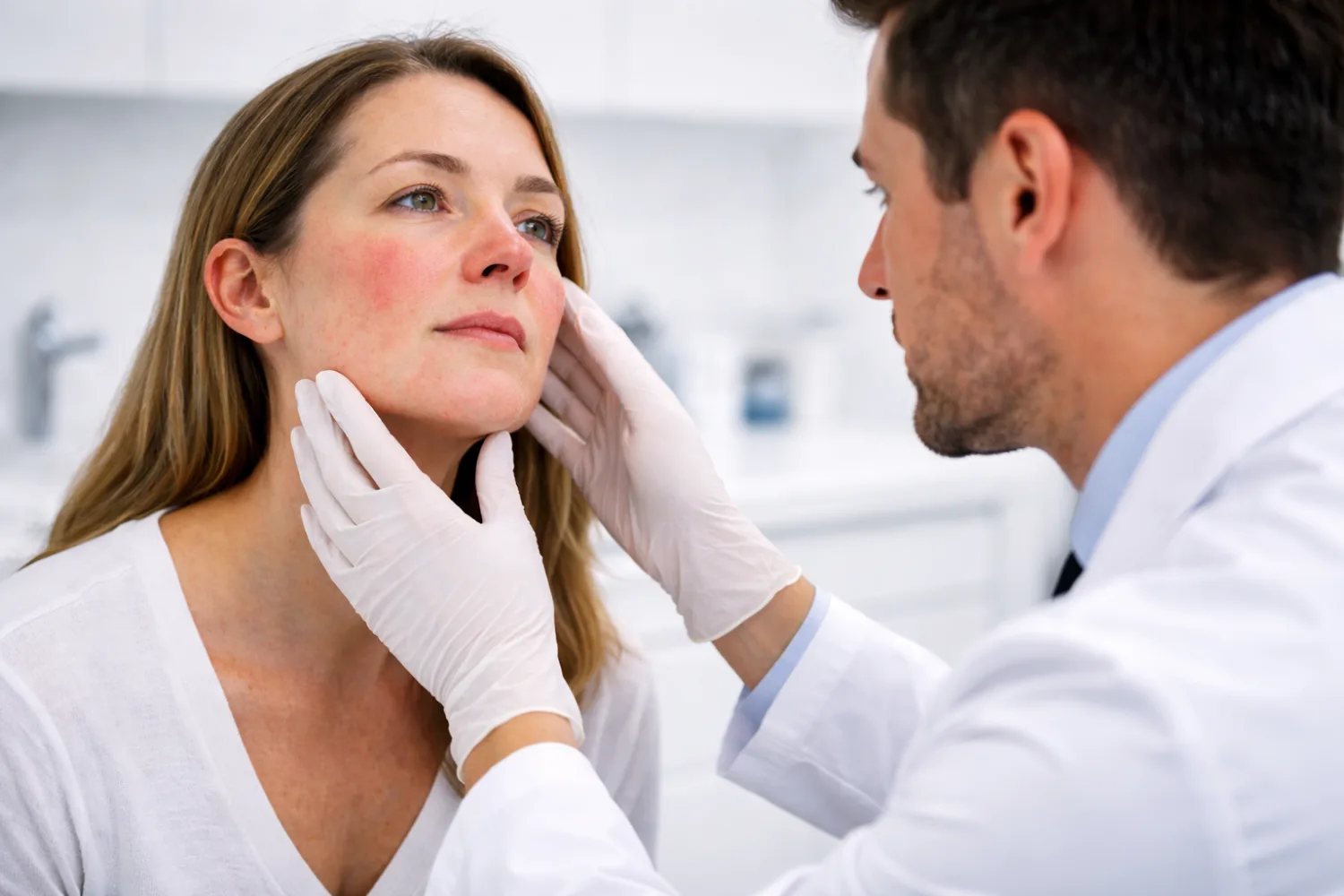
Rosacea can look different from person to person. In some people it starts with frequent flushing or facial sensitivity. In others it becomes more obvious as ongoing redness across the cheeks and nose.
Some people also develop small inflamed bumps and pus-filled spots, which is one reason rosacea is often mistaken for acne.
Common signs of rosacea include:
- persistent redness across the cheeks, nose, forehead or chin
- flushing that comes and goes
- visible fine blood vessels on the skin
- red bumps and pus-filled spots
- burning, stinging or sensitive skin
- dry, rough or easily irritated facial skin
- eye irritation, sore eyelids or gritty eyes in some people
The British Association of Dermatologists’ rosacea patient leaflet is especially helpful because it explains how rosacea can range from mild flushing to more persistent inflammation and eye symptoms.
Rosacea symptoms and how it differs from acne
Rosacea often begins gradually. Some people first notice that their face flushes more easily than it used to. Others realise that their skin burns or stings when they use skincare products, go out in the sun, drink alcohol, or move between hot and cold environments.
Over time, symptoms may include persistent facial redness, outbreaks of spots, skin irritation and visible small blood vessels. In some cases, rosacea can also affect the eyes, causing dryness, soreness, crusting of the eyelids, or a gritty sensation. This is sometimes called ocular rosacea.
Rosacea cannot usually be “cured” in the sense of disappearing forever, but it can often be controlled well. The NHS notes that rosacea can worsen if it is not treated, which is one reason it is worth seeking help rather than just trying to cover it with makeup or avoid mirrors.
Rosacea vs acne
Rosacea and acne can overlap in appearance, but they are not the same condition. Acne usually involves blocked pores, blackheads, whiteheads and oilier skin. Rosacea is more associated with flushing, background redness, visible blood vessels and skin sensitivity.
Rosacea spots are often concentrated on the central face and are not usually accompanied by blackheads.
This difference matters because treatment is different too. Products that are useful for acne can sometimes irritate rosacea-prone skin. If your skin problem seems to be mainly jawline spots, oiliness, clogged pores and post-acne breakouts, our guide to adult acne treatment in the UK may be the better starting point.
Rosacea and the eyes
Rosacea does not only affect the skin. Some people develop ocular rosacea, which can cause dry eyes, sore eyelids, a gritty sensation, watering, burning, or repeated irritation around the eyes.
This matters because eye symptoms can be overlooked, especially if the person thinks they only have “sensitive skin”. If rosacea is affecting the eyes, medical assessment is sensible.
For readers also dealing with eye irritation or dryness, our guide to dry eye syndrome in the UK may also be useful, although rosacea-related eye symptoms need their own assessment too.
Causes and triggers
The exact cause of rosacea is not fully understood. It is thought to involve a mixture of inflammation, over-reactive blood vessels, skin sensitivity, immune factors and genetic tendency. It can run in families, although there is no single clear inherited cause.
Rosacea is not caused by poor hygiene. It is also not simply “adult acne” and not a sign that you are drinking too much alcohol, despite the outdated stereotype. While alcohol can trigger flushing in some people, it is only one of many possible triggers and not the root cause of the condition.
The British Association of Dermatologists notes that rosacea may affect all skin types, even though it is often easier to recognise in fairer skin. This is important because rosacea can be missed or mislabelled in darker skin tones, where persistent redness may be less obvious.
Common rosacea triggers
Triggers do not cause rosacea on their own, but they can make symptoms worse. One of the most useful parts of rosacea management is learning what tends to trigger your own flare-ups.
Common triggers include:
- sun exposure
- hot weather or cold wind
- exercise
- stress or embarrassment
- hot drinks
- spicy foods
- alcohol
- harsh skincare products
- temperature changes
The British Association of Dermatologists highlights many of these triggers, and the NHS also advises noticing whether your rosacea worsens after sun, alcohol, exercise, hot drinks, or spicy foods. That does not mean you need to avoid everything forever. It simply means patterns are worth noticing.
Who gets rosacea?
Rosacea often begins in adulthood, commonly from the age of 30 onwards, although it can appear earlier or later. It is often described in people with fairer skin, but it can affect any skin type.
Women are diagnosed more often, but some of the more severe thickening changes of the nose are more often seen in men.
Because rosacea is so visible, it can have a bigger emotional impact than people expect. Persistent facial redness can affect confidence in work meetings, social situations, dating and day-to-day self-esteem.
If skin symptoms are affecting how you feel emotionally, our guide to mental health support options in the UK may also be helpful alongside treatment.
How rosacea is diagnosed in the UK
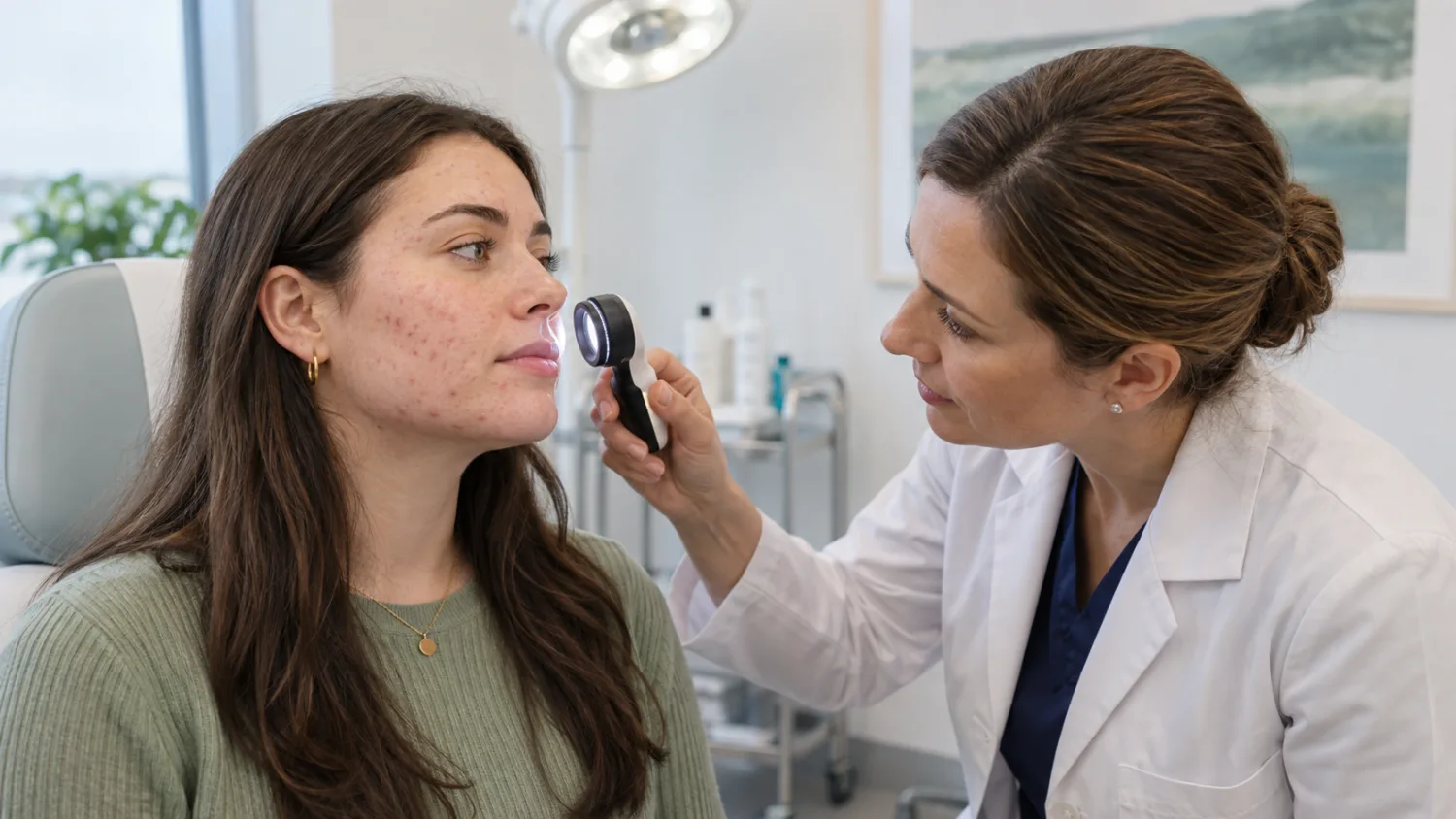
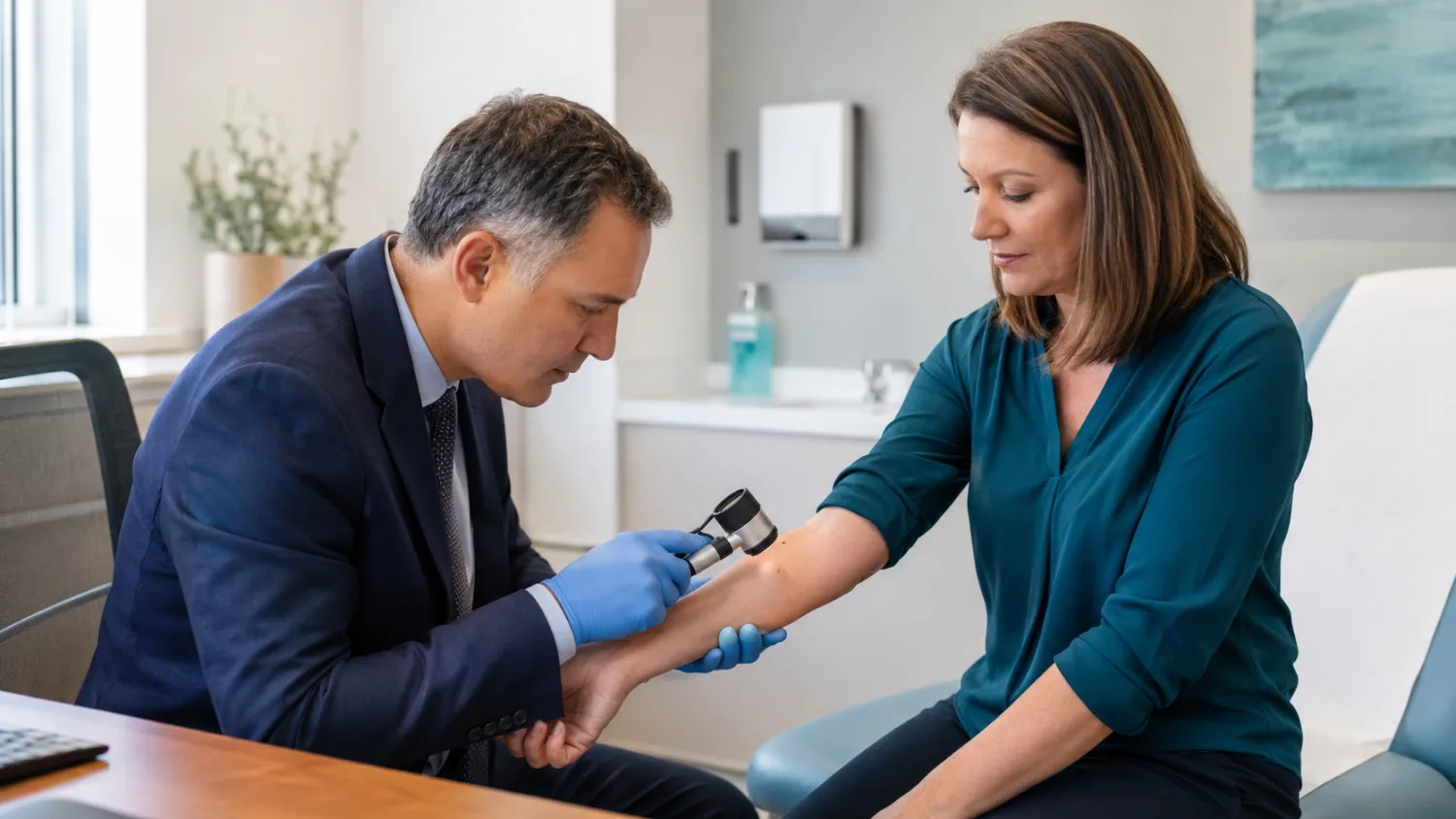
Rosacea is usually diagnosed clinically. That means a GP, dermatologist, or other trained clinician will diagnose it by looking at the skin and asking about symptoms such as flushing, persistent redness, spots, triggers, sensitivity and any eye problems.
NICE uses a phenotype-based approach, which means diagnosis is based on the features present rather than forcing everyone into one narrow subtype. According to NICE, rosacea can be diagnosed if there is at least one diagnostic feature, such as fixed facial redness, or two major features such as flushing, papules and pustules, visible blood vessels, or eye-related findings.
This is one reason self-diagnosis can be unreliable. Rosacea can be confused with acne, peri-oral dermatitis, seborrhoeic dermatitis, lupus, or sensitive-skin reactions.
The NICE rosacea diagnosis summary is useful if you want to understand how UK clinicians distinguish it from other facial rashes.
When to seek help
You should consider seeking medical advice if facial redness is becoming persistent, if flushing is frequent and difficult to control, if you are developing recurrent spots on the central face, or if your skin is burning, stinging, or reacting badly to many products.
You should also seek help if you think your rosacea may be affecting the eyes. Sore, dry, gritty, watery, or inflamed eyes and eyelids can be part of rosacea and may need treatment. Eye symptoms are often overlooked, but they matter.
If you are unsure whether to start with a pharmacy or book a GP, our guide on when to see a pharmacist instead of a GP can help you decide the best first step.
When to seek specialist help
You should ask for a more detailed medical review if:
- facial redness is becoming persistent
- flushing is frequent and difficult to control
- you have recurrent facial spots that are not improving
- your skin burns or stings with many products
- you think rosacea may be affecting your eyes
- standard treatment is not working
- rosacea is affecting confidence or mental wellbeing
Rosacea is often manageable, but poorly controlled rosacea can become more established over time. Getting the right treatment earlier usually makes life easier.
Treatment options for rosacea
Rosacea usually cannot be cured completely, but it can often be controlled very well. The NHS is clear that treatment can help control symptoms, and that rosacea can get worse if it is not treated. That is why treatment is usually about management rather than a one-off fix.
For many people, successful treatment means fewer flare-ups, less background redness, fewer spots, calmer skin and better confidence. It often involves a combination of trigger management, gentle skincare, prescription creams or gels, and sometimes oral medication.
First-line rosacea treatment in the UK
Rosacea treatment depends on the main features causing trouble. NICE recommends managing rosacea according to the presenting phenotype. In practical terms, that means treatment is chosen based on whether the main problem is background redness, spots and bumps, visible blood vessels, or eye symptoms.
For papules and pustules, topical treatments are often tried first. NICE and CKS list topical options such as metronidazole, azelaic acid and ivermectin, depending on the pattern and severity. For persistent redness, brimonidine gel may be used to temporarily reduce erythema.
You can see the main topical options on the NICE CKS topical rosacea treatments page.
The key point is that rosacea treatment is not one-size-fits-all. A cream that helps spots may not do much for flushing, while a gel that reduces redness may not prevent papules and pustules.
Topical treatments for rosacea
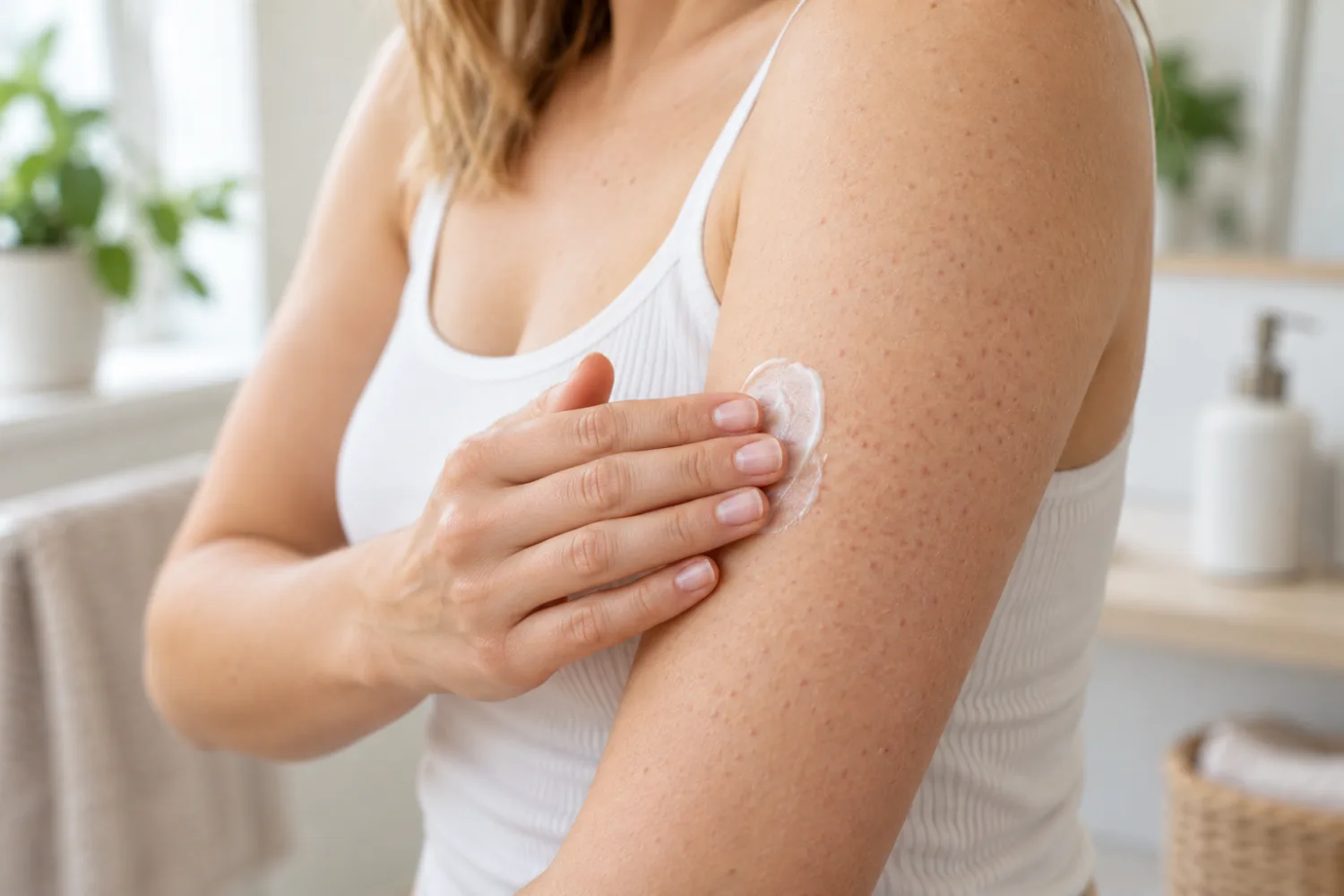
Topical rosacea treatments are applied directly to the skin and are often the first prescription option for mild to moderate disease. They may reduce inflammation, calm the skin, and improve papules and pustules over time.
Commonly used topical treatments in UK practice include:
- metronidazole
- azelaic acid
- ivermectin cream
- brimonidine gel for persistent redness
These treatments usually need time. Results are not instant, and some can cause irritation at first. Gentle skincare becomes especially important during treatment because rosacea-prone skin can react badly to scrubs, acids, alcohol-heavy toners, fragranced creams, and overuse of active ingredients.
Oral antibiotics for rosacea
If rosacea is more inflamed or more widespread, a GP may prescribe oral antibiotics. The NHS says antibiotics may be used for 6 to 16 weeks. In rosacea, antibiotics are often used for their anti-inflammatory effect rather than because rosacea is a simple infection.
This is one of the areas where patients sometimes get confused, especially if they also have adult acne. Antibiotics may help the inflammatory spots of rosacea, but they are part of a broader plan, not a permanent cure.
If repeated courses of treatment are failing or symptoms return as soon as treatment stops, that is often a sign that a more tailored review is needed.
Skincare for rosacea-prone skin
Skincare can make a big difference in rosacea, but simpler is usually better. A gentle cleanser, bland moisturiser and good daily sun protection are often more helpful than complicated routines.
Useful general principles include:
- use gentle, fragrance-free skincare where possible
- avoid harsh exfoliants and face scrubs
- choose products for sensitive skin if standard products sting
- wear sunscreen regularly, especially if sun is a trigger
- introduce new products slowly
The British Association of Dermatologists notes that people with rosacea can be especially sensitive to the sun, which is why regular sun protection is so important.
When rosacea becomes more severe
Some forms of rosacea become more noticeable over time if they are not managed. Persistent redness may become more fixed, blood vessels may become more visible, and in a small number of people the skin of the nose can thicken.
This thicker, bulbous change is called rhinophyma and tends to happen mainly after many years of active rosacea, more often in men.
The British Association of Dermatologists has a separate rhinophyma information page for this more advanced complication. It is not common, but it is one reason it makes sense to take persistent rosacea seriously rather than assume it is purely cosmetic.
NHS and private rosacea treatment
Many people with rosacea start by speaking to a pharmacist or GP. A pharmacist may be useful for gentle skincare advice and support with mild symptoms, but prescription treatment usually starts through a GP.
NHS treatment pathway
On the NHS, rosacea is often managed in primary care at first. If symptoms are not improving, if eye involvement is suspected, or if the condition is causing marked distress or is difficult to control, referral to a dermatologist may be considered.
If you want to understand how that works in practice, our guide on how hospital referrals work in the UK explains the usual process.
If the main barrier is getting seen in the first place, our article on how to get a GP appointment quickly in the UK may also help.
Private rosacea treatment in the UK
Because rosacea often overlaps with both medical dermatology and cosmetic concerns, many patients also consider private treatment. Private dermatology clinics may offer faster access to specialist assessment, prescription treatment review, laser discussion for visible vessels, and more continuity of care.
Private care may be particularly attractive if rosacea is persistent, if you are worried about facial redness and visible blood vessels, or if repeated first-line treatment has not given enough improvement. Some people also prefer private care because it offers more time to talk through triggers, skincare, redness management, and longer-term strategy.
If you are comparing routes into care, our guide to NHS vs private healthcare in the UK explains the main differences in access, speed, and cost, and our page on private GP services in the UK may be useful if you want a faster first appointment.
How rosacea affects confidence and daily life
Rosacea is visible, unpredictable, and often misunderstood. People may feel embarrassed by flushing, worry that others think they are sunburnt or stressed, or become anxious about social situations where alcohol, exercise, heat, or photos are involved.
This emotional impact should not be minimised. NICE specifically advises that rosacea management should take into account the effect on quality of life. If skin symptoms are affecting your confidence, mood, or social life, that is a valid reason to seek treatment, not vanity.
If rosacea is having a wider impact on your wellbeing, our guide to mental health support options in the UK may also be useful alongside medical skin care.
FAQ: rosacea in the UK
What is rosacea?
Rosacea is a long-term inflammatory skin condition that mainly affects the face, causing redness, flushing, visible blood vessels, sensitivity and sometimes acne-like spots.
What are the first signs of rosacea?
Early signs may include frequent facial flushing, sensitive or stinging skin, redness across the cheeks or nose, and skin that reacts easily to heat, alcohol, skincare products or sun exposure.
Is rosacea the same as acne?
No. Rosacea can cause acne-like bumps and pus-filled spots, but it usually does not cause blackheads. It is more strongly linked with flushing, redness, visible blood vessels and sensitive skin.
What causes rosacea?
The exact cause is not fully understood. It may involve inflammation, over-reactive blood vessels, skin sensitivity, immune factors and genetic tendency. It is not caused by poor hygiene.
What triggers rosacea flare-ups?
Common triggers include sun exposure, hot drinks, spicy foods, alcohol, exercise, stress, hot weather, cold wind, temperature changes and harsh skincare products.
Can rosacea be cured?
Rosacea usually cannot be cured permanently, but it can often be controlled well with gentle skincare, trigger management, prescription treatments and specialist care when needed.
What is the best treatment for rosacea?
The best treatment depends on the main symptoms. Topical treatments, oral antibiotics, redness-reducing gels, skincare changes and sometimes laser treatment may be considered.
Can rosacea affect the eyes?
Yes. Ocular rosacea can cause dry, gritty, sore, watery or inflamed eyes and eyelids. Eye symptoms should be assessed because they may need specific treatment.
Should I see a GP or dermatologist for rosacea?
A GP is often the first step for diagnosis and prescription treatment. Dermatology referral may be considered if symptoms are severe, persistent, affecting the eyes or not improving with standard treatment.
Can skincare make rosacea worse?
Yes. Harsh scrubs, fragranced products, strong acids, alcohol-heavy toners and too many active ingredients can irritate rosacea-prone skin. Simple, gentle skincare is usually better.
Is rosacea caused by alcohol?
No. Alcohol can trigger flushing in some people, but it is not the root cause of rosacea. The old stereotype that rosacea is caused by drinking too much alcohol is misleading.
Final takeaway
Rosacea is a common long-term facial skin condition that can cause redness, flushing, sensitivity, visible blood vessels and acne-like spots. It is not caused by dirt, not simply a cosmetic issue, and not something you have to just put up with.
With the right diagnosis, a gentler skincare approach, awareness of triggers and appropriate treatment, most people can get much better control of their symptoms.
If your skin is persistently red, reactive, or spotty in a way that does not seem like ordinary acne, it is worth considering rosacea. A proper assessment can help you understand what is going on and avoid wasting time and money on products that may be making things worse.