Private acne treatment in the UK can cost from around £60 for a basic online consultation to £200–£350 for an initial appointment with a consultant dermatologist. Follow-up consultations commonly cost £120–£250, with prescription medicines charged separately.
A straightforward course of prescription creams or oral antibiotics may cost approximately £250–£800 in total. Private isotretinoin treatment is considerably more expensive because it requires specialist assessment, repeated consultations, blood tests and additional pregnancy-prevention measures where relevant.
A complete private isotretinoin course commonly costs around £1,200–£2,500, although some patients may pay £3,000 or more. The total depends on the treatment duration, dose, number of appointments, monitoring schedule and whether tests and medication are included.
| Private acne service | Typical UK cost |
|---|---|
| Online acne assessment | £60–£150 |
| Initial consultant dermatologist appointment | £200–£350 |
| Follow-up dermatologist appointment | £120–£250 |
| Private prescription fee | Often included or £20–£50 |
| Topical prescription treatment | Approximately £15–£50 per item |
| Oral antibiotic treatment | Approximately £15–£50 per month |
| Spironolactone | Approximately £10–£40 per month, plus monitoring |
| Isotretinoin medicine | Approximately £20–£80 per month |
| Blood tests | £50–£200 per test round |
| Pregnancy test | £10–£50 when charged separately |
| Complete private isotretinoin pathway | Approximately £1,200–£2,500+ |
These are broad self-pay estimates rather than fixed national prices. Always request a written breakdown showing consultation, prescription, medicine, testing and follow-up fees.
Acne is a medical condition rather than a sign of poor hygiene. Early effective treatment can reduce inflammation, distress and the risk of permanent scarring.
What is included in a private acne consultation?
An initial private dermatology appointment should involve more than a quick look at photographs. The clinician may ask about:
- when the acne began;
- which areas of the face or body are affected;
- whether spots are painful, deep or leaving scars;
- previous prescription and over-the-counter treatments;
- how consistently each treatment was used;
- your skincare and cosmetic products;
- medicines and supplements;
- periods, contraception and pregnancy plans where relevant;
- symptoms that might suggest polycystic ovary syndrome;
- the effect on confidence, mood and everyday life;
- your general health and family history.
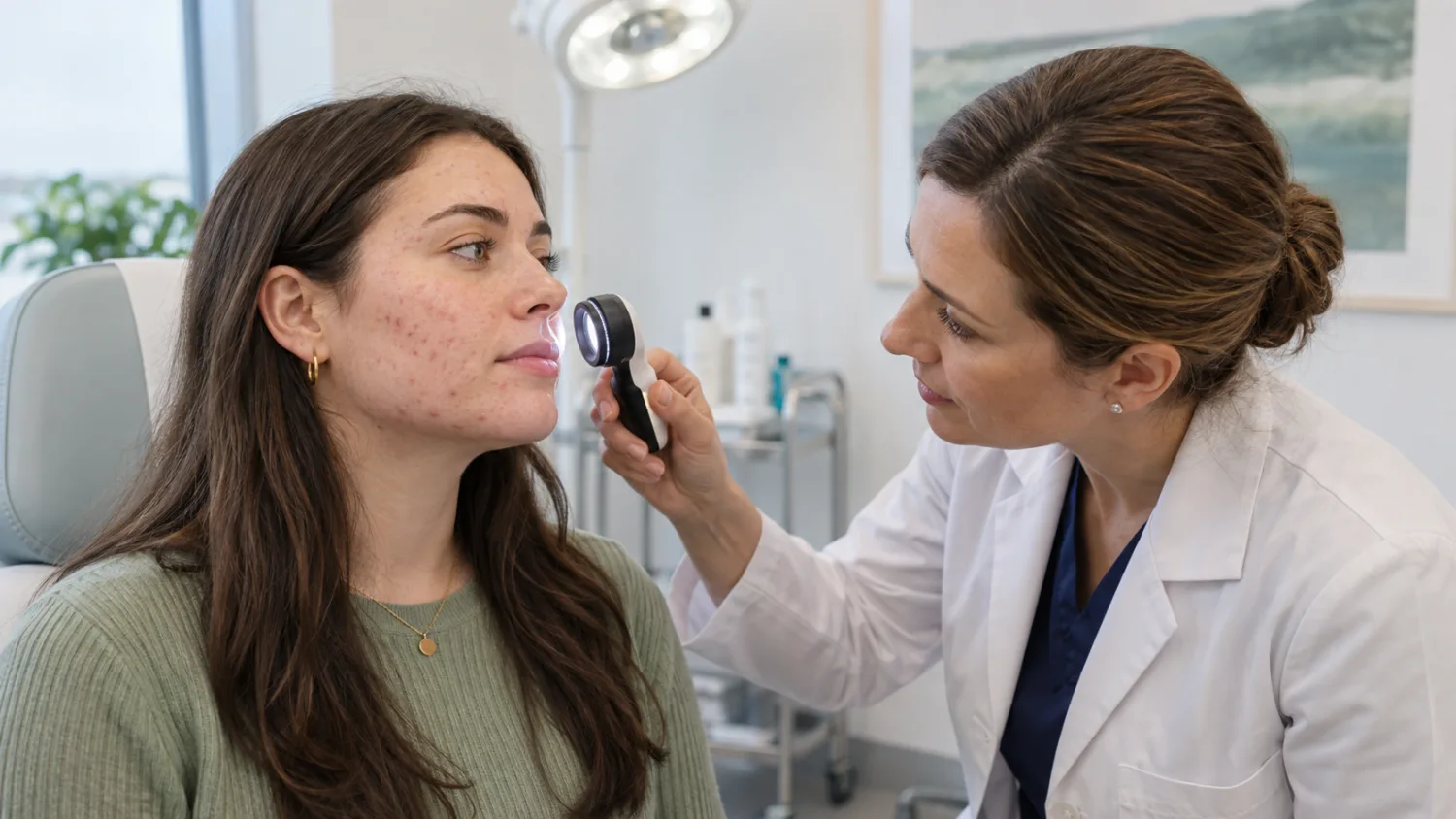
The dermatologist should examine the distribution and type of acne. Acne can include blackheads, whiteheads, inflamed papules, pustules, nodules and cysts. The treatment plan depends on which lesions are present, their severity and whether scarring has started.
The appointment may also identify another condition that resembles acne, such as rosacea, folliculitis, perioral dermatitis or hidradenitis suppurativa.
A first consultation commonly costs £200 to £350. London and major private hospitals may charge more, while online dermatology services may cost less.
Our broader guide to private dermatologist costs in the UK compares consultation, investigation and procedure fees for different skin conditions.
How much do prescription acne treatments cost?
The price of the medicine is usually separate from the clinician’s fee. A private prescription is not charged at the standard NHS prescription rate. You pay the pharmacy’s price for the medicine, which can vary between pharmacies, brands and pack sizes.
A relatively simple private treatment pathway might involve:
| Example expense | Possible cost |
|---|---|
| Initial dermatology consultation | £250 |
| Two prescription products | £40–£80 |
| Follow-up consultation | £150 |
| Further three-month prescription | £30–£80 |
| Illustrative total | £470–£560 |
The actual cost may be lower if a GP or regulated online prescriber can manage uncomplicated acne. It may be higher if the diagnosis is uncertain, several treatments are tried or blood monitoring is needed.
Topical treatments
Prescription treatments applied to the skin may contain:
- benzoyl peroxide;
- a topical retinoid such as adapalene or tretinoin;
- azelaic acid;
- clindamycin combined with another active ingredient;
- a combination of adapalene and benzoyl peroxide.
A private topical prescription commonly costs approximately £15 to £50 per item. Combination products and particular brands may cost more.
Irritation, dryness and temporary worsening can occur when treatment begins. The clinician should explain how frequently to apply the product and how to introduce it gradually when appropriate.
Topical antibiotics should not normally be used alone, and antibiotic-containing treatment should not continue indefinitely. This helps reduce antimicrobial resistance.
Topical retinoids are unsuitable during pregnancy and when planning pregnancy. Tell the prescriber if pregnancy is possible.
Oral antibiotics
Moderate or more widespread inflammatory acne may be treated with an oral antibiotic, often alongside a non-antibiotic topical treatment.
The medicine may cost around £15 to £50 per month privately, although pharmacy prices vary. The larger expense is often the consultation and review rather than the tablets themselves.
Antibiotics are normally reviewed after a defined treatment period. They should not become an open-ended treatment without reassessment, particularly if the acne is not improving.
Some antibiotics can cause digestive symptoms, headaches, photosensitivity or other side effects. They may also be unsuitable during pregnancy or interact with other medicines.
Hormonal treatment
For some women, a combined oral contraceptive may improve acne. The choice depends on medical history, contraceptive needs and the risks associated with the particular pill.
Spironolactone is also used by some dermatologists for persistent hormonally influenced acne in women. Its use for acne is generally off-label in the UK, meaning the medicine is licensed for other conditions but prescribed on professional judgement and available evidence.
Private spironolactone treatment may involve:
- a dermatology consultation;
- blood-pressure assessment;
- kidney-function and potassium testing where clinically appropriate;
- medicine costing approximately £10 to £40 per month;
- follow-up appointments to assess response and side effects.
It is not suitable during pregnancy. Possible side effects include menstrual changes, breast tenderness, dizziness and increased urination.
How much does private isotretinoin treatment cost?
A full private isotretinoin course commonly costs between £1,200 and £2,500. Some consultant-led hospital pathways or longer courses can exceed £3,000.
Isotretinoin is often known by the former brand name Roaccutane, although various generic products are now used.
An illustrative six-month pathway might cost:
| Isotretinoin expense | Illustrative cost |
|---|---|
| Initial consultant assessment | £250–£350 |
| Five or six follow-up appointments | £600–£1,200 |
| Blood tests | £150–£500 |
| Pregnancy tests where required | £0–£250 |
| Medication | £150–£480 |
| Possible total | £1,150–£2,780 |
This example is not a quote. The number and frequency of appointments and tests are determined by clinical need and current safety requirements.
Some clinics sell an isotretinoin monitoring package. Check whether the advertised price includes:
- the first consultation;
- every required follow-up;
- prescription fees;
- the medicine itself;
- baseline and repeat blood tests;
- pregnancy testing;
- urgent advice between appointments;
- an appointment after the treatment ends.
A low initial price can be misleading if monthly reviews, laboratory tests and medication are all billed separately.
Who can prescribe isotretinoin?
Isotretinoin is a powerful systemic retinoid reserved for acne that is severe, at risk of permanent scarring or resistant to appropriate standard treatment.
It must be initiated and supervised by an appropriately qualified clinician with expertise in its use. A responsible service should not prescribe it merely because a patient is willing to pay privately.
The decision should consider:
- the severity and type of acne;
- scarring or risk of scarring;
- previous properly used treatments;
- physical and mental health history;
- pregnancy potential;
- other medicines and supplements;
- the patient’s ability to follow monitoring requirements.
For patients under 18, strengthened UK safety measures require additional safeguards. Two independent prescribers must agree that there is no other appropriate effective treatment before isotretinoin is started.
Online treatment is not automatically inappropriate, but the assessment and monitoring must still meet the same safety standards. Be cautious of any provider offering isotretinoin after only a short questionnaire with no meaningful specialist contact.
What tests and monitoring are needed?
Monitoring is personalised, but baseline blood tests commonly include:
- liver-function tests;
- blood lipids, including cholesterol and triglycerides;
- other tests when medical history indicates them.
Blood testing may be repeated after treatment begins or when the dose changes. The schedule depends on the results, dose, risk factors and the clinic’s protocol.
A private blood-test round may cost around £50 to £200. Clinic collection is often more expensive than a home kit, while hospital laboratory prices can be higher still.
Finger-prick kits may not be appropriate for every test or every patient. A failed or insufficient home sample can create extra cost and delay treatment. Our guide to finger-prick versus venous blood tests explains the practical differences.
People who could become pregnant need pregnancy assessment and testing in accordance with current safety requirements. Isotretinoin can cause severe harm to an unborn baby and must not be taken during pregnancy.
The prescriber should also assess mental wellbeing and possible sexual side effects before and during treatment. Tell the clinical team promptly about significant changes in mood, anxiety, behaviour, sexual function or any thoughts of self-harm.
The MHRA’s current isotretinoin safety information explains the risks, monitoring and precautions patients should understand.
What side effects can isotretinoin cause?
Dryness is extremely common. This may affect the lips, skin, eyes and inside of the nose. Patients often need lip balm, moisturiser, sunscreen and adjustments to contact-lens use.
Other possible effects include:
- skin sensitivity and irritation;
- nosebleeds;
- headaches;
- muscle or joint discomfort;
- changes in liver tests;
- raised cholesterol or triglycerides;
- changes in night vision;
- mood or behavioural changes;
- sexual side effects;
- temporary initial worsening of acne.
Seek urgent medical advice for severe headache with visual symptoms, a serious allergic reaction, severe abdominal symptoms, significant mood deterioration, thoughts of self-harm or another concerning reaction.
Do not take vitamin A supplements during treatment unless the prescriber specifically advises them. Isotretinoin must not be combined with certain antibiotics, including tetracyclines, because of the risk of raised pressure around the brain.
You must not share the medicine with anyone else. Blood donation is prohibited during treatment and for a specified period afterwards because donated blood could be given to someone who is pregnant.
How long does private acne treatment take?
Topical acne treatments usually need several weeks before improvement becomes clear. A clinician may review the plan at around 12 weeks rather than changing it after only a few days.
Oral antibiotics are also prescribed for a defined course and reviewed alongside topical treatment. Continuing antibiotics for longer than necessary increases the risk of resistance.
An isotretinoin course often lasts approximately four to eight months, but duration varies. Lower doses, side effects, interruptions, response and the cumulative amount taken can all affect the timeline.
Ask how the clinic handles:
- appointments that need to be rearranged;
- late blood-test results;
- dose changes;
- side effects between consultations;
- medicine supply during holidays;
- treatment extending beyond the package period.
Stopping early can affect the treatment plan, but you should never continue medicine without the required clinical review merely to avoid additional fees.
Do private clinics treat acne scars at the same time?
Active acne and established scarring are related but usually require different treatment. Controlling new inflammation is generally the first priority because procedures cannot prevent ongoing acne from creating further scars.
Scar treatments may include:
- microneedling;
- chemical peels;
- subcision;
- fractional laser treatment;
- punch techniques;
- dermal fillers for selected scars;
- combined treatment plans.
These procedures are normally charged separately and can add hundreds or thousands of pounds to the total cost. A package labelled “acne treatment” may not include treatment of existing scars or pigmentation.
Certain procedures and waxing techniques must be avoided during isotretinoin treatment and sometimes for a period afterwards. Ask the prescribing dermatologist when a specific procedure would be safe rather than applying one universal waiting period.
Our guide to acne-scar types, treatments and costs explains how ice-pick, rolling and boxcar scars are treated.
Can a private GP or online service treat acne?
A private GP or regulated online prescribing service may be suitable for straightforward mild or moderate acne, particularly when the diagnosis is clear and first-line treatment has not yet been tried.
An online acne assessment commonly costs around £60 to £150, although some providers include the consultation within the cost of a subscription or medicine-delivery plan.
Check:
- who reviews the application;
- whether the prescriber is registered in the UK;
- how identity and medical history are verified;
- whether clear photographs are required;
- what the price includes;
- how side effects are reported;
- when treatment is reviewed;
- how the service refers complex or severe acne.
Online photographs cannot always show depth, tenderness or subtle scarring. An in-person assessment may be more appropriate when acne is severe, widespread, diagnostically unclear or affecting mental health substantially.
A consultant dermatologist is particularly useful when:
- acne is nodular or cystic;
- scars are appearing;
- several appropriate treatments have failed;
- isotretinoin is being considered;
- there may be another skin condition;
- treatment is limited by side effects;
- hormonal or medical factors complicate the picture.
Our guide to private GP services and costs explains online and face-to-face appointment options.
Can health insurance cover private acne treatment?
Private medical insurance frequently excludes acne treatment, particularly when it is considered chronic, pre-existing or cosmetic. Policies may also exclude outpatient prescriptions.
Even when a dermatologist consultation is covered, the insurer may not pay for:
- prescription creams or tablets;
- isotretinoin monitoring;
- routine blood tests;
- pregnancy tests;
- acne-scar procedures;
- cosmetic peels or laser treatment.
Ask the insurer for pre-authorisation before booking. Confirm that the named dermatologist and clinic are recognised and ask whether follow-ups, investigations and medicines have separate limits.
If treatment began before the policy started, acne may be treated as a pre-existing condition even if it has recently worsened.
Can you get acne treatment through the NHS?
Yes. A community pharmacist or GP can help with many cases of acne. NHS treatment may include topical medicines, oral antibiotics and selected hormonal options.
Referral to dermatology may be considered when:
- acne is severe;
- nodules or cysts are present;
- permanent scarring is developing or likely;
- appropriate treatment has not worked;
- the diagnosis is uncertain;
- acne causes persistent psychological distress;
- isotretinoin may be appropriate.
NHS waits vary by area and urgency. A private appointment may provide quicker assessment, but your NHS GP is not automatically required to arrange blood tests or continue prescriptions initiated privately.
Before starting private isotretinoin, ask whether the clinic expects your GP to provide any monitoring. Be prepared to pay privately for the entire course unless an NHS clinician has explicitly accepted responsibility.
The NHS guide to acne and its treatment explains common treatment options and when to see a GP.
Our detailed article on acne treatment in the UK covers skincare, prescriptions, referrals and managing flare-ups.
How can you choose a safe private acne clinic?
Check the person who will diagnose and prescribe—not only the clinic’s brand.
Doctors should be registered with the General Medical Council. A consultant dermatologist should normally appear on the GMC Specialist Register for dermatology. Other appropriately qualified clinicians may manage certain acne treatments within their professional scope.
Signs of a responsible service include:
- a proper assessment before prescribing;
- clear information about alternatives and limitations;
- a staged approach based on acne severity;
- discussion of pregnancy and medicine interactions;
- mental-health and sexual-function monitoring for isotretinoin;
- access to clinical advice between appointments;
- realistic expectations about improvement and relapse;
- a clear plan for blood tests and reviews;
- transparent prices for the complete pathway;
- communication with your GP where appropriate.
Be cautious when a clinic:
- guarantees permanently clear skin;
- promotes isotretinoin as an easy first treatment;
- prescribes without checking previous treatment;
- does not explain pregnancy risks;
- offers medicine without appropriate monitoring;
- claims that blood tests are never necessary for anyone;
- pressures you to buy skincare products or procedure packages;
- will not identify the prescriber;
- hides the cost of follow-ups and prescriptions.
When should acne receive prompt medical attention?
Arrange medical assessment rather than relying only on shop-bought skincare if:
- you have deep, painful nodules or cysts;
- scars are beginning to form;
- acne is widespread across the chest or back;
- appropriate treatment has not helped;
- the skin is becoming increasingly painful or inflamed;
- you are unsure whether the condition is acne;
- symptoms began suddenly alongside other hormonal changes;
- acne substantially affects confidence, relationships or daily life.
Seek urgent help if acne or its treatment is associated with thoughts of self-harm or suicide. Call 999 or attend A&E if there is immediate danger. Otherwise, contact your GP, NHS 111 or an urgent mental-health service.
Acne can have a serious psychological effect regardless of how mild or severe it appears to someone else. The clinical plan should consider emotional wellbeing as well as the skin.
Frequently asked questions
How much is a private dermatologist appointment for acne?
An initial consultation commonly costs £200 to £350. Follow-up appointments are usually around £120 to £250. Online assessments may be available for approximately £60 to £150.
How much does private isotretinoin cost in the UK?
A complete course commonly costs around £1,200 to £2,500, although longer or hospital-based pathways may exceed £3,000. Ask whether consultations, blood tests, pregnancy tests and medication are included.
Can I pay for isotretinoin without seeing a dermatologist?
Isotretinoin must be prescribed and monitored by an appropriately qualified specialist prescriber. It should not be supplied simply in response to payment or a brief online request.
Is Roaccutane different from isotretinoin?
Roaccutane was a brand of isotretinoin and remains a commonly used informal name. Private pharmacies may dispense a different licensed isotretinoin brand or generic product.
Are blood tests included in the consultation fee?
Often they are not. Private blood tests may cost approximately £50 to £200 per round. Some isotretinoin packages include a defined number of tests, while others charge for each one separately.
How often are isotretinoin appointments needed?
Reviews are required regularly throughout treatment. The exact frequency depends on current safety requirements, pregnancy potential, clinical response, side effects and the prescriber’s protocol.
Can my NHS GP do blood tests for private isotretinoin treatment?
You can ask, but the GP is not obliged to arrange NHS monitoring for treatment prescribed privately. Confirm responsibilities before starting and budget for private tests if necessary.
Can I transfer private isotretinoin treatment to the NHS?
Not automatically. You would need to enter the local NHS pathway and meet its referral and prescribing requirements. An NHS dermatologist must make their own clinical decision.
Is isotretinoin suitable for mild acne?
It is generally reserved for severe acne, acne at risk of permanent scarring or acne that has not responded to appropriate standard treatment. Severity is assessed by more than spot count alone, but isotretinoin should not be treated as a routine first option.
Does private treatment work faster?
Private care may provide faster access to assessment, but medicines still require time to work. Paying privately does not safely shorten the biological response or remove monitoring requirements.
Will isotretinoin permanently cure acne?
Many people achieve long-lasting improvement, but relapse is possible. Some need further topical treatment or, occasionally, another specialist-supervised course.
Does acne-scar treatment come with the dermatology fee?
Usually not. Scar procedures such as microneedling, laser treatment and subcision are generally priced separately and often begin only after active acne is controlled.
Can acne treatment be claimed through private insurance?
It depends on the policy, but acne, outpatient medicines and scar procedures are commonly excluded. Obtain written authorisation before arranging treatment.