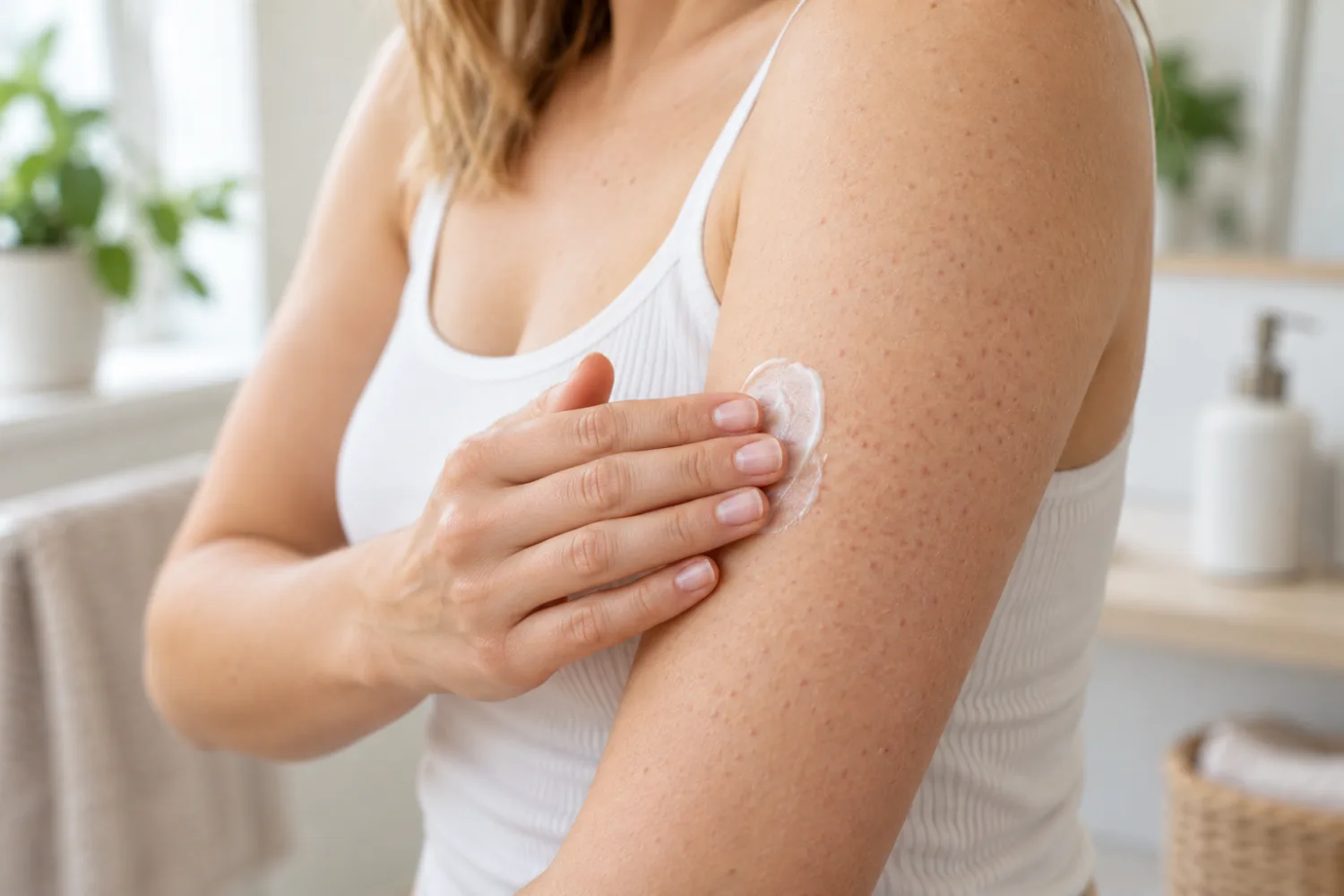
Keratosis pilaris is a very common and harmless skin condition that causes patches of small, rough bumps. It often appears on the upper arms, thighs, buttocks or cheeks and is sometimes described as “chicken skin” or permanent goosebumps.
The bumps develop when keratin, a protein found in the outer layer of the skin, builds up around hair follicles. Keratosis pilaris is not caused by poor hygiene, it is not contagious and it does not need medical treatment unless it is uncomfortable or bothers you.
There is no instant or permanent cure. However, regular moisturising and carefully chosen ingredients such as urea, lactic acid, salicylic acid or other alpha-hydroxy acids can make the skin feel noticeably smoother. Harsh scrubbing, picking and using several strong products together often make the redness and roughness worse.
What does keratosis pilaris look and feel like?
Keratosis pilaris produces many small bumps centred around individual hair follicles. The affected area commonly feels dry and rough when you run your hand over it.
Typical features include:
- tiny, closely grouped bumps;
- a rough or sandpaper-like texture;
- skin-coloured, red, brown or darker bumps;
- redness around some follicles;
- dry or flaky skin;
- occasional mild itching;
- small hairs trapped beneath the surface;
- dark marks after irritated bumps settle.
On lighter skin, the bumps may look pink or red. On brown or black skin, they may be skin-coloured, brown, greyish or darker than the surrounding area. Redness may be less obvious, while uneven pigmentation can be more noticeable.
The most common locations are:
- the backs and outer surfaces of the upper arms;
- the fronts and sides of the thighs;
- the buttocks;
- the cheeks, particularly in children and teenagers.
Keratosis pilaris can also occur on the forearms, lower legs or trunk. It does not usually affect the palms, soles or skin without hair follicles.
Why does keratosis pilaris develop?
Keratosis pilaris develops when keratin does not shed normally from the opening of a hair follicle. Instead, it collects and forms a small plug. The follicle may then become raised, rough or mildly inflamed.
The precise reason this happens is not completely understood. Genetics and the way a person’s skin barrier functions appear to be important. The condition frequently runs in families, although family members may have different levels of severity.
It is more common in people who have naturally dry skin and may occur alongside:
- atopic eczema;
- ichthyosis vulgaris, an inherited dry-skin condition;
- hay fever or other features of an atopic tendency;
- a family history of keratosis pilaris.
Keratosis pilaris often begins in childhood, becomes more noticeable during adolescence and improves gradually during adulthood. It can nevertheless persist for many years.
It is not caused by dirt accumulating in the pores. Washing more frequently will not remove it and may worsen dryness if strong soap or hot water is used.
Why is it sometimes worse in winter?
Many people notice that keratosis pilaris becomes rougher or more visible during autumn and winter. Cold air, indoor heating and lower humidity can reduce the moisture held in the outer layer of the skin.
It may also become worse because of:
- long, hot showers or baths;
- harsh soaps and fragranced shower gels;
- frequent physical exfoliation;
- tight clothing rubbing against the skin;
- shaving or waxing an already irritated area;
- not applying moisturiser regularly;
- picking or squeezing the bumps.
The condition often feels smoother during summer because humidity is higher and more skin is exposed. This does not mean deliberate tanning is a safe treatment. A tan can temporarily disguise redness, but ultraviolet exposure damages the skin and increases the risk of skin cancer.
What actually helps keratosis pilaris?
The most effective routine is usually simple and consistent. Treatment needs to soften dry skin, loosen the plugs within the follicles and avoid creating additional inflammation.
Use a plain moisturiser every day
A thick, fragrance-free cream is usually more useful than a light cosmetic lotion. Apply it after washing, ideally while the skin is still slightly damp. This reduces water loss and helps soften the rough surface.
Moisturising alone may not remove every bump, but it can improve dryness, itching and the overall feel of the skin.
Consider a moisturiser containing urea
Urea attracts water into the outer skin and, at higher concentrations, helps soften thickened keratin. Products containing approximately 5% to 10% urea are often suitable for regular moisturising, while stronger formulations may have a greater exfoliating effect.
Begin cautiously if the skin is sensitive. Urea can sting on scratched, freshly shaved or inflamed skin.
Try lactic acid or another alpha-hydroxy acid
Lactic acid moisturises while helping loosen dead skin cells. Glycolic acid and other alpha-hydroxy acids work in a similar way, although stronger products can cause burning, peeling or increased sensitivity.
Use one product a few times a week initially rather than applying it every day from the beginning.
Salicylic acid may help unblock follicles
Salicylic acid is a beta-hydroxy acid that can reduce scale and improve the feel of plugged follicles. Body lotions and washes normally contain lower concentrations than professional peels.
It may be too irritating for very dry, inflamed or eczema-prone skin. Avoid applying it over a large area without professional advice if you are pregnant, breastfeeding or treating a young child.
DermNet lists moisturisers containing urea, salicylic acid, lactic acid or alpha-hydroxy acids among the treatment options for keratosis pilaris.
What is a sensible skincare routine?
A complicated routine is not necessary. Using too many active products can create irritant dermatitis that looks redder and feels rougher than the original condition.
A reasonable starting routine is:
- Wash with lukewarm rather than hot water.
- Use a mild, fragrance-free cleanser only where needed.
- Pat the skin dry instead of rubbing it vigorously.
- Apply a plain moisturiser while the skin remains slightly damp.
- Introduce one urea or acid-containing product two or three times a week.
- Increase the frequency gradually only if the skin tolerates it.
- Use sunscreen on exposed areas, particularly when using exfoliating acids or retinoids.
Patch-test a new product on a small area first. If it produces marked burning, persistent redness, cracking or swelling, wash it off and stop using it.
Give a routine approximately four to six weeks before deciding whether it is helping. Texture generally changes gradually rather than overnight. Once improvement occurs, some form of maintenance is usually needed because the plugs can return when treatment stops.
The American Academy of Dermatology recommends applying moisturiser shortly after bathing and notes that several treatments may need to be tried before finding a suitable routine. Its guidance on keratosis pilaris diagnosis and treatment also advises reducing the frequency if an exfoliating medicine causes irritation.
Does exfoliating or scrubbing remove the bumps?
Very gentle physical exfoliation may temporarily smooth the surface, but vigorous scrubbing does not remove the underlying tendency to form follicular plugs.
A soft washcloth or gentle exfoliating mitt can be used occasionally if the skin is not inflamed. Avoid:
- coarse salt or sugar scrubs;
- stiff body brushes;
- rough exfoliating gloves used with pressure;
- pumice stones on affected skin;
- scratching with fingernails;
- squeezing individual bumps;
- combining vigorous scrubbing with strong acids.
Aggressive treatment can injure the follicles, increase redness and produce post-inflammatory pigmentation. Picking may also introduce bacteria and cause folliculitis or small scars.
The NHS recommends mild, unperfumed bathing products and warns against harsh scrubs, hot water and picking. See its overview of keratosis pilaris and self-care.
Can shaving, waxing or laser hair removal help?
Keratosis pilaris is related to hair follicles, but removing the visible hair does not necessarily remove the keratin plugs. Shaving and waxing can temporarily make the area appear more irritated.
If you shave affected skin:
- soften the skin with lukewarm water first;
- use a lubricating shaving gel or cream;
- use a clean, sharp razor;
- shave gently in the direction of hair growth;
- avoid repeatedly passing over the same area;
- apply a fragrance-free moisturiser afterwards;
- do not apply a strong acid immediately after shaving.
Laser hair removal may reduce hair and help some people who also experience ingrown hairs, but it is not a guaranteed cure for keratosis pilaris. Different laser and light devices may be used for redness, pigmentation or hair reduction, so the expected result depends on the main concern.
Laser treatment is generally private and can require several sessions. It can cause burns or pigment changes, especially when the device or settings are unsuitable for the person’s skin tone. Choose an appropriately qualified practitioner and ask what experience they have treating your skin type.
Our guide to choosing a safe aesthetic clinic or practitioner provides checks to make before paying for treatment.
Which medical or cosmetic treatments are available?
Most people do not need prescription treatment. When a regular skincare routine is insufficient, a GP, pharmacist or dermatologist may recommend other options based on whether the main concern is roughness, redness, itching or pigmentation.
Topical retinoids
Retinoid creams such as adapalene or tretinoin influence skin-cell turnover and may reduce follicular plugging. They can also cause dryness, stinging, peeling and irritation, particularly during the first few weeks.
Topical retinoids should not be used during pregnancy. Anyone who is pregnant, planning pregnancy or breastfeeding should discuss suitable alternatives with a doctor or pharmacist.
Short courses of topical corticosteroids
A clinician may occasionally recommend a short course of steroid cream when the area is itchy and inflamed. Steroids reduce inflammation but do not correct the underlying keratin build-up.
Repeated or prolonged unsupervised use can thin the skin and cause other side effects. They should not be treated as a routine long-term cosmetic solution.
Laser and light treatment
Vascular lasers or intense pulsed light may reduce persistent redness in selected patients. Other lasers may be used to improve texture, pigmentation or associated hair growth.
Results vary, several sessions may be required and the bumps can return. The NHS notes that laser and steroid treatments are not normally provided for keratosis pilaris because their effectiveness is uncertain and private treatment can be expensive.
If you are considering specialist assessment, our guide to private dermatologist costs in the UK explains consultation, test and treatment fees.
What commonly makes keratosis pilaris worse?
Many unsuccessful routines fail because they damage the skin barrier while trying to remove the bumps quickly.
Common mistakes include:
- starting a high-strength acid every day;
- using salicylic, glycolic and lactic acids together;
- applying retinoids and acids on the same night without guidance;
- scrubbing until the skin becomes red;
- taking very hot showers;
- using fragranced soap on already dry skin;
- picking or squeezing the plugs;
- changing products every few days;
- expecting permanent clearance after one treatment course.
If treatment causes inflammation, pause the active product and use a simple fragrance-free moisturiser until the skin settles. Restart less frequently or choose a gentler formulation.
Keratosis pilaris may coexist with eczema. If the skin is very itchy, cracked, weeping or inflamed, the roughness may not be caused by keratosis pilaris alone. See our comparison of eczema and psoriasis symptoms or our guide to common causes of itchy skin.
Could the bumps be something else?
Keratosis pilaris can usually be identified from its distribution and appearance, but not every group of small bumps is the same condition.
Possible alternatives include:
- folliculitis: inflamed or infected follicles that may be tender or contain pus;
- acne: blocked pores, blackheads, whiteheads and inflamed spots;
- eczema: itchy, dry and inflamed patches that may crack or weep;
- heat rash: prickly bumps that develop after sweating or overheating;
- contact dermatitis: an itchy reaction following contact with an irritant or allergen;
- milia: small, firm keratin-filled cysts, commonly occurring on the face;
- ingrown hairs: individual inflamed bumps developing after hair removal.
Folliculitis is more likely when spots become painful, warm or pus-filled. Keratosis pilaris bumps are usually numerous, similar in size and relatively painless.
Do not assume that an unexplained or rapidly changing rash is keratosis pilaris. Our guides to rashes in adults and common rashes in children explain when assessment is needed.
When should you see a pharmacist, GP or dermatologist?
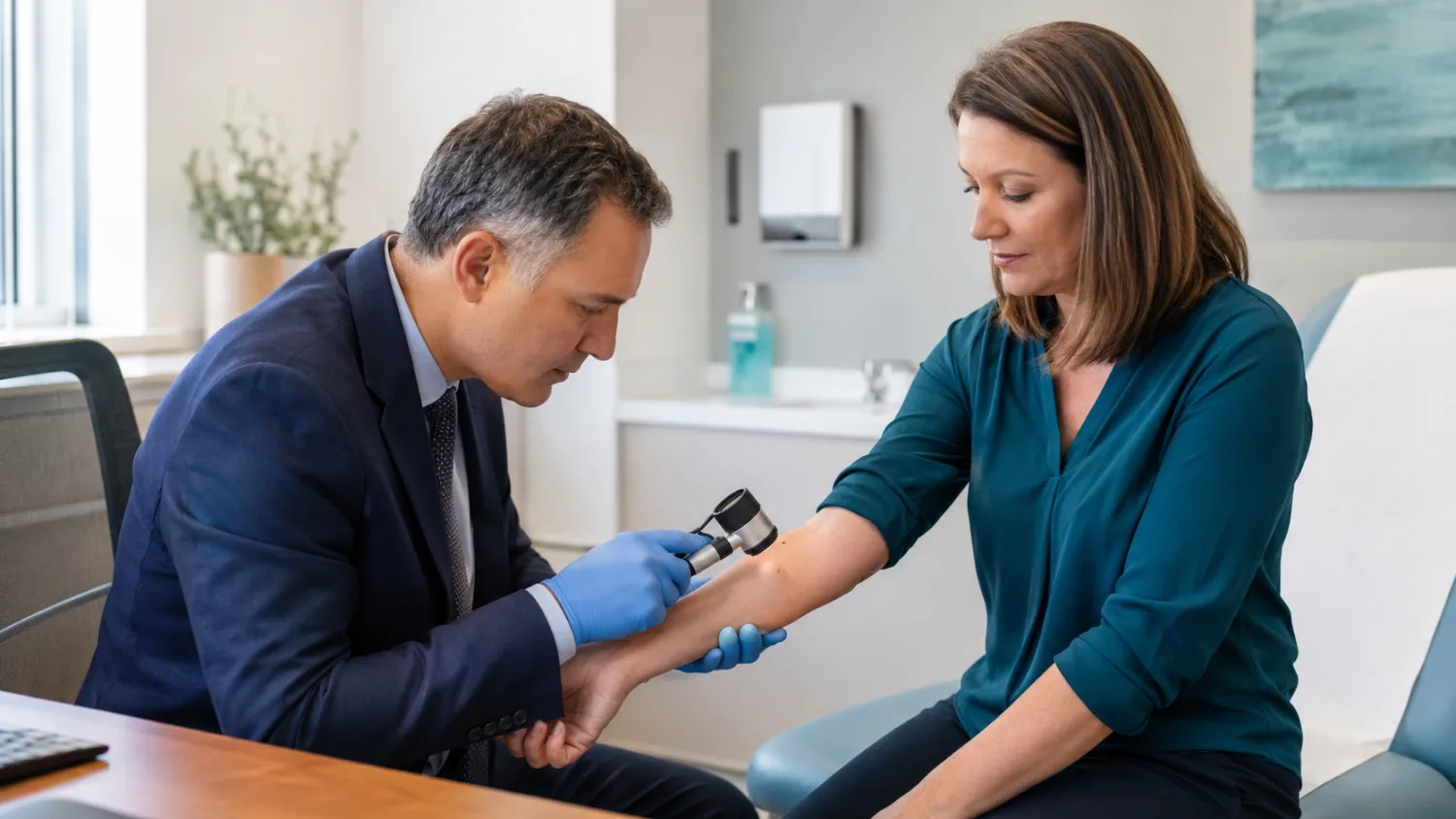
Keratosis pilaris is harmless and does not normally require tests. A pharmacist can help you choose a suitable moisturiser or exfoliating product if self-care has not helped.
Speak to a GP or dermatologist if:
- you are not sure that the bumps are keratosis pilaris;
- the area is very itchy, painful or inflamed;
- spots contain pus or develop spreading redness;
- the skin is bleeding, weeping or crusting;
- there is scarring or loss of hair, including eyebrow hair;
- the rash appeared suddenly and is spreading rapidly;
- treatment repeatedly causes irritation;
- facial redness or pigmentation is causing significant concern;
- the appearance is affecting confidence or wellbeing.
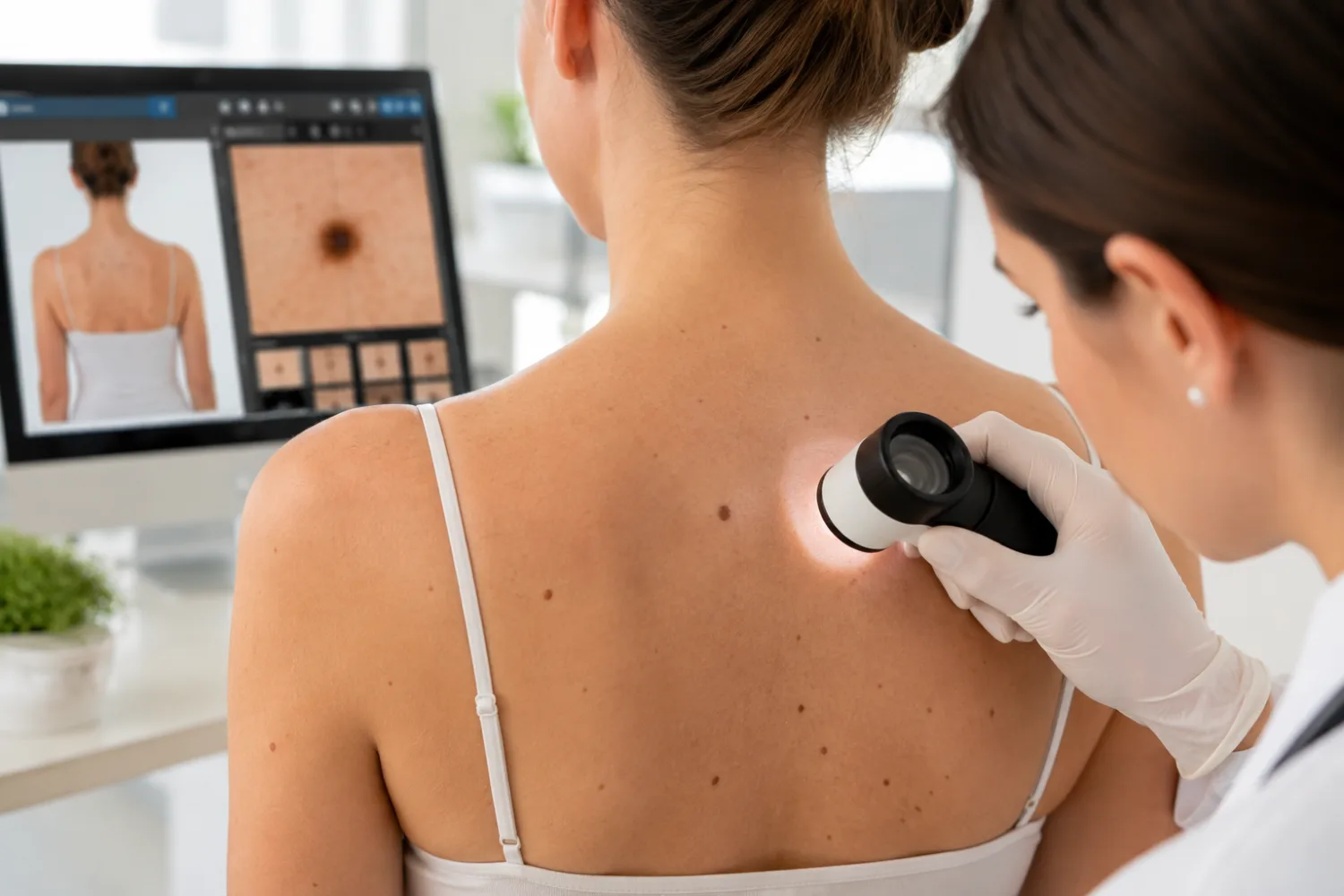
A diagnosis is normally made by examining the skin. Blood tests and skin biopsies are rarely needed for typical keratosis pilaris.
Seek urgent medical help if a rash occurs with breathing difficulty, swelling of the tongue or throat, faintness, a non-blanching purple rash, severe illness or rapidly spreading painful skin changes. These are not ordinary features of keratosis pilaris.
Frequently asked questions
Does keratosis pilaris go away?
It often becomes less noticeable with age and may improve during adulthood. However, it can persist for many years and commonly returns when an effective skincare routine is stopped.
Is keratosis pilaris contagious?
No. It is not caused by an infection and cannot be caught from or passed to another person.
Is keratosis pilaris caused by poor hygiene?
No. The bumps form because keratin collects within hair follicles. Washing harder or more frequently does not cure it and may worsen dryness.
Is keratosis pilaris a form of acne?
No. Both conditions involve follicles, but they develop differently. Keratosis pilaris usually causes many small, rough and relatively painless bumps without blackheads or typical acne spots.
Can keratosis pilaris itch?
It can be mildly itchy, particularly when the skin is dry. Severe itching, weeping or marked inflammation may suggest eczema or another condition alongside it.
What is the best ingredient for keratosis pilaris?
There is no single best ingredient for everyone. Urea and lactic acid can provide both moisturising and smoothing effects. Salicylic or glycolic acid may help some people but can irritate sensitive skin.
How long does treatment take to work?
You may notice smoother skin within several weeks, but results vary. A consistent routine should generally be tried for approximately four to six weeks unless it causes irritation.
Should you squeeze keratosis pilaris bumps?
No. Squeezing does not change the underlying condition and can cause inflammation, infection, scarring or dark marks.
Can diet cause keratosis pilaris?
Keratosis pilaris is not normally caused by eating a particular food. There is no good reason to remove gluten, dairy or another major food group solely to treat typical keratosis pilaris unless a clinician has identified a separate medical problem.
Does drinking more water cure keratosis pilaris?
Normal hydration supports general health, but drinking additional water does not remove follicular keratin plugs. Applying an appropriate moisturiser directly to the skin is more likely to improve dryness.
Can children use acids or urea creams?
Some lower-strength products may be suitable, but children’s skin can be sensitive. Ask a pharmacist or GP before using exfoliating acids, strong urea products or retinoids on a child.
Is keratosis pilaris dangerous?
Typical keratosis pilaris is harmless and does not become skin cancer. Medical assessment is appropriate when the diagnosis is uncertain or the skin becomes painful, infected, scarred or substantially different from its usual appearance.