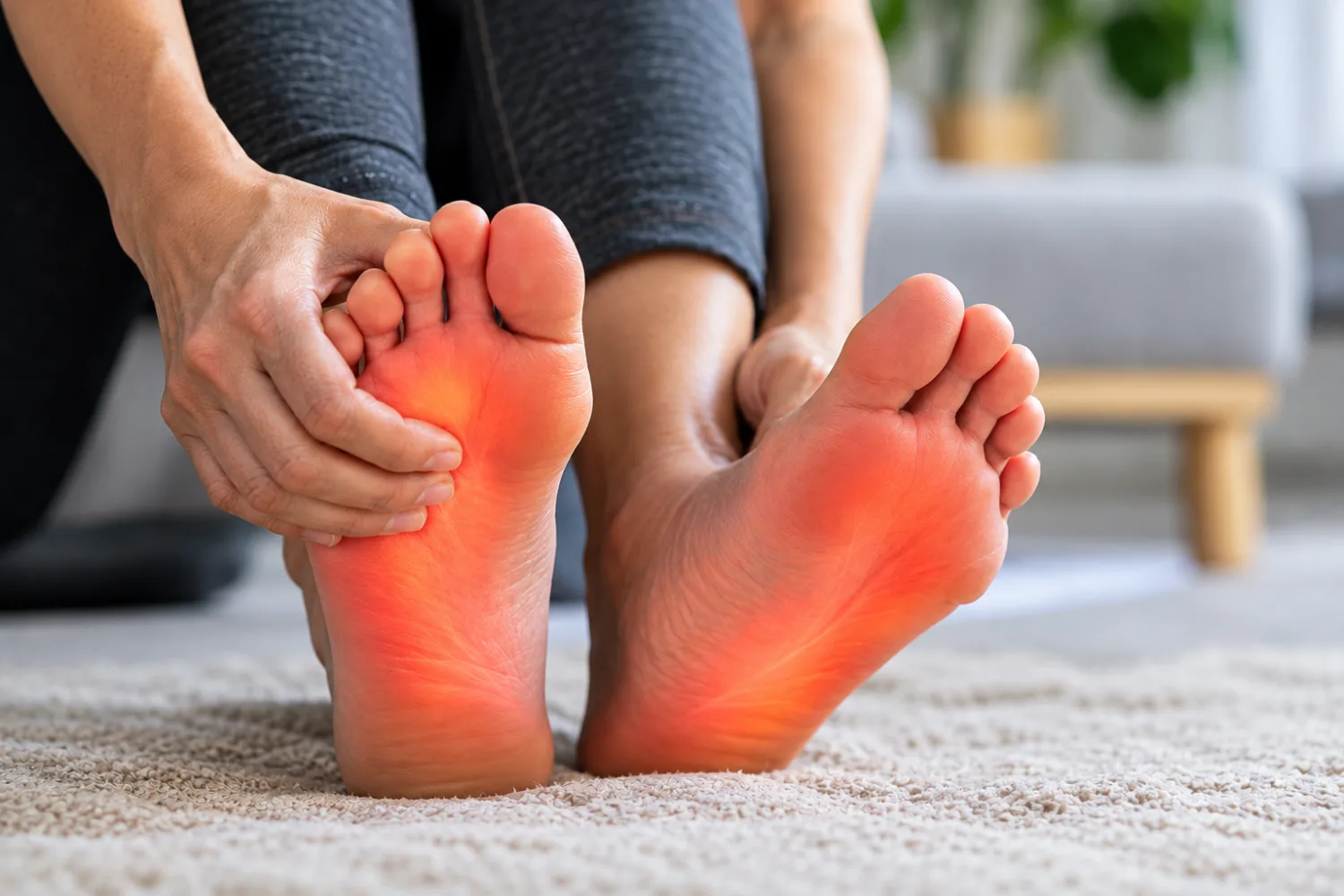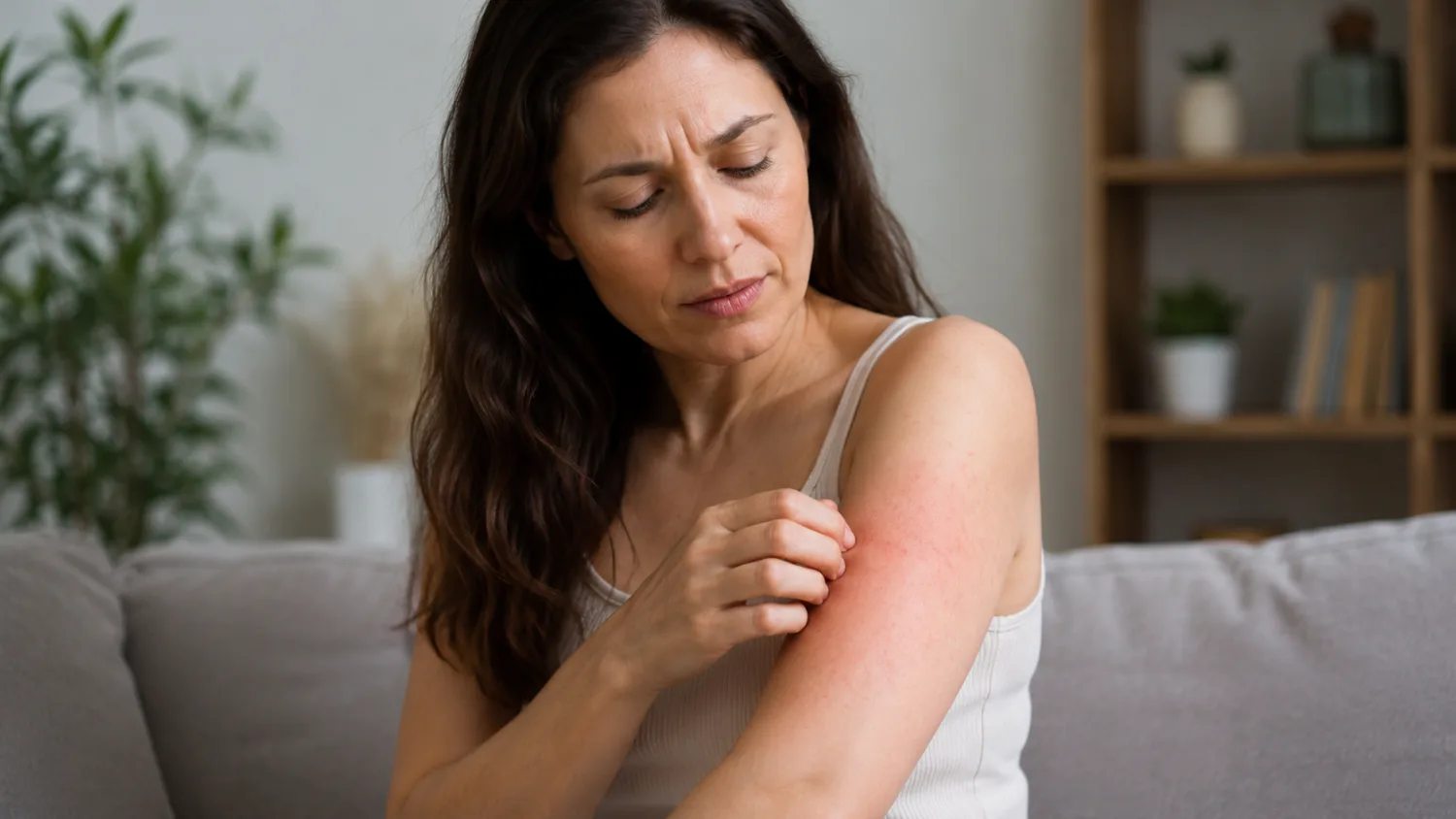
Itchy skin is very common. It may affect one small area, such as the hands, scalp, legs or groin, or it may affect the whole body.
Sometimes there is an obvious rash. Other times the skin looks normal but feels intensely itchy, prickly, crawling, burning or irritated.
Most itching is caused by dry skin, eczema, allergy, insect bites, heat rash, irritation from products, or mild skin inflammation.
But itching can also happen without a visible rash and may sometimes be linked with medicines, pregnancy, thyroid problems, diabetes, liver disease, kidney disease, iron deficiency, nerve irritation or other underlying conditions.
This guide explains common causes of itchy skin, how to tell whether it is linked with a rash or no rash, what may help at home, when a pharmacist can advise, and when to contact a GP or NHS 111.
Important: Seek urgent help if itching comes with swelling of the lips, tongue, throat or face, breathing difficulty, fainting, confusion, a rash that does not fade when pressed, fever with feeling very unwell, rapidly worsening skin infection, or yellow skin and eyes.
What causes itchy skin?
Itchy skin happens when nerve endings in the skin are irritated or when the body releases chemicals that trigger itch signals.
It can be caused by skin problems, allergic reactions, infections, heat, dryness, medicines, nerve irritation or internal health conditions.
Common causes include:
- dry skin
- eczema
- contact dermatitis
- hives
- prickly heat rash
- insect bites or stings
- scabies
- fungal infections such as ringworm or athlete’s foot
- psoriasis
- allergies
- irritation from soaps, detergents, perfumes or skincare products
- pregnancy-related itching
- medicines
- diabetes
- thyroid problems
- liver or kidney problems
- iron deficiency or anaemia
- nerve-related itching
The pattern matters.
Itching with a raised rash may suggest hives, bites, eczema or scabies. Itching after a new product may suggest contact dermatitis. Itching all over the body without a rash may need more thought, especially if it is severe, persistent or linked with other symptoms.
Itchy skin with a rash or no rash
Itchy skin with a rash
When itching comes with a visible rash, the appearance and location can give useful clues.
Common itchy rashes include:
- Eczema: dry, itchy, inflamed, cracked or thickened skin.
- Contact dermatitis: itchy, red, sore or blistered skin after contact with a trigger.
- Hives: raised itchy patches or wheals that may come and go.
- Prickly heat: small itchy or stinging bumps after heat and sweating.
- Insect bites: itchy bumps, often on exposed skin.
- Scabies: intense itching, often worse at night, with a rash in typical areas.
- Fungal infection: itchy, scaly or ring-shaped patches.
- Psoriasis: scaly, thickened patches, often on elbows, knees, scalp or lower back.
If you are unsure what type of rash it is, see Rash in Adults: Common Causes and When to Seek Urgent Help.
Itchy skin with no rash
Itching without a visible rash can be frustrating.
Sometimes the rash is subtle or appears only after scratching. In other cases, the skin looks normal because the cause is dryness, medicines, pregnancy, nerve irritation or an internal health condition.
Possible causes of itching without a clear rash include:
- dry skin
- mild eczema before visible inflammation appears
- allergy or hives that come and go quickly
- pregnancy-related itching
- medicine side effects
- thyroid disease
- diabetes
- iron deficiency
- liver problems, especially if there is jaundice
- kidney disease
- nerve irritation
- stress or anxiety worsening itch perception
Speak to a GP if itching has no obvious cause, affects your daily life or sleep, is all over your body, keeps coming back, is severe, happens during pregnancy, or does not improve with self-care.
Common skin causes of itching
Dry skin
Dry skin is one of the most common causes of itching, especially on the legs, arms, hands and back.
It may be worse in cold weather, after hot showers, with central heating, after frequent washing, or with ageing skin.
Dry skin may look:
- flaky
- rough
- tight
- cracked
- ashy or greyish on darker skin
- slightly red or inflamed on lighter skin
What may help:
- use a fragrance-free moisturiser regularly
- apply moisturiser after washing while skin is still slightly damp
- avoid very hot showers and baths
- use soap substitutes or gentle cleansers
- avoid perfumed products if they irritate the skin
- wear soft, breathable fabrics
If dry skin is severe, cracked, bleeding, infected-looking or not improving, ask a pharmacist or GP for advice.
Eczema and itchy skin
Eczema is a common cause of itchy, dry and inflamed skin. It can affect adults and children, and it often comes and goes.
Some people have mild patches; others have widespread, painful or sleep-disrupting symptoms.
Eczema symptoms may include:
- itching
- dryness
- redness on lighter skin
- darker, purple, grey or brown patches on darker skin
- cracking
- weeping or crusting if infected
- thickened skin from scratching
Triggers can include soaps, detergents, stress, heat, sweat, cold weather, allergens, wool clothing, fragrances and infections.
For more detail, see Eczema and Psoriasis: Symptoms, Differences and Treatment.
Contact dermatitis
Contact dermatitis happens when the skin reacts to something that touches it.
This may be an irritant, such as detergent or cleaning products, or an allergy, such as nickel, fragrance, hair dye, latex or certain plants.
Symptoms may include:
- itching
- redness or darker inflamed patches
- dryness
- burning or stinging
- small blisters
- cracked skin
- swelling
Think about recent changes in:
- soap or shower gel
- laundry detergent
- fabric softener
- moisturiser or skincare
- sunscreen
- perfume
- workplace chemicals
- gloves or latex products
- jewellery or watches
See a GP if contact dermatitis symptoms are persistent, recurrent or severe, or if there are signs of infection such as rapidly worsening symptoms, discharge, increasing pain, feeling generally unwell, or feeling hot, cold or shivery.
Hives
Hives, also called urticaria, cause raised itchy patches or wheals. They may appear suddenly and move around the body. Individual patches can fade and reappear elsewhere.
Hives may be triggered by:
- viral infections
- foods
- medicines
- insect stings
- heat or cold
- pressure on the skin
- stress
- unknown causes
Most hives are not dangerous, but hives with swelling or breathing symptoms can be serious.
Seek urgent GP or NHS 111 help if hives do not improve after 2 days, the rash is spreading, hives keep coming back, there is a high temperature and feeling unwell, or swelling under the skin suggests angioedema.
Call 999 if hives come with swelling of the lips, tongue, throat or face, breathing difficulty, wheezing, fainting, collapse or severe dizziness.
Infections, bites, scabies and heat-related itching
Prickly heat rash
Prickly heat rash is caused by sweat becoming trapped in the skin during hot or humid conditions.
It can cause small itchy bumps, stinging or a prickling sensation, usually in sweaty areas such as the neck, chest, back, armpits, groin or under the breasts.
It is more common during heatwaves, holidays, exercise, hot nights, tight clothing or humid weather.
Cooling the skin, wearing loose clothing and avoiding heavy creams usually helps.
For a full guide, see Prickly Heat Rash: Symptoms, Causes and What Helps.
Insect bites and stings
Insect bites and stings often cause itchy bumps, swelling, redness or irritation.
They are common in spring and summer and may affect exposed areas such as the arms, legs, ankles, neck or face.
Most bites improve with simple self-care, but scratching can lead to infection.
Seek advice if a bite or sting becomes:
- increasingly painful
- hot, swollen or spreading
- pus-filled
- linked with fever
- associated with red streaks
- not improving
Call 999 if a bite or sting causes breathing difficulty, throat swelling, facial swelling, fainting or collapse.
Read Insect Bites and Stings: Swelling, Infection, Allergy and When to Get Help.
Scabies
Scabies is an itchy rash caused by tiny mites. It spreads through close skin contact and needs treatment to stop it spreading.
Anyone can get scabies, and it is not a sign of poor hygiene.
Scabies often causes:
- intense itching
- itching that is worse at night
- a rash with small spots or lines
- symptoms between the fingers
- itching on wrists, elbows, armpits, waist, buttocks or genitals
- other household members or close contacts becoming itchy
See a pharmacist or GP if you think it could be scabies. Close contacts may need treatment at the same time, even if symptoms are mild.
Fungal skin infections
Fungal infections can cause itchy, scaly, red, darker, ring-shaped or peeling patches.
They are more common in warm, moist areas such as between the toes, groin, under the breasts or skin folds.
Examples include:
- athlete’s foot
- ringworm
- jock itch
- fungal rash in skin folds
A pharmacist can advise on antifungal creams or powders.
Avoid using steroid cream alone on a suspected fungal rash unless advised, as it can sometimes make fungal infections worse.
For related information, see Ringworm: Symptoms, Treatment and Prevention.
Itching in specific body areas
Itchy scalp
An itchy scalp can be caused by dandruff, seborrhoeic dermatitis, eczema, psoriasis, head lice, allergy to hair products, fungal infection or dry skin.
Think about:
- flakes or dandruff
- new shampoo, dye or styling product
- itching behind the ears or at the nape of the neck
- scalp redness or scaling
- patchy hair loss
- other household members itching
A pharmacist can advise on medicated shampoos, head lice treatment or when to see a GP.
Itchy legs
Itchy legs are often caused by dry skin, shaving irritation, eczema, contact dermatitis, insect bites, heat rash or poor circulation.
It may be worse after hot showers, exercise or wearing tight clothing.
Seek advice if itchy legs come with:
- swelling
- skin ulcers
- pain
- discolouration
- weeping or crusting
- rash spreading quickly
- symptoms of infection
If swelling is a major symptom, see Swollen Legs and Ankles: Veins, Heart, Kidneys, Medicines or Something Else?.
Itchy hands
Itchy hands are commonly caused by dry skin, hand eczema, frequent washing, cleaning products, gloves, sanitiser, contact dermatitis, scabies or fungal infection.
What may help:
- use a gentle soap substitute
- apply fragrance-free moisturiser after washing
- wear protective gloves for cleaning
- avoid known irritants
- remove rings before wet work
- ask a pharmacist about suitable creams
If the skin is cracked, painful, infected-looking or affecting work or sleep, seek advice.
Itchy groin or intimate area
Itching in the groin or genital area can be caused by sweat, friction, fungal infection, thrush, contact irritation, shaving, eczema, psoriasis, scabies, sexually transmitted infections or skin conditions.
Seek medical or sexual health advice if itching comes with:
- unusual discharge
- sores or blisters
- pain when urinating
- pelvic pain
- testicular pain
- rash that is spreading
- symptoms after unprotected sex
- recurrent symptoms
For related women’s health guidance, see Thrush vs BV: Symptoms, Differences and Best Treatment and Vaginal Discharge: What’s Normal and What’s Not.
Itching after a shower or at night
Itching after a shower may be caused by hot water, dry skin, soaps, shower gels, fragrance, hard water irritation, eczema or sensitive skin.
Itching at night may be worse because skin is warmer, distractions are fewer, or the cause is scabies, eczema, dry skin or hives.
What may help:
- keep showers warm rather than hot
- use fragrance-free products
- pat skin dry rather than rubbing
- apply moisturiser after washing
- wear loose cotton nightwear
- keep the bedroom cool
- ask a pharmacist if itching affects sleep
See a GP if itching at night is severe, persistent, widespread, linked with sweating, weight loss, fever or no obvious skin cause.
Itching linked with pregnancy, medicines or internal health conditions
Itching during pregnancy
Mild itching can happen during pregnancy as the skin stretches or becomes drier.
However, itching in pregnancy should be discussed with a midwife or GP, especially if it is severe, widespread, worse at night, or affects the palms of the hands or soles of the feet.
Pregnancy-related itching can sometimes be linked with a liver condition called intrahepatic cholestasis of pregnancy. This needs medical assessment and blood tests.
Contact your midwife or GP if you are pregnant and develop itching, especially if:
- it is severe
- there is no obvious rash
- it affects the hands or feet
- it is worse at night
- you feel unwell
- your urine is dark or stools are pale
- your skin or eyes look yellow
Itching from medicines
Some medicines can cause itching, either through dry skin, allergy, liver effects or other reactions.
This can happen soon after starting a medicine, but sometimes later.
Medicines that can sometimes be linked with itching include:
- antibiotics
- opioid painkillers
- some blood pressure medicines
- some cholesterol medicines
- some diabetes medicines
- some anti-seizure medicines
- some supplements or herbal products
Do not stop prescribed medicine suddenly without advice.
Speak to a pharmacist, GP or prescribing clinician if itching starts after a new medicine, especially if there is a rash, swelling or feeling unwell.
Liver problems
Itching all over the body without a rash can sometimes be linked with liver or bile flow problems. This is more concerning if it comes with jaundice or other symptoms.
Seek medical advice promptly if itching comes with:
- yellow skin or yellow eyes
- dark urine
- pale stools
- upper right abdominal pain
- unexplained weight loss
- feeling very tired or unwell
- persistent nausea
For related guides, see Liver Function Test Results Explained, ALT, AST, ALP and GGT Liver Results Explained and Nausea: Common Causes, What Helps and When to Get Medical Advice.
Kidney problems
Itchy skin can happen in some people with kidney disease, especially more advanced kidney disease.
It may be widespread, persistent and difficult to relieve.
Kidney-related itching is more likely if you already have kidney disease, abnormal kidney blood tests, swelling, fatigue, reduced urination or other kidney-related symptoms.
For more information, see Kidney Blood Test Results Explained and eGFR and Creatinine Results Explained.
Diabetes, thyroid problems and iron deficiency
Diabetes can contribute to itchy skin through dryness, infections, poor circulation, nerve changes or high blood sugar.
Fungal infections are also more common in some people with diabetes, especially around skin folds or the genital area.
Seek advice if you have diabetes and develop persistent itching, recurrent fungal infections, slow-healing skin sores, foot wounds, numbness or tingling, or increasing redness, swelling or pain.
Related guides include HbA1c and Blood Sugar Results Explained and Numbness and Tingling: Causes and When It Is Urgent.
Thyroid problems can sometimes affect the skin. An underactive thyroid may cause dry, rough skin, while an overactive thyroid may cause sweating, heat intolerance and skin changes.
Consider asking a GP about thyroid symptoms if itching comes with unexplained weight change, fatigue, cold intolerance or heat intolerance, palpitations, hair thinning, constipation or diarrhoea, period changes, or dry or unusually sweaty skin.
See Thyroid Blood Test Results Explained and Could a Thyroid Problem Be Affecting Your Weight?.
Iron deficiency and anaemia are not the most common causes of itching, but they can sometimes be linked with skin symptoms, restless legs, fatigue, dizziness, shortness of breath, palpitations or feeling unusually tired.
If itching is persistent and you also have fatigue, heavy periods, pale skin, dizziness, hair shedding or breathlessness, a GP may consider blood tests.
Related guides include Iron, Ferritin and Anaemia Blood Test Results Explained, Full Blood Count Results Explained and Fatigue: Why Am I Always Tired?.
Nerve-related itching
Sometimes itching is caused by irritated or damaged nerves rather than a skin rash.
This may feel like burning, crawling, tingling, prickling or itching under the skin. It may affect a specific area rather than the whole body.
Possible nerve-related causes include:
- shingles or post-shingles nerve irritation
- trapped nerves in the neck or back
- diabetes-related neuropathy
- multiple sclerosis or neurological conditions
- nerve injury
If itching feels like tingling, burning, pins and needles or numbness, see Numbness and Tingling: Causes and When It Is Urgent.
What helps itchy skin at home?
Simple self-care can help many causes of itchy skin, especially dry skin, mild irritation and heat-related itching.
Helpful steps include:
- avoid scratching where possible
- tap or press the itchy area instead of scratching
- use a cold compress
- keep nails short
- wear loose, breathable clothing
- avoid wool or rough fabrics if they irritate the skin
- use fragrance-free moisturiser
- avoid perfumed soaps and shower gels
- avoid very hot baths or showers
- keep the skin cool in hot weather
- change out of sweaty clothing quickly
- identify and avoid triggers where possible
If itching is linked with nausea, vomiting, fever, jaundice, severe tiredness, weight loss or other whole-body symptoms, do not treat it as a simple skin problem. Seek medical advice.
Can antihistamines help itchy skin?
Antihistamines can help some types of itching, especially hives, allergy-related itching and some insect bite reactions.
They may not help much with dry skin, eczema, scabies, fungal infection, liver-related itch or nerve-related itch.
Ask a pharmacist before using antihistamines if you:
- are pregnant or breastfeeding
- are buying for a child
- are older or frail
- drive or operate machinery
- take other medicines
- have glaucoma, prostate problems, heart rhythm problems or other long-term conditions
Some antihistamines can cause drowsiness. Others are less sedating but may still not suit everyone.
When to see a pharmacist, GP or NHS 111
When to see a pharmacist
A pharmacist can advise on many common causes of itchy skin, including dry skin, mild eczema, hives, insect bites, prickly heat, fungal infections, scabies, dandruff and contact irritation.
Ask a pharmacist if:
- the itch is mild to moderate
- you think it may be dry skin or eczema
- you need advice on moisturisers or soap substitutes
- you think it may be hives or allergy
- you have insect bites or prickly heat
- you suspect athlete’s foot or ringworm
- you suspect scabies
- you need advice on antihistamines
- you are unsure whether you need a GP
For more about pharmacy care, see When to See a Pharmacist Instead of a GP.
When to contact a GP or NHS 111
Contact a GP, out-of-hours service or NHS 111 if itchy skin:
- is affecting your daily life or sleep
- does not improve with self-care
- keeps coming back
- is severe
- is all over your body
- happens during pregnancy
- is linked with a new rash, lump or swelling you are worried about
- comes with fever or feeling unwell
- comes with weight loss or night sweats
- comes with yellow skin or eyes
- comes with dark urine or pale stools
- is linked with infected-looking skin
- is caused by a medicine or started after a new medicine
- is unexplained and persistent
You can use NHS 111 online in England if you need urgent advice and it is not a 999 emergency.
When to call 999
Call 999 if itching or a rash comes with emergency symptoms. These are unlikely to be simple dry skin or mild allergy.
Call 999 if you or someone else has:
- difficulty breathing
- wheezing or throat tightness
- swelling of the lips, tongue, throat or face
- collapse or fainting
- confusion or severe drowsiness
- a rash that does not fade when pressed
- stiff neck with fever
- severe headache with fever or rash
- blue, grey, pale or blotchy skin, lips or tongue
- rapidly worsening illness
Tests and how to describe itching clearly
What tests might a GP arrange?
Most itchy skin does not need tests if the cause is obvious, such as dry skin, eczema, hives, bites or contact irritation.
If itching is persistent, widespread, severe or unexplained, a GP may consider tests.
Possible checks include:
- skin examination
- review of medicines
- full blood count
- liver function tests
- kidney function tests
- thyroid blood tests
- iron and ferritin
- HbA1c or blood sugar
- skin swab if infection is suspected
- skin scraping if fungal infection or scabies is suspected
- referral to dermatology if needed
Related guides include How to Understand Blood Test Results, Full Blood Count Results Explained and What to Do After Abnormal Private Blood Test Results.
How to describe itching clearly
If you speak to a pharmacist, GP or NHS 111, clear details can help them decide what may be causing the itch.
Useful details include:
- when the itching started
- whether there is a rash
- where the itch is on the body
- whether it is all over or in one area
- whether it is worse at night
- whether anyone else at home is itchy
- whether you used a new product
- whether you started a new medicine
- whether you have fever or feel unwell
- whether your skin or eyes look yellow
- whether you have weight loss or night sweats
- whether you are pregnant
- whether you have diabetes, kidney disease or liver disease
- what you have already tried
FAQ: itchy skin
What is the most common cause of itchy skin?
Dry skin is one of the most common causes, especially in cold weather, after hot showers, with frequent washing, or as skin becomes older. Other common causes include eczema, contact dermatitis, hives, insect bites, prickly heat and fungal infections.
Why is my skin itchy but there is no rash?
Itching without a rash may be caused by dry skin, medicines, pregnancy, nerve irritation, thyroid problems, diabetes, iron deficiency, liver disease, kidney disease or other causes. See a GP if it is severe, widespread, persistent or affecting sleep.
When should I worry about itchy skin?
Seek advice if itching affects daily life, does not improve with self-care, keeps coming back, is severe, all over the body, happens during pregnancy, or comes with a new rash, lump, swelling, fever, weight loss, night sweats or jaundice.
Can stress cause itchy skin?
Stress can worsen itching and can trigger or aggravate conditions such as eczema, hives and psoriasis. However, persistent or unexplained itching should not automatically be blamed on stress without considering other causes.
Can itchy skin be caused by allergy?
Yes. Allergies can cause hives, contact dermatitis, swelling and itching. Call 999 if itching or rash comes with swelling of the lips, tongue, throat or face, breathing difficulty, wheezing, fainting or collapse.
Can liver problems cause itchy skin?
Yes, some liver and bile flow problems can cause itching, often without a clear rash. Seek medical advice promptly if itching comes with yellow skin or eyes, dark urine, pale stools, nausea, abdominal pain or unexplained weight loss.
Can diabetes cause itching?
Yes. Diabetes can contribute to dry skin, fungal infections, poor circulation and nerve-related symptoms, all of which can cause itching. Persistent itching, recurrent infections or slow-healing skin problems should be discussed with a GP.
Does antihistamine help itchy skin?
Antihistamines may help hives, allergy-related itching and some insect bite reactions. They may not help dry skin, eczema, scabies, fungal infection, liver-related itch or nerve-related itch. Ask a pharmacist if you are unsure.
Is itching worse at night a sign of scabies?
It can be. Scabies often causes intense itching that is worse at night, with a rash in areas such as between the fingers, wrists, armpits, waist, buttocks or genitals. A pharmacist or GP can advise on treatment.
What can I put on itchy skin?
For dry or irritated skin, fragrance-free moisturiser, soap substitutes and cool compresses may help. For hives, bites, fungal infection or scabies, different treatments may be needed. Ask a pharmacist if you are unsure what the cause is.
Can hot weather cause itchy skin?
Yes. Heat and sweating can trigger prickly heat rash, eczema flares, hives or general irritation. Keeping cool, wearing loose clothing and showering after sweating may help.
When should I call 999 for an itchy rash?
Call 999 if a rash or itching comes with breathing difficulty, swelling of the lips, tongue, throat or face, collapse, confusion, a rash that does not fade when pressed, stiff neck with fever, or rapidly worsening illness.
Final takeaway
Itchy skin is common and often caused by dry skin, eczema, contact dermatitis, hives, bites, heat rash or fungal infection.
In many cases, self-care and pharmacy advice are enough. Keeping the skin cool, avoiding triggers, using fragrance-free moisturiser and not scratching can make a big difference.
However, itching should be checked if it is severe, widespread, persistent, affecting sleep, happening during pregnancy, or linked with a new rash, infection signs, fever, weight loss, night sweats, jaundice, dark urine, pale stools or other worrying symptoms.
Call 999 for breathing difficulty, facial or throat swelling, collapse, confusion, or a rash that does not fade when pressed.
For official guidance, see NHS advice on itchy skin, NHS information on hives, NHS guidance on scabies and NHS advice on contact dermatitis.
This article is for general information only and should not replace medical advice. If you are worried about itchy skin, a rash or other symptoms, contact NHS 111, your GP, a pharmacist, or call 999 in an emergency.