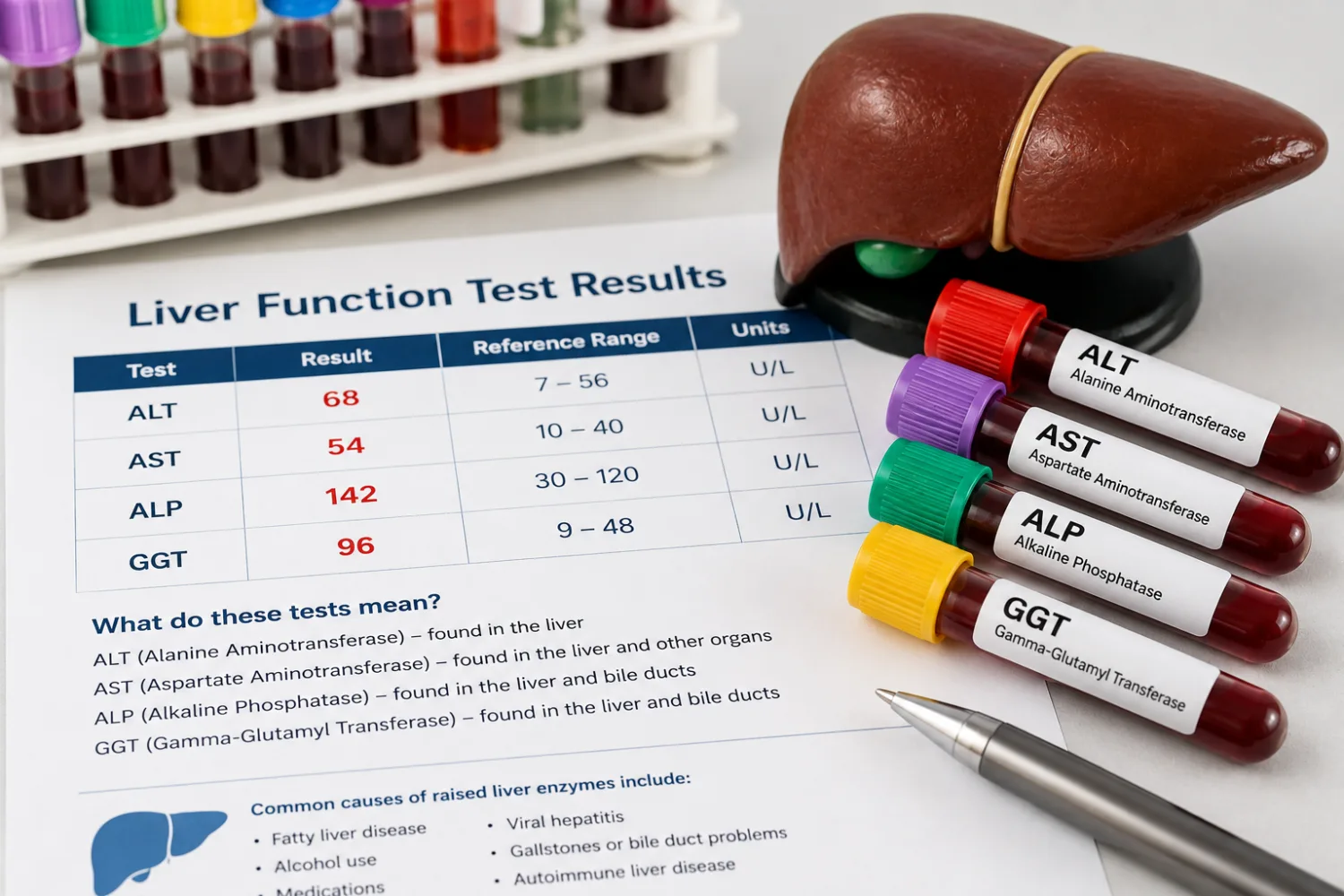
ALT, AST, ALP and GGT are liver enzyme blood tests. They are often included in a wider liver function test, sometimes shortened to LFT. These results can help show whether liver cells are irritated or damaged, whether bile flow may be blocked or slowed, and whether alcohol, medicines, fatty liver disease, gallstones, viral hepatitis or other conditions could be affecting the liver.
But liver blood tests can be confusing. A result may be slightly raised even when you feel perfectly well. One enzyme may be high while the others are normal. A result may be due to the liver, but sometimes the source can be bone, muscle or another part of the body. And importantly, the words “liver function test” can be misleading: some enzymes show liver injury or irritation, not necessarily how well the liver is functioning.
This guide explains what ALT, AST, ALP and GGT mean, what common abnormal patterns suggest, when raised liver enzymes are urgent, and what usually happens next.
Important: This article is for general information only and should not replace medical advice. Liver blood tests must be interpreted alongside your symptoms, medical history, alcohol intake, medicines, body weight, previous results, examination findings and other tests. Always discuss abnormal liver results with your GP, specialist or the clinician who arranged the test.
What are liver blood tests?
Liver blood tests are a group of blood tests that look at substances linked with the liver and bile ducts. A typical UK liver blood test panel may include:
- ALT — alanine aminotransferase;
- AST — aspartate aminotransferase;
- ALP — alkaline phosphatase;
- GGT — gamma-glutamyl transferase;
- bilirubin — a yellow pigment made from the breakdown of red blood cells;
- albumin — a protein made by the liver;
- sometimes total protein, globulin or clotting tests such as PT/INR.
The British Liver Trust explains that liver blood testing is usually not one single test, but several tests measured from one blood sample, commonly including enzymes, bilirubin and proteins made by the liver. You can read their overview of liver blood tests.
If you want a wider overview of liver results beyond enzymes, see our related guide: Liver Function Test Results Explained.
Why are ALT, AST, ALP and GGT checked?
These enzymes are checked because they can give clues about liver cell injury, bile duct problems or other conditions affecting the liver. They may be tested because you have symptoms, risk factors, a medication review, or an abnormal result from a private health check.
Common reasons for checking liver enzymes include:
- right upper abdominal pain;
- jaundice, meaning yellowing of the skin or eyes;
- dark urine or pale stools;
- itching without an obvious skin cause;
- nausea, loss of appetite or unexplained tiredness;
- monitoring fatty liver disease;
- checking the effect of alcohol on the liver;
- monitoring medicines that can affect the liver;
- checking for viral hepatitis or other liver infections;
- investigating abnormal blood tests found incidentally;
- checking liver results before surgery or certain treatments;
- following up gallstones or bile duct problems.
Liver enzymes are often interpreted alongside other blood tests such as a full blood count, CRP, U&E blood tests, clotting tests, hepatitis tests, ferritin and sometimes autoimmune liver markers.
What do ALT, AST, ALP and GGT stand for?
| Marker | Full name | What it often suggests when raised |
|---|---|---|
| ALT | Alanine aminotransferase | Liver cell irritation or injury |
| AST | Aspartate aminotransferase | Liver injury, but also muscle injury and other causes |
| ALP | Alkaline phosphatase | Bile duct or cholestatic pattern, but also bone causes |
| GGT | Gamma-glutamyl transferase | Liver or bile duct irritation, alcohol effect, fatty liver or medicine effect |
Lab Tests Online UK describes liver blood tests as a panel measuring enzymes, proteins and other substances produced or processed by the liver. Their liver blood tests page is a useful external reference.
Typical reference ranges for ALT, AST, ALP and GGT
Reference ranges vary between laboratories. They may also vary by age, sex, pregnancy status, body size and testing method. Always use the range printed next to your own result.
As a broad adult guide:
| Test | Typical adult reference range | Important notes |
|---|---|---|
| ALT | Often up to about 35–50 IU/L | Ranges differ by lab and sex. ALT is more liver-specific than AST. |
| AST | Often up to about 35–50 IU/L | Can rise from liver or muscle injury. |
| ALP | Often about 30–130 IU/L | Can come from liver, bile ducts, bone, placenta or growth in children. |
| GGT | Often up to about 40–70 IU/L | Often higher with alcohol, fatty liver, bile duct irritation and some medicines. |
A result just above the reference range is not the same as a result that is five, ten or twenty times the upper limit. The degree of abnormality, the pattern, your symptoms and whether the result is new all matter.
ALT result explained
ALT, or alanine aminotransferase, is an enzyme found mainly in liver cells. When liver cells are inflamed, irritated or damaged, ALT can leak into the bloodstream and rise on a blood test.
ALT is one of the most useful markers for liver cell injury. It is often raised in conditions such as fatty liver disease, viral hepatitis, alcohol-related liver injury, medicine-related liver injury and autoimmune liver disease.
What does a raised ALT mean?
A raised ALT means liver cells may be under stress or damaged. Common causes include:
- fatty liver disease, now often called MASLD, previously NAFLD;
- alcohol-related liver injury;
- viral hepatitis, such as hepatitis B or C;
- recent viral illness or systemic infection;
- medicine or supplement-related liver injury;
- autoimmune hepatitis;
- haemochromatosis, where iron builds up in the body;
- rapid weight loss or severe metabolic stress;
- muscle injury, although AST and CK are often more helpful for muscle causes.
The NHS Specialist Pharmacy Service notes that ALT and AST are enzymes found in the liver and can rise when the liver is damaged. Their guide to assessing liver function and interpreting liver blood tests is written for healthcare professionals but is useful background.
Is a mildly raised ALT serious?
Not always. A mildly raised ALT is common and may be found during routine or private blood testing. It can be related to fatty liver disease, alcohol, recent illness, exercise, medicines or temporary liver irritation.
However, mild does not mean ignore. The key question is whether it persists, rises, or appears with other abnormal results. If ALT remains abnormal, your clinician may look for metabolic risk factors, alcohol intake, viral hepatitis, iron overload, autoimmune liver disease or other causes.
What does a very high ALT mean?
A very high ALT, especially several times above the upper limit, can suggest more significant liver cell injury. Possible causes include acute viral hepatitis, drug-induced liver injury, severe alcohol-related hepatitis, bile duct obstruction, autoimmune hepatitis or reduced blood flow to the liver in severe illness.
Very high liver enzymes, especially with jaundice, confusion, bleeding, severe vomiting or feeling very unwell, need urgent medical assessment.
AST result explained
AST, or aspartate aminotransferase, is another enzyme that can rise when cells are damaged. AST is found in the liver, but it is also found in muscle, heart, red blood cells and other tissues. This means AST is less liver-specific than ALT.
What does a raised AST mean?
A raised AST can be caused by liver problems, but also by non-liver causes. Possible causes include:
- fatty liver disease;
- alcohol-related liver injury;
- viral hepatitis;
- medicine-related liver injury;
- autoimmune hepatitis;
- muscle injury or intense exercise;
- heart or muscle conditions;
- haemolysis, where red blood cells break down in the sample or body.
If AST is raised and ALT is normal or only mildly raised, your clinician may consider muscle causes, especially if you recently did intense exercise, had muscle pain, took certain medicines or had an injury. A blood test called creatine kinase, or CK, may help assess muscle injury.
AST:ALT ratio
Doctors sometimes look at the AST:ALT ratio. In many liver conditions, ALT is higher than AST. In some alcohol-related liver disease, AST may be higher than ALT, often with a raised GGT. However, the ratio is not a diagnosis by itself. It can be affected by the stage of liver disease, muscle injury and other factors.
It is better to see the AST:ALT ratio as one clue among many, not as a standalone answer.
ALP result explained
ALP, or alkaline phosphatase, is an enzyme found in several parts of the body, especially the liver, bile ducts and bones. It can also be higher in pregnancy because the placenta makes ALP, and it is often higher in children and teenagers because of bone growth.
What does a raised ALP mean?
A raised ALP can come from the liver or bile ducts, but it can also come from bone. This is why ALP is often interpreted with GGT.
Possible liver and bile duct causes of raised ALP include:
- gallstones blocking or irritating bile flow;
- bile duct obstruction or narrowing;
- primary biliary cholangitis;
- primary sclerosing cholangitis;
- drug-induced cholestasis;
- liver congestion, sometimes related to heart failure;
- liver tumours or spread of cancer to the liver;
- infiltrative liver diseases.
Possible non-liver causes include:
- bone growth in children and teenagers;
- healing fractures;
- vitamin D deficiency or bone disease;
- Paget’s disease of bone;
- pregnancy;
- some endocrine or metabolic bone conditions.
How does GGT help interpret ALP?
If ALP is raised and GGT is also raised, the source is more likely to be liver or bile ducts. If ALP is raised but GGT is normal, a bone source becomes more likely, though clinical context still matters.
This is one of the most useful reasons GGT is included in liver blood tests. It can help decide whether an ALP result is likely to be liver-related or bone-related.
Raised ALP and abdominal pain
Raised ALP with right upper abdominal pain, nausea, fever, jaundice, pale stools or dark urine may suggest a bile duct or gallbladder problem. Depending on the situation, doctors may arrange an ultrasound or other imaging.
You may find these related guides useful: Gallstones: Symptoms, Gallbladder Pain and When Surgery Is Needed, Abdominal Ultrasound: What It Shows and Why It’s Requested and Ultrasound vs CT vs MRI.
GGT result explained
GGT, or gamma-glutamyl transferase, is an enzyme found in the liver and bile ducts. It is sensitive to many types of liver and bile duct irritation. This means it often rises early, but it is not very specific.
A raised GGT is common. It can happen with alcohol intake, fatty liver disease, obesity, diabetes, bile duct problems, medicines, smoking and other liver conditions.
What does a raised GGT mean?
Possible causes of raised GGT include:
- alcohol use, especially regular or heavy intake;
- fatty liver disease;
- being overweight or having metabolic syndrome;
- type 2 diabetes or insulin resistance;
- gallstones or bile duct irritation;
- some medicines, including anti-seizure medicines and others;
- smoking;
- viral hepatitis or other liver inflammation;
- liver congestion or other liver diseases.
GGT is useful, but a raised GGT alone does not tell you the exact cause. Many people with raised GGT need a review of alcohol intake, weight, diabetes risk, cholesterol, medicines and other liver results.
Is isolated raised GGT serious?
An isolated raised GGT means GGT is high but ALT, AST, ALP and bilirubin are normal. This is common. It may be linked with alcohol, fatty liver disease, medicines or metabolic risk factors. In some people, it persists without a serious underlying diagnosis.
However, it should still be interpreted properly. If GGT is very high, rising, persistent, or accompanied by symptoms or other abnormal tests, further investigation may be needed.
Common liver enzyme patterns
Doctors often interpret liver blood tests by looking at the pattern. The pattern can be more useful than any single result.
1. Hepatocellular pattern: ALT and AST mainly raised
A hepatocellular pattern means ALT and AST are the most abnormal results. This suggests liver cell injury or inflammation.
Possible causes include:
- fatty liver disease;
- viral hepatitis;
- alcohol-related liver injury;
- medicine or supplement-related liver injury;
- autoimmune hepatitis;
- haemochromatosis;
- acute severe illness affecting liver blood flow;
- less commonly, inherited or metabolic liver diseases.
The British Society of Gastroenterology guideline on abnormal liver blood tests recommends that initial investigation for possible liver disease should include bilirubin, albumin, ALT, ALP and GGT, together with a full blood count if not already done recently. You can read the guideline on abnormal liver blood tests.
2. Cholestatic pattern: ALP and GGT mainly raised
A cholestatic pattern means ALP and GGT are raised more than ALT and AST. Cholestasis means bile flow is reduced, blocked or irritated.
Possible causes include:
- gallstones blocking the bile duct;
- bile duct strictures or narrowing;
- primary biliary cholangitis;
- primary sclerosing cholangitis;
- medicine-related cholestasis;
- pancreatic or bile duct problems;
- liver congestion;
- pregnancy-related cholestasis in pregnant people.
Symptoms that may fit this pattern include jaundice, itching, dark urine, pale stools and right upper abdominal pain. Depending on the situation, an abdominal ultrasound, CT, MRI or MRCP scan may be arranged. See our guides to CT scans and MRI scans for more detail on imaging.
3. Mixed pattern: ALT/AST and ALP/GGT raised
A mixed pattern means both liver cell enzymes and bile duct enzymes are raised. This can happen in many conditions, including gallstones, drug-induced liver injury, viral hepatitis, fatty liver disease, alcohol-related liver disease and autoimmune or inflammatory liver conditions.
A mixed pattern often needs careful review of symptoms, medicines, alcohol intake, risk factors, previous results and sometimes imaging or specialist tests.
4. Isolated raised bilirubin
Bilirubin is not one of the four enzymes in this article, but it is often part of the same liver panel. If bilirubin is raised while ALT, AST, ALP and GGT are normal, one common explanation is Gilbert’s syndrome, a harmless inherited condition that can cause mild jaundice during stress, fasting or illness.
However, bilirubin can also rise with bile duct obstruction, hepatitis, blood breakdown or more serious liver problems, especially if other liver tests are abnormal. Jaundice should always be assessed properly.
What can cause mildly raised liver enzymes?
Mildly raised liver enzymes are common. They are often found during routine blood tests or private health checks.
Common causes include:
- fatty liver disease;
- alcohol intake;
- recent viral illness;
- being overweight;
- type 2 diabetes or insulin resistance;
- high triglycerides or metabolic syndrome;
- recent strenuous exercise;
- medicines or supplements;
- thyroid disease;
- coeliac disease;
- muscle injury, especially when AST is raised.
The key is not to panic, but also not to dismiss the result. If the abnormality persists, is worsening, or appears alongside symptoms, further assessment is sensible.
Fatty liver disease and liver enzymes
Fatty liver disease is one of the most common reasons for abnormal liver blood tests. It is linked with insulin resistance, type 2 diabetes, higher body weight, high triglycerides, high blood pressure and metabolic syndrome. It can also occur in people who are not overweight.
In fatty liver disease, ALT is often raised more than AST in earlier stages. GGT may also be raised. However, liver enzymes can be normal even when fatty liver or liver scarring is present. This is why liver blood tests are only one part of risk assessment.
If fatty liver disease is suspected, your clinician may review:
- weight and waist size;
- alcohol intake;
- blood pressure;
- HbA1c or blood sugar;
- cholesterol and triglycerides;
- platelet count and full blood count;
- liver fibrosis scores or FibroScan where appropriate.
Related guides include HbA1c and Blood Sugar Results Explained, Cholesterol Blood Test Results Explained and Losing Weight: Causes of Weight Gain, Treatments and When to Get Help.
Alcohol and liver enzyme results
Alcohol can affect liver enzymes in several ways. GGT is often raised with regular alcohol intake, although it can also rise for many other reasons. AST may be higher than ALT in some alcohol-related liver disease, but this pattern is not perfect.
If your liver enzymes are raised, your clinician may ask about alcohol intake in units per week, binge drinking, alcohol-free days, and whether cutting down has improved previous results.
It is important to be honest about alcohol use. The purpose is not to judge; it is to interpret the result accurately and reduce the risk of liver damage. If you may be dependent on alcohol, do not suddenly stop without medical advice, as withdrawal can be dangerous for some people.
Medicines and supplements that can raise liver enzymes
Many medicines can affect liver blood tests. Sometimes the effect is mild and monitored. Sometimes the medicine needs to be stopped or changed. This decision should be made by a clinician.
Medicines and substances that can affect liver results include:
- statins;
- some antibiotics, including co-amoxiclav, macrolides and nitrofurantoin;
- anti-seizure medicines;
- methotrexate;
- azathioprine and other immune medicines;
- some antifungal medicines;
- some antipsychotic medicines;
- paracetamol overdose or repeated excessive use;
- bodybuilding supplements or anabolic steroids;
- some herbal remedies, green tea extracts or weight loss supplements.
Do not stop prescribed medicines without advice unless you have been told to do so urgently. But do tell your clinician about all prescription medicines, over-the-counter medicines, supplements, herbal products and recreational substances.
Can exercise raise ALT or AST?
Yes. Intense exercise, muscle injury or heavy resistance training can raise AST and sometimes ALT. This is because AST is found in muscle as well as liver. If muscle injury is suspected, a CK blood test can help.
If you had a liver blood test soon after unusually hard exercise, a marathon, heavy weight training or muscle injury, tell the clinician interpreting your results. They may repeat the test after rest if it is safe to do so.
Can gallstones raise liver enzymes?
Yes. Gallstones can cause abnormal liver enzymes if they irritate or block the bile ducts. The pattern may be cholestatic, with ALP and GGT raised, but ALT and AST can also rise, sometimes sharply, especially if a stone temporarily blocks the common bile duct.
Symptoms that may suggest gallstones or bile duct problems include:
- right upper abdominal pain;
- pain after fatty meals;
- pain spreading to the back or right shoulder;
- nausea or vomiting;
- jaundice;
- dark urine or pale stools;
- fever or chills.
Ultrasound is often the first imaging test used for suspected gallstones. For more detail, see Abdominal Ultrasound: What It Shows and Why It’s Requested.
Viral hepatitis and liver enzyme results
Viral hepatitis means liver inflammation caused by a virus. Hepatitis A, B, C, E and other viruses can affect liver enzymes. ALT and AST are often raised, sometimes very high in acute hepatitis.
Testing may be considered if you have risk factors such as:
- jaundice or symptoms of hepatitis;
- contact with someone with hepatitis;
- previous injecting drug use;
- blood transfusion in certain countries or before modern screening;
- tattoos or piercings in unsafe settings;
- sex with a partner who has hepatitis B or C risk;
- birth or medical treatment in a country where hepatitis B or C is more common;
- unexplained persistently abnormal liver tests.
Hepatitis testing usually needs specific antibody or antigen tests. Routine ALT, AST, ALP and GGT results cannot tell you which virus, if any, is present.
Autoimmune and inherited liver conditions
Most abnormal liver enzymes are not due to rare disease, but persistent unexplained abnormalities may need tests for less common causes.
These may include:
- autoimmune hepatitis;
- primary biliary cholangitis;
- primary sclerosing cholangitis;
- haemochromatosis, where iron overload affects organs;
- Wilson’s disease, especially in younger people;
- alpha-1 antitrypsin deficiency.
Further tests may include ferritin and transferrin saturation, immunoglobulins, autoantibodies, viral hepatitis tests, ultrasound and sometimes specialist referral.
When are abnormal liver enzymes urgent?
Many abnormal liver enzyme results can be reviewed routinely, especially if they are mild and you feel well. But some situations need urgent medical advice.
Seek urgent medical help if abnormal liver results come with:
- yellow skin or yellow eyes;
- confusion, severe drowsiness or personality change;
- vomiting blood or passing black tarry stools;
- severe right upper abdominal pain;
- fever, chills and jaundice;
- dark urine and pale stools;
- new swelling of the abdomen;
- easy bruising or bleeding;
- suspected paracetamol overdose;
- very high ALT or AST, especially if you feel unwell;
- abnormal clotting tests or very low albumin, if reported.
If you have severe abdominal pain, jaundice with fever, confusion, collapse or suspected overdose, do not wait for a routine appointment.
What happens after abnormal ALT, AST, ALP or GGT?
The next step depends on the pattern and severity of abnormality, your symptoms, and whether the result is new or persistent.
Your clinician may recommend:
- repeating the liver blood tests;
- reviewing alcohol intake;
- reviewing medicines, supplements and herbal products;
- checking weight, blood pressure, diabetes risk and cholesterol;
- checking viral hepatitis tests;
- checking ferritin and transferrin saturation for iron overload;
- checking autoimmune liver markers;
- checking full blood count and platelets;
- checking U&Es and kidney function;
- checking clotting, such as PT/INR, if liver function is a concern;
- arranging abdominal ultrasound;
- arranging FibroScan, CT, MRI or MRCP in selected cases;
- referring to a liver specialist if results are persistent, significant or concerning.
If your abnormal result came from a private blood test, make sure it is reviewed by an appropriate clinician. See What to Do After Abnormal Private Blood Test Results.
Should abnormal liver enzymes be repeated?
Often, yes. Mild abnormalities are frequently repeated to see whether they settle, especially if there was a possible temporary trigger such as illness, alcohol, new medicine, exercise or dehydration.
However, repeating is not always enough. If results are significantly abnormal, persistent, worsening or associated with symptoms, your clinician may investigate rather than simply waiting.
A useful repeat test may include the full liver panel, not just one enzyme, so the pattern can be reassessed. Sometimes GGT is added to help interpret raised ALP.
Can liver enzymes be normal even if there is liver disease?
Yes. Normal liver enzymes do not completely rule out liver disease. Some people with fatty liver disease, liver fibrosis or even cirrhosis can have normal or near-normal ALT and AST. This is why risk factors, platelet count, imaging, fibrosis scores and clinical assessment matter.
On the other hand, raised liver enzymes do not always mean severe liver disease. Some abnormalities are temporary or mild. The result needs context.
What is the difference between liver injury and liver function?
This is an important point. ALT, AST, ALP and GGT are mainly markers of liver or bile duct irritation. They do not directly measure all liver function.
Tests that may give more information about liver function include:
- albumin, because the liver makes albumin;
- bilirubin, because the liver processes and clears bilirubin;
- PT/INR, because the liver makes clotting factors;
- platelet count, because low platelets can sometimes suggest portal hypertension or advanced liver disease.
This is why someone can have high ALT but normal liver function, while another person with advanced liver disease may have only modest enzyme changes but abnormal albumin, bilirubin, INR or platelets.
For white cells and platelets in the broader blood picture, see White Blood Cell Count Results Explained.
How to read liver enzyme results sensibly
When you receive your results, avoid focusing on one number alone. Ask these questions:
- Which enzyme is raised? ALT, AST, ALP and GGT point to different patterns.
- How raised is it? Slightly raised is different from many times above the upper limit.
- Is the pattern hepatocellular, cholestatic or mixed?
- Are bilirubin, albumin, INR or platelets abnormal? These may change the significance.
- Do you have symptoms? Jaundice, severe pain, fever, confusion or bleeding are important.
- Is it new or persistent? Previous results are very useful.
- Could alcohol, medicines, supplements or recent exercise be involved?
- Do you have metabolic risk factors? Weight, diabetes, high triglycerides and blood pressure matter.
- Was imaging needed? Ultrasound is commonly used when bile ducts, gallstones or fatty liver are suspected.
One abnormal liver enzyme result is rarely the whole story. The pattern, trend and clinical context matter most.
FAQ: ALT, AST, ALP and GGT liver results
What is ALT in a liver blood test?
ALT stands for alanine aminotransferase. It is an enzyme found mainly in liver cells. Raised ALT often suggests liver cell irritation or injury, although the cause can range from fatty liver disease and alcohol to viral hepatitis, medicines or autoimmune liver disease.
What is AST in a liver blood test?
AST stands for aspartate aminotransferase. It can rise with liver injury, but it is also found in muscle and other tissues. Raised AST may therefore be due to liver disease, muscle injury, intense exercise or other causes.
What is ALP in a liver blood test?
ALP stands for alkaline phosphatase. It can come from the liver, bile ducts or bones. Raised ALP with raised GGT is more likely to be liver or bile duct related. Raised ALP with normal GGT may suggest a bone source, depending on the context.
What is GGT in a liver blood test?
GGT stands for gamma-glutamyl transferase. It is a sensitive marker of liver or bile duct irritation, but it is not specific. It can rise with alcohol intake, fatty liver disease, bile duct problems, medicines, smoking and other liver conditions.
Does raised ALT mean liver damage?
Raised ALT can suggest liver cell irritation or injury, but it does not automatically mean permanent liver damage. The cause, level, duration and other results matter. Mild raised ALT is common and often needs repeat testing and risk-factor review.
Does raised GGT mean I drink too much alcohol?
Not necessarily. Alcohol can raise GGT, but so can fatty liver disease, obesity, diabetes, medicines, bile duct problems and smoking. A raised GGT should be interpreted with the full liver panel and your clinical history.
Can fatty liver cause raised ALT and GGT?
Yes. Fatty liver disease commonly raises ALT and may also raise GGT. However, liver enzymes can be normal in some people with fatty liver disease, so risk factors and imaging may also matter.
Can gallstones raise liver enzymes?
Yes. Gallstones can raise ALP and GGT if bile flow is affected. ALT and AST can also rise, especially if a stone temporarily blocks the common bile duct.
Can exercise raise AST or ALT?
Yes. Intense exercise or muscle injury can raise AST and sometimes ALT. If this is suspected, your clinician may check creatine kinase, also called CK, and repeat the test after rest.
Can medicines raise liver enzymes?
Yes. Many medicines and supplements can affect liver enzymes. Examples include some antibiotics, statins, anti-seizure medicines, methotrexate, antifungals, paracetamol overdose, anabolic steroids and some herbal or weight loss supplements. Do not stop prescribed medicines without medical advice.
What is a cholestatic liver enzyme pattern?
A cholestatic pattern means ALP and GGT are raised more than ALT and AST. It may suggest reduced or blocked bile flow, which can be caused by gallstones, bile duct disease, medicines or some liver conditions.
What is a hepatocellular liver enzyme pattern?
A hepatocellular pattern means ALT and AST are the main abnormal results. It suggests liver cell injury or inflammation. Causes include fatty liver disease, viral hepatitis, alcohol-related liver injury, medicines, autoimmune hepatitis and other liver conditions.
Are liver enzymes the same as liver function?
No. ALT, AST, ALP and GGT mostly show liver or bile duct irritation. Liver function is better reflected by tests such as albumin, bilirubin and clotting tests such as PT/INR, interpreted with the clinical picture.
When should I worry about raised liver enzymes?
Seek medical advice if liver enzymes are persistently raised, rising, very high, or accompanied by jaundice, dark urine, pale stools, itching, severe abdominal pain, fever, confusion, vomiting blood, black stools, bruising or unexplained weight loss.
Should I repeat abnormal liver blood tests?
Often, yes, especially if the abnormality is mild and there may be a temporary cause. But significant, persistent or symptomatic abnormalities may need investigation rather than repeat testing alone.
Can liver enzymes be high without symptoms?
Yes. Many people with raised liver enzymes feel well. Fatty liver disease, alcohol effects, medicines, viral hepatitis and other conditions may be found incidentally on routine or private blood tests.
Can liver enzymes be normal in liver disease?
Yes. Some people with fatty liver disease, fibrosis or advanced liver disease can have normal or only mildly abnormal enzymes. That is why risk factors, platelet count, imaging, fibrosis scores and other liver function markers are important.
What tests are done after abnormal liver enzymes?
Follow-up may include repeat liver blood tests, full blood count, U&Es, clotting tests, hepatitis tests, ferritin and transferrin saturation, autoimmune markers, ultrasound, FibroScan, CT, MRI or specialist referral depending on the pattern and symptoms.
What should I do if my private blood test shows raised liver enzymes?
Contact the provider or a qualified clinician for interpretation. Do not ignore the result, especially if enzymes are significantly raised, symptoms are present, or bilirubin, albumin, platelets or clotting results are abnormal.